Call, Text or WhatsApp Us

Kenne Bell Supercharger Alternatives: What to Consider Before You Buy
Kenne Bell has built a reputation as one of the more aggressive players in the twin-screw supercharger market. Their high-flow Mammoth and Liquid Cooled designs are known for serious power potential, strong top-end capability, and a following among enthusiasts who want to push their builds well beyond stock power levels. If you’re researching Kenne Bell, you’re likely thinking about a high-output build and you understand that this is a brand focused on maximum performance rather than mild street manners.
But not every build calls for maximum boost, and not every platform is in Kenne Bell’s lineup. Some buyers want a more streetable OEM+ setup. Others are on Toyota, Lexus, Jeep, or Dodge platforms where Kenne Bell doesn’t offer fitment. And some are simply doing their homework before committing to a significant purchase. This article looks at the Kenne Bell landscape honestly — where it excels, where buyers sometimes look elsewhere, and how alternatives including VT Superchargers compare across the factors that matter most.
Quick Comparison: Kenne Bell vs. Alternatives
| Brand | Supercharger Type | Best Use Case | Strengths | Possible Drawbacks |
|---|---|---|---|---|
| Kenne Bell | Twin-screw | High-boost performance builds, maximum power output | High-flow twin-screw design, strong top-end capability, proven high-boost performance | Aggressive power focus, premium pricing, limited platform range outside domestic V8 |
| VT Superchargers | Roots / Twin-screw (platform dependent) | OEM+ daily drivers, Toyota/Lexus/Jeep/Dodge builds | Complete bolt-on kits, water-to-air intercooling, OEM+ drivability, import platform support | Newer brand with growing platform coverage |
| Whipple | Twin-screw | High-output street and strip builds | Excellent thermal efficiency, strong mid-range and top-end power | Premium pricing, larger packaging |
| Magnuson | Roots (TVS) | Trucks, SUVs, OEM-style builds | Strong low-end torque, clean OEM integration, proven reliability | Premium pricing, limited import platform support |
| ProCharger | Centrifugal | High-RPM peak horsepower builds | Strong top-end power, wide domestic platform support | RPM-dependent boost, modest low-end torque |
Why Some Buyers Look for Kenne Bell Alternatives
Kenne Bell’s high-output focus is a genuine differentiator — but it’s also the reason some buyers look elsewhere:
- Daily drivability: Kenne Bell systems are often configured for aggressive boost levels that deliver impressive peak power numbers. For buyers who want a daily driver that’s also supercharged — something that commutes, tows, and occasionally sees spirited driving — a milder OEM+ system may be a better fit than a high-boost twin-screw setup.
- Platform availability: Kenne Bell’s lineup is focused on domestic V8 platforms, primarily Ford Mustang, F-150, and similar applications. Buyers on Toyota, Lexus, Jeep, or Dodge platforms will generally find no Kenne Bell fitment available.
- Price point: Kenne Bell kits sit at the premium end of the market. For buyers who want a well-engineered bolt-on system without the top-tier price tag, alternatives that deliver strong street performance at a lower cost are worth evaluating.
- Packaging: High-flow twin-screw units tend to be physically large. On some platforms this affects hood clearance, installation complexity, and under-hood aesthetics. Buyers who prioritise a clean, OEM-like appearance sometimes prefer a lower-profile system.
- Power goals: Not every build needs maximum boost. If your goal is strong, usable street torque rather than peak dyno numbers, a system designed specifically for OEM+ drivability may be a better match.
Understanding Supercharger Types
Twin-Screw Superchargers
Kenne Bell’s supercharger designs use twin-screw compressor technology — two intermeshing rotors that compress air internally as it passes through. This internal compression makes twin-screw units thermally more efficient than roots-style designs, producing less heat per unit of boost. They deliver strong power across a wide RPM range, and at high boost levels the thermal efficiency advantage becomes increasingly significant. Kenne Bell’s Mammoth series in particular is designed for high-flow, high-boost applications. The trade-off is physical size and the aggressive power delivery that comes with high-boost configurations.
Roots-Style Superchargers
Roots superchargers are positive displacement units that move a fixed volume of air per revolution, delivering boost from idle and producing strong low-end torque. They’re typically more compact than twin-screw units and mount cleanly in the engine valley for an OEM-like appearance. For street and daily-driver applications at moderate boost, a well-designed roots system with good intercooling delivers a very satisfying driving experience without the aggressive power curve of a high-boost twin-screw setup.
Centrifugal Superchargers
Centrifugal superchargers build boost progressively with RPM. They run cool and can produce strong peak horsepower, but low-end torque gains are modest. For daily drivers, towing, or off-road use where low-RPM torque matters, centrifugal systems are generally less satisfying than positive displacement designs. ProCharger and Vortech are the main centrifugal brands.
OEM+ Daily-Driver Systems
A distinct category of kits is engineered specifically for street and daily use — prioritising clean installation, manageable boost levels, strong drivability, and long-term reliability over maximum power output. VT Superchargers builds in this space, targeting platforms and use cases that high-output brands like Kenne Bell don’t typically serve.
Where VT Superchargers Fits
VT Superchargers and Kenne Bell are targeting very different buyers. Kenne Bell is built for enthusiasts who want maximum power output from a high-boost build on a domestic V8 platform. VT Superchargers is built for enthusiasts who want meaningful, usable performance from a daily driver — particularly on Toyota, Lexus, Jeep, and Dodge platforms that high-output brands don’t typically cover.
- OEM+ power delivery — strong, usable torque across the RPM range without the aggressive power curve of a high-boost twin-screw setup
- Water-to-air intercooling where applicable, for consistent real-world performance in traffic, on the highway, and in varying conditions
- Complete bolt-on kits — supercharger, intercooler, all hardware, and tuning support in one package
- Clean under-hood appearance — designed to look factory-appropriate, not like a race build
- Platform focus on Toyota, Lexus, Jeep, and Dodge
- Daily-driver orientation — built for vehicles that commute, tow, go off-road, and occasionally see spirited driving
Not sure which setup suits your build? Our team is happy to advise — reach out with your vehicle, engine, and goals and we’ll help you work through the options.
Who Each Option Suits
Choose Kenne Bell if:
- Maximum power output is the primary goal
- You’re building a high-boost street or strip car on a supported domestic V8 platform
- Budget allows for a premium high-flow twin-screw system
- Your tuner has strong experience with Kenne Bell systems
Consider VT Superchargers if:
- You want OEM+ drivability and strong street torque without a high-boost aggressive setup
- You’re running a Toyota Camry, Land Cruiser, Tacoma, Lexus GX or IS, Jeep Wrangler, Jeep Gladiator, or Dodge/Chrysler 3.6L platform
- A clean, factory-style installation matters to you
- Your vehicle is a daily driver, tow vehicle, or off-road rig
- You want a complete bolt-on kit with water-to-air intercooling
Consider Whipple if:
- You want a high-output twin-screw system with strong thermal efficiency on a domestic V8 platform
- Your build is high-output street or strip focused
Consider Magnuson if:
- You want a TVS roots system with proven OEM integration and strong low-end torque on a domestic truck or SUV platform
Platform Examples: Where VT Superchargers Operates
- Toyota Camry: A popular daily driver where a bolt-on supercharger kit adds meaningful torque for highway driving and overtaking without compromising reliability or refinement.
- Toyota Land Cruiser: A serious towing and overlanding platform. Low-end torque from a positive displacement supercharger improves towing capability and trail performance — use cases where a high-boost twin-screw would be overkill.
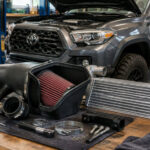
- Toyota Tacoma: Off-road and daily use. Added torque improves loaded towing, trail performance, and highway confidence at the RPM ranges that matter most in real-world use.
- Lexus GX and IS: More performance without compromising the composed, refined daily-driver character these vehicles are known for.
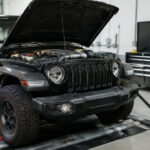
- Jeep Wrangler and Gladiator: Off-road builds where low-RPM torque is critical for rock crawling, trail use, and loaded highway driving. The Pentastar 3.6L responds well to a well-engineered bolt-on supercharger kit.
- Dodge/Chrysler 3.6L Pentastar: A widely used engine across trucks, SUVs, and Jeep platforms that benefits significantly from the immediate torque delivery of a positive displacement supercharger.
Frequently Asked Questions
What is the best alternative to Kenne Bell superchargers?
It depends on your platform and goals. For high-output domestic V8 builds, Whipple is the closest twin-screw alternative. For Toyota, Lexus, Jeep, and Dodge platforms where you want OEM+ drivability and a complete bolt-on kit, VT Superchargers is a strong option. If you’re unsure what’s right for your build, reach out — we’re happy to advise.
Are Kenne Bell superchargers good for daily driving?
Kenne Bell systems can be used on daily drivers, but they’re typically configured for high boost and aggressive power output. If your goal is OEM+ drivability — meaningful torque gains without an aggressive power curve — a system designed specifically for street and daily use may be a better fit than a high-output twin-screw setup.
What is the difference between a twin-screw and a roots supercharger for street use?
At moderate boost levels typical of street builds, the real-world drivability difference between a well-designed roots system and a twin-screw is relatively small. Both deliver boost from idle and produce strong low-end torque. The twin-screw’s thermal efficiency advantage becomes more significant at higher boost levels. For a daily driver running moderate boost, a quality roots system with good intercooling can deliver a very similar driving experience at a lower cost and in a more compact package.
Do high-boost supercharger kits require additional engine modifications?
High-boost setups often require supporting modifications beyond the supercharger kit itself — upgraded fuel injectors, a higher-capacity fuel pump, stronger internals depending on the engine, and a comprehensive tune. This is worth factoring into your total build budget. OEM+ systems running moderate boost typically require fewer supporting modifications, which is one reason they’re popular for daily-driver builds.
Do supercharger kits require tuning?
Yes, without exception. Any supercharger kit that adds meaningful boost requires a proper engine tune to adjust fuel delivery, ignition timing, and other parameters. Running a supercharger without a tune risks engine damage. Always confirm tuning is included or supported before purchasing.
Which supercharger is best for towing?
Positive displacement superchargers — roots and twin-screw — are the better choice for towing. Towing demands torque at low to moderate RPM, which is exactly where positive displacement systems excel. A well-tuned system at moderate boost levels is a practical and reliable choice for a tow vehicle.
Are supercharger kits reliable for daily use?
A properly engineered, correctly installed, and well-tuned supercharger kit can be very reliable for daily use. The key factors are appropriate boost levels, quality intercooling, a proper tune, and regular maintenance. Kits designed specifically for street and daily use tend to have the strongest real-world reliability track record.
What should I check before buying a supercharger kit?
Confirm the kit is engineered specifically for your engine and model year. Check what’s included — a complete kit should cover the supercharger, intercooler, all hardware, and tuning support. Understand the installation requirements and whether supporting modifications are needed. Review the warranty. And be honest about your use case. If you’re not sure what’s right, reach out — we’re happy to help you work through it.
Final Thoughts
Kenne Bell builds high-output twin-screw supercharger systems, and for maximum-power builds on supported domestic V8 platforms, they’re a legitimate top-tier choice. But not every build needs maximum boost, and not every platform is in Kenne Bell’s lineup.
If you’re building a Toyota, Lexus, Jeep, or Dodge platform and want a complete, well-engineered bolt-on kit focused on OEM+ drivability and strong street torque, there are now well-developed alternatives that serve that use case specifically.
Not sure which supercharger setup fits your build? Browse VT Superchargers kits or contact us with your vehicle, engine, and power goals — we’re happy to advise.