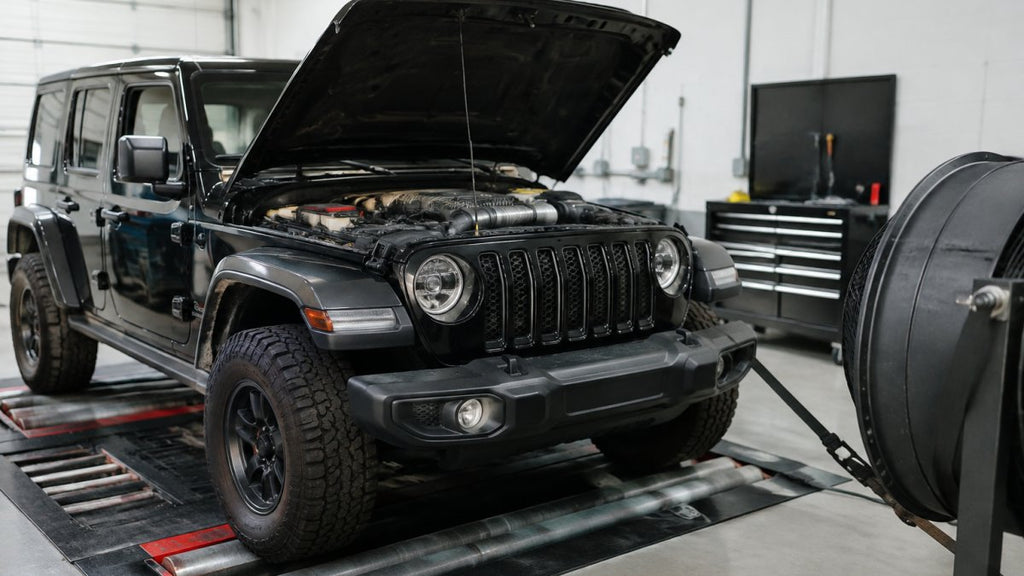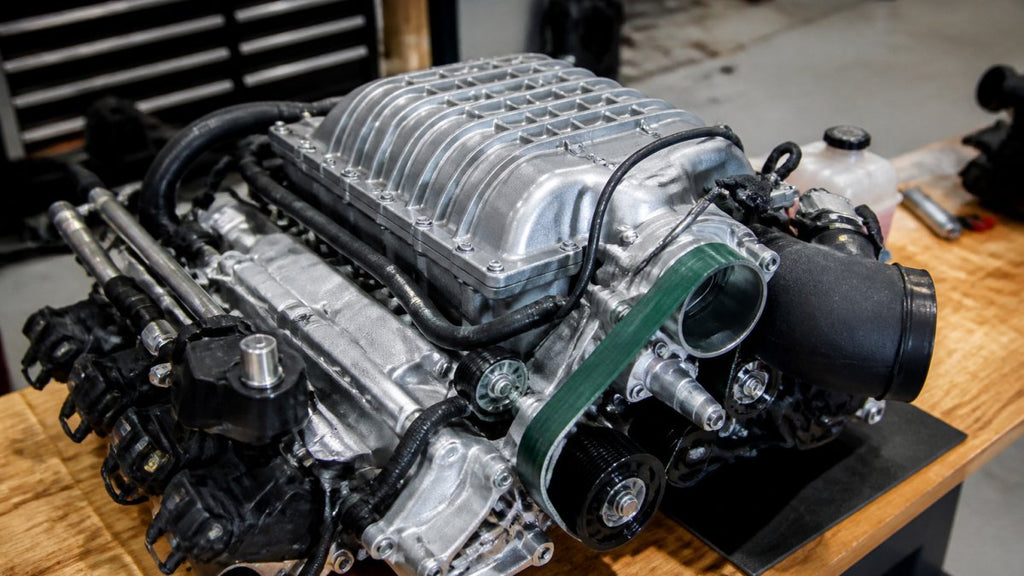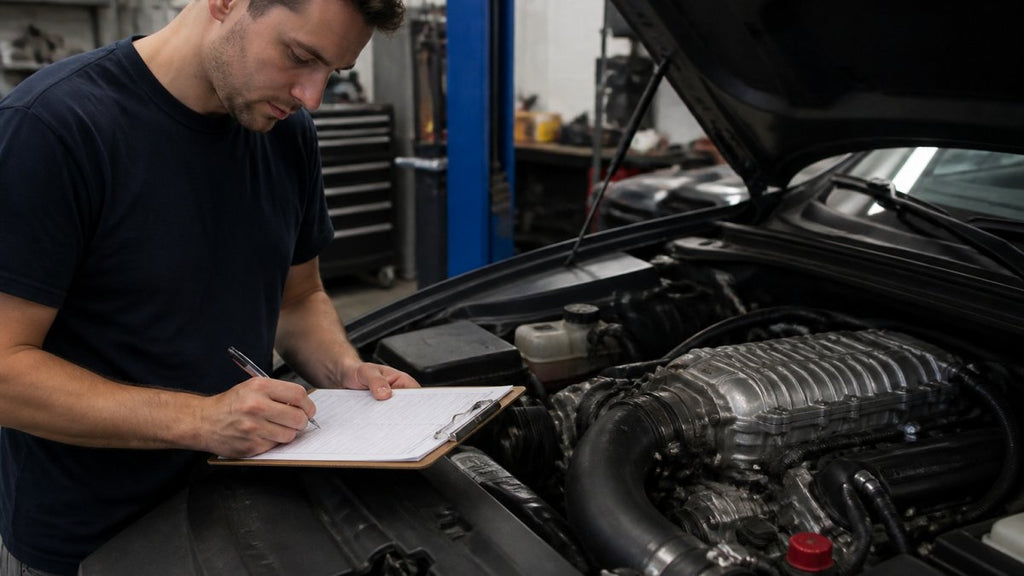
6 F-150 Supercharger Exhaust System Upgrade Steps
Last Updated: November 4, 2026
Quick Summary
A supercharger exhaust upgrade should start with a cat-back system, since it replaces the mid-pipe, muffler, and tailpipe where most restriction lives on a boosted F-150. Size the piping to your blower's airflow, typically 3.0-inch for most supercharged builds, and use 304 stainless steel with mandrel bends.
- Ford reports its 2026 F-150 supercharger kit produces 700 hp and 590 lb-ft of torque.
- Axle-back systems change sound profile more than airflow because they keep the factory mid-pipe.
- A 2.5-inch system suits mild boost and delivers strong low-end, while 3.5-inch suits high-horsepower builds.
- Inspect annually for stress cracks at weld beads and replace clamps showing surface pitting.
- Register your VT Superchargers kit before first startup to record the 24-month warranty.
Table of Contents
- Why a Supercharger Exhaust System Upgrade Matters
- Step 1: Set Your F-150 Supercharger Exhaust System Upgrade Cost Budget
- Step 2: Choose Cat-Back vs Axle-Back for Forced Induction
- Step 3: Match Exhaust Diameter and Flow to Your Boost Pressure
- Step 4: Follow These Performance Exhaust Installation Tips
- Step 5: Plan for Tuning, Emissions, and Long-Term Durability
- Step 6: Register Your VT Superchargers Kit Before the First Startup
- Frequently Asked Questions
Why a Supercharger Exhaust System Upgrade Matters
A supercharger exhaust system upgrade matters because forced induction pushes more air into the engine, and that air has to leave just as fast. Ford reports that its 2026 F-150 supercharger kit produces 700 hp and 590 lb-ft of torque, and at that output the factory exhaust becomes the narrowest part of the system. Owners who add boost without addressing the exhaust often find the truck feels restricted at higher rpm.
The exhaust is where the power gains get real or get lost. A cat-back exhaust system replaces everything from the catalytic converter rearward, while an axle-back swaps only the muffler and tailpipe section. For a supercharged truck, the cat-back is usually the smarter starting point because it addresses the muffler, resonator, and tailpipe restrictions in one move.
Below, we break the process into six steps, from budget to first startup, so you can plan the whole build before you buy a single part.
Backpressure vs. Scavenging in Forced Induction
Backpressure is the pressure that builds in the exhaust ahead of a restriction; scavenging is the low-pressure pulse that pulls burnt gas out of the cylinder during valve overlap. In a naturally aspirated engine, some backpressure helps scavenging. In a supercharged engine, that trade-off flips.
Positive manifold pressure means the cylinder has more to evacuate on every stroke. Excess backpressure then does two things: it traps hot gas in the chamber and it raises EGT (exhaust gas temperature). Higher EGT is the enemy of heat dissipation and long-term durability. The fix is exhaust flow, not noise. A larger diameter pipe with smooth, mandrel-bent curves keeps velocity high while dropping restriction.
This is the part most forum threads miss. Bigger is not automatically better; matched is better.
Step 1: Set Your F-150 Supercharger Exhaust System Upgrade Cost Budget
Budget the exhaust as part of the whole forced induction package, not as an afterthought.
Your exhaust line item depends on three choices:
- Cat-back vs. axle-back: cat-back costs more but unlocks more flow
- Material: 304 stainless steel outlasts aluminized steel in salt and heat
- Installation: DIY saves labor, professional install buys peace of mind
Pricing depends on your truck, configuration, and delivery details. For current pricing on our kits and how they pair with exhaust work, check the VT Superchargers website or request a quote.
Watch out: the cheapest cat-back on the market often uses crush-bent piping and thin flanges. It will fit poorly, drone at highway speed, and rust at the welds within a few winters.
Step 2: Choose Cat-Back vs Axle-Back for Forced Induction
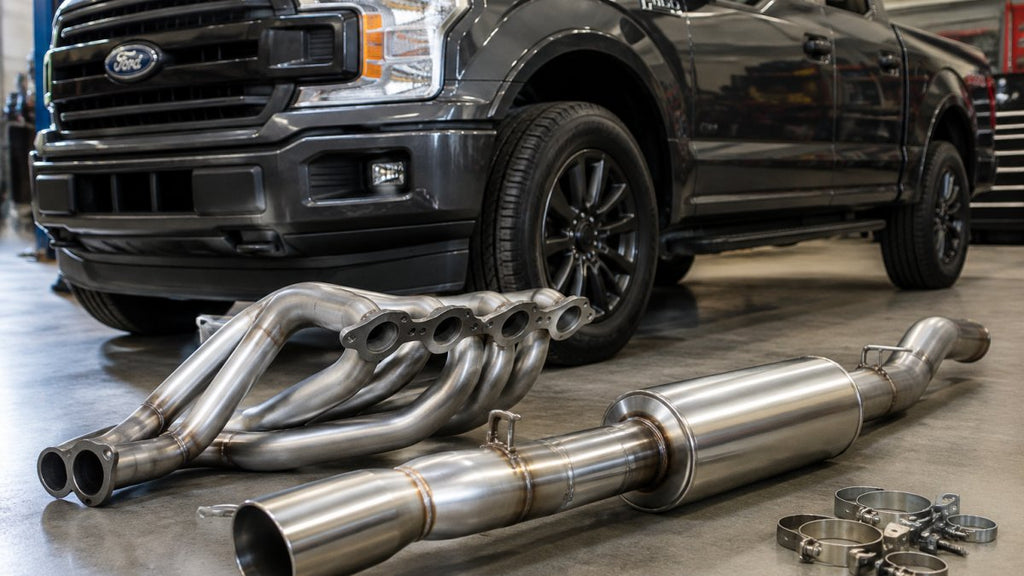
The cat-back vs axle-back for forced induction decision comes down to how much restriction you want to remove. An axle-back keeps the factory mid-pipe and resonator, so it changes sound profile more than airflow. A cat-back replaces the mid-pipe, muffler, and tailpipe, which is where most of the restriction lives on a boosted F-150.
For a truck running meaningful boost pressure, we recommend cat-back. The performance gain is measurable on a dyno, and the throttle response sharpens because the turbo or blower spools against less downstream pressure. Axle-back suits owners who want a deeper tone and a lower entry price, and it remains a valid choice if you plan to add a cat-back later.
Material and Diameter: Stainless Steel and Mandrel-Bent Piping
Stainless steel in 304 grade resists corrosion and handles high EGT far better than aluminized steel. Mandrel-bent piping keeps a consistent internal diameter through every curve, while crush-bent pipe pinches at the bend and costs you flow exactly where the exhaust is hottest.
Diameter should follow your power target:
- 2.5-inch: mild boost, stock-ish sound, strong low-end
- 3.0-inch: the sweet spot for most supercharged F-150 builds
- 3.5-inch and up: high-horsepower builds where downpipe and manifold work is also planned
Check the fitment notes for your cab and bed configuration before ordering. Crossover pipe routing differs between wheelbases.
Step 3: Match Exhaust Diameter and Flow to Your Boost Pressure
Match exhaust diameter to boost by sizing for the mass airflow your blower actually moves, not the biggest pipe that fits. This is the step where most builds go wrong, because the internet's default answer, go bigger, ignores how a supercharged engine behaves under load.
Start with the mechanism. A supercharger raises manifold pressure, which raises the mass of air and fuel burned per cycle. More burned mass means more exhaust gas volume at the same exhaust gas temperature, and that gas has to pass through the same pipe in the same window of time. Flow rate through a pipe scales with cross-sectional area times gas velocity.
The practical target is a pipe that keeps gas velocity high enough to scavenge but low enough that backpressure stays modest at redline. Selecting the right diameter is only the first step in ensuring your truck maintains factory-level fitment and reliability, which is why many enthusiasts prioritize premium exhaust upgrades that integrate seamlessly with existing chassis mounting points.
Sizing also depends on where the restriction lives. On a boosted F-150 the factory catalytic converters and the crimped section over the rear axle are common choke points, which is why a cat-back that replaces the mid-pipe and tailpipe often delivers more measurable gain than an axle-back that keeps the factory mid-pipe.
Watch out: oversizing the pipe on a low-boost build can reduce exhaust velocity and low-end torque, and a larger volume can resonate at highway speed. Match the pipe to the blower's airflow rather than to a number from an online thread.
If you want to understand how your chosen boost level affects engine life before you size the pipe, read our guide on how boost pressure affects engine longevity.
Here is how exhaust diameter lines up with boost level and build plans.
| Exhaust diameter | Best for | Note |
|---|---|---|
| 2.5-inch | Mild boost, stock-ish sound | Strong low-end |
| 3.0-inch | Most supercharged F-150 builds | Common single-system choice |
| 3.5-inch and up | High-horsepower builds | Pair with downpipe and manifold work |
| Dual 2.5-inch | Specific sound profile desired | Can be considered |
Step 4: Follow These Performance Exhaust Installation Tips
Performance exhaust installation tips start with safety and end with a leak check. Put the truck on jack stands or a lift on level ground, let the exhaust cool completely, and soak the factory flange bolts in penetrating oil the night before. Stainless hardware that has heat-cycled for years does not want to move.
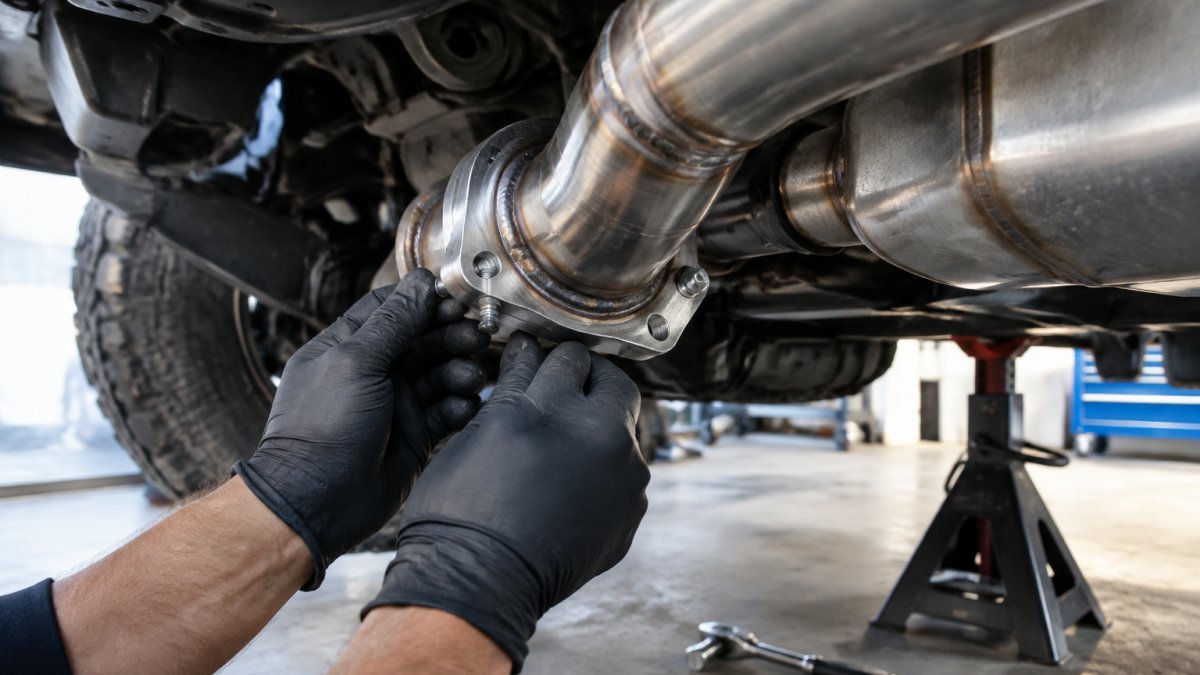
Work front to back. Support the old system with a jack before you cut or unbolt anything, then test-fit the new cat-back on the hangers before tightening a single clamp. A bolt-on kit should not require a hammer. If it does, the fitment is wrong or the truck is on uneven ground. For a fuller walkthrough, our DIY supercharger installation tips cover the habits that keep a bolt-on job clean, and what to expect during supercharger installation explains how a shop sequences the same work.
Common Mistakes to Avoid
- Reusing old gaskets and clamps, which causes leaks at the flange
- Tightening clamps before the system is aligned on its hangers
- Skipping the resonator delete decision, then complaining about drone
- Forgetting to disconnect the battery before welding near the ECU
Step 5: Plan for Tuning, Emissions, and Long-Term Durability
Plan tuning and emissions before the first startup, not after a check-engine light. A cat-back system that keeps the catalytic converter in place generally does not alter the emissions control hardware; confirm emissions compliance with your tuner and local inspection rules.
Tuning and calibration should account for the exhaust change, especially if you also changed the downpipe. Our guide on how to pass emissions with a supercharger walks through the readiness monitors and what inspectors actually check, and our article on whether forced induction voids your vehicle warranty covers the warranty question honestly.
Long-term durability is where supercharged trucks diverge from naturally aspirated ones, and it is the part most exhaust articles skip. A supercharger raises exhaust gas temperature because more fuel and air burn per cycle, and sustained high EGT accelerates two failure modes: oxidation of the pipe's inner surface and fatigue at welds and hangers.
Inspection should be annual and specific: check hanger condition, look for stress cracks at weld beads, and verify clearance near fuel lines and the transmission tunnel where heat shielding does the most work. Replace clamps rather than reusing them when you see surface pitting.
If you run E85, plan the fuel system and exhaust together. E85 delivers more charge cooling and allows more timing, which often means more boost and higher exhaust volume, so the exhaust you sized for pump gas may be undersized for an E85 calibration. E85 builds often require confirming fuel pump and injector capacity, and the exhaust may need to be sized for the higher airflow of an E85 calibration.
Watch out: a cat-back that fits perfectly on a stock truck can contact the frame or a heat shield once a supercharger kit changes engine movement under load, so recheck clearance after the first hard pull.
Step 6: Register Your VT Superchargers Kit Before the First Startup
Register your VT Superchargers kit before the first startup so your 24-month warranty is on record. Our kits are engineered for a precise, OEM-style fitment across a range of vehicle makes, and the 24-month warranty backs that engineering.
Here is our registration checklist:
- Record the kit serial number and purchase date
- Photograph the installed kit and the exhaust connection points
- Complete the registration form on the VT Superchargers site
- Save your calibration file and dyno sheet if you have one
- Note your installer, whether that is you or an approved shop
Financing and worldwide shipping are available, so the kit and exhaust work can be planned around one budget.
Frequently Asked Questions
Does a supercharged F-150 require a specific exhaust system?
Not always. A dedicated supercharger exhaust upgrade becomes worth it when you want a louder sound profile, lower backpressure at high boost, or a specific tailpipe and tip look. Start with your power target and sound preference, then size the piping to match.
How much horsepower does an exhaust upgrade add to a supercharged truck?
Exhaust sellers market sound and power improvements, but published exhaust-only horsepower figures for late-model F-150s are scarce. The bigger gains come from the supercharger itself: Treat exhaust as a supporting mod that helps airflow and sound, and ask for dyno results for your exact calibration before expecting a specific number.
What is the difference between cat-back and axle-back exhaust for F-150s?
A cat-back system replaces everything from the catalytic converter rearward, including the mid-pipe, muffler, resonator, and tailpipe, so it changes flow and sound the most. An axle-back kit swaps only the muffler and tailpipe behind the rear axle, which is cheaper and easier to install but leaves the factory mid-section in place. For a forced induction build chasing airflow, cat-back is the usual pick; for sound on a budget, axle-back works.
Will a new exhaust system void my VT Supercharger warranty?
VT Superchargers backs its bolt-on kits with a 24-month warranty. For coverage questions, including how an aftermarket exhaust may interact with your kit, confirm with VT Superchargers before you buy. If you are unsure about a specific part, confirm with VT Superchargers before you buy.
Building a supercharged F-150 that sounds right, breathes right, and holds together under heat takes planning, not just parts. VT Superchargers builds bolt-on kits with OEM-style fitment, a 24-month warranty, financing options, and a network of approved installers who know these trucks. Get started with VT Superchargers and register your kit before the first startup so your build is covered from day one.

Related post
02
Nov
26
Oct
RECENT POSTS