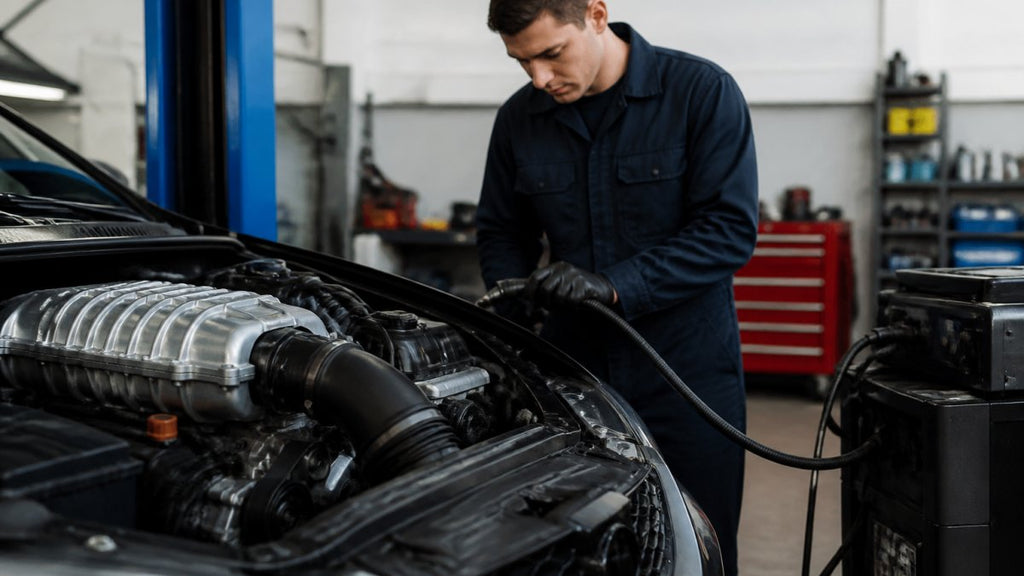
How to Pass Emissions With a Supercharger
Table of Contents
- Can a Supercharged Car Pass an Emissions Test?
- Start With a CARB-Approved Supercharger Kit
- Supercharger Emissions Test Readiness Monitors
- Your Emissions Test Preparation Checklist
- Supercharger Tune Emissions Compliance
- What Inspectors Check: Visual, OBD-II, and Tailpipe
- Bypassing or Removing Emissions Equipment: Risks and Legality
- Register Your Build and Plan Your First Test
- Frequently Asked Questions
Last Updated: November 2, 2026
Can a Supercharged Car Pass an Emissions Test?
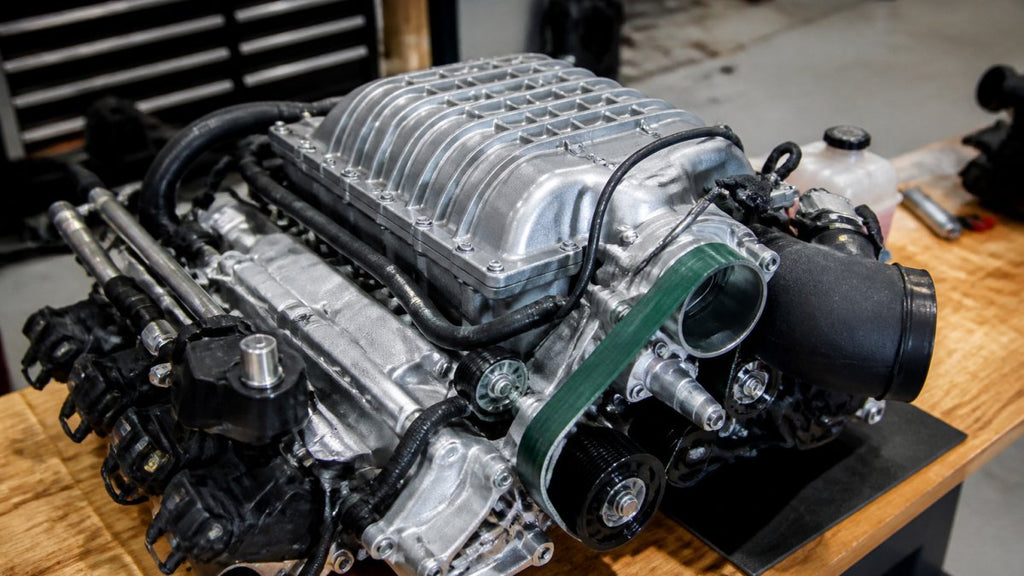
Yes, a supercharged car can pass an emissions test when it uses a legal kit and a tune that keeps the engine running clean. Passing comes down to three things: a certified kit, a stock-like calibration, and fully set readiness monitors. A legal kit and clean calibration are only part of passing emissions tests, since a check engine light can still affect the outcome even when the supercharger itself is compliant.
Here is the part most guides skip. A supercharger does not automatically fail you. An uncertified kit or a custom track tune does. According to Magnuson's guide to emissions-legal supercharger systems, not every kit on the market is compliant. You must check for a CARB Executive Order number before you buy.
At VT Superchargers, our bolt-on kits are available for a range of makes, including Dodge, Ford, Jeep, Mazda, Nissan, Suzuki, and Toyota. Power and legality are two separate jobs. Below, we walk through each step, from picking a certified kit to timing your retest.
Start With a CARB-Approved Supercharger Kit
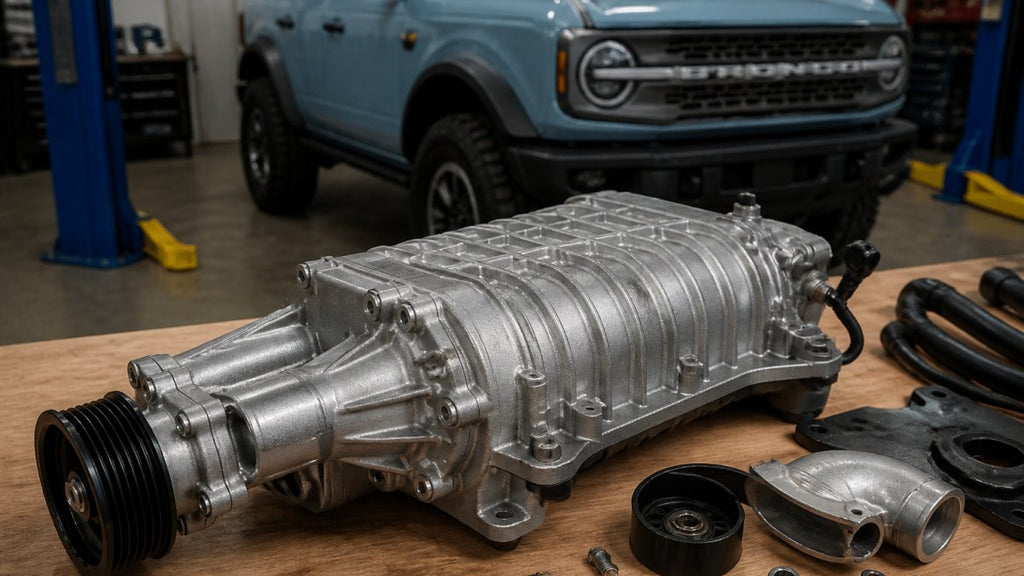
The fastest path to a pass starts at the point of sale. A CARB-approved supercharger kit carries an Executive Order number, which means the manufacturer proved the system meets emissions standards on a specific engine.
Check three things before you order:
- The EO number covers your exact year, make, model, and engine
- The kit includes the tune the manufacturer tested with
- The seller lists the EO in writing, not just "50-state legal" in a headline
Manufacturers now release systems with CARB Executive Orders for recent model years, including 2024-2026 F-150 applications (ProCharger's CARB-certified systems, 2026). That trend helps, but the EO still has to match your vehicle.
Buying used? Our used supercharger kit inspection guide covers what to check before money changes hands.
Supercharger Emissions Test Readiness Monitors
Readiness monitors are the self-tests your engine computer runs to confirm the emissions systems work. If they are not set, the inspection station cannot pass you, even with a clean tailpipe. Most newer vehicles are now tested through a computer scan rather than a tailpipe probe (5250 Performance's overview of OBD2 testing, 2024). That makes monitors the whole game.
Not all monitors behave the same way, and that difference decides how you prepare:
- Continuous monitors (misfire, fuel system, comprehensive component) run constantly once the engine is warm and usually set within a short drive.
- Non-continuous monitors (catalyst, oxygen sensor, oxygen sensor heater, EVAP, EGR, secondary air) each need a specific drive cycle, a defined pattern of cold start, idle, steady cruise, and decel, before they report "ready."
- The catalyst and EVAP monitors are the slow ones. The catalyst monitor needs a sustained closed-loop cruise to compare upstream and downstream oxygen sensor signals, and the EVAP monitor needs a cold soak followed by a specific fuel-tank pressure test. On a supercharged build, a larger injector or a revised intake path can stretch the time these take to set.
A common pattern is that owners clear codes or disconnect the battery to "start fresh" right before a test. That is the single most reliable way to fail. Clearing codes wipes every monitor back to "not ready," and the station will reject the car on readiness alone, before it ever looks at the tailpipe.
Here is the sequence most practitioners recommend:
- Install the kit and the matching EO-covered tune.
- Clear any codes once, confirm no check engine light, and then leave the battery and ECU alone.
- Drive a full mixed cycle, a cold start, 20-30 minutes of city stop-and-go, then 20-30 minutes of steady highway cruise, and repeat over several days rather than one long trip.
- Scan with your own OBD-II tool and confirm every monitor your state requires shows "ready."
- Only then book the appointment.
Watch out: some states allow one or two monitors to be incomplete, but the allowance varies, check your state's rule before you assume an incomplete monitor is acceptable.
If a monitor refuses to set after several drive cycles, the cause is usually a real fault, not bad luck: a lazy oxygen sensor, a small EVAP leak, or a tune that holds the engine out of the conditions the monitor needs. Diagnose it before the test rather than hoping it sets on the way in. After a repair, expect to repeat the full drive cycle and allow a few days of driving before the retest, a monitor that was just reset will not be ready the same afternoon.
Readiness monitors decide whether the scan stage passes, so here is how each type behaves and what it needs.
| Monitor type | Examples | What it needs to set |
|---|---|---|
| Continuous | Misfire, fuel system, comprehensive component | Runs constantly once the engine is warm |
| Non-continuous | Catalyst, oxygen sensor, oxygen sensor heater, EVAP, EGR, secondary air | A specific drive cycle: cold start, idle, steady cruise, decel |
| Catalyst (slow) | Catalyst monitor | Sustained closed-loop cruise comparing upstream and downstream O2 signals |
| EVAP (slow) | EVAP monitor | Cold soak followed by a specific fuel-tank pressure test |
Your Emissions Test Preparation Checklist
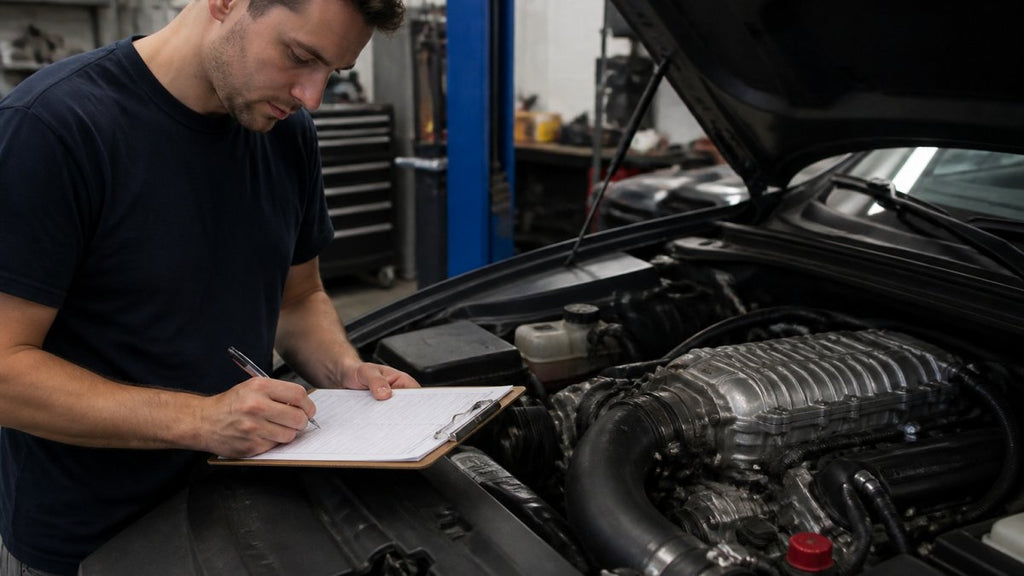
Run this checklist the week before your appointment. It takes an hour and saves a second trip.
- Confirm your kit's EO number matches your VIN and engine
- Scan for stored and pending diagnostic trouble codes
- Confirm all readiness monitors show "ready" except any your state allows to be incomplete
- Check the check engine light is off at startup
- Make sure the catalytic converter is the stock unit or a CARB-approved replacement
- Confirm no test pipes are installed
- Verify charge piping and bypass valve are secure with no leaks
- Check the engine reaches full operating temperature on the drive in
Watch out: a loose charge pipe clamp can trigger a lean code and fail you on the scan. Recheck every clamp after the first 50 miles.
Supercharger Tune Emissions Compliance
The tune decides whether your supercharger passes or fails. A stock-style emissions tune keeps fuel mixture and timing close to factory targets. A track tune does the opposite.
Ask your tuner one question: "Is this calibration the one covered by the EO?" If the answer is no, you have a problem in any state that follows CARB standards.
You have two clean options:
- Flash back to the EO-matched tune before testing
- Keep the compliant tune as your daily calibration and save the aggressive map for off-road use
For Mazda 2.0L and 2.5L owners, our Mazda supercharger tuner kit ships with the cable, tuning software, and off-the-shelf supercharger tuning service in one box, so the calibration matches the hardware.
What Inspectors Check: Visual, OBD-II, and Tailpipe
Inspectors look at three things: what is bolted on, what the computer reports, and what comes out of the tailpipe. Each stage can fail you on its own, and each failure points to a different fix. Knowing which stage you failed is the difference between a quick correction and a wasted second trip.
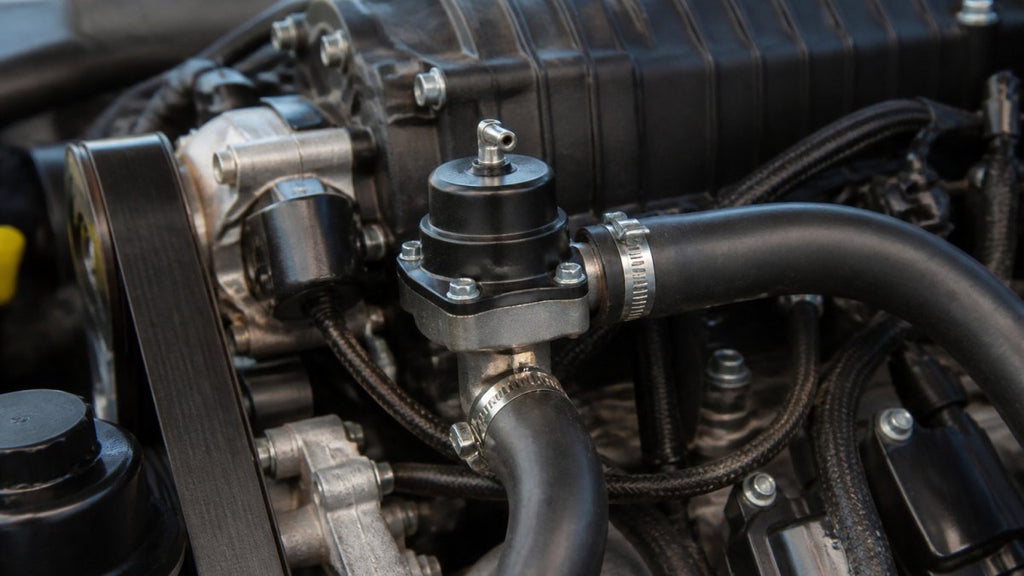
Visual inspection confirms the supercharger hardware is present, secure, and matches a legal configuration. Missing emissions parts, like a catalytic converter or an air pump, get flagged here. If you are unsure how your bypass valve should look under the hood, our supercharger bypass valve guide explains its function.
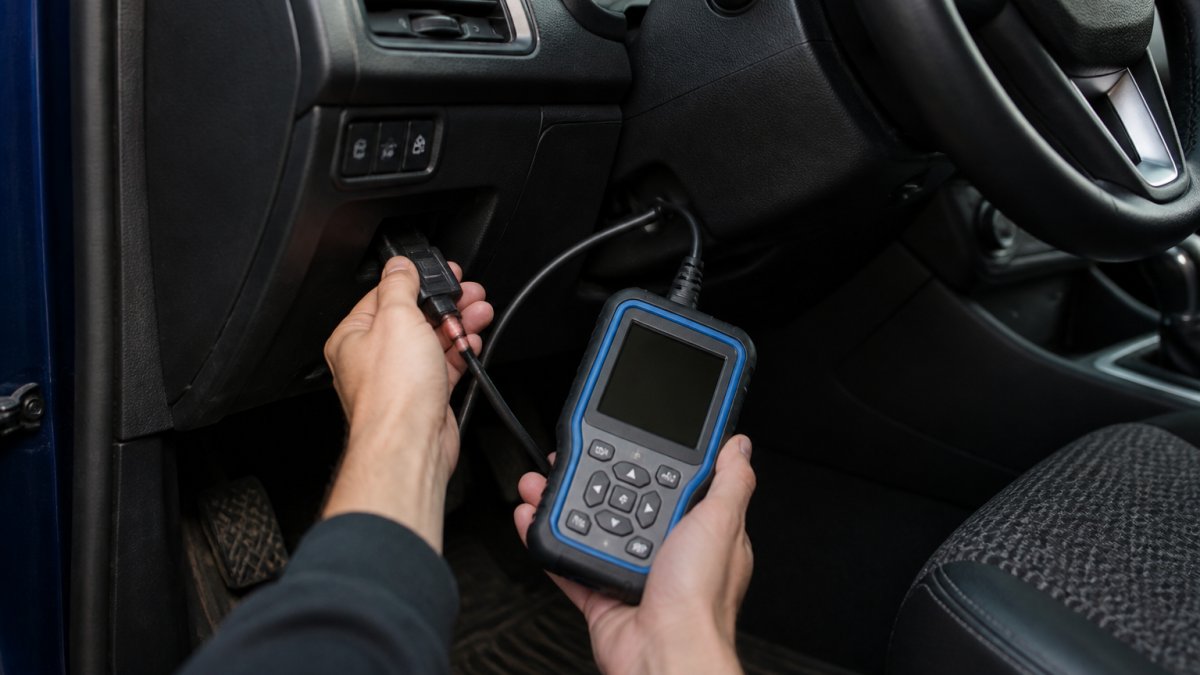
OBD-II scan reads readiness monitors and trouble codes. Any stored code is a fail in most states, and an incomplete monitor can be a fail depending on your state's allowance.
Tailpipe test measures exhaust emissions directly. A rich or poorly tuned calibration shows up here as high hydrocarbons or carbon monoxide.
When a test fails, work backward from the result:
- Visual fail, missing or modified part. The fix is hardware, not tuning. Reinstall the stock or CARB-approved component, confirm the kit's EO still covers the configuration, and recheck clamps and connections. Do not try to talk the inspector past a missing catalyst; that is a tampering issue, not a paperwork one.
- Visual fail, present but not matching the EO. If the installed kit or pulley does not match the Executive Order, the inspector can flag it even with everything bolted on. Return to the EO-covered configuration before retesting.
- OBD-II fail, stored or pending code. Read the code, fix the underlying cause, clear it once, and then run the full drive cycle to reset monitors. A pending code that has not yet lit the check engine light will still fail a scan in many states.
- OBD-II fail, monitors not ready. This is a timing problem, not a hardware one. Drive the full mixed cycle described above and rescan before booking. Do not clear codes again.
- Tailpipe fail, high hydrocarbons. Usually unburned fuel: a rich tune, a misfire, or a failing catalyst. Confirm the EO tune is loaded and the ignition system is healthy before blaming the converter.
- Tailpipe fail, high carbon monoxide. Usually an overly rich mixture at idle or cruise. A stock-style emissions calibration rather than a track map is the first thing to check.
- Tailpipe fail, high oxides of nitrogen. Usually excessive combustion temperature from aggressive timing or a lean condition under load. This is where a custom tune most often shows up, and where returning to the EO-matched calibration matters most.
Watch out: a loose charge pipe clamp can trigger a lean code and fail you on the scan, and the same leak can push tailpipe numbers out of range, recheck every clamp after the first 50 miles and again before the test.
If you fail the same stage twice, stop guessing. Scan for live data, confirm the tune matches the EO, and treat any repeated tailpipe failure as a signal to have the calibration reviewed rather than to add parts.
Bypassing or Removing Emissions Equipment: Risks and Legality
Removing emissions equipment is generally illegal for road use, and it is a bad trade. Test pipes, deleted catalytic converters, and O2 sensor simulators can fail you on the visual and scan stages.
One owner on a Reddit mechanic community took the honest route: they removed the supercharger hardware and reflashed the ECU to the stock tune to pass. It worked. It also cost them a weekend and a retune.
The better plan is to build legal from day one. A certified kit with a matched tune needs no workaround.
Register Your Build and Plan Your First Test
Timing matters as much as hardware. Book your inspection for a day when you can drive 30 minutes beforehand, so the engine and catalytic converter reach full temperature.
Then register your build with us. Registering your build connects you to approved installers.
Frequently Asked Questions
Can a supercharged car pass an emissions test?
Yes, if the supercharger kit is CARB-approved or 50-state legal, the tune keeps the check engine light off, and all readiness monitors are set. A supercharged car goes through the same OBD-II or tailpipe test as a stock vehicle. The key is starting with a compliant kit and verifying its exemption number before installation.
Do emissions inspectors check whether a supercharger is CARB-approved?
Yes. During the visual inspection, inspectors look for an exemption number or CARB Executive Order sticker on the supercharger kit. If the kit lacks that certification, the vehicle fails the visual portion regardless of tailpipe or OBD-II results. Keep the EO documentation with the vehicle and make sure the sticker is visible.
How long does it take for emissions readiness monitors to reset after a supercharger install?
Plan on driving a mix of city and highway miles to set readiness monitors. A supercharger install or ECU reflash can clear those monitors, so drive a mix of city and highway cycles before your test. A scan tool can confirm monitor status before you visit the station.
Can a supercharged car pass emissions with the check engine light on?
No. A check engine light means at least one diagnostic trouble code is stored, and most states fail a vehicle automatically for an illuminated light. Scan the codes, fix the underlying issue, clear the codes, and complete a drive cycle to reset monitors before retesting. Do not clear codes right before the test, because monitors will read as not ready.
Passing emissions with a supercharger is a planning problem, not a power problem. We can help you get it right the first time. VT Superchargers offers bolt-on kits with OEM-style fitment, a 24-month warranty, and financing options, plus approved installers who know what inspectors look for. Get started with VT Superchargers and register your build today.

Related post
02
Nov
26
Oct
23
Oct
RECENT POSTS