How Boost Pressure Affects Engine Longevity
Table of Contents
- How Boost Pressure Directly Stresses Engine Components
- Safe Boost Levels for Stock Internals
- The Role of Lubrication and Oil Quality
- Preventative Maintenance for Forced Induction
- Signs of Turbo Failure and Engine Wear
- Real-World Longevity Data on Modern Boosted Engines
- Frequently Asked Questions
Last Updated: September 2, 2026
How Boost Pressure Directly Stresses Engine Components
Boost pressure fundamentally changes how an engine operates. By forcing additional air into the combustion chamber, you're increasing the mass of fuel and oxidizer burned in each cycle, which means higher combustion temperatures, faster pressure rise rates, and greater mechanical loads on every internal component. Understanding how boost pressure affects engine longevity starts here: at the physics of what happens inside the cylinder when you add forced induction.
According to research on turbocharger durability, approximately 90% of turbocharger failures stem not from the turbo itself, but from contaminated oil carrying metal particles and carbon deposits into the bearing assembly. This reveals a critical truth: boost pressure doesn't kill engines directly, it amplifies the consequences of inadequate maintenance and cooling. When you run boost, every system that supports combustion must perform flawlessly.
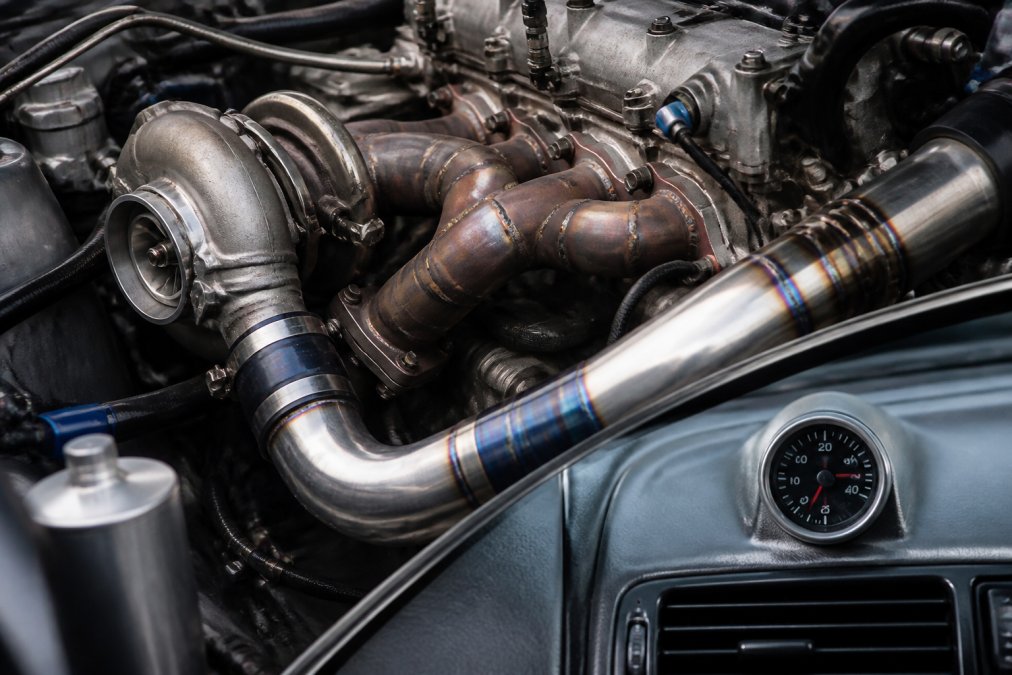
Cylinder Pressure and Mechanical Load
Cylinder pressure is the direct result of boost. A naturally aspirated engine typically sees peak pressures around 1,000-1,200 psi during combustion. Add 10 psi of boost, and you're forcing more air molecules into that same space, raising peak cylinder pressure to 1,400-1,600 psi or higher. This increased pressure translates into greater force pushing down on the piston, pulling on the connecting rod, and compressing the bearings that support the crankshaft.
The mechanical load scales nonlinearly. A modest 5 psi of boost doesn't add 5% stress, it adds significantly more because pressure rise rate matters as much as peak pressure. Faster pressure rise means sharper loads on components. Stock internals, pistons, rods, and bearings, are engineered with safety margins for naturally aspirated operation. Boost consumes that margin. How much margin remains depends on the engine's design, the boost level applied, and how aggressively you drive.
VT Superchargers designs its kits to operate at conservative boost levels, typically 5-7 psi for most applications. This approach keeps cylinder pressures within safe limits for stock internals while still delivering meaningful power gains. The engineering philosophy is straightforward: real performance without sacrificing reliability.
Thermal Stress and Heat Generation
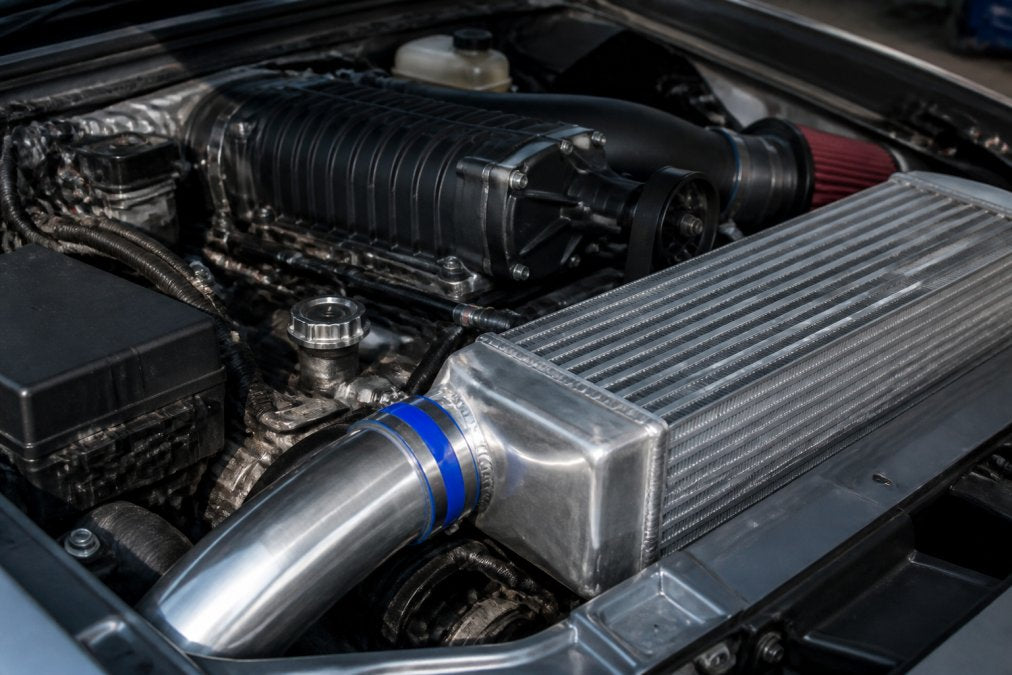
Heat is the silent killer in boosted engines. A turbocharger spins at over 100,000 RPM, driven by exhaust gases that can exceed 1,800°F. This generates intense heat in the turbine housing, which radiates into the engine bay and raises coolant temperatures. Superchargers generate heat through compression, forcing air into a smaller space heats it, requiring intercoolers to bring temperatures back down before that air enters the engine.
Elevated combustion temperatures accelerate chemical degradation of oil, reduce the film strength of your lubricant, and increase thermal stress on gaskets, seals, and cylinder head fasteners. According to energy loss analysis in worn engines, blow-by losses, unburned gas escaping past piston rings, increase significantly in boosted engines operating at higher temperatures. In an unworn engine, blow-by represents 1.5-5% of indicated work. After 300,000 km of operation, these losses jump to 2.5-7.5%, directly correlating with thermal and pressure cycling.
The consequence: without proper cooling upgrades, a boosted engine ages faster. Coolant temperature creep of just 10-15°F can reduce oil life by 50%. This is why thermal management separates reliable boosted builds from unreliable ones.
Safe Boost Levels for Stock Internals
The question every enthusiast asks: how much boost can my stock engine handle? The honest answer is context-dependent, but there's a useful threshold to understand.
Stock engines are engineered with safety margins for naturally aspirated operation. Most modern stock engines can tolerate 5-8 psi of boost before cylinder pressures approach the limits of their design. Beyond 10 psi, you're pushing into territory where piston and rod loads exceed OEM specifications. This doesn't mean the engine will fail immediately, many drivers run 12+ psi on stock internals without catastrophic failure. But you're operating outside the design envelope, accumulating fatigue damage with every heat cycle.
The real risk isn't a single boost spike. It's cumulative thermal and mechanical fatigue. Short commutes, under 15 minutes in cold weather, are particularly damaging for boosted engines. The engine never reaches optimal operating temperature, oil never fully warms, and combustion efficiency suffers. Unburned fuel washes past cold piston rings, contaminating the oil and reducing its protective film. This accelerates bearing wear dramatically.
If your vehicle has stock internals and you're considering forced induction, stay conservative. 5-7 psi is the safe zone where you gain real performance without compromising longevity. VT Superchargers kits are calibrated to operate within this window, prioritizing the balance between performance and reliability.
| Boost Level | Stock Engine Risk | Reliability Window | Recommended Use |
|---|---|---|---|
| 0-5 psi | Minimal | Safe indefinitely | Daily drivers, conservative builds |
| 5-8 psi | Low | Safe with maintenance | Performance daily drivers |
| 8-12 psi | Moderate | Limited lifespan | Track use, short-term gains |
| 12+ psi | High | Expect failures | Built engines only |
The Role of Lubrication and Oil Quality
Oil is the single most critical factor determining how long a boosted engine lasts. It's not hyperbole, it's physics. Oil carries away heat, reduces friction, and protects bearing surfaces from metal-to-metal contact. In a boosted engine operating at higher pressures and temperatures, oil does more work and degrades faster.
Synthetic oils are not optional for forced induction. Conventional mineral oil breaks down under the thermal stress of boost, losing viscosity and film strength. Synthetic formulations maintain viscosity across wider temperature ranges and resist oxidation far longer. A quality synthetic oil rated for your engine's viscosity specification will extend turbo life by thousands of miles compared to conventional oil.
Oil change intervals also matter. Standard intervals of 5,000-7,500 miles are aggressive for boosted engines. Many forced induction specialists recommend 3,000-5,000 mile intervals, or follow the manufacturer's severe-duty recommendations if available. This isn't just about oil degradation, it's about preventing the 90% failure mode we mentioned earlier: oil contamination. Fresh oil means fewer metal particles and carbon deposits circulating through your turbo bearings.
Additionally, oil flow to the turbocharger must be adequate. Turbos require pressurized oil for bearing lubrication. Restrictive oil supply lines, clogged filters, or inadequate oil pressure reduce bearing film strength and accelerate wear. When you install a forced induction system, verify that oil supply and return lines are properly sized and routed without kinks or restrictions.
Preventative Maintenance for Forced Induction
A boosted engine demands a more rigorous maintenance schedule than a naturally aspirated engine. This isn't negotiable, it's the cost of performance.
Oil Change Intervals and Synthetic Requirements
Change your oil every 3,000-5,000 miles if you're running boost regularly. Use a full synthetic oil meeting your engine manufacturer's viscosity and performance specifications. Check your oil level before every drive, boosted engines can consume oil slightly faster due to increased blow-by. If you's seeing oil level drops between changes, investigate for leaks or excessive blow-by before it becomes a larger problem.
Oil filters deserve attention too. Use OEM-quality filters or equivalent aftermarket units designed for high-flow applications. A clogged filter restricts oil flow, starving the turbo of lubrication. Replace your filter every oil change, and consider upgrading to a larger capacity filter if your engine supports it.
Synthetic oil isn't just a recommendation, it's mandatory. The thermal stability of synthetic formulations is non-negotiable when running boost. A quality synthetic rated for your engine will cost $30-50 more per oil change than conventional oil. Over the life of your engine, that's insurance against premature turbo failure.
Cooling System Upgrades and Thermal Management
Stock cooling systems are designed for naturally aspirated operation. Boost adds heat, and stock radiators often can't handle it. Upgrade to a larger capacity radiator, or at minimum, add a quality auxiliary fan controller that engages cooling fans at lower temperatures.
Intercoolers are equally critical. A turbocharger compresses air, raising its temperature. An intercooler cools that compressed air before it enters the engine, improving density and reducing combustion temperatures. Larger intercoolers with higher fin density dissipate more heat but introduce slight turbo lag. The trade-off is worth it: lower charge air temperatures mean lower peak combustion temperatures and reduced thermal stress on internal components.
Monitor coolant temperature obsessively. Install a quality digital gauge or use your engine management system's data logging to track peak coolant temperatures during driving. Sustained temperatures above 220°F indicate your cooling system is struggling. Address this immediately, either upgrade cooling capacity or reduce boost levels.
Coolant quality matters as well. Use a high-quality coolant designed for your engine, and flush the system every two years. Degraded coolant loses heat transfer efficiency and can cause deposits that restrict flow.
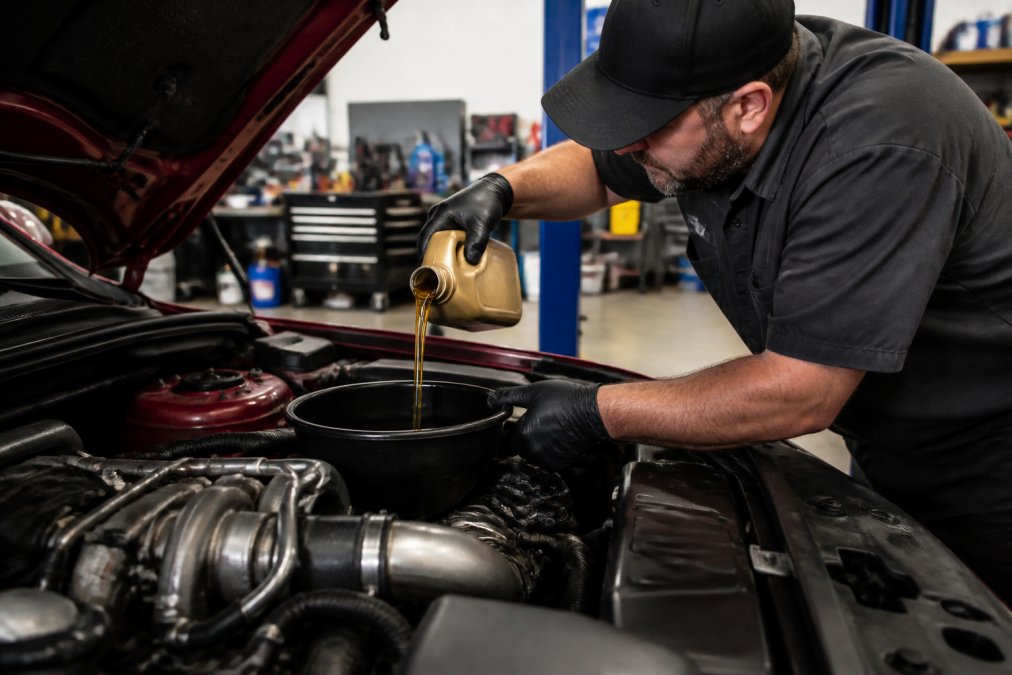
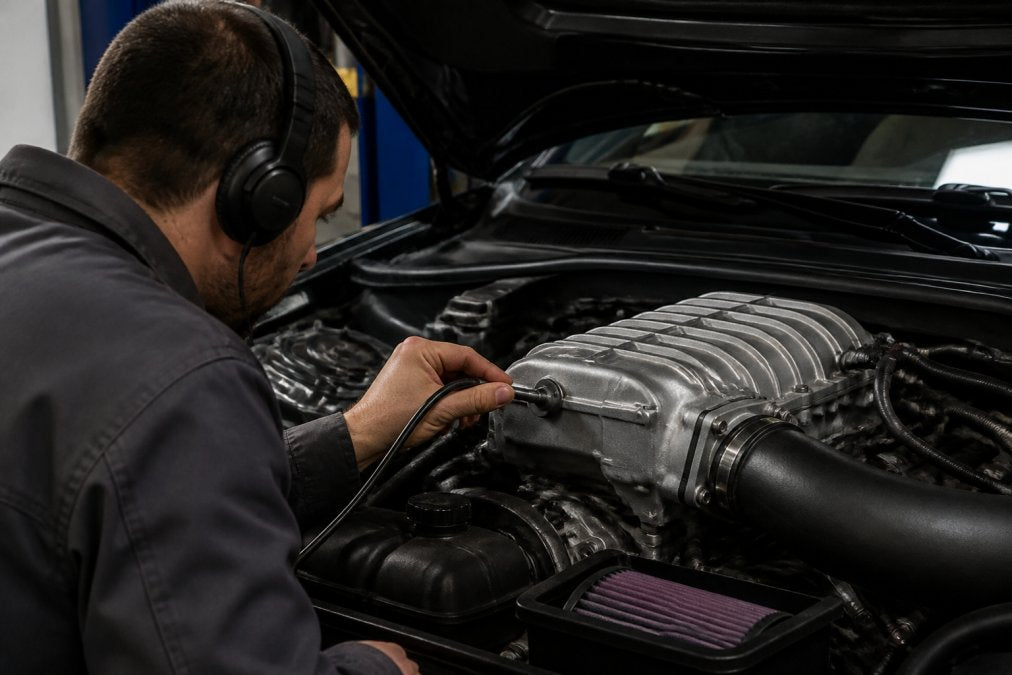
Signs of Turbo Failure and Engine Wear
Catching problems early is the difference between a $500 repair and a $5,000 engine rebuild. Learn to recognize the warning signs.
Blue or white smoke from the exhaust indicates oil burning. This can mean turbo seal failure, where oil leaks past bearing seals and enters the combustion chamber. Early detection allows you to replace the turbo before internal engine damage occurs.
Loss of boost pressure suggests turbo degradation. If your boost gauge shows 7 psi when it should read 10 psi, the turbo is losing efficiency. Compressor wheel wear or bearing play causes this. Don't ignore it, continued operation accelerates failure.
Knocking or pinging under load is a sign of detonation. This means combustion is occurring too aggressively, likely from excessive boost, poor fuel quality, or overly aggressive tuning. Detonation damages piston crowns and can crack pistons. Reduce boost immediately and investigate the cause.
Turbo whine that changes pitch or becomes louder indicates bearing wear. As bearing clearances increase, the turbo shaft moves more, creating different noise patterns. This is a final warning, replace the turbo soon.
Oil in the intercooler or intake piping means turbo seal failure. Inspect the intercooler by removing the piping and looking inside. Any oil accumulation requires turbo service.
Real-World Longevity Data on Modern Boosted Engines
The data tells an encouraging story if you understand how to read it. According to turbocharger lifespan research, turbos last up to 150,000 miles on average, but with proper care, they may reach 200,000 miles or maintain a 30-year lifespan. This assumes good maintenance, conservative boost levels, and quality supporting modifications.
Real-world case studies support this. Porsche's 3.6L Mezger twin-turbo engine, used in the 2002 911, earned a reputation as "bulletproof" and regularly achieves 300,000+ miles with proper maintenance. Toyota's 2JZ-GTE engine, famous in tuning circles, demonstrates that well-engineered turbocharged engines can exceed 300,000 miles when cooling and head bolt torque are properly addressed.
However, not all boosted engines thrive. A 2022 Ford F-150 equipped with a 2.7-liter EcoBoost V6 catastrophically failed at 110,000 miles despite diligent maintenance above recommended intervals. The cause: a burnt exhaust valve, suggesting cooling or fueling issues that went unaddressed. This case illustrates a critical truth: even modern engines with forced induction can fail prematurely if supporting systems are inadequate or if early warning signs are ignored.
The pattern is clear. Modern downsized turbocharged engines, the 2.0L and 2.7L variants now common in trucks and sedans, can achieve 200,000+ miles, but only with conservative boost calibration, synthetic oil, upgraded cooling, and meticulous maintenance. Short commutes in cold climates accelerate wear significantly. Long highway drives at steady throttle are gentler on boosted engines than city driving with frequent boost cycling.
VT Superchargers kits operate within this reliable zone. By limiting boost to 5-7 psi and engineering for OEM-standard fitment, the kits preserve engine longevity while delivering real performance. The 24-month warranty reflects confidence in this engineering approach.
How boost pressure affects engine longevity depends entirely on how you manage the stresses it creates. Boost itself isn't the enemy, inadequate cooling, poor oil quality, neglected maintenance, and aggressive tuning are. Conservative boost levels, synthetic oil, upgraded cooling, and diligent maintenance practices will allow your engine to thrive for 200,000+ miles.
If you're ready to add performance to your vehicle without sacrificing reliability, VT Superchargers bolt-on kits deliver real horsepower gains while maintaining compatibility with stock internals. Our kits operate at proven boost levels with OEM-style fitment, backed by a 24-month warranty and accessible financing options. Whether you're upgrading a daily driver or an off-road build, the engineering is designed for both performance and longevity. Register today to explore kits engineered for your specific vehicle make.
=== FAQ ANSWERS (audit these too, same rules) ===
[1] Q: How much horsepower will 5 psi of boost add to my engine? A: Horsepower gains depend on your engine size and fuel system. Generally, 5 psi of boost can add 20-40 horsepower on naturally aspirated engines. However, forced induction systems like superchargers deliver boost pressure proportional to engine speed. A VT Supercharger kit operates at 5-7 psi with proven ECU tuning, allowing reliable power gains while maintaining engine longevity through controlled boost pressure and excellent cooling.
[2] Q: How much boost pressure is too much for a stock engine? A: Stock engines are designed for naturally aspirated operation. Most stock internal components can safely handle 6-8 psi of boost without modification, depending on compression ratio and engine design. Beyond 10 psi, stock pistons, rods, and head gaskets face significant risk. VT Supercharger kits are engineered to operate within safe pressure ranges with OEM-style fitment, ensuring your stock engine stays protected while delivering real performance gains.
[3] Q: Can turbocharged engines last 200,000 miles or more? A: Yes. Turbos last up to 150,000 miles on average, but with proper maintenance, they can reach 200,000 miles or even 30 years of service. The real threat is oil contamination, which causes 90% of turbocharger failures. Oil contaminated with metal particles and carbon deposits damages the bearing assembly. Synthetic oil, regular changes, and quality cooling systems are critical. Peter Gilbert's 1989 Saab 900 SPG turbo exceeded one million miles through diligent maintenance, proving longevity is achievable.
[4] Q: What are the main signs my turbo or supercharger is failing? A: Watch for blue or white smoke from the exhaust, loss of power despite boost gauge readings, oil leaking from turbo seals, unusual whining or grinding noises, and reduced throttle response. These indicate bearing wear, seal failure, or internal damage. If you notice these signs, have the system inspected immediately to prevent catastrophic engine damage.
Frequently Asked Questions
How much horsepower will 5 psi of boost add to my engine?
Horsepower gains depend on your engine size and fuel system. Generally, 5 psi of boost can add 20-40 horsepower on naturally aspirated engines. However, forced induction systems like superchargers deliver boost pressure proportional to engine speed. A VT Supercharger kit operates at 5-7 psi with proven ECU tuning, allowing reliable power gains while maintaining engine longevity through controlled boost pressure and excellent cooling.
How much boost pressure is too much for a stock engine?
Stock engines are designed for naturally aspirated operation. Most stock internal components can safely handle 6-8 psi of boost without modification, depending on compression ratio and engine design. Beyond 10 psi, stock pistons, rods, and head gaskets face significant risk. VT Supercharger kits are engineered to operate within safe pressure ranges with OEM-style fitment, ensuring your stock engine stays protected while delivering real performance gains.
Can turbocharged engines last 200,000 miles or more?
Yes. Turbos last up to 150,000 miles on average, but with proper maintenance, they can reach 200,000 miles or even 30 years of service. The real threat is oil contamination, which causes 90% of turbocharger failures. Oil contaminated with metal particles and carbon deposits damages the bearing assembly. Synthetic oil, regular changes, and quality cooling systems are critical. Peter Gilbert's 1989 Saab 900 SPG turbo exceeded one million miles through diligent maintenance, proving longevity is achievable.
What are the main signs my turbo or supercharger is failing?
Watch for blue or white smoke from the exhaust, loss of power despite boost gauge readings, oil leaking from turbo seals, unusual whining or grinding noises, and reduced throttle response. These indicate bearing wear, seal failure, or internal damage. If you notice these signs, have the system inspected immediately to prevent catastrophic engine damage.
This article was written using GrandRanker
Related post
RECENT POSTS