How to Choose Off-Road Tires for Heavy Overland Builds
Last Updated: October 28, 2026
Quick Summary
The best off-road tires for heavy overland builds are all-terrains with a load index and load range matched to your real loaded axle weights, not the door-jamb sticker. Weigh each axle fully loaded, divide by two, add 10-15% headroom, then choose a tire that leaves margin at your highway pressure.
- Load index is a numeric code for maximum weight per tire; load range letters C, D, and E describe carcass strength.
- Most heavy-build tire failures start as heat from underinflation, not from cuts.
- A tread-area puncture is often repairable; sidewall, shoulder, or bead damage usually is not.
- Carry a full-size spare matched to your set and rotate it in.
- Heavy builds with full water and fuel typically need load range E or a high load index.
Table of Contents
- Why Heavy Overland Builds Need Off-Road Tires Rated for Real Weight
- Best All-Terrain Tires for Overlanding: The Daily-Driver Compromise
- All-Terrain vs. Mud-Terrain Tires for Overlanding: Matching Tread to Terrain
- Overlanding Tires for Heavy Loads: Sidewall, Puncture Resistance, and Durability
- Overland Tire Load Rating: How to Read the Sidewall and Match Your Axle Weight
- Tire Size, Fitment, and Pressure for Loaded Rigs
- Total Cost of Ownership: Tread Life, Fuel Economy, and Spare Strategy
- Register Your Build and Get Fitment Support
- Frequently Asked Questions
Why Heavy Overland Builds Need Off-Road Tires Rated for Real Weight
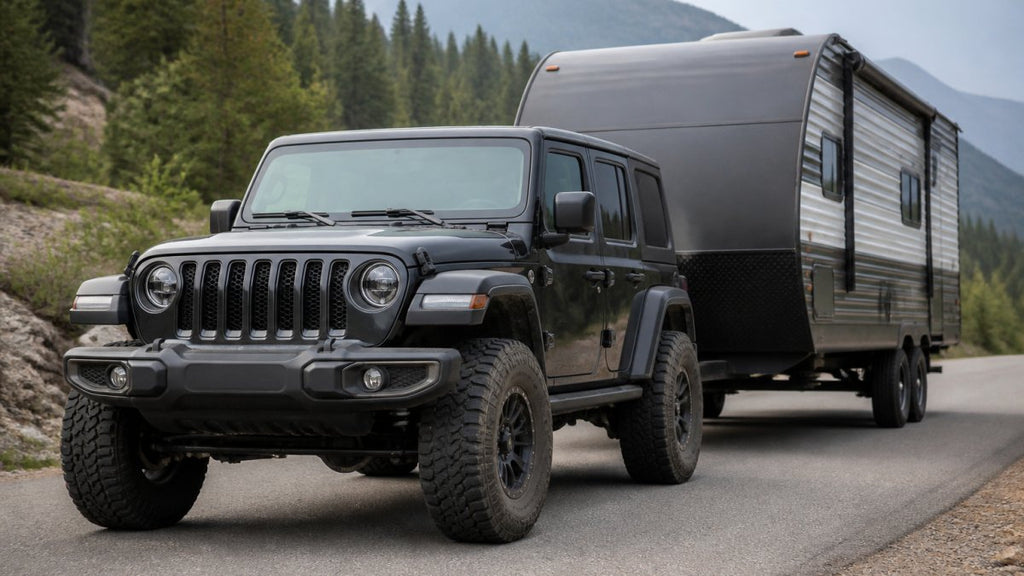
Most overland tire advice is written for stock trucks. That is the first thing we would change about this category. A rig carrying armor, a rooftop tent, a fridge, recovery gear, and two people sits far above its factory curb weight, and the best off-road tires for heavy overland builds have to carry that load without overheating, squirming, or failing on a washboard road.
The sidewall carries the answer. Load index and load range tell you what a tire can actually support, and ignoring them is the most common mistake in heavy builds.
The Weight Penalty: Payload, Gear, and Armor
Steel bumpers, skid plates, sliders, a winch, and a full water tank add up fast. Many builds gain several hundred pounds before a single bag is packed, and that weight sits high and rearward. Heavier vehicles brake later, lean more in corners, and put more heat into the tire carcass on long highway stretches. Every component downstream of the frame has to earn its place.
Load Index and Load Range: What the Sidewall Is Telling You
Load index is a numeric code for the maximum weight a single tire can carry at its rated pressure. Load range is the older letter system (C, D, E) describing carcass strength and ply rating.
Best All-Terrain Tires for Overlanding: The Daily-Driver Compromise
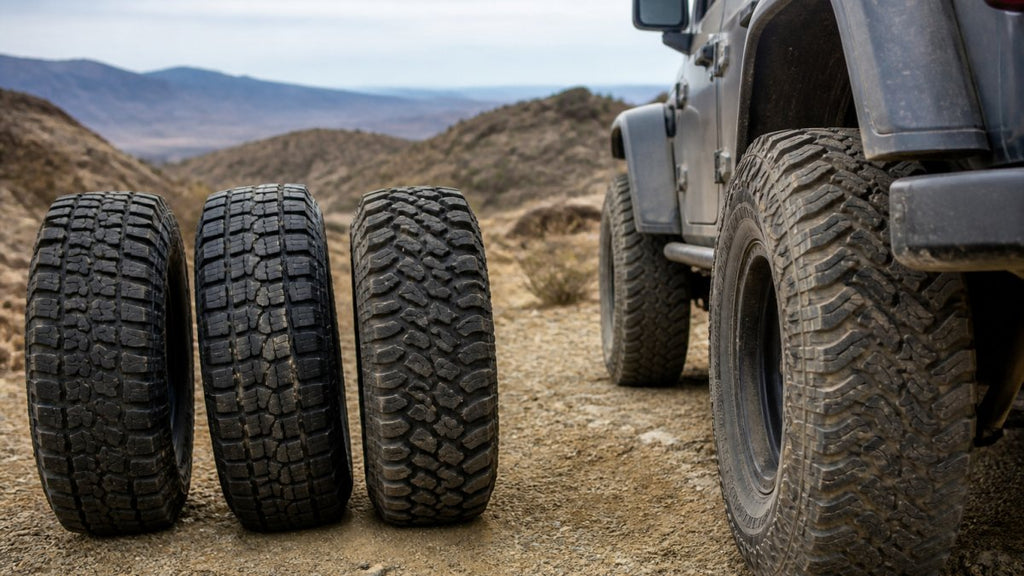
The best all-terrain tires for overlanding are the ones that survive the 90% of miles you drive on pavement without punishing you. All-terrains win on this build because they balance highway manners with enough tread to handle gravel, dirt, and light rock. A common approach is a three-peak mountain snowflake-rated all-terrain in a load range that matches your axle weight.
- Best for: daily-driven overlanders who tow or commute between trips
- Skip if: you spend most weekends in deep mud or sharp rock gardens
All-Terrain vs. Mud-Terrain Tires for Overlanding: Matching Tread to Terrain
All-terrain vs. mud-terrain tires for overlanding comes down to where you actually drive. Mud-terrains clear sticky clay and grip loose rock, but they howl on pavement, wear faster, and cost you fuel economy. All-terrains are quieter, last longer, and handle wet-weather grip and light snow better.
For a heavy build, the trade-off tilts toward all-terrain unless mud is a routine condition. A loaded rig already stresses the tire; adding an aggressive, fast-wearing mud-terrain on a daily driver just shortens tread life and increases road noise.
Overlanding Tires for Heavy Loads: Sidewall, Puncture Resistance, and Durability
Durability on a loaded rig starts at the sidewall, but it does not end there. A heavy vehicle changes how a tire fails: it drives sharp edges deeper, generates more heat at highway speed, and turns a slow leak into a sidewall blowout faster than a light truck would. Understanding the failure modes is how you prevent them.
Heat Is the Quiet Killer
Most heavy-build tire failures start as heat, not as a cut. A loaded tire flexes more per revolution, and underinflation multiplies that flex. On a long highway climb in summer, a tire running below its loaded pressure can build carcass temperature until the sidewall weakens. That is why the loaded highway pressure matters more than the empty pressure, and why a tire that feels fine around town can fail on the third hour of a desert grade. Check pressure cold, recheck when loaded, and do not treat a TPMS warning as a suggestion.
Sidewall Damage: What Actually Causes Blowouts
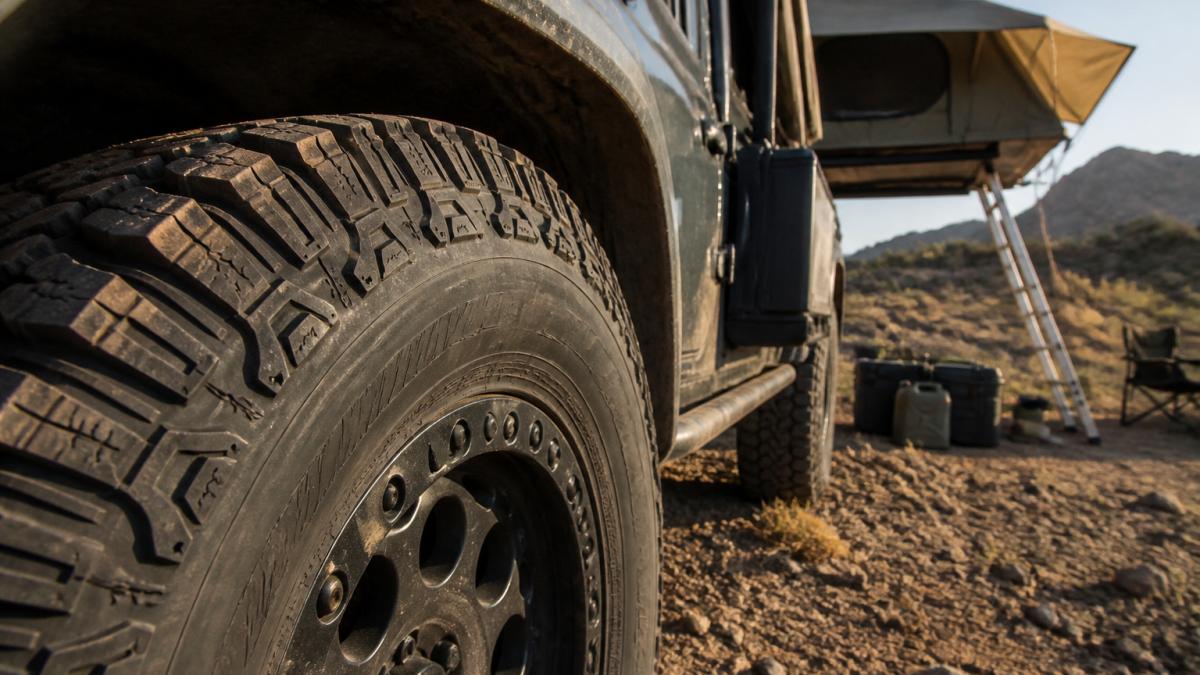
A light-duty sidewall on a rig that sees sharp rock is how blowouts happen. The carcass flexes, heat builds, and a sidewall that felt fine empty fails when loaded.
Repairability and Spare Planning
Not every puncture is a roadside fix. A tread-area puncture from a nail or screw is often repairable with a plug or patch; a sidewall cut, a shoulder impact, or a bead damage is usually not. Plan the spare around that reality: carry a full-size spare matched to your set and rotate it in, plus the tools to change it on a loaded rig, a proper jack, a breaker bar, and a torque wrench rated for your lug spec.
Pro Tip
Carry a tire repair kit with plugs, a reamer, and a compressor, and practice a plug repair before you need it. Know the difference between a tread puncture you can plug and a sidewall or shoulder injury that means the tire comes off.
::: Reducing the frequency of these structural failures often requires a more nuanced approach to chassis tuning, as improving UTV suspension helps mitigate the harsh impacts that lead to premature tire fatigue on jagged terrain.
When to Replace, Not Repair
For the powertrain side of durability on a forced-induction build, our guide to off-road forced induction maintenance covers what changes when you add boost and weight together.
Overland Tire Load Rating: How to Read the Sidewall and Match Your Axle Weight
Overland tire load rating is the number that decides whether your tires are working or struggling, and most guides stop at "buy load range E." That is not a method. The method is to measure your real axle weights, add a margin for what you carry, and then pick a load index that leaves headroom at the pressure you actually run.
Step 1: Get Real Axle Weights, Not Curb Weight
Curb weight is the truck empty with fluids. Your build is not that. Load the rig the way you travel, passengers, water, fuel, fridge, recovery gear, tools, spare parts, rooftop tent, armor, and weigh each axle separately at a certified scale. A common pattern is a rear axle that gains far more than the front because water tanks, fridges, and gear boxes sit behind the rear axle. Weigh once fully loaded and once with just driver and fuel so you know the spread.
Step 2: Convert Axle Weight to Per-Tire Load
Divide each axle weight by two to get the per-tire load on that axle. Then add a working margin, most practitioners target 10-15% headroom above the loaded per-tire figure to cover heat, uneven loading, and dynamic weight transfer on descents and corners. A tire running at 95% of its rated capacity on a long highway climb is a tire building heat it cannot shed.
Step 3: Read Load Index and Load Range Together
Load index is a numeric code for the maximum weight a single tire can carry at its rated pressure, the higher the number, the more capacity. Load range is the older letter system (C, D, E) describing carcass strength and ply rating.
| Build Profile | Typical Load Range | What It Buys You |
|---|---|---|
| Near stock, light gear | C or standard load | Flexible sidewall, comfort, lower cost |
| Moderate armor and gear | D | Extra carcass strength without a harsh ride |
| Heavy build, full water/fuel/kit | E or high load index | Heat margin and loaded highway durability |
The door-jamb sticker assumes a stock truck. Once you add armor, water, and gear, the real axle weight is higher, and a tire matched to the sticker is already behind. Match the tire to the scale ticket, not the sticker.
Step 4: Match Pressure to the Load
Load capacity is pressure-dependent. A tire rated for a given load at its maximum pressure does not carry that load at 35 psi. If you air down for trail comfort or traction, you are reducing capacity at the same time you are adding sidewall flex and heat. That is why a heavy rig should not run trail pressures as low as a light Jeep, and why the highway re-inflation step matters more the heavier you are. Check pressure cold, recheck fully loaded, and treat the loaded highway pressure as a spec, not a suggestion.
Key Takeaway
Measure each axle loaded, divide by two, add 10-15% headroom, then choose a load index and load range that leave margin at your real highway pressure. The scale ticket is the only number that matters.
Tire Size, Fitment, and Pressure for Loaded Rigs
For fitment and pressure questions on a loaded rig, dyno tuning support can help dial in the powertrain side while you sort the rubber. Tire pressure is the other half: air down for sand and rock, air up for highway, and expect the right pressure to shift as load changes. Check pressure cold and recheck when fully loaded.
Total Cost of Ownership: Tread Life, Fuel Economy, and Spare Strategy
Spare strategy matters just as much. Carry a full-size spare matched to your set, and rotate it in. A mismatched or undersized spare on a loaded rig is a roadside problem waiting to happen.
Register Your Build and Get Fitment Support
VT Superchargers builds bolt-on supercharger kits with OEM-style fitment for Dodge, Ford, Jeep, Mazda, Nissan, Suzuki, and Toyota, backed by a 24-month warranty and financing options. Book an appointment when you are ready for fitment help or service on your loaded rig.
Frequently Asked Questions
What are the best off-road tires for a heavy overland build?
There is no single best tire for every heavy overland build. Start by matching the tire's load index and load range to your rig's actual gross vehicle weight, then choose tread based on the terrain you drive most. An all-terrain tire with a reinforced sidewall and a load range that exceeds your axle weight is the safest starting point. Mud-terrain tires offer more traction in deep mud and rocks but add road noise and wear faster on pavement. Confirm fitment with your wheel diameter and suspension before buying.
Are all-terrain or mud-terrain tires better for overlanding?
For most overlanding, all-terrain tires are the better choice. They handle gravel, dirt, and light mud while staying quiet and wearing evenly on the highway miles that connect trails. Mud-terrain tires win in deep mud, loose rock, and sharp sidewall hazards, but they are louder, heavier, and can reduce wet-weather grip on pavement. If your trips are mostly highway with occasional off-road sections, an all-terrain tire with a three-peak mountain snowflake rating covers more conditions with fewer compromises.
What load rating should overland tires have?
Your tire's load index must meet or exceed the load carried by each axle, not just the vehicle's curb weight. Weigh your rig fully loaded, including gear, passengers, and armor, then divide by axle. Look for a load range that gives a margin above that figure. Many heavy overland builds need load range E or higher. Check the tire's maximum load at a given pressure on the sidewall and confirm it covers your real axle weight with a buffer for dynamic loads on rough terrain.
How much tire pressure should I run when overlanding with a heavy vehicle?
Tire pressure for a heavy overland build depends on actual load and terrain. On pavement, use the vehicle manufacturer's recommended pressure for the load you carry, or the tire maker's load-inflation table. Airing down to 18-25 psi for rocky trails and sand improves traction and ride comfort but reduces ground clearance and increases sidewall flex. Reinflate before highway driving. Carry a quality gauge and a portable compressor, and test pressures on a loaded vehicle rather than guessing from an empty one.
Your tires can only do so much when the engine is straining to turn them. VT Superchargers can help you match the power to the build with bolt-on kits engineered for real performance and precise fitment. Register your build with VT Superchargers and get the fitment support your rig deserves.

Related post
26
Oct
23
Oct


RECENT POSTS