Off-Road Forced Induction Maintenance: A 2026 Guide
Table of Contents
- Understanding Forced Induction and Off-Road Stress
- Off-Road Vehicle Maintenance Schedule for Forced Induction
- Supercharger Maintenance: System-Specific Care
- Off-Road Air Filter Maintenance and Dust Ingestion
- Recognizing Boost Leak Symptoms and Early Warning Signs
- Oil Quality, Viscosity, and Change Intervals
- Long-Term Ownership and Preventive Replacement
- Frequently Asked Questions
Last Updated: October 16, 2026
Understanding Forced Induction and Off-Road Stress
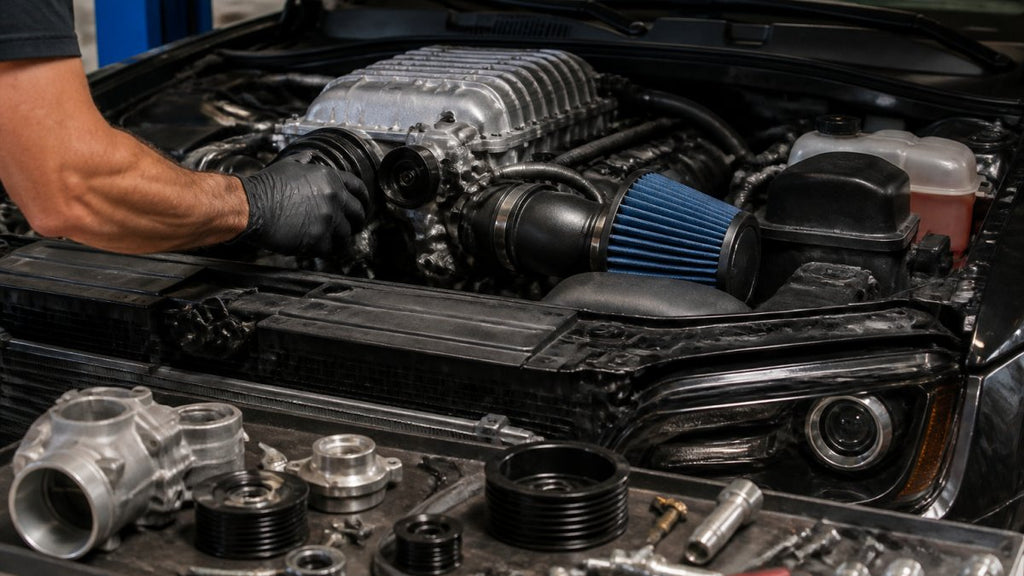
Forced induction maintenance isn't optional for off-road vehicles. A supercharger or turbocharger compresses more air into the engine than it was designed to handle naturally, delivering real power but multiplying stress on every component downstream.
Off-road driving compounds this pressure. Dust, heat, water crossings, and sustained high-RPM climbs accelerate wear.
Most problems are preventable. A structured maintenance plan catches issues before they become failures; this guide covers the checks, intervals, and procedures that keep forced-induction off-road vehicles reliable.
At VT Superchargers, the difference between vehicles that thrive and those that fail is rarely the kit itself. It's the owner who understands what forced induction demands and acts on it.
Pro Tip
Start your maintenance log before your first trail. Record boost pressure, coolant temperature, oil condition, and any unusual sounds. Patterns reveal problems early.
Off-Road Vehicle Maintenance Schedule for Forced Induction
A forced-induction vehicle off-road needs a different maintenance rhythm than a stock engine. Standard intervals don't account for the extra heat, air contamination, and mechanical stress.
Think of your schedule in three tiers: before every trail, after every trail, and at mileage intervals. Miss the first two, and mileage intervals become irrelevant.
Pre-Trail Checklist
Before you leave the driveway, spend 10 minutes on these checks to catch problems that could strand you.
Visual inspection of the supercharger system:
- Check all visible bolts and brackets for tightness
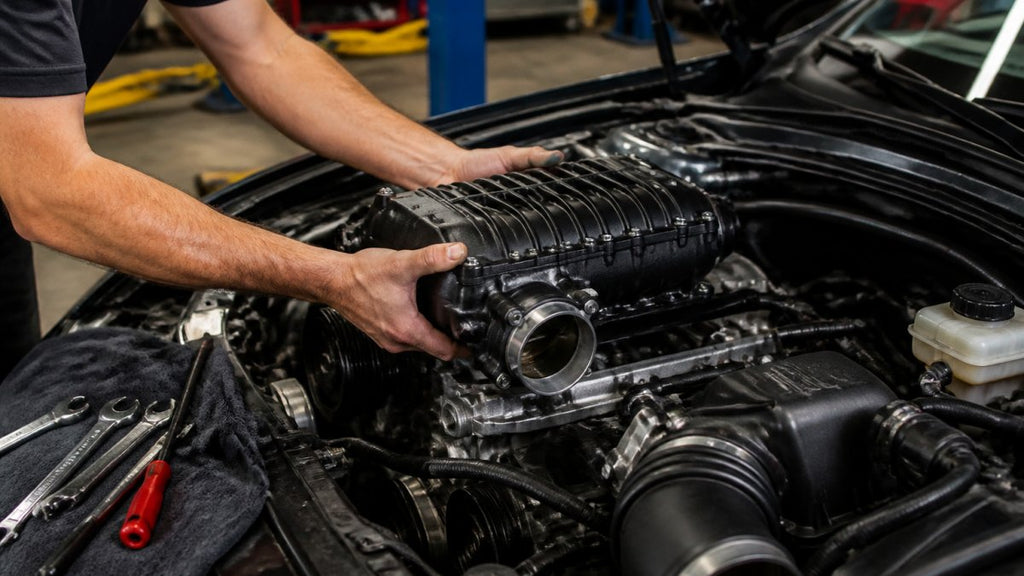
- Look for oil leaks around the supercharger body, water cooler, or pump
- Inspect the belt for cracks, fraying, or glazing
- Verify the water cooler is secure and free of debris
Fluid levels:
- Engine oil level (check on level ground with engine cold)
- Coolant level in the reservoir
- Confirm the oil is still the correct viscosity for your climate
Boost and temperature baseline:
- Start the engine and note the idle boost pressure (should be near zero)
- Listen for any unusual whining, grinding, or rattling
- Feel the temperature of the intake manifold after 30 seconds of idle (it should be cool)
Air intake system:
- Visually inspect the air filter for obvious debris or damage
- Check intake hose connections for cracks or looseness
If anything looks wrong, don't go. Fix it first or wait for a shop day.
Post-Trail Inspection and Cleaning
The moment you return from a trail, your forced-induction system is dirty, hot, and vulnerable. Post-trail inspection is where you catch damage and prevent corrosion.
Immediate cooling period (first 30 minutes):
- Let the engine idle for 5 minutes after returning, then shut it down
- Do NOT immediately hose down the engine, the thermal shock can crack components
- Allow the supercharger and cooler to cool to ambient temperature
Visual damage assessment:
- Look for bent fins on the water cooler
- Check for loose or damaged hoses
- Inspect the intake manifold and throttle body for cracks
- Verify all bolts and brackets are still tight
Cleaning the air intake path:
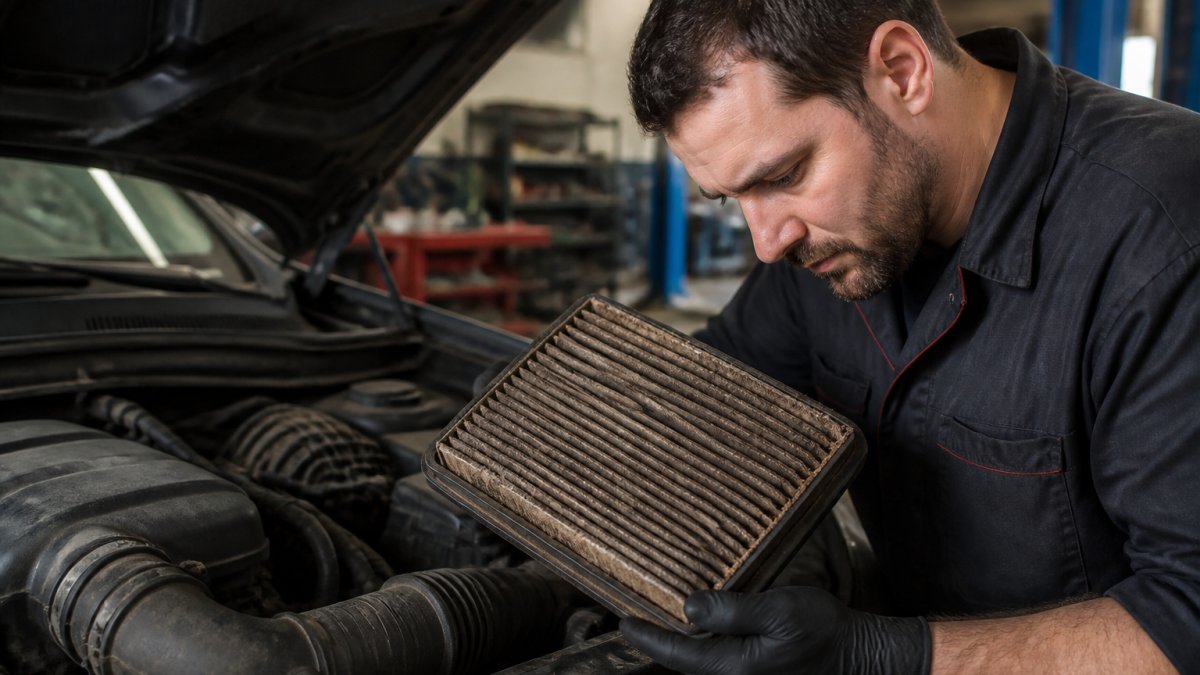
- Once cool, remove the air filter and inspect it for mud, dust, or water
- If the filter is caked with mud, tap it gently to dislodge loose material
- If water entered the intake, dry the filter element with compressed air
- Replace the filter if it's damaged or severely contaminated
Fluid check 24 hours later:
- Check oil level again after the engine has cooled completely
- Inspect the oil color, muddy oil means water ingress and requires an oil change
- Check coolant level and color
- Look for any new leaks under the vehicle
Watch Out
Never ignore muddy or discolored oil after water crossings. Water in the oil destroys lubrication and corrodes internal engine components. Change the oil immediately if contamination is visible.
Supercharger Maintenance: System-Specific Care
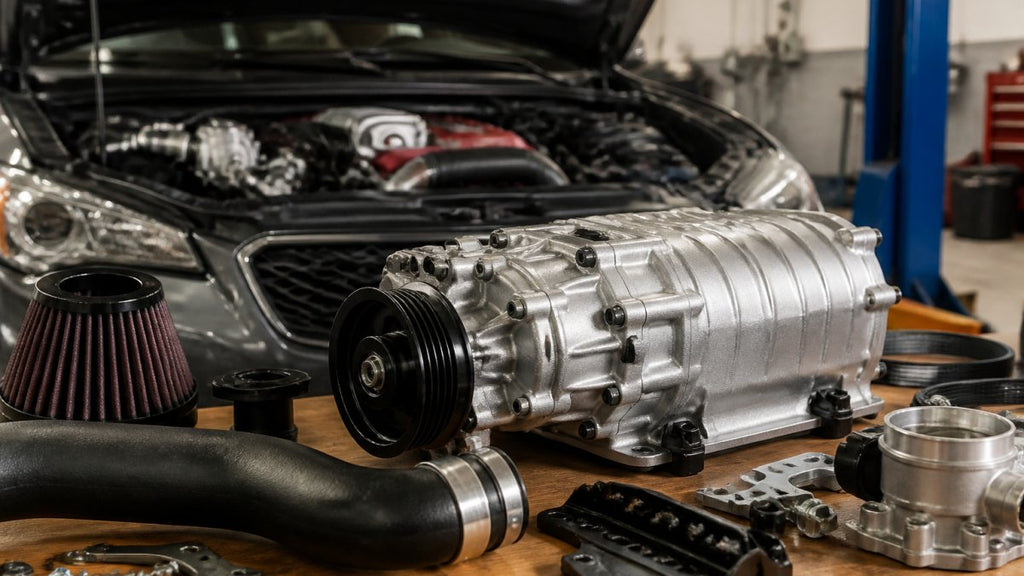
Your supercharger is a precision machine. Unlike a turbocharger that uses exhaust gases, a supercharger is mechanically driven by a belt. That belt and the internal bearings demand specific attention.
Cooling System and Heat Management
A supercharger compresses air. Compression creates heat.
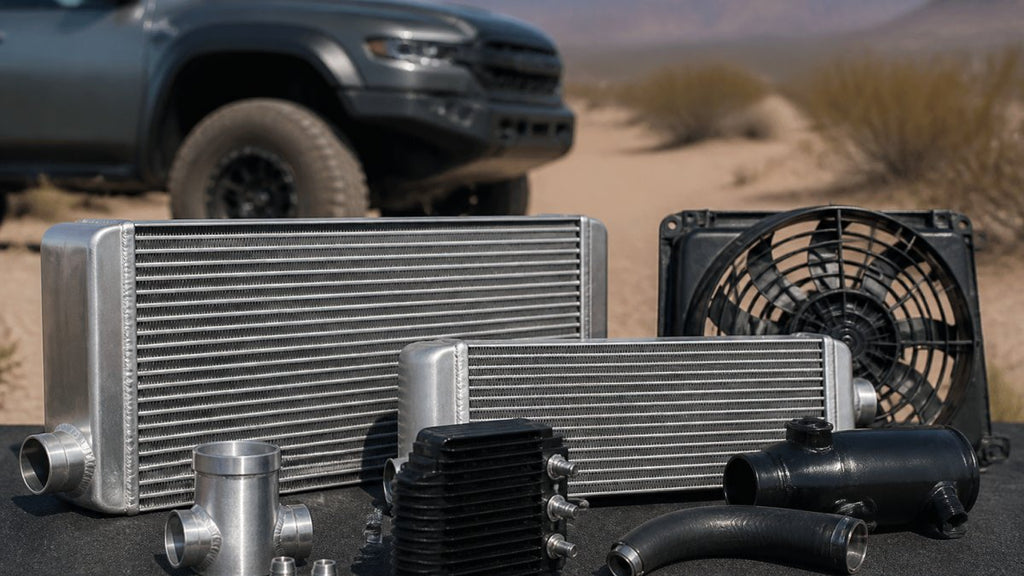
This cooler is your most important component for long-term reliability. If it fails, intercooler temperatures spike, boost pressure drops, and engine knock increases.
Cooler maintenance:
Check the cooler fins monthly for blockage, mud, leaves, and trail debris accumulate fast.
Inspect coolant hoses for cracks, splits, or bulges. Hoses degrade from heat cycling and UV exposure, so replace any showing wear before it fails on a trail.
Flush the cooler system every 24 months or 30,000 miles, whichever comes first.
Monitor coolant temperature during driving. Note the reading at idle and under load; a sudden spike indicates a cooling system problem, so stop and investigate before continuing.
Belt, Pulley, and Bearing Inspection
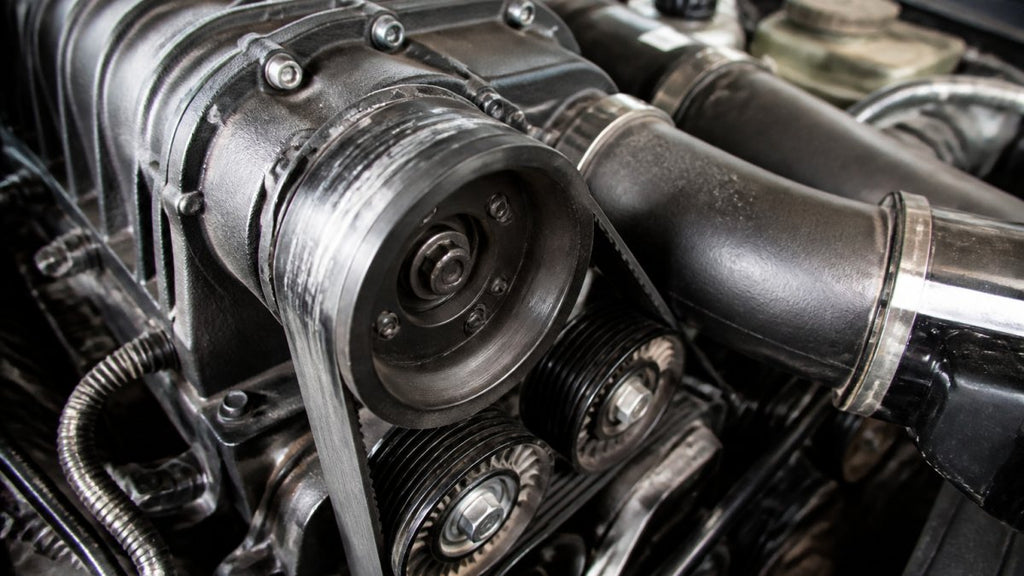
The belt drives the supercharger rotor. When it wears, slips, or breaks, boost pressure drops immediately, and a broken belt can damage the pulley and internal bearings.
Belt inspection routine:
Visually check the belt every month for:
- Cracks or splits in the rubber
- Glazing or shiny spots (indicates slipping)
- Fraying edges
- Uneven wear across the width
Press your thumb against the belt midway between pulleys. It should deflect about half an inch.
Replace the belt every 3 years or 40,000 miles, even if it looks fine. Rubber degrades from heat and UV exposure. A belt that looks good can fail suddenly under load.
Pulley and bearing health:
Listen for a high-pitched whine from the supercharger. A slight whine at startup is normal. A rising whine under load or a grinding sound indicates bearing wear.
Check pulley alignment annually. Misaligned pulleys accelerate belt wear and damage bearings. A shop can verify alignment with a straightedge.
Key Takeaway
A supercharger belt failure on the trail leaves you stranded. Replace it preventively every 3 years, not reactively when it breaks.
Off-Road Air Filter Maintenance and Dust Ingestion
Dust is the enemy of forced-induction engines. A supercharger pulls massive volumes of air. If that air is dirty, particles go straight into the engine and damage cylinder walls, piston rings, and valve seats.
Off-road air is filthy. Dust, sand, and silt are everywhere. Your air filter is your first defense. Treat it seriously.
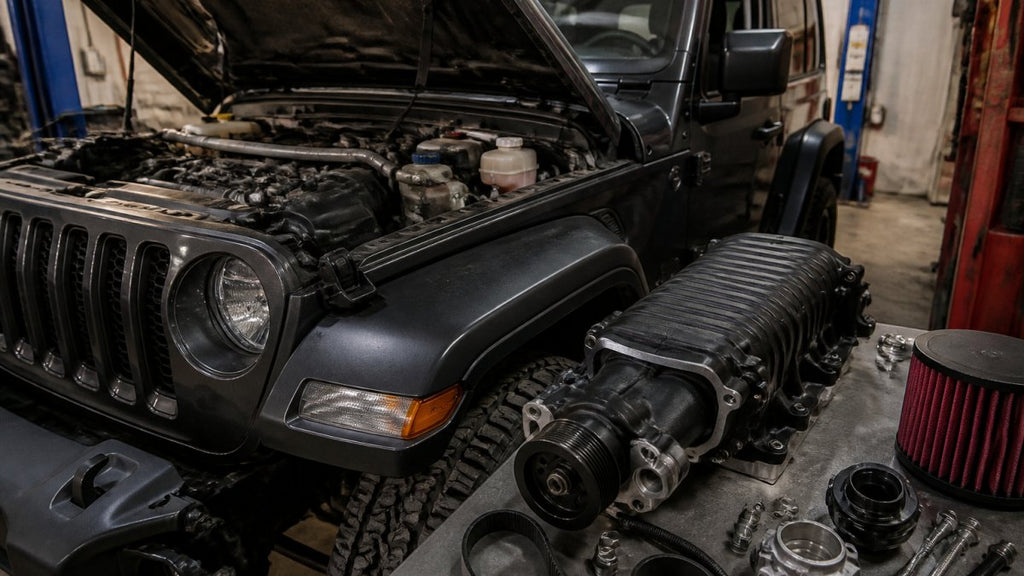
Jeep Wrangler 3.6L V6 Supercharger Kit (2012+) →
High-Flow Air Filter Selection and Replacement
Stock air filters work fine for street driving. They're not adequate for off-road forced induction. You need a high-flow filter designed for dusty conditions.
High-flow filters use a larger surface area and more porous media than stock filters, flowing more air with less restriction to help boost pressure and throttle response.
Replace your air filter every 500-1,000 miles of off-road driving, or every 3 months if you trail frequently.
After muddy or dusty trails, inspect the filter immediately. Tap it gently to remove loose material. If mud is baked on, replace it.
Keep a spare filter in your vehicle. A clogged filter in the field costs you a trail day. A spare costs nothing.
Diagnosing Dust Contamination
Early signs of dust ingestion are subtle. Catching them saves your engine.
Watch for these warning signs:
- Rough idle or hesitation during acceleration
- A slight loss of boost pressure compared to baseline
- Increased engine knock or pinging under load
- Black or gray soot visible in the exhaust
- A metallic smell from the engine bay
If you notice any of these, stop and inspect the air intake system. Check the filter, intake hose connections, and throttle body for cracks or loose joints. Even a small gap lets unfiltered air bypass the filter.
Remove the air filter and look at the element. If it's heavily caked with dust or shows tears, replace it immediately. Do not attempt to clean a damaged filter, replacement is cheaper than an engine rebuild.
Check the intake manifold interior with a flashlight. You should see a clean metal surface. If you see dust, mud, or discoloration, the filter failed or the intake was compromised. Investigate the source before driving again.
Recognizing Boost Leak Symptoms and Early Warning Signs
A boost leak is a crack or loose connection in the intake system that lets pressurized air escape.
Boost leaks are common after off-road driving because vibration loosens clamps and connections.
Symptoms of a boost leak:
- Boost pressure drops 1-2 PSI from your baseline
- Engine knock increases, especially under load
- Throttle response feels sluggish or delayed
- Hissing sound from the engine bay during acceleration
- Check engine light appears (air/fuel ratio sensor detects lean condition)
To find a leak, listen carefully during acceleration. A hissing sound points to the leak location. Visually inspect all hose connections and clamps in the intake path. Tighten any loose clamps with a wrench.
If you can't locate it by sound, use a smoke test. A shop can pressurize the intake system with smoke and watch where it escapes. This pinpoints even tiny leaks.
Common leak locations: intake manifold gasket, throttle body connection, intercooler hose clamps, and boost sensor line. Fix leaks immediately. Driving with a boost leak damages the engine.
Oil Quality, Viscosity, and Change Intervals
Forced induction means higher temperatures and greater mechanical stress on oil. Your engine oil works harder, breaks down faster, and needs replacement more often.
Choose a synthetic oil rated for high-temperature use.
Check your vehicle's manual for the correct viscosity. Common choices for supercharged engines are 5W-30 or 0W-40.
Change oil every 3,000-5,000 miles with a forced-induction engine, or every 3 months if you don't drive frequently. Off-road driving in dusty conditions accelerates oil degradation.
After water crossings, change the oil immediately. Water contamination destroys oil's protective properties and corrodes engine bearings.
Check oil level before every trail. Low oil on a forced-induction engine means inadequate lubrication under boost, which leads to bearing wear and catastrophic failure.
Pro Tip
Keep synthetic oil and a filter in your vehicle. An oil change takes 20 minutes and prevents thousands in engine damage.
Long-Term Ownership and Preventive Replacement
Forced induction is reliable when maintained.
Supercharger bearings: Most superchargers are rated for 100,000-150,000 miles before bearing wear becomes noticeable.
Intercooler hoses: Rubber hoses degrade from heat and UV exposure.
Boost sensor: The sensor that monitors boost pressure for the ECU can fail from vibration or thermal cycling.
Track your maintenance history. Record every service, part replacement, and fluid change.
VT Superchargers kits, like the Jeep Wrangler 3.6L V6 Supercharger Kit or Toyota 4Runner 4.0L 1GR-FE Supercharger Kit, come with a 24-month warranty that covers defects in materials and workmanship.


Long-term ownership of a forced-induction off-road vehicle demands attention, but the payoff is undeniable.
The challenge is consistency. Most owners maintain their vehicles well for the first year, then skip intervals.
Register with VT Superchargers today to access installation guides, maintenance videos, and customer support.
Frequently Asked Questions
How often should you service a forced-induction engine used off-road?
Off-road forced-induction engines require more frequent servicing than street vehicles. Check your oil level before every trail outing and plan full oil changes every 3,000-5,000 miles instead of the typical 7,500-10,000-mile interval. Inspect the air filter monthly, replace it every 1,000-2,000 miles of aggressive off-road use, and check the cooling system, belts, and boost lines every two weeks. Dust and heat accelerate wear, so shorter intervals protect your engine's longevity.
What are the signs of a boost leak or forced-induction problem?
Boost leak symptoms include a hissing sound from the engine bay, reduced power output, a check engine light, rough idle, or visible cracks in intake piping. You may also notice a loss of boost pressure on acceleration or white smoke from the exhaust. Post-trail, inspect all water hoses, intake pipes, and intercooler connections for splits or loose clamps. A boost gauge or OBD-II scanner can confirm lost pressure. Addressing leaks immediately prevents compressor damage and engine strain.
Does off-road use shorten the life of a supercharger?
Off-road use does accelerate supercharger wear due to dust, heat, and sustained high boost pressure, but proper maintenance extends its lifespan significantly. Regular oil changes, air filter replacements, cooling system flushing, and post-trail cleaning prevent premature failure. Most well-maintained forced-induction systems last 100,000+ miles. VT Superchargers kits include a 24-month warranty and are engineered with die-cast aluminum housings and large water coolers designed for sustained off-road performance, making preventive care the key to long-term reliability.
How do you protect a supercharger from dust and debris?
Use a high-flow air filter rated for off-road conditions and replace it frequently (every 1,000-2,000 miles on dusty trails). Install an air intake snorkel if possible to draw cooler, cleaner air from higher on the vehicle. After muddy or wet rides, rinse the intake area and inspect for water intrusion in the intercooler and piping. Keep the engine bay clean and check all intake seals and clamps weekly. Store your vehicle in a garage when not in use, and avoid driving through standing water that can reach the supercharger intake.
Related post
09
Oct
RECENT POSTS