Best Performance Upgrades for Toyota 5.7L V8 Engines
Table of Contents
- Why the 5.7L V8 Responds Well to Bolt-On Upgrades
- Toyota 5.7 Cold Air Intake: The Entry-Level Breathing Upgrade
- Toyota Tundra Exhaust Upgrade: Sound, Flow, and Real Gains
- Toyota Tundra 5.7 Tuning: What an ECU Calibration Actually Changes
- Toyota 5.7 V8 Supercharger Kit: The Biggest Single Jump in Power
- Supercharger Kits for Tundra, Land Cruiser, and Sequoia Compared
- Which Performance Upgrades for the Toyota 5.7L V8 Should You Buy First?
- Frequently Asked Questions
Last Updated: October 17, 2026
Why the 5.7L V8 Responds Well to Bolt-On Upgrades
The best performance upgrades for Toyota 5.7L V8 engines work because the 3UR-FE is detuned from the factory. Toyota built this engine for longevity and emissions compliance, not peak output, which leaves real headroom for bolt-on parts to exploit. This guide from VT Superchargers walks through each upgrade in the order most owners should buy them. Understanding the fundamental mechanics behind these modifications provides a clearer perspective on how automotive performance parts interact with the existing engine architecture to safely unlock that hidden potential.
The 3UR-FE is a 5.7-liter V8 found in the Tundra, Sequoia, and Land Cruiser. Toyota tuned it conservatively: mild cam profiles, a restrictive intake path, and exhaust plumbing sized for quiet cruising. That means simple parts swap in for measurable gains without touching internals.
Here is the key insight most guides miss. The engine responds best when you upgrade in sequence, not all at once. Intake and exhaust free up airflow, tuning ties the changes together, and forced induction multiplies everything upstream.
Key Takeaway
Bolt-on parts work on the 5.7L because the factory left performance on the table. Buy in order: intake, exhaust, tune, then supercharger.
Toyota 5.7 Cold Air Intake: The Entry-Level Breathing Upgrade
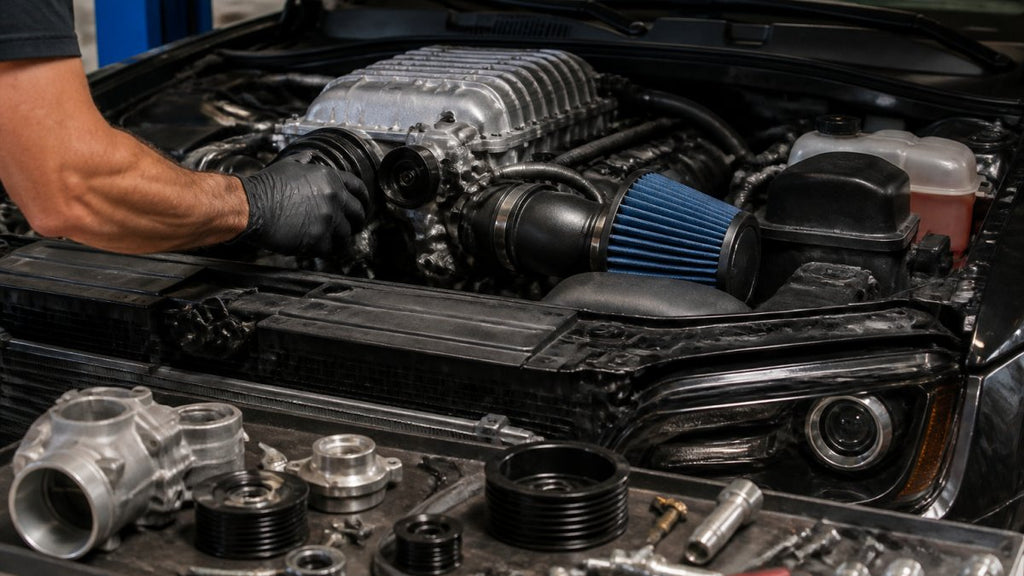
A Toyota 5.7 cold air intake is the cheapest first step and the easiest to install. It replaces the factory airbox with a higher-flow filter and smoother intake tube, letting the engine pull air with less restriction.

Expect modest gains on its own, mostly in throttle response and induction sound. The real benefit shows up later, when a tune and exhaust let the engine use that extra airflow. Many owners find the intake alone feels underwhelming until supporting parts arrive.
- Best for: first-time modifiers and daily drivers
- Install time: roughly an hour with basic hand tools
- Watch out for: oiled filters that need cleaning, and heat-soak from poorly shielded kits
A common mistake is buying the loudest intake instead of the one that seals against engine heat. In practice, a sealed box beats an open cone for consistent power.
Toyota Tundra Exhaust Upgrade: Sound, Flow, and Real Gains
A Toyota Tundra exhaust upgrade does two jobs: it frees exhaust flow and it changes how the truck sounds. Cat-back systems are the usual choice because they bolt on after the catalytic converters and stay emissions-legal in most states.
The power gain from exhaust alone is modest. Where it matters is combined with an intake and tune, when the engine can breathe in and out more freely. Owners towing or running larger tires often notice better mid-range pull.
Watch Out
Check your state's emissions rules before swapping any exhaust component ahead of the catalytic converters. Removing or relocating cats can fail inspection and is illegal for road use in many states.
Toyota Tundra 5.7 Tuning: What an ECU Calibration Actually Changes
Toyota Tundra 5.7 tuning is the step that ties bolt-ons together. A calibration adjusts fuel delivery, ignition timing, and throttle mapping so the engine actually uses the extra airflow from intake and exhaust changes.
It also fixes the gear-hunting complaint many owners report. On trucks with larger tires, the transmission shifts too early and too often. A proper tune corrects shift logic and throttle response, which is often the change drivers feel most.
Here is the part nobody tells you: tuning is not optional once you add a supercharger. Every forced-induction kit we sell requires an ECU tune for safe operation.
Toyota Tundra 5.7L 3UR-FE Supercharger Kit | VT Superchargers →
Toyota 5.7 V8 Supercharger Kit: The Biggest Single Jump in Power
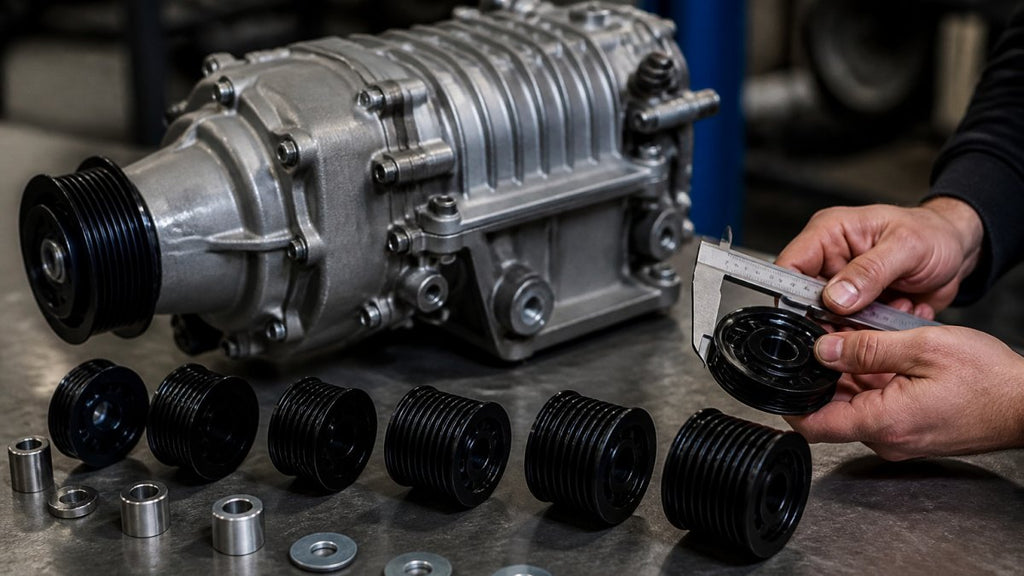
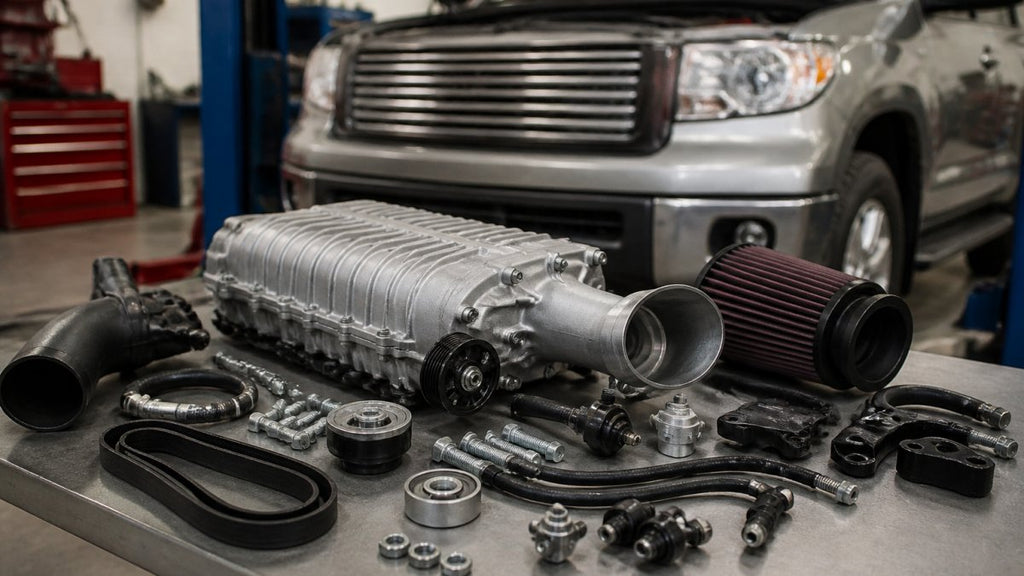
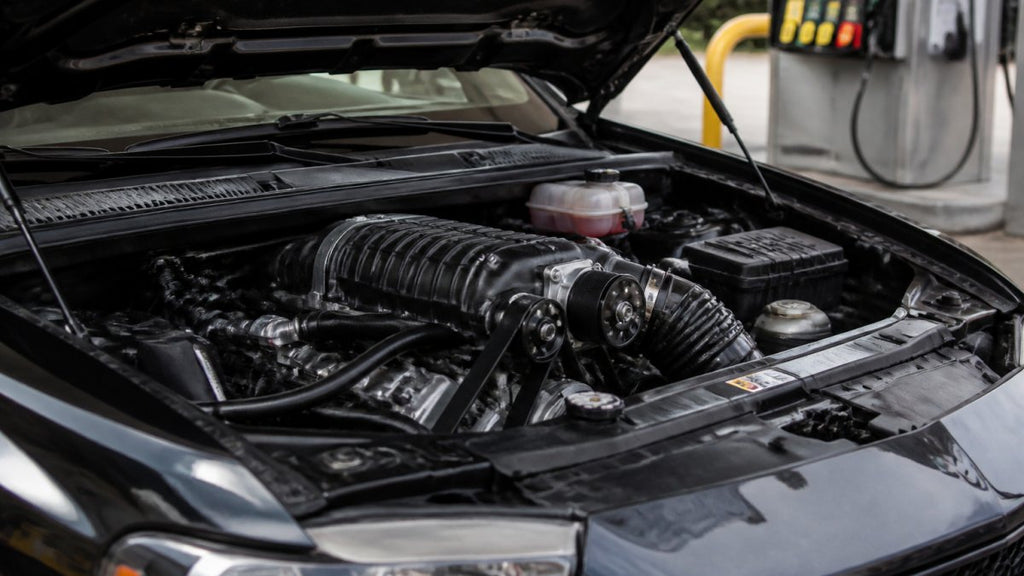
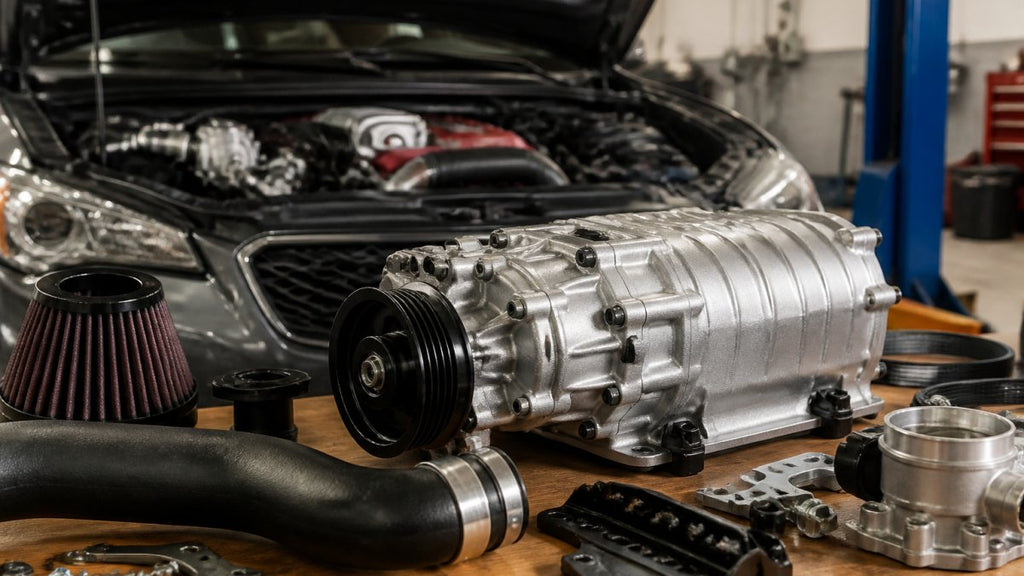
A Toyota 5.7 V8 supercharger kit delivers the largest single gain of any upgrade on this list. Our bolt-on kits add 40-60% more horsepower over the stock 3UR-FE and 30-50% more torque at roughly 7 psi of boost.

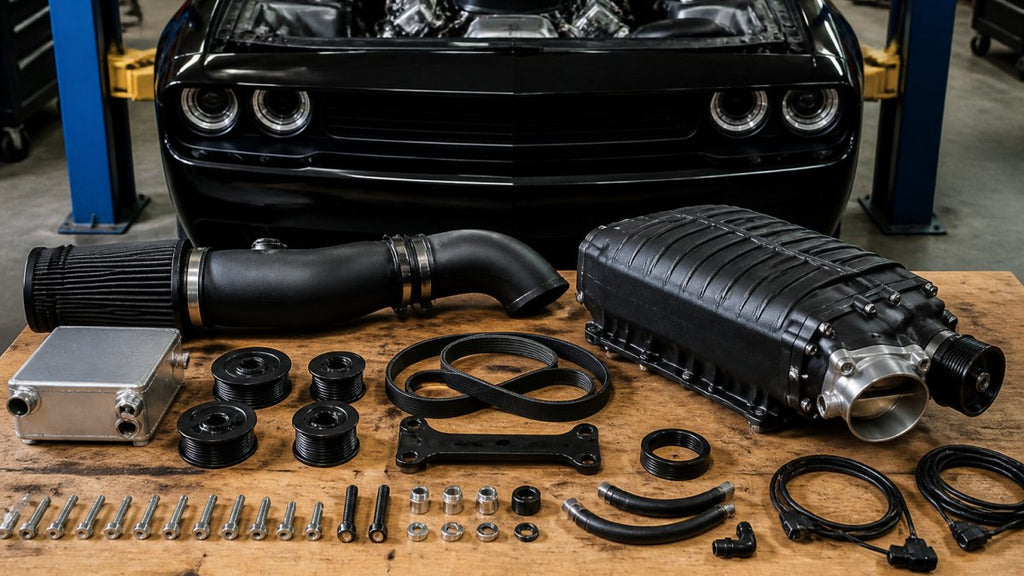
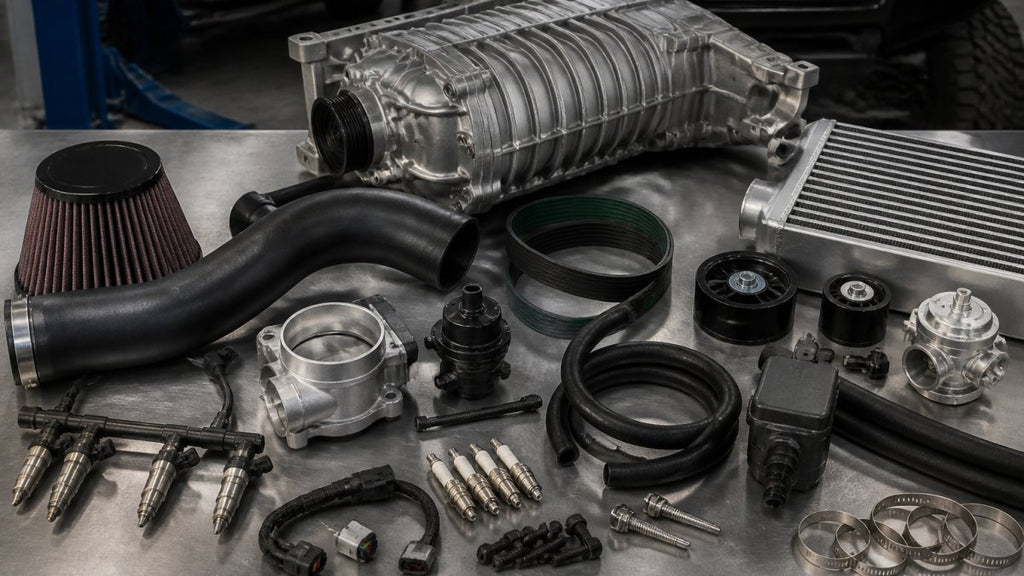
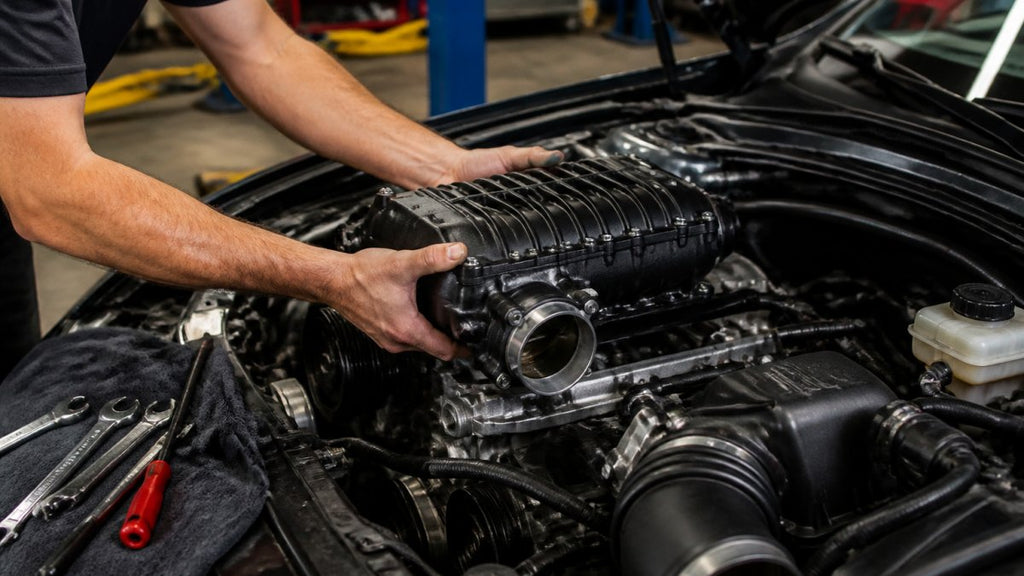
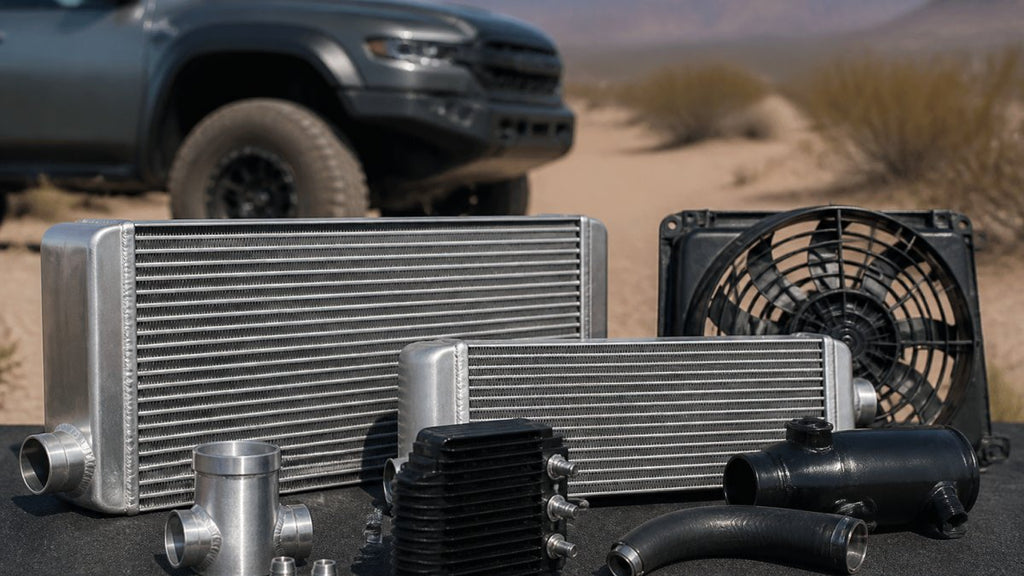
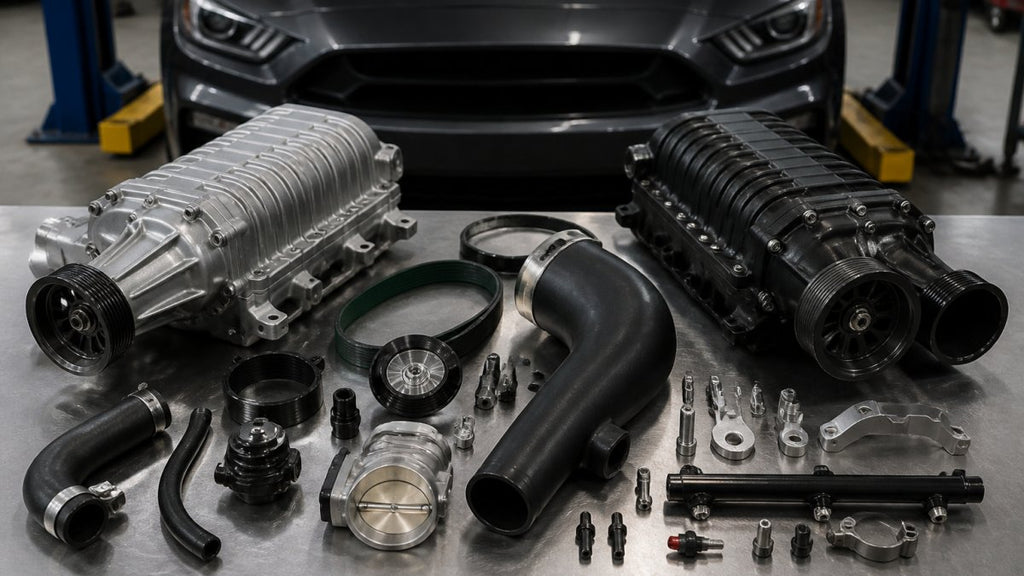
The install is non-destructive. No cutting, welding, or permanent modifications, and your original components stay intact. Each kit includes the supercharger body, intake manifold, mid-mounted water cooler, water pump, belt, bracket, and all accessories.
Pro Tip
If you are worried about towing and low-end torque, a supercharger is the right call. It builds boost from low rpm, so the pull you feel off the line and under load is stronger than a turbo setup of similar peak power.
Supercharger Kits for Tundra, Land Cruiser, and Sequoia Compared
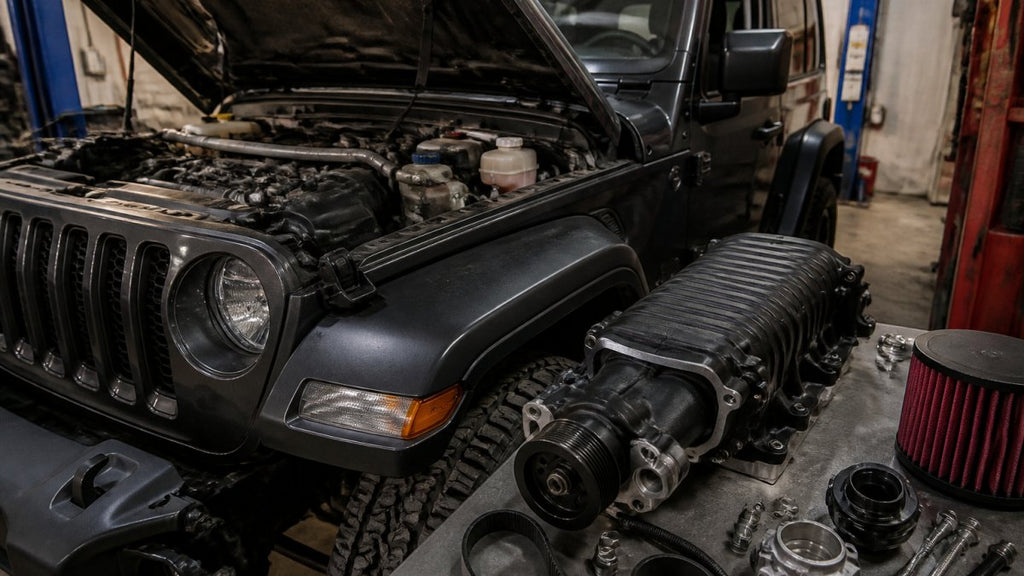
Fitment is the first thing to confirm. All three kits use the same 3UR-FE platform, so the difference is vehicle-specific bracketry and intake routing, not the core blower. Every kit costs $6,900 and includes a 24-month warranty.
| Kit | Vehicle | Boost | Power Gain | Price |
|---|---|---|---|---|
| Tundra 5.7L 3UR-FE | Tundra | ~7 psi | 40-60% hp, 30-50% torque | $6,900 |
| Land Cruiser 5.7L 3UR-FE | Land Cruiser | ~7 psi | 40-60% hp, 30-50% torque | $6,900 |
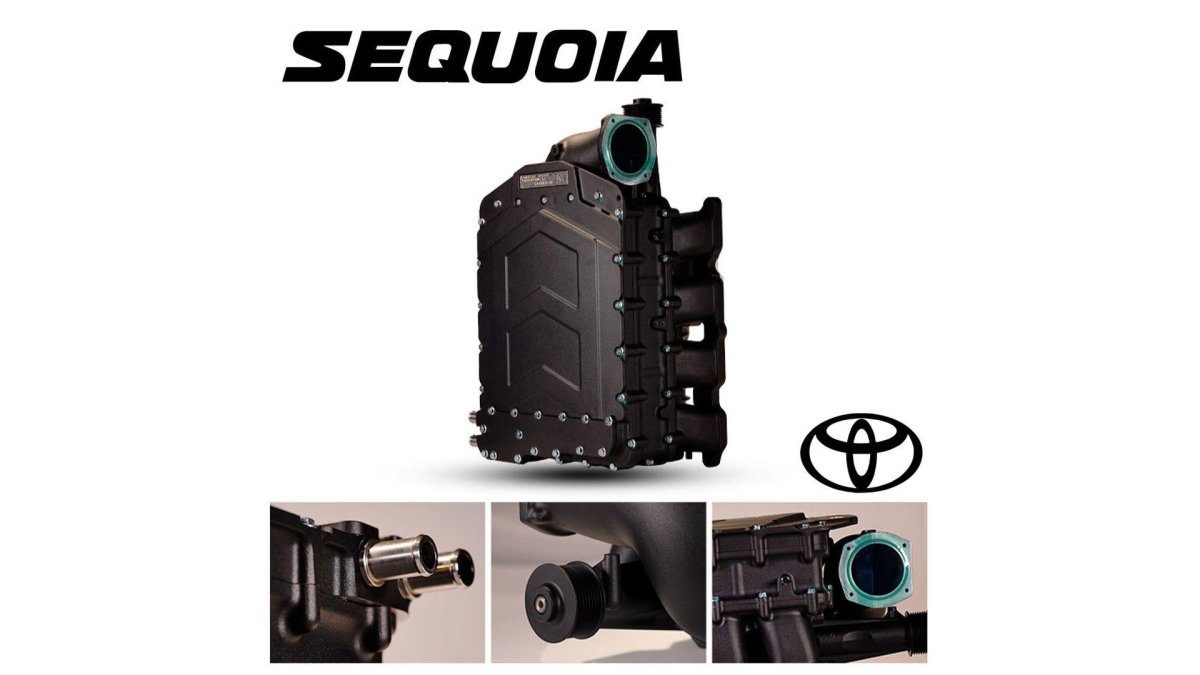
| Sequoia 5.7L 3UR-FE | Sequoia | ~7 psi | 40-60% hp, 30-50% torque | $6,900 |
Finishes come in red or black, with custom colors available on request. Sequoia buyers can review installation videos before ordering.
Best For
Overlanders and tow-haulers who want low-end torque and a factory-style fit, not a cut-and-weld build.
Which Performance Upgrades for the Toyota 5.7L V8 Should You Buy First?
Buy in this order: cold air intake, then exhaust, then tune, then supercharger. Each step builds on the last, and skipping ahead wastes money because the engine cannot use the airflow until the tune and forced induction arrive.
If budget is tight, intake and tune give the best feel-per-dollar. If you want the biggest single jump, go straight to the supercharger kit and plan the tune as part of the install. For towing, off-roading, or larger tires, the supercharger solves gear-hunting and low-end pull in one move.
- Budget build: intake, then tune
- Balanced build: intake, exhaust, tune
- Maximum power: supercharger kit plus tune
Frequently Asked Questions
What are the best performance upgrades for a Toyota 5.7L V8?
Start with a cold air intake and cat-back exhaust for modest gains and better sound. A custom ECU tune ties those together and sharpens throttle response. For the largest jump, a bolt-on supercharger kit like the VT Superchargers systems for the Tundra, Land Cruiser, or Sequoia adds 40-60% more horsepower and 30-50% more torque at about 7 psi of boost. Each step builds on the last, so plan the order around your budget and goals.
How much horsepower can a supercharged Toyota 5.7L V8 make?
VT Superchargers rates its 5.7L 3UR-FE kits at 40-60% more horsepower than stock and 30-50% more torque at roughly 7 psi of boost. The exact number depends on your baseline, supporting mods like intake and exhaust, and the quality of the ECU tune. A proper tune is required for safe and optimal performance, so budget for it alongside the $6,900 kit price.
Does a cold air intake add power to a Toyota Tundra 5.7?
A cold air intake typically adds a small amount of power on its own, usually in the single digits to low double digits at the wheels. Its bigger value is pairing with a tune and exhaust to improve airflow and throttle response. If you plan to supercharge later, the intake still supports the system, but the supercharger kit includes its own intake manifold, so confirm fitment before buying both.
What should I upgrade first on a Toyota Tundra 5.7?
If you want immediate responsiveness on a budget, start with a cold air intake and a cat-back exhaust, then add an ECU tune to bring them together. If you tow or run larger tires and want the biggest gain, save for a supercharger kit first, since it delivers 40-60% more horsepower and 30-50% more torque. Either path works, but plan the full sequence so you do not buy parts twice.
The 5.7L V8 rewards owners who upgrade in the right order, and the biggest gain comes from forced induction. VT Superchargers builds bolt-on kits with OEM-style fitment, a 24-month warranty, and financing available, so you can add real power without cutting your truck apart. Register with us and we will guide you through fitment and install for your specific vehicle.
Related post
09
Oct
RECENT POSTS