Warranty Denied After Mods? What to Do Next
Last Updated: October 26, 2026
Quick Summary
If your warranty denied a claim after modifications, request the denial reason in writing, stop the repair, and gather your records into an evidence file. Then send a written appeal with a response deadline and escalate through the tiers, since the manufacturer must show the part caused the failure.
- Voiding cancels all coverage, while denying refuses to pay for one specific fix.
- Ask who made the decision: dealer, manufacturer, or warranty administrator.
- Your appeal should identify the claim, VIN, and denial date.
- Read any binding arbitration clause before escalating externally.
- If the repair is safety-related, pay for the fix and keep fighting for reimbursement.
Table of Contents
- Why Warranty Claims Get Denied After Modifications
-
How to Dispute a Denied Car Warranty Claim: Step-by-Step
- Step 1: Request the Denial in Writing and Stop the Repair
- Step 2: Identify Which Contract Governs the Decision
- Step 3: Gather Your Records and Build an Evidence File
- Step 4: Send a Written Appeal With a Response Deadline
- Step 5: Escalate Through the Tiers
- Step 6: Bring In Outside Help Only When the Record Supports It
- Step 7: Decide What to Do While the Appeal Is Pending
- What Your Warranty Claim Denial Letter Must Say
- Warranty Claim Appeal Letter Template You Can Adapt
- How to Prove a Modification Did Not Cause Vehicle Damage
- What to Do While Your Appeal Is Pending
- Register Your VT Superchargers Kit and Protect Your Coverage
- Frequently Asked Questions
Why Warranty Claims Get Denied After Modifications
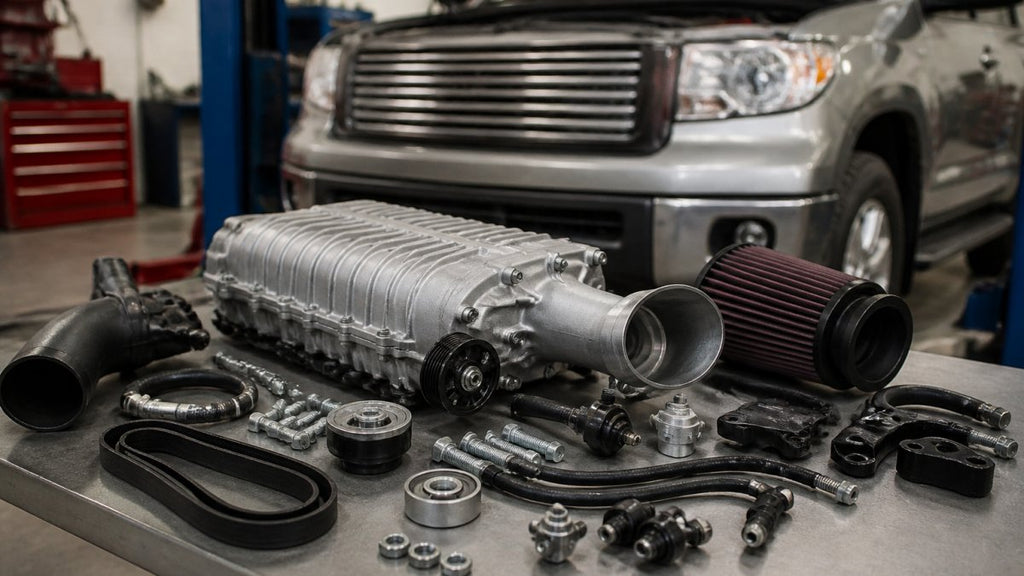
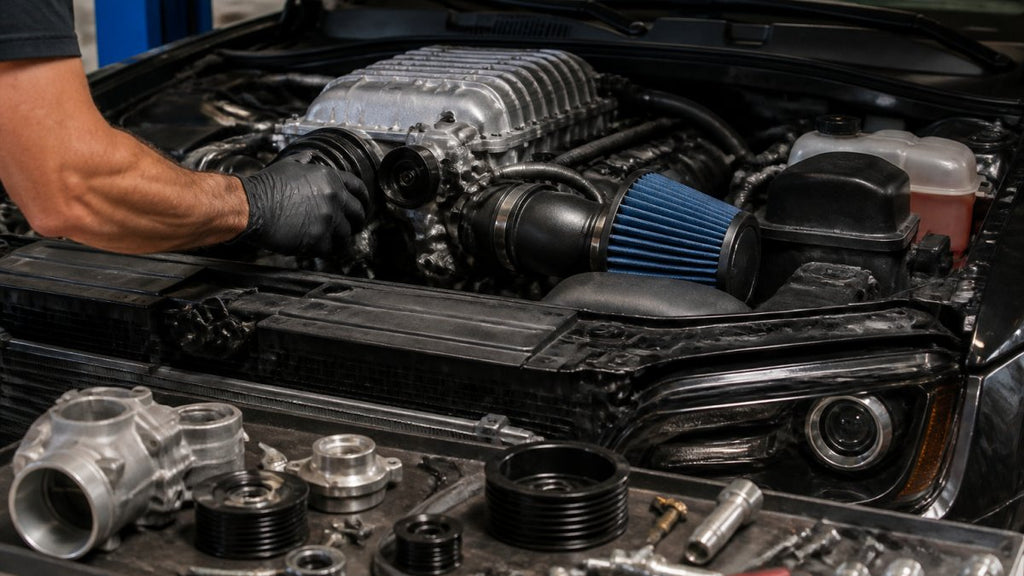
At VT Superchargers, we sell bolt-on supercharger kits. A denial is a claim decision, not a final ruling: request the reason in writing, gather records, and escalate.
The Difference Between Voiding a Warranty and Denying One Repair
Voiding a warranty cancels your entire coverage. Denying a repair refuses to pay for one specific fix.
If you bought a dealer-installed kit, understand how dealer-installed and aftermarket kits differ before you argue.
How the Magnuson-Moss Warranty Act Protects You
The law requires the manufacturer to show the part or service caused the failure. They cannot deny coverage on a blanket rule. Under the Federal Trade Commission's guidance on auto warranties, tying warranty coverage to the use of branded parts is generally prohibited unless the manufacturer provides the part free or proves the aftermarket part caused the problem.
How to Dispute a Denied Car Warranty Claim: Step-by-Step
Disputing a denied car warranty claim means building a paper trail and forcing the manufacturer to justify the decision. Move in order. Skip a step and you give them an easy reason to close the file.

Step 1: Request the Denial in Writing and Stop the Repair
- Get the denial reason, the specific failed component, and the policy language they relied on
- Ask who made the decision: dealer, manufacturer, or warranty administrator
- Do not authorize the repair yet
- Keep the vehicle where it is if it is safe to do so
Step 2: Identify Which Contract Governs the Decision
Owners often appeal to the wrong party for weeks, so confirm the decision-maker in writing first.
Step 3: Gather Your Records and Build an Evidence File
- Maintenance records and service history
- Repair invoices and diagnostic reports
- The modification receipt and install documentation
- Your warranty booklet and any service contract
- Photos of the failed component and the surrounding area
- Copies of every email, text, and written estimate
Step 4: Send a Written Appeal With a Response Deadline
Your appeal should do four things:
- Identify the claim, VIN, and denial date.
- Quote the denial reason and ask for the specific contract provision applied.
- State why the modification is unrelated to the failed system, with evidence references.
- Request a written response within a stated period.
Step 5: Escalate Through the Tiers
Many warranty booklets include a binding arbitration clause; read it before escalating externally, since some contracts require exhausting that process first.
Step 6: Bring In Outside Help Only When the Record Supports It
- An independent shop can provide a written causation opinion, usually for a diagnostic fee.
Step 7: Decide What to Do While the Appeal Is Pending
A written decision, a numbered evidence file, and a documented escalation path separate a warranty denied claim that gets reversed from one that gets closed.
Work through the dispute in this order so the manufacturer has to justify its decision on the record.
| Step | What to do |
|---|---|
| Step 1 | Request the denial in writing and stop the repair |
| Step 2 | Identify which contract governs the decision |
| Step 3 | Gather records and build an evidence file |
| Step 4 | Send a written appeal with a response deadline |
| Step 5 | Escalate through the tiers |
| Step 6 | Bring in outside help only when the record supports it |
| Step 7 | Decide what to do while the appeal is pending |
What Your Warranty Claim Denial Letter Must Say
Read the letter closely and check for these:
- The exact component that failed
- A stated causal connection between your modification and the failure
- The warranty exclusion or contract term they cite
- The name and department of the decision-maker
- Instructions for appeal or reconsideration
Warranty Claim Appeal Letter Template You Can Adapt
Subject: Request for Reconsideration of Denied Warranty Claim, VIN [your VIN], Claim [claim number]
To [Manufacturer/Warranty Administrator] Customer Relations:
I am requesting reconsideration of the denial dated [date] for repair of [component] on my [year/make/model], VIN [VIN].
The denial states [quote the reason].
Enclosed: maintenance records, repair invoices, diagnostic report, and installation documentation for the modification.
Sincerely, [Name], [Phone], [Email]
How to Prove a Modification Did Not Cause Vehicle Damage
Build your case around these points:
If your modification is a supercharger kit, know what its own warranty covers. A supercharger kit warranty comparison helps you separate what the kit maker backs from what the vehicle manufacturer is disputing.
Force the Manufacturer to State a Technical Rationale
If the response is a blanket assertion, say so in your next letter. A denial that skips the causal step is a weakness in their file, and pointing it out politely puts the burden back where it belongs.
Request Diagnostic Evidence and an Itemized Explanation
Often the dealer's file has a diagnostic code and a technician note but no analysis linking your part to the failure. Getting that record lets you compare it against your maintenance history and an independent opinion. Discrepancies between these findings and your own evidence provide the necessary foundation for appealing rejected claims when the manufacturer refuses to honor the original agreement.
Use an Independent Inspection as a Causation Challenge
If you need professional diagnostic evidence, you can book an appointment for an independent inspection. For builds that need deeper data, our dyno tuning and diagnostic services can document how the vehicle is actually running.
Preserve the Physical Evidence
If the part is already gone, document that and rely on the diagnostic record and independent inspection instead. Never let a shop discard a failed part without asking first.
Know When the Causation Fight Is Worth It
Not every denial is worth a full causation challenge. Weigh the repair estimate against the cost of an inspection and your time. For a small repair, a written appeal with records may suffice; for a significant repair with a thin manufacturer rationale, an independent inspection and documented causation challenge are stronger.
What to Do While Your Appeal Is Pending
If the repair is safety-related, do not wait on the appeal. Pay for the fix and keep fighting for reimbursement. Safety comes first.
Register Your VT Superchargers Kit and Protect Your Coverage
Our bolt-on supercharger kits are built for OEM-style fitment across Dodge, Ford, Jeep, Mazda, Nissan, Suzuki, and Toyota. Each carries a 24-month warranty, and financing is available.
A denied claim is a setback, not a dead end. Get the reason in writing, gather your records, and escalate with evidence. Then register your kit with VT Superchargers so your install is on record from day one.
Frequently Asked Questions
Can a manufacturer deny a warranty claim because of aftermarket modifications?
Yes, but only if the modification caused the failure. Under the Magnuson-Moss Warranty Act, a dealer or manufacturer cannot deny coverage just because an aftermarket part is installed. They must show a causal connection between the modification and the broken component. If your supercharger kit or exhaust had nothing to do with a failed transmission, the denial is likely improper. Ask for the denial reason in writing and review your warranty terms for specific exclusions.
What should I do if a dealer says my modification caused the failure?
Request the denial in writing with the specific failure-related modification identified. Stop any repair work until you have that document. Then gather maintenance records, repair orders, and installation receipts. Get an independent inspection from a certified mechanic who can state whether the modification caused the damage. Use that diagnostic evidence in a warranty claim appeal letter sent to the manufacturer or warranty administrator, not just the dealer.
How do I appeal a denied car warranty claim?
Start by requesting the written denial and reviewing your contract terms. Collect service history, modification records, and an independent inspection report. Send a warranty claim appeal letter to the manufacturer or warranty administrator via certified mail, including your VIN, claim number, and a clear request for reconsideration. If the first appeal fails, escalate to a supervisor review or the dispute-resolution process outlined in your contract. State consumer protection agencies can also help.
Can a modification void the entire vehicle warranty?
No. A modification can only void coverage for the specific part or system it affects. The rest of your warranty remains intact. For example, a supercharger kit might affect engine and drivetrain coverage if the manufacturer proves it caused a failure, but it cannot void coverage for your air conditioning, infotainment, or suspension unless those systems were directly damaged. Always read the warranty exclusions section to see what is specifically listed.
A denied warranty claim after a modification is frustrating, but you have more leverage than most owners realize. The law puts the burden on the manufacturer to prove causation, and a clean paper trail wins arguments. VT Superchargers backs every kit with a 24-month warranty, OEM-style fitment, and financing to keep your build moving. Get started with VT Superchargers and register your kit today to protect your coverage from the first mile.

Related post
26
Oct
23
Oct


RECENT POSTS