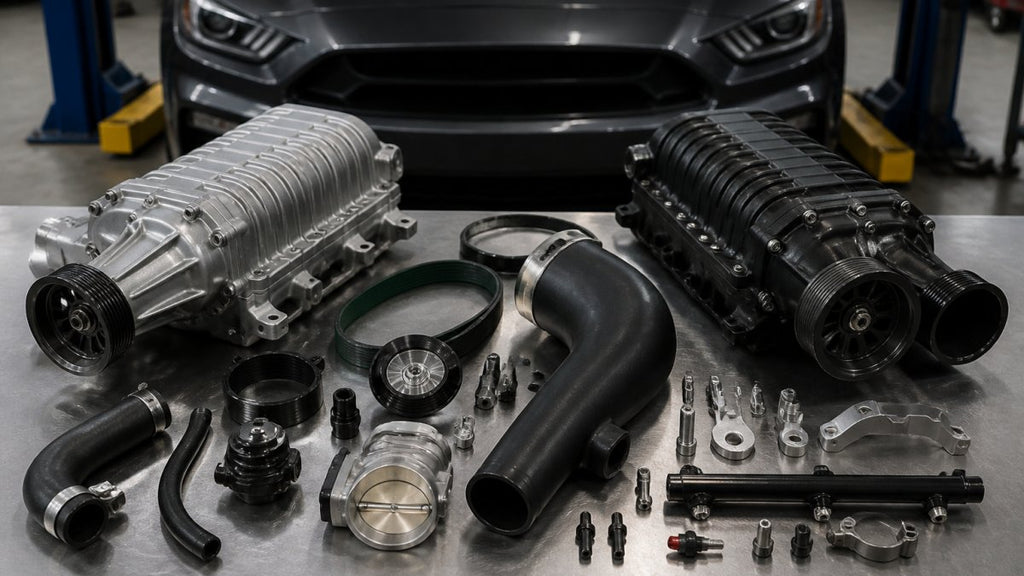
Supercharger Kit Warranty Comparison: What's Covered in 2026
Table of Contents
- Supercharger Kit Warranty Comparison: What Actually Gets Covered
- Supercharger Kit Warranty Coverage: Kit Parts vs. Powertrain and Drivetrain
- Supercharger Warranty Length: Terms, Mileage Limits, and Transfer Rules
- Supercharger Installation Warranty Requirements: What Keeps Coverage Valid
- Supercharger Warranty Claim Process: Proof, Denials, and Appeals
- Kit Stage, Model Year, and Vehicle Application: How They Change Warranty Terms
- Total Ownership Cost and Warranty Value: What the Fine Print Is Worth
- Conclusion: Matching Warranty Protection to Your Build
- Frequently Asked Questions
Last Updated: October 8, 2026
Supercharger Kit Warranty Comparison: What Actually Gets Covered
A supercharger kit warranty is the kit maker's written promise to repair or replace defective parts for a set period, separate from your vehicle's factory coverage. At VT Superchargers, we field warranty questions every day.
A kit warranty covers the parts in the box; a factory powertrain warranty covers the engine and transmission that came with the vehicle. Two documents, two providers, two claim processes.
Supercharger Kit Warranty Coverage: Kit Parts vs. Powertrain and Drivetrain
Supercharger kit warranty coverage splits into two buckets, and confusing them is the most common mistake we see. The kit warranty covers the hardware the manufacturer sold you; the factory powertrain warranty covers the engine, transmission, and drivetrain from the automaker.
What the kit warranty covers
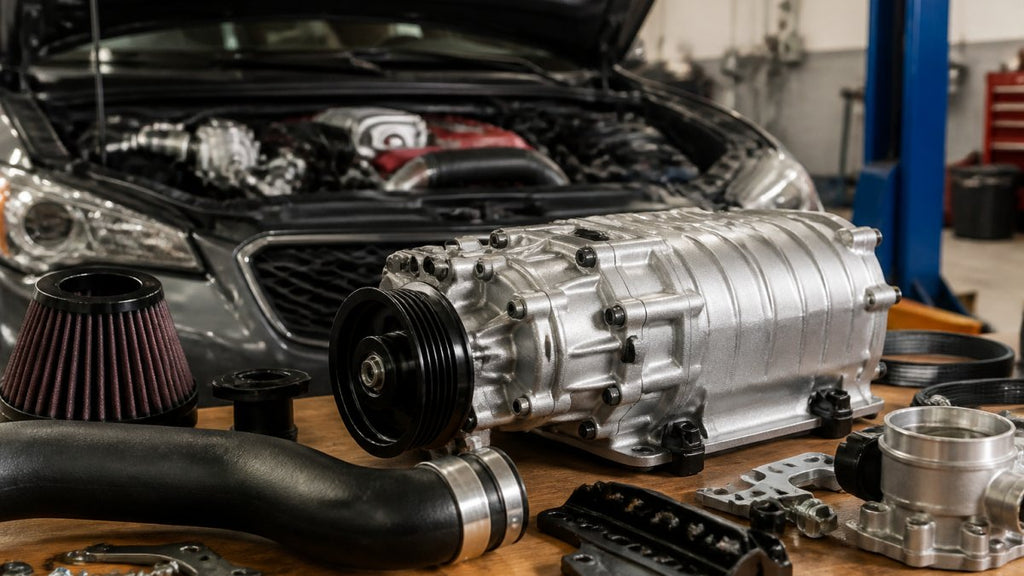
A typical kit warranty covers defects in materials and workmanship on the components supplied in the kit: the blower unit, brackets, pulleys, belts, hardware, and any included tuning device or calibration file.
What it usually does not cover: labor to remove and reinstall the kit, shipping costs, incidental damage to other parts, or failures caused by improper installation or tuning.
What a factory powertrain warranty covers after a supercharger install
Under the Magnuson-Moss Warranty Act, a manufacturer cannot void your entire warranty simply because you installed aftermarket parts. However, it can deny a specific claim if it can show the aftermarket part caused the failure.
In practice, that means a failed alternator on a supercharged truck is still likely covered. The FTC guidance on aftermarket parts and warranty coverage explains this distinction in plain terms.
Watch Out
The most common denial scenario is a lean condition caused by a skipped calibration step. If the engine runs lean under boost and burns a piston, the automaker will deny the powertrain claim, and the kit maker may deny it too if the install deviated from the instructions. Follow the calibration procedure exactly.
Supercharger Warranty Length: Terms, Mileage Limits, and Transfer Rules
Supercharger warranty length varies by manufacturer, kit stage, installer, and sometimes model year. The term you actually get is the one printed in the warranty document that ships with your specific kit, not a forum post from three years ago.
How to read a warranty term correctly
A term is written one of four ways:
- Months from purchase. The clock starts the day you buy, even if the kit sits in the box for six months.
- Months from installation. The clock starts when the kit is first put into service, which usually favors the buyer.
- Miles, whichever comes first. A daily driver can burn through a mileage cap long before the calendar term expires.
What a typical comparison looks like
Because terms change and vary by application, pull the current warranty document for the exact kit and model year you are considering. The table below shows the categories to compare, fill it in from the actual documents, not marketing pages.
| Warranty Element | Kit Warranty (varies by brand) | Factory Powertrain Warranty |
|---|---|---|
| Provider | Kit manufacturer | Vehicle automaker |
| Term basis | Months from purchase or install | Months or miles from original sale |
| Mileage limit | Often capped; varies by brand | Commonly 60,000 miles on the powertrain |
| Transferable | Rarely; usually original purchaser only | Sometimes, for a fee, within a set window |
| Covers labor | Usually not | Yes, at a franchised dealer |
| Affected by modification | Only if install or tune was faulty | Only for failures the automaker can tie to the modification |
| Deductible | Often none, but shipping may be on you | May apply on extended coverage |
| Claim window | Set by the kit maker | Set by the automaker |
Where to verify current terms
Warranty terms are updated without much fanfare. Before relying on any number, check these sources and note the date:
- The warranty PDF linked from the kit manufacturer's product page.
- The vehicle owner's warranty booklet, which lists the powertrain term and any state-specific variations.
- The FTC's guidance on auto warranties and aftermarket parts for the federal rules that apply to both documents.
Write the verification date next to each term; one you confirmed last year may already be out of date.
Transfer rules and resale
Most kit warranties are written for the original purchaser and do not transfer if you sell the vehicle. Some factory powertrain warranties transfer to a second owner, sometimes for a fee or within a set window. If resale value matters, read both documents before you buy.
Pro Tip
Build a one-page warranty sheet for your build: kit brand, kit part number, purchase date, install date, term, mileage cap, transferable yes/no, claim phone number, and the date you last verified the term. Keep it with the receipts. When a claim comes up two years later, that sheet is the difference between a quick approval and a fight.
Supercharger Installation Warranty Requirements: What Keeps Coverage Valid
Supercharger installation warranty requirements come down to one principle: the manufacturer wants proof the kit was installed and tuned as designed. Meet those conditions and coverage stays intact. Deviate, and you give the provider a reason to deny.
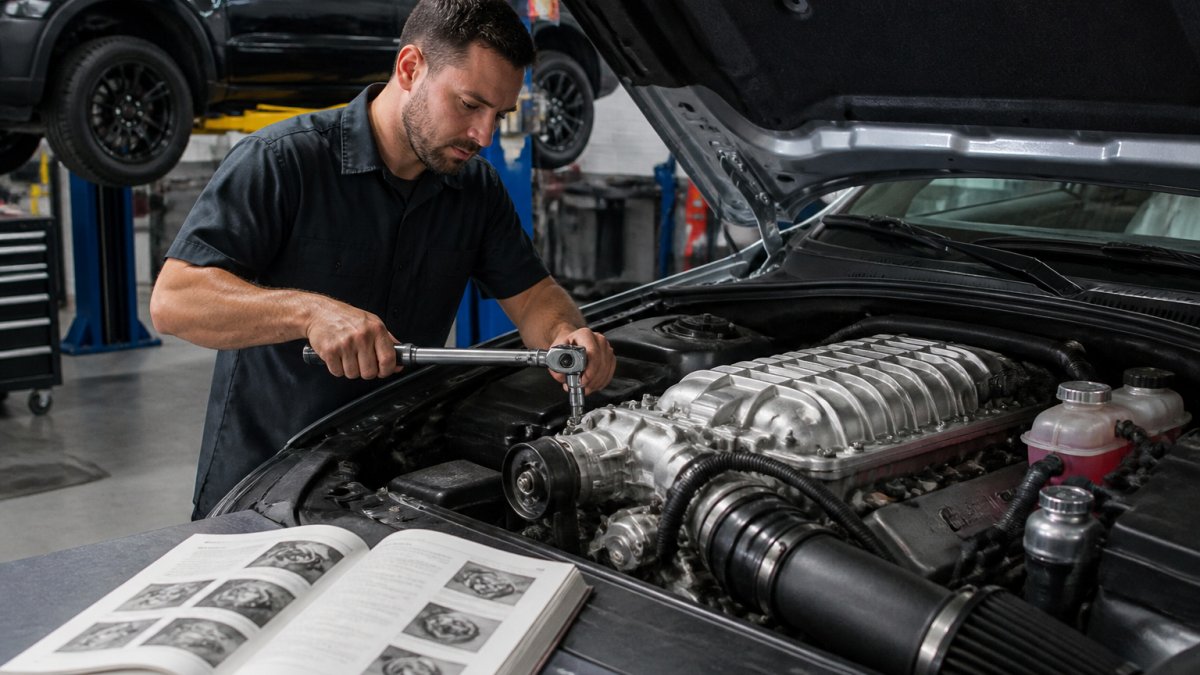
The requirements we see most often:
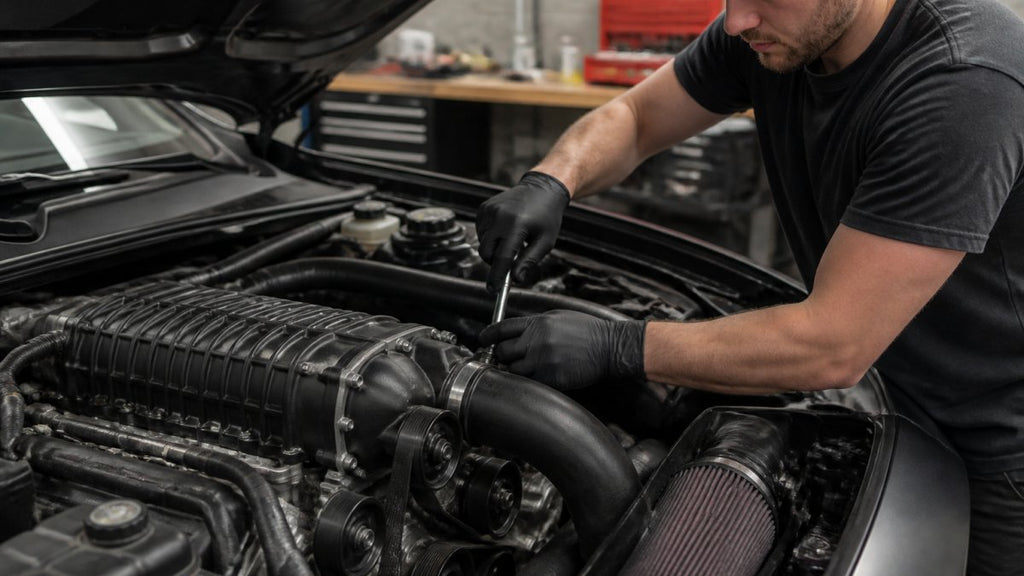
- Professional installation or documented DIY compliance. Some brands require an approved installer for full coverage. Others allow DIY but require adherence to the published torque specs and sequence.
- Correct calibration. Running the stock tune with a boosted engine is the fastest way to void coverage. Load the supplied calibration or a verified custom tune.
- Specified fuel and boost limits. Exceeding the maximum boost or running lower octane than specified can void a claim.
A compliance checklist is worth building before you turn a single bolt:
- Confirm the kit is listed for your exact model year and trim
- Read the warranty document before purchase, not after
- Record torque values and installation photos
Supercharger Warranty Claim Process: Proof, Denials, and Appeals
The supercharger warranty claim process starts with a phone call or online form to the provider, followed by documentation: the original invoice, installation records, calibration proof, and photos or video of the failed part.
Denials usually fall into a few categories: missed maintenance, evidence of over-boost, an unverified installer, or a failure the provider attributes to a related component.
For factory powertrain claims, the process runs through a dealership: the service advisor submits the claim and the automaker decides.
Kit Stage, Model Year, and Vehicle Application: How They Change Warranty Terms
Warranty terms are not universal across a manufacturer's lineup or across stages. A stage 1 kit for a stock daily driver often carries different coverage than a stage 2 or 3 kit built for higher boost. Higher stages mean more stress on the engine, and manufacturers respond with tighter terms, stricter installation requirements, or no powertrain-related coverage at all.
How stage changes the warranty conversation
A stage is shorthand for how much boost and supporting hardware the kit adds. As stage goes up, three things happen:
- The kit warranty may narrow. Some makers keep the same parts-only term across stages; others shorten it or add conditions for higher stages.
- The factory powertrain exposure grows. More boost means more cylinder pressure, more heat, and a wider set of failure modes an automaker can point to.
- Installation requirements tighten. Higher stages are more likely to require an approved installer, a specific fuel, or a verified custom tune.
Stage 1 kits are typically marketed as compatible with a stock vehicle, while stage 2 and 3 kits assume supporting modifications, injectors, fuel pump, exhaust, or a built short block. Without those parts, the kit maker may treat the install as out of spec, a denial trigger on both the kit warranty and any related factory claim.
How model year and application change coverage
A kit engineered for a specific year range and trim level is covered on that application. Install it on a vehicle it was not designed for and you may void coverage entirely, the manufacturer's testing and calibration were done on the intended application.
Three application questions to answer before you buy:
- Does the kit list your exact model year and trim? A one-year gap can mean a different ECU calibration, different fuel system, or different emissions hardware.
- Does the kit account for mid-cycle changes? Automakers sometimes change a part mid-year without changing the model year. Ask the kit maker whether your build date is covered.
- Does the kit assume a stock baseline? If you already have a cold air intake, headers, or a different cam, ask in writing whether your configuration is covered.
How modifications interact with the factory warranty
Under the Magnuson-Moss Warranty Act, a manufacturer cannot void your entire warranty simply because you installed aftermarket parts, but that is not a promise your whole factory warranty stays intact.
In practice:
- A failed alternator on a supercharged truck is still likely covered, because the supercharger did not cause it.
- A failed piston ring is not, if the automaker can tie the failure to increased boost, a lean condition, or a tune that exceeded stock parameters.
- A failed transmission may be covered or denied depending on whether the automaker can show the added torque exceeded the drivetrain's design limits.
The burden is on the manufacturer to show causation for a specific claim, not on you to prove your innocence. The FTC guidance on aftermarket parts and warranty coverage explains this distinction in plain terms.
What to get in writing before you buy
- Confirmation that the kit is listed for your exact model year, trim, and build date.
- Confirmation of whether your existing modifications are compatible with the kit's warranty terms.
- The kit warranty document itself, not a summary.
Keep that email. If a claim ever comes up, it is the clearest evidence of what you were told before you spent the money.
Total Ownership Cost and Warranty Value: What the Fine Print Is Worth
Warranty value is not a line item on the invoice, but it shows up in total cost of ownership. A kit with a longer term and labor coverage costs more upfront; a shorter, parts-only term costs less.
Three costs to weigh:
- Replacement parts. A failed blower unit out of warranty is a significant expense. In-warranty, it is a phone call.
- Labor. Most kit warranties exclude it. If a shop charges several hours to remove and reinstall a unit, that is on you unless the warranty states otherwise.
- Downtime. A vehicle off the road for a warranty claim still costs you, whether that is a rental or a missed weekend.
For most buyers, the practical answer is a kit with a clear, written warranty term, a documented claim process, and a manufacturer who answers the phone.
Key Takeaway
The warranty is only as good as the paperwork behind it. A 24-month term with clear requirements and a responsive provider beats a longer term buried in exclusions you cannot meet.
Conclusion: Matching Warranty Protection to Your Build
The gap between a warranty that pays and one that denies comes down to documentation, calibration, and choosing a kit built for your exact application. Before you buy, read the warranty document, confirm the term and mileage limit, and understand what factory powertrain coverage will and will not do after the install.
VT Superchargers builds bolt-on supercharger kits with OEM-style fitment for many makes, backs them with a 24-month warranty, and supports customers with financing and worldwide shipping.
Frequently Asked Questions
Will installing a supercharger void my vehicle's factory warranty?
Not automatically. Under the Magnuson-Moss Warranty Act, a dealer cannot void your entire factory warranty just because you added a supercharger. The dealer must show the modification caused the specific failure being claimed. If a supercharger tune causes a piston failure, that repair may be denied. If your power window motor fails, the supercharger has nothing to do with it and the claim should stand. Always keep installation records and receipts.
How long do supercharger kit warranties typically last?
Supercharger warranty length varies by manufacturer. VT Superchargers offers a 24-month warranty on its bolt-on kits. Some competitors advertise three-year or five-year terms, but those often carry mileage limits like 36,000 or 60,000 miles and may exclude competition use. Check whether the term is measured in months, years, or miles, and confirm whether it transfers if you sell the vehicle.
What does a supercharger kit warranty typically cover?
Most kit warranties cover the supercharger head unit, brackets, pulleys, and hardware against defects in materials and workmanship. They usually do not cover labor to remove and reinstall the kit, tuning costs, or damage to unrelated engine components. Some policies exclude engine damage entirely unless a specific powertrain protection add-on is purchased. Read the covered components list before you buy.
Can a warranty claim be denied if the kit was not professionally installed?
Yes. Many manufacturers require professional installation by an approved installer to keep coverage valid. If you install the kit yourself and a failure occurs, the manufacturer may deny the claim if they can show improper installation caused the problem. If you plan a DIY install, document every step with photos and torque specs, and check whether your kit's warranty allows self-installation before you start.
Related post
RECENT POSTS