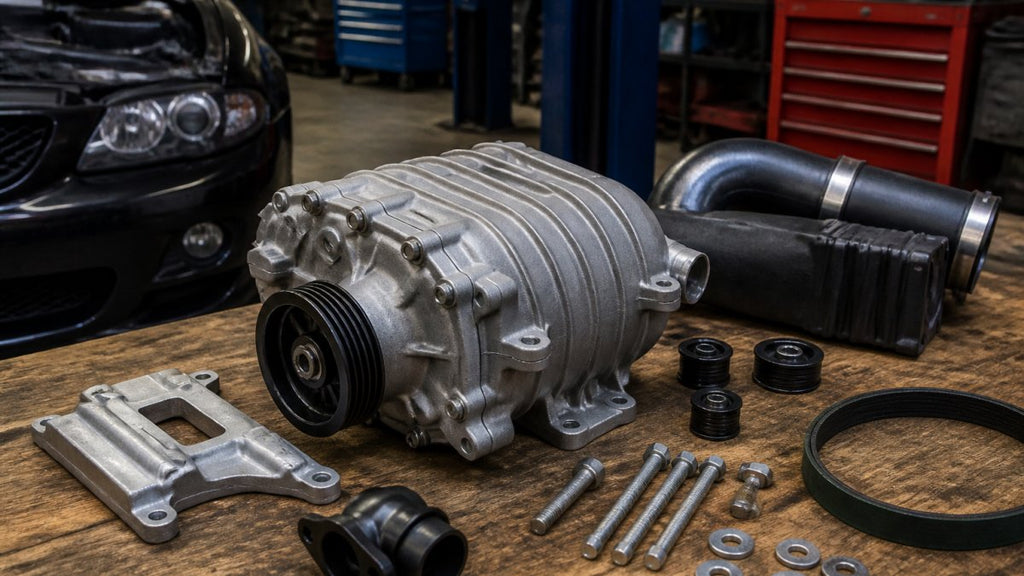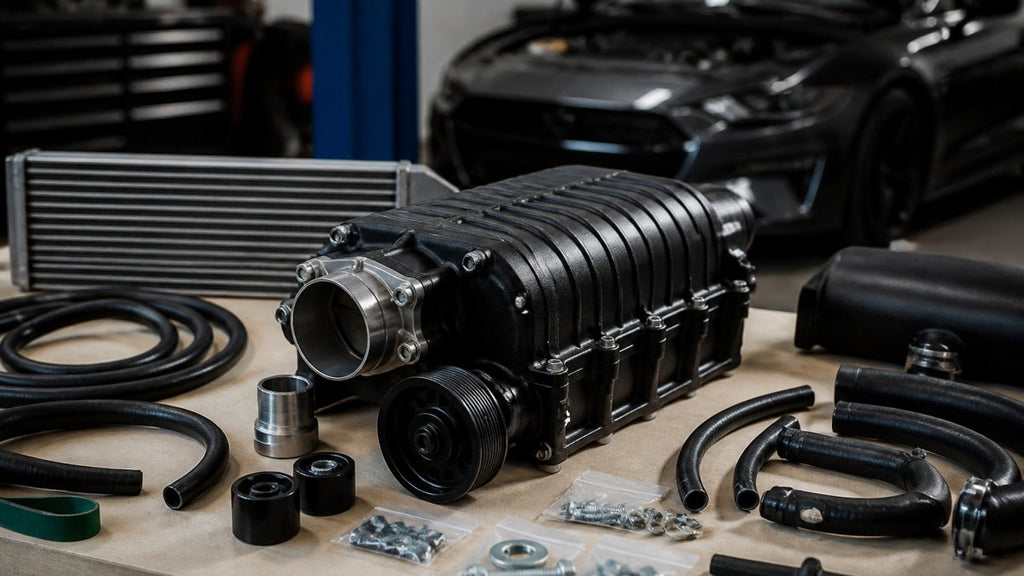
7 Supercharger Kit Sound Comparisons That Matter
Last Updated: October 24, 2026
Quick Summary
A supercharger kit sound comparison comes down to three noises: the belt-driven whine, the intake whoosh, and the low roar under full throttle. Roots kits give a broad mechanical whine, twin-screw kits a sharper whine, and centrifugal kits stay quiet until high rpm. Intake, exhaust, and recording conditions often change the sound more than the blower design itself.
- A supercharger is belt-driven and whines instantly, while a turbo spools a beat later.
- Roots blowers produce a broad, low mechanical whine with strong idle and cruise presence.
- Twin-screw blowers deliver a sharper whine that holds pitch across the rev range.
- Centrifugal kits are nearly silent at idle and scream near redline.
- Opening the intake is the single biggest change for most kits' whine volume.
Table of Contents
- What a Supercharger Kit Actually Sounds Like
- Supercharger Whine vs Turbo Spool: The Core Difference
- Roots vs Twin-Screw Supercharger Sound
- Centrifugal Supercharger Whine: Higher Pitch, Later Arrival
- How Throttle, Load, and Gear Change What You Hear
- How to Make a Supercharger Whine Louder
- Choosing a Supercharger Kit for the Sound You Want
- Frequently Asked Questions
What a Supercharger Kit Actually Sounds Like
Three noises dominate the conversation: the high-pitched whine of a belt-driven blower, the whoosh of air rushing into the intake, and the low roar under full throttle. Each one tells you something about the compressor inside.
Below, we break down how each kit type sounds, what changes the volume, and how to pick a blower that matches your ears, not just your dyno sheet.
Supercharger Whine vs Turbo Spool: The Core Difference
The supercharger whine versus turbo spool debate comes down to how each device makes boost. A supercharger is driven by a belt off the crankshaft, so it spins the moment the engine turns.
That mechanical link is why a blower produces an immediate, rising whine tied directly to engine speed.
- Supercharger: instant response, whine rises with rpm, no lag
- Turbo: delayed spool, whistle under load, blow-off valve "stututu" on lift
- Supercharger roar: deep intake growl under wide-open throttle
Neither is better. They are different listening experiences, and most enthusiasts know within seconds which one they prefer.
Roots vs Twin-Screw Supercharger Sound
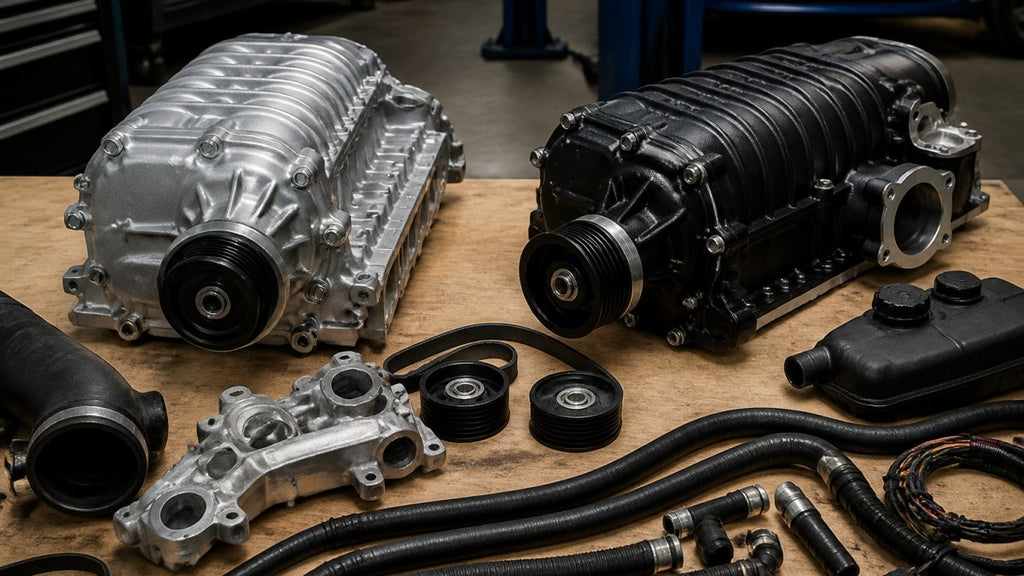
Roots and twin-screw blowers both sit on top of the engine and both whine, but they do not sound identical, and the difference is more consistent than most forum threads suggest. The keyword asks about supercharger kits, so it is worth comparing the major kit designs on sound directly rather than treating "supercharger" as one sound. For a direct Edelbrock vs Whipple supercharger comparison, see how these two popular twin-screw designs differ.
The mechanism behind the sound
A Roots-style supercharger moves air in pockets between its rotors and does not compress the air internally; compression happens downstream. Its whine tends to be a broader, lower mechanical tone with a pronounced rotor and gear character. A twin-screw supercharger compresses air between two intermeshing rotors, and its whine is often sharper and more consistent across the rev range. Both are positive-displacement, so both make sound the moment the engine turns, unlike a centrifugal unit, which is quiet until rpm builds.
Kit-by-kit sound character
- Roots-style kits (common on domestic V8 applications): broad, low mechanical whine; strong presence at idle and cruise; a deep intake roar under wide-open throttle. The sound reads as "muscle" rather than "scream."
- Twin-screw kits (common on modern V8 and truck applications): sharper, more insistent whine that holds pitch across the range; strong low-end response; a cleaner, more high-frequency character than Roots.
- Centrifugal kits: near-silent at idle, high-pitched whine that climbs with rpm, loudest near redline. Included here because buyers cross-shop it against the positive-displacement designs.
What actually changes the sound more than the design
A common mistake is attributing every difference to the blower type. In practice, four other factors often matter more:
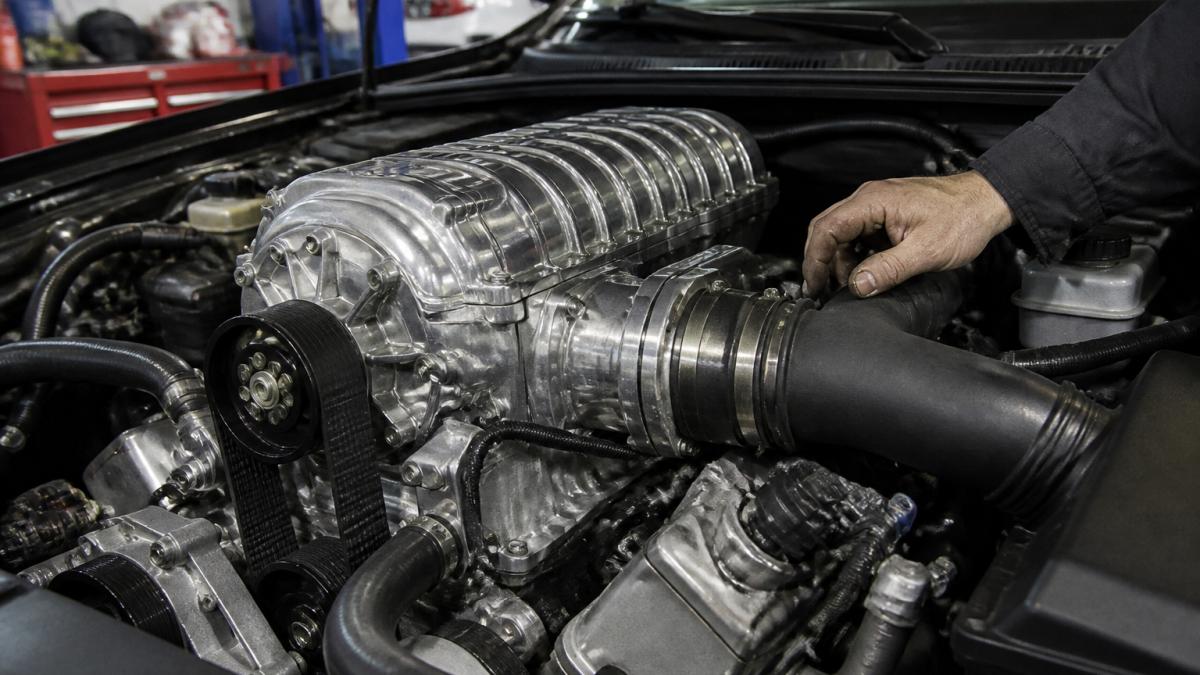
- Intake: the whine is largely intake noise. An open-element intake or high-flow filter can transform a quiet kit into a loud one; a restrictive factory air box muffles it.
- Exhaust: a loud exhaust can mask the blower whine entirely; a moderate exhaust lets the intake and blower character come through.
- Bypass valve: the bypass or recirculation valve behavior affects part-throttle and lift-off sounds, and a poorly matched valve can add unwanted noise.
How to compare kits fairly
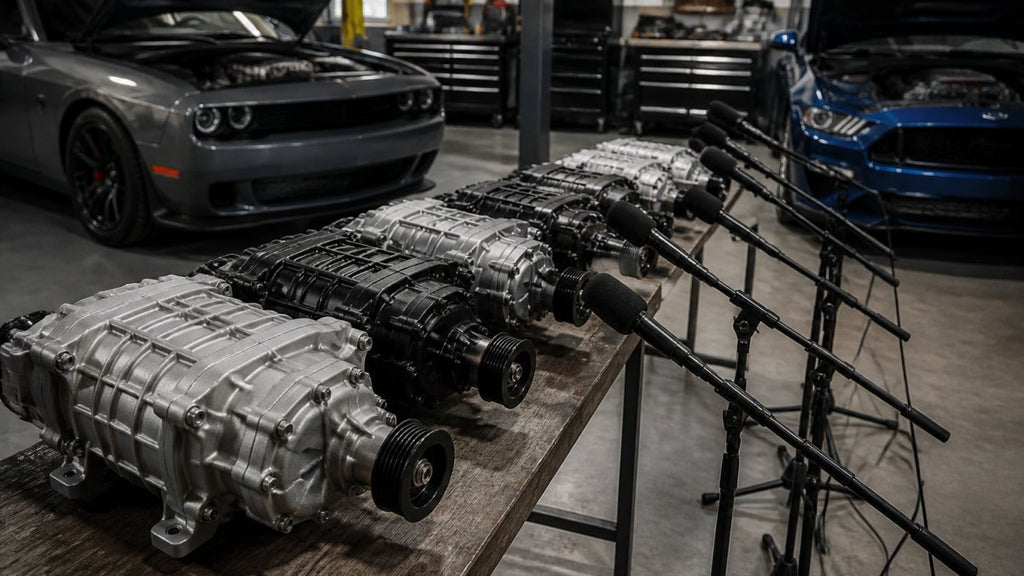
Because setup dominates, a fair kit-to-kit comparison holds intake, exhaust, and recording conditions constant. In practice that means listening to clips recorded with the same microphone placement and similar exhaust, or hearing the kits in person. When you shop, ask what intake and exhaust the demo vehicle runs, a "quiet" kit with an open intake can be louder than a "loud" kit with a stock air box.
Watch Out
Do not judge a blower from a single wide-open-throttle phone clip. Cabin insulation, exhaust note, and microphone placement all color what you hear, and the clip usually captures the peak, not the daily experience.
For the deeper engineering breakdown, our guide on Roots vs centrifugal supercharger design covers how each type builds boost.
Centrifugal Supercharger Whine: Higher Pitch, Later Arrival
Centrifugal supercharger whine behaves differently from a positive-displacement blower. A centrifugal unit looks like a turbo and spins up with rpm, so its whine climbs in pitch as engine speed rises.
That "later arrival" is the trade-off. A centrifugal blower feels softer at low rpm and comes alive in the upper range, which suits drivers who spend time in the top half of the tach.
- Centrifugal: quiet at idle, high-pitched whine up top, builds boost with rpm
- Twin-screw: strong whine throughout, strong low-end response
- Roots: broad mechanical tone, instant low-end push
Pick based on where you drive, not just how you want it to sound at a car show.
How Throttle, Load, and Gear Change What You Hear
Most sound comparisons stop at "it whines under throttle." That tells you almost nothing about what you will actually hear on a given drive. The useful question is narrower: at idle, at a steady cruise, at part throttle, at wide-open throttle, and on lift-off, which supercharger kit designs make which sounds, and how loud? Below is a condition-by-condition breakdown you can use to predict what a kit will sound like before you buy it.
At idle
A positive-displacement blower (Roots or twin-screw) is always turning, so at idle you hear a low, steady mechanical presence, a soft rotor whir and, on some kits, a faint gear or bearing tone. It is rarely loud, but it is there. A centrifugal unit is nearly silent at idle because it is not spinning fast enough to move meaningful air; most drivers hear only the engine and accessories.
At a steady cruise
This is where the kits diverge most and where most phone videos mislead. A Roots or twin-screw blower at light throttle and low load produces a subdued, constant whine that rises and falls with rpm, noticeable in a quiet cabin, masked by a loud exhaust. A centrifugal unit at cruise is close to stock; its whine does not arrive until you are well into the rev range.
Under part throttle and moderate load
Part throttle is the in-between zone. A Roots blower's whine becomes clearly audible and climbs with rpm. A twin-screw sharpens earlier and holds a more consistent pitch. A centrifugal begins to make itself known only as rpm climbs past the midrange. This is the condition where a smaller pulley and an open intake change the experience most, because you spend most of your driving time here.
At wide-open throttle
Wide-open throttle under load is the full-character moment. A Roots blower gives a broad, low mechanical roar layered with whine. A twin-screw gives a sharper, more insistent whine plus the intake growl. A centrifugal gives a high-pitched scream that builds toward redline and is comparatively quiet below the midrange. The exhaust note competes with all three here; a loud exhaust can bury the blower entirely.
On lift-off and deceleration
A belt-driven supercharger quiets almost instantly when you close the throttle, because its speed is tied to engine rpm, not to boost demand. You get a rapid decay of whine rather than a dramatic event. This is the clearest listening difference from a turbo, which can add a blow-off valve or compressor-surge sound on lift. If the "stututu" or flutter is what you want, no supercharger kit will give it to you, that is a turbo behavior.
How gear and rpm interact
Gear choice changes engine rpm at a given road speed, and rpm is what drives blower speed on a belt-driven kit. The same kit cruising in a tall overdrive gear sounds tame; downshift one or two gears at the same road speed and the whine jumps in both volume and pitch. That is why two drivers with the same kit can describe it completely differently, one spends time lugging in overdrive, the other keeps the tach in the midrange.
Pro Tip
When you evaluate a kit, listen in the condition you drive most. A clip recorded at wide-open throttle tells you the ceiling, not the daily experience. Ask for or record a steady-cruise clip at part throttle in a tall gear, that is the sound you will live with.
What this means for kit choice
If you want sound present at idle and cruise, a Roots or twin-screw kit fits. If you want near-stock calm at cruise and a scream only when you push it, a centrifugal kit fits. Neither is louder in absolute terms, they are loud in different conditions. Match the condition, not just the peak.
How to Make a Supercharger Whine Louder
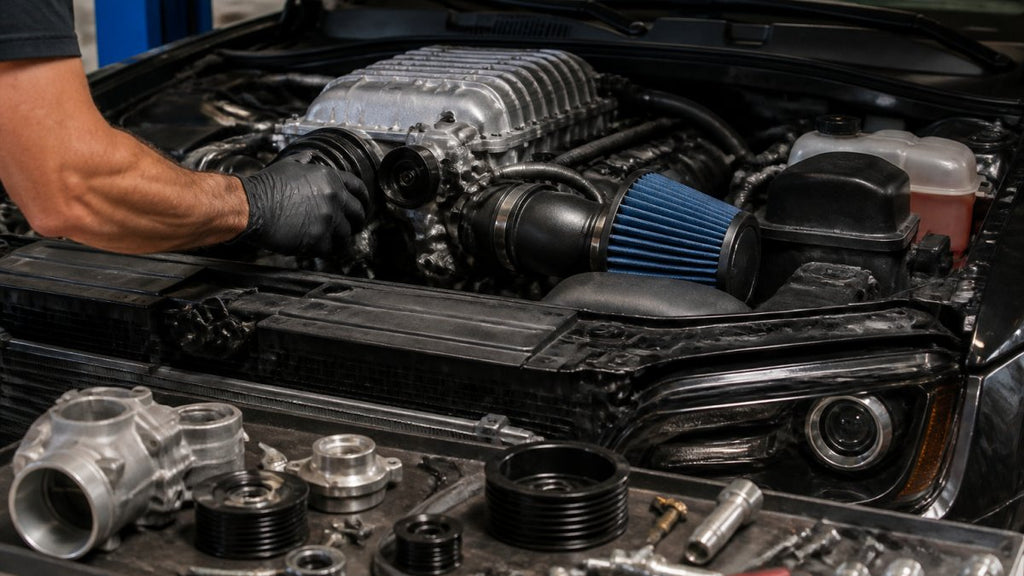
The fastest way to make a supercharger whine louder is to open up the intake. The whine is largely intake noise, so a restrictive factory air box muffles it.
Other levers that change the volume and pitch:
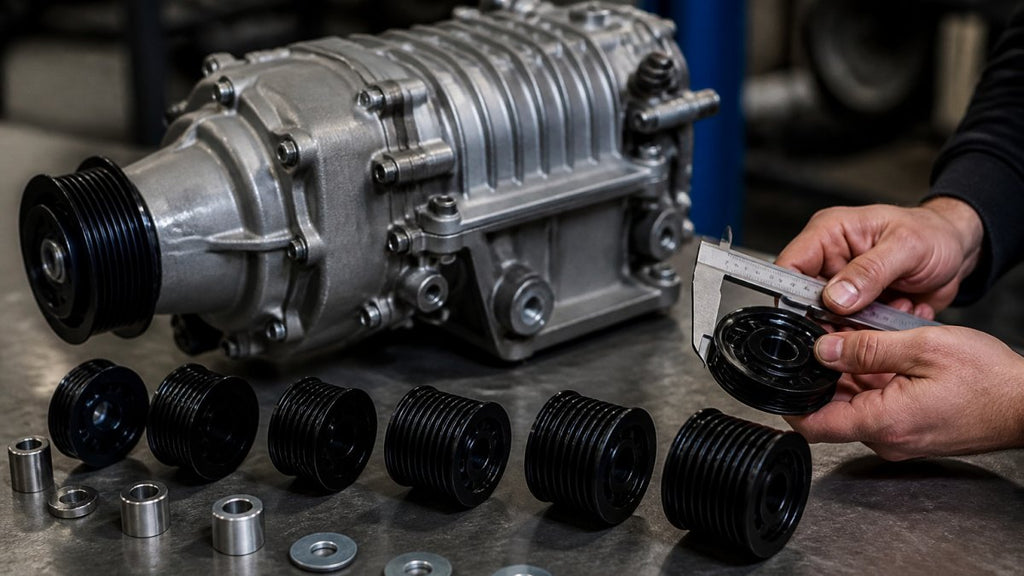
- Smaller pulley: spins the blower faster, raising pitch and volume
- Open intake: the single biggest change for most kits
- Less cabin insulation: more sound reaches you, for better or worse
Watch out: spinning the blower faster with a smaller pulley adds heat and stress, so match it to the blower's rated limits and your tune. Not every listener loves a loud whine, either.
Choosing a Supercharger Kit for the Sound You Want
Match the kit to the sound first, then to the power goal. If you want constant whine and instant low-end torque, a twin-screw or Roots blower fits.
Beyond sound, weigh fitment, drivability, and how you use the vehicle. Our guide on how to choose the right supercharger for your engine walks through matching a blower to your goals.
| Kit Type | Sound Character | Best For |
|---|---|---|
| Roots | Broad mechanical whine, instant response | Daily drivers, towing |
| Twin-screw | Sharp whine, strong low-end | Street performance |
| Centrifugal | High-pitch whine up top | Top-end power builds |
If you are leaning toward a Mazda build, you can browse our Mazda supercharger kits to see fitment options.
Frequently Asked Questions
What does a supercharger kit sound like compared with a turbo?
A supercharger kit typically produces a continuous whine or roar that rises with engine speed, because the blower is belt-driven and always spinning. A turbo is quieter until boost builds, then you hear spool and a blow-off valve chirp or stututu on lift. Supercharger sound is more constant and linear; turbo sound is more delayed and event-driven. The difference is most obvious at idle and part throttle, where a turbo is nearly silent.
Which type of supercharger has the loudest whine?
Roots-style and twin-screw superchargers generally produce the most noticeable whine because their rotors turn at engine speed and move air in distinct pulses. Centrifugal superchargers spin much faster and create a higher-pitched whistle that arrives later in the rev range. Loudness also depends on intake design, pulley size, and cabin insulation, so two kits of the same type can sound very different in practice.
How can I make my supercharger whine louder?
Start with an open-element intake or a larger throttle body to reduce muffling. A smaller supercharger pulley spins the blower faster and raises pitch and volume, but it also adds heat and may require a tune. Exhaust changes alter the overall tone but not the blower whine itself. Check with the kit maker before modifying pulleys to avoid voiding coverage.
Does a supercharger kit change exhaust sound?
A supercharger kit changes exhaust sound indirectly by increasing airflow and power, which can make the exhaust note deeper and louder under load. The blower whine itself comes from the intake side, not the tailpipe. If you want a specific exhaust tone, plan the cat-back or axle-back system alongside the kit. On otherwise stock vehicles, the exhaust change is usually mild compared with the distinct supercharger whine.
The right supercharger kit sound comes down to matching the blower design to how you drive and what you want to hear. VT Superchargers builds bolt-on kits with OEM-style fitment for Dodge, Ford, Jeep, Mazda, Nissan, Suzuki, and Toyota, backed by a 24-month warranty and financing options. Get started with VT Superchargers and find the kit that sounds as good as it performs.

Related post
26
Oct
23
Oct


RECENT POSTS