How to Choose the Right Supercharger for Your Engine
Table of Contents
- Start With Your Power Goals and Driving Style
- Centrifugal vs Roots vs Twin-Screw Supercharger: Which Type Fits Your Engine
- Sizing a Supercharger to Your Engine Displacement and Airflow
- Supercharger Kit Installation Requirements and Hidden Costs
- Benefits of Bolt-On Supercharger Kits for Stock and Modified Engines
- Intercooling, Heat Management, and Real-World Maintenance
- Emissions, Warranty, and Legal Compliance Checklist
- Frequently Asked Questions
Last Updated: September 18, 2026
Start With Your Power Goals and Driving Style
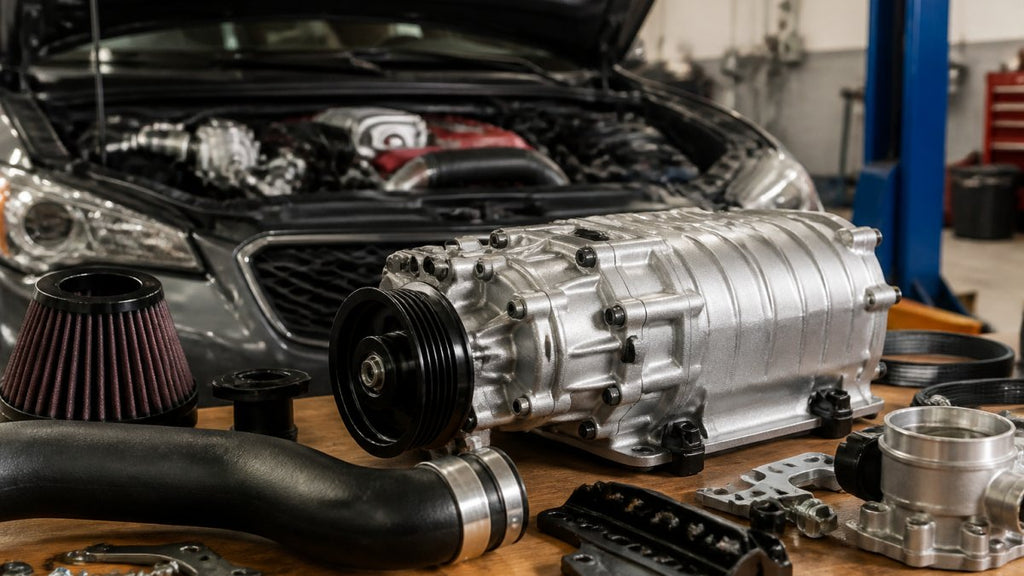
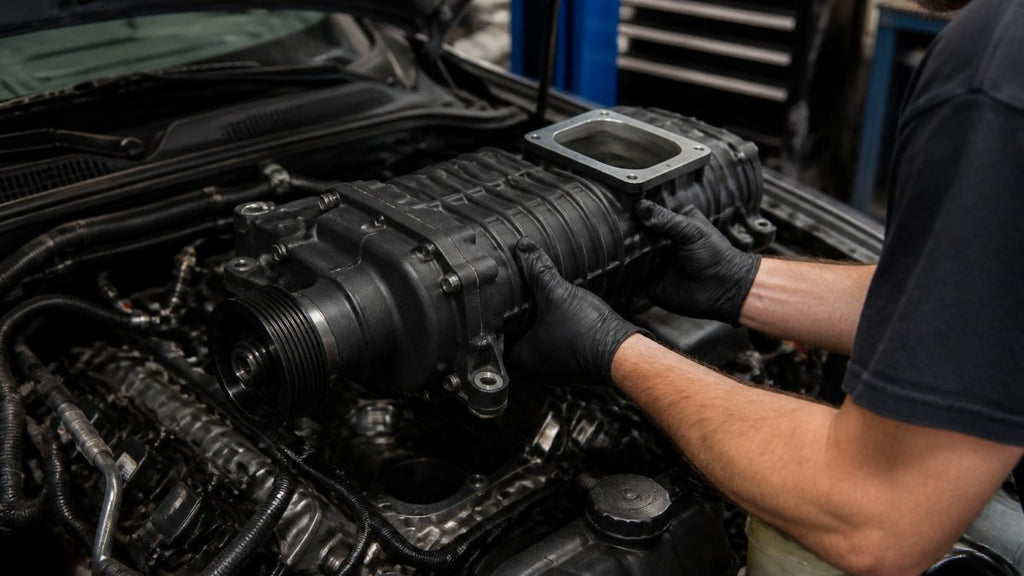
Learning how to choose the right supercharger for your engine starts with one question: what do you want the vehicle to do? A supercharger is a belt-driven forced induction system that compresses intake air to increase power, and the right unit for a daily driver is rarely right for a towing rig. We see buyers chase peak horsepower when they need low-end torque.
Daily Driver vs. Towing vs. Off-Road Builds
The three builds pull in different directions. A daily driver benefits from a broad torque curve and instant part-throttle response, not redline. A towing or off-road build needs torque down low and mid-range, where the engine works hardest. Many truck owners running oversized tires describe constant gear hunting on the highway, and a positive-displacement supercharger is often the fix because it builds boost early instead of waiting for rpm.
Pro Tip
If you tow or run larger tires, prioritize a torque curve that comes in strong below 3,000 rpm. Peak power figures sell kits; area under the curve is what actually fixes gear hunting.
Centrifugal vs Roots vs Twin-Screw Supercharger: Which Type Fits Your Engine
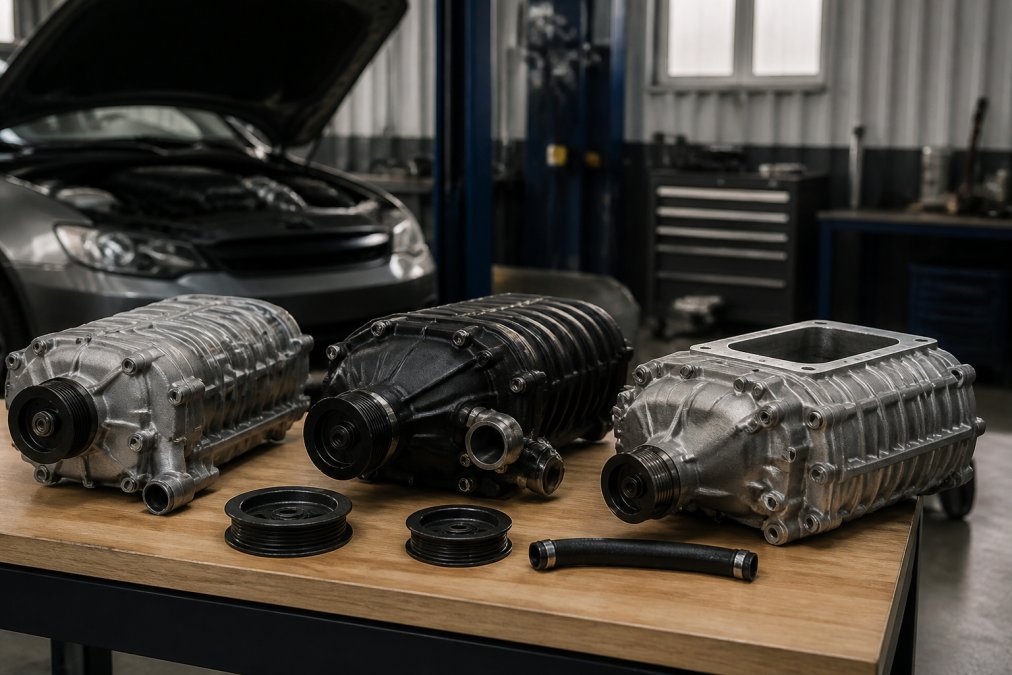
The centrifugal vs roots vs twin-screw supercharger decision comes down to how each type delivers boost. Centrifugal units build boost progressively with rpm, roots-style blowers deliver it almost instantly from idle, and twin-screw compressors combine immediate response with strong efficiency. Each design has a compressor map showing airflow versus pressure ratio, and how that map lines up with your engine's volumetric efficiency curve is the whole game.
How Each Type Delivers Boost
- Centrifugal: boost rises with engine speed, so low-end feels close to stock and top-end pulls hard. Best for street and strip builds that live above 4,000 rpm.
- Roots-style: positive displacement, so boost is available the moment you open the throttle. Best for trucks, towing, and daily drivers wanting instant response.
- Twin-screw: also positive displacement, but with better adiabatic efficiency and less heat buildup than a traditional roots blower. Best for builds that want both low-end torque and sustained power.
A centrifugal kit with air-to-water cooling, like the HKS-based system we offer for the Toyota Tacoma 3.5L V6, suits owners who want a strong, linear pull without changing how the truck behaves around town. A roots or twin-screw suits anyone who wants torque now.

Watch Out
Matching a centrifugal blower to a heavy towing rig is a common mismatch. You get peak boost at rpm you rarely use, and the low-end problem you were trying to solve stays exactly where it was.
Sizing a Supercharger to Your Engine Displacement and Airflow
Sizing a supercharger to your engine displacement and airflow starts with a simple airflow estimate: displacement times target rpm, adjusted for volumetric efficiency, converted to a CFM rating. Compare that CFM against the compressor map to confirm the blower can supply it without spinning past its efficiency island.
The Airflow Math, Worked Out
The formula most tuners use is:
CFM = (CID × RPM × VE) ÷ 3456
Where CID is cubic inch displacement, VE is volumetric efficiency (0.85 stock, 0.90-0.95 for a well-flowing head and intake), and 3456 is a unit conversion constant. That gives naturally aspirated airflow; for boosted airflow, multiply by the pressure ratio:
Pressure Ratio = (Boost + 14.7) ÷ 14.7
- Naturally aspirated: (323 × 6,000 × 0.85) ÷ 3456 = 477 CFM
- At 6 psi (pressure ratio 1.41): 477 × 1.41 = 672 CFM
Reading a Compressor Map and CFM Rating
A compressor map plots airflow on the horizontal axis and pressure ratio on the vertical, with efficiency islands drawn inside. Your operating point, the boost pressure and airflow your engine needs, should land inside the highest efficiency island at cruise and stay out of the surge line at low flow.
Three things to check on any map:
Mazda 2.0L / 2.5L Supercharger Tuner Kit →
- Where your peak-power point lands. That is your max CFM at your max pressure ratio. It should sit inside an efficiency island, not on the edge.
- Where your cruise point lands. Part-throttle cruise is low airflow and low pressure ratio. If that point is left of the surge line, the blower will surge and buck at light throttle.
- How fast the impeller or rotors spin to get there. Every blower has a max rpm. If you need to overdrive it past that to hit your CFM, you are outside the design envelope.
| Engine Goal | Blower Type | Typical Boost Target | Watch Out For |
|---|---|---|---|
| Daily driver, stock internals | Roots or centrifugal | Low boost | Heat soak, fuel quality |
| Towing / off-road torque | Roots or twin-screw | Low to moderate boost | Drivetrain stress, tuning |
| Built engine, max power | Centrifugal or twin-screw | Higher boost | Forged internals, fuel system |
Pro Tip
Do the CFM math before you talk to a single vendor. Walking in with a required CFM number and a pressure ratio turns a sales conversation into an engineering conversation, and it is the fastest way to spot a kit that is wrong for your engine.
Supercharger Kit Installation Requirements and Hidden Costs
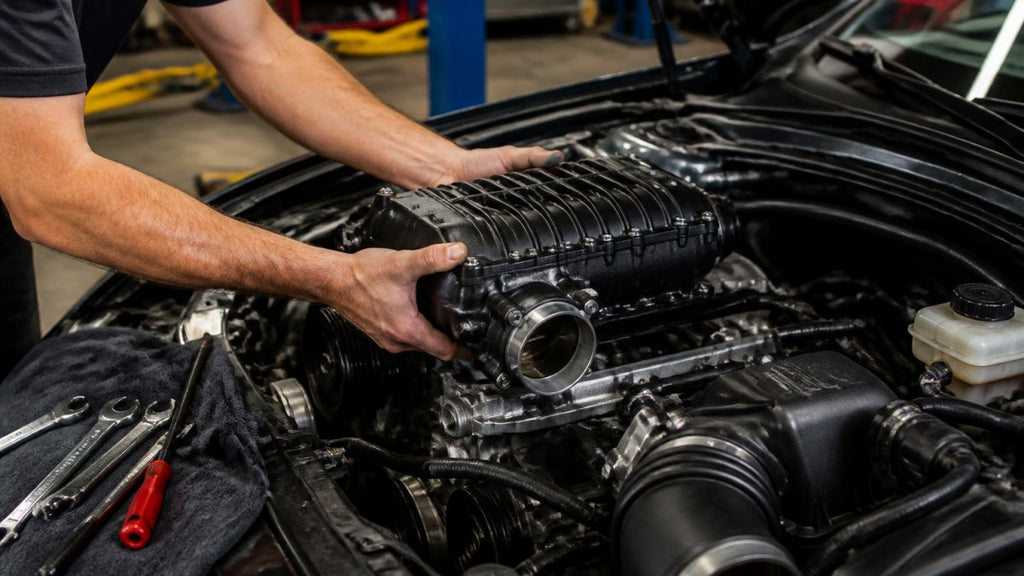
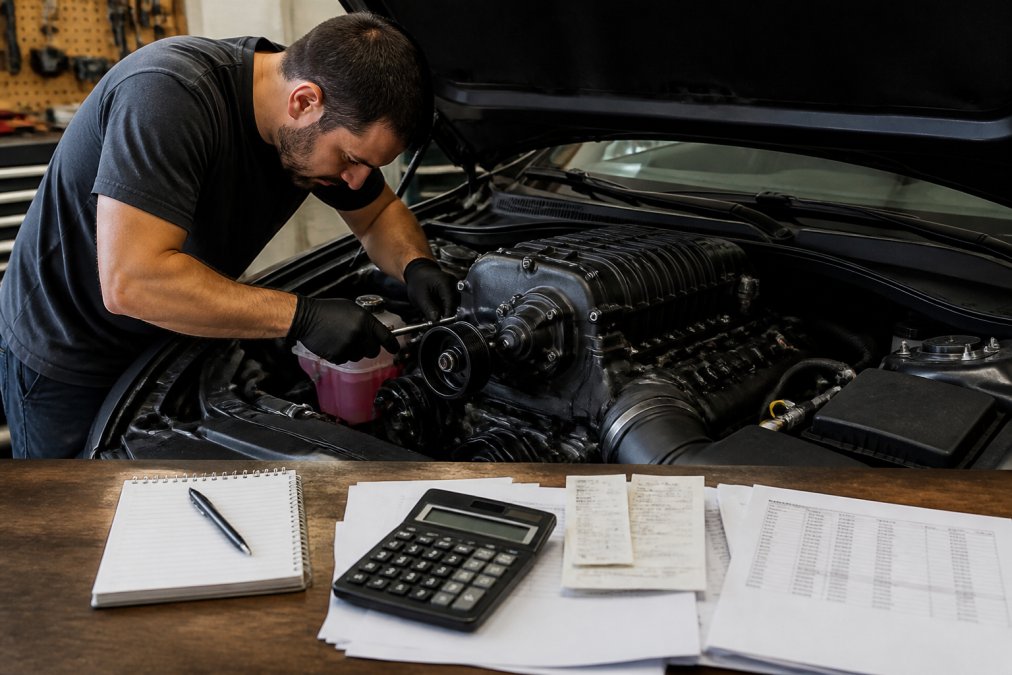
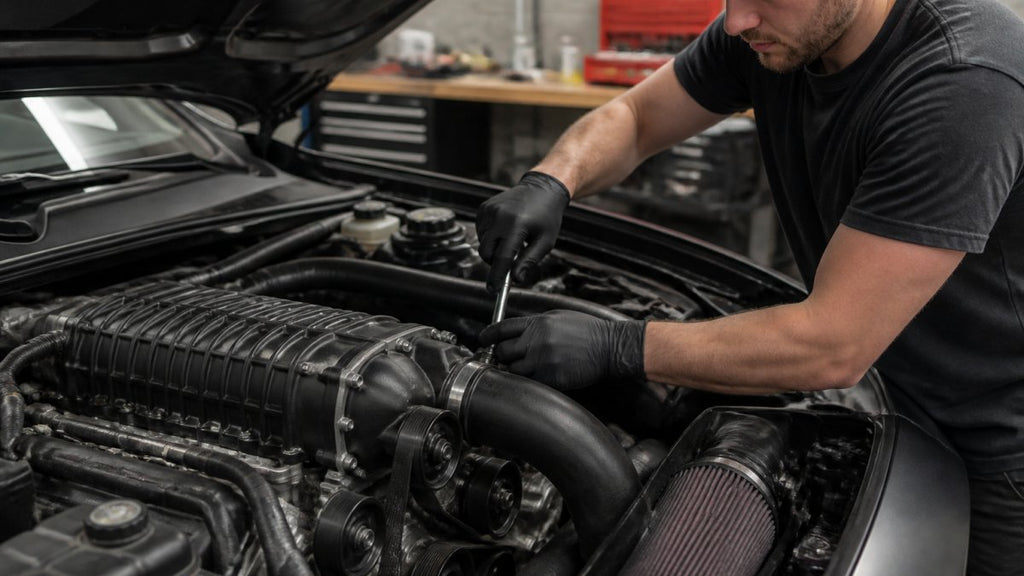
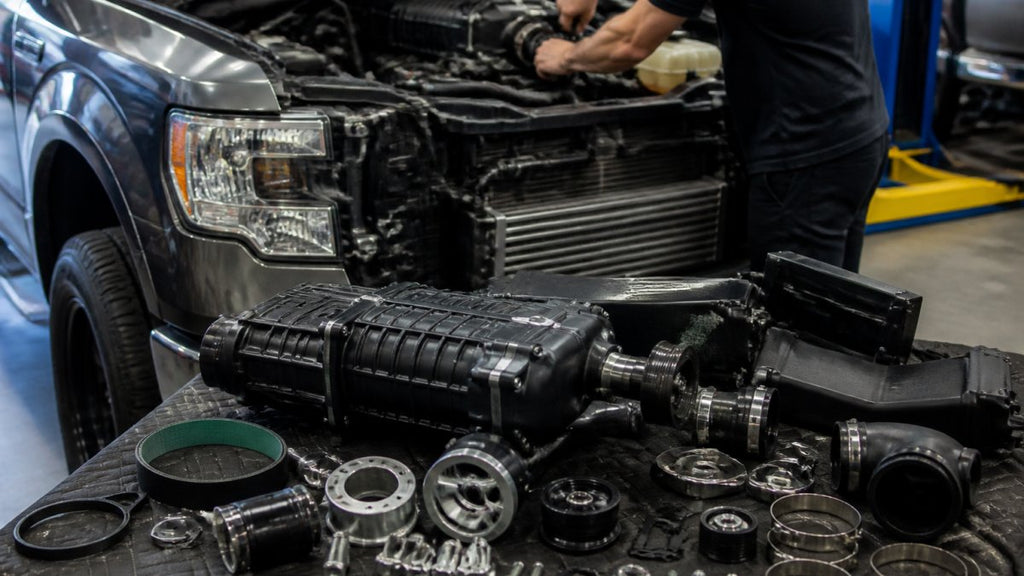
Supercharger kit installation requirements go well beyond the box. A bolt-on kit with a non-destructive installation, no cutting, welding, or permanent modifications, is genuinely a driveway job for a careful DIYer. But the kit is only part of the budget, and hidden costs are where most builds go sideways.
The Supporting Costs Nobody Puts in the Ad
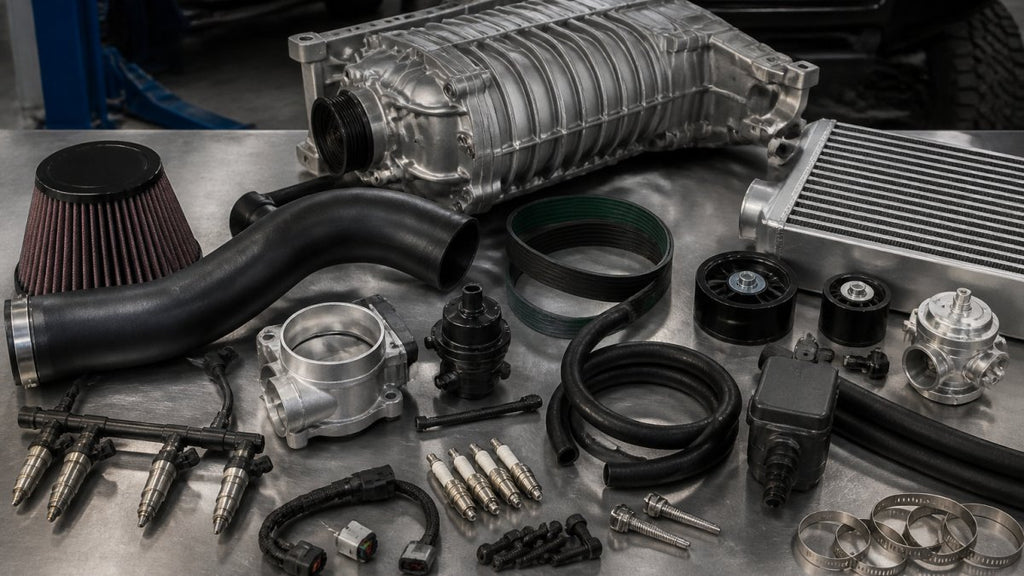
A kit advertised as a complete bolt-on still needs supporting work on most modern engines. Budget for these before you commit:
- Tuning and calibration. Professional ECU calibration is not optional on most modern engines. Without it, you risk detonation, poor air-to-fuel ratio control, and check-engine lights. This is the first line item, not the last.
- Fuel system. Larger fuel injectors and a capable pump if you push meaningful boost. A stock pump and injectors often run out of headroom before the blower does.
- Drivetrain. Clutch, transmission, and differential stress rises with torque. Plan for it.
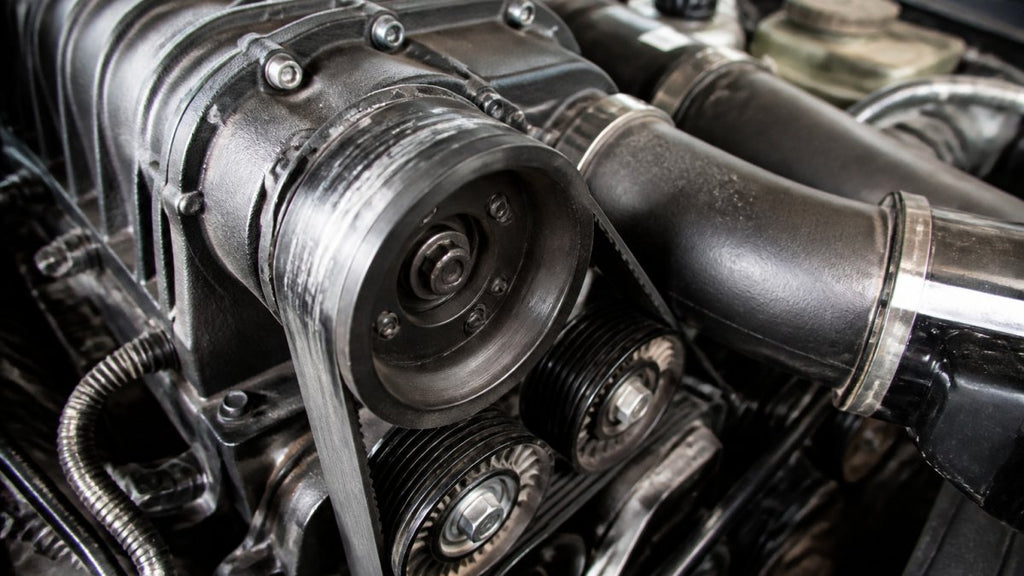
- Belt system. A proper drive belt and harmonic balancer setup, plus a pulley ratio chosen for your boost target.
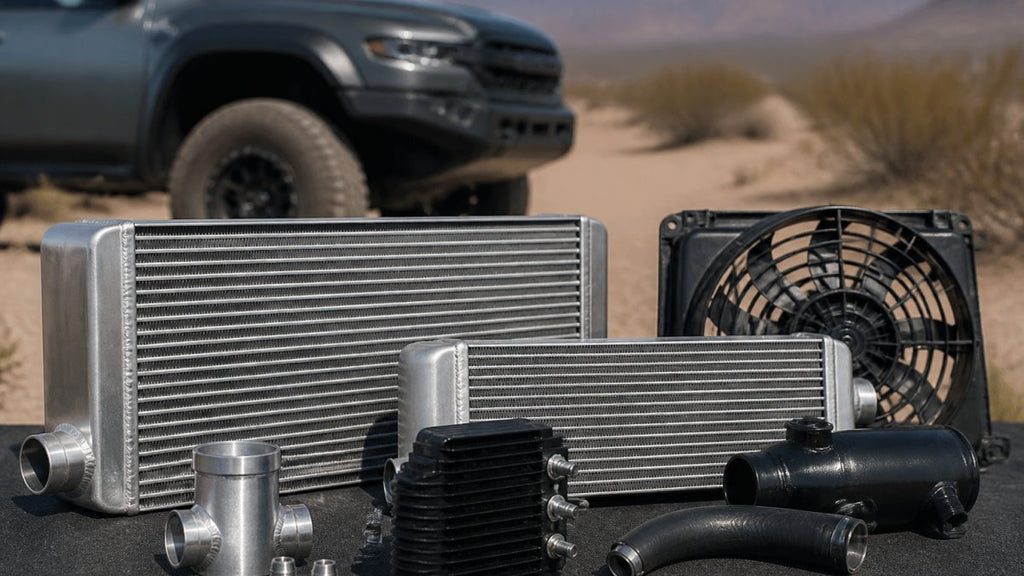
- Cooling. Intercooler capacity and heat management, especially in summer traffic.
Drivetrain Stress: The Downstream Cost of Boost
Torque is what breaks parts, and a supercharger adds torque everywhere in the curve, not just at redline. That torque travels through the clutch, transmission, driveshaft, differential, and axles. Each has a torque rating, and each becomes the weak link once you exceed it.
Real-World Maintenance Intervals and Long-Term Cost of Ownership
Selection guides stop at the purchase. Ownership does not. A supercharger adds a small but real maintenance routine, and skipping it is how builds lose power quietly.
- Supercharger oil and reservoir. Check at every oil change. Some units share engine oil; others have a sealed or separate reservoir. Know which yours is.
- Drive belt. Inspect for glazing and tension at every oil change. Belts wear faster under boost, and a slipping belt costs boost and can damage the pulley.
- Intake air temperatures. Watch them in summer traffic to catch heat soak early. A scan tool or a gauge is enough.
- Tuning recheck. After any pulley change or fuel system work, recheck the calibration. A tune that was safe at one boost level is not automatically safe at a higher one.
- Bearing service. Follow the manufacturer's interval. This is the one item most owners forget, and it is the one that ends a blower's life early when ignored.
Watch Out
A bolt-on kit is not a bolt-on-and-forget kit. The first symptom of skipped maintenance is usually lost power, not a warning light, so by the time you notice, the problem has been building for a while.
Key Takeaway
Budget the kit, the tune, the fuel system, the drivetrain margin, and the maintenance routine as one number. The owners who are happiest with their builds are the ones who priced all five before they ordered.
Benefits of Bolt-On Supercharger Kits for Stock and Modified Engines
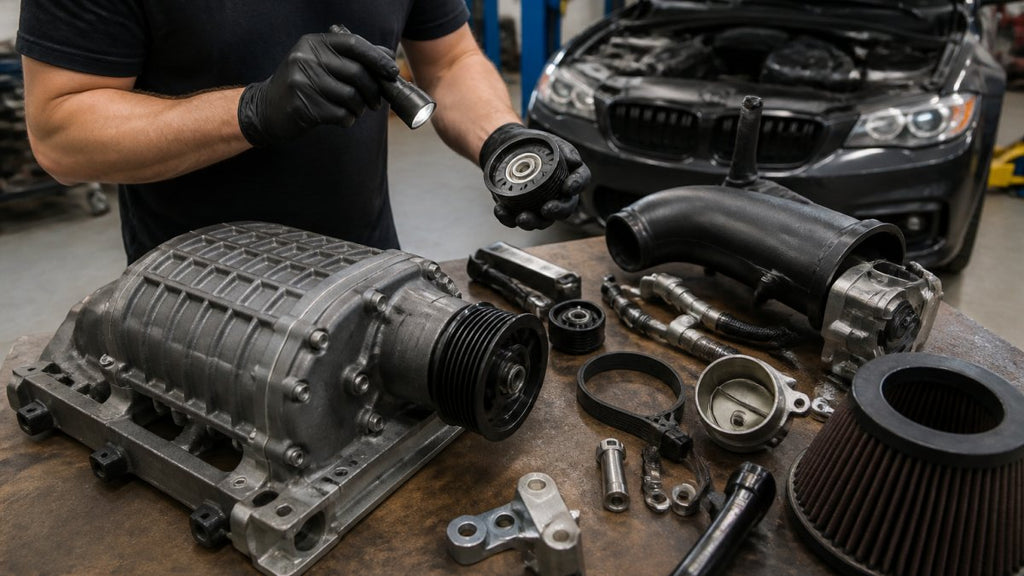
The benefits of bolt-on supercharger kits come down to reversibility and fitment. A well-engineered kit installs with OEM-style fitment, keeps factory accessories working, and can be removed if you sell the vehicle, whether you drive a stock daily or a built rig.
Key Takeaway
The best supercharger kit is the one that fits your engine, your goals, and your budget for the supporting work, not the one with the biggest advertised power number.
Intercooling, Heat Management, and Real-World Maintenance
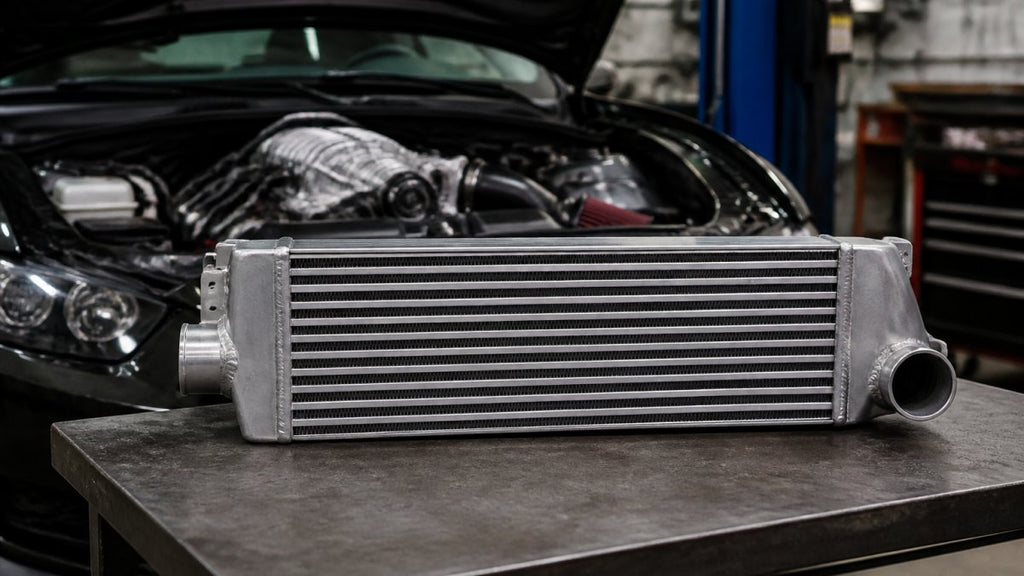
Intercooling and heat management decide whether your supercharger makes power on lap ten or heat-soaks into a slug. Compressing air raises its temperature, and hot intake air invites detonation and robs power. An air-to-water system with its own radiator, water pump, and reservoir can help keep intake temperatures lower.
- Check supercharger oil and the oil reservoir, filter, and lines at every oil change
- Inspect the drive belt for glazing and tension
- Watch intake air temperatures in summer traffic to catch heat soak early
- Recheck tuning after any pulley change or fuel system work
Emissions, Warranty, and Legal Compliance Checklist
Emissions and legal compliance are the part most guides skip, and the part that can cost you most. Forced induction changes your engine's air and fuel behavior, which in many states affects whether the vehicle passes inspection. Before you buy, work through this checklist:
- Confirm whether your state requires emissions testing and what it checks
- Check that the kit keeps or replaces required emissions equipment correctly
- Ask the manufacturer in writing how the kit affects your factory warranty
- Confirm the tuner's calibration keeps the check-engine light off and readiness monitors set
- Verify the kit is designed for your exact engine and model year
- Keep your installation and tuning receipts for warranty claims
Watch Out
Installing a supercharger without addressing emissions compliance can leave you with a vehicle that fails inspection and cannot be legally registered. Sort the compliance question before the install, not after.
Frequently Asked Questions
What type of supercharger is best for a daily driver?
A twin-screw or Roots-style supercharger usually suits daily drivers because both build boost low in the rpm range, which improves throttle response and torque for stop-and-go traffic and towing. A centrifugal unit makes most of its power higher in the rev range, so it feels more like a turbo and rewards drivers who rev the engine out. Match the type to how you actually drive, not to peak horsepower claims.
How does engine displacement affect supercharger sizing?
Displacement sets your engine's baseline airflow, measured in CFM. A larger engine moves more air per revolution, so it needs a supercharger with a higher flow rating to hit the same boost pressure. Smaller engines can run a smaller blower and still reach the target boost. Always calculate airflow at your redline, then pick a compressor that stays inside its efficiency range at that point.
What are the benefits of bolt-on supercharger kits over custom setups?
Bolt-on kits arrive with brackets, pulleys, hardware, and tuning support matched to your engine, so installation is largely reversible and does not require cutting or welding. Custom builds can make more power but demand fabrication, dyno time, and one-off tuning. For most enthusiasts, a bolt-on kit delivers a predictable power gain, keeps the factory mounting points, and is easier to service later.
Do I need to upgrade engine internals before installing a supercharger?
It depends on your boost target. At low boost, most stock engines with a proper tune and adequate fuel delivery handle forced induction safely. Once you push past roughly 8 to 10 psi, compression ratio, piston ring gaps, and rod strength become limiting factors, and forged internals are the safer path. Ask the kit maker what boost level their tune supports on a stock long block before you buy.
Related post
09
Oct
RECENT POSTS