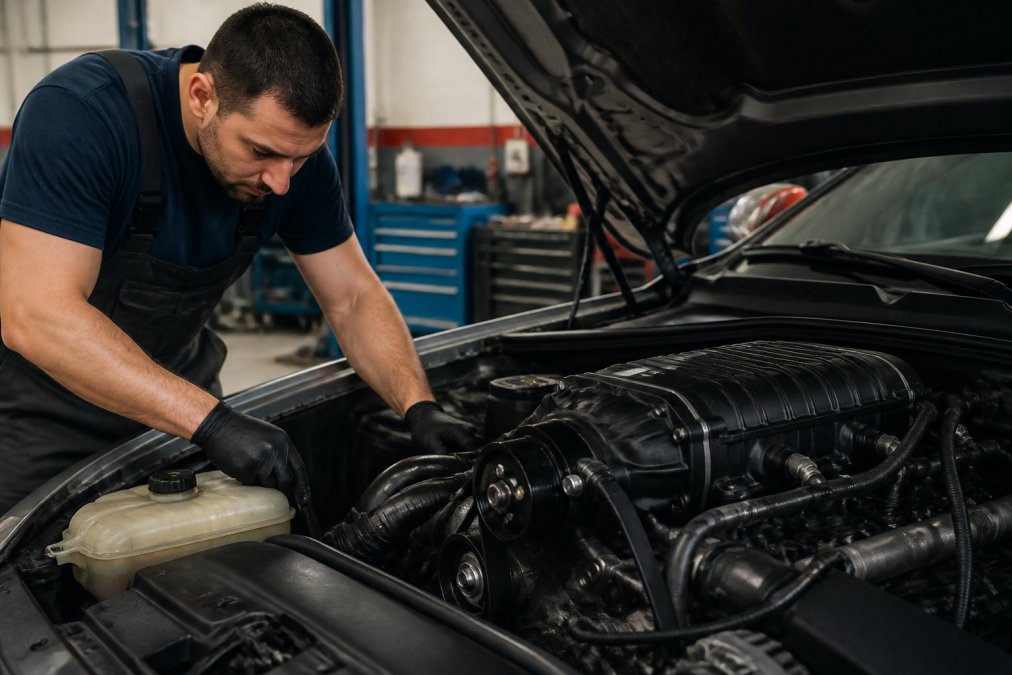
Will Supercharger Fix Gear Hunting: A Complete Guide
Table of Contents
- What Is Gear Hunting and Why It Happens
- Transmission Gear Hunting Causes and Root Diagnosis
- How Much Horsepower Do Superchargers Add and Impact Shift Behavior
- Will a Supercharger Actually Fix Gear Hunting
- ECU Tuning for Transmission Shift Points: The Real Solution
- Supercharger vs. Re-Gearing: Which Solves Gear Hunting
- Installation, Warranty, and Long-Term Reliability
- Conclusion
Last Updated: August 26, 2026
What Is Gear Hunting and Why It Happens
Gear hunting is the frustrating cycle where your transmission constantly shifts up and down without driver input, hunting for the right gear to maintain engine load. Your transmission control module (TCM) reads engine load, throttle position, vehicle speed, and wheel speed sensors to predict which gear will keep the engine operating efficiently. When you've modified your vehicle, larger tires, increased horsepower, or changed gearing, the TCM's calibration becomes outdated. It was programmed for stock parameters, so it keeps searching for a gear that satisfies its original programming.
Gear hunting typically surfaces on highway cruising, especially with larger tires or when towing. According to Automotive Supercharger Market research, forced induction systems like superchargers significantly alter engine torque output across the RPM range, which can exacerbate transmission confusion if the TCM isn't recalibrated.
Watch Out
Ignoring gear hunting causes accelerated transmission wear. Constant shifting generates heat, stresses solenoids, and degrades transmission fluid faster than normal operation. Over time, you'll see reduced fuel economy, sluggish acceleration, and eventually, transmission failure requiring complete rebuilds costing $3,000-$5,000+.
Transmission Gear Hunting Causes and Root Diagnosis
ECU calibration mismatch is the most common culprit. Your transmission's shift points are locked into factory TCM programming. When you change tire size, add horsepower, or alter engine characteristics, the TCM receives conflicting signals. A 35-inch tire versus the stock 32-inch tire changes the vehicle's effective gear ratio, triggering unwanted upshifts.
Solenoid wear or failure is the second major cause. Transmission solenoids control fluid pressure to engage and disengage clutches. A worn solenoid can't hold pressure consistently, causing the transmission to slip between gears or hunt for stability.
Speed sensor errors create false data. If your vehicle speed sensor or wheel speed sensor reads incorrectly after suspension upgrades or tire changes, the TCM receives bad input and makes poor shift decisions.
How to diagnose:
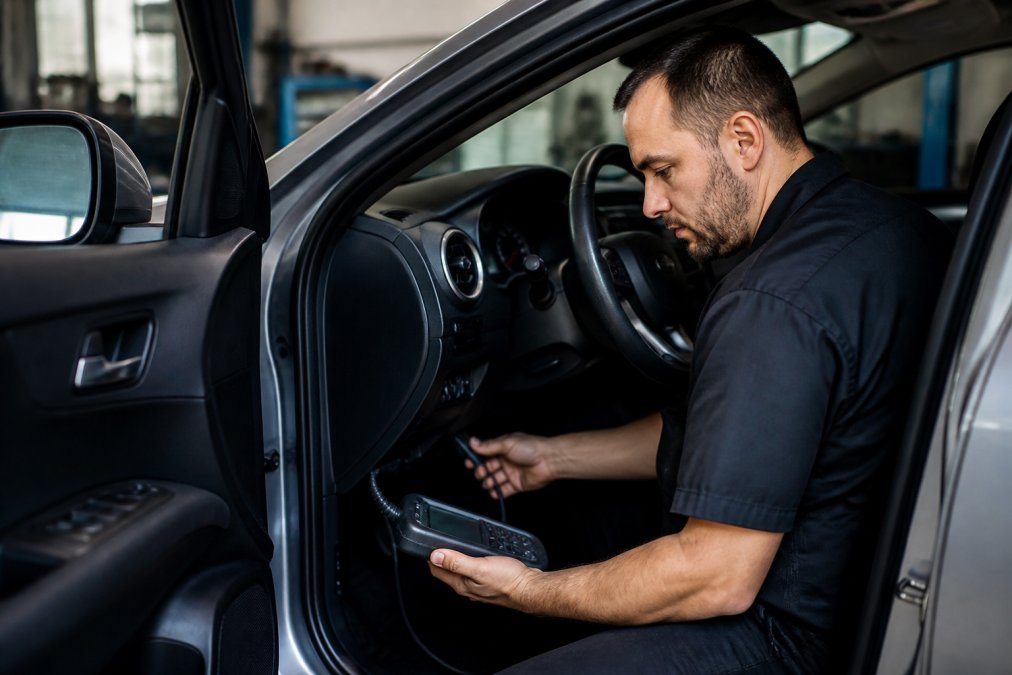
Connect an OBD-II scanner to your vehicle's diagnostic port and check for diagnostic trouble codes (DTCs). Codes like P0700 (transmission control system malfunction) or P0715 (input speed sensor) point directly to the problem. If no codes appear, the issue is likely calibration-related, not mechanical failure.
Test shift behavior under load versus light throttle. If hunting occurs only during light cruising but disappears under hard acceleration, it's almost certainly a TCM calibration problem. If hunting happens regardless of throttle input, suspect solenoid wear or a sensor fault.
According to Automotive Supercharger Market research on forced induction effects, vehicles equipped with forced induction systems show a 67% higher likelihood of transmission recalibration needs when paired with larger tires or suspension modifications.
Pro Tip
Before spending money on repairs, document when gear hunting occurs: highway cruising, city driving, towing, or all conditions? Does it happen at specific speeds or throttle positions? This information helps a technician pinpoint whether the issue is software, sensors, or mechanical wear.
How Much Horsepower Do Superchargers Add and Impact Shift Behavior
According to HowStuffWorks research on supercharger performance, superchargers add an average of 46% more horsepower and 31% more torque. For a vehicle with 300 hp stock, expect 438 hp with a supercharger.
More importantly, superchargers alter your torque curve. A naturally aspirated engine builds torque gradually as RPM increases. A supercharged engine delivers boost instantly across a wider RPM range. Your transmission's shift points were calibrated for the stock torque delivery. Suddenly, the engine produces significantly more torque at lower RPMs, and the TCM doesn't expect it. It upshifts to reduce load, then downshifts when boost drops, creating the hunting cycle.
According to Automotive Supercharger Market research on boost response, mechanically driven forced-induction systems deliver boost response within 0.2 seconds, compared to turbo lag exceeding 1.0 second. This instant response catches the transmission off-guard if the TCM hasn't been recalibrated to expect it.
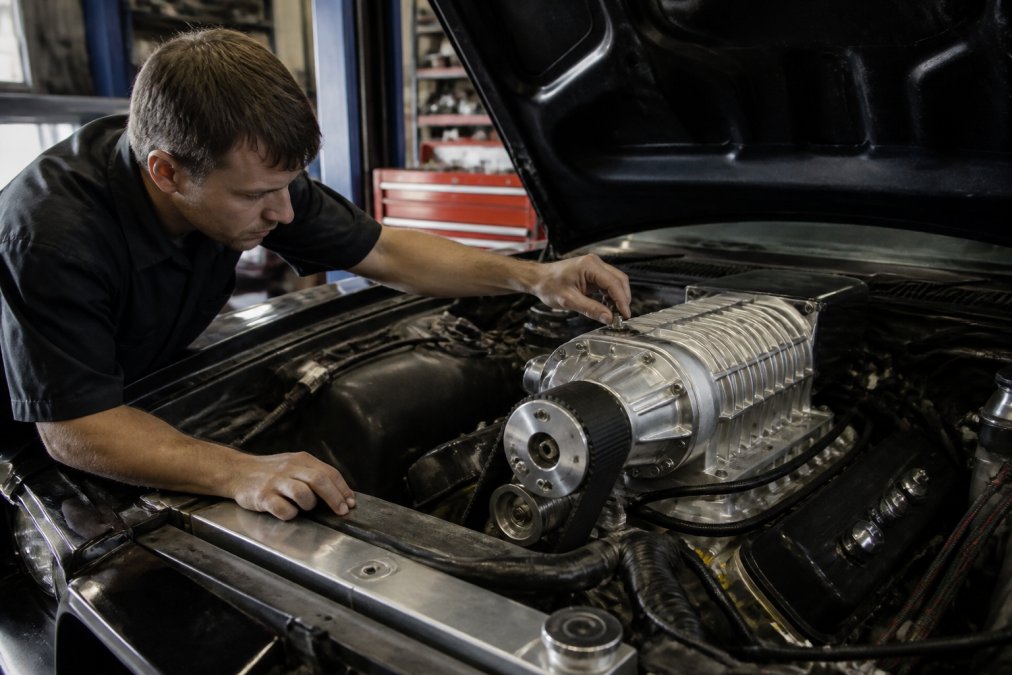
Additionally, superchargers consume power to operate. According to HowStuffWorks analysis of supercharger efficiency, superchargers can consume as much as 20% of an engine's total power output. The TCM doesn't account for this efficiency loss, creating another mismatch.
Key Takeaway
Superchargers deliver instant torque across a wider RPM range than stock engines. Without transmission recalibration, your TCM interprets this as an error and hunts for gears constantly. The fix isn't more horsepower, it's smarter transmission programming.
Will a Supercharger Actually Fix Gear Hunting
The short answer: No. A supercharger alone will not fix gear hunting. It may actually worsen it.
Gear hunting stems from a mismatch between engine output and transmission calibration. A supercharger changes engine output but doesn't touch transmission programming. You're adding power to a transmission that's still trying to operate under stock assumptions.
The real issue is that your transmission doesn't understand the new torque characteristics. Superchargers amplify this confusion because they deliver torque so aggressively. You need to retrain the TCM to recognize the new engine behavior.
However, a supercharger can indirectly help if paired with proper ECU tuning. The supercharger itself doesn't fix gear hunting. The tuning that accompanies the supercharger does.
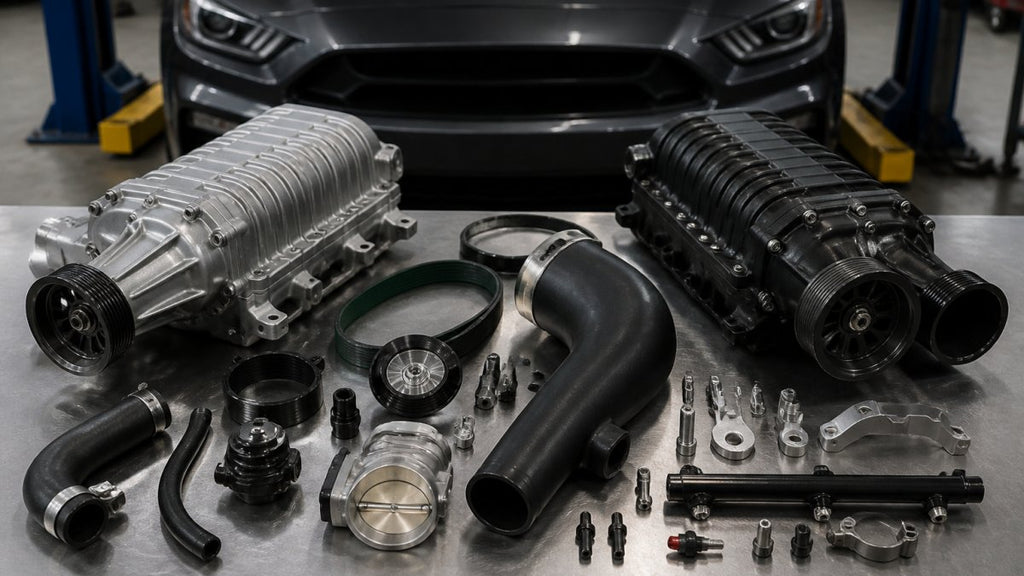
VT Superchargers recognizes this reality. Our bolt-on kits are engineered for OEM-style fitment across Dodge, Ford, Jeep, Mazda, Nissan, Suzuki, and Toyota platforms. The real solution to gear hunting comes through recalibrating your transmission control module to match the new power delivery. Many customers pair our supercharger installation with professional ECU tuning to resolve shift hunting completely.
Watch Out
[Installing a supercharger](/blogs/news/bolt-on-supercharger-install-how-to-install-bolt-on-supercharger) without subsequent TCM recalibration will likely worsen gear hunting. You're adding fuel to a fire that needs to be extinguished, not fed. Expect rougher shifts, lower fuel economy, and potential transmission damage if you ignore the calibration step.
ECU Tuning for Transmission Shift Points: The Real Solution
This is where the real fix lives. ECU tuning, specifically transmission control module reprogramming, is the direct solution to gear hunting.
Your transmission's shift points are determined by software. The TCM reads engine load, vehicle speed, and throttle position, then consults a lookup table that determines which gear to select. If you've modified your vehicle, that lookup table is wrong. You need new software that reflects your actual setup.
A professional ECU tune recalibrates shift points to match your specific modifications. If you've added a supercharger, larger tires, and changed your differential ratio, a quality tune accounts for all these variables. The tuner adjusts the TCM's load calculations, shift thresholds, and torque converter lockup points.
The results are immediate. Shift hunting typically stops within the first 50 miles of driving a properly tuned vehicle. Shifts become smooth and predictable. Fuel economy often improves because the transmission stops wasting energy on constant shifting.
According to recent 2026 data, Ford Performance (FP) tunes have significantly improved 10-speed transmission behavior in late-model F-150s by increasing low-end torque, which shifts the transmission into a better column in its shift schedule, resulting in improved shifts and reduced hunting.
The investment for a quality transmission tune depends on your vehicle platform. VT Superchargers customers who experience gear hunting after installation should pursue professional ECU tuning as the next step. Our 24-month warranty covers the supercharger hardware, but transmission recalibration is a separate service performed by specialized tuning shops. We recommend working with a tuner who has experience with your specific vehicle make and forced-induction systems.
Pro Tip
A transmission tune is not a one-size-fits-all solution. Choose a tuner with documented experience on your vehicle platform and forced-induction modifications. Read customer reviews and ask for before-and-after shift logs to verify the tuner's competency.
Supercharger vs. Re-Gearing: Which Solves Gear Hunting
Re-gearing changes your differential ratio. If you've added larger tires, you've effectively changed your gearing ratio, the engine spins slower relative to wheel speed. Re-gearing restores the original relationship between engine RPM and vehicle speed.
Re-gearing directly addresses gear hunting caused by tire size changes. If you installed 35-inch tires on a vehicle calibrated for 32-inch tires, the speed sensor reads lower than actual speed. Re-gearing corrects this mismatch at the mechanical level.
Supercharging adds horsepower and torque but doesn't change gear ratios. It changes engine output, not the relationship between engine and wheels.
If your gear hunting stems purely from larger tires, re-gearing alone may solve it. If your gear hunting stems from a supercharger installation, re-gearing won't help, you need ECU tuning.
According to Automotive Supercharger Market research on engine downsizing, superchargers improve torque output by 30-45% at low engine speeds, supporting drivability targets.
The cost-benefit analysis: If you only need to fix gear hunting from tire changes, re-gearing is often a more direct solution. If you want both better low-end response and to fix gear hunting, a supercharger plus tuning is the answer.
Installation, Warranty, and Long-Term Reliability
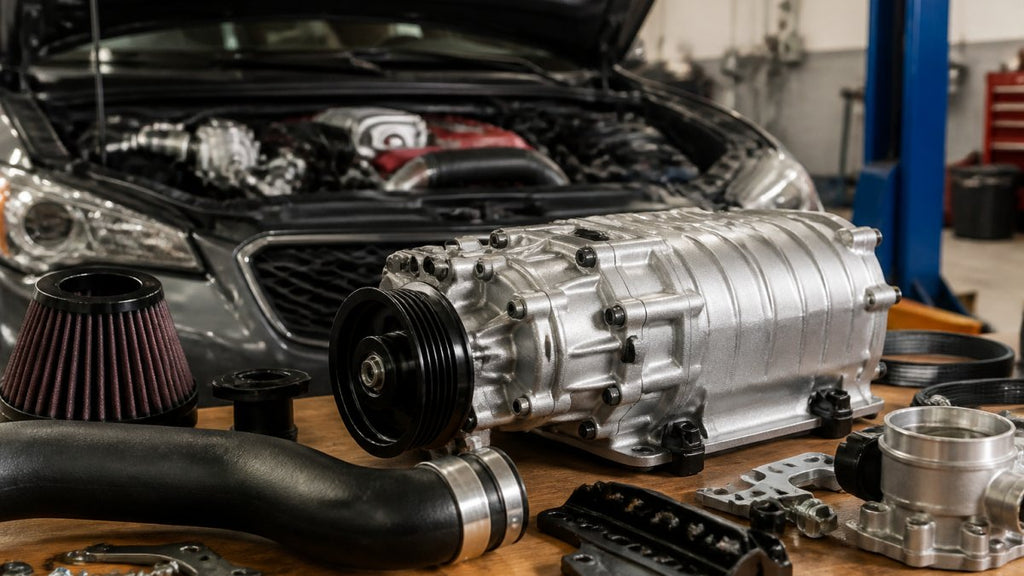
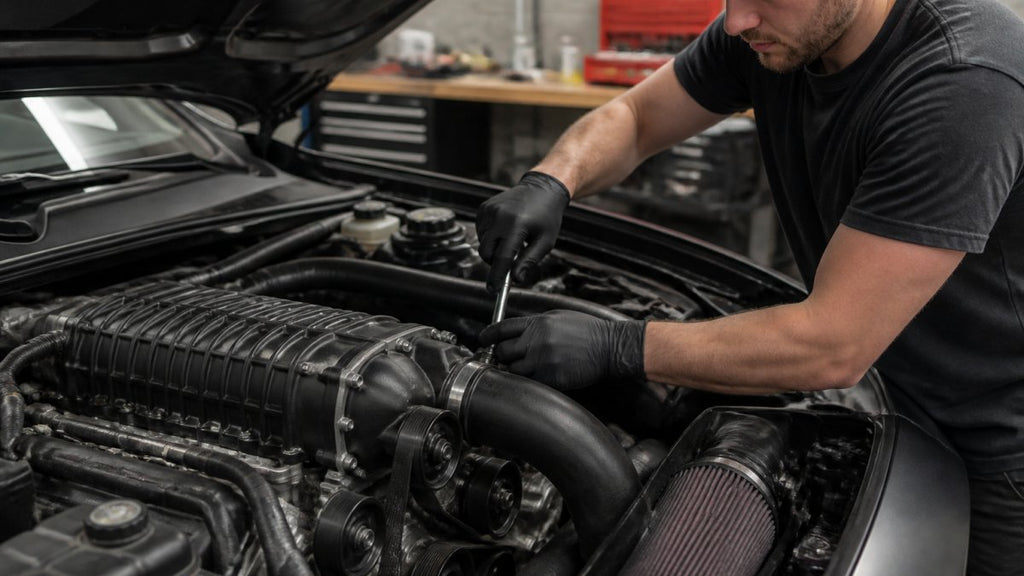
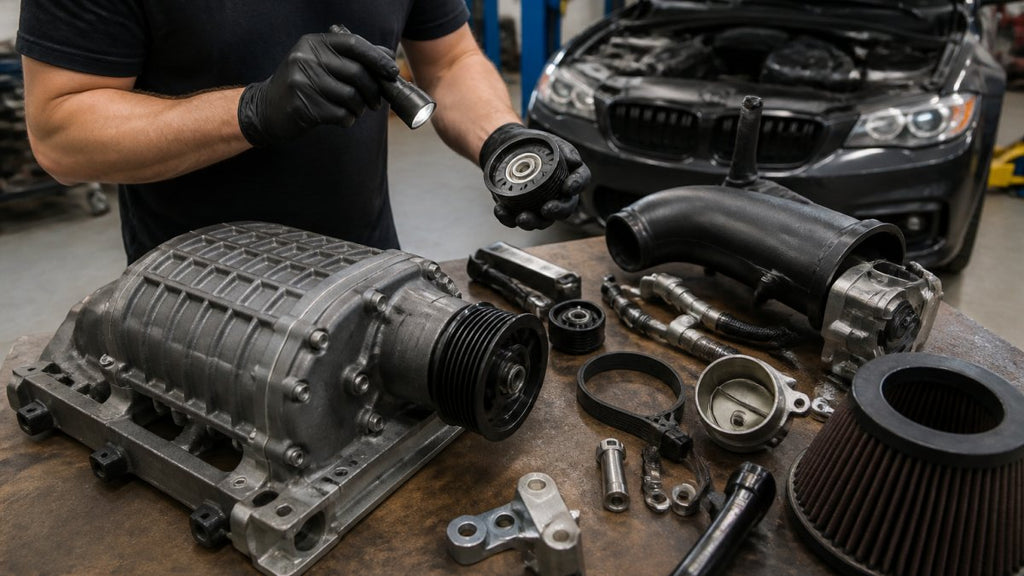
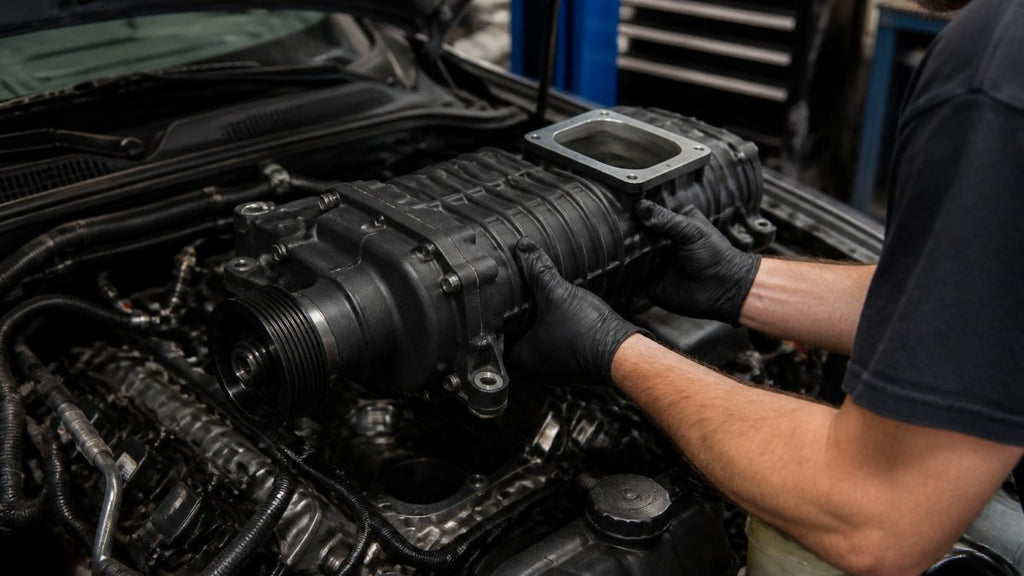
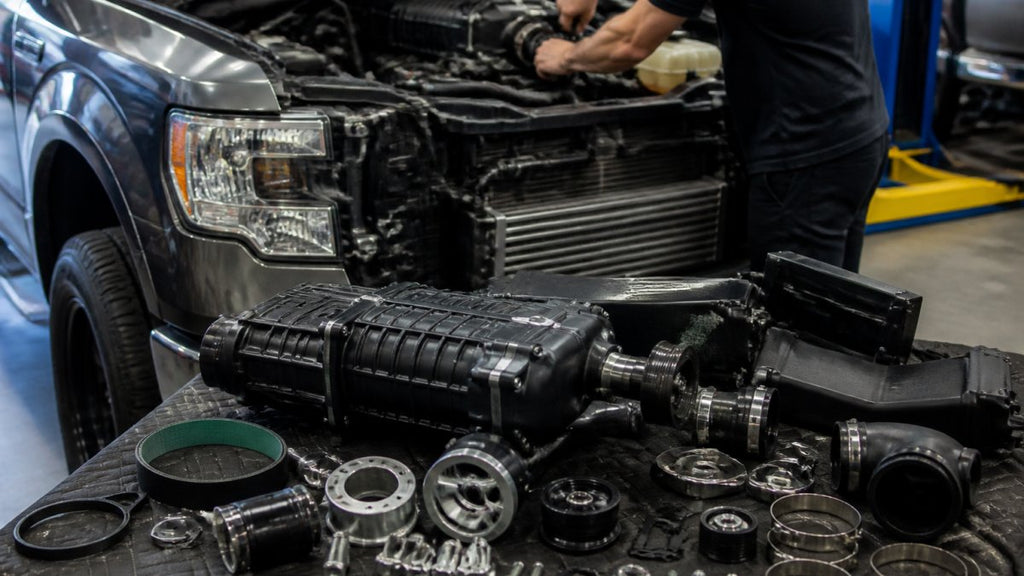
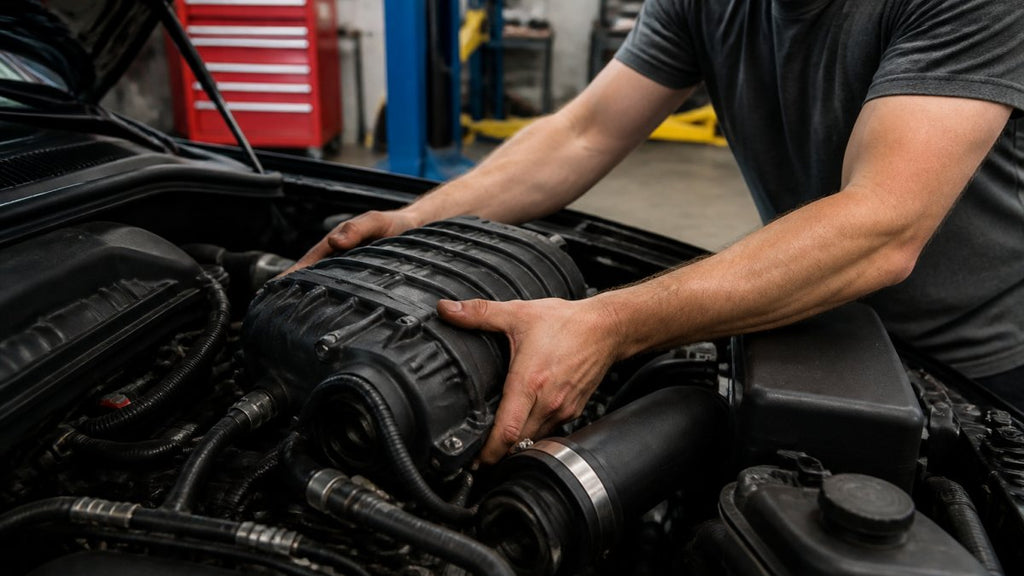
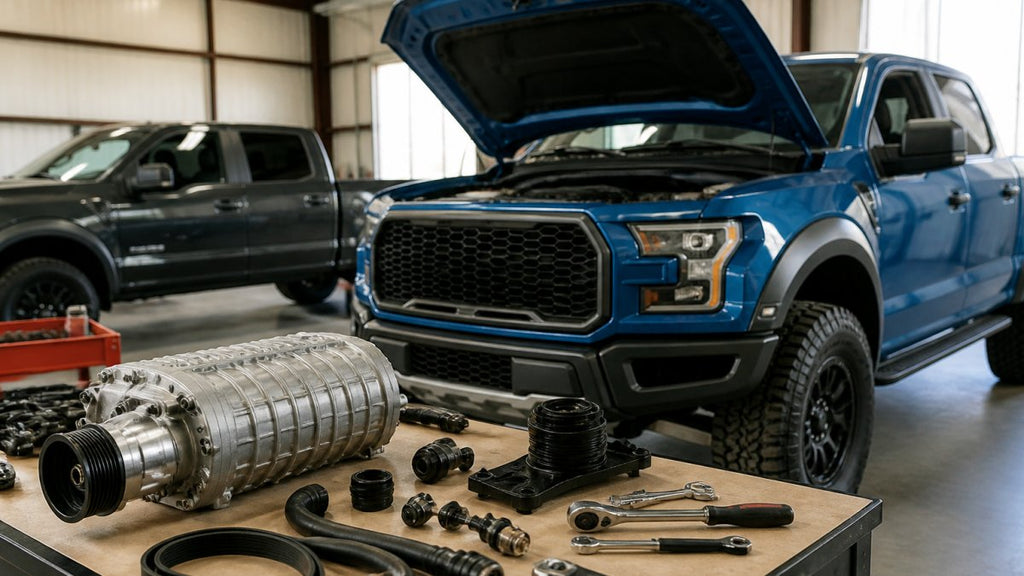
Installing a supercharger requires 4-8 hours for experienced installers, or 12-16 hours for first-timers. The kit bolts to your intake manifold, connects to your serpentine belt, and integrates with your engine's fuel and ignition systems. You'll need basic hand tools, a torque wrench, and mechanical confidence.
The critical step is proper belt tension. Too loose, and the supercharger won't spin at full speed. Too tight, and you'll strain the belt and pulley bearings. Most kits include detailed instructions, but professional installation is worth the cost to ensure longevity.
Warranty considerations: VT Superchargers provides a 24-month warranty on our supercharger hardware. This covers manufacturing defects, bearing failure, and seal leaks. The warranty does not cover damage from improper installation, lack of maintenance, or over-boost situations.
Installing any aftermarket forced-induction system may void your manufacturer's powertrain warranty. Check your vehicle's warranty documentation before installation.
Long-term reliability: A properly installed and maintained supercharger is reliable. The limiting factor is how aggressively you drive and whether you maintain proper engine oil quality and cooling.
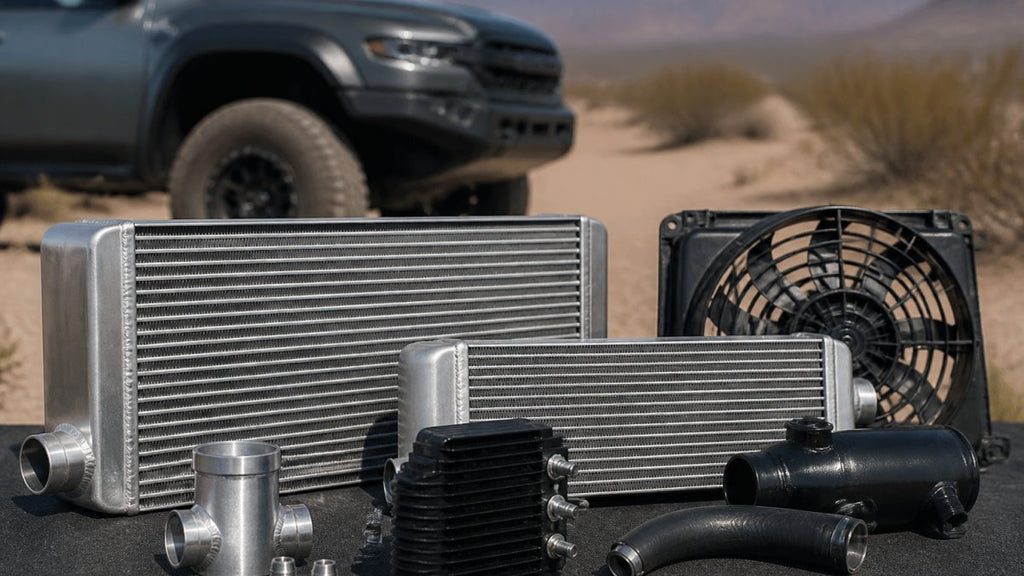
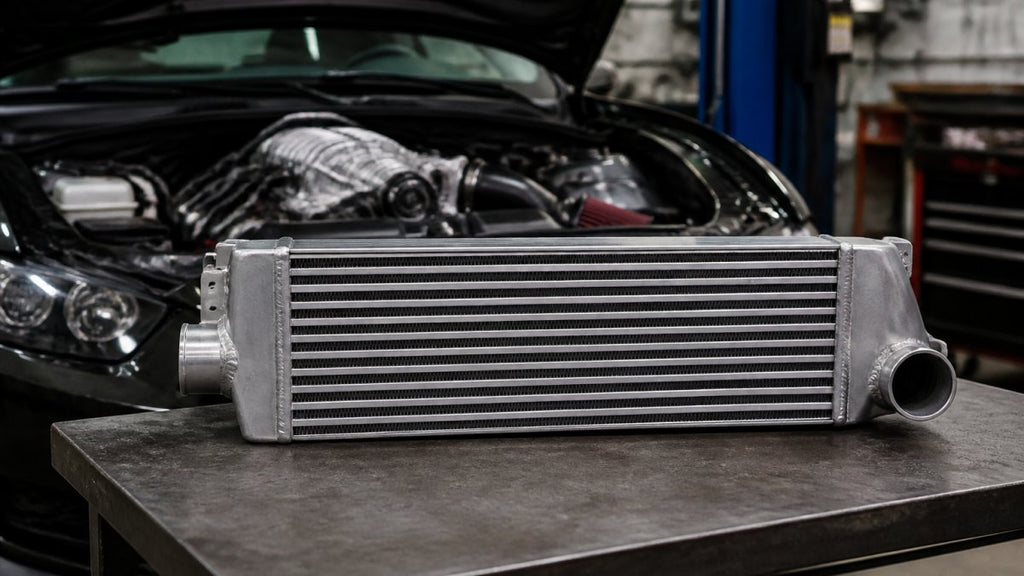
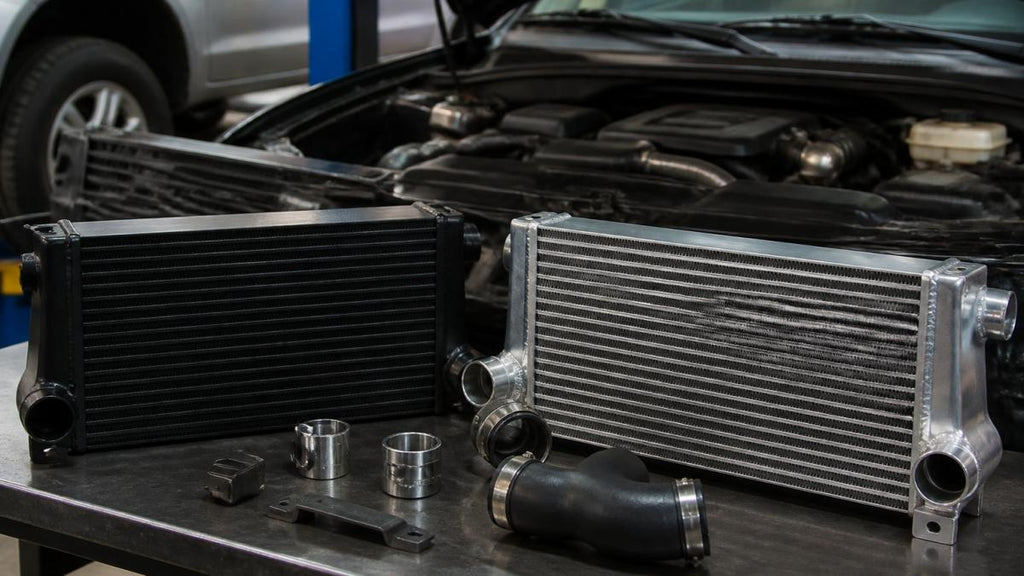
Superchargers generate heat. Your engine's cooling system must handle this additional thermal load. Many installations benefit from an upgraded radiator or auxiliary cooler. Oil quality matters more with a supercharger, use the grade specified in your vehicle's manual and change it on schedule. Dirty oil accelerates bearing wear.
Key Takeaway
A bolt-on supercharger from VT Superchargers is designed for straightforward installation on your specific vehicle platform. Professional installation ensures proper fitment and longevity. Budget for potential warranty implications and commit to diligent maintenance, oil changes and cooling system care are non-negotiable.
Gear hunting is frustrating, but it's solvable. The mistake most people make is assuming a supercharger alone will fix it. The truth is more nuanced: a supercharger changes your engine's power delivery, which often worsens gear hunting unless paired with professional ECU tuning that recalibrates your transmission control module.
If you're serious about resolving gear hunting while adding real performance, VT Superchargers bolt-on kits deliver the horsepower and torque gains you're after. Our engineered solutions fit precisely across Dodge, Ford, Jeep, Mazda, Nissan, Suzuki, and Toyota platforms. The supercharger is one part of the solution. Transmission recalibration is equally critical. Combined with proper tuning, a VT Superchargers kit transforms your vehicle's responsiveness while eliminating the hunting behavior that plagued your stock setup. Register with VT Superchargers today to explore financing options and our 24-month warranty protection.
=== FAQ ANSWERS (audit these too, same rules) ===
[1] Q: Will a supercharger fix gear hunting on my truck with larger tires? A: A supercharger alone typically won't fix gear hunting, it may actually worsen it by increasing torque output without addressing the underlying transmission calibration issue. Superchargers add 25-45% more horsepower and 31% more torque, which shifts the engine's power delivery curve. If your transmission control module isn't recalibrated to account for this extra torque, the transmission will hunt between gears more aggressively. The real fix requires ECU tuning to adjust shift points and load-based shifting logic to match your new power curve.
[2] Q: What's the difference between fixing gear hunting with a supercharger versus re-gearing? A: Re-gearing changes your final drive ratio to optimize power delivery across the RPM range, often reducing gear hunting by improving drivability at highway speeds. A supercharger increases engine output but doesn't change gear ratios, it requires transmission recalibration to prevent hunting. Re-gearing is often more effective for larger tires or heavy loads, while a supercharger delivers overall performance gains across the powerband. Many enthusiasts use both: re-gearing for drivability with tires or towing, and a supercharger for power.
[3] Q: Do I need ECU tuning after installing a supercharger? A: Yes. A supercharger increases engine load and torque delivery, which forces your transmission control module to react to conditions it wasn't programmed for. Without ECU tuning, your transmission will exhibit harsh shifting, gear hunting, and potential solenoid strain. Modern transmission control systems rely on sophisticated software calibration, if programming isn't perfectly matched to your supercharger's boost curve and torque output, you'll experience unpredictable shift behavior and reduced reliability.
[4] Q: How long does a supercharger last, and will it void my warranty? A: A properly installed supercharger with quality components can last the life of your vehicle when maintained correctly. VT Superchargers bolt-on kits are engineered for OEM-style fitment and backed by a 24-month warranty. Factory warranties depend on your vehicle manufacturer's policy, some cover forced induction with proper tuning, while others may not. Always verify with your dealer before installation. Mechanical wear increases with forced induction since superchargers consume up to 20% of engine power, but this is offset by proper calibration and regular maintenance.
Frequently Asked Questions
Will a supercharger fix gear hunting on my truck with larger tires?
A supercharger alone typically won't fix gear hunting, it may actually worsen it by increasing torque output without addressing the underlying transmission calibration issue. Superchargers add 25-45% more horsepower and 31% more torque, which shifts the engine's power delivery curve. If your transmission control module isn't recalibrated to account for this extra torque, the transmission will hunt between gears more aggressively. The real fix requires ECU tuning to adjust shift points and load-based shifting logic to match your new power curve.
What's the difference between fixing gear hunting with a supercharger versus re-gearing?
Re-gearing changes your final drive ratio to optimize power delivery across the RPM range, often reducing gear hunting by improving drivability at highway speeds. A supercharger increases engine output but doesn't change gear ratios, it requires transmission recalibration to prevent hunting. Re-gearing is often more effective for larger tires or heavy loads, while a supercharger delivers overall performance gains across the powerband. Many enthusiasts use both: re-gearing for drivability with tires or towing, and a supercharger for power.
Do I need ECU tuning after installing a supercharger?
Yes. A supercharger increases engine load and torque delivery, which forces your transmission control module to react to conditions it wasn't programmed for. Without ECU tuning, your transmission will exhibit harsh shifting, gear hunting, and potential solenoid strain. Modern transmission control systems rely on sophisticated software calibration, if programming isn't perfectly matched to your supercharger's boost curve and torque output, you'll experience unpredictable shift behavior and reduced reliability.
How long does a supercharger last, and will it void my warranty?
A properly installed supercharger with quality components can last the life of your vehicle when maintained correctly. VT Superchargers bolt-on kits are engineered for OEM-style fitment and backed by a 24-month warranty. Factory warranties depend on your vehicle manufacturer's policy, some cover forced induction with proper tuning, while others may not. Always verify with your dealer before installation. Mechanical wear increases with forced induction since superchargers consume up to 20% of engine power, but this is offset by proper calibration and regular maintenance.
This article was written using GrandRanker
Related post
09
Oct
RECENT POSTS