How Much Horsepower Do Superchargers Add: Real Gains Explained
Table of Contents
- How Much Horsepower Do Superchargers Actually Add
- How Superchargers Work and Generate Forced Induction
- Supercharger Types and Their Horsepower Gain Potential
- Factors Affecting Supercharger Horsepower Gains
- Supercharger vs. Turbocharger: Horsepower Comparison
- Engine Modifications Required for Supercharger Installation
- Real-World Horsepower Gains: What to Expect
- Common Misconceptions About Supercharger Power Gains
How Much Horsepower Do Superchargers Add: Real Gains Explained
Last Updated: July 20, 2026
How much horsepower do superchargers add depends on parasitic loss, engine displacement, compression ratio, and whether your supporting modifications can handle the additional air your supercharger forces into the combustion chamber. At VT Superchargers, we've analyzed actual dyno results across different engine platforms. The answer is far more nuanced than "X percent increase", the difference between theoretical gain and real-world results comes down to mechanics.
How Much Horsepower Do Superchargers Actually Add
A supercharger compresses intake air before it enters the engine, increasing air density and allowing more fuel to burn in each combustion cycle. Most bolt-on supercharger kits for street vehicles generate between 6 and 12 PSI of boost pressure, typically yielding horsepower gains ranging from 40 to 150 horses depending on engine displacement and fuel-to-air tuning. A 5.0-liter V8 will see dramatically different results than a 2.0-liter four-cylinder because of how the supercharger's mechanical drive interacts with different RPM ranges.
Pro Tip
Dyno testing is your only reliable way to know actual horsepower gain for your specific setup. Theoretical calculations might predict 120 hp, but real-world results often vary by 15-25% depending on ambient temperature, fuel octane, and ECU tuning aggressiveness.
The relationship between boost pressure and horsepower isn't linear. Doubling boost pressure doesn't double power output because of parasitic loss, the energy the supercharger itself consumes to compress air. A belt-driven supercharger consumes 15 to 30 horsepower just to operate, which is why crank horsepower (theoretical maximum at the engine) differs significantly from wheel horsepower (what reaches the ground through your drivetrain).
Understanding Boost Pressure and Power Output
Boost pressure is measured in PSI and represents how much additional air pressure the supercharger forces into the intake manifold above atmospheric pressure (14.7 PSI at sea level). At 8 PSI of boost, your engine receives air at approximately 22.7 PSI, roughly 1.5 times normal density.
This increased air density allows you to burn more fuel in the same displacement. A 5.0-liter engine running 8 PSI of boost behaves like a much larger naturally aspirated engine in terms of total air volume. Peak boost pressure typically occurs in the mid-range RPMs (4,000-6,000 RPM for street applications), which is why supercharged vehicles feel dramatically more responsive during acceleration.
However, boost pressure alone doesn't tell the whole story. A centrifugal supercharger running 10 PSI might deliver less efficiently than a twin-screw running 8 PSI because of differences in volumetric efficiency. The mechanical drive system also matters, belt-driven superchargers have different boost characteristics than gear-driven ones, affecting both the torque curve and overall horsepower gain.
Crank Horsepower vs. Wheel Horsepower
Crank horsepower is theoretical power measured directly at the engine's crankshaft before power passes through the transmission and drivetrain. Wheel horsepower is what actually reaches the ground. Drivetrain loss typically ranges from 12 to 20 percent depending on whether you're driving two-wheel-drive or all-wheel-drive.
When manufacturers claim horsepower gains, they usually cite crank horsepower. A kit adding 120 crank horsepower might translate to only 100 wheel horsepower after drivetrain losses.
Key Takeaway
Always compare wheel horsepower numbers when evaluating [supercharger kit](/products/mazda3-2-0-twin-screw-supercharger-kit)s. Crank horsepower looks better on paper, but wheel horsepower determines your actual performance gain.
How Superchargers Work and Generate Forced Induction
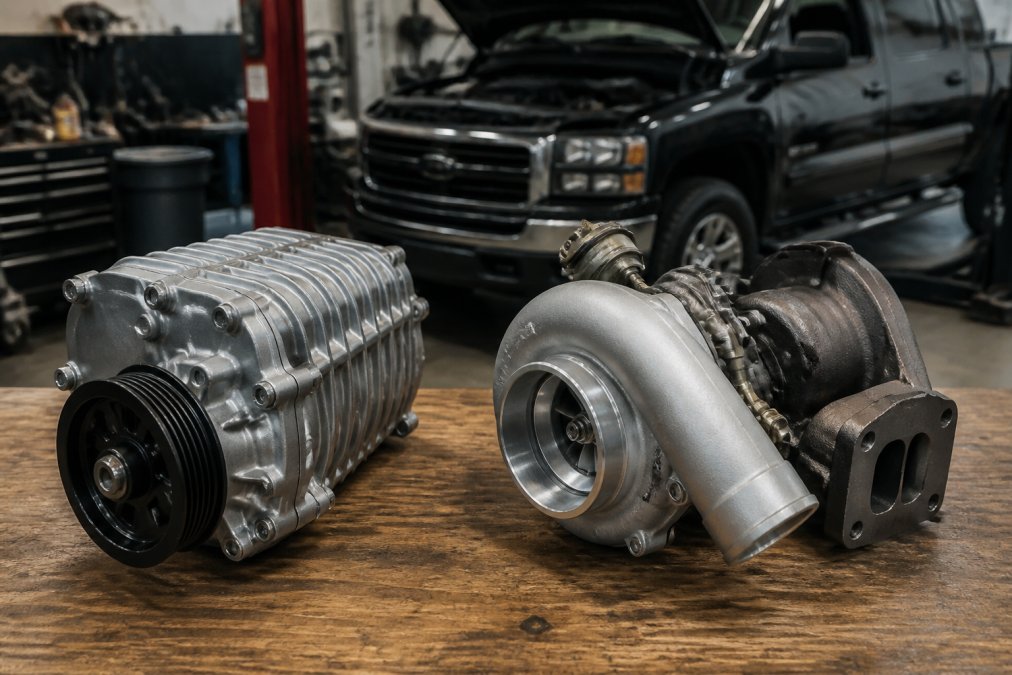
A supercharger is a mechanical air compressor bolted directly to your engine's intake system. Unlike a turbocharger, which uses exhaust gas energy to spin a turbine, a supercharger is driven by a belt connected to your engine's crankshaft. This mechanical drive delivers boost pressure instantly when you press the throttle, no turbo lag, no delay.
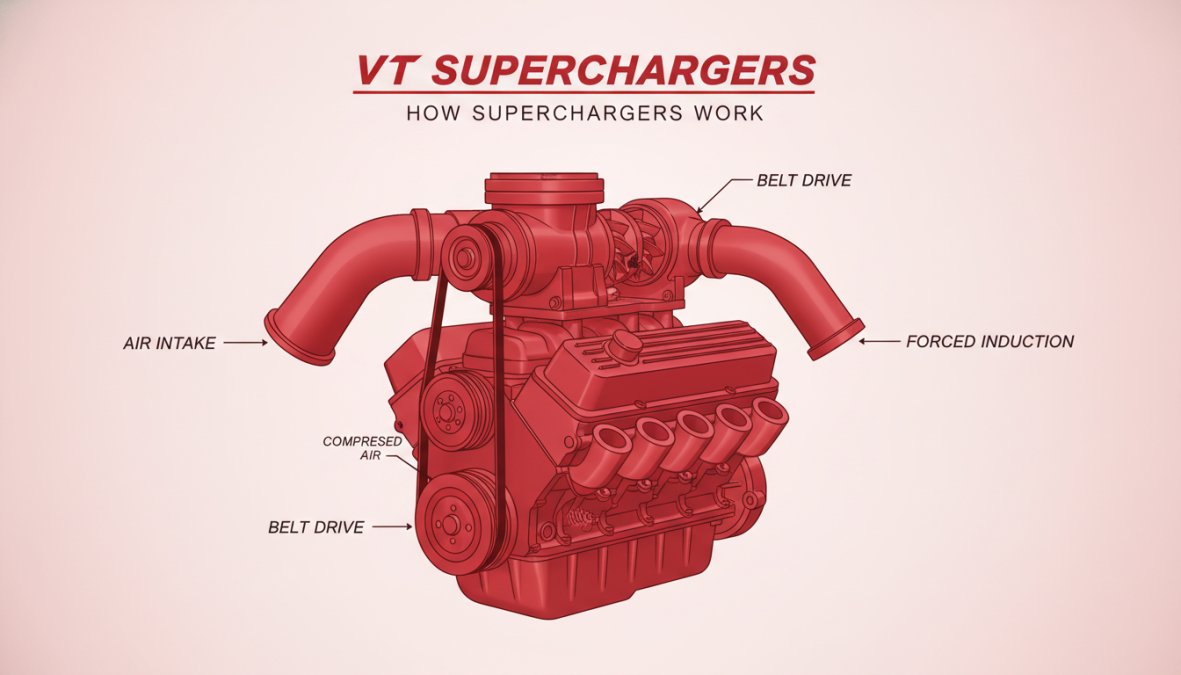
The supercharger pulls ambient air through your intake, compresses it, and forces it into the intake manifold at elevated pressure. Your engine's ECU detects increased manifold pressure and adjusts the fuel-to-air ratio accordingly, injecting more fuel to maintain proper combustion. The result is more fuel burned per cycle, generating more torque and horsepower.
Most street-oriented supercharger kits operate at 6 to 12 PSI. Racing applications can push higher, but street vehicles need to balance performance gains against reliability and engine load stress.
Mechanical Drive and Air Compression
Your supercharger's pulley spins at a specific ratio relative to your crankshaft. A 1.5:1 pulley ratio means the supercharger spins 1.5 times faster than the crankshaft. Faster speeds generate higher boost pressure but increase parasitic loss and mechanical stress.
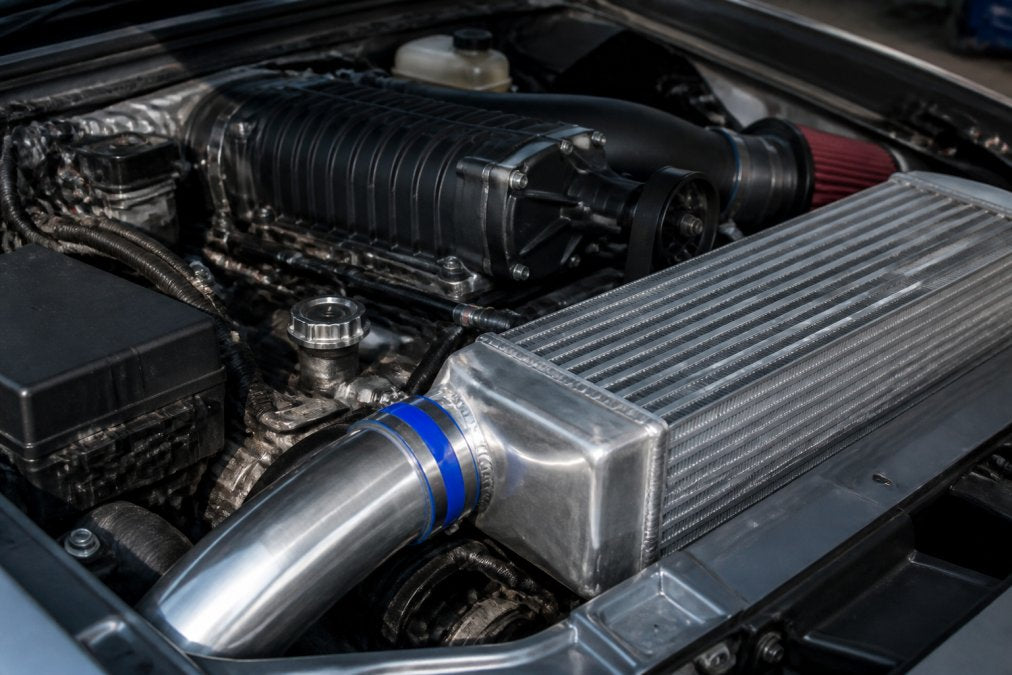
Air compression generates heat. A supercharger can heat intake air by 40 to 80 degrees Fahrenheit depending on boost level and ambient temperature. An intercooler cools compressed air before it enters the engine, recovering 10 to 20 percent of horsepower lost to heat soak.
The mechanical drive means your supercharger is always spinning whenever your engine runs, consuming power even at idle. This parasitic loss is why crank horsepower gains don't directly translate to wheel horsepower.
Parasitic Loss: The Hidden Cost of Forced Induction
Parasitic loss is the power your engine consumes just to drive the supercharger. A typical belt-driven supercharger consumes 15 to 30 horsepower at full boost, depending on design, pulley ratio, and boost level. At idle, it's minimal (2-5 hp). At 5,000 RPM at full boost, it can spike to 25-30 hp.
Net horsepower gain is the theoretical gain minus parasitic loss. A kit generating 130 crank horsepower in theory might deliver only 100-110 wheel horsepower because of drivetrain losses and parasitic loss combined.
Larger displacement engines tend to see better efficiency from superchargers. A 6.0-liter V8 absorbs parasitic loss more easily than a 2.0-liter four-cylinder because additional air volume is proportionally less significant relative to total displacement.
Watch Out
Ignoring parasitic loss when planning your upgrade can lead to disappointing results. A kit claiming 140 hp gain might only deliver 100 hp after accounting for parasitic loss, heat soak, and drivetrain losses. Always ask for wheel horsepower numbers.
Supercharger Types and Their Horsepower Gain Potential
Different supercharger designs have dramatically different characteristics, determining both horsepower gain and how that power is delivered across your RPM range.
Roots-Type Superchargers
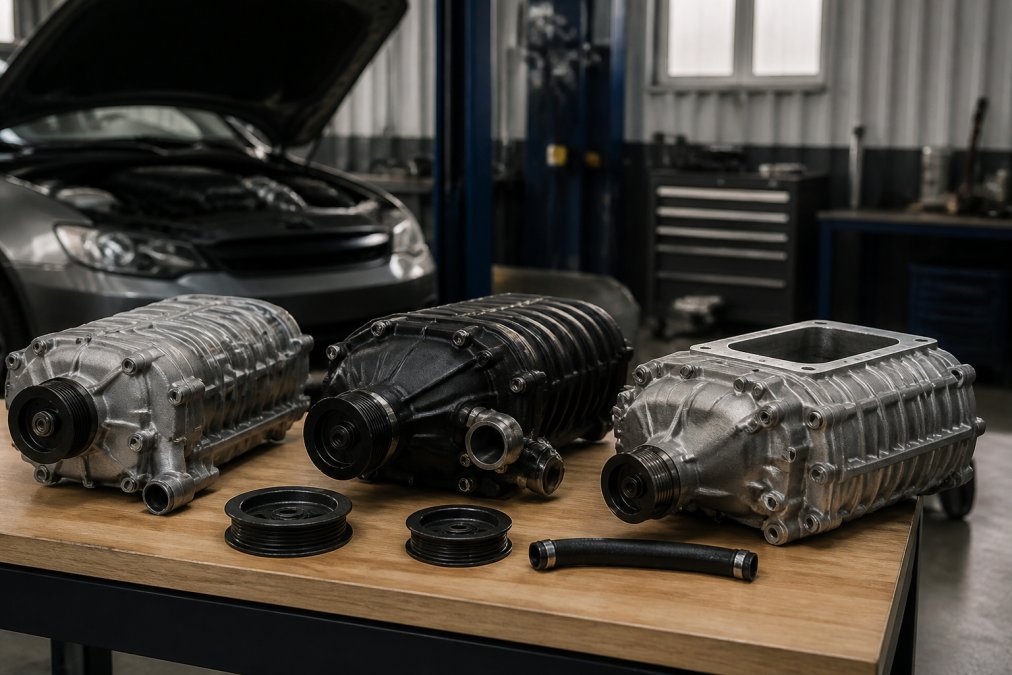
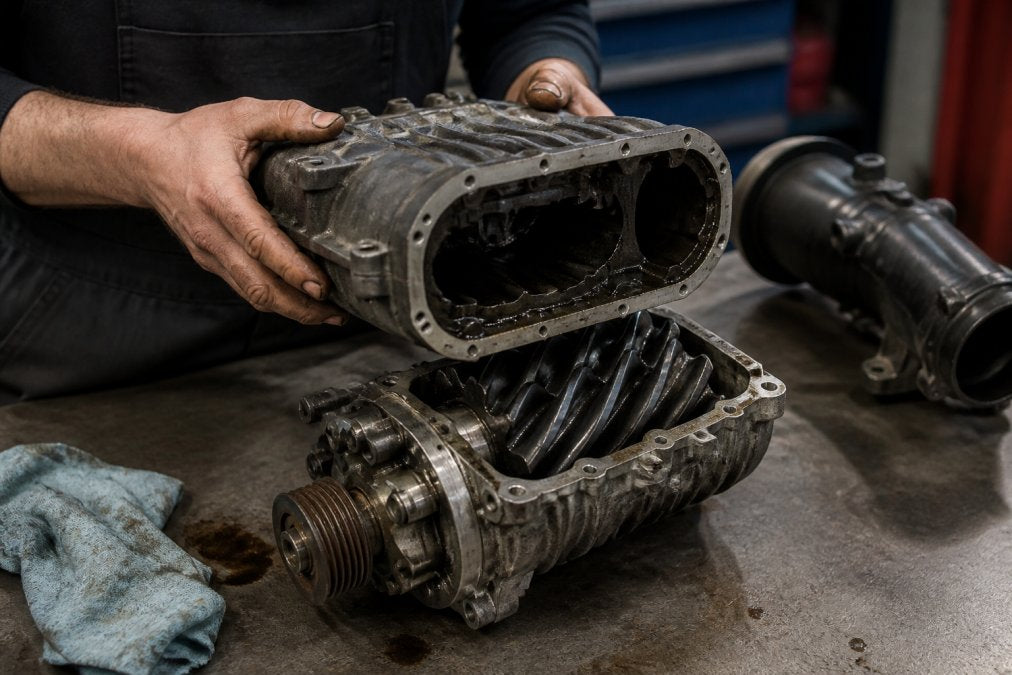
A Roots-type supercharger uses two interlocking rotors spinning in opposite directions, trapping and compressing air. Roots superchargers deliver boost pressure almost instantly across a wide RPM range, making them excellent for street vehicles where low-end torque matters.
Horsepower gains typically range from 50 to 120 horses on bolt-on kits. A 5.0-liter V8 with a Roots supercharger running 8 PSI might gain 90 to 110 horsepower. The torque increase is often more impressive than horsepower, Roots superchargers excel at building torque in the 2,000 to 5,000 RPM range.
The tradeoff is efficiency. Roots superchargers consume more parasitic loss than other designs and are noisier, producing a distinctive whining sound. Heat generation is higher, making an intercooler nearly mandatory.
Twin-Screw Superchargers
Twin-screw superchargers use helical rotors that compress air more efficiently than Roots designs. They generate less parasitic loss, run cooler, and deliver smoother boost pressure across the RPM range.
Horsepower gains typically range from 70 to 150 horses. The same 5.0-liter V8 that gained 100 hp with a Roots supercharger might gain 120 to 130 hp with a twin-screw because of improved efficiency. Twin-screw designs are quieter and generate less heat, allowing higher boost levels or skipping the intercooler on street applications.
Twin-screw kits cost 20 to 40 percent more than comparable Roots kits, reflecting more complex manufacturing.
Centrifugal Superchargers
Centrifugal superchargers use an impeller spinning at extremely high speeds (up to 60,000 RPM) to compress air. They're the most efficient in terms of parasitic loss and produce the least heat. However, they deliver boost pressure more gradually across the RPM range, slow to spool at low RPM but reaching peak efficiency at higher engine speeds.
Horsepower gains range from 50 to 130 horses. The advantage is lower parasitic loss, so more theoretical horsepower translates to actual wheel horsepower. The disadvantage is reduced low-end torque compared to Roots or twin-screw designs.
| Supercharger Type | Typical HP Gain (5.0L V8) | Parasitic Loss | Best For | Noise Level |
|---|---|---|---|---|
| Roots | 90-110 hp | 22-28 hp | Street performance, low-end torque | High |
| Twin-Screw | 120-130 hp | 15-20 hp | Balanced performance, reliability | Medium |
| Centrifugal | 100-120 hp | 12-18 hp | High-RPM power, racing | Low |
Factors Affecting Supercharger Horsepower Gains
The horsepower gain you'll experience varies based on your specific engine, modifications, and tuning.
Engine Displacement and Volumetric Efficiency
Larger engines have more displacement, allowing a supercharger to force more air into them per cycle. This is why larger engines see larger absolute horsepower gains. Volumetric efficiency describes how effectively your engine fills its cylinders with air at various RPM levels. A stock engine typically has 85 to 95 percent volumetric efficiency at peak torque RPM. A supercharger boosts this above 100 percent by forcing air at elevated pressure.
Aftermarket kits engineered for specific engine platforms account for volumetric efficiency differences. A supercharger kit for a 5.0-liter Ford Coyote engine delivers different results than the same supercharger on a 5.0-liter Chevy LS engine because of different cylinder head designs and baseline volumetric efficiency.
Compression Ratio and Heat Soak
Your engine's compression ratio affects how much boost pressure it can safely handle. A stock 8:1 compression ratio engine is more sensitive to heat soak and detonation than a 10:1 compression ratio engine. Adding a supercharger increases effective compression ratio because you're forcing more air into the cylinder at the start of compression.
Heat soak occurs because compressing air generates tremendous heat. An intercooler cools compressed air after it leaves the supercharger, recovering 10 to 20 percent of horsepower lost to heat.
Stock engines with lower compression ratios typically require lower boost levels to avoid detonation. A stock 8:1 engine might safely handle 6 to 8 PSI, while a built engine with 10:1 compression can handle 10 to 12 PSI or more.
RPM Range and Power Band Development
The RPM range where your supercharger delivers peak boost defines your power band. Most street-oriented superchargers reach peak boost between 4,000 and 6,000 RPM. Below that range, boost ramps up gradually. Above that range, boost may taper slightly as parasitic loss rises.
The torque curve changes dramatically with a supercharger. A naturally aspirated engine peaks torque then gradually loses it at higher RPMs. A supercharged engine maintains elevated torque across a much wider RPM range because of constant forced induction. This is why supercharged vehicles feel more responsive across broader driving conditions.
Different supercharger designs develop power bands differently. A Roots supercharger builds torque quickly and maintains it widely. A centrifugal supercharger spools gradually but reaches higher peak boost at higher RPMs. A twin-screw falls between them.
Supercharger vs. Turbocharger: Horsepower Comparison
Both superchargers and turbochargers compress intake air and increase horsepower, but they operate on fundamentally different principles.
Immediate Throttle Response and Torque Curve
A supercharger responds instantly when you press the throttle because it's mechanically driven by your crankshaft. There's no lag, no delay. This makes superchargers ideal for street driving where immediate throttle response matters.
A turbocharger uses exhaust gas energy to spin a turbine, creating inherent lag between throttle input and boost pressure buildup. At low RPM, a turbo produces less boost than a supercharger. At high RPM, a turbo can produce more boost because exhaust energy increases with engine speed.
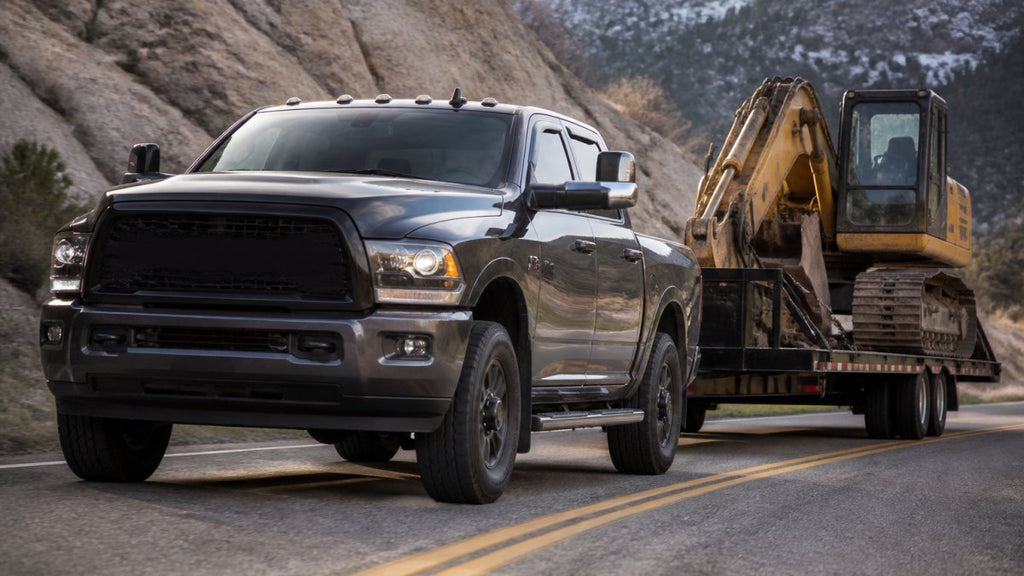
For towing and off-roading, superchargers are generally superior because of instant throttle response and consistent low-end torque.
Efficiency and Engine Load Considerations
A supercharger consumes engine power to operate (15-30 hp parasitic loss). A turbocharger uses waste exhaust energy, theoretically having lower parasitic loss. However, a turbocharger creates exhaust backpressure, requiring your engine to work harder to expel gases, creating its own efficiency penalty.
For stock or lightly modified engines, a supercharger's consistent load is easier to manage. For heavily modified engines designed to handle aggressive boost, a turbocharger's high-RPM focus can deliver more total horsepower.
Engine Modifications Required for Supercharger Installation
Installing a supercharger requires upgrades to your fuel system, ignition system, and engine management to handle additional air and increased combustion pressure.
ECU Remapping and Fuel-to-Air Ratio Tuning
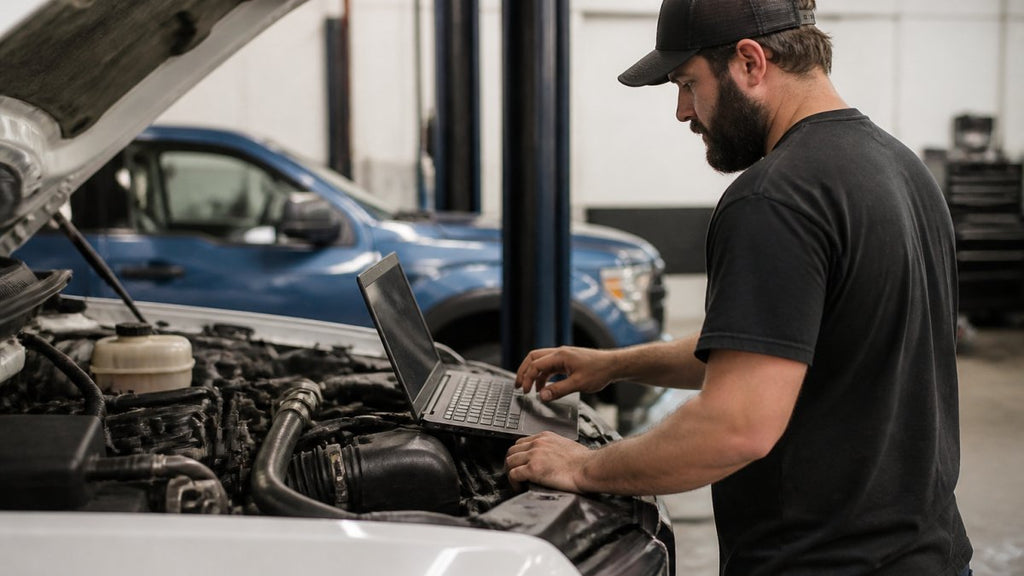
Your engine's ECU controls fuel injection based on engine load and manifold pressure sensors. A supercharger dramatically increases manifold pressure, telling the ECU your engine is under heavy load. Without ECU remapping, your engine will add excessive fuel, resulting in rich combustion, poor fuel economy, and potential detonation.
ECU remapping optimizes fuel injection maps for supercharged operation, accounting for your specific supercharger type, boost level, engine modifications, and fuel octane. A professional tune typically adds 10 to 20 horsepower beyond what the supercharger alone provides by optimizing combustion efficiency across your entire RPM range.
Intercooler and Intake Gas Management
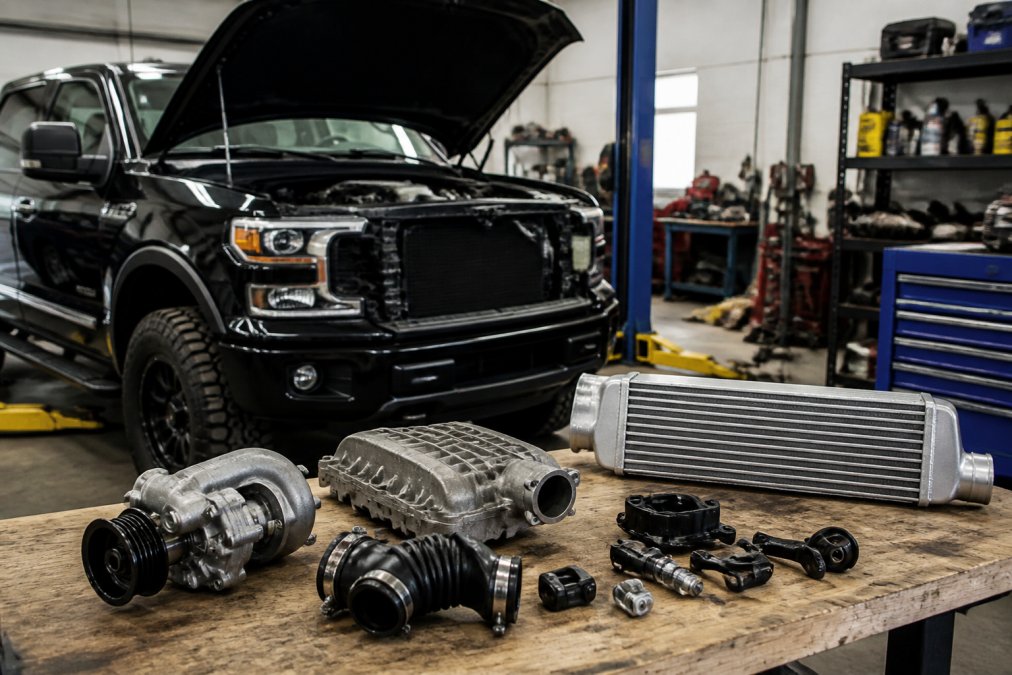
An intercooler is a heat exchanger that cools compressed air after it leaves the supercharger. Air-to-air intercoolers use ambient air and are simpler but less effective in hot climates. Air-to-water intercoolers are more efficient but require additional plumbing.
Adding an intercooler can improve horsepower by 10 to 20 percent by reducing heat soak and increasing air density. You may also need to upgrade fuel injectors if they're undersized for increased fuel demand.
Supporting Modifications and Reliability
Stock pistons, connecting rods, and valve springs are engineered for naturally aspirated operation. At moderate boost levels (6-8 PSI), most stock engines can handle a supercharger without internal modifications. At higher boost levels (10+ PSI), you'll likely need forged pistons, upgraded connecting rods, and stronger valve springs.
Your cooling system needs attention. A supercharger increases engine heat output because more fuel burns per cycle. Your radiator, water pump, and cooling fan may need upgrading. Your fuel system needs adequate capacity and pressure to supply increased fuel demand.
Real-World Horsepower Gains: What to Expect
Theoretical calculations don't always match real-world dyno results.
Dyno Testing and Vehicle-Specific Results
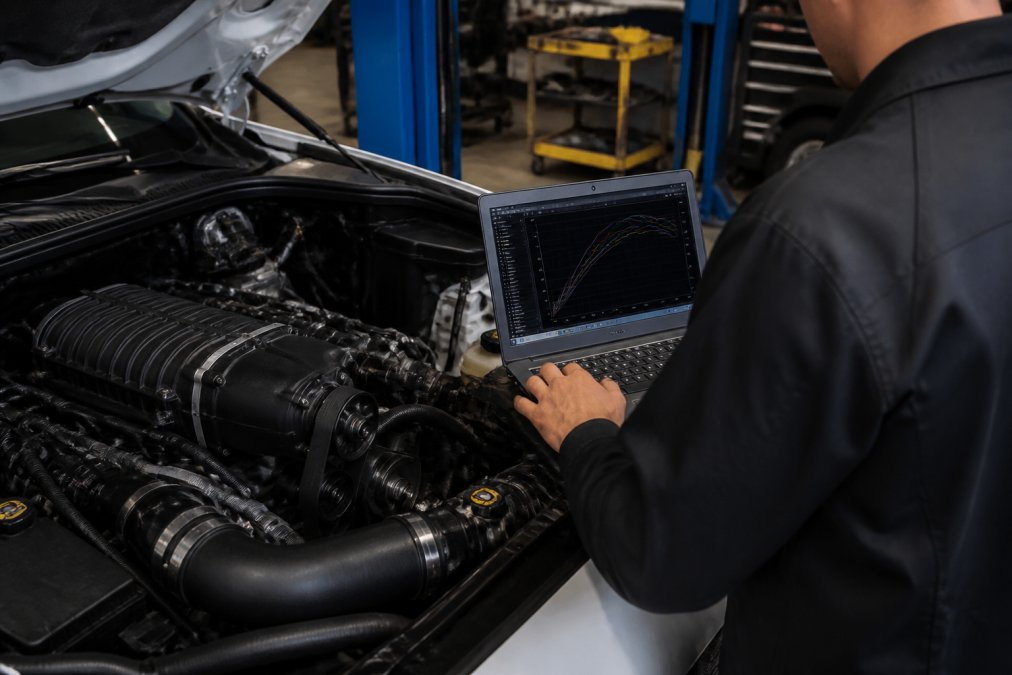
Dyno testing measures actual horsepower output on a chassis dynamometer, measuring wheel horsepower (always lower than crank horsepower due to drivetrain losses). Real-world dyno results vary based on ambient temperature, fuel quality, engine condition, and tuning aggressiveness.
For specific engine platforms, real-world gains are relatively consistent. A 5.0-liter Coyote Ford engine with a quality twin-screw supercharger kit typically gains 120 to 140 wheel horsepower at 8-10 PSI. A 6.2-liter Chevy LS3 typically gains 140 to 160 wheel horsepower. A 3.5-liter EcoBoost Ford typically gains 60 to 80 wheel horsepower with a centrifugal kit.
Torque Increase and Low-End Performance
Horsepower gets headlines, but torque is what you feel during acceleration. A supercharger typically increases torque even more dramatically than horsepower, especially in the 2,000 to 5,000 RPM range where most street driving occurs.
A 5.0-liter V8 gaining 120 horsepower might gain 150 to 180 lb-ft of torque distributed across a wider RPM range. This torque increase makes your vehicle feel more responsive during acceleration, merging, and passing across broader driving conditions.
For towing vehicles, this torque increase is transformative. A truck that struggled at highway speeds suddenly feels composed and responsive.
Common Misconceptions About Supercharger Power Gains
Myth 1: All superchargers on the same engine produce identical horsepower gains.
Reality: Different supercharger designs, boost levels, and tuning strategies produce significantly different results. A Roots and a twin-screw on the same engine can differ by 30 to 50 horsepower.
Myth 2: Horsepower gains are permanent and consistent.
Reality: Output varies based on ambient temperature, fuel octane, and engine condition. A kit might produce 120 hp on a cool day but only 100 hp on a hot day.
Myth 3: You don't need supporting modifications for a supercharger.
Reality: Most kits require fuel system upgrades, ECU tuning, and cooling system improvements. Ignoring these is the primary cause of reliability issues and disappointing results.
Myth 4: Superchargers reduce fuel economy slightly.
Reality: Superchargers typically reduce fuel economy by 15 to 25 percent because you're burning more fuel per cycle.
Myth 5: Any shop can install a supercharger correctly.
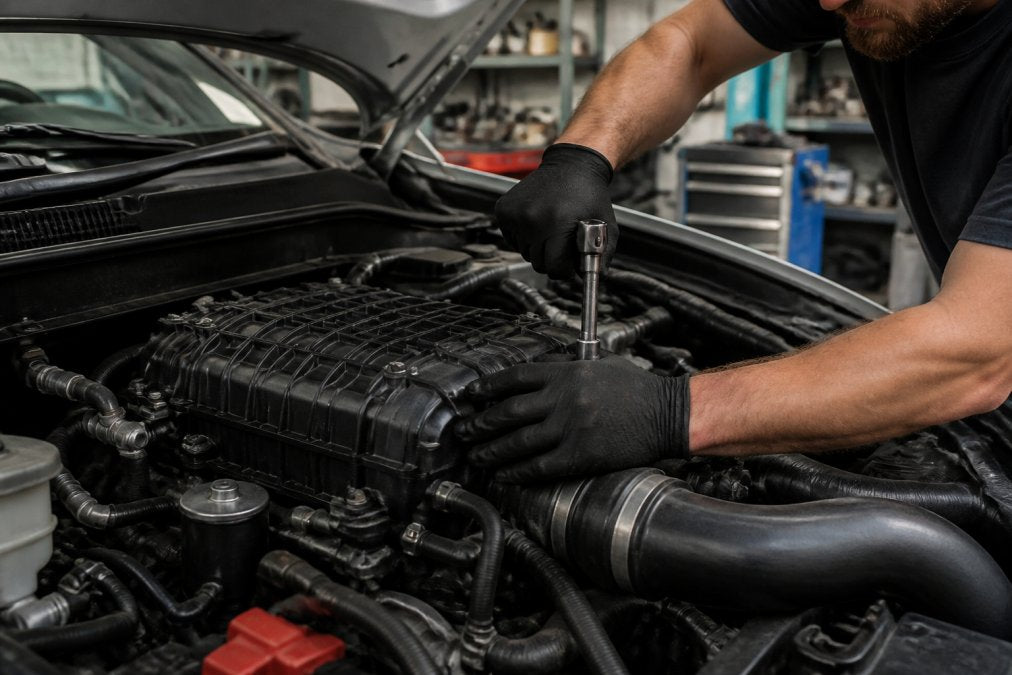
Reality: Installation requires specific knowledge about your engine platform and proper tuning expertise. A poorly installed kit can result in boost leaks, improper fuel delivery, and reliability problems.
The real horsepower gains from a supercharger depend on your specific engine, the supercharger type you choose, and the supporting modifications and tuning you invest in. Focus on selecting a kit engineered for your vehicle platform and working with experienced professionals who understand your engine's capabilities. VT Superchargers offers bolt-on kits specifically engineered for popular vehicle platforms with OEM-style fitment, professional tuning support, and a 24-month warranty. Register with VT Superchargers today to explore kit options for your specific vehicle and connect with approved installers in your area.
Frequently Asked Questions
What is the average horsepower gain from a supercharger?
Horsepower gains from superchargers vary significantly based on engine displacement, forced induction type, and supporting modifications. Roots-type superchargers typically deliver 35-50% power increases, while twin-screw and centrifugal options may achieve 40-60% gains. However, parasitic loss, the energy required to mechanically drive the supercharger, reduces net output. Actual wheel horsepower gains depend on dyno testing specific to your vehicle, as crank horsepower estimates don't account for drivetrain losses. Bolt-on aftermarket kits from manufacturers like VT Superchargers are engineered for real-world performance with OEM-style fitment.
What factors affect how much horsepower a supercharger adds to my engine?
Several factors influence supercharger horsepower gains: engine displacement (larger engines benefit more), compression ratio (higher ratios reduce boost pressure safely), volumetric efficiency (how well the engine breathes), RPM range (superchargers excel at different RPM bands depending on type), heat soak (intercoolers reduce intake gas temperature), and supporting modifications like ECU remapping and fuel-to-air ratio tuning. Engine load and throttle response also matter, a supercharger's mechanical drive delivers immediate boost, unlike turbochargers. Vehicle-specific testing reveals true gains after accounting for parasitic loss and manifold pressure optimization.
Do superchargers increase torque as well as horsepower?
Yes, superchargers increase both horsepower and torque, with torque gains often appearing lower in the RPM range where forced induction is most effective. The torque curve flattens across a wider power band, improving acceleration and towing performance. Twin-screw superchargers typically deliver more consistent low-end torque, while centrifugal designs peak higher in the RPM range. Roots-type options provide strong mid-range increases. Actual torque gains depend on boost pressure, compression ratio, and engine modifications. For vehicles like the 2019 Ford F-150 mentioned in customer feedback, superchargers can resolve gear-hunting issues by providing consistent low-end torque, improving highway performance with aftermarket kits engineered for specific vehicle platforms.
Are superchargers bad for engine reliability and warranty coverage?
Properly engineered bolt-on supercharger kits with OEM-style fitment and quality ECU remapping don't inherently damage engines when installed correctly. However, reliability depends on supporting modifications, adequate fuel delivery, cooling systems, and intercoolers are essential. Factory warranty concerns are valid; many OEM warranties exclude forced induction modifications. VT Superchargers addresses this with a 24-month warranty on their kits and support for approved installers. Real-world reliability improves when parasitic loss is minimized through proper tuning and when heat soak is managed with intercoolers. Vehicle-specific case studies show that professionally installed kits on stock or moderately modified engines maintain reliability when supporting systems are upgraded accordingly.
This article was written using GrandRanker
Related post


RECENT POSTS