Supercharging a Jeep Wrangler for Towing: What Works
Table of Contents
- What Supercharging a Jeep Wrangler for Towing Actually Changes
- Jeep Wrangler Towing Capacity: The Number a Supercharger Cannot Change
- 3.6L Jeep Wrangler Supercharger Horsepower and Torque Gains
- Supercharged Wrangler Towing Upgrades You Need First
- Jeep Wrangler Towing in the Mountains: Heat, Gears, and Load
- Step-by-Step: Selecting and Installing a Towing-Focused Supercharger Kit
- Cost of Ownership, Warranty, and Long-Term Reliability
- Frequently Asked Questions
Last Updated: October 19, 2026
What Supercharging a Jeep Wrangler for Towing Actually Changes
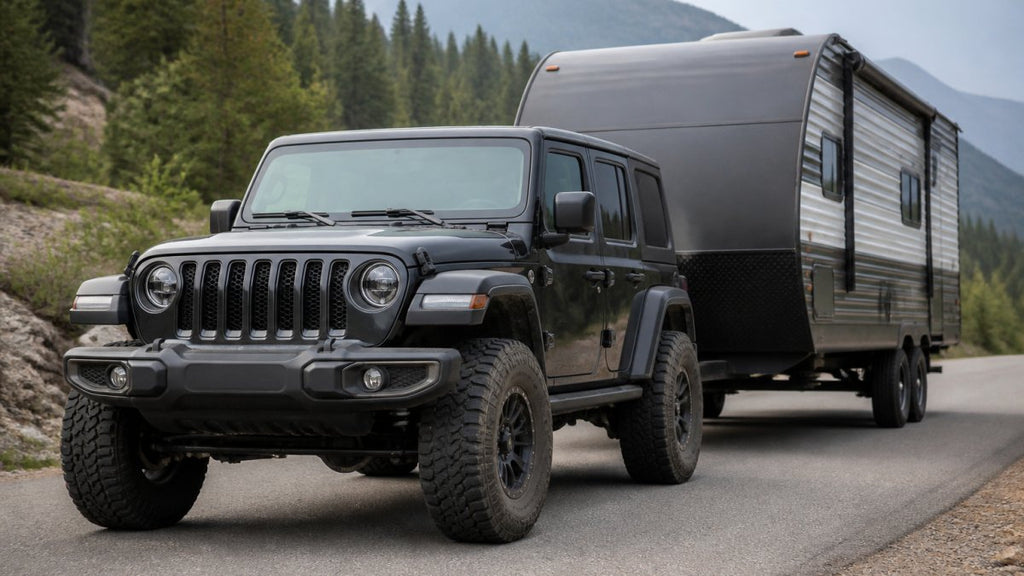
Supercharging a Jeep Wrangler for towing is the practice of adding a belt-driven air pump to the 3.6L V6 so the engine makes more power at every rpm, which matters most when a trailer is hooked up, and supercharging Jeep Wrangler builds follow the same logic. At VT Superchargers, we build bolt-on kits for this exact engine. Here is the part most guides skip: boost changes how the Jeep pulls, not what it is legally allowed to haul.

Power You Feel, Limits You Cannot Move
Supercharging a Jeep Wrangler raises horsepower and torque. It does not raise your tow rating by a single pound.
That rating is set by the manufacturer. It comes from the frame, brakes, cooling system, and axle hardware.
So what does change? The way the Jeep handles a load it is already rated to pull.
- Merging onto a highway with a trailer behind you
- Holding speed on a long grade instead of downshifting twice
- Climbing out of a switchback without winding out the engine
Those are real gains. They are also the gains that make towing less stressful.
Watch Out
Adding boost and then towing above your door-jamb rating is the most common mistake we see. The extra power hides how overloaded the Jeep is until the brakes or transmission pay for it.
Jeep Wrangler Towing Capacity: The Number a Supercharger Cannot Change
Jeep Wrangler towing capacity is the maximum trailer weight the factory rates the vehicle to pull, and it stays fixed no matter how much power you add.
Read it before you buy anything.
The rating varies by body style, axle ratio, and equipment. A two-door and a four-door do not share the same number.
What a supercharger does is make the rated load feel lighter. It gives you reserve power for hills and passing.
| What You Want | Does a Supercharger Do It? | What Actually Does It |
|---|---|---|
| More passing power with a trailer | Yes | Supercharger boost |
| Stronger pull on grades | Yes | Torque gain at low rpm |
| Higher legal tow rating | No | Nothing aftermarket can |
| Better brake control | No | Electronic trailer brakes |
| Cooler running under load | Partly | Intercooler plus cooling upgrades |
3.6L Jeep Wrangler Supercharger Horsepower and Torque Gains
The 3.6L Jeep Wrangler supercharger horsepower story comes down to boost pressure and tuning.
What you feel is the shape of the curve, not just the peak.
A positive-displacement blower builds boost early. That means torque arrives down low, right where a loaded Wrangler needs it. You are not waiting for revs to climb before the trailer starts moving.
- Stronger low- and mid-range pull
- Sharper throttle response
- Less downshifting to hold speed
That last point matters. Every unnecessary downshift is heat and wear.
Supercharged Wrangler Towing Upgrades You Need First
Supercharged Wrangler towing upgrades should come before the blower, not after. Power is the last piece. The supporting hardware is what keeps the Jeep together under a sustained load.
Gearing, Brakes, and Cooling Before Boost
Start with the parts that carry the load.
- Gearing and axle ratio: Big tires raise your effective gear ratio and cause gear hunting. Regearing fixes the root cause. Common builds step to 5.13 gears with 37-inch tires.
- Brakes: Electronic trailer brakes are not optional on heavy trailers. They do more for safety than any engine mod.
- Cooling: A supercharger adds heat. Make sure the radiator, transmission cooler, and intercooler system are up to the job.
- Intake and exhaust: A cold air intake and free-flowing exhaust help the engine breathe with the new boost.
Pro Tip
Fix gear hunting with gears, not throttle. A regear solves the cause. A supercharger only makes the symptom less annoying.
Jeep Wrangler Towing in the Mountains: Heat, Gears, and Load
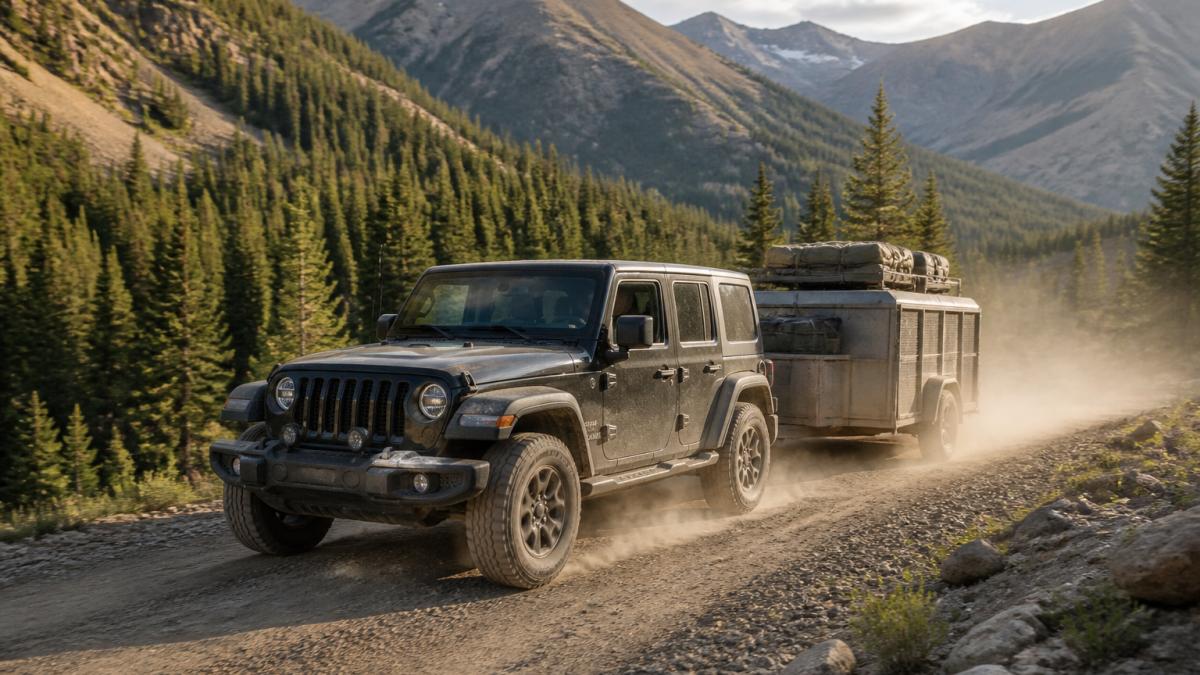
Jeep Wrangler towing in the mountains is a heat management problem first and a power problem second. Long grades under load build heat in the engine, transmission, and coolant, and boost adds to that total.
Where the Heat Actually Comes From
Three systems share the load on a climb, and each has its own failure mode:
- Engine coolant. Boost raises cylinder pressure and intake charge temperature. The radiator and fan have to reject more heat at the same road speed, which is worst on a slow, steep grade where airflow is low.
- Transmission fluid. Gear hunting under load cycles the torque converter and clutches, and every unnecessary downshift adds heat. This is why gearing matters as much as cooling.
- Intake air temperature. Compressing air heats it. Without intercooling, the ECU pulls timing to protect the engine, and you lose the power you paid for right when you need it.
What the Intercooler Does and Does Not Do
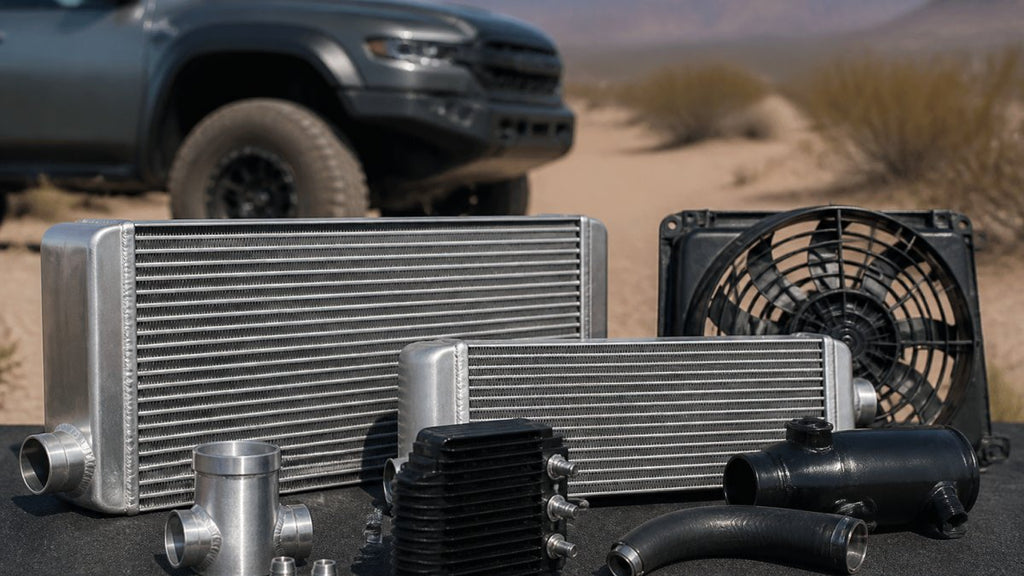
Our kits use a mid-mounted water-to-air intercooler and a front-mounted heat exchanger to keep intake temps down. Water-to-air is well suited to a Wrangler because the charge-air path is short and the system holds up at low vehicle speed, where a front-mount air-to-air unit loses effectiveness.
Jeep Wrangler 3.6L V6 Supercharger Kit (2012+) →
A common pattern is to add boost, keep the stock transmission cooler, and then wonder why fluid temps climb on the first long grade. Treat the intercooler and the transmission cooler as separate jobs.
Heat Soak and Why It Matters on a Long Pull
Heat soak is the buildup of heat in the intake and engine bay after repeated load, and it is the reason a Jeep that pulls fine for five minutes can feel flat at minute fifteen. The intercooler heat exchanger can only reject so much heat, and once the system saturates, intake temps rise and the ECU protects the engine. The fix is not more throttle.
What to Monitor and When to Back Out
Watch these on a long pull, and know what normal looks like before you tow:
- Coolant temperature. A steady climb toward the upper end of the normal gauge range is your cue to ease off. A warning light means stop.
- Transmission temperature. This is the one most owners ignore. If it climbs and stays high, downshift manually to reduce converter slip or pull over to let it cool.
- Intake air temperature. Rising intake temps with falling power is heat soak, not a tuning fault.
If any of them climb and stay there, back out of the throttle. Mountain towing rewards patience, and the cheapest cooling upgrade is driving style.
Pro Tip
Before a mountain trip, test your monitoring setup on a shorter grade with the trailer loaded. You want to know your normal temps before you are committed to a long climb.
Step-by-Step: Selecting and Installing a Towing-Focused Supercharger Kit
Picking and installing a towing-focused kit is a sequence, and order matters. Get the supporting parts right first, then add boost.
- Confirm your exact vehicle. Model year, engine, and engine code. Our kits are built for specific configurations, so verify before ordering.
- Check your tow rating. Read the door jamb. Decide what you will actually tow.
- Upgrade the supporting hardware. Gears, brakes, and cooling first.
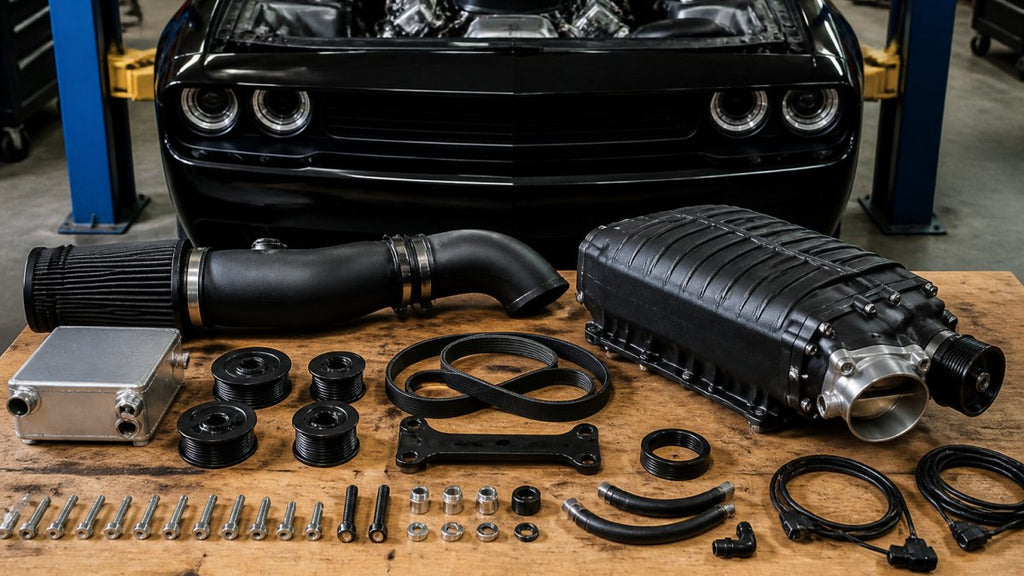
- Choose the kit. The Jeep Wrangler 3.6L V6 Supercharger Kit (2012+) fits 2012 and newer 3.6L V6 models. The Jeep Pentastar 3.6L V6 Supercharger Kit covers Pentastar ERB/EZH applications. Both list at $5,500.00.
- Install it. Our kits use original mounting points. No wire cutting, panel cutting, or welding.
- Tune it. ECU tuning is required. Do not skip this step.
- Test unloaded first. Put miles on it before you hook up a trailer.
Pre-Trip Towing Checklist
Run this before every loaded trip.
- Tow rating confirmed against actual trailer weight
- Tire pressures set on Jeep and trailer
- Trailer brakes tested and working
- Coolant and transmission fluid at level
Cost of Ownership, Warranty, and Long-Term Reliability
Long-term reliability with a supercharger comes down to three things: correct tuning, good cooling, and honest load limits. Treat those as non-negotiable and the setup holds up. The financial side deserves the same honesty, because the kit price is only the first line item.
What the Kit Costs and What Comes With It
Our kits list at $5,500.00 and include a 24-month warranty. Financing is available, and we work with approved installers if you would rather not do it yourself. That price covers the supercharger hardware. It does not cover everything a towing build needs.
Total Cost of Ownership Beyond the Kit
Budget for the supporting work, because a towing-focused build is a system, not a single part:
- Installation, if you are not doing it yourself
- ECU tuning, if it is not included in your plan
- Gears, if you are regearing for larger tires or to stop gear hunting
- Brakes and a trailer brake controller
A useful way to frame it: the kit is the visible cost, and the supporting hardware and maintenance are the cost that determines whether the build is reliable. Skipping the second list is how owners end up spending more later.
Warranty Implications You Should Understand
A 24-month warranty on the kit covers the kit. It does not automatically extend to the rest of the powertrain, and it does not override the vehicle manufacturer's warranty terms. Adding forced induction can affect how a dealer handles a powertrain claim, so read your vehicle warranty and talk to your dealer before install if you are still covered. This is not a reason to avoid boost.
Maintenance Cadence Under Towing Load
Towing changes the maintenance schedule, and boost changes it again. A common pattern among owners who tow regularly is to shorten oil change intervals, check coolant and transmission fluid more often, and inspect belts and the intercooler system at each service.
One honest limitation: boost does not fix a weak cooling system or worn brakes. Fix those first or the supercharger just exposes them faster, and you pay for the same repair twice.
Key Takeaway
Power is the easy part. Reliability under load comes from tuning, cooling, and staying inside your tow rating, and the real cost is the kit plus the supporting work that keeps it together.
Frequently Asked Questions
Does a supercharger increase a Jeep Wrangler's towing capacity?
No. Supercharging a Jeep Wrangler raises engine output, but the Jeep Wrangler towing capacity is set by the manufacturer and tied to axle ratio, cooling, brakes, and vehicle configuration, not horsepower. A 3.6L kit adding roughly 40% more horsepower and 30% more torque makes a loaded trailer easier to pull and merge with, but the legal and safe trailer weight limit stays the same. Treat the door-jamb and owner's manual rating as the ceiling and use boost to make that weight feel lighter.
How much horsepower does a supercharger add to a 3.6L V6?
The 3.6L Jeep Wrangler supercharger horsepower gain depends on the kit and tune, but VT Superchargers rates its 3.6L V6 kits at 7 psi for about 40% more horsepower and 30% more torque than stock. ECU tuning is required after installation to deliver those numbers safely. Gains show up most in the low and mid range, which is exactly where a Wrangler pulling a trailer needs them. Confirm your exact model year and engine code before ordering.
What should I upgrade before towing with a supercharged Wrangler?
Sort the supporting hardware first. On lifted builds with 37-inch tires, regearing (5.13 gears are common) restores the axle ratio and stops constant gear hunting. Add a transmission cooler, confirm electronic trailer brakes are working, and check cooling capacity for sustained loads. Supercharged Wrangler towing upgrades also include a cold air intake and a proper tune. Do these before the kit, or the extra torque just exposes weaknesses in the rest of the drivetrain.
Can a supercharged Jeep Wrangler tow safely in the mountains?
It can, but heat and gearing matter more than boost. Jeep Wrangler towing in the mountains puts sustained load on the engine, transmission, and cooling system, so watch coolant and transmission temperatures on long climbs. The kit's water-to-air intercooler helps keep intake temperatures stable, but you still need to downshift early, keep trailer weight inside the rating, and use trailer brakes on descents. If temperatures climb, slow down and let the drivetrain recover rather than pushing through.
Towing with a Wrangler asks a lot of a V6, and the gap between "it will do it" and "it does it well" is power delivery. VT Superchargers builds bolt-on kits with OEM-style fitment, a 24-month warranty, and financing to spread the cost. Confirm your model year and engine, then register your build with us and we will help you match the right kit to your towing setup.
Related post
09
Oct
RECENT POSTS