Call, Text or WhatsApp Us

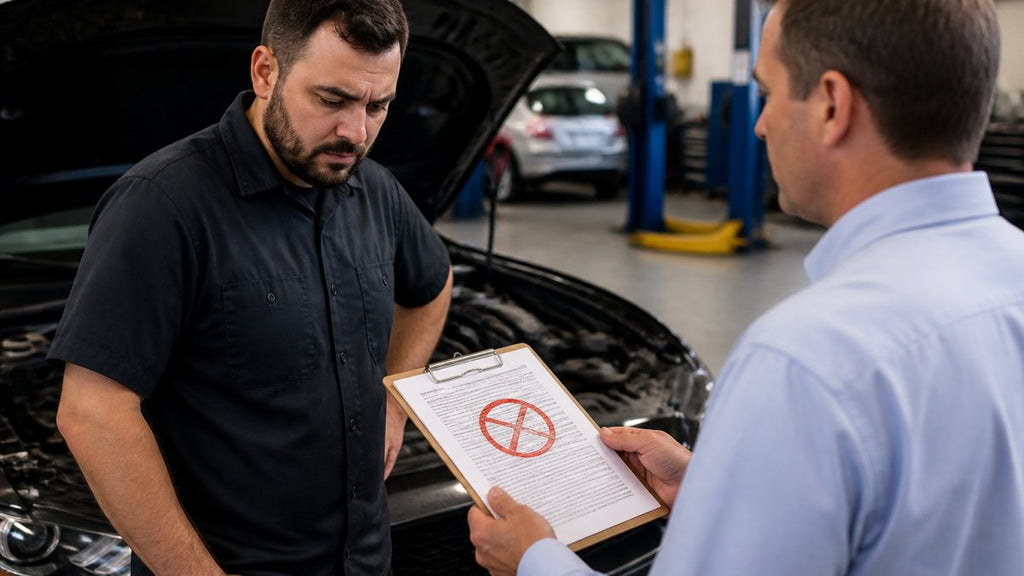
Table of Contents
- Can a Dealership Deny Warranty for Performance Modifications?
- The Magnuson-Moss Warranty Act and Aftermarket Parts
- Supercharger and Factory Warranty: What You Need to Know
- Documenting Aftermarket Modifications: Your Best Defense
- How to Appeal a Warranty Claim Denial
- Common Mistakes That Weaken Your Warranty Position
- Conclusion: Protect Your Build and Your Coverage
- Frequently Asked Questions
Last Updated: October 20, 2026
Can a Dealership Deny Warranty for Performance Modifications?
No, a dealership cannot automatically deny your warranty just because you added performance modifications. But they can deny a specific repair claim if they can show your modification caused the failure. That distinction matters more than almost anything else in this conversation, and it’s where most owners get confused.
At VT Superchargers, we build bolt-on supercharger kits for daily drivers, tow rigs, and trail Jeeps, so we hear this question constantly. The short answer: your factory warranty survives most modifications. What doesn’t survive is a broken part that a tech can trace back to your aftermarket parts.
Here’s the part most guides get wrong. They treat warranty coverage as a single on/off switch. It isn’t. It’s a claim-by-claim decision, and the burden of proof sits with the dealer, not you.
Below, we’ll walk through who actually decides, how causal connection gets tested, and exactly what to do if a claim denial lands in your inbox.
A modification doesn’t void your whole warranty. It only puts a specific warranty claim at risk, and only if the dealer can link the mod to the failure.
The Magnuson-Moss Warranty Act and Aftermarket Parts
A federal law called the Magnuson-Moss Warranty Act governs how manufacturers treat aftermarket parts and warranty terms. Passed in 1975 and enforced by the Federal Trade Commission, it stops a manufacturer from voiding a manufacturer warranty simply because you used a replacement part made by someone else.
The core rule: the manufacturer must show the aftermarket part caused the problem. They cannot blanket-void coverage for the whole vehicle.
The Federal Trade Commission’s guidance on auto warranties spells out that a dealer can’t require you to use brand-name parts as a condition of coverage. That said, the law has real limits you should know:
- It applies to new-car warranty coverage, not to used vehicles sold “as-is.”
- It protects approved parts and aftermarket equivalents, not reckless engine tunes.
- It does not shield you if the part genuinely caused the failure.
So the law gives you use. It doesn’t give you immunity.
Supercharger and Factory Warranty: What You Need to Know
Adding a supercharger puts your powertrain warranty and engine warranty in the spotlight. These are the two coverage areas most likely to face a claim-specific denial after forced induction, because a blower changes air, fuel, and load on the motor. But “most likely” is not “automatic,” and the outcome usually turns on evidence, not on the presence of the blower itself.
The National Highway Traffic Safety Administration tracks safety defects and recalls, which sit outside the modification debate entirely. Recalls still get fixed regardless of your build.
Here’s how the risk actually breaks down by component:
| Modification | Most exposed coverage | Denial risk | Why |
|---|---|---|---|
| Aftermarket turbo kit or supercharger | Engine, powertrain | Higher | Adds boost and load |
| ECU tuning / engine tune | Engine, emissions | Higher | Alters fuel and timing maps |
| Aftermarket exhaust or mid muffler delete | Exhaust, emissions | Moderate | Can affect sensors and backpressure |
| Oil catch can | Engine (rarely) | Low | Usually seen as preventive |
| Cold air intake | Engine (rarely) | Low | Minor airflow change |
How causation actually gets tested
A dealer cannot deny a claim just by pointing at your blower. In practice, a warranty administrator looks for a chain: a failure mode, a diagnostic finding, and a plausible link to the modification. Common evidence includes:
- Diagnostic trouble codes and freeze-frame data showing lean condition, overboost, knock, or high intake temperatures.
- Inspection findings such as melted pistons, scored bearings, or a failed head gasket consistent with added load.
- Tuning records, a flashed ECU, altered rev limiter, or calibration mismatch.
- Install and maintenance records showing whether supporting fuel and cooling upgrades were done.
Your rebuttal runs the same chain in reverse. If the failed part is a power window motor, an alternator, or a stock transmission behind a mild build, the causal link is thin and a denial is hard to defend. If the failure is a lean-condition piston failure on a boosted stock fuel system, the link is stronger and your best move is documentation showing supporting mods and maintenance were in place.
The mistake we see most: owners assume a supercharger voids everything. It doesn’t. But if you skip supporting mods like fuel upgrades or a proper tune, you raise the odds a tech can link a lean condition to your blower, and that is a causation argument you will struggle to rebut.
A stock part failure on a stock component, like a power window or alternator, has almost no connection to a supercharger. That’s where a dealer’s causal connection argument falls apart fast.
Documenting Aftermarket Modifications: Your Best Defense
Good records are the strongest tool you have against a warranty denial. When a dealer submits a warranty claim, the warranty administrator reviews a repair order and diagnostic findings. If your file shows clean installs and steady maintenance, you make their job harder and your case stronger.
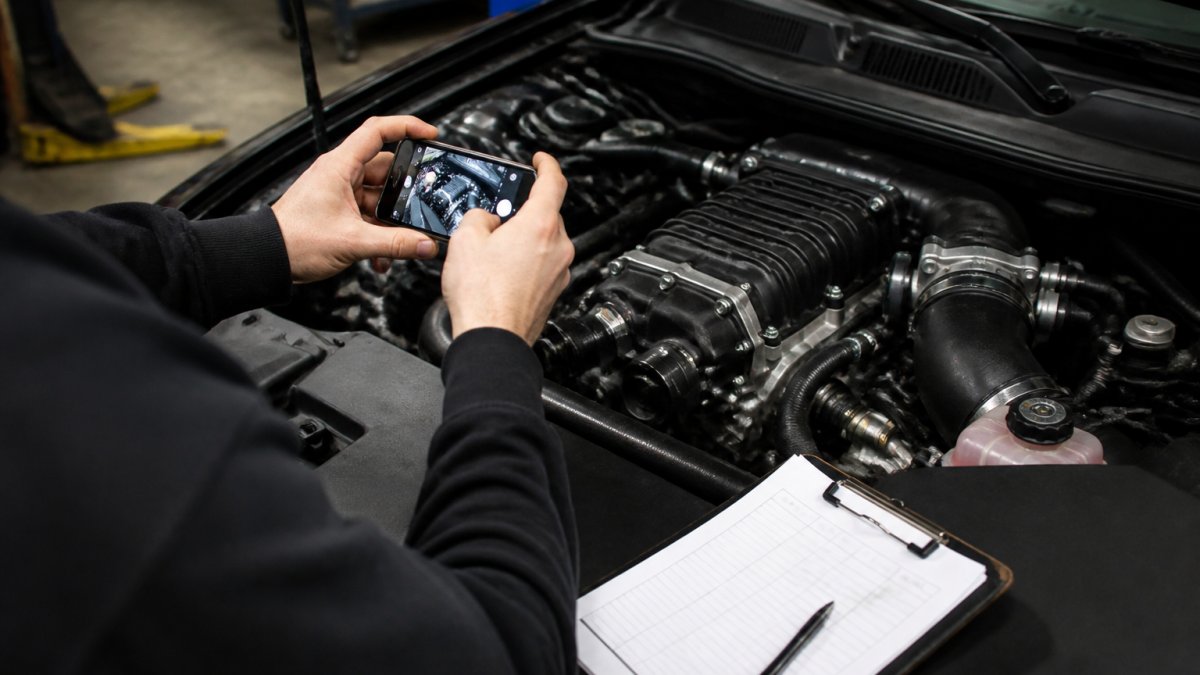
Build a simple modification file from day one. Keep it in one folder, digital or paper:
- Photos of each aftermarket modification before and after install
- Receipts and part numbers for every replacement part
- A dated log of vehicle inspection and oil changes
- The installer’s name and any shop invoice
- Your warranty terms and coverage exclusions, saved as a PDF
- A note of the mileage at each install
This is how you document maintenance and prove your build was done right. It’s also how you prove causation runs the other way when a claim gets challenged.
Photograph the odometer next to each new part on install day. It timestamps your build in one image and kills the “we can’t tell when this was added” argument.
How to Appeal a Warranty Claim Denial
You can appeal a denial, and doing it fast and in writing gives you the best shot. A claim denial is not always final. Dealers and manufacturers have internal review steps, and a calm, documented appeal often gets a second look. The difference between owners who win and owners who stall out is almost always the paper trail, not the argument.
Here is the sequence that works, with the specific asks that move a file forward:
- Get the denial in writing. Ask the service manager for the specific coverage exclusion cited and the diagnostic findings (codes, freeze-frame data, inspection notes) they relied on. A verbal “that’s not covered” is not a denial you can appeal. Request it by email so the date is stamped.
- Request the causal link in writing. Ask the dealer to state, in one or two sentences, how your modification caused the failure. This is the single most useful document you can obtain, because it forces the dealer to commit to a theory you can rebut with your own records.
- Preserve the removed parts. Ask that any failed component be retained and bagged, not scrapped. If the part is already gone, note that in your file, a dealer that discarded the evidence weakens its own causation case. Photograph the failed part before it leaves the bay if you can.
- Submit your file with a short cover letter. Send your install photos, receipts, maintenance log, and the written denial back to the dealer and to the manufacturer’s customer service line. Keep the letter to one page: what failed, when, what you’re asking for, and what you’ve enclosed.
- Escalate to the manufacturer. Move past the dealer to the regional warranty administrator or the manufacturer’s customer assistance center. Dealers submit claims; manufacturers and their administrators decide coverage disputes. Ask for a case number.
- Use the dispute process in your warranty terms. Many warranty terms include a binding arbitration or mediation step. Read that clause before you escalate further, some require you to exhaust it before other routes.
- Contact a consumer agency. Your state attorney general’s office handles Magnuson-Moss Warranty Act complaints, and the Federal Trade Commission accepts reports on warranty practices. The Consumer Financial Protection Bureau explains consumer complaint routes that can apply to warranty disputes.
- Consult a qualified attorney if the claim is large or the manufacturer refuses to engage. Many state consumer-protection statutes allow fee recovery, which changes the economics of a dispute.
Send every communication by email and keep a single folder. A short, dated paper trail, denial, causal statement, your records, your appeal, is what a warranty administrator reviews. Emotion doesn’t move the file; documents do.
One caution: don’t remove a tune or pull parts right before an inspection. That reads as hiding evidence and can convert a winnable claim into a denied one. Preserve the vehicle as it failed, document it, then act.
Common Mistakes That Weaken Your Warranty Position
Most warranty denial problems are self-inflicted. The dealer rarely has to work hard when an owner hands them the argument.
- No records. If you can’t show maintenance, they’ll call it unreasonable use.
- Skipping supporting mods. A blower without fuel or tune support invites a lean-condition blame.
- Removing parts before inspection. Pulling your engine tune right before a claim looks like hiding evidence.
- Arguing at the counter. Emotion doesn’t move a warranty administrator. Documents do.
- Ignoring the fine print. Read your warranty terms and coverage exclusion list before you mod.
- Assuming “bolt-on” means “invisible.” A vehicle inspection can spot a performance modification quickly.
Our bolt-on supercharger kits are built for OEM-style fitment, which keeps your install clean and your documentation simple. We also back our kits with a 24-month warranty, so you’re not carrying the whole risk alone. If you’re weighing a build, our team can walk you through how fitment and supporting parts affect long-term reliability.
Conclusion: Protect Your Build and Your Coverage
The real challenge isn’t whether you can modify your vehicle. It’s whether you can prove your build was done right when a claim gets questioned. Keep records, choose parts with clean fitment, and know your rights under federal law.
At VT Superchargers, we build bolt-on supercharger kits with OEM-style fitment, ship worldwide, offer financing, and stand behind every kit with a 24-month warranty. Get started with VT Superchargers and register your kit so your coverage and your build stay protected from day one.
Frequently Asked Questions
Does modifying a car automatically void its warranty?
No. Under the Magnuson-Moss Warranty Act, a dealer or manufacturer cannot void your entire warranty just because you installed an aftermarket part. They must show that the modification caused the specific failure. For example, an aftermarket exhaust won’t void your transmission warranty unless they can prove the exhaust caused the transmission issue. Always keep receipts and documentation for every modification.
Will a supercharger void my factory warranty?
A supercharger can affect your factory warranty, but it does not automatically void the whole thing. The manufacturer may deny claims for powertrain components if they can prove the supercharger caused the failure. To protect yourself, document the install, use quality parts, and consider a kit with its own warranty, like those from VT Superchargers that include a 24-month warranty. Always check your warranty terms before installing.
What should I do if a dealership denies my warranty claim?
First, ask for the denial in writing with the specific reason and diagnostic findings. Then gather your maintenance records and modification documentation. You can appeal the denial through the manufacturer’s customer service or dispute resolution process. If that fails, contact your state’s consumer protection office or the FTC. The Magnuson-Moss Warranty Act gives you the right to sue in some cases. Keep everything documented.
Does the Magnuson-Moss Warranty Act protect aftermarket modifications?
The Magnuson-Moss Warranty Act protects you from having your warranty voided simply because you used aftermarket parts. It requires the warrantor to prove that the aftermarket part caused the failure. However, it does not protect you if the modification actually causes damage. The Act also allows you to use any brand of parts, as long as they meet the manufacturer’s specifications. Always keep records of your modifications.