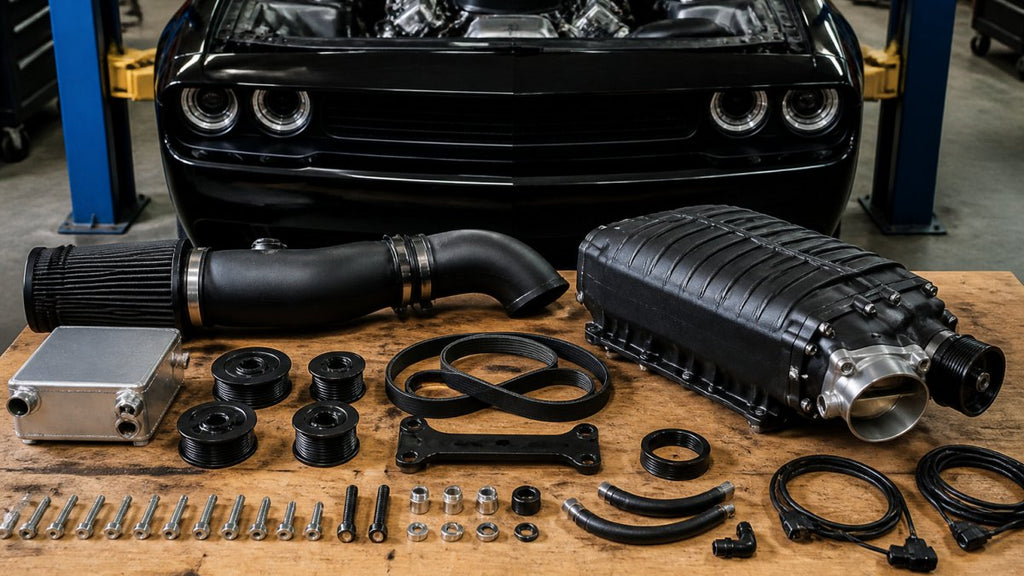
Supercharger Kit for Dodge Challenger HEMI: 2026 Guide
Table of Contents
- Supercharger Kit for Dodge Challenger HEMI: How to Choose and Install
- What You'll Need Before You Buy
- 5.7 HEMI Supercharger Kit Fitment and Compatibility
- Dodge Challenger Supercharger Kit Installation Walkthrough
- 5.7 HEMI Supercharger Horsepower Gains and Dyno Results
- Dodge Challenger Supercharger Kit Cost and Supporting Mods
- Reliability, Warranty, and Emissions Compliance
- Conclusion
- Frequently Asked Questions
Last Updated: October 15, 2026
Supercharger Kit for Dodge Challenger HEMI: How to Choose and Install
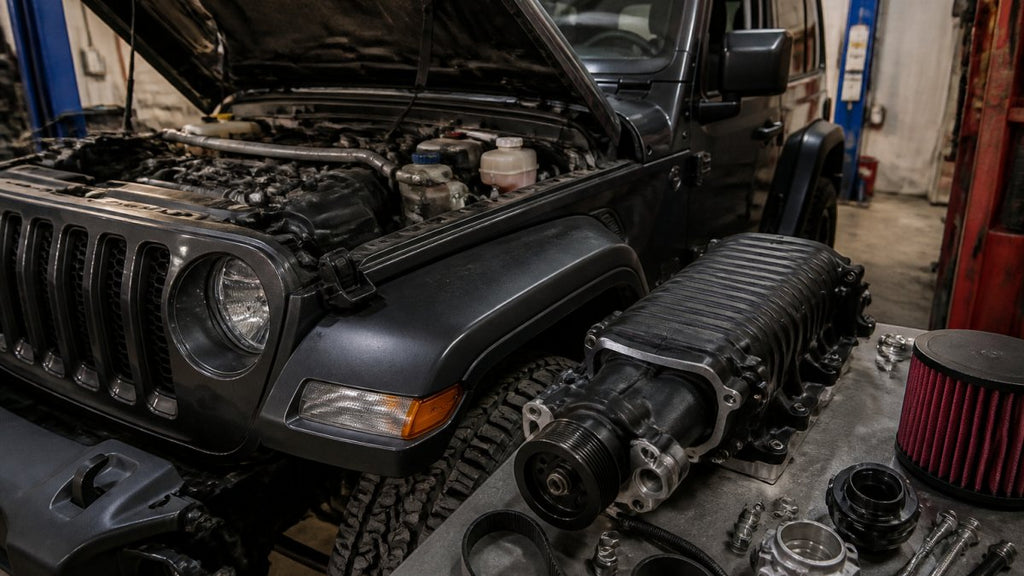
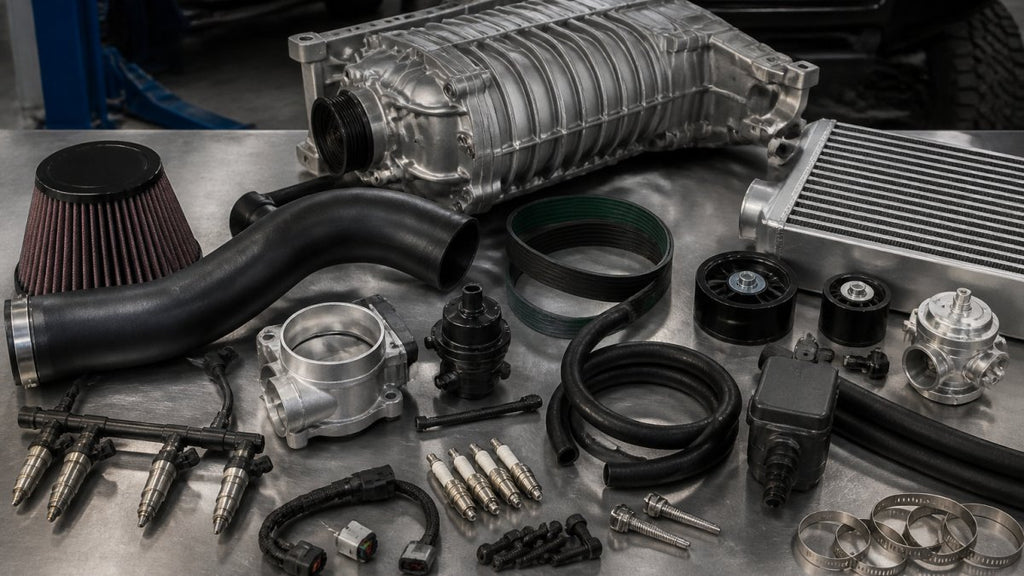
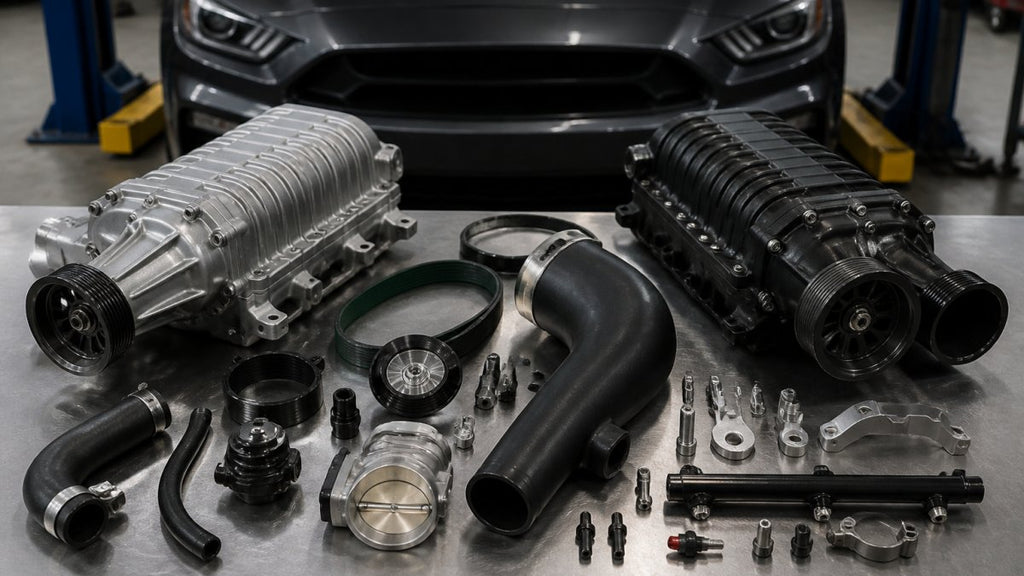
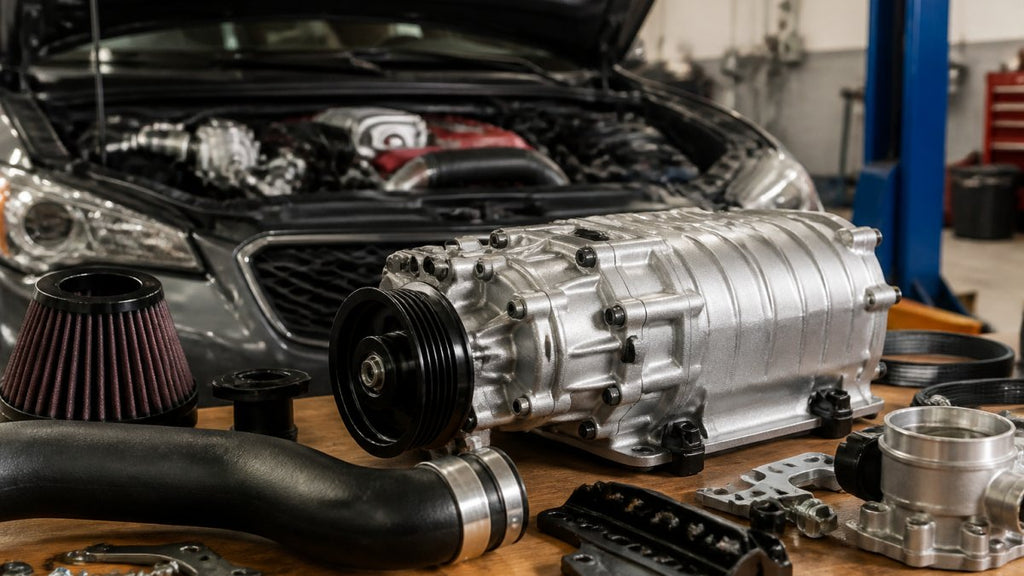
A supercharger kit is a bolt-on forced-induction system that replaces the factory intake manifold with a belt-driven blower, adding boost without internal modifications. At VT Superchargers, we build our kits around OEM-style mounting points, so the install is reversible and the car stays streetable.

The 5.7L, 6.4L, and 6.2L HEMI engines share a pushrod V8 architecture but not the same supercharger hardware, and buying the wrong kit for your displacement or model year is a common mistake.
Key Takeaway
Fitment comes first. Displacement, model year, and ECU strategy decide which kit will actually bolt on and run correctly. Power numbers are secondary until those three line up.
What You'll Need Before You Buy
Before ordering, confirm four things: engine displacement, model year, ECU and tuning plan, and fuel system capacity. These decide fitment, boost ceiling, and cost.
Start by verifying the engine code. The Challenger shipped with the 3.6L Pentastar V6, the 5.7L HEMI V8, the 6.4L HEMI V8 in SRT and Scat Pack trims, and the 6.2L supercharged HEMI in the Hellcat.
Next, check your model year.
- Engine displacement and code (3.6L, 5.7L, 6.4L, 6.2L)
- Model year and trim (SRT, Scat Pack, R/T, Hellcat)
- ECU tuning method (handheld tuner, custom dyno tune, or both)
- Fuel system capacity (injectors, pump, and lines)
- Octane available at your local pump
Watch Out
Skipping the tuning plan is the fastest way to damage a boosted engine. A supercharger adds air; the ECU must add matching fuel and pull timing under load. Running a kit without a proper calibration risks detonation and engine damage.
5.7 HEMI Supercharger Kit Fitment and Compatibility
Displacement compatibility is non-negotiable. VT Superchargers builds kits per displacement, so the intake manifold, brackets, and belt drive match your engine from the start.
Model year matters for accessory drive and hood clearance. Earlier Challengers use a different front accessory layout, and the head unit sits in the valley where the factory intake was. A kit that clears a 2011 hood may not clear a 2020 without a different bracket set.
Positive-Displacement vs Centrifugal Blowers
Two blower designs are common in the market, and they deliver power differently.
Positive-displacement superchargers (twin-screw or roots-type) sit on top of the engine and build boost almost instantly from idle, suiting daily drivers and tow vehicles because low-end torque arrives early.
Centrifugal superchargers mount like an accessory and build boost with RPM, similar to a turbo. They make strong top-end power but feel softer off the line.
| Blower Type | Boost Delivery | Best For | Trade-Off |
|---|---|---|---|
| Positive-displacement | Immediate, from idle | Daily drivers, towing, low-end torque | More heat under the hood |
| Centrifugal | Builds with RPM | Top-end power, roll racing | Softer low-end response |
Pro Tip
If you tow, off-road, or drive in traffic, a positive-displacement blower can provide low-end torque that makes the car feel stronger everywhere, not just near redline.
Dodge Challenger Supercharger Kit Installation Walkthrough
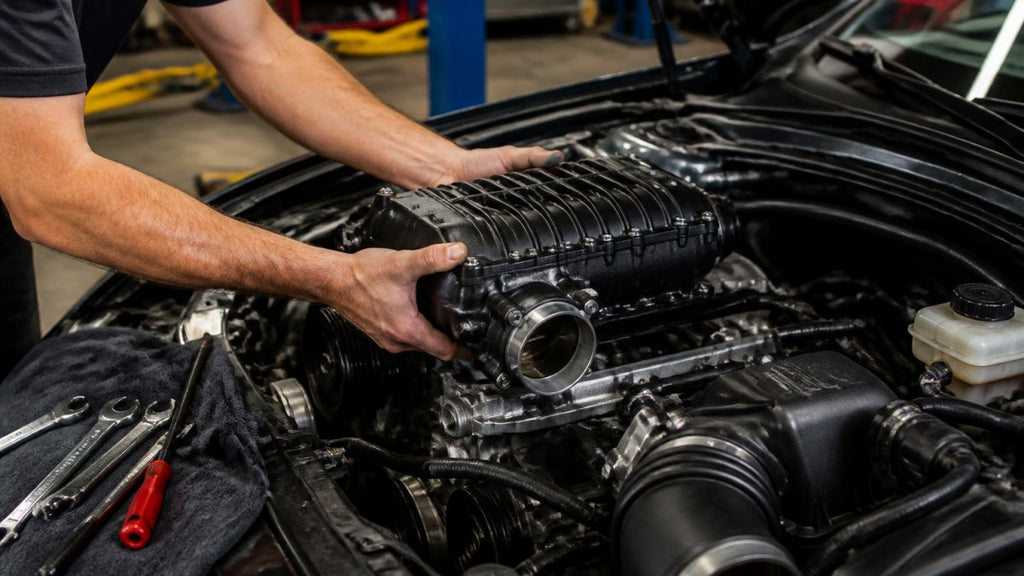
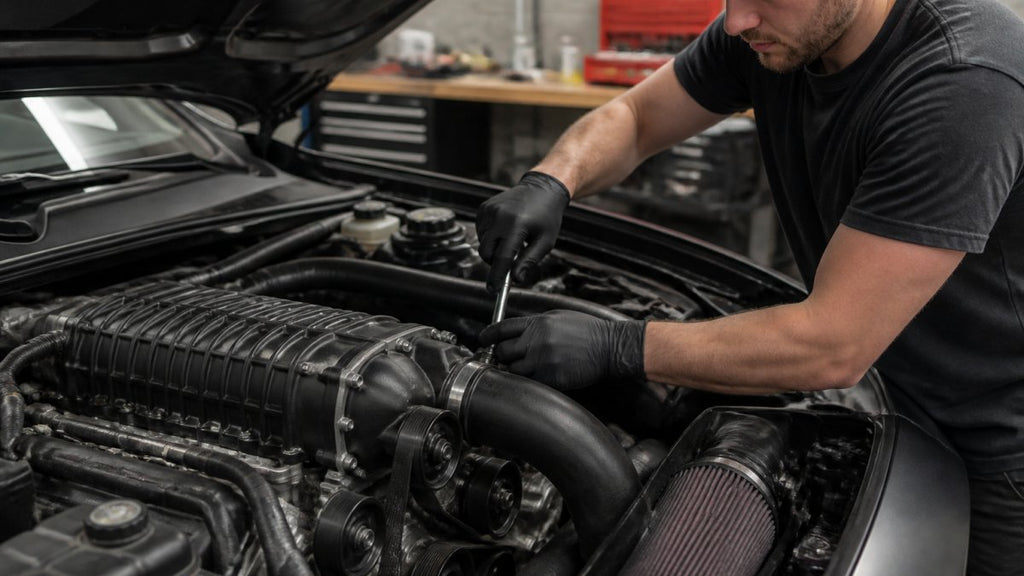
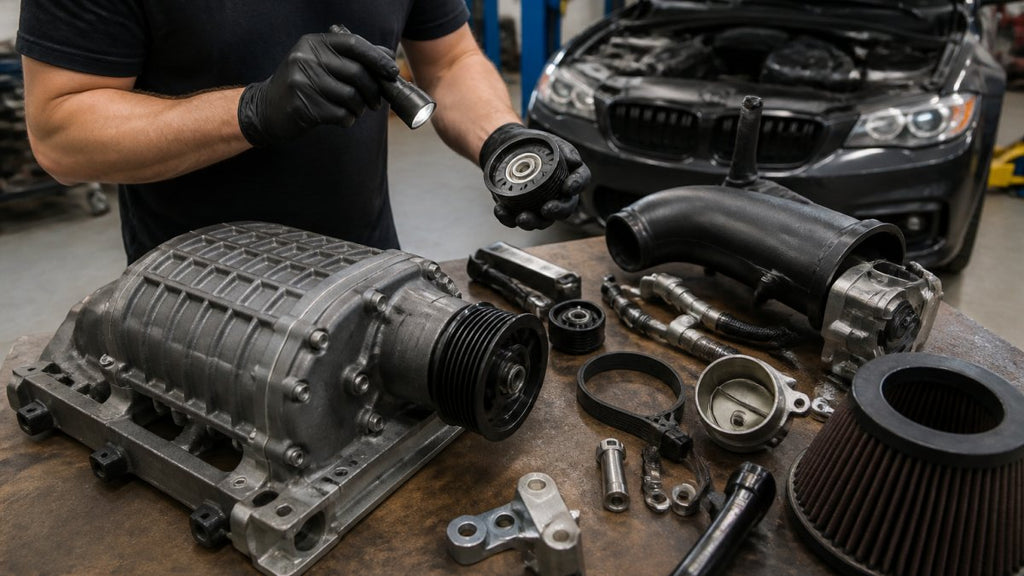
A bolt-on Challenger supercharger kit installs in a home garage over a weekend with hand tools, a torque wrench, and a lift or jack stands.
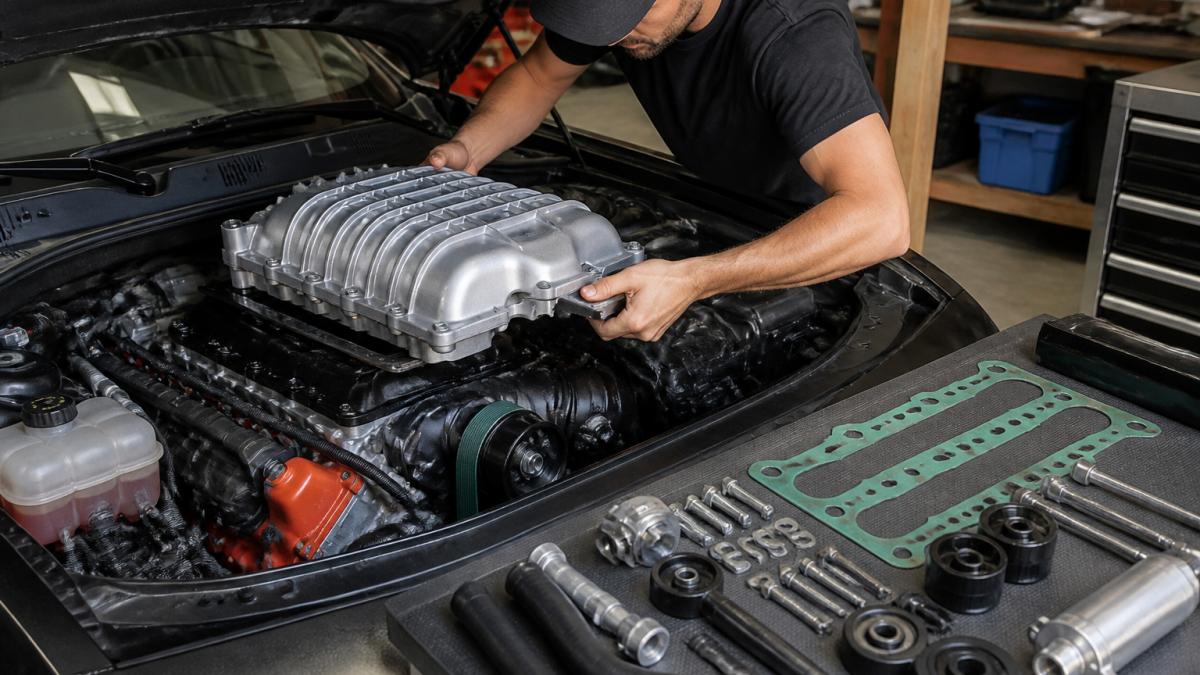
Here is a typical installation sequence:
- Disconnect the battery and relieve fuel pressure. Safety first, and it prevents a fuel spill when you pull the factory intake.
- Remove the factory intake manifold and throttle body. Label every vacuum line and connector.
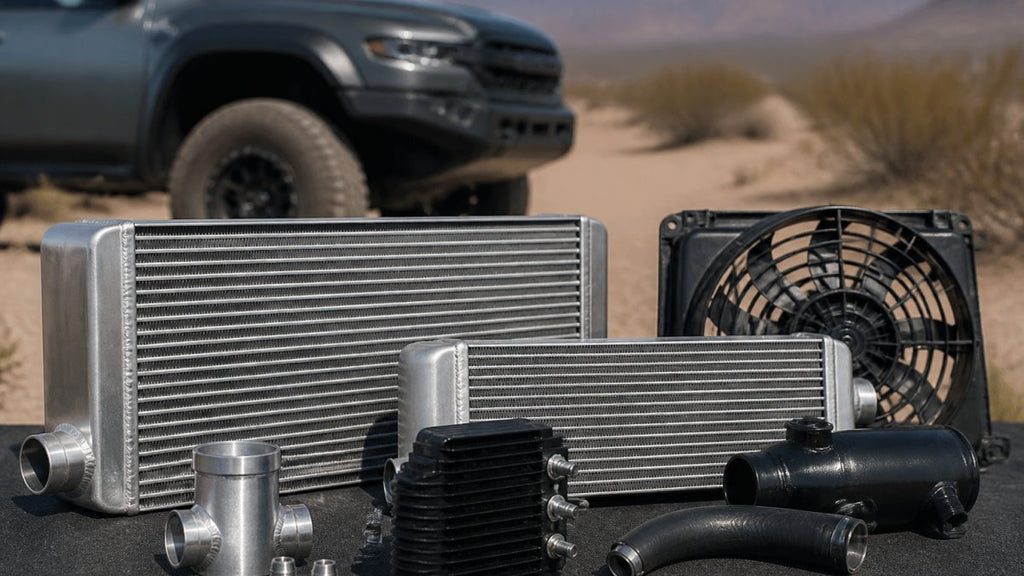
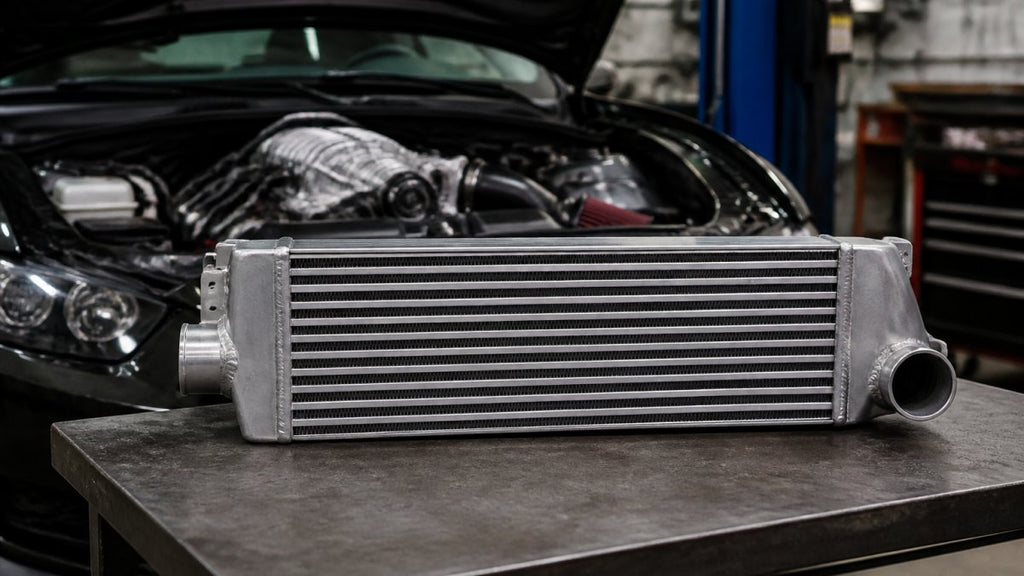
- Install the new intake manifold and intercooler. On water-to-air kits, route the coolant lines to the front heat exchanger.
- Mount the supercharger head unit and brackets. Use the OEM mounting points, no cutting or welding.
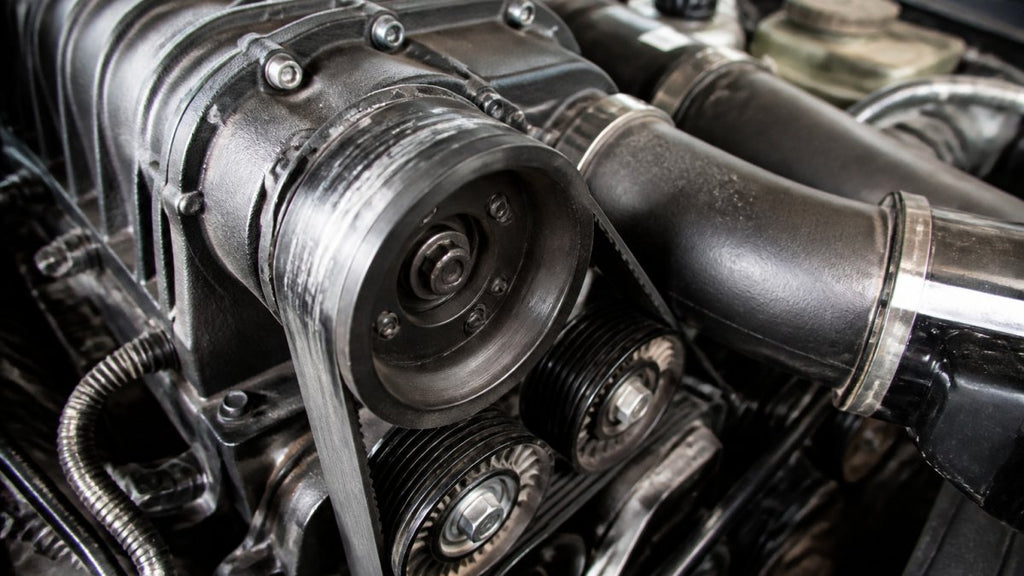
- Install the drive belt and idler pulley. Check belt routing against the supplied diagram.
- Reconnect the throttle body, intake piping, and sensors. Double-check every connector.
- Fill the intercooler coolant and check for leaks. Run the electric water pump and watch the reservoir.
- Flash the calibration and start the engine. Let it idle and check for codes before driving.
Expected result: a clean idle with no check-engine light, stable coolant level, and correct boost reading on your gauge.
Common Mistakes to Avoid During Install
The worst mistakes are small ones. Cross-threading a bracket bolt, leaving a vacuum line disconnected, or forgetting to prime the intercooler before the first start can turn a weekend job into a tow to the shop.
- Reusing factory intake gaskets instead of the supplied ones
- Routing the belt on the wrong side of an idler pulley
- Forgetting to bleed air from the intercooler coolant loop
- Starting the engine before flashing the calibration
- Torquing manifold bolts in the wrong sequence
5.7 HEMI Supercharger Horsepower Gains and Dyno Results
Supercharger horsepower gains depend on boost pressure, tuning, and supporting fuel mods, but a well-matched bolt-on kit adds a large percentage over stock rather than a fixed number.
That range reflects octane, air temperature, tuning aggressiveness, and whether the fuel system keeps up.
Two things matter more than the peak number. First, where the power arrives: a positive-displacement blower adds torque from idle, so the car pulls hard off the line.
Key Takeaway
Judge a kit by the shape of the power curve, not just the peak. Low-end torque is what you feel on the street; peak horsepower is what you brag about on the dyno sheet.
Dodge Challenger Supercharger Kit Cost and Supporting Mods
Dodge Challenger supercharger kit cost breaks into three buckets: the kit, supporting modifications, and installation or tuning labor.
Dodge Challenger 3.6L Pentastar V6 Supercharger Kit | VT →
The kit is the largest single line item. From there, plan for the parts that make boost safe and reliable:
| Cost Category | What It Covers | Typical Price Range (USD) | Why It Matters |
|---|---|---|---|
| Supercharger kit | Head unit, manifold, intercooler, brackets, hardware | $5,500.00 to $9,000.00 | The core system |
| Fuel system | Injectors, pump, lines | $600.00 to $1,800.00 | Keeps air-fuel ratio safe under boost |
| Tuning | Handheld tuner or dyno calibration | $500.00 to $1,200.00 | Prevents detonation, unlocks gains |
| Installation | DIY or shop labor | $0.00 to $2,500.00 | Fitment and torque specs |
| Supporting mods | Spark plugs, thermostat, catch can | $150.00 to $500.00 | Reliability under sustained boost |
| Drivetrain and cooling | Clutch or converter, upgraded radiator, gauges | $500.00 to $3,000.00 | Handles the added power and heat |
Those ranges reflect common configurations, not a quote.
Total installed cost. Add the buckets together and a realistic all-in budget for a bolt-on Challenger HEMI kit typically runs from roughly $7,000.00 at the low end to $15,000.00 or more for a fully supported build. The kit is rarely the whole story.
Pro Tip
Ask for a written total before you order. A kit price that looks like a bargain can cost more than a complete system once you add injectors, a pump, a tune, and labor.
What Drives the Price Up or Down
Four variables move the price most:
- Displacement and trim. A 5.7L kit is generally least expensive; 6.4L and 6.2L applications use different hardware and often cost more.
- Blower design. Positive-displacement kits cost more than centrifugal kits due to the integrated manifold and intercooler.
- Tuning method. A handheld tuner with a canned calibration is cheaper than a custom dyno tune, but a dyno tune extracts more safe power.
- DIY versus shop install. Doing it yourself saves labor but requires tools, time, and a torque wrench you trust.
Supporting Mods Most Buyers Forget
The parts that keep a boosted HEMI alive are easy to overlook:
- Fuel injectors and pump. Stock injectors often run out of duty cycle before the blower runs out of boost.
- Colder spark plugs. A cooler heat range reduces the risk of pre-ignition under load.
- Lower-temperature thermostat. Helps the cooling system keep up with added heat.
- Catch can. Keeps oil vapor out of the intake on a forced-induction engine.
- Gauges. A boost gauge and wideband air-fuel gauge let you see what the tune is doing.
- Drivetrain. A stock clutch or torque converter may not hold the added torque, especially on a 6.4L.
Watch Out
Running more boost than your fuel system and tune can support is the leading cause of engine failure on boosted HEMIs. Upgrade injectors and pump capacity before you raise boost, not after.
Reliability, Warranty, and Emissions Compliance
A properly tuned bolt-on supercharger kit is reliable for daily driving, but reliability depends on the tune, the fuel, and staying within the engine's safe boost limit. Pushing past the safe ceiling on a stock bottom end shortens engine life.
Three factors protect reliability:
- A conservative, matched calibration. The tune should add fuel and pull timing under load, not chase peak numbers.
- Correct octane. Higher boost demands higher octane. Running regular fuel in a boosted engine invites detonation.
- Heat management. The intercooler system and a quality coolant loop keep intake air temperatures down, which protects power and the engine.
Engine Limits and Boost Ceilings
The stock engine bottom end has a practical limit lower than the blower's maximum. Sustained high boost, lean air-fuel ratios, or repeated heat soak can shorten ring and bearing life. Forged pistons, rods, and a stronger crank can raise that ceiling, and the budget.
Drivetrain stress is the other half. Added torque loads the clutch, torque converter, driveshaft, and rear axle.
Maintenance Under Boost
Boost changes the maintenance schedule:
- Oil changes at shorter intervals than the factory recommendation, with a quality full-synthetic oil.
- Spark plugs inspected and replaced more often, in the cooler heat range the tune calls for.
- Intercooler coolant checked for level and condition, and the water pump verified.
- Belt and idler pulley inspected for wear and correct tension.
- Air filter kept clean so the blower is not starved.
Warranty Implications
VT Superchargers backs its kits with a 24-month warranty. A supercharger can affect a factory powertrain warranty because it changes the engine's operating parameters, so check your coverage before installing. Under the Magnuson-Moss Warranty Act, a manufacturer generally cannot void a warranty simply because an aftermarket part is installed, but it can deny a specific claim if it shows the part caused the failure. Keep your receipts and documentation.
Emissions Compliance
For emissions, many bolt-on kits are engineered to keep factory emissions equipment in place, and we recommend confirming your state's inspection rules before you buy. Requirements vary widely: some states run only an OBD-II readiness check, while others perform a visual inspection or a tailpipe test. The U.S. EPA vehicle emissions information outlines how aftermarket parts interact with emissions requirements, and your state motor vehicle agency publishes the specific inspection rules for your area.
Watch Out
A kit that is legal in one state may not pass inspection in another. Confirm your state's rules and the kit's emissions status before you order, not after the install.
Conclusion
Choosing the right supercharger kit for Dodge Challenger comes down to matching the kit to your displacement, model year, and tuning plan, then budgeting for the supporting mods that keep boost safe. Get those right, and a bolt-on blower transforms the car without opening the engine.
That is exactly what VT Superchargers builds: bolt-on kits with OEM-style fitment, engineered per displacement, backed by a 24-month warranty and financing options. Register with VT Superchargers to confirm fitment for your Challenger and get your build moving.
Frequently Asked Questions
How much HP will a supercharger add to a 5.7 HEMI?
A bolt-on supercharger kit for the Dodge Challenger 3.6L Pentastar V6 from VT Superchargers typically adds 40% to 60% more horsepower than stock and 30% to 50% more torque at approximately 7 PSI boost pressure. Actual numbers vary by model year, fuel octane, and whether you run a custom dyno tune versus a canned calibration.
Can I install a Dodge Challenger supercharger kit at home?
Yes, if you choose a bolt-on kit designed for OEM-style fitment. Kits that use original mounting points and require no cutting, welding, or wire splicing are realistic for a DIY install over a weekend with basic hand tools and a torque wrench. Budget 8 to 12 hours for a first-timer. You will still need a shop or remote tuner to flash the ECU after the hardware is bolted on, since the factory calibration cannot handle boost.
What is the cost of a Dodge Challenger supercharger kit?
The kit itself is the biggest line item, and VT Superchargers lists its Dodge Challenger 3.6L Pentastar V6 kit at $5,500.00.
Will a supercharger void my factory warranty?
Adding forced induction can affect your factory powertrain warranty, and under the Magnuson-Moss Warranty Act a dealer must show the modification caused the failure before denying a specific claim. VT Superchargers backs its kits with a 24-month warranty covering the supercharger hardware itself. Keep your receipts, document the install, and talk to your dealer before you start if your Challenger is still under factory coverage.
Related post
09
Oct
RECENT POSTS