Tuning Requirements After Installing a Supercharger
Table of Contents
- Why Supercharger Tuning Is Not Optional
- Air-Fuel Ratio Requirements for Supercharged Engines
- Timing, Knock Control, and Fuel System Upgrades
- Dyno Tuning for Superchargers: What It Involves
- Custom Tuning vs Canned Tunes: Which Fits Your Build
- Data Logging, Emissions Compliance, and Post-Tune Maintenance
- Frequently Asked Questions
Last Updated: September 21, 2026
Why Supercharger Tuning Is Not Optional
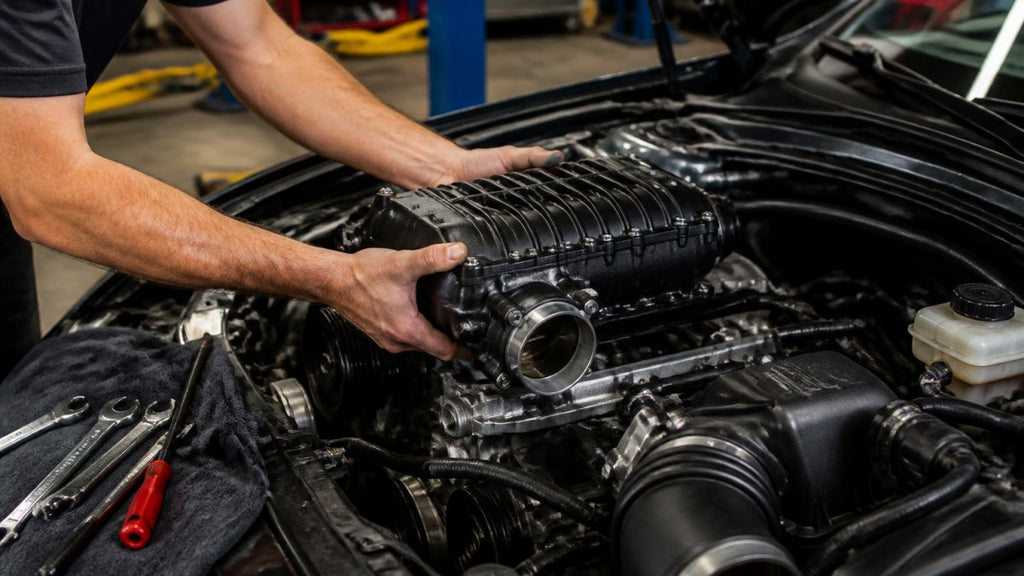
Tuning requirements after installing a supercharger are not a formality you can skip. Forcing more air into an engine changes nearly every value the factory computer was calibrated to expect, from fuel delivery to ignition timing. This guide from VT Superchargers breaks down what has to change, what happens when it doesn't, and how to choose the right tuning path.
A supercharger pushes more air into the cylinders than the engine was designed to ingest naturally. The powertrain control module (PCM) has no idea that hardware exists until someone tells it, so it keeps injecting fuel and firing spark plugs on the assumption that manifold pressure stays below atmospheric.
What Changes When You Add Boost
Three things shift the moment you add boost pressure. The mass airflow or manifold absolute pressure sensor reports values the stock calibration never anticipated, the engine needs proportionally more fuel to match the extra oxygen, and rising cylinder pressures and temperatures change how much ignition advance the engine can tolerate before detonation.
Volumetric efficiency is the technical term for how completely a cylinder fills with air. A supercharger raises it substantially. Every fuel and spark table in the ECU reflash has to account for that.
What Happens If You Skip the Tune
Running a supercharger without a tune is one of the most expensive mistakes in forced induction. A lean condition develops when the engine receives more air than the fuel system compensates for, cylinder temperatures climb fast, and the resulting detonation cracks pistons.
The knock sensor can only pull so much timing before the PCM runs out of adjustment range. Many modern engines then drop into limp mode; others simply keep running lean until something fails.
Watch Out
Skipping the tune does not just cost horsepower. A sustained lean condition under boost can destroy pistons and ring lands in a matter of minutes of hard driving, turning a bolt-on project into a full engine rebuild.
Air-Fuel Ratio Requirements for Supercharged Engines
Air-fuel ratio requirements for supercharged engines differ meaningfully from naturally aspirated targets. A naturally aspirated engine at wide-open throttle typically runs around 12.5:1 to 13:1. Under boost, most tuners target 11.5:1 to 12.0:1 to control heat and suppress detonation.
That richer mixture does two jobs: extra fuel absorbs heat from the combustion chamber, and it slows the burn slightly, reducing peak cylinder pressure. Both effects protect the engine.
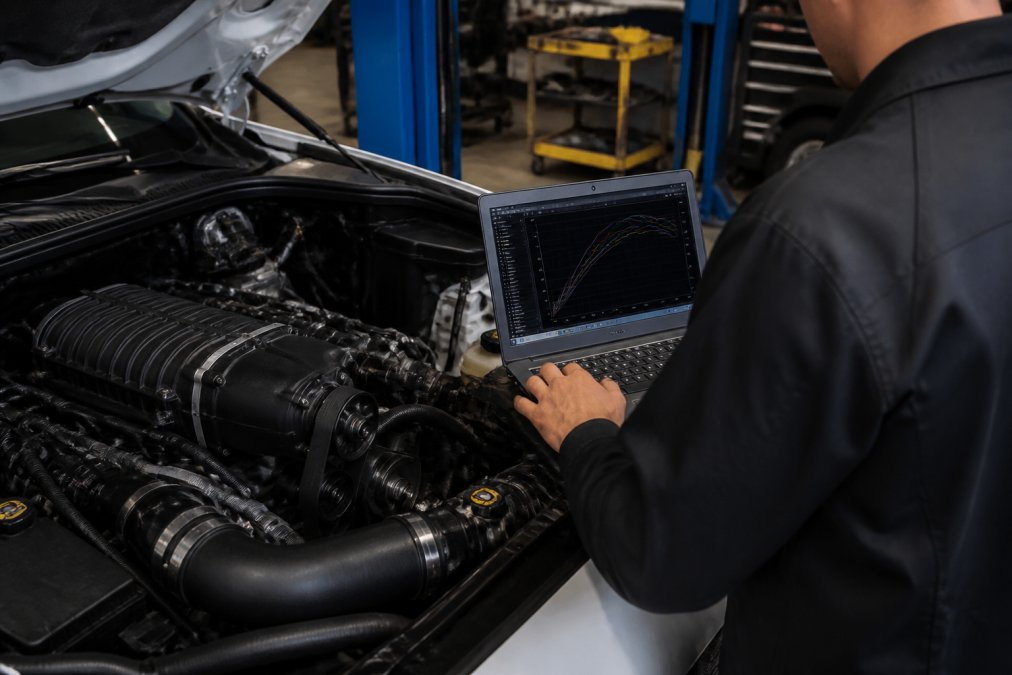
A wideband O2 sensor is mandatory for verifying this, since factory narrowband sensors cannot report accurately across the range you need under boost. A wideband logs actual AFR against boost pressure so the tuner can see exactly where the calibration runs lean or rich.
| Condition | Target AFR | Why It Matters |
|---|---|---|
| Idle and cruise | 14.5:1 to 14.7:1 | Idle stability and fuel economy |
| Light boost | 12.5:1 to 13.0:1 | Transitional protection |
| Full boost, wide-open throttle | 11.5:1 to 12.0:1 | Detonation suppression and heat control |
| Rich condition (too much fuel) | Below 11.0:1 | Costs power, fouls plugs, washes cylinder walls |
Running too rich is safer than running lean, but it is not free: it wastes fuel, fouls spark plugs, and can wash oil from cylinder walls over time. The goal is a controlled, measured mixture, not the richest possible one.
Pro Tip
Log AFR at part throttle, not just wide-open throttle. Many lean conditions hide in the transition zone between cruise and full boost, where the PCM is blending tables and a miscalibrated manifold absolute pressure signal can push the mixture lean before the knock sensor reacts.
Timing, Knock Control, and Fuel System Upgrades
Ignition timing and fuel delivery are the two levers that determine whether a boosted engine survives. Both have to be recalibrated together, because changing one affects how much of the other you can safely run.
Ignition Timing and Detonation Prevention
Boost raises cylinder pressure, and higher pressure makes the air-fuel charge ignite more easily, so the engine needs less ignition advance, not more. A tuner retards timing under boost to keep peak cylinder pressure from spiking past what the pistons and head gasket can handle. As a rule of thumb, every pound of boost added typically calls for pulling roughly one degree of timing from the naturally aspirated map, though the exact figure depends on compression ratio, fuel octane, and intake air temperature.
Toyota Tacoma 2.7L Supercharger Kit →
The knock sensor is the safety net: a piezoelectric element that converts the characteristic vibration of detonation into a voltage signal the PCM reads.
Injectors, Fuel Pumps, and OBD-II Compatibility
The factory fuel injectors are sized for naturally aspirated airflow. Add boost, and they can hit maximum duty cycle before the engine reaches peak power, forcing a lean condition exactly when you can least afford one. A common target is keeping injector duty cycle below roughly 80 to 85 percent at peak power, which leaves headroom for cold weather, higher boost, and fuel pressure variation.
Key Takeaway
Fuel system upgrades are not optional add-ons. Injectors and pump capacity determine whether your tune can actually deliver the AFR targets it was written for, and duty cycle headroom is what keeps the calibration safe when conditions change.
Dyno Tuning for Superchargers: What It Involves
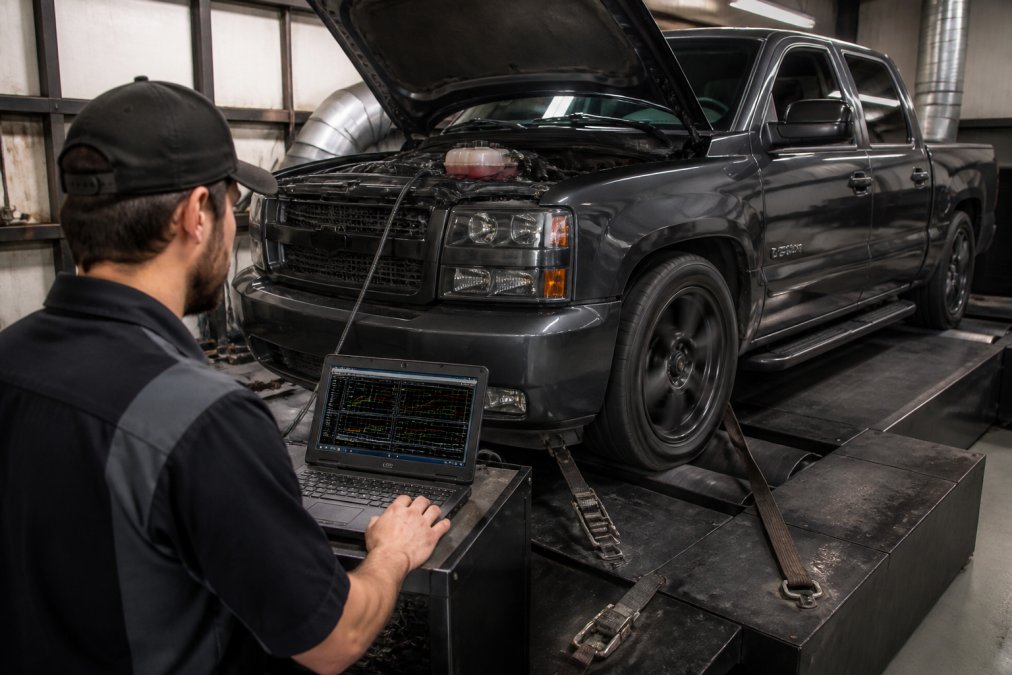
Dyno tuning for superchargers is the process of calibrating fuel and ignition maps on a load-bearing dyno while measuring power, torque, and AFR in real time, the most precise way to dial in a boosted combination.
Custom Tuning vs Canned Tunes: Which Fits Your Build
Custom tuning vs canned tunes comes down to how much variation your build has from stock. A canned tune is a pre-written calibration for a specific platform, flashed through a handheld device or laptop. It works well when your setup matches the assumptions baked into it.
| Approach | Best For | Trade-off |
|---|---|---|
| Canned tune | Stock or near-stock builds with common bolt-ons | No adjustment for elevation, fuel quality, or unusual hardware |
| Remote custom tune | Builds with intake, exhaust, or pulley changes | Requires accurate data logging to be effective |
| Dyno custom tune | Aggressive builds, maximum power targets | Highest cost and requires shop access |
Best For
Drivers who want forced induction without a standalone tuning project. A kit with a pre-configured piggyback ECU removes the guesswork while keeping factory drivability intact.
Data Logging, Emissions Compliance, and Post-Tune Maintenance
This is where a boosted build either stays reliable or turns into a recurring problem. Three things matter after the tune is flashed: logging data correctly, staying legal, and keeping the engine healthy over time.
Data Logging for Remote Tuning
Data logging is what makes remote tuning viable. A remote tuner needs clean logs of manifold absolute pressure, mass airflow sensor output, AFR, knock activity, and fuel injector duty cycle across a range of driving conditions; without accurate logs, a remote tune is guesswork.
Emissions Compliance
Emissions compliance is a real constraint on street-legal builds. Federal law prohibits tampering with emissions control equipment on vehicles used on public roads, and many states run their own inspection programs with their own rules. A tune that disables or defeats emissions components creates a compliance problem regardless of how well it performs.
Post-Tune Maintenance Schedule
Post-tune maintenance keeps a boosted engine healthy over the long run, and intervals should be shorter than the factory schedule. A practical checklist:
- Spark plugs: Shorten the replacement interval, often to roughly half the factory mileage, and re-check the gap at every oil change. Boost wears plugs faster, and a widening gap raises ignition voltage demand.
- Oil and filter: Change more frequently than stock, because boosted engines run hotter and fuel dilution and heat break down oil faster. Use the viscosity and specification the engine builder or kit manufacturer recommends.
- Intercooler coolant: Check the level periodically on air-to-water systems, and watch for air pockets after any service that opens the cooling loop.
- Intake and charge piping: Inspect clamps and couplers for boost leaks, which show up as a rich condition under load and a loss of power.
- Belts and tensioners: Supercharger drive belts wear faster than accessory belts. Inspect for glazing and re-tension or replace on schedule.
- Codes and logs: Re-scan for stored codes after the first few hundred miles, and re-log the same conditions you logged before the tune to catch calibration drift, a failing fuel pump, or a boost leak early.
Pro Tip
After any tune, re-log the same conditions you logged before. Comparing before-and-after data catches calibration drift, a failing fuel pump, or a boost leak before it turns into a lean condition under load.
Frequently Asked Questions
Do you need a tune after installing a supercharger?
Yes. Adding boost pushes more air into the engine than the factory calibration expects, so the powertrain control module needs updated fuel and ignition tables. Without supercharger tuning, the engine can run lean under boost, which raises combustion temperatures and risks detonation. Even low-boost bolt-on kits with a piggyback ECU, like the Toyota Tacoma 2.7L kit with its pre-configured module, ship with a calibration for this reason.
What are the risks of driving an untuned supercharged vehicle?
The main risk is a lean condition under boost. When air enters faster than fuel can be added, cylinder temperatures climb and detonation can crack pistons or bend rods. You may also trigger limp mode, see unstable idle, or lose throttle response as the ECU pulls timing to protect itself. Detonation damage often happens before you hear it, so a wideband O2 sensor and data logging are worth the cost.
Is dyno tuning for superchargers always necessary, or can I use a canned tune?
A canned tune covers a stock engine at a fixed boost level, which works well for many daily drivers. Custom tuning on a dyno refines fuel and ignition for your exact setup, including larger injectors, a different pulley, or altitude. If you run a 61 mm pulley or added a fuel system upgrade, a dyno session or remote e-tune with data logging gives safer air-fuel ratio targets than a one-size-fits-all file.
How do I know my air-fuel ratio requirements for supercharged engines are being met?
Watch the wideband O2 sensor reading under load. A safe target for most pump-gas supercharged builds sits richer than naturally aspirated, and the exact number depends on boost pressure and octane. Data logging during a third-gear pull shows whether the ECU holds that target. If the ratio leans out as rpm climbs, stop and have the tune revised before driving harder.
Related post
09
Oct
RECENT POSTS