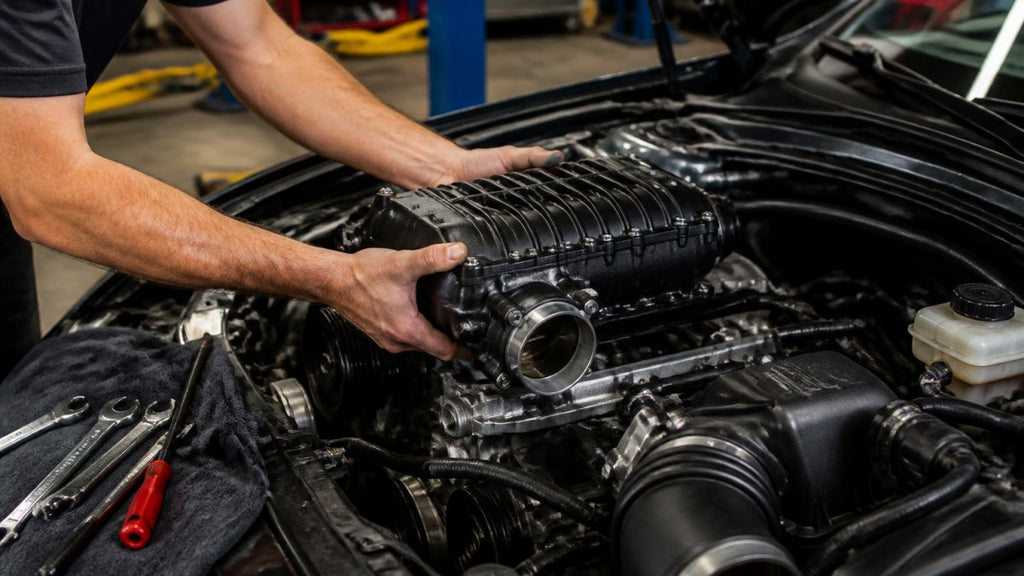
Best Supercharger Kits for Street Cars: 2026 Buyer's Guide
Table of Contents
- What Makes a Supercharger Kit Right for a Street Car
-
Top Supercharger Kits for Street Cars: Comparison Table and Pricing
- Toyota Tundra 5.7L 3UR-FE: $6,900
- Dodge Charger 3.6L V6: $5,500
- Dodge Challenger 3.6L V6: $5,100
- Mazda 6 2.0L Skyactiv-G: $4,800
- Ford Explorer 3.5L V6: $5,800
- Nissan Titan/Armada 5.6L V8: $7,600
- Dodge Durango 3.6L V6: $5,500
- Jeep Pentastar 3.6L V6: $5,500
- Toyota Tacoma 4.0L 1GR-FE: $6,000
- Nissan Frontier 4.0L VQ40DE: $5,400
- Centrifugal vs Roots Supercharger for Street: Which Type Fits Your Build
- Street Legal Supercharger Kits: Emissions Compliance and Insurance
- Supercharger Installation Best Practices for DIY and Shop Builds
- Warranty, Maintenance, and Long-Term Reliability of Forced Induction
- Conclusion
- Frequently Asked Questions
Last Updated: September 22, 2026
What Makes a Supercharger Kit Right for a Street Car
The best supercharger kits for street cars balance three things: real horsepower gains, OEM-style fitment, and daily drivability you don't have to babysit. A kit that makes big power but heat-soaks in traffic or throws a check-engine light every other week isn't a street kit, it's a track toy.
At VT Superchargers, we build bolt-on systems around that exact trade-off. Every kit is engineered for a specific engine, not adapted from a universal housing.
Here's the practical filter. A street-ready kit should:
- Use factory mounting points with no cutting, welding, or wire splicing
- Deliver power across the mid-range, not just at redline
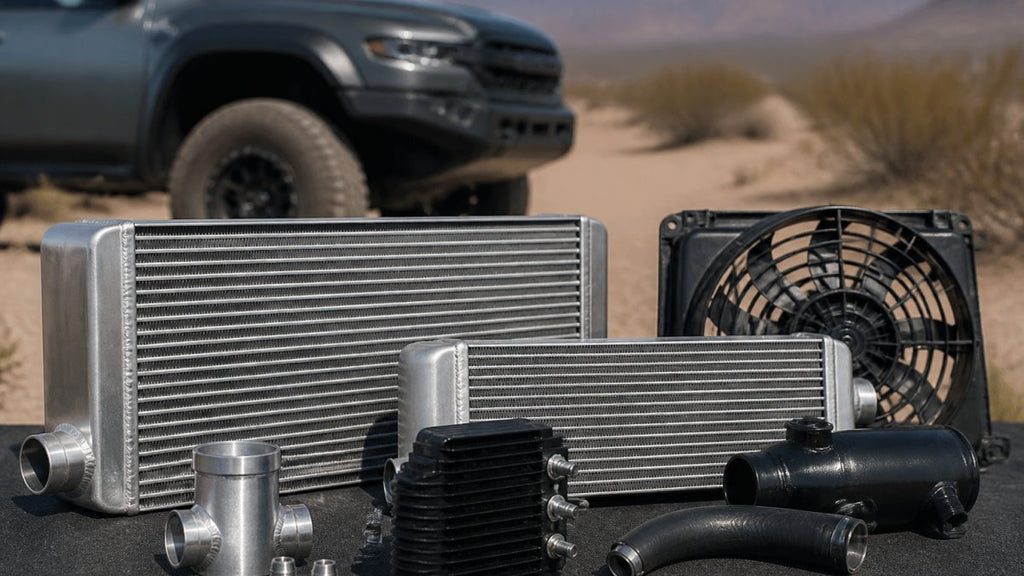
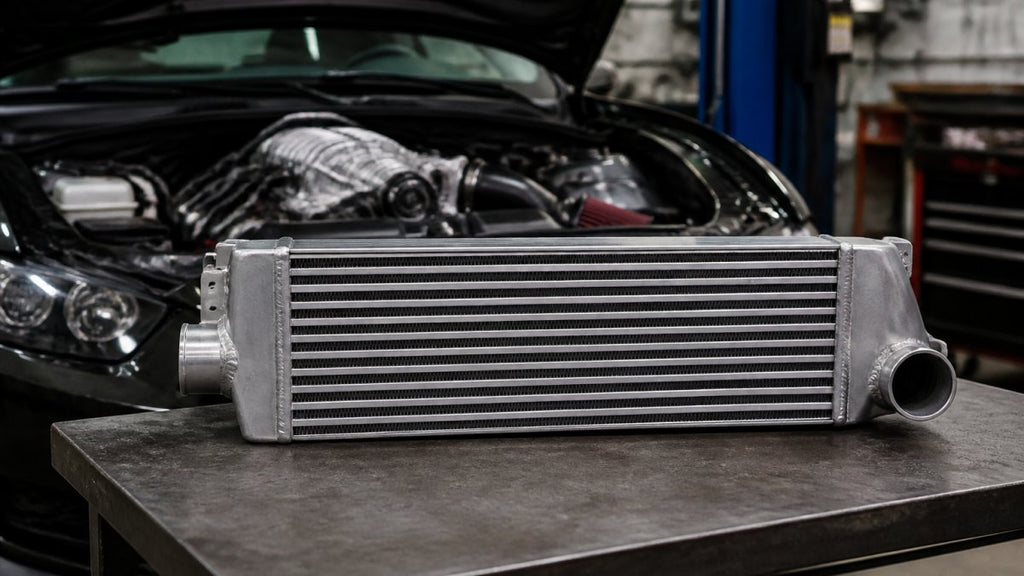
- Include a water-to-air intercooler to fight heat soak
- Support an ECU tune so the engine management actually knows what's happening
- Preserve drivability for commuting, towing, and stop-and-go traffic
Most buyers obsess over peak horsepower. The real difference on a street car is the torque curve. A kit that adds 40% torque from 2,500 rpm transforms how the car feels every single day. Peak numbers you hit once a week don't.
Top Supercharger Kits for Street Cars: Comparison Table and Pricing
Every kit below is a complete, vehicle-specific system from VT Superchargers with a 24-month warranty, Red or Black finish options, and a required ECU tune.
| Vehicle | Engine | Price | Boost | Power Gain |
|---|---|---|---|---|
| Toyota Tundra | 5.7L 3UR-FE V8 | $6,900 | 7 psi | +40-60% hp |
| Dodge Charger | 3.6L Pentastar V6 | $5,500 | 7 psi | +40-60% hp |
| Dodge Challenger | 3.6L Pentastar V6 | $5,100 | 7 psi | +40-60% hp |
| Mazda 6 | 2.0L Skyactiv-G | $4,800 | 7 psi | +40-60% hp |
| Ford Explorer | 3.5L V6 | $5,800 | 7 psi | +40-60% hp |
| Nissan Titan/Armada | 5.6L VK56VD V8 | $7,600 | 7 psi | +50-70% hp |
| Dodge Durango | 3.6L Pentastar V6 | $5,500 | 7 psi | +40-60% hp |
| Jeep (Wrangler, Gladiator, Grand Cherokee) | 3.6L Pentastar V6 | $5,500 | 7 psi | +40% hp |
| Toyota Tacoma | 4.0L 1GR-FE V6 | $6,000 | 7 psi | +40-60% hp |
| Nissan Frontier | 4.0L VQ40DE V6 | $5,400 | 6-8 psi | +40-60% hp |
Toyota Tundra 5.7L 3UR-FE: $6,900
It's a one-piece die-cast aluminum system with a mid-mounted water cooler and a super-large water-to-air intercooler that holds intake temperatures steady on long highway pulls. You get +40-60% horsepower and +30-50% torque at 7 psi, with no cutting required.

Dodge Charger 3.6L V6: $5,500
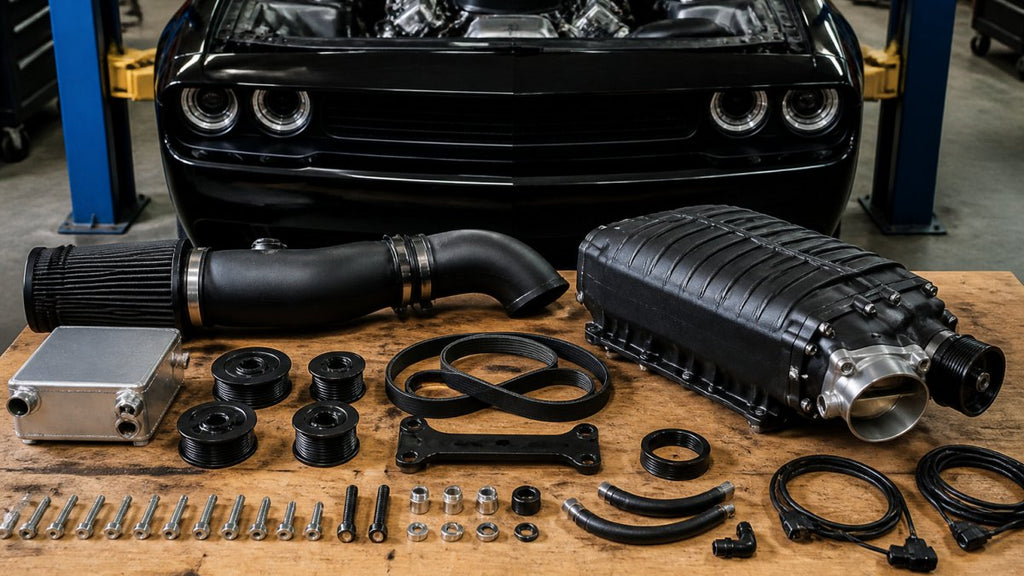
The Charger 3.6 kit is a matched system built specifically for the Pentastar platform. It includes the head unit, cast aluminum intake manifold, mid-mounted water-to-air intercooler, high-flow water pump, and front-mounted radiator. Stronger mid-range pull and improved throttle response are the headline gains.
Dodge Challenger 3.6L V6: $5,100
The Challenger kit is a purpose-built forced-induction system, not a universal kit, and installs using original OEM mounting points with no internal engine mods.
Mazda 6 2.0L Skyactiv-G: $4,800
The Mazda 6 kit uses a twin-screw design for instant low-end response. It fits 2014-2024 models and gives +40-60% horsepower at 7 psi.
Ford Explorer 3.5L V6: $5,800
Built for the Explorer 3.5L V6 with a mid-mounted water-to-air intercooler that keeps power consistent, not heat-soaked. You get +40-60% horsepower and +30-50% torque at 7 psi, plus a sharper throttle. Professional installation is recommended here.
Nissan Titan/Armada 5.6L V8: $7,600
The Titan and Armada kit delivers +50-70% horsepower and torque from the VK56VD V8. It's a twin-screw system engineered for towing and off-road work, with remote tuning assistance available. It's also the most expensive kit here, and the price reflects the larger hardware.
Dodge Durango 3.6L V6: $5,500
The Durango kit shares the Pentastar architecture with the Charger and Challenger systems. It delivers +40-60% horsepower and +30-50% torque at 7 psi with non-destructive bolt-on installation.
Jeep Pentastar 3.6L V6: $5,500
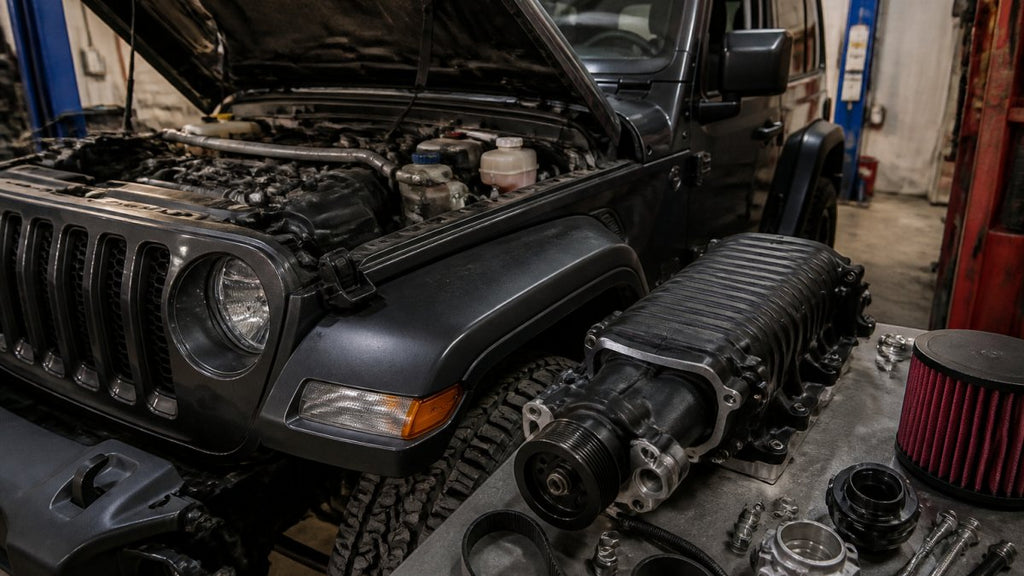
Designed for Wrangler, Gladiator, Grand Cherokee, and other Pentastar-powered Jeeps. It adds +40% horsepower and +30% torque at 7 psi, with stronger low- and mid-range pull that matters off-road. Confirm your exact engine code with VT Superchargers before ordering.
Toyota Tacoma 4.0L 1GR-FE: $6,000
The Tacoma 4.0 kit is built for all-terrain use, with high intake efficiency and a large water cooler for stable cooling. You get +40-60% horsepower and +30-50% torque at 7 psi.
Nissan Frontier 4.0L VQ40DE: $5,400
Fits 2005-2019 Frontiers with the 4.0L VQ40DE. It runs 6-8 psi with 40-60% horsepower and 30-50% torque gains depending on the tune.
Toyota Tundra 5.7L 3UR-FE Supercharger →
Key Takeaway
The cheapest kit here ($4,800) and the most expensive ($7,600) both deliver real gains. The difference is displacement and hardware size. Pick by your engine, not your budget.
Centrifugal vs Roots Supercharger for Street: Which Type Fits Your Build
For street cars, a roots or twin-screw supercharger usually builds boost from idle. Centrifugal units need rpm to make power, which means you wait for the tach to climb before the car feels fast.
- Roots-style: Positive displacement, strong low-end torque, classic muscle-car whine. Best for trucks and heavy vehicles that need pull from a stop.
- Twin-screw: A more efficient positive-displacement design. Near-instant throttle response and better thermal efficiency than roots. This is what our Mazda 6 and Nissan V8 kits use.
- Centrifugal: Belt-driven like a turbo compressor, but boost builds with rpm. Great for high-revving track builds, less ideal for a 3,000-pound daily driver in traffic.
Street Legal Supercharger Kits: Emissions Compliance and Insurance
Street legal supercharger kits must keep your vehicle's emissions equipment intact and pass your state's inspection requirements. That's the legal baseline, and it's where kit design matters most.
- Does it retain the factory catalytic converters and O2 sensors?
- Does the ECU tune keep the check-engine light off?
- Does your state require a visual inspection or a plug-in emissions test?
Watch Out
Skipping the ECU tune to save money is the single most common mistake we see. Running boost on a stock calibration can cause lean conditions and detonation, which can destroy pistons. Every kit we sell requires a tune for a reason.
Supercharger Installation Best Practices for DIY and Shop Builds
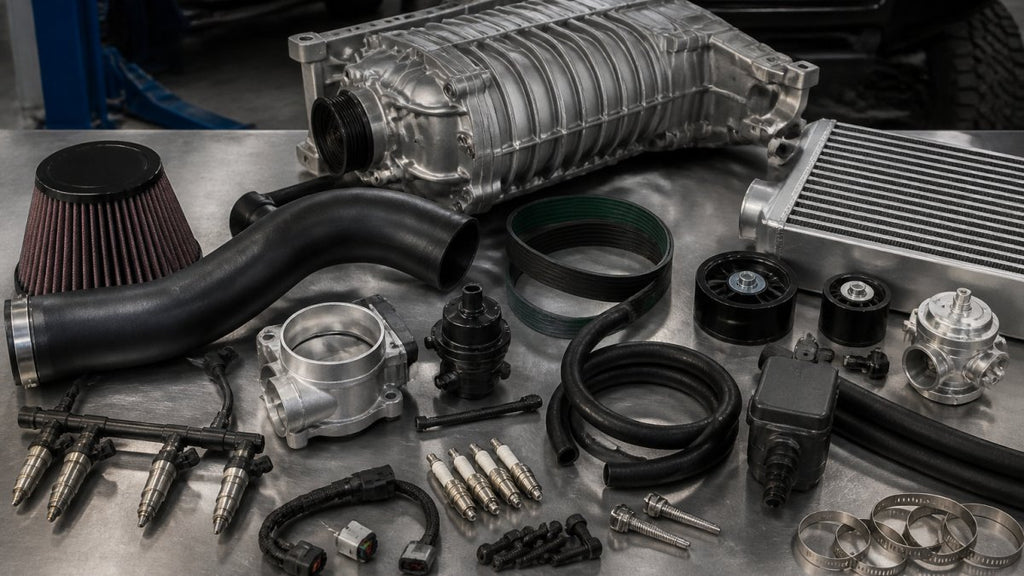
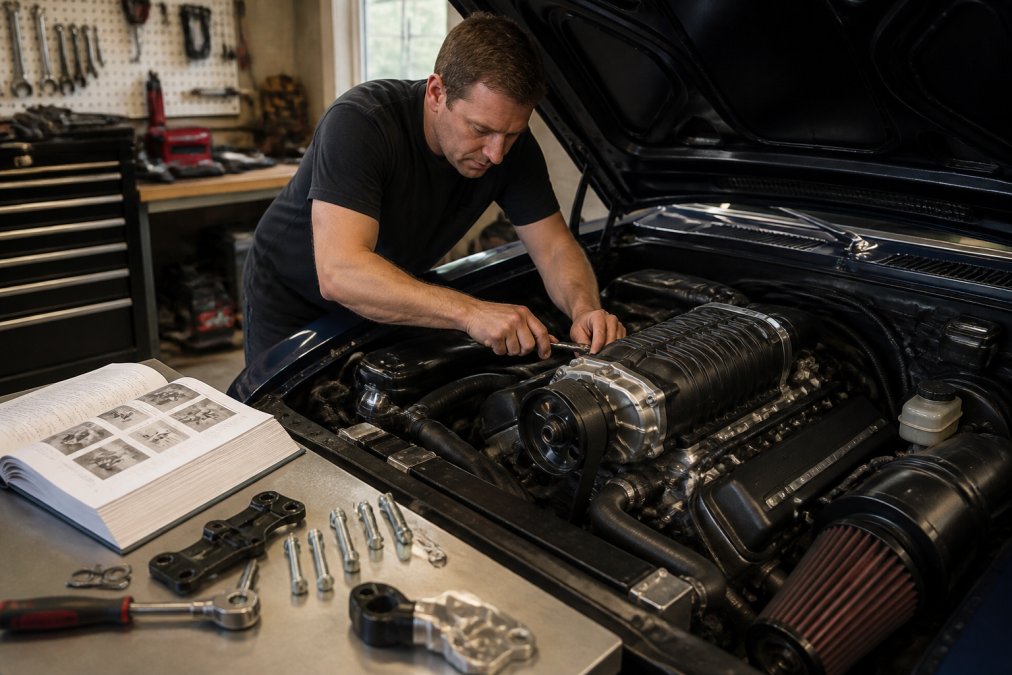
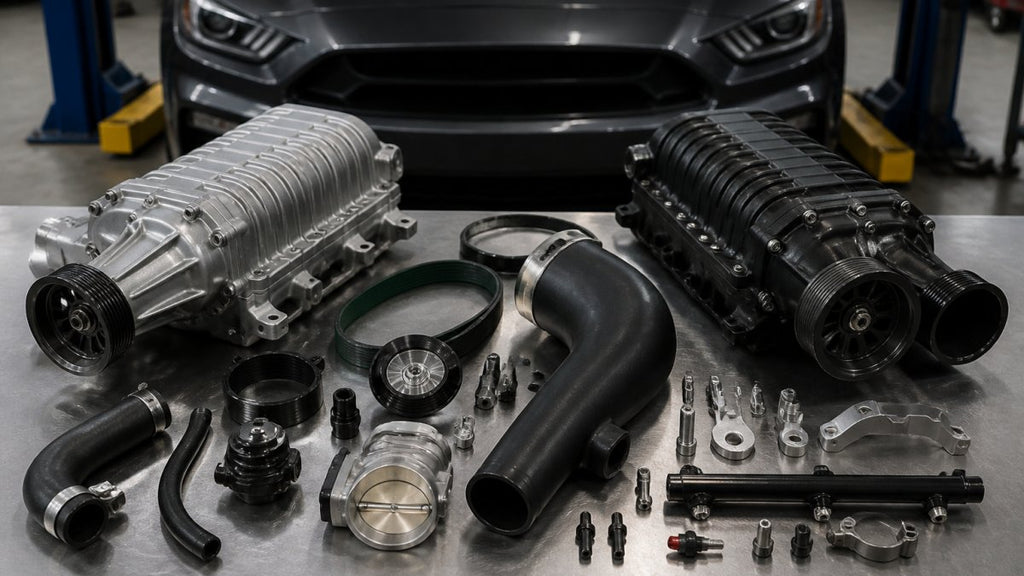
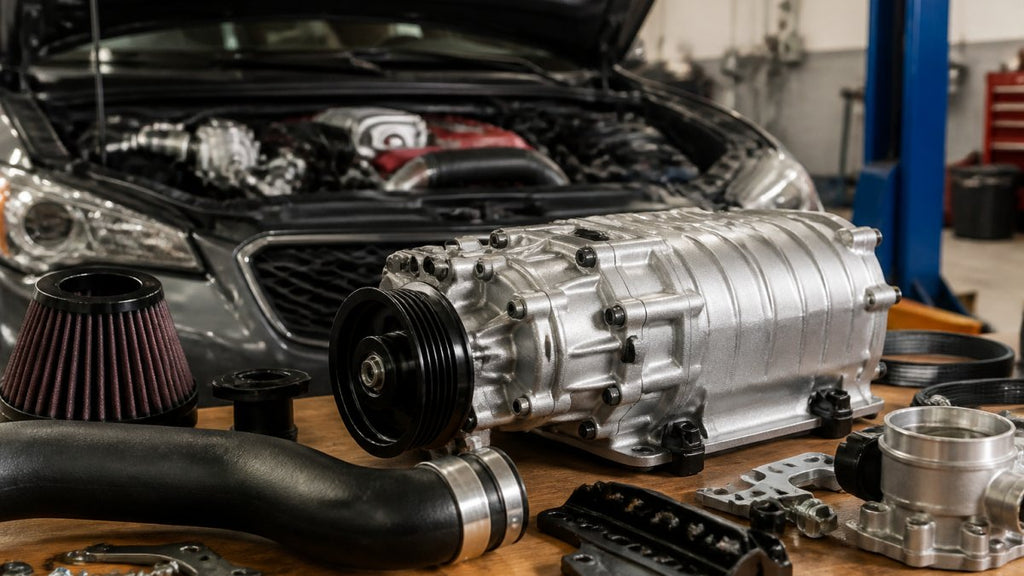
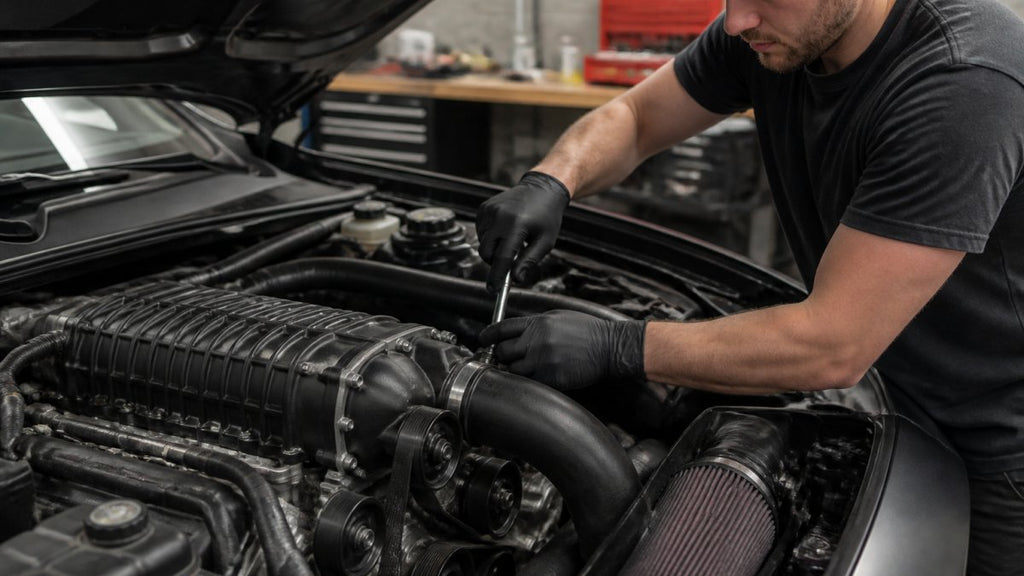
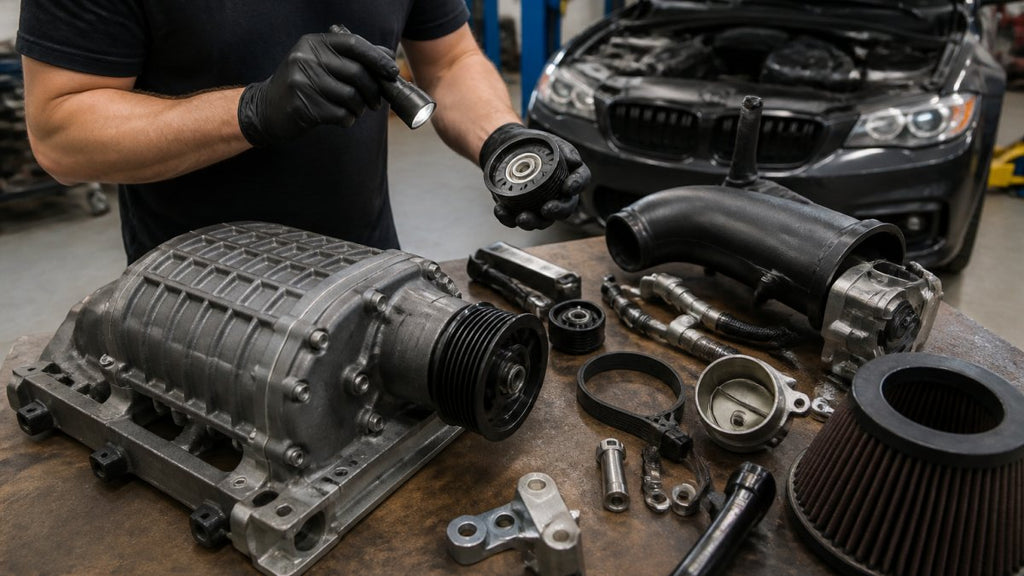
Most bolt-on supercharger installs are a weekend job for a confident DIYer with basic hand tools, and a one-day job for a shop. The kits include everything: head unit, intake manifold, intercooler, water pump, radiator, belt, brackets, and hardware.
Tuning and ECU Calibration After Installation
The ECU tune is not optional. After the hardware goes on, the engine management needs recalibration for the new airflow, boost pressure, and fuel demand. This is where the kit's power actually gets unlocked safely.
Options for tuning include:
- A remote tune from a specialist who sends you a file to flash
- A local dyno shop that calibrates on the rollers
- Manufacturer-supplied tuning support
Common Installation Mistakes to Avoid
The mistakes that cause the most trouble are almost always the same ones:
- Skipping the tune, then wondering why the car runs rough
- Reusing old belts and hardware instead of the new parts in the box
- Not bleeding the intercooler coolant system properly, which causes heat soak
- Torquing intake manifold bolts by feel instead of to the spec
- Forgetting to check for vacuum leaks before the first start
Warranty, Maintenance, and Long-Term Reliability of Forced Induction
Forced induction doesn't have to shorten engine life, provided the tune is right and you keep up with maintenance. The key is treating the engine as a system, not just bolting on a blower and forgetting it.
Maintenance for a supercharged street car looks like this:
- Change oil more often than the factory interval, since boost adds heat and load
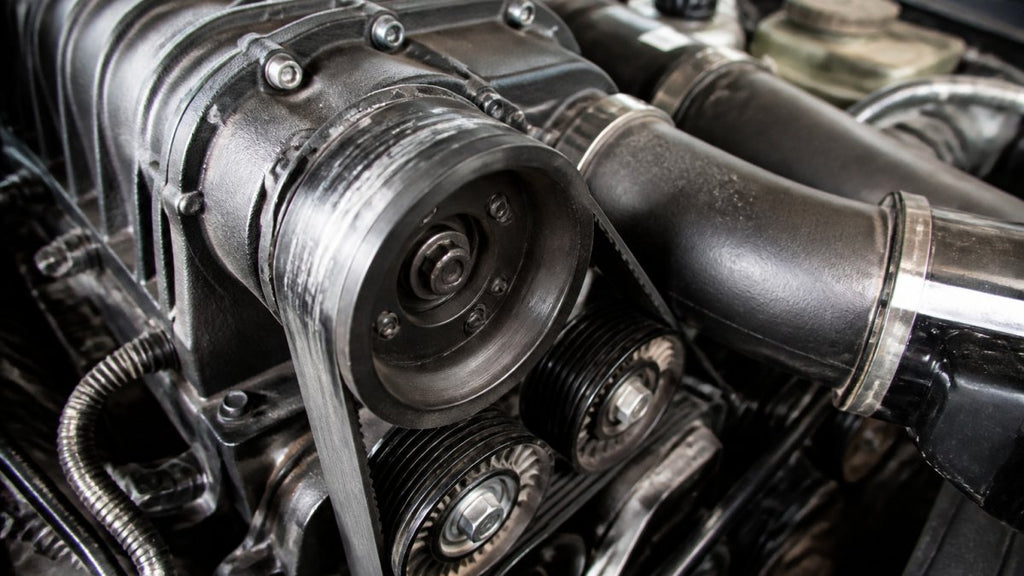
- Check the supercharger belt and idler pulleys at every oil change
- Inspect intercooler coolant level monthly
- Replace the air filter on schedule to protect the compressor
- Log intake air temperatures occasionally to catch heat soak early
Conclusion
Choosing among the best supercharger kits for street cars comes down to matching the kit to your engine, your driving, and your state's rules. Get the tune right, keep up with maintenance, and forced induction stays reliable for the long haul.
Frequently Asked Questions
Are aftermarket supercharger kits street legal?
Street legality depends on your state's emissions rules. Most bolt-on supercharger kits for street cars are designed to work with factory emissions equipment and pass inspection when paired with a proper ECU tune. Check your state's regulations before installing, and look for kits that keep your catalytic converters and O2 sensors intact. A kit that requires removing emissions hardware will not pass a smog check in most states.
What is the difference between centrifugal and roots-style superchargers for street cars?
Centrifugal superchargers build boost progressively with RPM, so power arrives higher in the rev range. Roots and twin-screw designs deliver boost almost instantly from idle, which means stronger low-end torque and better throttle response for daily driving. For street cars that tow or need off-the-line pull, a roots or twin-screw kit is often preferred.
Do supercharger kits come with a warranty?
Warranty coverage varies by manufacturer. VT Superchargers includes a 24-month warranty on all its bolt-on kits, covering defects in materials and workmanship under normal use. The warranty excludes damage from improper installation, racing abuse, or incorrect tuning. Always confirm what the warranty covers before ordering, and keep your installation receipts in case you need to file a claim.
How does a supercharger affect the reliability of a daily driver?
A properly installed supercharger kit running moderate boost (6-8 psi) with a correct ECU tune has minimal impact on engine longevity. The key factors are keeping intake air temperatures low through intercooling, staying within the fuel system's capacity, and following a shorter oil change interval. VT Superchargers kits use mid-mounted water-to-air intercoolers to manage heat soak, which helps preserve reliability in stop-and-go traffic.
Related post
09
Oct
RECENT POSTS