Best Supercharger for Daily Driver Truck: 2026 Guide
Table of Contents
- Why a Supercharger Beats a Turbo for Daily Driver Trucks
- Bolt-On Supercharger Kit Benefits for Daily Drivers
- Top Supercharger Kits for Daily Driver Trucks
- Supercharger Maintenance Schedule for Daily Drivers
- Towing and Reliability: What Daily Driver Truck Owners Need to Know
- Conclusion
- Frequently Asked Questions
Last Updated: September 23, 2026
Why a Supercharger Beats a Turbo for Daily Driver Trucks
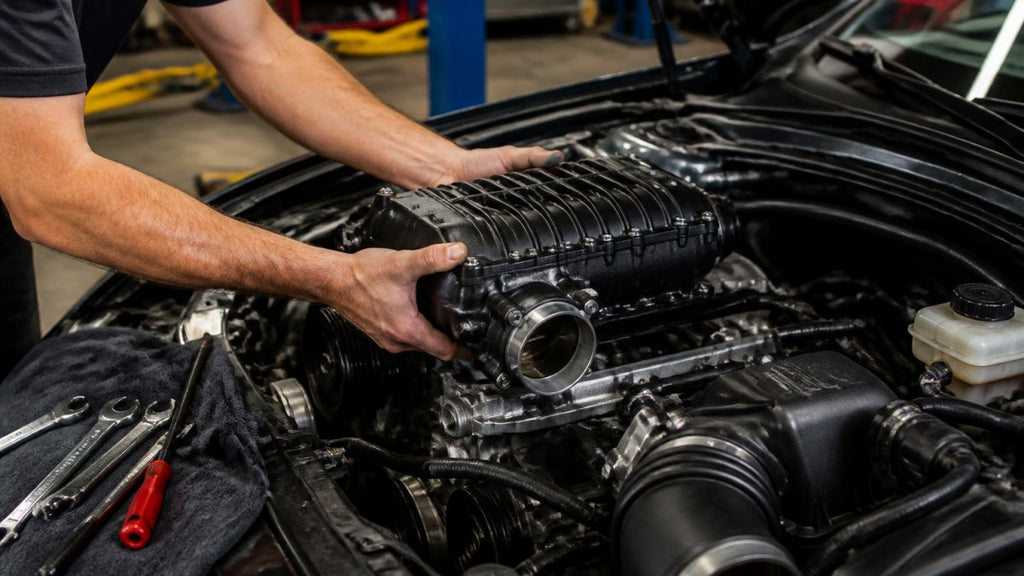
The best supercharger for daily driver truck use is a positive-displacement (twin-screw or Roots-style) blower, because it builds boost the instant you touch the throttle instead of waiting for exhaust gas to spool a turbine. That single difference, immediate manifold pressure versus delayed boost, is what separates a truck that feels strong at 2,000 rpm from one that only wakes up past 3,500 rpm. At VT Superchargers, we build bolt-on kits around exactly that logic: usable torque where a truck actually lives, from a stoplight to a loaded trailer pull.
Here is the mechanical reason.
Key Takeaway
For a daily driver truck, torque delivery matters more than peak horsepower. A supercharger delivers boost at low rpm, which is exactly where a truck spends most of its life.
Bolt-On Supercharger Kit Benefits for Daily Drivers
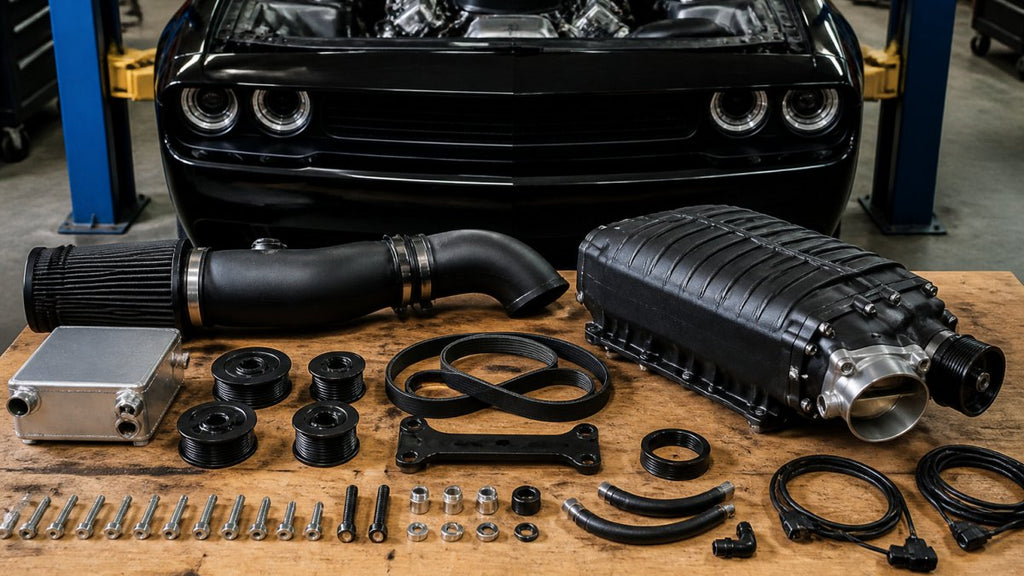
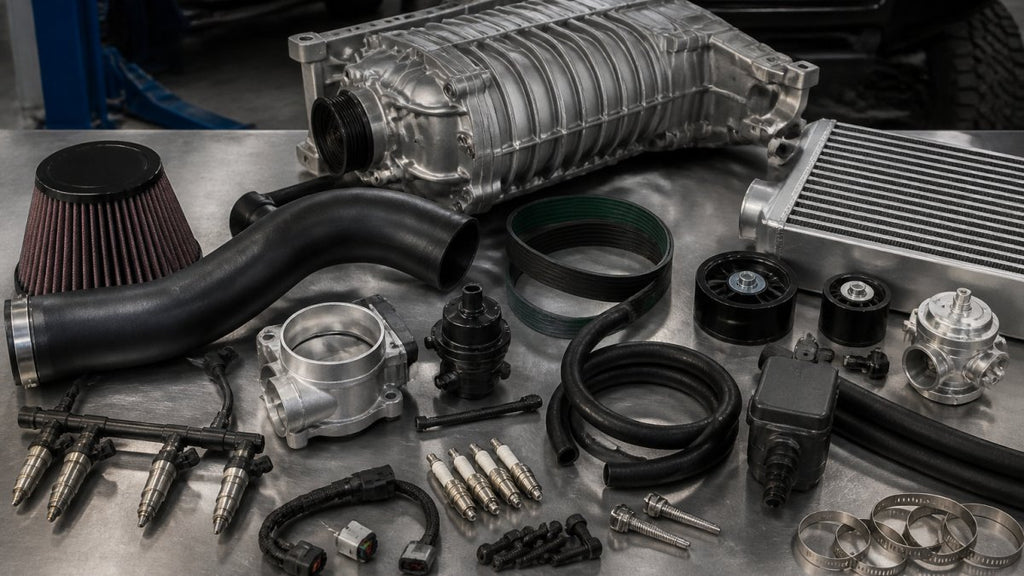
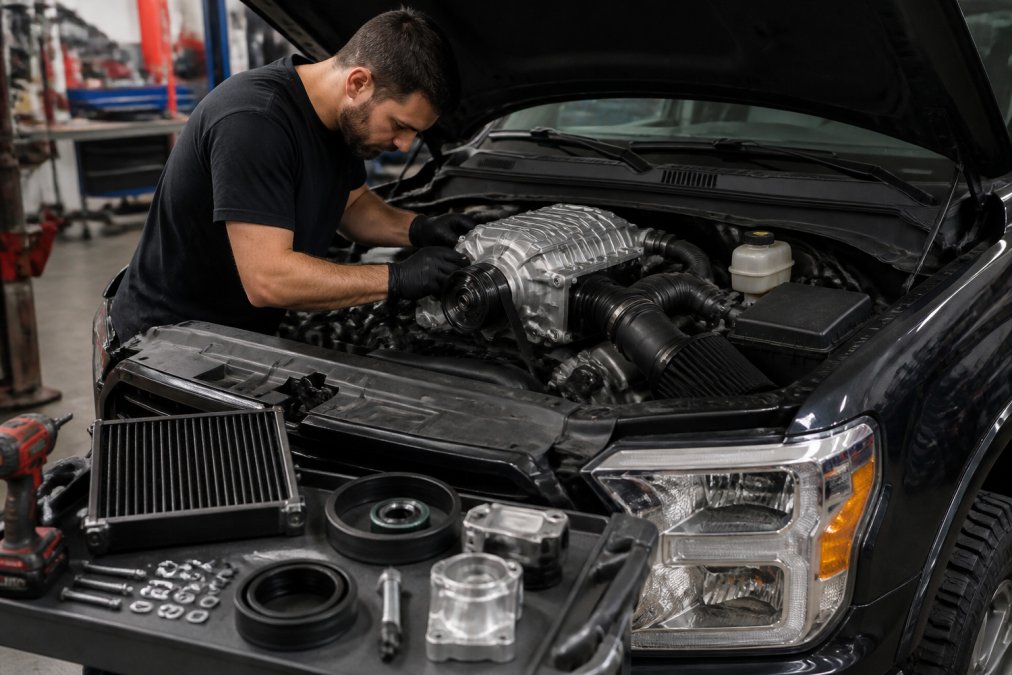
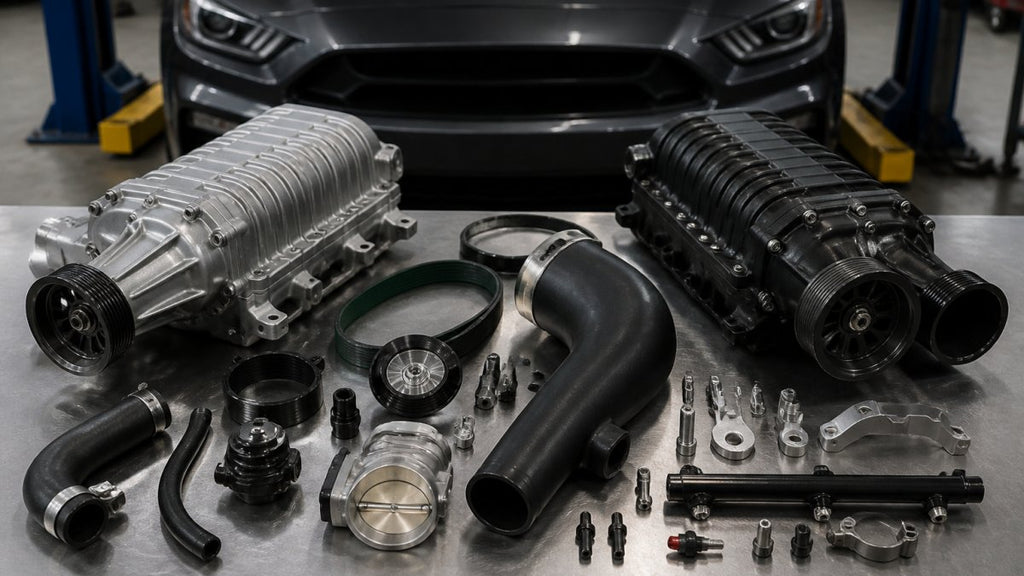
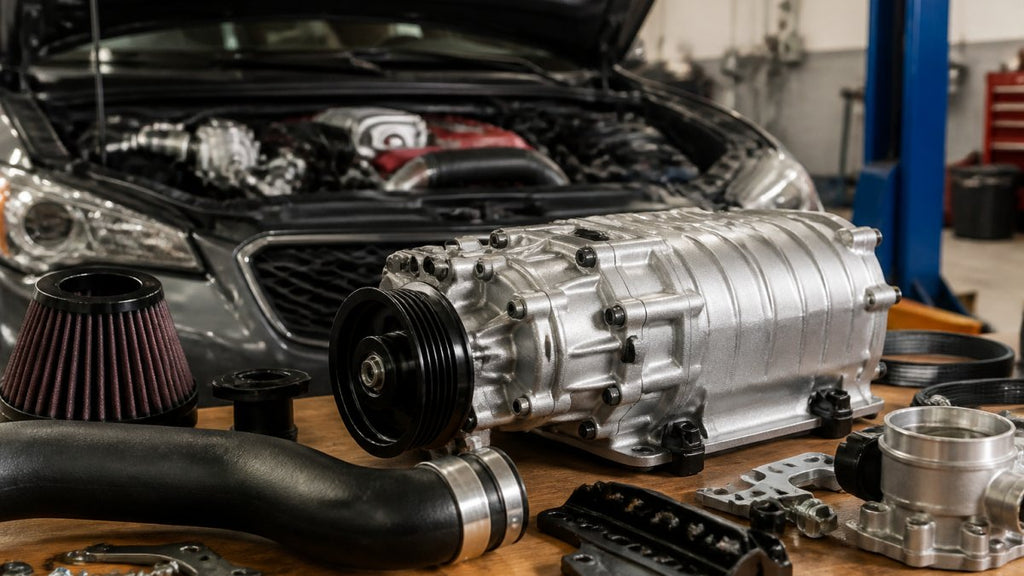
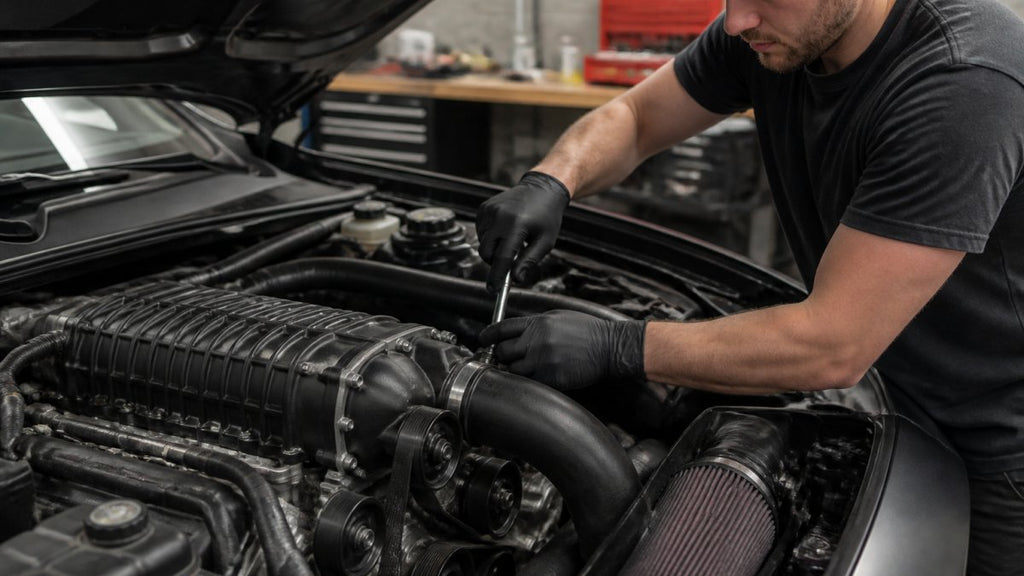
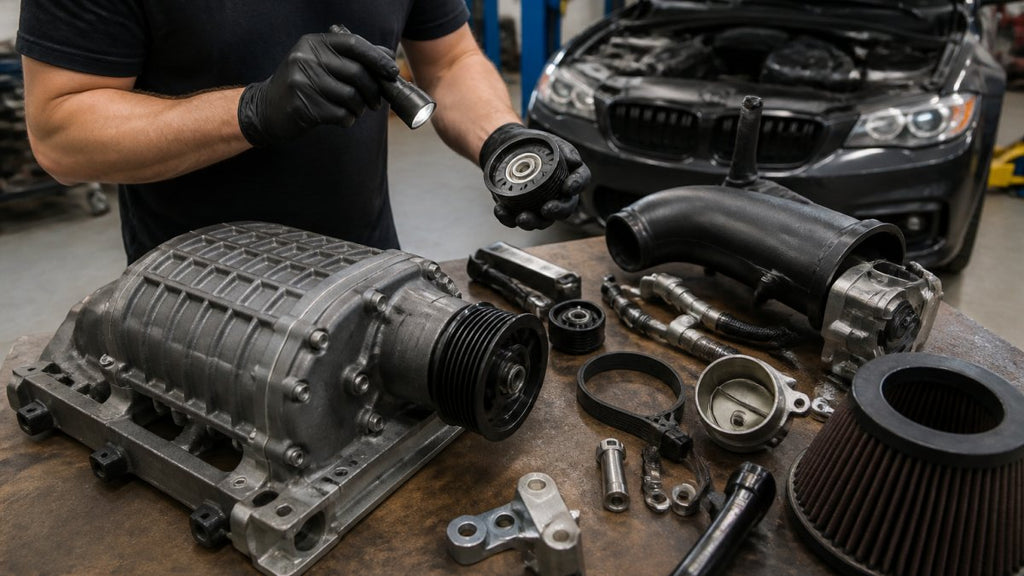
A bolt-on supercharger kit is a complete forced-induction system that installs using factory mounting locations, with no cutting, welding, or internal engine modifications required. The practical benefit for a daily driver is that the truck keeps its original wiring, panels, and core components intact, which preserves resale value and simplifies any future service.
- No cutting, welding, or wire splicing
- Factory mounting points retained
- Detailed installation manuals included
- 24-month warranty on most kits
Watch Out
Skipping the ECU tune after installing a bolt-on kit is the fastest way to damage an engine. The factory calibration cannot manage the added airflow, and lean conditions under boost can cause detonation. Always complete the tune before driving hard.
Top Supercharger Kits for Daily Driver Trucks
The right kit depends entirely on your engine, not on a generic "best" label. Below are the vehicle-specific bolt-on systems built for the platforms most common in daily-driver and overland use, each tuned for low-end torque rather than peak numbers.
| Kit | Engine | Price | Boost | Reported Gain |
|---|---|---|---|---|
| Toyota Tundra 5.7L | 3UR-FE V8 | $6,900 | 7 psi | +40-60% hp, +30-50% torque |
| Nissan Titan/Armada 5.6L | VK56VD V8 | $7,600 | Twin screw | +50-70% hp and torque |
| Toyota Tacoma 3.5L | 2GR-FKS V6 | $6,000 | Linear | +100 hp, +90 lb-ft |
| Nissan Frontier 4.0L | VQ40DE V6 | $5,400 | 6-8 psi | +40-60% hp, +30-50% torque |
Toyota Tundra 5.7L 3UR-FE Supercharger Kit
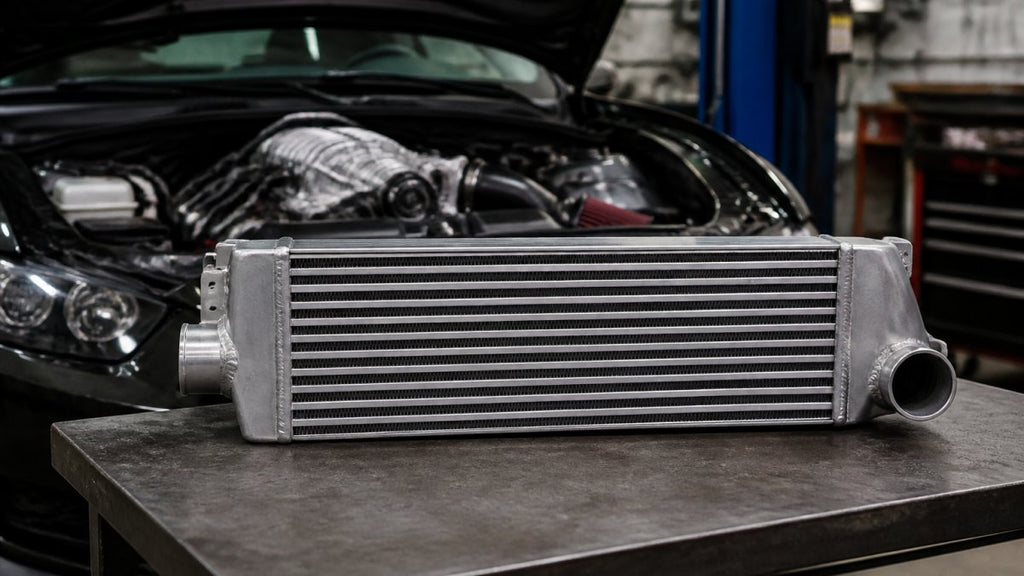
The Tundra 5.7 kit is the flagship for owners who tow and commute on the same truck. It delivers +40-60% horsepower and +30-50% torque at just 7 psi of boost, using a super-large water cooler for stable cooling. The one-piece die-cast aluminum shell runs lighter and sheds heat better than a cast iron equivalent, and the non-destructive install leaves original components intact.

Nissan Titan/Armada 5.6L V8 Twin Screw Supercharger Kit
Twin-screw blowers are the enthusiast favorite for throttle response, and this kit claims +50-70% horsepower and torque over the stock VK56VD. It handles towing, off-road use, and daily driving, with remote tuning assistance available. In practice, the twin-screw design is what gives it that immediate, linear pull. The aggressive gains demand a proper tune and quality fuel.
Toyota Tacoma 3.5L V6 2GR-FKS Supercharger Kit (2016+)
For the 2GR-FKS, this kit adds 100 horsepower and 90 lb-ft of torque with linear boost and no turbo lag. It includes upgraded injectors and fuel-system components plus a high-flow intake, and it requires 91+ octane premium fuel.
Nissan Frontier 4.0L VQ40DE Supercharger Kit (2005-2019)
Running 6-8 psi, this Frontier kit reports 40-60% more horsepower and 30-50% torque depending on the tune, with stronger mid-range acceleration and towing response. It uses factory mounting locations with no internal engine work.
Supercharger Maintenance Schedule for Daily Drivers
A supercharger maintenance schedule for a daily driver is not the same as one for a weekend toy. A truck that sees 12,000-15,000 miles a year cycles its blower through thousands of heat-soak events, dozens of cold starts a month, and constant part-throttle vacuum-to-boost transitions. Those cycles, not peak boost, are what wear out belts, bearings, and intercooler fluid. The schedule below is built around that reality.
| Interval | Task | Why It Matters on a Daily Driver |
|---|---|---|
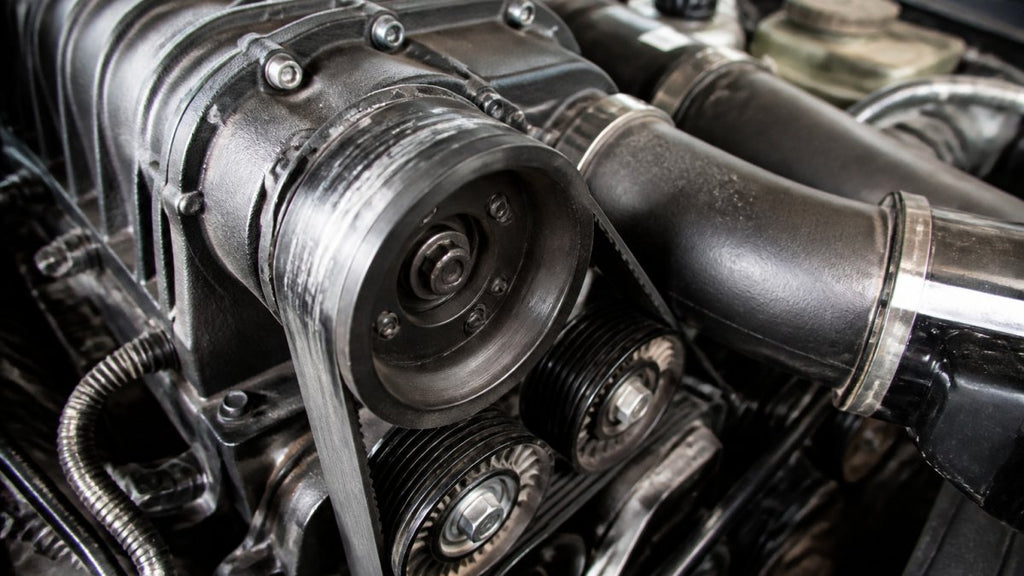
| Every 10,000 miles | Inspect drive belt, tensioner, and idler pulleys | Daily heat cycling glazes and stretches belts faster than occasional use; slip shows up first as lost boost, then as belt dust |
| Every 15,000 miles | Check intercooler coolant level and condition | Air-to-water systems lose a small amount of fluid over time; low fluid means heat soak on the next long grade |
| Every 30,000 miles | Inspect vacuum lines, bypass valve, and boost reference hoses | Rubber hardens with age; a cracked line causes lean tip-in and erratic idle |
| Every 30,000-50,000 miles | Service or replace supercharger oil (sealed-unit blowers) | Oil shear is cumulative; neglected oil is the most common cause of bearing noise |
| Every oil change | Check intake piping, clamps, and air filter | Boost leaks and a dirty filter both rob power and skew fuel trims |
| Annually | Pressure-test the intercooler circuit and inspect the heat exchanger for road debris | Daily-driven trucks see more bugs, salt, and gravel than garage queens |
What Daily Driving Actually Costs You
Most guides skip the cost-per-mile math, which is the number a daily driver actually budgets around. On a truck that averages 16 mpg stock, a 2 mpg drop at 15,000 miles a year is roughly 130 extra gallons annually, plus the requirement to run 91+ octane premium in most kits. Add the maintenance items above, and the realistic ongoing cost is a fuel and fluid premium, not a repair bill, as long as the tune is conservative.
Toyota Tundra 5.7L 3UR-FE Supercharger →
Long-Term Engine Longevity
The blower itself is rarely the failure point on a well-tuned daily driver. The wear items are the ones the added cylinder pressure touches: spark plugs (gap them tighter and expect a shorter interval), ignition coils, and the transmission behind the engine. A conservative 6-8 psi system on a stock long block commonly runs well past 100,000 miles with disciplined maintenance, but the same engine on an aggressive tune and skipped oil changes will not.
Pro Tip
Log intake air temperature on a hot day after a long highway pull. If temperatures climb sharply and stay high, your intercooler system is being overwhelmed by heat soak, and a larger heat exchanger or better airflow is the fix.
Watch Out
Treating a supercharger as a sealed, forget-about-it part is the most common daily-driver mistake. Belt tension, coolant level, and intake air temperature all drift over time, and heat soak degrades performance long before it causes damage.
Towing and Reliability: What Daily Driver Truck Owners Need to Know
Reliability with aftermarket forced induction comes down to boost pressure, tuning quality, and heat management, not the blower itself. A conservative 6-8 psi system on a well-tuned engine is generally more reliable than an aggressive high-boost setup with a poor tune, and that gap widens the more the truck is used as an actual truck.
Towing: What Actually Changes
A positive-displacement supercharger helps towing in two concrete ways. First, torque is available immediately, so the transmission downshifts less often on grades and stays in a taller gear, which keeps converter slip and fluid temperature lower. Second, the engine holds speed on long climbs without the boost-threshold hunting that plagues turbo trucks. The trade-off is that added power raises cylinder pressure and heat rejection, so the transmission and cooling system become the limiting factors, not the engine.
Warranty and Insurance: The Questions Daily Drivers Actually Ask
This is the angle most guides skip, and it is the one that stops buyers at the checkout page. Under the Magnuson-Moss Warranty Act, a manufacturer cannot void your entire warranty simply because you installed an aftermarket part; it must show the part caused the failure. In practice, a supercharger is a powertrain modification, so a denied claim on a failed engine or transmission is a realistic risk if the dealer can tie the failure to the added boost.
Cold Starts and Climate
Daily drivers face weather that dyno pulls never simulate. In cold climates, a positive-displacement blower is generally well-behaved because it is mechanically driven and does not rely on exhaust heat, but the tune matters: cold-start fueling and idle quality are set in the calibration, and a poor tune shows up first as rough cold idle or a check-engine light. Allow the engine to reach operating temperature before hard acceleration, and use the correct oil viscosity for the season.
Watch Out
Towing at maximum load with an aggressive boost tune is a common way to overheat a transmission. Keep boost moderate, monitor transmission temperature on long grades, and confirm your insurance and warranty situation before the first heavy pull.
Conclusion
Choosing the best supercharger for daily driver truck use comes down to matching a positive-displacement kit to your engine and your real driving, not chasing the biggest peak number. The right setup delivers low-end torque for towing, immediate throttle response for commuting, and reliability you can trust for years.
Frequently Asked Questions
Can you supercharge a daily driver truck without sacrificing reliability?
Yes, when you choose a quality bolt-on kit and follow the manufacturer's tuning and maintenance requirements. VT Superchargers kits are designed for OEM-style fitment and include a 24-month warranty. Proper installation and regular oil changes are key to keeping your daily driver reliable.
What's better for a daily driver, turbo or supercharger?
For daily driving, a supercharger delivers linear boost with no turbo lag, so power is immediate when you need it for passing or towing. Turbos can be more efficient but often have lag. A supercharger like the VT Superchargers kit for your truck provides instant throttle response and predictable power delivery.
How does a supercharger affect the fuel economy of a daily driver truck?
Fuel economy can decrease slightly under boost, but many drivers report minimal impact during normal commuting. The actual effect depends on your driving habits and tuning. A properly tuned bolt-on kit from VT Superchargers can maintain reasonable fuel economy while delivering significant power gains.
Are bolt-on supercharger kits covered by standard vehicle warranties?
Aftermarket superchargers may affect your factory warranty, so it's important to check with your dealer. VT Superchargers offers a 24-month warranty on their kits, covering defects in materials and workmanship. Always confirm warranty implications before installing any forced induction system.
Related post
09
Oct
RECENT POSTS