Supercharger Installation Cost: What You'll Pay in 2026
Table of Contents
- What a Supercharger Installation Cost Actually Covers
- Supercharger Installation Labor Rates by Shop Type
- Performance Tuning Costs You Can't Skip
- DIY vs Professional Supercharger Install: Real Cost Comparison
- Hidden Costs: Fuel System, Exhaust, and Electrical Upgrades
- Warranty, Emissions, and Street Legality Considerations
- Conclusion: Budgeting for Your Supercharger Build
- Frequently Asked Questions
Last Updated: September 20, 2026
What a Supercharger Installation Cost Actually Covers
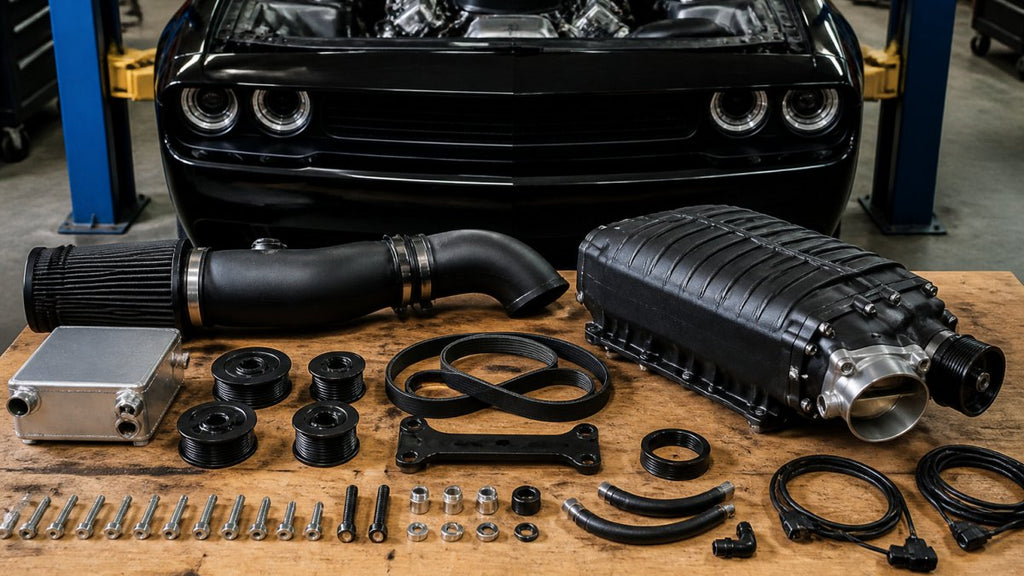
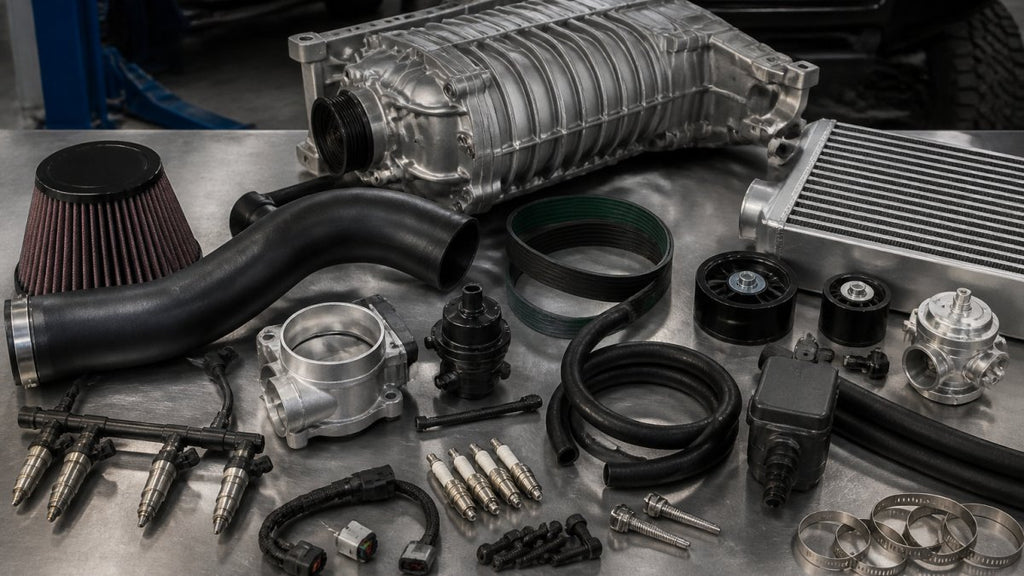
A supercharger installation cost is the total of three separate bills: the kit itself, the mechanical labor to mount it, and the engine calibration that makes it safe to drive. Most shoppers budget for the first and forget the other two. This guide from VT Superchargers breaks down each line so you can plan a realistic number before you order anything.

Kit Price vs. Total Installed Cost
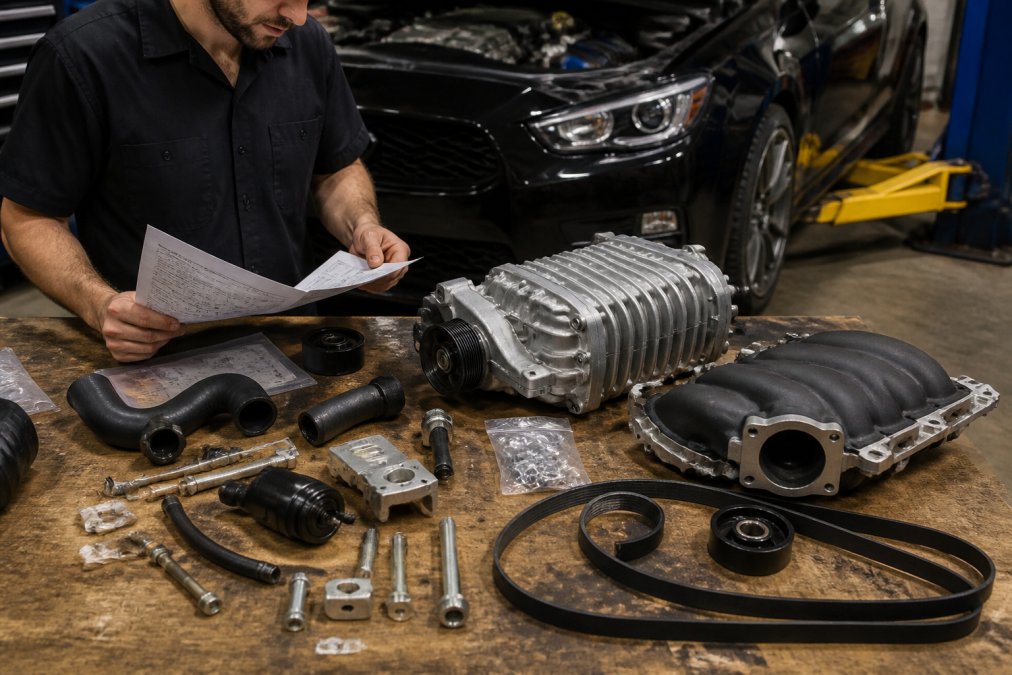
The gap between kit price and installed cost surprises first-time buyers. A kit that lists at a set price still needs eight to sixteen hours of shop time plus a dyno session on top. Financing helps spread the kit cost, but labor is usually paid separately to whoever turns the wrenches.
Supercharger Installation Labor Rates by Shop Type
Supercharger installation labor rates vary widely by who does the work, and the hourly rate is only half the equation, the other half is how many hours the shop books. A dealership charges premium hourly rates and often declines aftermarket work outright. An independent performance shop charges less per hour and has done the job before, which usually means fewer hours billed overall.
What Shops Actually Charge Per Hour
Labor rates in the performance aftermarket generally fall into three bands. These are typical ranges, not quotes, and they shift by region and by how busy a shop is:
| Shop Type | Typical Hourly Rate | Typical Booked Hours (Bolt-On V8) | Typical Booked Hours (Import 4/6-Cyl) |
|---|---|---|---|
| Dealership service department | Highest band | Often declines the job | Often declines the job |
| Independent performance shop | Mid band | 8-12 hours | 10-16 hours |
| General repair shop | Lower band | 12-20 hours (unfamiliar platform) | 14-22 hours (unfamiliar platform) |
| Mobile / freelance installer | Lowest band | Varies; no shop overhead | Varies; no shop overhead |
Dealer vs. Independent Performance Shop
Dealers follow factory procedures and warranty rules. Many will not install a forced induction kit on a vehicle still under factory coverage, and some will flag the powertrain if they see one. Independent shops live in this world. They know the torque specs, the belt routing, and the common fitment snags on your platform.
The practical difference shows up in three places:
- Diagnostic time. An independent shop that knows your platform skips the exploratory teardown a dealer would bill for.
- Parts sourcing. Performance shops stock or can quickly source the small hardware, clamps, gaskets, fittings, that a dealer would have to special-order.
- Post-install support. A performance shop will usually re-check the build after the first heat cycle. A dealer may not want the vehicle back in its bay.
How to Read a Labor Quote
A labor quote is a rate multiplied by an hour estimate, and the hour estimate is where quotes diverge. Ask the shop two questions before you compare numbers:
- Is this a flat rate or an hourly estimate? A flat rate is a fixed price for the job regardless of how long it takes. An hourly estimate is a guess that can grow.
- Does the quote include the tune and the post-install re-check? Many shops quote the mechanical install only, then bill the dyno session separately.
Pro Tip
Ask any shop for a flat-rate quote rather than an hourly estimate. A flat rate protects you from a job that runs long because a bracket fights back, which happens more often on high-mileage engines.
Vehicle-Class Labor Differences
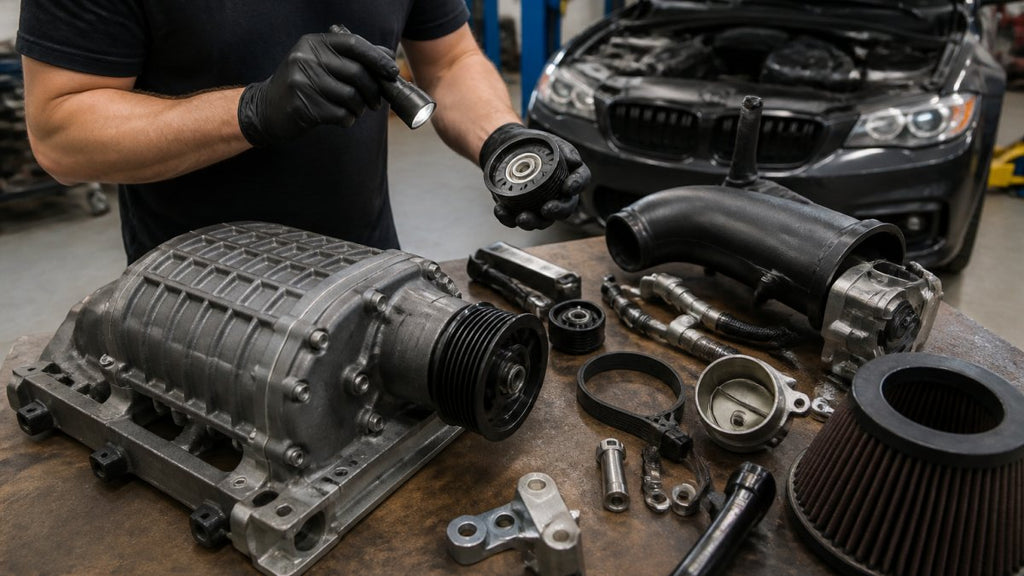
Labor hours track the engine bay, not the badge. A pushrod V8 with a large, open engine bay and a well-documented kit is the fastest install. A transverse-mounted four-cylinder with a tight bay, an intercooler that has to be plumbed through the front bumper, and a kit that requires relocating the battery or washer reservoir is the slowest. Before you accept a quote, ask the shop how many of your exact platform it has done in the last year.
Performance Tuning Costs You Can't Skip
Performance tuning costs are not optional. Every forced induction kit needs a calibration so the engine management system knows how to handle boost pressure. Skip it and you risk detonation, lean conditions, and a very expensive repair bill. Properly mapped software serves as the foundation for any broader effort to improve engine performance across the entire power band.
What a Calibration Actually Changes
A tune is not one setting. It is a rewrite of several tables inside the engine control unit (ECU):
- Fuel delivery. The ECU must add fuel in proportion to the extra air the supercharger pushes in. Too little fuel at wide-open throttle causes a lean condition, which raises combustion temperature and can melt a piston.
- Ignition timing. Boost raises cylinder pressure, which makes the engine more knock-prone. The tuner pulls timing under load to keep the engine out of detonation.
- Boost control. On kits with a bypass valve or wastegate, the tune sets how much boost the engine sees at each throttle position and rpm.
- Torque management and rev limits. The tune adjusts how the ECU limits torque during shifts and where the rev limiter sits.
- Transmission behavior. On automatic-equipped vehicles, the tune often adjusts shift pressure and shift points to match the new power curve.
Dyno-Tuning vs. Remote Calibration
Dyno-tuning happens on a load-bearing dyno with a tuner logging real pulls. It costs the most but delivers the safest, most repeatable result. Remote calibration sends you a file based on your build details; it costs less and works fine for common, stock-adjacent setups.
Toyota Tundra 5.7L 3UR-FE Supercharger →
| Tuning Method | What It Involves | Best For | Relative Cost |
|---|---|---|---|
| Dyno-tuning | In-person pulls with live logging | Built engines, custom setups | Highest |
| Remote calibration | Mailed or emailed tune file | Stock or mild bolt-on builds | Moderate |
| Street logging | Data logs reviewed off-site | Budget-conscious daily drivers | Lowest |
The Recurring Cost Most Buyers Miss
A tune is not a one-time purchase. Every time you change a hardware variable that affects airflow or fuel demand, the calibration has to be revisited. Common triggers:
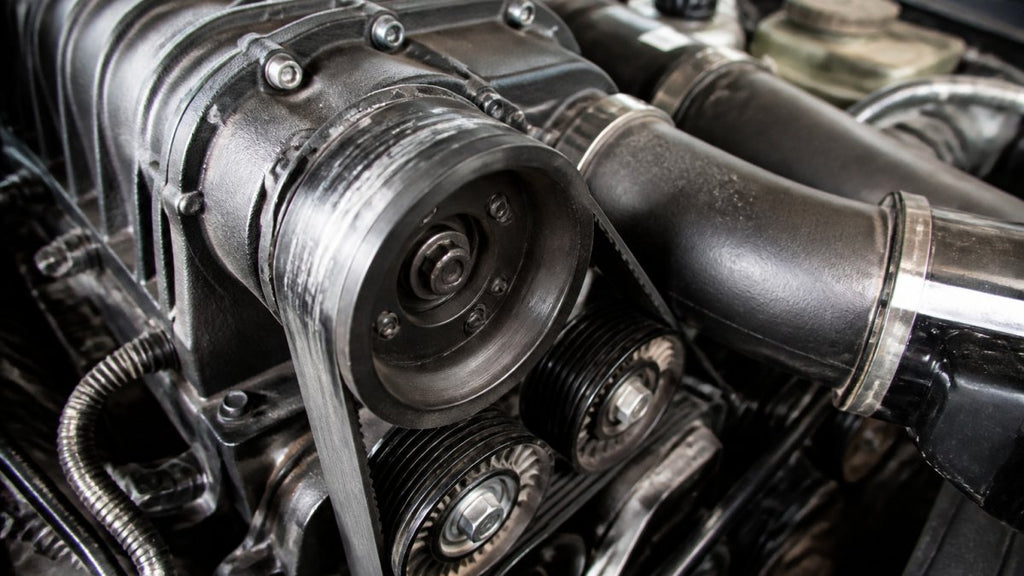
- Pulley change. A smaller supercharger pulley spins the blower faster and adds boost. The fuel and timing tables must be updated to match.
- Fuel system upgrade. New injectors or a higher-flow pump change the fuel curve. The tune has to be rescaled.
- Exhaust or header change. Better flow lowers backpressure and changes how the engine breathes. The tune may need adjustment to stay safe.
- Seasonal fuel blends. Some regions switch to oxygenated winter fuel. A tuner may adjust the calibration to keep the air-fuel ratio stable.
- Diagnostic trouble codes. If the ECU throws a code after the install, a tuner has to read the log, identify the cause, and revise the file.
Watch Out
The most common DIY mistake is skipping the post-install re-torque after the first heat cycle. Bolts on the intake and bracket loosen as the assembly expands and contracts. A loose bracket can throw a belt, and a thrown belt at speed takes out accessories with it. A tuner who logs the first 500 miles will often catch a problem the driver would not feel.
How Tuning Interacts With Warranty
A calibration is the single modification most likely to void a factory powertrain warranty. Manufacturers can detect a reflash through ECU calibration identifiers, and a dealer can flag the vehicle even if the hardware is later removed. If your vehicle is still under factory coverage, read the warranty language before you buy a tune, and ask the tuner whether they offer a stock-file backup so you can return the ECU to its original calibration if needed.
DIY vs Professional Supercharger Install: Real Cost Comparison
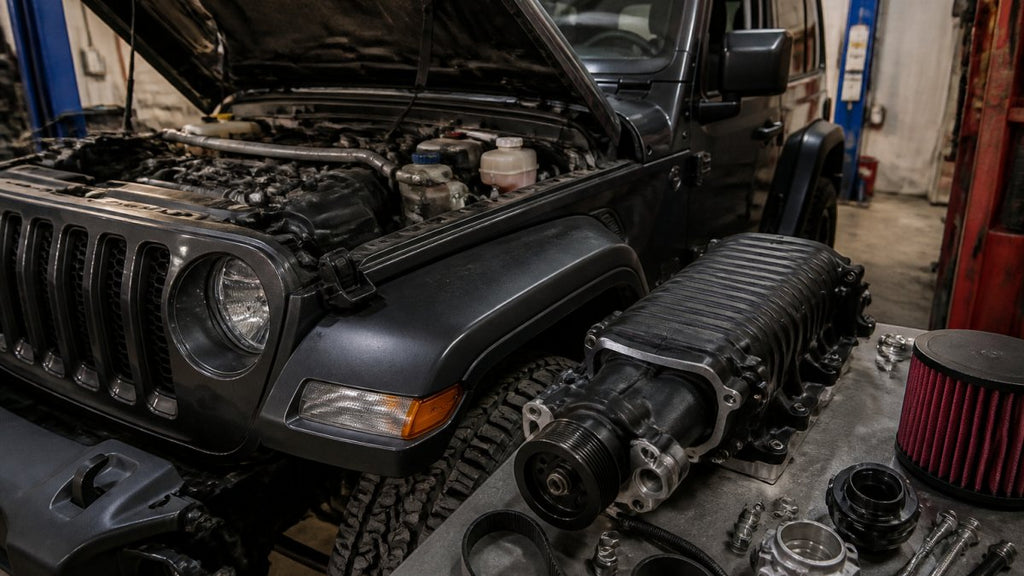
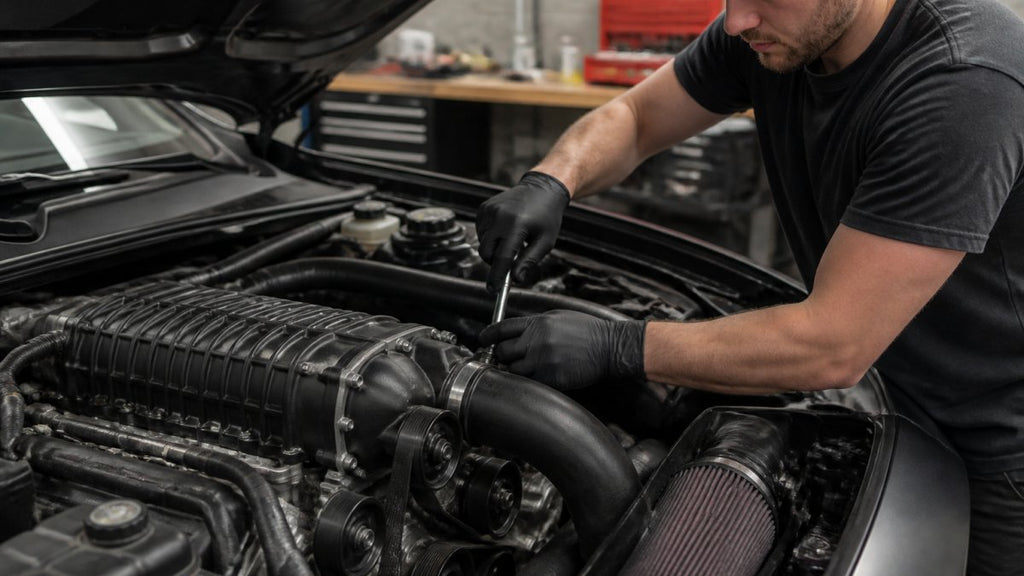
DIY vs professional supercharger install comes down to tools, time, and risk tolerance. A bolt-on kit with OEM mounting points is genuinely installable in a home garage with hand tools and a torque wrench. What you save in labor you pay back in weekends and the chance of a mistake.
- DIY: Saves the full labor bill, but you own every stripped bolt and misrouted vacuum line.
- Professional: Costs more upfront, includes a warranty on the work, and gets the truck back on the road in a day.
- Hybrid: Install it yourself, then pay a shop only for the tune and a post-install inspection.
Hidden Costs: Fuel System, Exhaust, and Electrical Upgrades
Hidden costs are where budgets break. Beyond the kit and labor, plan for supporting upgrades that the boost exposes. A fuel system upgrade, exhaust headers, and electrical infrastructure work all show up on the invoice if your build needs them.
- Fuel system upgrade: Higher boost demands more fuel. Injectors and a pump may need replacing.
- Exhaust headers: Stock manifolds choke flow. Headers help the engine breathe and make the tune safer.
- Electrical infrastructure: Added cooling fans and pumps draw current. A charging system check is cheap insurance.
Warranty, Emissions, and Street Legality Considerations
Warranty and street legality questions decide as many builds as horsepower does. Forced induction can void a factory powertrain warranty, and emissions compliance depends on your state's inspection rules. Check both before you buy.
Conclusion: Budgeting for Your Supercharger Build
Budgeting for a supercharger build means pricing the kit, the labor, the tune, and the supporting parts as one number, not four guesses. The kit is the easy part. The tune and the labor are what separate a build that runs for years from one that sits in the driveway.
Frequently Asked Questions
Is adding a supercharger worth it for a daily driver?
For daily drivers, a bolt-on supercharger kit delivers usable power gains without sacrificing drivability. VT Superchargers kits for the Ford Explorer 3.5L V6 and Toyota Tundra 5.7L add 40-60% more horsepower and 30-50% more torque at just 7 PSI of boost. That means stronger mid-range pull for merging and towing, not just peak numbers. The trade-off is upfront cost: kits run $5,800-$7,600, plus $500-$2,000 for professional installation and $400-$800 for required ECU tuning. If you plan to keep the vehicle for years and want reliable power, the investment makes sense.
How difficult is it to install a bolt-on supercharger kit yourself?
Bolt-on kits like VT Superchargers' systems use OEM mounting points and require no cutting, welding, or wire splicing. The Nissan Titan/Armada kit includes a detailed installation manual and remote tuning assistance. That said, you'll need mechanical experience, a torque wrench, and a full day or weekend. If you're not comfortable removing intake manifolds and routing coolant lines, professional installation at $100-$200 per hour is the safer route. DIY saves labor but risks costly mistakes if you skip steps.
What hidden costs should I budget for during a supercharger upgrade?
Beyond the kit and labor, budget for ECU tuning ($400-$800), a fuel system upgrade if you're targeting higher boost ($500-$1,500), and potentially exhaust headers ($600-$1,200 installed). Electrical infrastructure upgrades like a higher-output alternator may be needed for the water pump and intercooler system. Emissions compliance and permit requirements vary by state, so check local regulations before installing. A realistic hidden-cost buffer is $1,000-$2,500 on top of the kit price.
Will a supercharger void my factory warranty?
Adding forced induction can affect your factory powertrain warranty if the dealer can show the modification caused a failure. However, VT Superchargers includes a 24-month warranty covering defects in materials and workmanship under normal use. To protect yourself, keep detailed installation records, use a professional shop if possible, and confirm your kit's ECU tune is properly calibrated. Some dealers are more modification-friendly than others, so ask before you buy.
Related post
09
Oct
RECENT POSTS