Benefits of Intercooling a Supercharged Engine
Table of Contents
- Why Intercooling a Supercharged Engine Matters
- How Intercoolers Increase Horsepower
- Detonation Threshold and Engine Safety
- Supercharger Heat Soak Symptoms and Thermal Management
- Air-to-Air vs Air-to-Water Intercoolers: Which Fits Your Setup?
- Pressure Drop vs Temperature Drop: The Trade-Off Nobody Talks About
- Installation, Maintenance, and Real-World Performance
- Frequently Asked Questions
Last Updated: September 19, 2026
Why Intercooling a Supercharged Engine Matters
The benefits of intercooling a supercharged engine come down to one fact: compressing air heats it, and hot air kills power. A supercharger squeezes ambient air into the intake manifold, raising charge air temperature dramatically. Without a cooling stage between compressor and combustion chamber, you feed the engine hot, thin air that invites detonation and costs horsepower.
The Relationship Between Air Density and Power
Air density is the mass of air packed into a given volume, and it is the single biggest lever on how much fuel an engine can burn and how much power it can make. Cold air is denser, so every degree removed from the charge air puts more oxygen molecules into the same cylinder volume.
Boost without cooling is a partial win at best.
How Intercoolers Increase Horsepower
An intercooler increases horsepower by cooling the compressed charge air, raising its density and letting the engine run more aggressive ignition timing without knocking. Two mechanisms do the work: more oxygen per cylinder, and a safer combustion environment that tolerates more advance.
Compressed Air Temperature Reduction
A roots or twin-screw supercharger can push outlet temperatures well above ambient, and the harder you spin it, the worse that gets. The intercooler sits in that hot path as a heat exchanger, transferring thermal energy from the charge air into outside air or a separate coolant loop.
Pro Tip
When you datalog a supercharged build, watch intake air temperature and manifold pressure together, not separately. A big boost number with a climbing intake air temperature usually means the intercooler is undersized or heat soaked, and the ECU is already pulling timing to protect itself.
Detonation Threshold and Engine Safety
Detonation, or engine knock, happens when the air-fuel mixture ignites before the spark plug fires, and it can crack ring lands and hammer rod bearings in seconds under boost. The detonation threshold is where cylinder pressure and temperature combine to trigger that uncontrolled ignition, and charge air temperature is one of the biggest inputs into where that threshold sits.
Supercharger Heat Soak Symptoms and Thermal Management
Supercharger heat soak is what happens when the intercooler and surrounding components absorb more heat than they can shed, so intake air temperature climbs even though nothing about your driving has changed. It shows up most on repeated pulls, stop-and-go traffic, and hot days.
How to Spot Heat Soak on Your Build
Watch for these supercharger heat soak symptoms:
- Noticeable power drop on the second or third consecutive pull
- Intake air temperature that keeps climbing instead of stabilizing
- The ECU pulling timing, which feels like a soft, flat top end
- Higher underhood temperatures after sitting in traffic
- A dyno session that loses power run after run
Thermal management is the fix. A larger intercooler core, better airflow through the heat exchanger, and in air-to-water systems a bigger reservoir or dedicated pump raise cooling capacity so the system recovers between pulls instead of saturating. Builds that tow or off-road need this margin more than a weekend cruiser, because sustained load leaves no recovery time.
Air-to-Air vs Air-to-Water Intercoolers: Which Fits Your Setup?
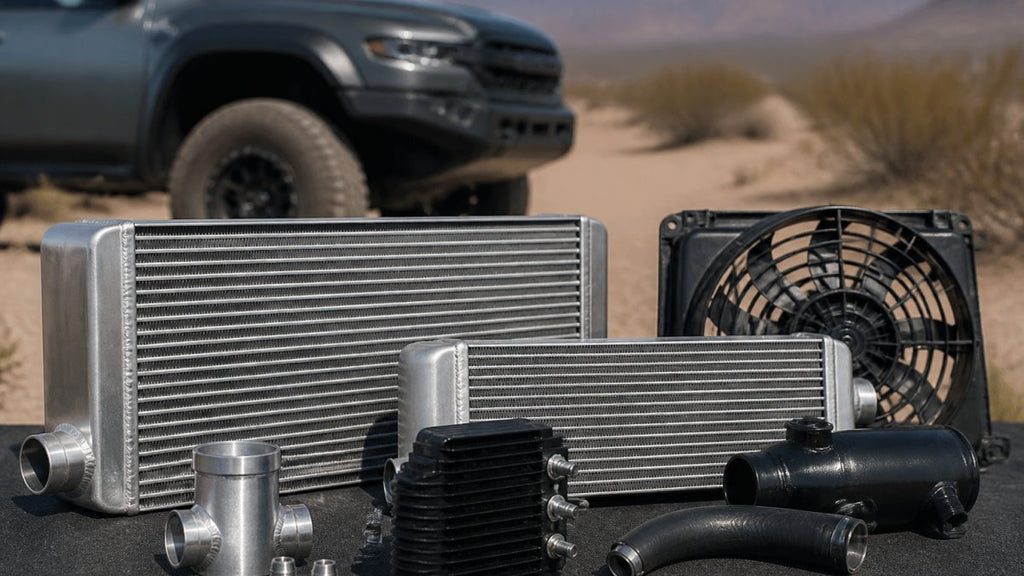
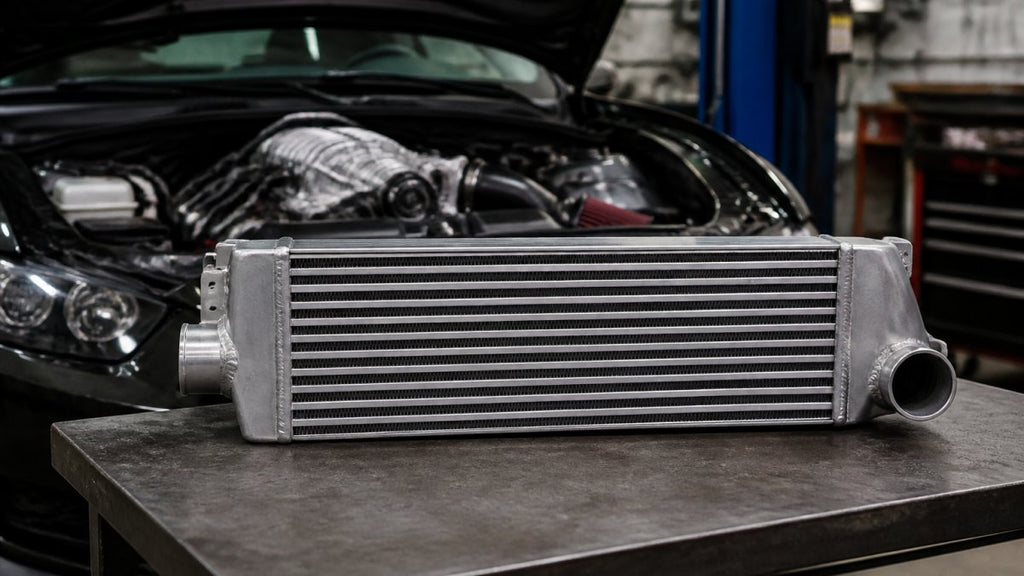
Air-to-air intercoolers cool the charge through a core that ambient air flows across, while air-to-water intercoolers transfer heat into a coolant loop running to a separate heat exchanger. Both reduce intake air temperature; they differ in packaging, recovery, plumbing complexity, and real estate demands.
Air-to-Air: Simplicity With a Packaging Tax
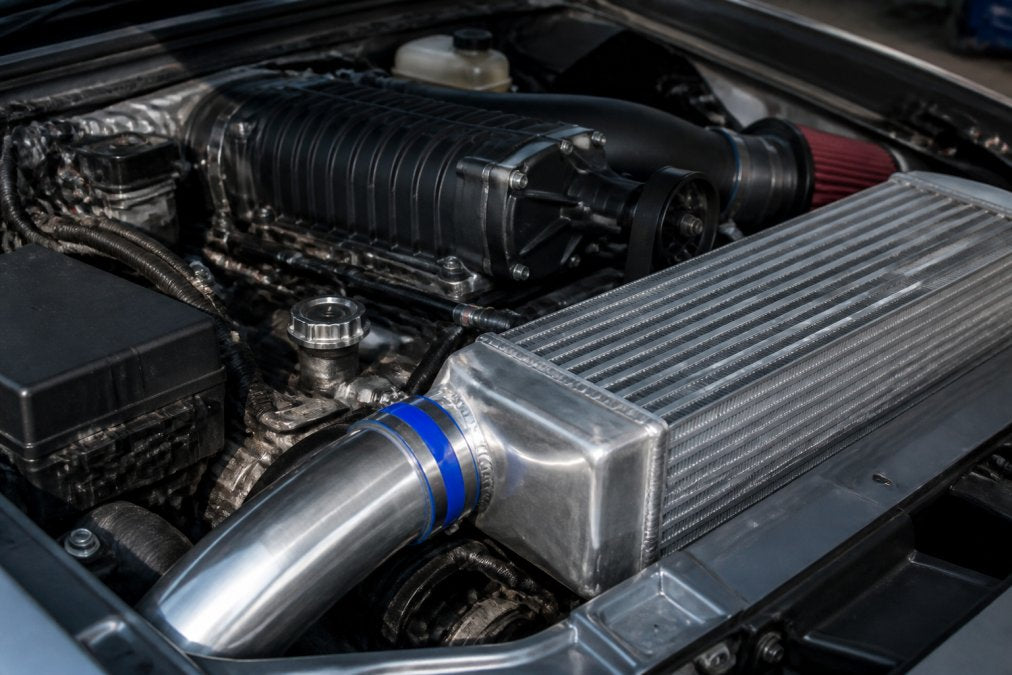
Air-to-air wins on simplicity and cost: no pump, no coolant, no reservoir to fail. On a truck or Jeep with room behind the grille, a large front-mount core works well, and a top-mount core can work on a roots-blown V8 where the blower sits in the valley.
Air-to-water: Consistency at the Cost of Complexity
Air-to-water wins on packaging and consistency. The coolant loop delivers a stable, lower intake air temperature even when the vehicle is not moving fast, suiting tight engine bays, mid-engine layouts, and drag-style builds that want a cold charge on every pass.
How to Choose for Your Build
Work through these questions before you buy:
- How much frontal area do you actually have? A front-mount air-to-air core needs clean, unobstructed airflow. If a winch, bumper, or intercooler stack blocks the core, you are paying for cooling you will not get.
- What is your duty cycle? A daily driver that sees occasional pulls can live happily with air-to-air. A tow rig, an overlander, or a track car that runs repeated hot laps benefits from the recovery speed of a coolant loop.
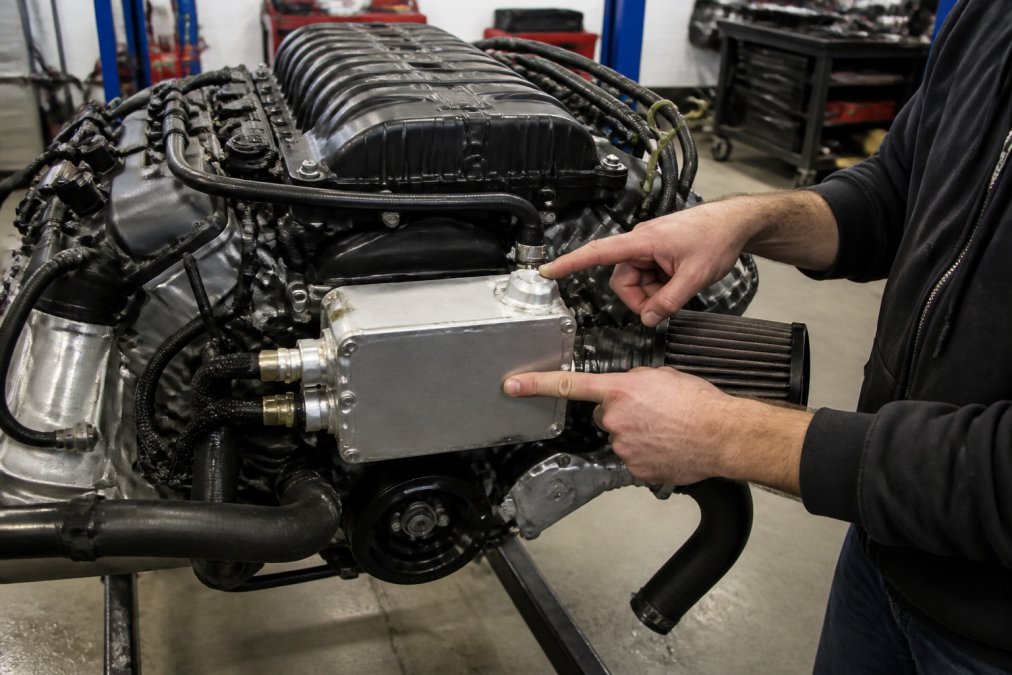
- How tight is the engine bay? On a roots or twin-screw blower sitting in the valley, an air-to-water core integrated into the intake manifold (often called an air-to-water charge cooler) is frequently the only packaging that fits without cutting the hood.
- What is your maintenance appetite? Air-to-air asks for occasional cleaning. Air-to-water asks for coolant level checks, pump inspection, and periodic coolant service.
| Factor | Air-to-Air | Air-to-Water |
|---|---|---|
| Complexity | Low, no pump or coolant | Higher, pump, reservoir, second heat exchanger |
| Packaging | Needs frontal airflow and room for charge pipes | Fits tight engine bays, integrates with intake manifold |
| Heat soak recovery | Slower in traffic, recovers with vehicle speed | Faster with coolant loop, consistent at low speed |
| Best for | Trucks, Jeeps, daily drivers with open grilles | Tight bays, track builds, drag builds, valley-mounted blowers |
| Maintenance | Occasional fin cleaning | Coolant level, pump, lines, and heat exchanger checks |
| Failure modes | Clogged fins, boost leaks at couplers | Pump failure, air pockets, low coolant, leaks |
Key Takeaway
Pick the design that matches your worst-case duty cycle, not your best-case dyno day. A slightly undersized air-to-water system that never heat soaks will outperform a big air-to-air core that is starved for airflow in the conditions you actually drive.
Pressure Drop vs Temperature Drop: The Trade-Off Nobody Talks About
A bigger, denser intercooler core cools the charge air more, but it also creates more pressure drop, meaning the boost pressure you measured at the compressor does not all arrive at the intake manifold.
Watch Out
Dropping in the biggest intercooler that fits without checking pressure drop is a common mistake. If manifold pressure falls after the swap, the ECU may compensate by adding fuel and pulling timing, and you can end up slower than before despite the colder charge.
Installation, Maintenance, and Real-World Performance
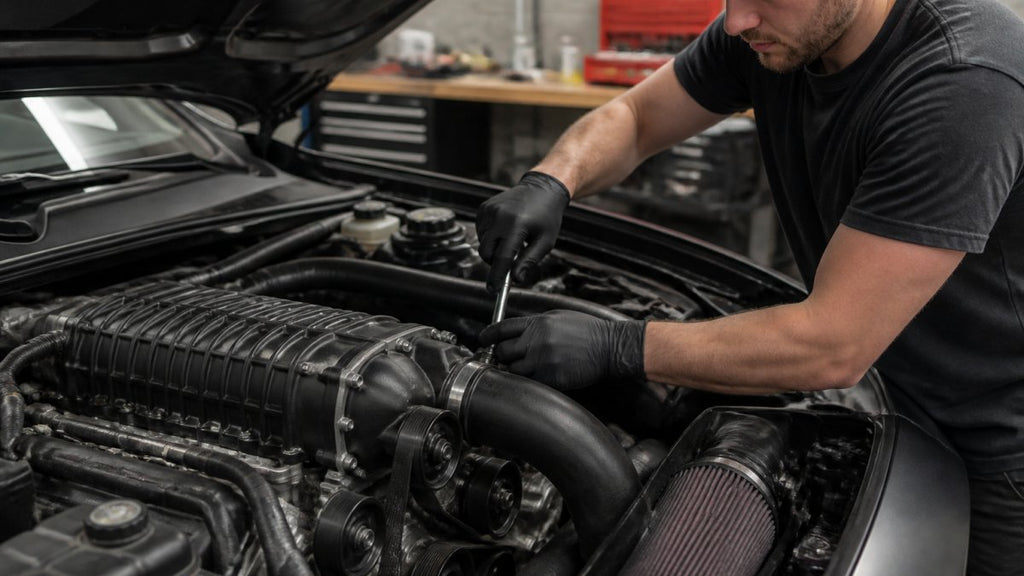
Real-world performance lives or dies on install quality and upkeep. A great intercooler mounted with leaking couplers, crushed charge pipes, or poor airflow to the core will underperform a modest setup done right.
Packaging and Plumbing on a Supercharged Build
Start with fitment. On a bolt-on kit engineered for OEM-style fitment, the charge pipes and intercooler mounting should drop in without cutting or fabricating brackets. On a built engine with custom work already in place, verify clearance around the intercooler and its piping before you commit, because aftermarket accessories often occupy the same space.
A few packaging realities that catch people out:
- Charge pipe diameter and length matter. Going larger than the blower outlet does not automatically help. Oversized tubing adds volume the blower has to pressurize and can cost you throttle response, especially on a positive-displacement blower that relies on immediate manifold pressure.
- Coupler count is a leak count. Every silicone coupler and clamp is a potential boost leak. Minimize joints where you can, use constant-tension clamps on high-boost builds, and route pipes so they are not resting on hot exhaust or sharp brackets.
- Heat exchanger placement drives recovery. On air-to-water systems, the front heat exchanger needs clean airflow just like an air-to-air core. Stacking it behind a radiator, transmission cooler, or winch bumper turns it into a heat sink instead of a heat shedder.
- Bleed the coolant loop properly. Air pockets in an air-to-water system cause intake air temperature swings that look like a tuning problem but are actually a plumbing problem. Bleed at the highest point and recheck the reservoir after the first few heat cycles.
Maintenance and Cleaning Requirements
Air-to-air cores collect bugs, road grime, and debris in the fins, and a clogged core cannot transfer heat. Clean with low-pressure water and a soft brush a couple of times a year, more often on dusty trails. Avoid high-pressure washes that bend fins flat, and straighten folded fins with a fin comb.
Oil Blow-by: The Maintenance Issue Nobody Mentions
On a forced induction engine, crankcase ventilation sends oil vapor into the intake tract, coating the inside of the intercooler core. On an air-to-air core, the oil film insulates the fins and reduces heat transfer. On an air-to-water core, oil can also contaminate the coolant if an internal seal fails, a much bigger problem.
Data-Driven Verification
Do not trust the butt dyno. Verify with data:
- Datalog intake air temperature and manifold pressure together on a real drive, not just a dyno pull. A dyno cell with a big fan does not reproduce the heat soak you get in traffic or on a long grade.
- Compare before-and-after runs under similar ambient conditions. A cold morning pull will always look better than a hot afternoon pull, so match conditions or correct for them.
- Watch for pressure drop across the core. If manifold pressure falls after the swap, the core may be too restrictive for your blower and pulley combination.
- Log knock retard or timing pull. If the ECU is pulling timing on the second or third pull, the intercooler is heat soaking and you have a thermal management problem, not a tuning problem.
Watch Out
A boost leak at a silicone coupler bleeds manifold pressure and makes the whole system look weak. Pressure-test the charge path after install before you chase a tune. Many "the intercooler did not help" stories end with a loose clamp.
NHTSA guidance on vehicle modifications and safety
Frequently Asked Questions
Is an intercooler necessary for a supercharger?
For any supercharger running more than about 6 psi of boost, an intercooler is strongly recommended. Compressing air raises its temperature, and hot intake air increases the risk of detonation, which can damage pistons and bearings. An intercooler lowers intake air temperature, allowing more aggressive ignition timing and safer power. Without one, you may need to run higher-octane fuel or accept reduced boost to avoid engine knock. For low-boost street setups, a small intercooler still adds a meaningful safety margin.
How much horsepower gain can you expect from an intercooler upgrade?
Gains depend on boost level, ambient temperature, and tuning. On a supercharged engine running 8-10 psi, an intercooler often frees up 20-50 horsepower by reducing intake air temperature and allowing more timing advance. The biggest gains show up on repeated pulls where heat soak would otherwise rob power. A dyno session before and after installation is the only way to know exact numbers for your vehicle.
Can you run too big of an intercooler?
Yes. An oversized intercooler can add pressure drop and turbo lag or throttle response delay, especially on a supercharger with limited boost. It also adds weight and can block airflow to the radiator. The goal is to match intercooler size to your boost level and driving use. A unit rated for 600 horsepower on a 400-horsepower build may cool well but hurt response. Ask the manufacturer for flow and pressure drop data before buying.
What are common supercharger heat soak symptoms?
Heat soak symptoms include a noticeable drop in power after the engine warms up, especially in stop-and-go traffic or after multiple hard pulls. Intake air temperature climbs, the ECU pulls timing, and throttle response feels flat. You may also hear pinging or see higher coolant temps. An intercooler with good airflow and a heat exchanger that stays clean reduces heat soak. If symptoms persist, check for air pockets in the cooling system or a clogged intercooler core.
Getting intercooling right is the difference between a supercharger that makes safe, repeatable power and one that heat soaks, knocks, and costs you an engine. VT Superchargers builds bolt-on kits with OEM-style fitment for a wide range of makes, backed by a 24-month warranty and financing options, so your build gets the cooling and the power it needs without guesswork. Register with VT Superchargers to find the kit engineered for your vehicle and start making real performance gains.
Related post
09
Oct
RECENT POSTS