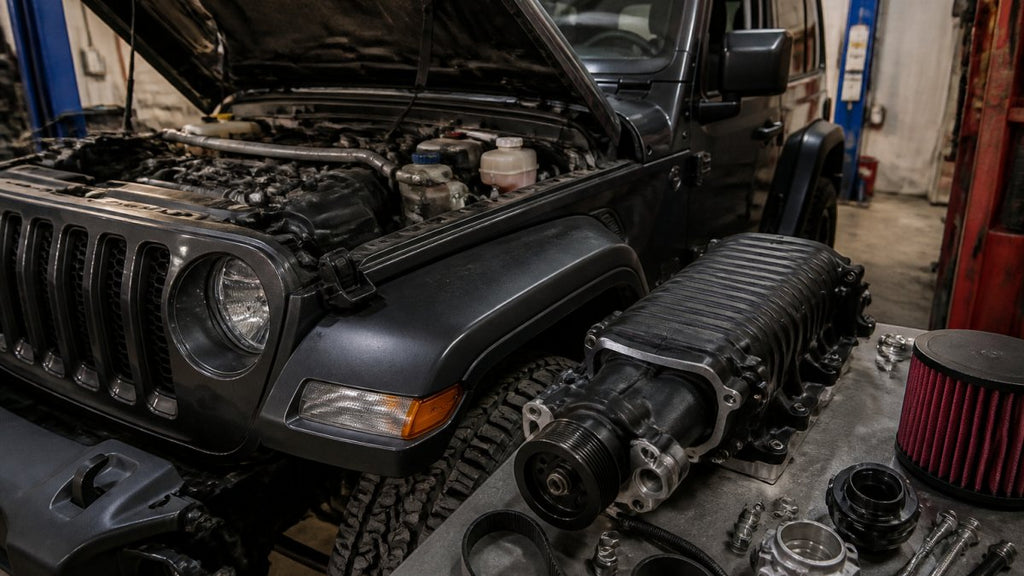
How to Increase Horsepower in a Jeep 3.6L Pentastar
Table of Contents
- Step 1: Establish Your Baseline Before You Modify
- Step 2: Jeep 3.6 Pentastar Cold Air Intake and Exhaust Upgrades
- Step 3: Jeep 3.6 Pentastar Tune and ECU Calibration
- Step 4: Jeep 3.6 Pentastar Supporting Mods for Higher Boost
- Step 5: Adding a Jeep 3.6 Pentastar Supercharger for Maximum Gains
- Reliability, Warranty, and Emissions After the Build
- Conclusion
- Frequently Asked Questions
Last Updated: October 14, 2026
Step 1: Establish Your Baseline Before You Modify
Before you spend a dollar on parts, you need a real number to compare against. A dyno pull costs far less than a wrong part, and it tells you exactly where your Jeep 3.6L Pentastar makes power now.
A dyno test is a controlled measurement of your engine's wheel horsepower and torque across the full rpm range. It is the only honest way to know whether a modification actually helped.
Here is what to capture on your baseline run:
- Peak wheel horsepower and the rpm it occurs at
- Peak torque and its rpm
- Air-fuel ratio across the pull
- Any knock or timing pull the tuner sees
Note your tire size and gearing too. Bigger tires change how the truck feels, even when the engine is unchanged.
Pro Tip
Log your baseline on the same dyno you plan to use afterward. Different dynos read differently, so comparing a before number from one shop to an after number from another tells you almost nothing.
SAE J1349 engine power test standard
Step 2: Jeep 3.6 Pentastar Cold Air Intake and Exhaust Upgrades
A Jeep 3.6 Pentastar cold air intake and a freer exhaust are the classic first bolt-ons, and for good reason. They are simple, reversible, and they set up every later upgrade.

An intake replaces the stock airbox with a higher-flowing filter and pipe. More air in means the engine can burn more fuel, but only if the exhaust can move the extra gas out.
What an intake actually changes
- Filter surface area and flow: a reusable cotton or synthetic element flows more than the factory paper panel, but it also passes more fine dust if it is over-oiled or under-maintained.
- Intake tract shape: removing the factory resonator and silencer box smooths airflow but can add drone at highway rpm.
- Heat management: an open-element filter sitting in the engine bay pulls hot air at idle and low speed. A sealed airbox that draws from the fender or grille keeps intake temps closer to ambient, which matters more than the filter brand.
On the exhaust side, you have options:
- Axle-back or cat-back system: frees up flow, changes sound, and is the most common first exhaust step.
- Mid-muffler delete: cheaper and louder, with a modest flow gain and more interior drone.
- Cutout valve: lets you run quiet on the street and open at the track, but it is the hardest to keep emissions-legal.
Realistic expectations
Be honest about what these deliver on their own. A naturally aspirated 3.6L Pentastar responds to intake and exhaust with a small gain, often felt more in throttle response than in peak numbers.
This is where the marketing gets ahead of the physics. A cold air intake alone will not transform the truck, and any claim of a double-digit peak gain from an intake on a stock Pentastar should be treated with suspicion.
Fitment notes by generation
- JK Wrangler (2012-2018) and early JL: the 3.6L Pentastar uses a conventional intake and exhaust layout, and most aftermarket parts are a direct bolt-on.
- JL Wrangler and JT Gladiator (2018+): the engine bay is tighter and the factory airbox is integrated with the hood and cowl, so confirm the intake clears the hood and any factory sensors.
- 4xe models: the hybrid powertrain adds packaging and calibration constraints. Confirm that any intake or exhaust part is explicitly listed for the 4xe, because the PCM strategy and underbody layout differ.
Supporting parts and cost
An intake and cat-back are usually the cheapest real steps in a build. Budget for the parts plus a few hours of labor if you are not doing the work yourself, and plan to keep your stock airbox and exhaust so you can return the vehicle to stock for inspection, resale, or warranty work.
Watch Out
A cutout or straight-pipe exhaust can fail a state emissions inspection and may violate local noise limits. Check your state's rules before you cut anything, and keep the factory parts.
EPA vehicle emissions and tampering rules
Step 3: Jeep 3.6 Pentastar Tune and ECU Calibration
The Jeep 3.6 Pentastar tune is where bolt-ons start to pay off. The factory calibration is built for 87-octane fuel, emissions, and a wide margin of safety. A custom tune tightens that margin in your favor.
What a good tune does:
- Adjusts fuel mixture for the extra airflow
- Optimizes ignition timing for the fuel you run
- Improves throttle response and acceleration feel
- Raises the safe ceiling for later mods
A PCM swap is one common route: you send your factory unit out, or buy a pre-programmed one, and swap it in. It keeps your original as a spare.
Fuel matters here. Running 93-octane fuel lets the tuner use more aggressive timing than 87-octane allows. Higher-octane fuel resists knock, so the engine can make more power safely.
Key Takeaway
A tune is not optional if you add airflow or boost. Skipping it leaves power on the table and, with forced induction, risks real engine damage.
Step 4: Jeep 3.6 Pentastar Supporting Mods for Higher Boost
Jeep 3.6 Pentastar supporting mods are the parts that let the rest of the build keep up. Once you push past bolt-ons, the weak links show up fast, and the most common mistake is chasing engine power while ignoring the things that decide how the truck actually accelerates.
Start with power-to-weight and gearing, not more boost
Before you add a single horsepower, look at what the vehicle is already working against. Tire size, wheel weight, and axle gearing change acceleration more than a small engine mod ever will.
- Tire diameter: going from a stock ~32-inch tire to a 35-inch tire raises the effective final drive ratio and makes the engine work harder at every speed. A Jeep on 35s with stock gears will feel slower than the dyno sheet suggests.
- Unsprung and rotating mass: heavier wheels and tires cost acceleration and braking. A lighter wheel-and-tire package can feel like a power gain even when the engine is unchanged.
- Axle gearing: regearing to a numerically higher ratio (for example, moving from a 3.45 to a 4.10 or 4.56) restores the mechanical advantage the taller tires took away. For many lifted Jeeps, this is the single most cost-effective "power" mod you can make.
A common pattern is that owners spend on engine parts first and regear last, then wonder why the truck still feels sluggish. Do the gearing and weight math before you buy boost.
Supporting mods, in priority order
- Spark plugs and gap: a colder plug and a tighter gap handle boost without misfire. A worn plug or a wide gap can cause a misfire under load long before anything else fails.
- Ignition system: fresh coils and quality wires keep the spark strong under higher cylinder pressure.
- Fuel system: enough pump and injector capacity to feed the extra air. Running lean under boost is how pistons fail.
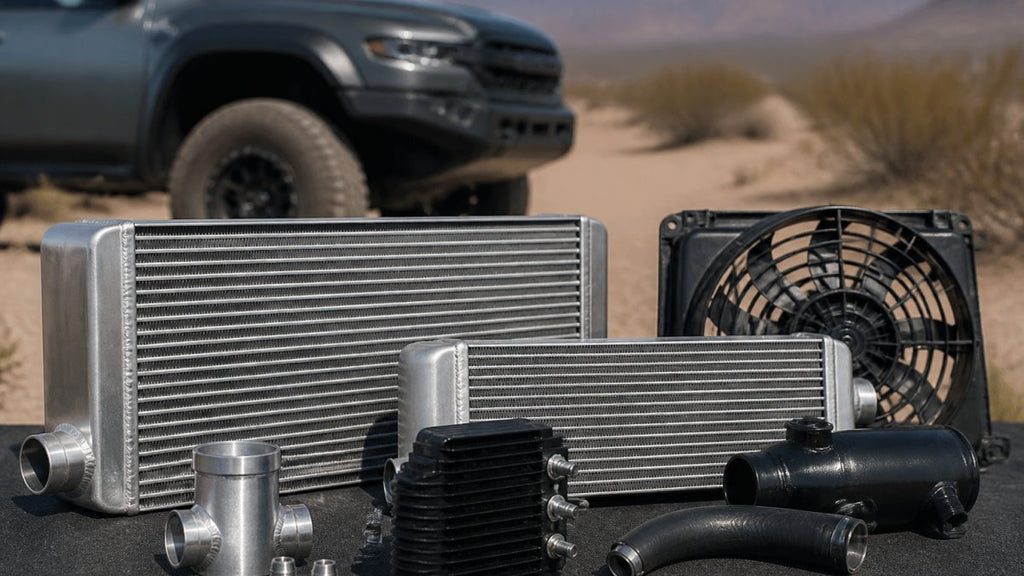
- Cooling: heat management for sustained load, especially for towing or long off-road climbs.
- Drivetrain: gearing, axles, and driveshafts rated for the added torque and larger tires.
Staged plan and total installed cost
A sensible build order keeps the truck drivable at every step and spreads the cost out:
Jeep Pentastar 3.6L V6 Supercharger Kit →
- Stage 1, airflow and tune: intake, cat-back, and a custom tune. Lowest cost, reversible, and the foundation for everything else.
- Stage 2, gearing and tires: regear to match your tire size and confirm the drivetrain is rated for the load. This is where the truck starts to feel genuinely quicker.
- Stage 3, supporting mods: plugs, ignition, fuel, and cooling, sized for the boost you plan to run.
- Stage 4, forced induction: the supercharger and its required tune, added last so the supporting parts are already in place.
Budget for parts plus labor, and remember that tuning is a required cost, not an optional one. A dyno session to verify the result is worth the money, because it tells you whether the combination actually works.
Here is a quick reference for where each mod fits:
| Mod | Typical Gain Feel | Tune Needed | Best For |
|---|---|---|---|
| Cold air intake | Sharper response | No | First step |
| Cat-back exhaust | Sound, small flow gain | No | Daily drivers |
| Regear for larger tires | Restores acceleration | No | Lifted Jeeps |
| ECU tune | Best NA gain | Yes | Any build |
| Spark plugs and gap | Prevents misfire | Yes | Boosted builds |
| Supercharger | Largest gain | Yes | Max power goals |
Key Takeaway
If the truck feels slow, measure before you modify. Gearing, tire weight, and power-to-weight often explain more of the problem than the engine does.
Step 5: Adding a Jeep 3.6 Pentastar Supercharger for Maximum Gains
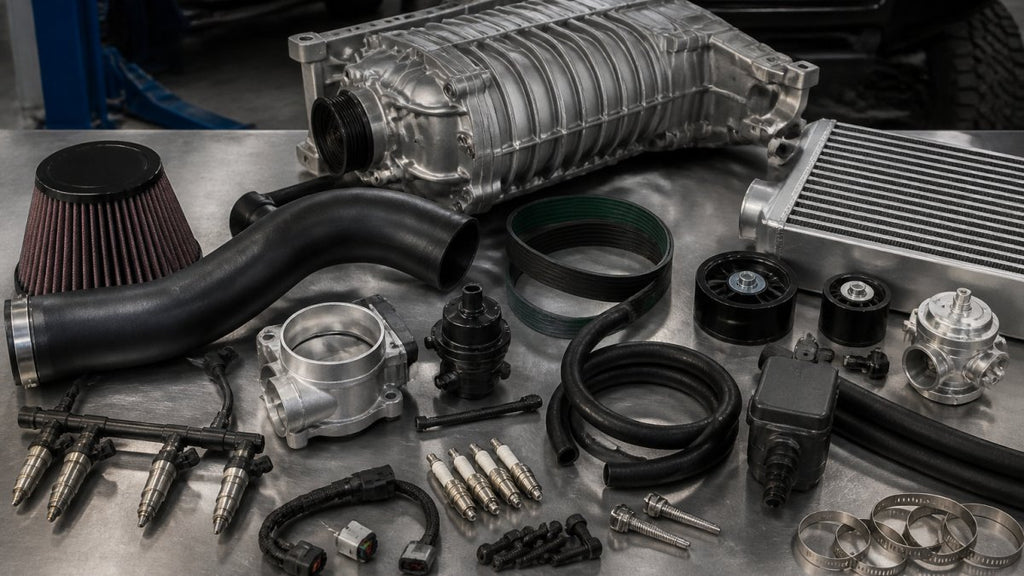
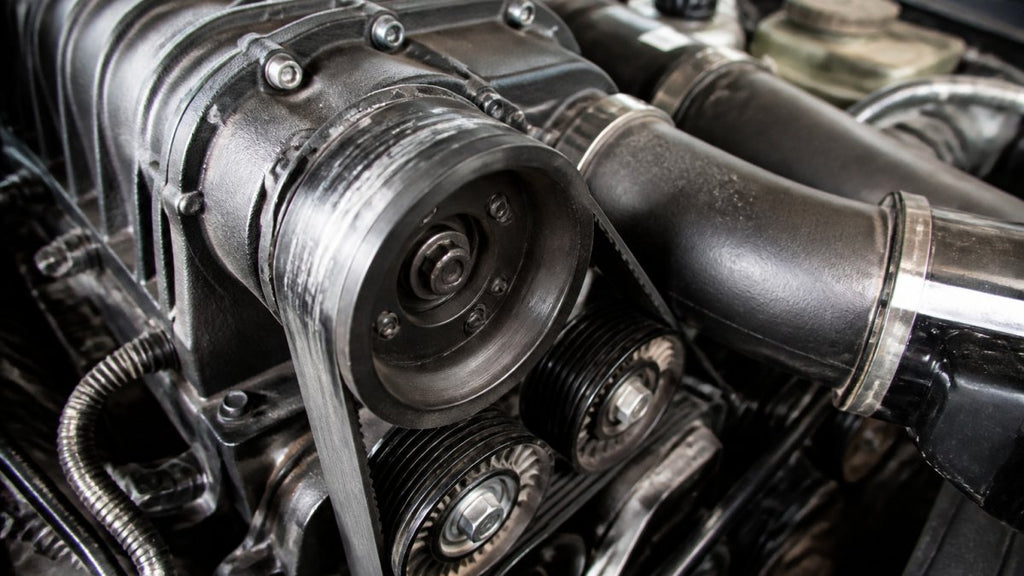
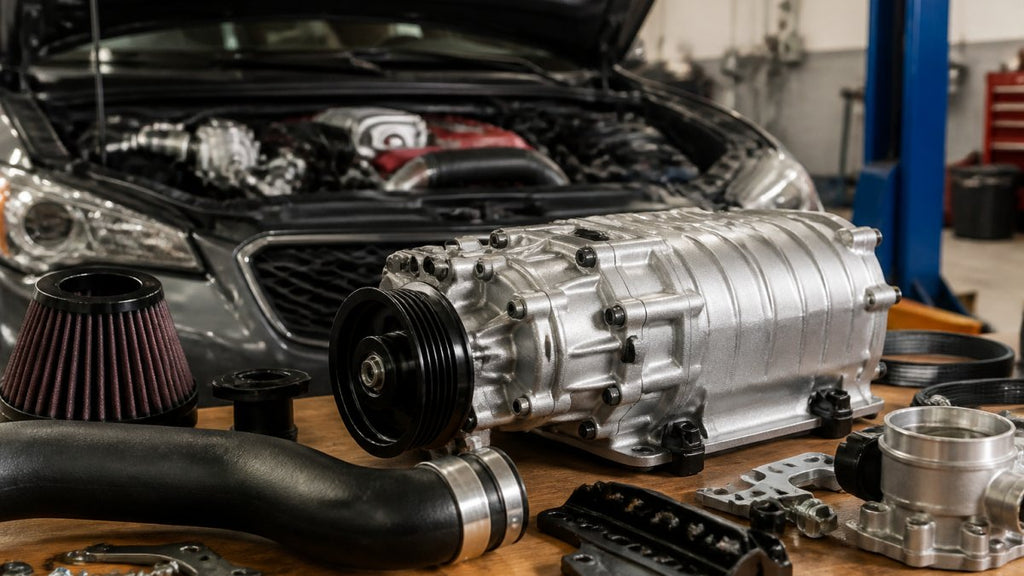
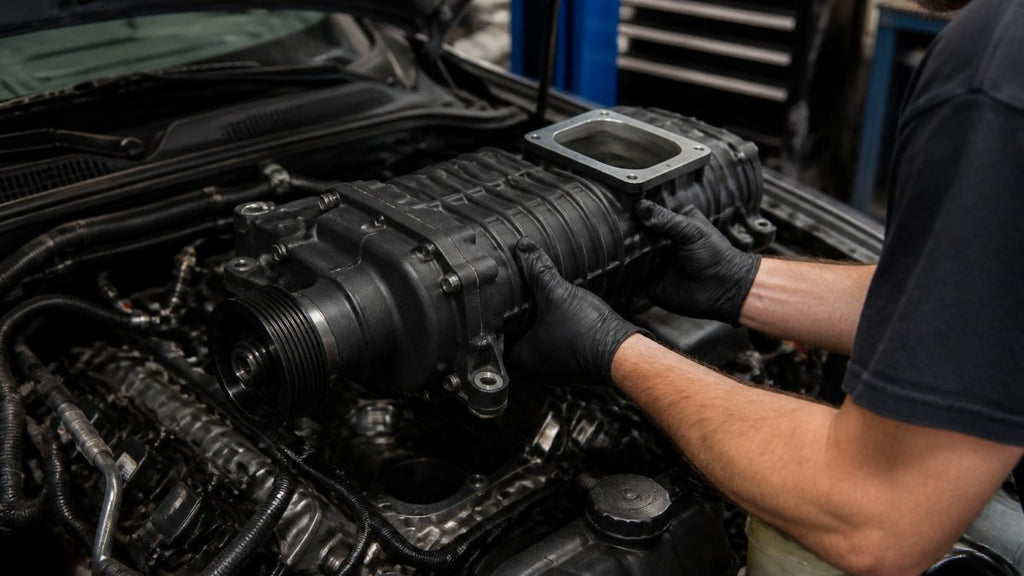
A Jeep 3.6 Pentastar supercharger is the single biggest power step you can take.
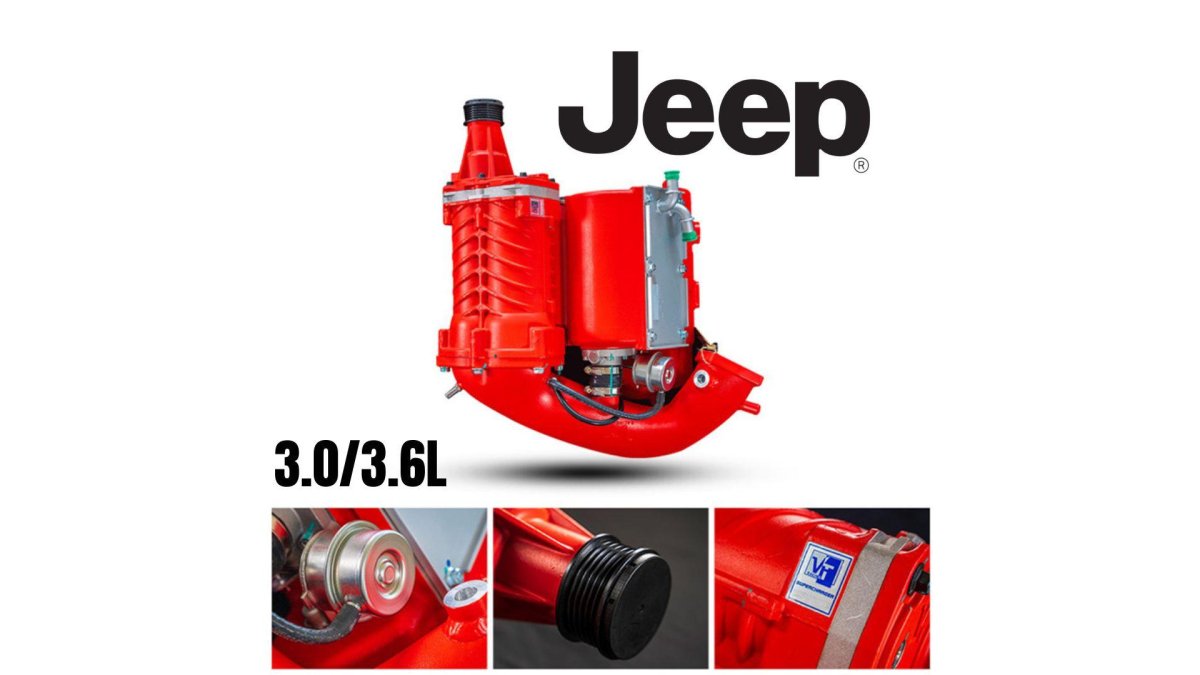
The gains are in a different league from bolt-ons.
What sets a well-built kit apart:
- One-piece die-cast aluminum housing with built-in air and coolant passages
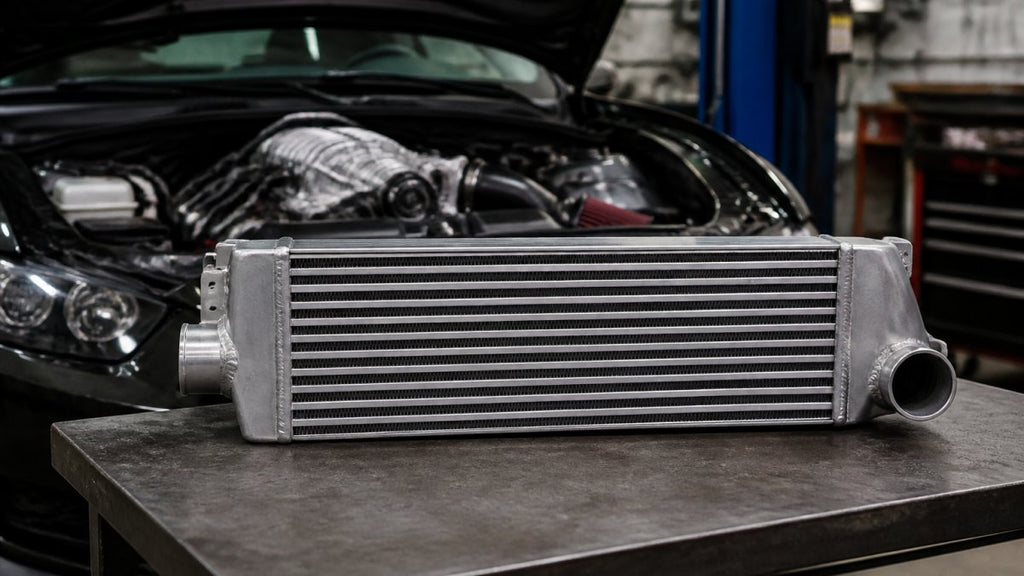
- Mid-mounted water-to-air intercooler for stable intake temps
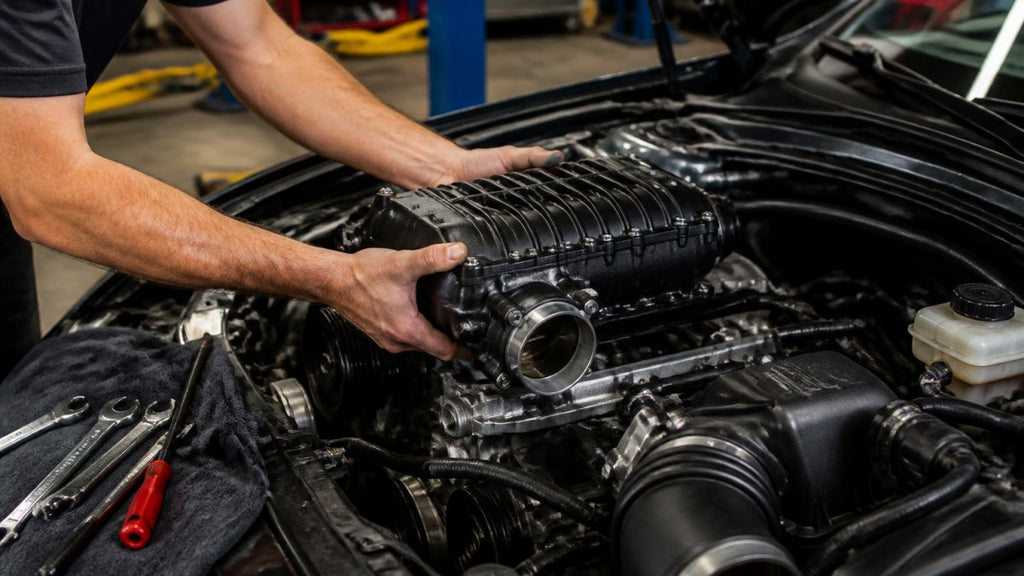
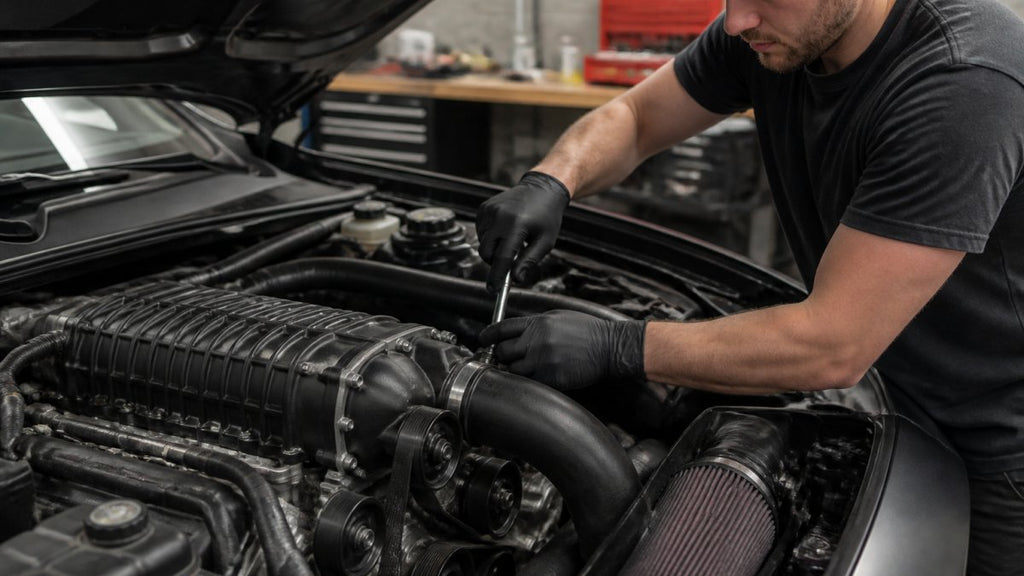
- Bolt-on, non-destructive install using OEM mounting points
- No cutting, welding, or wire splicing required
That last point matters for anyone worried about their factory warranty or resale. The install is reversible.
Does a supercharger add boost without internal engine work? Yes. Our kits run at modest boost and bolt to the stock engine using original mounting points.
Fitment varies by model. We build kits for the Wrangler (2012+), Gladiator, Grand Cherokee (2011+), and other Pentastar-powered Jeeps.
Best For
Jeep owners who want a large, reliable power gain for towing, off-road, or daily driving, and who value a bolt-on install with a 24-month warranty.
Reliability, Warranty, and Emissions After the Build
Power means nothing if the truck will not stay on the road. Plan for three things: reliability, warranty, and emissions.
On reliability, the pattern is simple. Modest boost with a proper tune and supporting mods tends to hold up well. Big boost without the fuel, ignition, and cooling to back it up does not.
On warranty, understand how it works. Our kits carry a 24-month limited manufacturer warranty covering defects in materials and workmanship under normal use. It does not cover improper installation, racing abuse, or incorrect tuning.
Watch Out
Forcing more air in without a matching tune is the fastest way to burn a piston. Always tune the engine before you drive a boosted build hard.
On emissions, know your state's rules. Tampering with emissions equipment is a federal issue under the Clean Air Act, and many states run their own inspection programs. Keep your stock parts.
Measure your results the same way you started: same dyno, same conditions.
Conclusion
Building real power in a 3.6L Pentastar is a sequence, not a shopping spree. Baseline it, free up the airflow, tune it, support it, then add boost if you want the big numbers.
At VT Superchargers, we build bolt-on kits for exactly that last step. Our kits use OEM-style fitment, non-destructive installation, and a 24-month warranty, with kits for the Wrangler, Gladiator, Grand Cherokee, and more. Get started with VT Superchargers and register your build to lock in the right kit for your Jeep.
Frequently Asked Questions
How much horsepower does a Jeep 3.6L Pentastar make stock?
The 3.6L Pentastar V6 produces roughly 285 horsepower and 260 lb-ft of torque in most Jeep Wrangler and Gladiator applications, depending on model year and calibration. That baseline matters because every mod you add builds on it. A cold air intake might free up a few horsepower, but a supercharger at 7 psi adds around 40% more horsepower, which pushes you well past 400 horsepower at the crank.
Do cold-air intakes increase horsepower on a Jeep 3.6L Pentastar?
A cold air intake alone typically adds 5 to 10 horsepower on a naturally aspirated 3.6L Pentastar. The real benefit shows up when you pair it with an ECU tune and exhaust work, because the engine can actually use the extra airflow. If you plan to supercharge later, a quality intake becomes even more valuable since the blower moves far more air than the stock box can supply efficiently.
What supporting mods are needed before supercharging a Jeep 3.6L Pentastar?
Before adding a supercharger, you should run a colder spark plug with a tighter gap, upgrade to a higher-flow intake, and make sure your cooling system is in good shape. An ECU tune is mandatory. VT Superchargers requires engine tuning for safe operation on the Pentastar ERB and EZH. If you are running 35-inch or larger tires, regearing your axles first will keep the drivetrain happy and preserve throttle response.
Will performance mods affect reliability or emissions compliance?
Bolt-on mods like intakes and cat-back exhausts generally do not affect emissions compliance if they retain the factory catalytic converters. ECU tuning and supercharger kits can affect emissions in some states, so check your local inspection rules before installing. VT Superchargers offers a 24-month warranty on their kits, but improper tuning or racing abuse voids coverage. Stick to a proven calibration and you will keep reliability intact.
Related post
09
Oct
RECENT POSTS