Dealer-Installed vs. Aftermarket Supercharger Kits
Last Updated: October 22, 2026
Quick Summary
Dealer-installed supercharger kits offer manufacturer-backed warranties, factory-trained installation, and simplified service through authorized dealerships, while aftermarket kits provide lower upfront costs, greater customization flexibility, and access to specialized tuning shops. The choice depends on whether you prioritize simplicity and warranty clarity or control over installation timing, installer selection, and performance tuning.
- Dealer-installed systems typically cost $3,000-$5,000+ while aftermarket professional installation ranges from $6,800-$11,100 including kit, labor, and tuning.
- Dealer kits include a manufacturer-backed limited warranty like Ford Racing's 3-year coverage, but do not extend to your factory engine warranty.
- Aftermarket kits from VT Superchargers deliver 40-70% horsepower and 30-50% torque increases at 7 PSI of boost with a 24-month warranty on the supercharger system.
- Professional installation is recommended over DIY to avoid costly mistakes with hose routing, belt tension, and ECU tuning that can damage the engine.
- Dealer installation suits daily drivers wanting reliability and minimal hassle, while aftermarket kits benefit enthusiasts building custom vehicles or seeking specialist tuning.
Table of Contents
- Dealer-Installed vs. Aftermarket Supercharger: Core Differences
- Supercharger Installation Cost Breakdown
- Dealer-Installed Supercharger Warranty: What Actually Covers You
- Supercharger Kit Compatibility and Fitment Requirements
- Power Gains, Engine Stress, and Long-Term Reliability
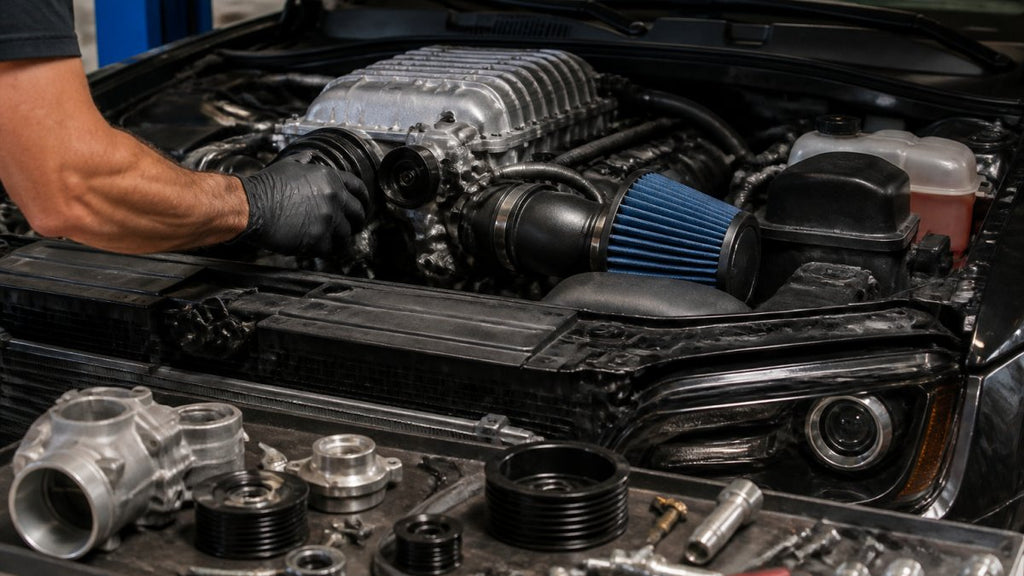
- Installation Quality: Professional vs. DIY Considerations
- Frequently Asked Questions
Dealer-Installed vs. Aftermarket Supercharger: Core Differences
A dealer-installed supercharger kit and an aftermarket system serve the same purpose but differ in who handles installation, what warranty you receive, and how the system integrates with factory components.

Dealer-installed supercharger kits come through authorized Ford, Nissan, Toyota, or other manufacturer channels, engineered by the manufacturer or an approved partner and installed at a dealership by factory-trained technicians. Aftermarket kits are purchased separately and installed by independent shops, certified installers, or DIY enthusiasts. Both deliver real power gains, but ownership and protection differ significantly.
The decision between these two approaches hinges on three factors: installation labor cost, warranty implications, and long-term engine reliability. According to VT Superchargers' installation guidance, professional installation ranges from moderate to substantial depending on your vehicle and the complexity of the system. Dealer installations promise OEM-backed support and simplified service, while aftermarket kits offer flexibility, lower upfront costs, and access to specialized tuning shops that understand forced-induction systems.
In practice, a dealer installation includes a manufacturer warranty and simplified support but locks you into that dealership's service ecosystem. An aftermarket kit like those from VT Superchargers gives you control over timing, installer, and tuning, but you must find a qualified shop and manage the process yourself.
Pro Tip
The real advantage of dealer-installed systems isn't always the installation itself, it's the warranty clarity and the fact that future service stays within the dealership network. For owners who value simplicity and one-stop support, that matters. For enthusiasts who want to customize their build or work with specialists, aftermarket kits offer more control.
Supercharger Installation Cost Breakdown
Installation cost is often the biggest sticker shock. The total depends on whether you pay a dealership, an independent shop, or do the work yourself.
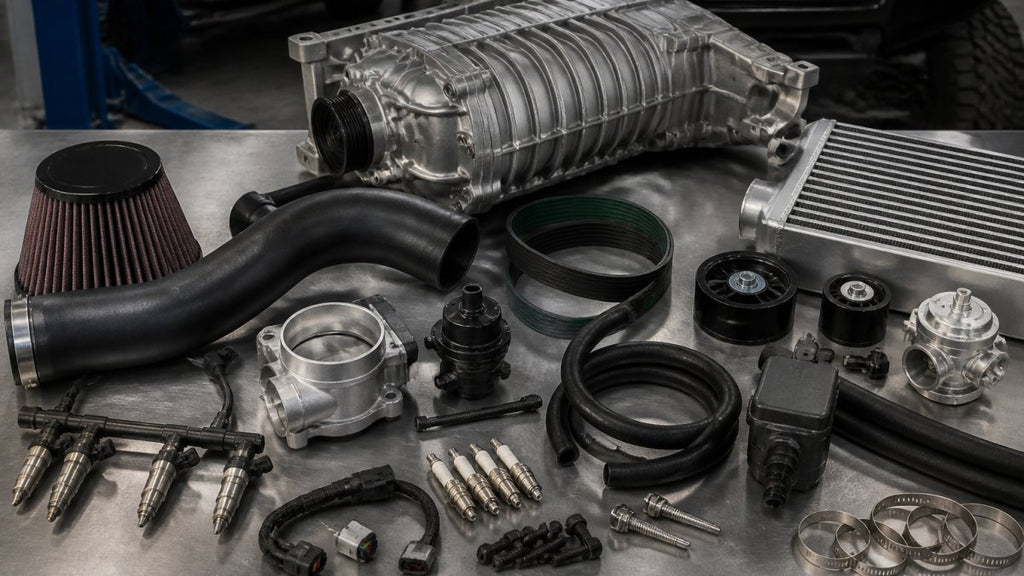
Dealer-installed supercharger kits bundle kit price and labor into one package. A Ford Racing installation at an authorized dealership might run several thousand dollars once you factor in the kit, labor, ECU tuning, and supporting modifications. The advantage is transparency: a fixed upfront quote.
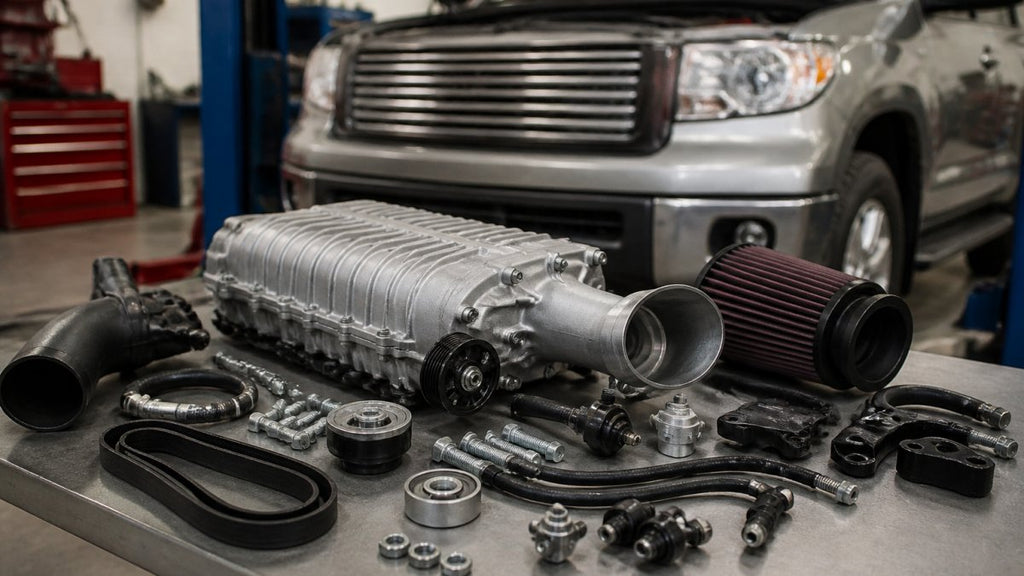
Aftermarket kits separate the component cost from labor. A VT Superchargers kit for a Toyota Tundra 5.7L costs $6,900.00, while a Ford Explorer 3.5L kit runs $5,800.00. According to VT Superchargers' cost guidance, professional installation can range from $500 for straightforward bolt-on systems to $2,000 or more for complex builds that require additional modifications.

Hidden costs apply to both paths. ECU tuning is mandatory for safe operation, not optional. Budget for supporting modifications too: fuel system upgrades, cooling improvements, or exhaust work depending on your power goals and platform. These secondary costs can add $1,000 to $3,000 to the final bill.
| Installation Path | Kit Cost | Labor Cost | Tuning Cost | Total Range |
|---|---|---|---|---|
| Dealer-installed (Ford Racing example) | Included in package | Included in package | Included in package | $3,000-$5,000+ |
| Aftermarket professional (VT Superchargers) | $5,800-$7,600 | $500-$2,000 | $500-$1,500 | $6,800-$11,100 |
| Aftermarket DIY (VT Superchargers) | $5,800-$7,600 | DIY labor | $500-$1,500 | $6,300-$9,100 |
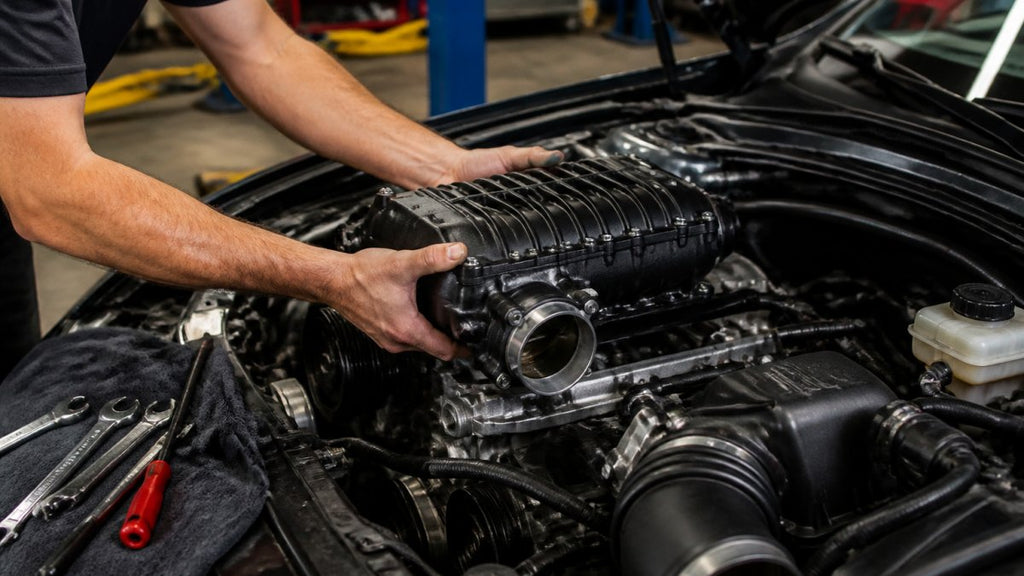
DIY installation is the cost-conscious path but requires mechanical competence and specialized tools. Bolt-on kits from VT Superchargers are designed for owner installation with detailed manuals and support. If you're not comfortable working on engines, DIY attempts to save money often mean paying a shop more to fix mistakes.
Watch Out
Underestimating tuning costs is the most common mistake. A supercharger without proper ECU calibration will run dangerously lean, risk engine damage, and void warranties. Budget for professional tuning regardless of installation path, this is not a place to cut corners.
Dealer-Installed Supercharger Warranty: What Actually Covers You
Warranty coverage is where dealer-installed and aftermarket kits diverge most sharply. Understanding what's protected prevents expensive surprises.
Dealer-installed supercharger kits typically carry a manufacturer-backed limited warranty. Ford Racing Parts systems, for example, are often covered under a 3-year warranty when installed at an authorized dealership, covering defects in the compressor, intercooler, intake manifold, and related components.
The critical point: installing a supercharger at a dealership does not automatically preserve your factory engine warranty. The supercharger system is warrantied separately from your engine. If the supercharger fails, the dealer covers it.
Aftermarket kits from VT Superchargers include a 24-month warranty covering defects in materials and workmanship on the supercharger body, intercooler, water cooling system, and accessories. Like dealer warranties, it does not extend to engine internals, but aftermarket warranties are typically more straightforward about their scope.
The real warranty question is your engine. Forced induction stresses pistons, rods, valves, and gaskets beyond stock. If your engine fails prematurely, the manufacturer examines whether the modification caused it.
Toyota Tundra 5.7L 3UR-FE Supercharger Kit | VT Superchargers →
Key Takeaway
Dealer-installed systems offer clearer warranty boundaries because the dealership manages both the kit and the warranty claim process. Aftermarket kits put the burden on you to document proper installation and maintenance. Neither path fully protects your engine warranty, that's a reality of forced induction regardless of installation source.
Supercharger Kit Compatibility and Fitment Requirements
Not every supercharger kit fits every vehicle. A kit that doesn't fit your engine bay or requires extensive modification defeats the purpose of a bolt-on system.
Dealer-installed kits are engineered specifically for the vehicles they're sold for.
Aftermarket kits require more due diligence. VT Superchargers manufactures vehicle-specific kits: a Toyota Tundra 5.7L 3UR-FE kit is engineered for that engine, not a universal design. Before ordering, confirm your engine code, model year, and configuration.
Fitment also depends on current modifications. A stock Tundra bolts on cleanly.
Hood clearance catches owners off guard. Some systems sit higher than stock intake manifolds; a low hood or aggressive body kit may require a custom hood or spacer plates.
Emissions and legal compliance also factor into compatibility. According to Magnuson Superchargers' compliance statement, supercharger systems engineered for street legality in all 50 states, including California, must meet specific emissions standards.
Power Gains, Engine Stress, and Long-Term Reliability
The reason to install a supercharger is power, but more power means more engine stress. Understanding boost, power gains, and long-term durability is essential.
A properly installed and tuned supercharger delivers real performance gains. VT Superchargers' Toyota 5.7L kits provide 40-60% more horsepower and 30-50% more torque at 7 PSI of boost. For a Nissan Titan 5.6L V8, the twin-screw kit delivers 50-70% horsepower and torque increases.
Forced induction stresses every component in the power chain: pistons, connecting rods, and valves work harder, fuel consumption increases, engine temperatures rise, and oil change intervals may need to shorten. The system itself adds complexity and potential failure points.
Dealer-installed systems often run conservative boost to avoid warranty claims; aftermarket systems can be tuned more aggressively because the installer and owner accept the risk.
Long-term ownership costs reflect this: a supercharged engine may need more frequent maintenance, earlier component replacement, and potentially shorter overall life. Many owners accept the trade-off for the performance gains; others regret it when repair costs mount.
Key Takeaway
Supercharger reliability is directly tied to boost level and maintenance discipline. Conservative tuning on a well-maintained engine can last 100,000+ miles without major issues. Aggressive tuning on a neglected engine might fail in 50,000 miles. The kit itself is usually the reliable part, the engine's longevity is the question.
Installation Quality: Professional vs. DIY Considerations
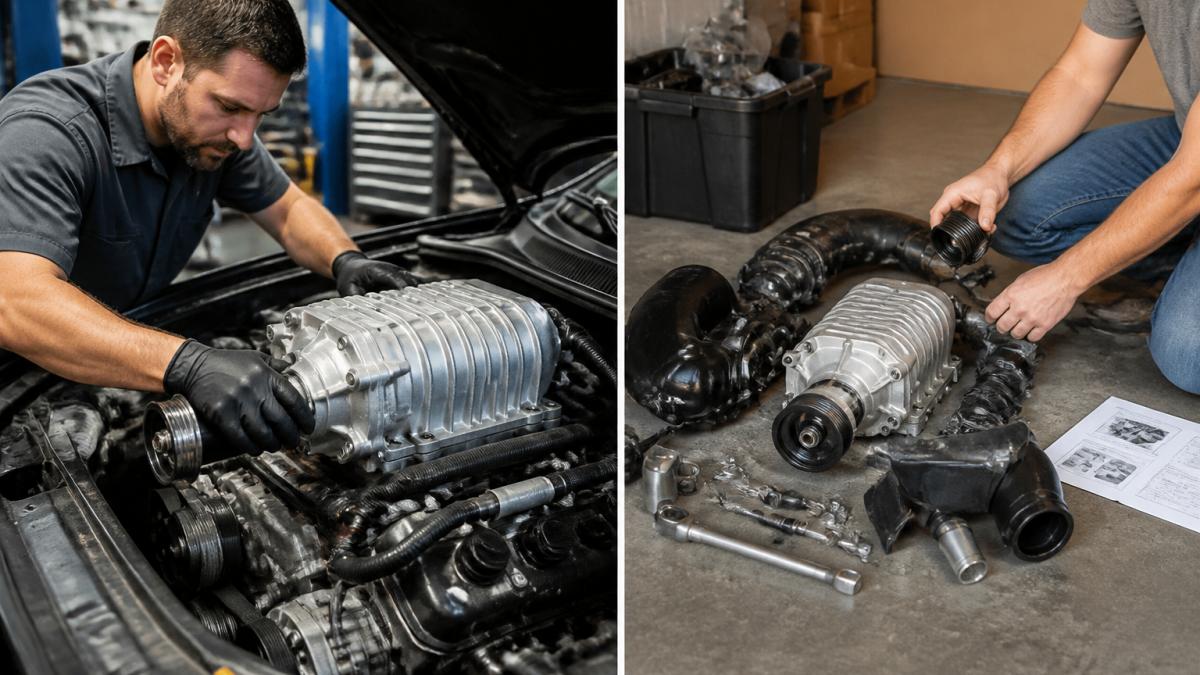
Installation quality determines whether your supercharger performs as designed or becomes a source of problems.
Frequently Asked Questions
Does a dealer-installed supercharger affect the vehicle warranty?
Dealer-installed supercharger kits typically come with a separate limited warranty (often 3 years/36,000 miles) covering the supercharger system itself. However, this does not automatically preserve your original powertrain warranty. Some dealers report that modifications may affect coverage for engine-related claims, while others honor the factory warranty if the installation meets OEM standards. Always request the dealer's warranty terms in writing before installation and ask specifically how it interacts with your existing factory coverage.
How much does it cost to have a supercharger installed professionally?
Professional supercharger installation ranges from $500 to $2,000 or more, depending on the installer, kit complexity, and vehicle type. Dealer installations typically fall at the higher end of this range due to labor rates and OEM certification. Aftermarket kits like those from VT Superchargers (ranging from $5,800 to $7,600 for the kit alone) may have lower installation costs at independent shops. Always request a detailed labor quote before committing, as installation time varies by vehicle model and engine configuration.
Is a dealer-installed supercharger better than an aftermarket kit?
Dealer-installed systems offer simplified purchasing and warranty alignment with the dealership, but aftermarket kits often provide equal or superior performance at lower total cost. Dealer kits are typically turn-key solutions with limited customization, while aftermarket supercharger kits allow you to choose your installer and often deliver comparable power gains. The choice depends on your priorities: convenience and dealership support versus cost savings and installation flexibility. Both can deliver real horsepower and torque increases when properly tuned and maintained.
Can you put a supercharger on any car?
No. Supercharger kits are engineered for specific engine platforms and vehicle models. VT Superchargers, for example, offers kits for Toyota (Tundra, Land Cruiser, Sequoia with the 5.7L 3UR-FE), Ford (Explorer 3.5L V6), and Nissan (Titan/Armada 5.6L V8) models. Before purchasing, confirm your exact vehicle make, model year, and engine displacement with the manufacturer. Attempting to install a kit designed for a different engine can result in poor fitment, reliability issues, and voided warranty coverage.
What should I ask a dealer before buying a supercharger kit?
Ask about the complete warranty coverage (kit and labor), how the installation affects your factory powertrain warranty, the total installed cost including tuning, the expected power gains for your specific vehicle, whether the kit requires a custom hood or modifications, the maintenance schedule and any special oil requirements, and what happens if the system fails during the warranty period. Request all terms in writing and confirm that the dealer is an authorized installer for the supercharger brand.
Related post
RECENT POSTS