Benefits of Positive Displacement Superchargers
Table of Contents
- What Positive Displacement Superchargers Actually Do
- How Positive Displacement Superchargers Work
- Positive Displacement vs Centrifugal Supercharger: Key Differences
- Real Performance Gains: Horsepower and Torque Output
- Why Low-End Torque and Throttle Response Matter for Daily Driving
- Supercharger Maintenance Requirements and Long-Term Reliability
- Heat Management and Tuning Considerations
- Conclusion
Last Updated: August 9, 2026
What Positive Displacement Superchargers Actually Do
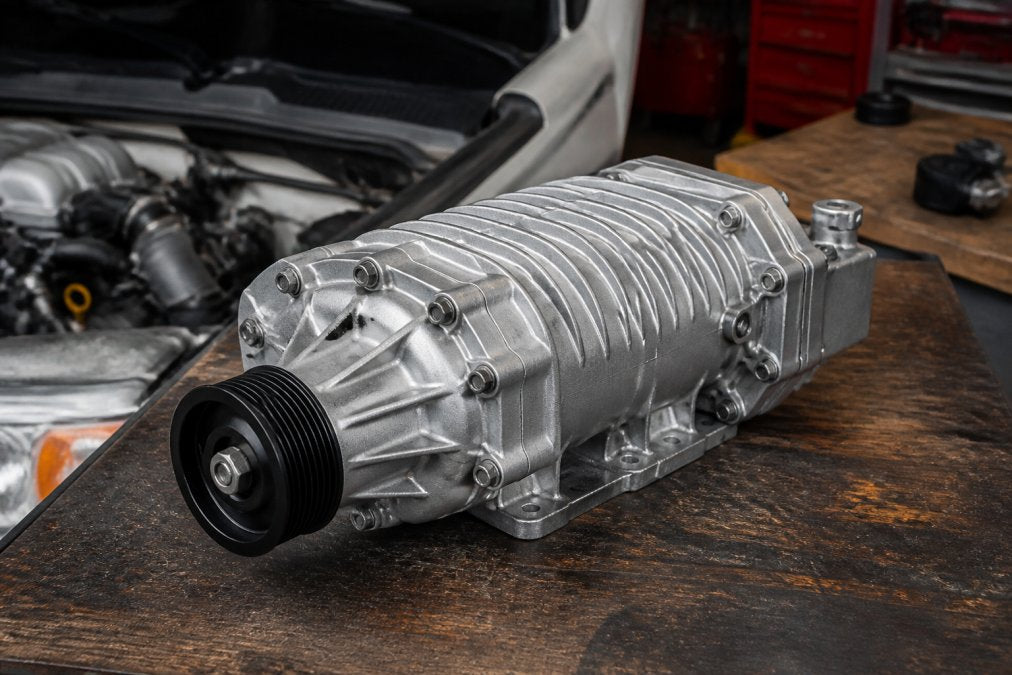
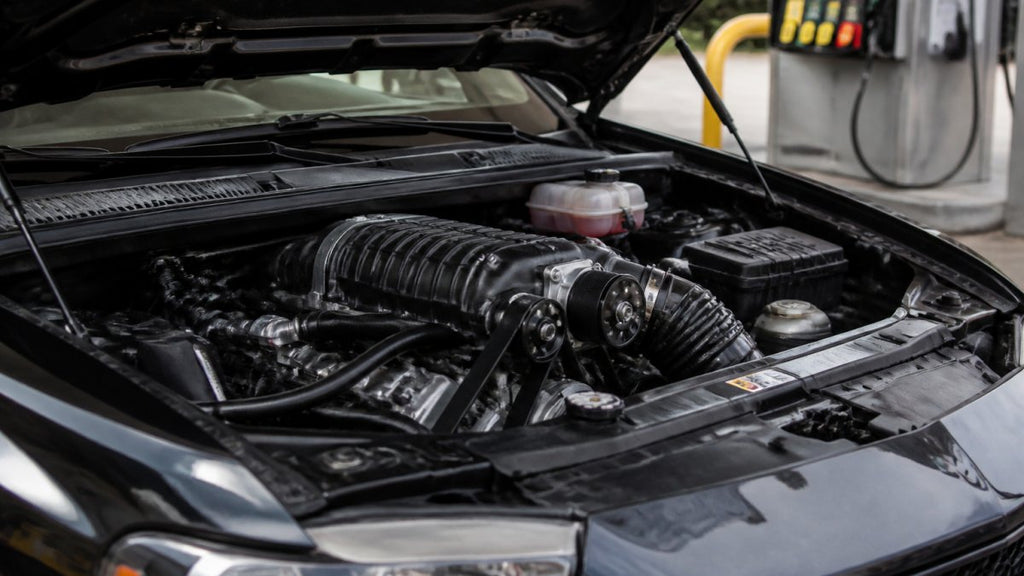
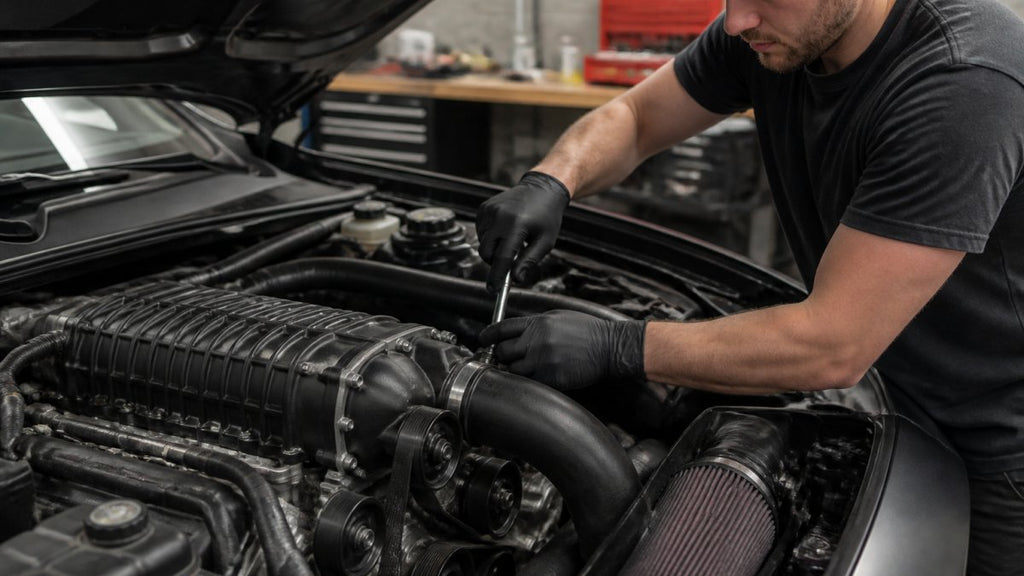
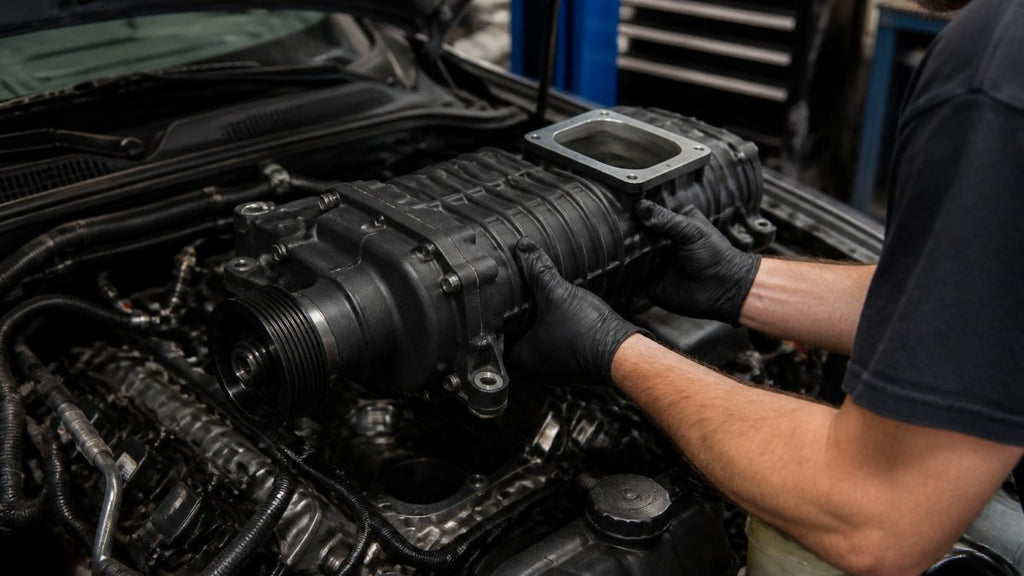
Apositive displacement supercharger is a forced induction system that compresses air mechanically and delivers it directly into the engine's intake manifold at a consistent rate, regardless of engine speed. Unlike other forced induction methods that rely on exhaust gases or engine speed to generate boost, positive displacement superchargers use rotating internal components to trap and compress air, then force it into the cylinders on every intake stroke.
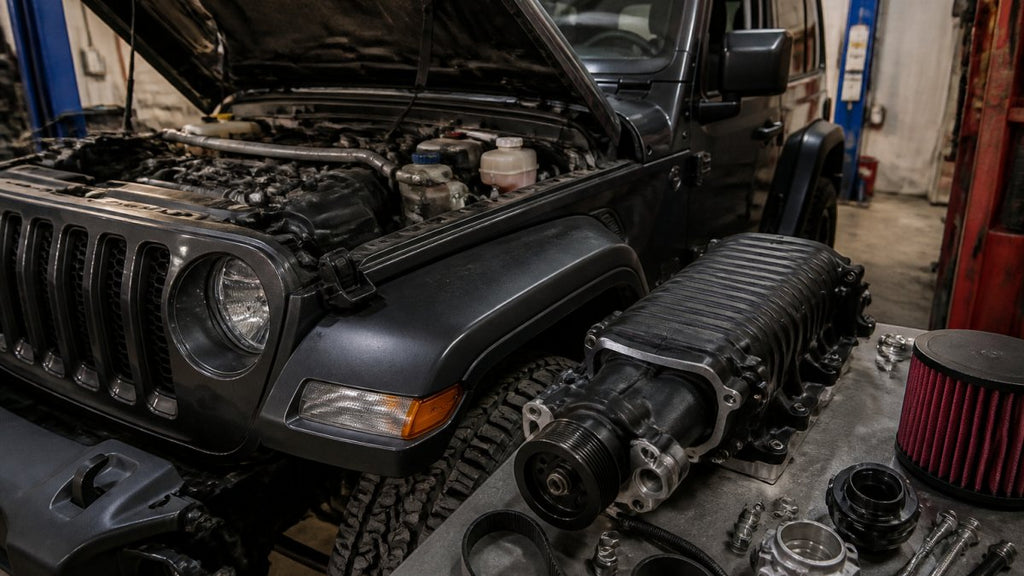
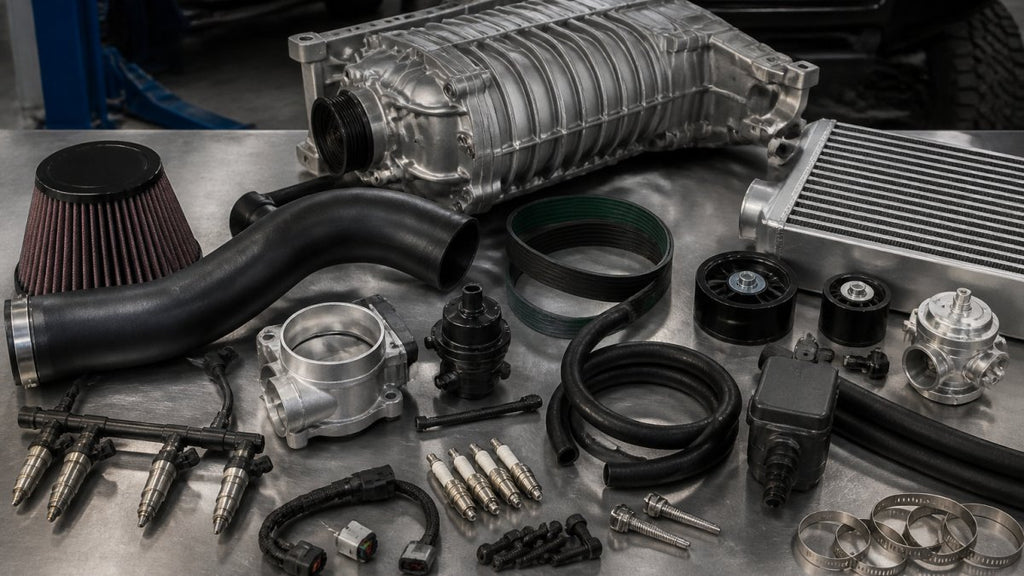
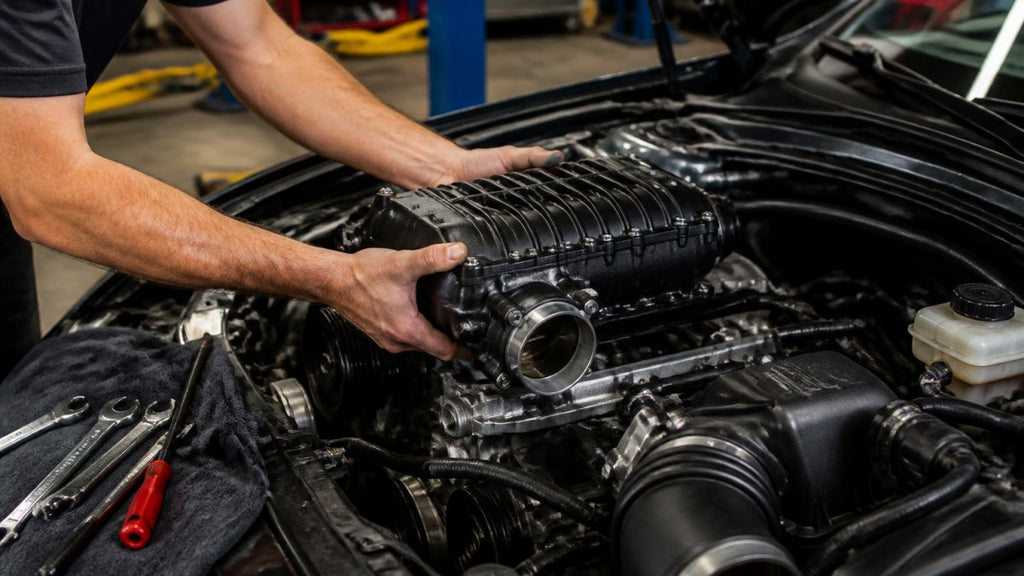
The core advantage is immediate boost pressure delivery. The moment you open the throttle, you get increased airflow with no lag, no waiting for turbine spool-up. VT Superchargers has engineered bolt-on kits that deliver this mechanical advantage without requiring extensive engine modifications, maintaining OEM-style fitment across Dodge, Ford, Jeep, Mazda, Nissan, Suzuki, and Toyota. A properly tuned positive displacement supercharger system provides consistent torque from low RPM through redline, fundamentally changing how a vehicle feels to drive in real-world conditions.
How Positive Displacement Superchargers Work
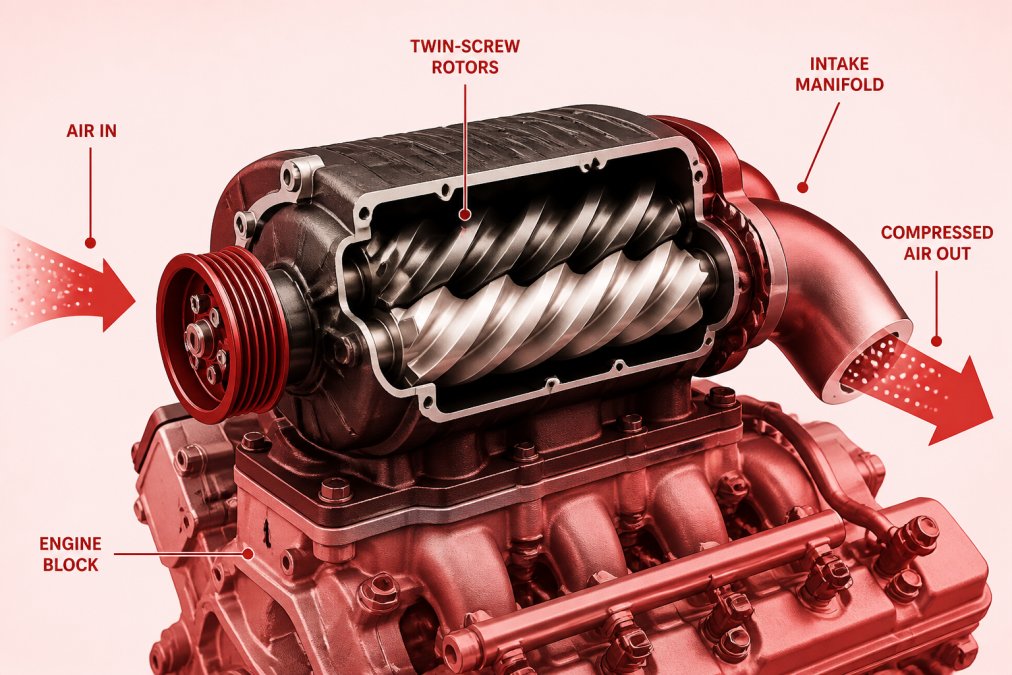
Positive displacement superchargers operate on a simple mechanical principle: trap a fixed volume of air, compress it, and push it into the engine. Two rotating screws or lobes spin in opposite directions, creating expanding and contracting chambers. Air enters through the intake port, gets trapped between the rotors and housing, and as the rotors continue turning, that air gets compressed into a smaller space. By the time it reaches the discharge port, the air is denser and at higher pressure than ambient atmosphere.
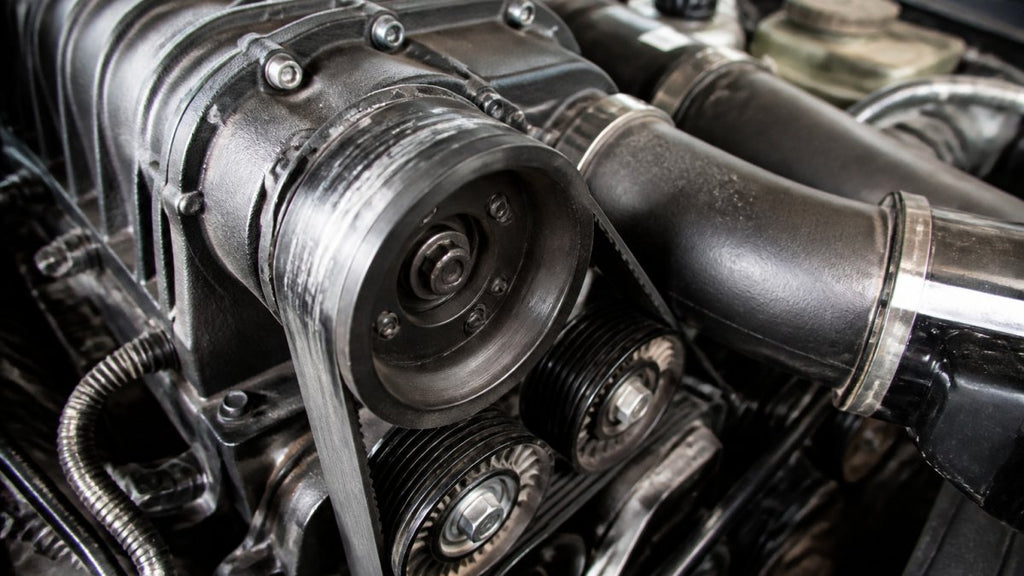
A belt connected to the engine's crankshaft pulley drives the supercharger at a fixed ratio, typically between 1.5:1 and 2.5:1. This means if the engine is spinning at 3,000 RPM, the supercharger rotors are spinning at 4,500 to 7,500 RPM depending on the pulley ratio. The boost pressure you generate is directly proportional to engine speed and the pulley ratio you select.
Twin-Screw and Roots-Type Designs
Two main designs dominate the positive displacement supercharger market: twin-screw and roots-type.
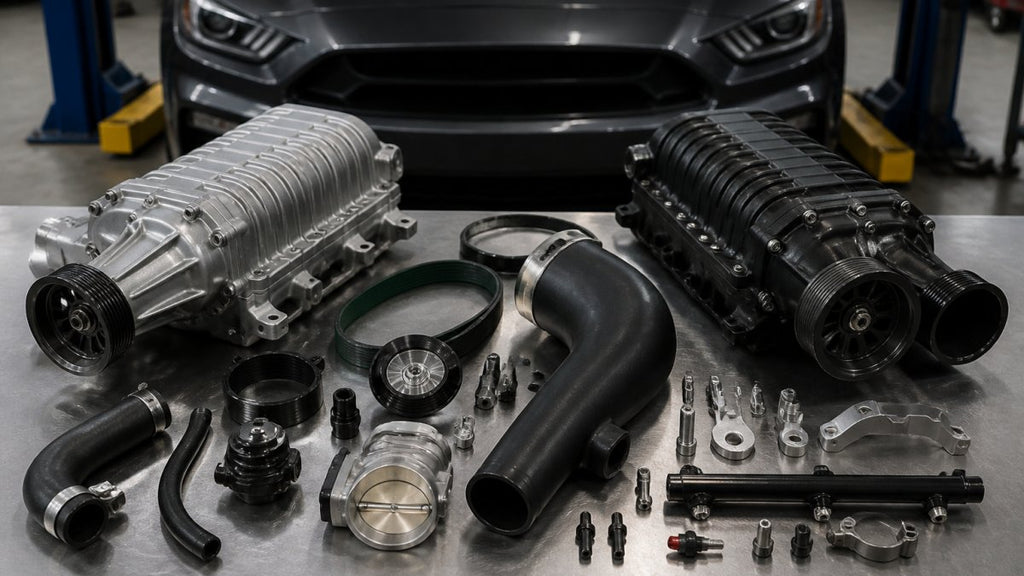
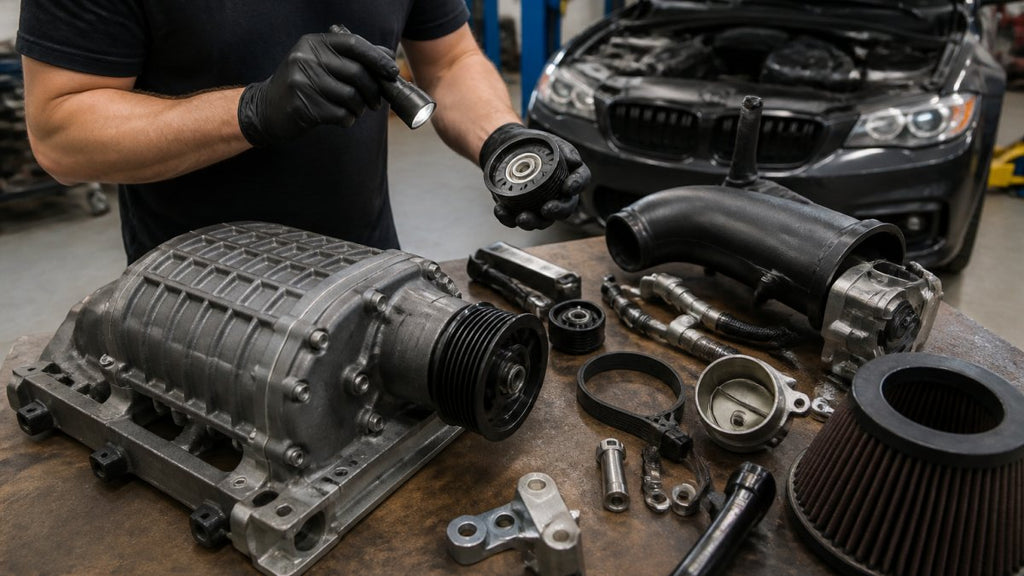
Twin-screw superchargers use two interlocking helical rotors that compress air internally as they rotate. Air moves along the rotor length and gets progressively compressed, generating less heat and better thermal efficiency than roots-type designs. The trade-off is higher complexity and cost due to tighter manufacturing tolerances.
Roots-type superchargers use two identical figure-8 shaped lobes that rotate in opposite directions. They don't compress air internally; instead, they trap air between the rotors and housing, then push it directly into the intake manifold. Roots-type units are simpler and less expensive to build, but they generate more heat because all compression happens at the discharge point. They're also slightly less efficient at higher boost levels.
For most bolt-on applications, twin-screw designs offer better efficiency and lower heat output. VT Superchargers focuses on twin-screw technology for its kit lineup, including the Mazda 6 2.0 Twin Screw Supercharger Kit and the Nissan Titan/Armada 5.6L V8 Twin Screw Supercharger Kit, to maximize performance while minimizing cooling demands.

Positive Displacement vs Centrifugal Supercharger: Key Differences
Positive displacement superchargers deliver boost immediately. The mechanical drive means boost pressure increases with engine RPM from idle onward, excelling in low-RPM torque and throttle response. Volumetric efficiency remains relatively constant across the RPM range.
Centrifugal superchargers use a turbine-like impeller that spins at extremely high speeds to compress air through centrifugal force. They don't produce significant boost at low RPM and require higher engine speeds to generate meaningful pressure. Once they spool up, they can produce very high boost levels and peak horsepower, but the power delivery curve is different, gradual rise in boost as RPM increases, with biggest gains at higher engine speeds.
| Feature | Positive Displacement | Centrifugal |
|---|---|---|
| Boost Onset | Immediate at low RPM | Gradual, peaks at high RPM |
| Low-End Torque | Excellent | Limited |
| Peak Horsepower | High (depends on tuning) | Very High |
| Heat Generation | Moderate (especially twin-screw) | Can be high at peak boost |
| Complexity | Moderate | Lower (simpler design) |
| Cost | Higher | Lower |
| Best For | Daily driving, low-end response | Track performance, peak power |
For off-road driving, towing, or daily driving where you're constantly modulating throttle and speed, positive displacement wins. For track days where you're holding high RPM and chasing peak numbers, centrifugal has advantages.
Pro Tip
The pulley ratio on a positive displacement supercharger is your primary tuning tool. A smaller pulley ratio reduces supercharger speed and boost, lowering heat and improving reliability. A larger ratio increases boost and power but demands better cooling and fuel system upgrades.
Real Performance Gains: Horsepower and Torque Output
The performance numbers depend entirely on engine displacement, baseline power, fuel system capability, and tuning aggressiveness. A positive displacement supercharger multiplies the engine's air-making capability rather than adding a fixed amount of horsepower.
A naturally aspirated engine typically operates at 80-95% volumetric efficiency. A positive displacement supercharger can push that to 140-180% volumetric efficiency, meaning cylinders fill with significantly more air per combustion cycle. More air plus more fuel equals more power.
A stock 2.0L naturally aspirated engine producing roughly 160 horsepower typically gains 40-60% more power with a positive displacement supercharger, landing in the 220-250 horsepower range. A larger 5.6L V8 engine sees similar percentage gains. The Nissan Titan 5.6L, which produces around 390 horsepower stock, can reach 550-650 horsepower with a properly tuned positive displacement supercharger system.

Torque gains are equally significant and come where you actually use them. A stock 2.0L engine might produce 150 lb-ft of torque at 4,000 RPM. With positive displacement forced induction, you're looking at 200-240 lb-ft across a much wider RPM range, including at much lower engine speeds. This extra low-end torque eliminates gear hunting on the highway with larger tires and provides pulling power for towing without constant gear searching.
A typical street-oriented positive displacement supercharger setup produces 8-12 PSI of boost at cruise and 15-18 PSI at full throttle. More aggressive setups can exceed 20 PSI, but that demands fuel system upgrades, engine tuning, and stronger internal components. You can start conservative and adjust the pulley ratio to increase boost as you upgrade supporting systems.
Why Low-End Torque and Throttle Response Matter for Daily Driving
Most performance discussions focus on peak horsepower. What you feel every day is throttle response and how the engine delivers power across the RPM range where you actually drive.
Throttle response is the lag between pressing the accelerator and feeling the engine respond. A positive displacement supercharger eliminates that delay. The mechanical drive means boost pressure increases the instant the throttle opens, providing immediate response that transforms how the vehicle feels.
Low-end torque is equally important. Most real-world driving happens below 4,000 RPM. A naturally aspirated small-displacement engine often feels sluggish in stop-and-go traffic, merging, and acceleration from a standstill because it hasn't reached the RPM range where it makes peak power. A positive displacement supercharger flattens the torque curve, delivering strong pulling power from 2,000 RPM onward.
For vehicles with larger tires or those towing, this matters even more. A truck hunting between gears on the highway isn't just annoying, it's inefficient, heats the transmission, and wastes fuel. The extra low-end torque from a positive displacement supercharger keeps the engine in the right gear, reducing transmission stress and improving fuel economy even with the added power.
Watch Out
Upgrading to a positive displacement supercharger without addressing fuel system limitations is a common mistake. Stock injectors often can't keep up with increased air volume, resulting in a lean condition that damages the engine. Verify your fuel system capacity before installation and budget for injector upgrades if necessary.
Supercharger Maintenance Requirements and Long-Term Reliability
A positive displacement supercharger is a mechanical device with rotating components spinning at high speed. Like any mechanical system, it requires proper maintenance to remain reliable.
The primary maintenance item is the supercharger oil. Most positive displacement units use synthetic oil designed specifically for high-speed mechanical components. Oil changes are typically required every 12,000 to 15,000 miles. Using the correct oil specification is critical, wrong oil can lead to inadequate lubrication, increased wear, and premature failure.
The belt drive system also requires attention. Inspect the serpentine belt regularly for cracks, fraying, or glazing. Most manufacturers recommend belt replacement every 50,000 to 60,000 miles or whenever you notice visible wear.
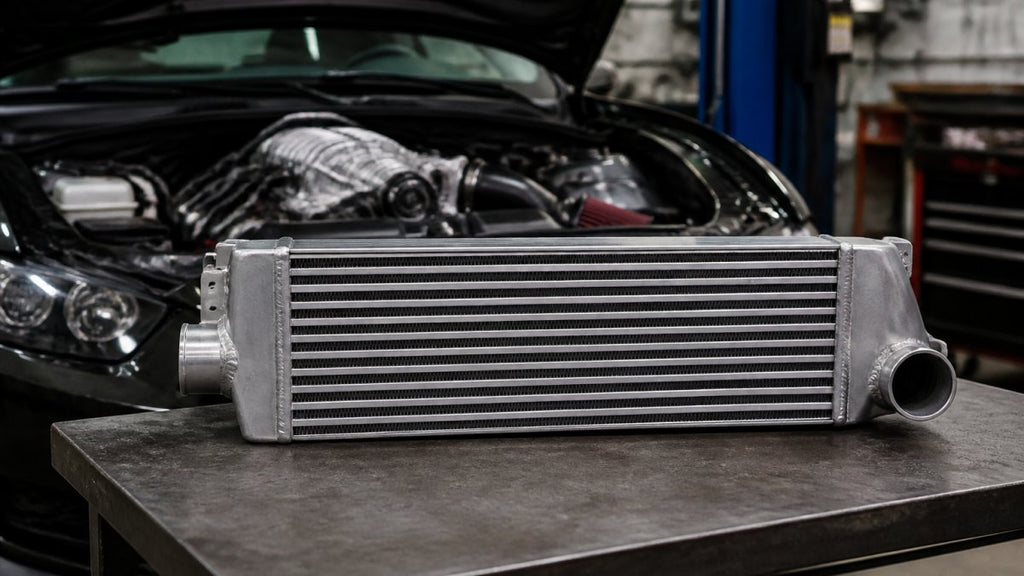
The intercooler, if your system includes one, needs annual cleaning. Debris accumulates on the fins over time, reducing cooling efficiency. A clogged intercooler means higher intake temperatures, which reduces power and increases detonation risk.
Bearing wear is the long-term concern. The supercharger's rotors spin on precision bearings that experience wear over time, especially if the unit runs hot or oil changes are neglected. Early signs include increased noise, slight vibration, or a whining sound that changes pitch with engine speed.
Modern positive displacement superchargers, including those from VT Superchargers, are engineered for durability. The 24-month warranty backing VT's kits reflects confidence in long-term reliability. Thousands of vehicles have run positive displacement superchargers for 100,000 miles or more without major issues, provided they receive proper maintenance and supporting systems are upgraded appropriately.
Heat Management and Tuning Considerations
Heat is the enemy of forced induction. Compressed air is hot air, and that heat reduces the density of the air entering the engine. Less dense air means fewer oxygen molecules, reducing the power benefit of forced induction.
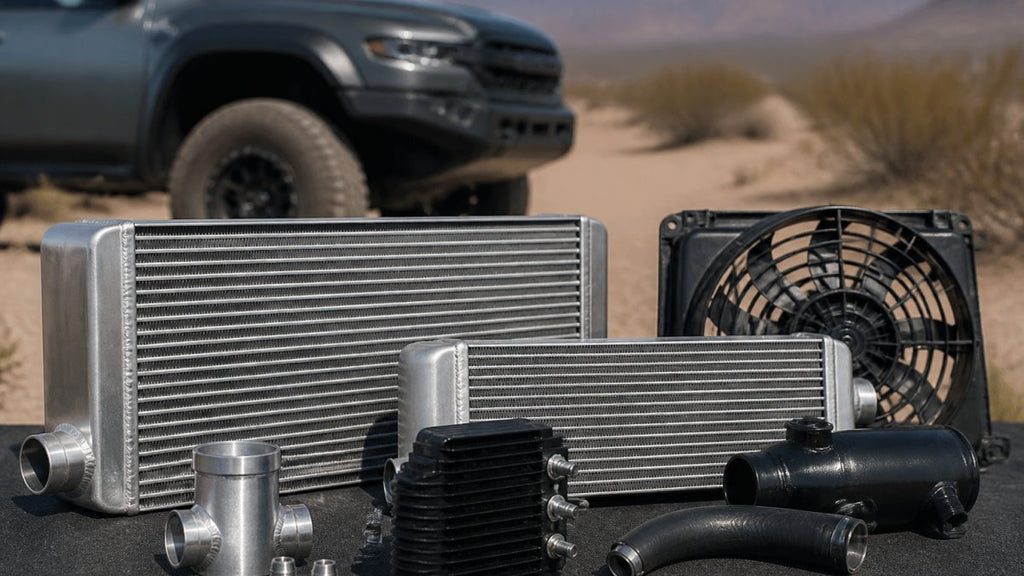
An intercooler solves this problem. An intercooler is a heat exchanger that sits between the supercharger discharge and the engine intake. Compressed hot air passes through the intercooler, where it transfers heat to surrounding air or coolant. The cooled, denser air then enters the engine, delivering more oxygen and more power. The temperature drop can be 30-50 degrees Fahrenheit depending on ambient conditions and intercooler design.
Most positive displacement supercharger systems benefit from an intercooler, especially if you're running boost levels above 12 PSI or driving in hot climates. Without intercooling, heat soak becomes a real problem. After aggressive driving or sustained high-speed cruising, intake air temperature climbs, reducing power and increasing engine knock risk.
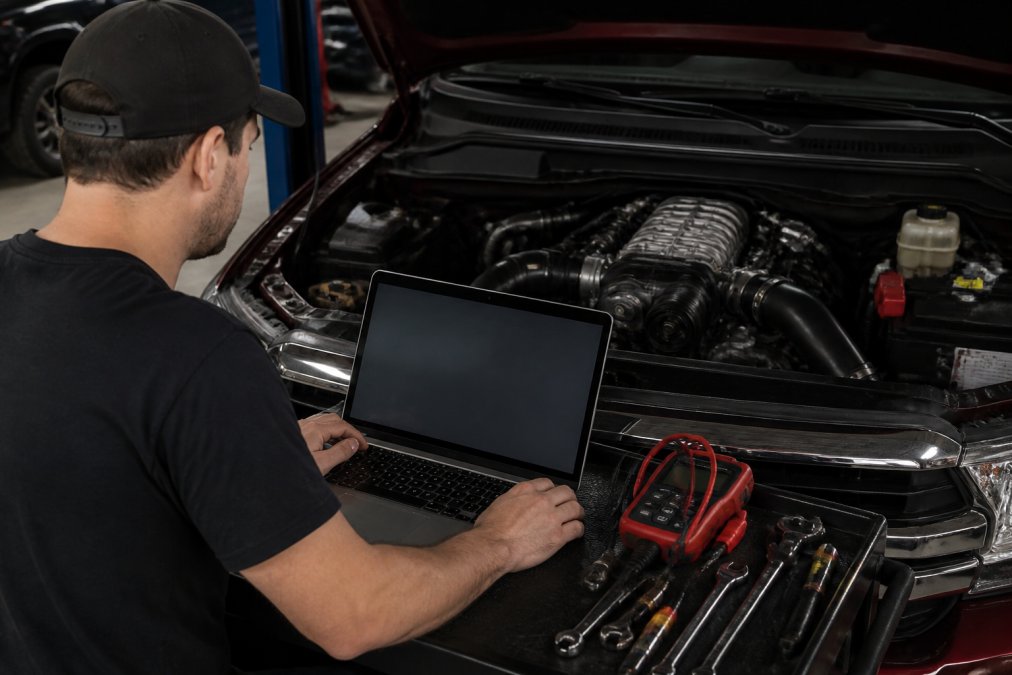
Fuel system tuning is equally critical. More air requires more fuel to maintain the proper air-fuel ratio. Stock fuel injectors and engine computers aren't calibrated for the increased airflow from a supercharger. A professional tune adjusts the fuel map to deliver the correct fuel quantity at each boost level and engine speed.
Boost level selection depends on your engine's capabilities and supporting modifications. A stock engine with factory internals typically handles 10-12 PSI safely. Moderate upgrades like quality fuel, premium octane, and professional tune might support 15-18 PSI. Aggressive builds with forged pistons, stronger connecting rods, and upgraded fuel systems can handle 20+ PSI. Start conservative, verify reliability over time, then increase boost if you want more power.
Key Takeaway
The difference between a reliable positive displacement supercharger installation and a problematic one comes down to supporting modifications. Fuel system upgrades, intercooling, professional tuning, and proper maintenance aren't optional extras. They're essential components of a successful build.
Conclusion
Positive displacement superchargers deliver immediate, consistent boost pressure that transforms how a vehicle responds and performs across the entire RPM range. The mechanical drive system provides low-end torque and throttle response that no other forced induction method matches, making them ideal for daily drivers, off-road vehicles, and trucks where real-world drivability matters.
VT Superchargers' bolt-on kits, engineered for precise OEM-style fitment across Dodge, Ford, Jeep, Mazda, Nissan, Suzuki, and Toyota platforms, deliver these benefits without requiring extensive engine modifications. The Mazda 6 2.0 Twin Screw Supercharger Kit and Nissan Titan/Armada 5.6L V8 Twin Screw Supercharger Kit exemplify this approach, offering 40-70% power increases with straightforward installation and backed by a 24-month warranty. Invest in proper intercooling and fuel system upgrades, and commit to regular maintenance. Get started with VT Superchargers and experience how forced induction transforms your vehicle's real-world performance.
Frequently Asked Questions
What does a positive displacement supercharger do?
A positive displacement supercharger compresses air and forces it into the engine's intake manifold using rotating lobes or screws. This increases volumetric efficiency and delivers consistent boost pressure across the entire RPM range. The result is more oxygen available for combustion, which means more horsepower and torque, especially at lower RPMs where you need it most for acceleration and responsiveness.
How do positive displacement superchargers compare to centrifugal superchargers?
Positive displacement superchargers provide instant boost and strong low-end torque because they mechanically compress air at any engine speed. Centrifugal superchargers rely on engine speed to build boost, so they deliver less power at lower RPMs and are more efficient at high RPM. For street driving and off-road applications, positive displacement systems offer better drivability and more usable power across the power band.
Will a positive displacement supercharger void my factory warranty?
Adding a supercharger may affect your manufacturer's powertrain warranty, depending on your vehicle and dealer. VT Superchargers kits are engineered for OEM-style fitment and include a 24-month warranty covering the supercharger system itself. We recommend discussing the installation with your dealer beforehand and keeping detailed service records. Many owners find the performance gains and warranty protection worth the trade-off.
What kind of maintenance do positive displacement superchargers require?
Positive displacement superchargers need regular oil changes and belt inspections, as the system relies on a serpentine belt driven by the engine. Check your supercharger oil level monthly and follow the manufacturer's maintenance schedule. Intercooler cleaning and fuel system tuning may also be necessary to handle increased boost pressure. Proper maintenance ensures reliability and extends the life of your supercharger system.
This article was written using GrandRanker
Related post
09
Oct
RECENT POSTS