Supercharger Benefits and Risks Explained for 2026
Table of Contents
- Supercharger Benefits and Risks: What Changes Under Your Hood
- The Real Gains: How Much Horsepower Do Superchargers Add
- Where Superchargers Shine: Torque, Throttle Response, and Daily Driving
- The Risks of Supercharging: Parasitic Loss, Heat, and Engine Stress
- Supercharger vs. Turbocharger: Reliability and Power Delivery Compared
- The Supercharger Maintenance Schedule You Need to Know
- Warranty, Emissions, and Legal Compliance for Supercharged Vehicles
- Should You Supercharge Your Engine? The Bottom Line
- Frequently Asked Questions
Last Updated: September 5, 2026
Supercharger Benefits and Risks: What Changes Under Your Hood
The automotive supercharger market is projected to grow from USD 9.91 billion in 2026 to USD 15.71 billion by 2035, a 5.25% compound annual growth rate according to Market Research Future's 2026 automotive supercharger market analysis. That growth reflects a simple reality: drivers want more power without swapping engines. Understanding the supercharger benefits and risks before you buy separates a smart upgrade from an expensive mistake. At VT Superchargers, we engineer bolt-on kits for Dodge, Ford, Jeep, Mazda, Nissan, Suzuki, and Toyota platforms.
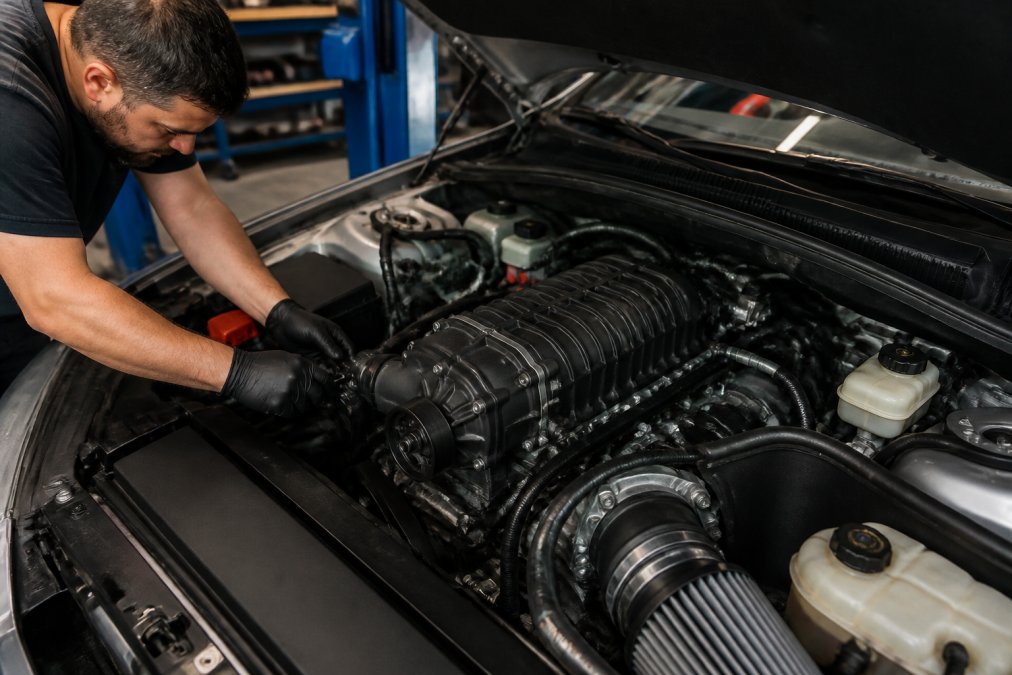
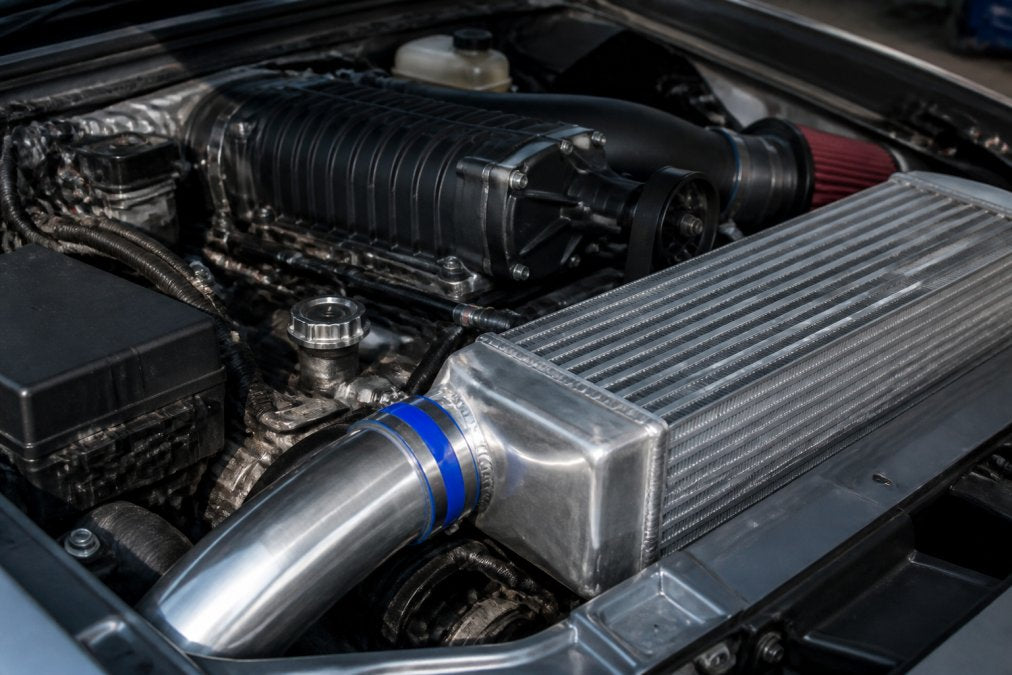
A supercharger is a mechanically driven air pump that forces more oxygen into your internal combustion engine, increasing air density and combustion efficiency. Properly designed systems can boost engine output by 50-85% or more, as documented by ProCharger's 2024 performance gain benchmarks. The tradeoff is real: parasitic loss, heat, and added engine stress. Below, we'll break down exactly what changes under your hood, what it costs to maintain, and whether the supercharger benefits and risks balance out for your driving style.
How a Supercharger Alters Your Engine's Air Intake
Your engine is an air pump. More air plus more fuel equals more power, but only if you control the mixture. A supercharger is driven directly by the crankshaft via a belt, so boost builds instantly with RPM rather than waiting for exhaust gas to spool a turbine. This eliminates turbo lag entirely.
The intake cycle changes dramatically. Atmospheric pressure is roughly 14.7 psi at sea level; a supercharger running 8-10 psi of boost nearly doubles the air density entering the cylinders. That denser charge allows more fuel to burn per cycle, raising volumetric efficiency and torque across the RPM range. Research published in MDPI's Energies Journal review of supercharged engine performance confirms that supercharging can lead to cleaner exhaust, fewer gearshifts, and improved fuel consumption in specific engine configurations.
The Real Gains: How Much Horsepower Do Superchargers Add
The short answer: most bolt-on kits deliver 40-70% more horsepower over stock. Our twin-screw kit for the Nissan Titan and Armada 5.6L V8 adds 50-70% horsepower and torque over the stock VK56VD. The Toyota Tundra 5.7L 3UR-FE kit produces 40-60% more power with no cutting or wiring modifications.

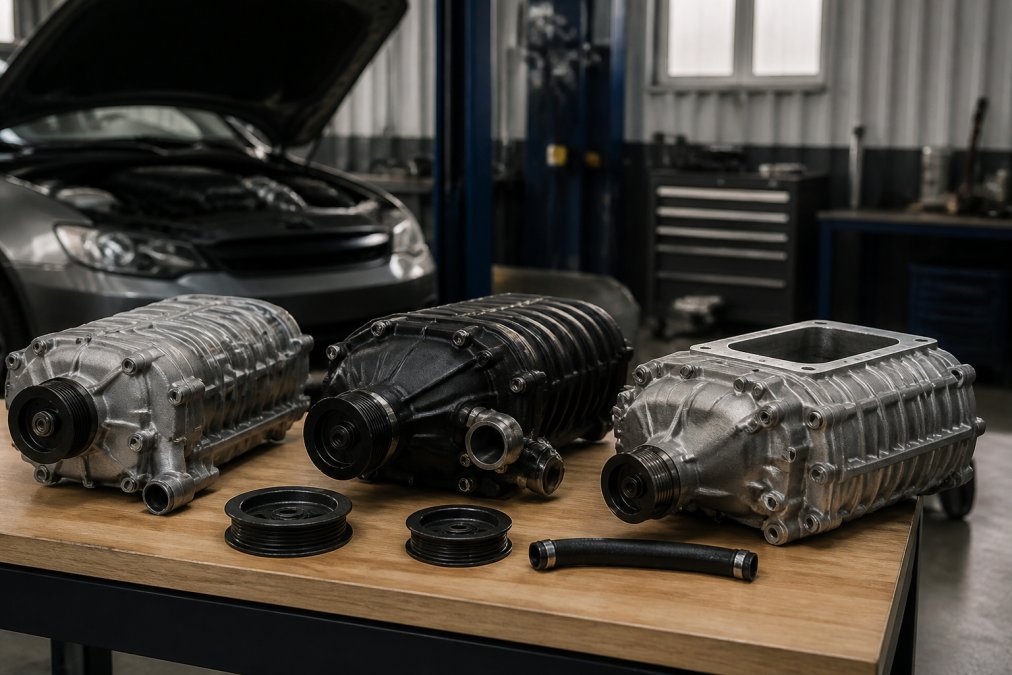
Those numbers depend on several variables. Engine displacement, compression ratio, fuel octane, and whether the kit includes an intercooler all shift the final output. A centrifugal supercharger favors high-RPM airflow, while Roots-type and twin-screw designs build boost earlier for stronger low-end response. Strategic Market Research's 2026 analysis of supercharger technology trends notes that centrifugal systems are increasingly favored for high-RPM airflow delivery while maintaining lower packaging weight.
What most guides miss: the advertised gain is peak horsepower, not average power. A supercharger that adds 150 hp at redline might only add 40 hp at 2,500 RPM. For daily driving and towing, the area under the torque curve matters more than the dyno sheet's top number.
Where Superchargers Shine: Torque, Throttle Response, and Daily Driving
Superchargers excel in situations where instant throttle response and low-end torque matter. Off-road vehicles with oversized tires often hunt for gears on highways because they've lost effective torque. A supercharger restores that pulling power, and properly engineered systems can be driven harder and longer with reduced risk of heat soak, providing specific benefits for towing and heavy-load work.
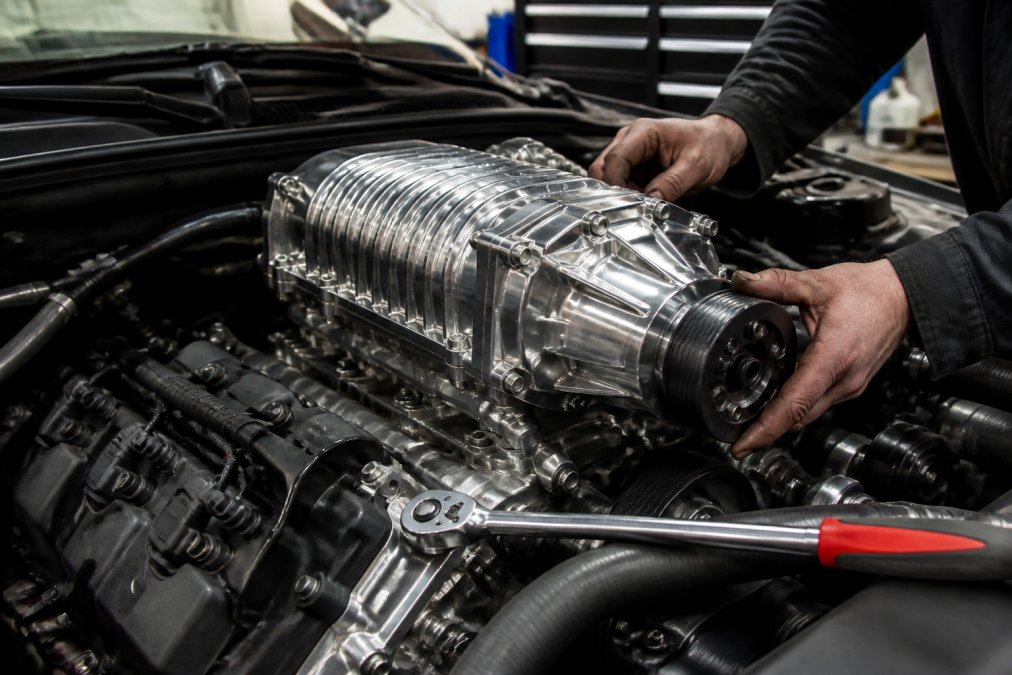
The driving experience changes immediately. There's no waiting for boost to build, no surge when the turbine finally spools. Power delivery is linear and predictable, which makes the vehicle easier to modulate off-road or when towing a trailer. Research from ResearchGate's performance analysis of supercharged engines indicates that supercharging allows for lower volumetric displacement, reducing frictional and thermal losses within the engine.
For daily drivers, the benefit is fewer downshifts. Merging onto highways, climbing grades, or passing at speed requires less throttle input because the torque curve is fatter.
The Risks of Supercharging: Parasitic Loss, Heat, and Engine Stress
Superchargers have a fundamental efficiency disadvantage: they draw power directly from the crankshaft. This parasitic loss typically consumes 10-20% of engine output just to spin, depending on design and boost level. A 400 hp engine might lose 40-80 hp to the blower before the remaining power reaches the wheels. That is the price of instant response.
Heat is the second concern. Compressing air raises its temperature, which reduces density and increases the risk of detonation. Without proper thermal management, sustained high-RPM operation can push cylinder temperatures past safe limits. An intercooler or charge cooler becomes essential at higher boost levels. Components such as belts also require regular inspection to ensure optimal performance, as HotCars' 2026 technical analysis of supercharger maintenance notes.
What Actually Happens to Your Pistons, Rods, and Bearings
Engine stress is the third factor. Forcing more air and fuel through the same rotating assembly increases cylinder pressure, bearing load, and heat rejection requirements. Here is what breaks and why:
Pistons and ring lands. Under boost, cylinder pressures can exceed 1,200 psi during peak combustion, versus roughly 800-900 psi naturally aspirated. The extra pressure side-loads the ring lands. Cast pistons, common in stock engines, are brittle under this stress; detonation, even a single episode, can crack ring lands within seconds. Forged pistons, which are ductile, are the standard upgrade for sustained boost above 8-10 psi. A set for a V8 costs $700-$1,200 plus installation labor.
Connecting rods. Under boost, rods experience higher compressive loads on the power stroke and higher tensile loads on the exhaust stroke. Stock powdered-metal rods in many modern engines can handle moderate boost, up to about 500-550 hp in a V8, but they bend or snap beyond that. Forged or billet rods are rated for 800+ hp and cost $800-$1,500 per set. A broken rod at speed can punch through the block, totaling the engine.
Main and rod bearings. Higher cylinder pressure translates directly to higher bearing loads. Under sustained boost, oil temperatures rise, thinning the oil film and increasing metal-to-metal contact risk. Upgrading to a high-volume oil pump and a larger oil cooler is a common mitigation. Bearing failure sounds like a rhythmic knock and, if ignored, leads to a seized crankshaft.
Cooling system capacity. A supercharged engine rejects significantly more heat to the coolant. The stock radiator and water pump are sized for naturally aspirated output. At 50% more power, the cooling system must move 50% more heat. Many owners find a larger radiator, higher-flow water pump, and auxiliary oil cooler necessary for sustained highway or towing use. Overheating degrades the oil, accelerates bearing wear, and increases detonation risk.
The Stock Engine's Real Safety Margin
A stock engine can typically handle moderate boost, but the margin of safety shrinks with mileage and poor maintenance. A low-mileage engine with clean oil and fresh coolant has the best chance; a 100,000-mile engine with carbon buildup, worn rings, or marginal cooling is a gamble. Compression and leak-down testing before installation are the cheapest insurance.
Watch Out
Skipping an intercooler on a high-boost application risks detonation, which can destroy pistons and ring lands within minutes of sustained load. If your kit doesn't include one, budget for an aftermarket charge cooler before installation.
Why Kit Quality Determines Survival
The key is choosing a kit engineered for your specific engine, not a universal unit. A well-designed kit includes proper fuel delivery upgrades, ignition timing adjustments, and thermal management. A universal kit relying on a single tune for multiple platforms leaves too much margin for error.
The Altitude Factor
Altitude is often overlooked. At sea level, atmospheric pressure is 14.7 psi; at 5,000 feet, it drops to about 12.2 psi. A supercharger running 8 psi of boost at sea level produces 22.7 psi absolute manifold pressure; at 5,000 feet, only 20.2 psi, a 10% drop in air density. This means less power, but the supercharger spins at the same speed and generates the same heat with less air to cool the combustion chamber.
The Real Risk Profile
A properly engineered, well-tuned supercharger kit on a healthy engine, maintained on schedule, will typically last 100,000+ miles without internal engine failure. The failures you read about on forums almost always trace back to detonation from a poor tune, inadequate fuel delivery, or ignoring maintenance intervals.
Supercharger vs. Turbocharger: Reliability and Power Delivery Compared
| Feature | Supercharger | Turbocharger |
|---|---|---|
| Power source | Crankshaft belt drive | Exhaust gas flow |
| Throttle response | Instant | Lag until spool |
| Low-end torque | Excellent | Limited before boost |
| Heat generation | Moderate | High under sustained load |
| Installation complexity | Bolt-on friendly | Exhaust and oil line work |
| Efficiency | Lower (parasitic loss) | Higher (waste energy recovery) |
| Maintenance | Belt and fluid checks | Oil lines, seals, wastegate |
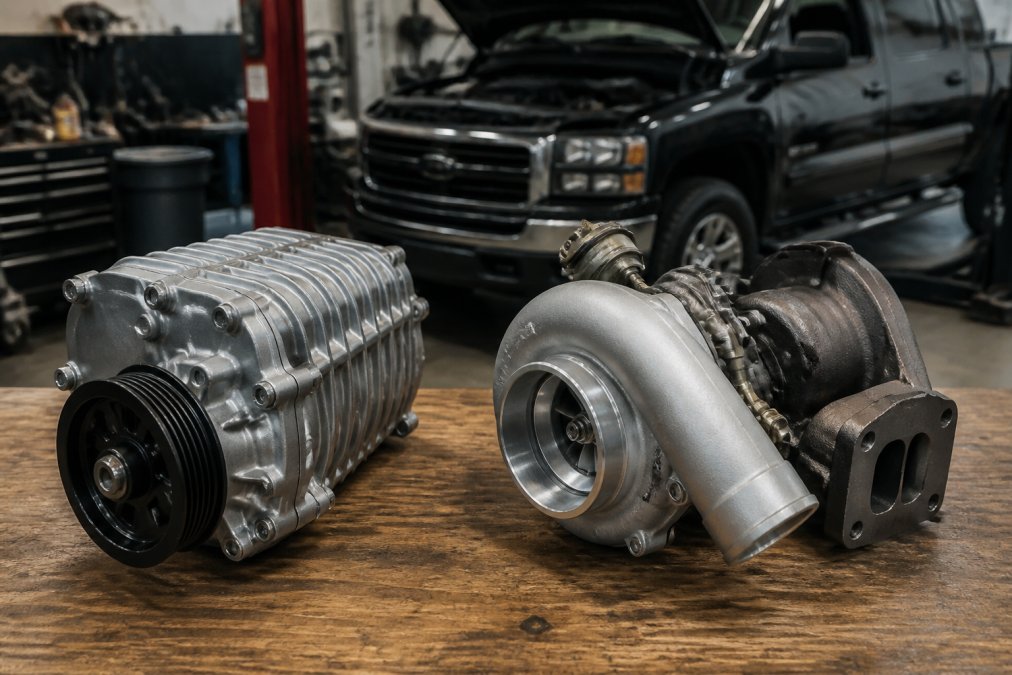
Turbochargers convert exhaust gas energy into boost, making them more efficient at extracting power from the same fuel. They also generate significant heat in the engine bay, requiring careful oil cooling and heat shielding.
Superchargers, by contrast, offer immediate response and predictable power delivery. There's no spooling delay, no sudden surge when boost arrives. For precise throttle control at low speeds, like rock crawling or towing in traffic, the supercharger's linear delivery is a genuine advantage.
The Supercharger Maintenance Schedule You Need to Know
The supercharger rebuild service market is valued at USD 0.24 billion in 2026 and is expected to grow at a 7.2% CAGR through 2035, according to Business Research Insights' supercharger rebuild service market report. That growth signals a clear trend: owners are keeping their superchargers running longer rather than replacing them. But what does that commitment actually cost over five years of ownership? The answer differs sharply between a daily driver and a track-only toy.
Realistic Service Intervals and Parts Costs
Here is the schedule that most practitioners find holds up in real-world use, along with the typical parts pricing you can expect at a US independent shop or dealer:
- Belt inspection (every 5,000 miles): Check for cracking, glazing, or stretching. A failed belt means zero boost and potential engine damage if pieces get ingested. A replacement Gates or Dayco belt runs $40-$80. Labor is minimal if you DIY, but a shop will charge 0.5-1 hour.
- Fluid changes (every 30,000-50,000 miles): Roots and twin-screw units have internal gears that require specific lubricant, such as Eaton or Lysholm spec oil. A quart of supercharger fluid costs $25-$50, and the service is a 1-2 hour job. Contaminated fluid accelerates gear wear, leading to premature whine and bearing failure.
- Boost leak testing (annually): Pressurize the intake tract to find leaks in hoses, couplers, or the intercooler. A 2 psi leak can cost 20-30 horsepower. A smoke test or pressure test at a shop runs $100-$150. Catching a leak early prevents lean conditions that melt pistons.
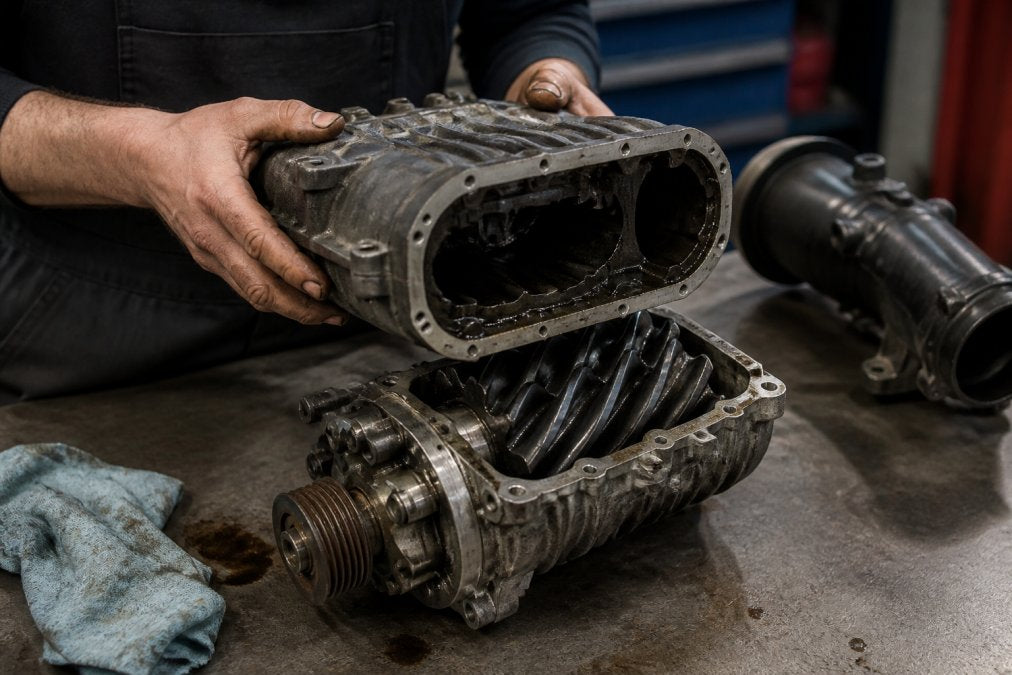
- Rebuild service (every 75,000-100,000 miles): Bearings and seals wear out. Rebuilding costs a fraction of replacement and restores original performance. A typical rebuild kit for a twin-screw unit costs $300-$600, and a full professional rebuild with labor runs $1,200-$2,500 depending on the unit. Compare that to a new supercharger at $3,000-$6,000.
- Spark plug changes (more frequently than stock): Higher cylinder pressure requires colder plugs, and they wear faster under boost. Plan on replacing plugs every 20,000-30,000 miles instead of the factory 100,000-mile interval. A set of iridium plugs costs $60-$120, plus 1-2 hours of labor.
The Real Cost of Ownership: Daily Driver vs. Track Car
Over 60,000 miles of mixed driving, a daily-driven supercharged truck will need roughly two fluid changes, one belt replacement, one boost leak test, and one set of spark plugs, about $600-$1,000 in parts and labor beyond normal maintenance.
A track car or heavy tow rig is different. Sustained high-RPM operation accelerates belt wear, fluid breakdown, and bearing fatigue. Expect to halve every interval: belts at 2,500 miles, fluid at 15,000-20,000 miles, and a rebuild at 50,000-60,000 miles. Over the same 60,000 miles, a track car owner will spend $2,500-$4,500 on supercharger-specific maintenance.
Pro Tip
Log your boost pressure and intake air temperatures during a few full-throttle pulls after installation. If intake temps climb more than 40-50 degrees Fahrenheit above ambient at sustained boost, your intercooler is undersized. Fixing that now is cheaper than a rebuild later.
Why Rebuilds Are Inevitable, Not Optional
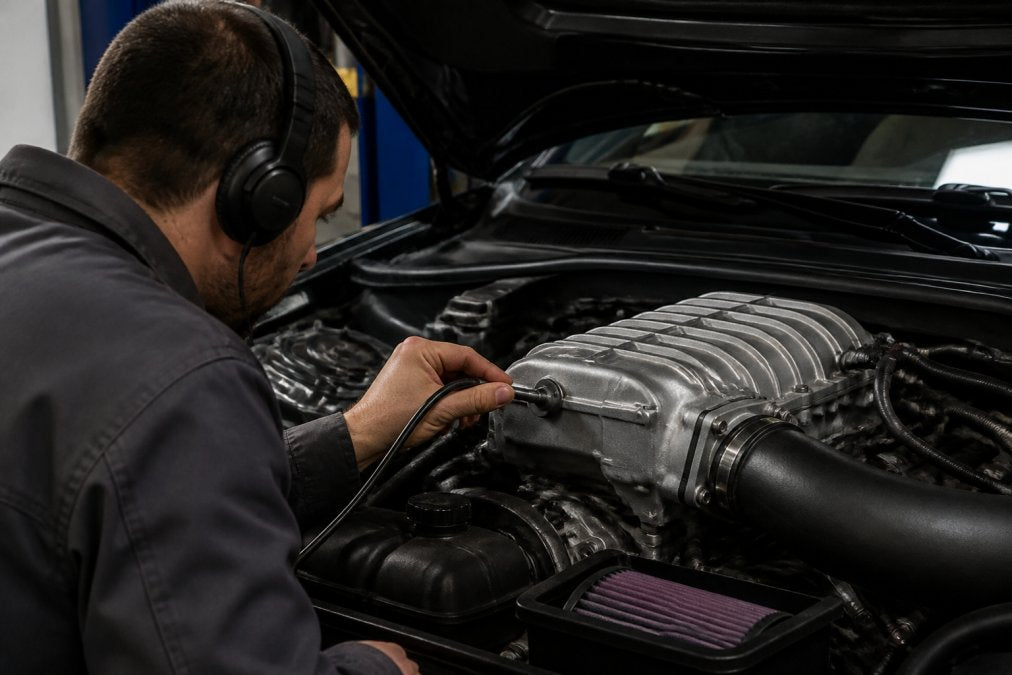
The 7.2% CAGR in the rebuild market reflects a simple reality: the internal gears and bearings in a Roots or twin-screw unit spin at up to 15,000 RPM under load. Even with proper fluid, they wear. A whining supercharger at idle or a noticeable drop in boost pressure are the first signs. Ignoring them leads to metal contamination and eventual seizure.
For centrifugal units, the gearbox and impeller bearings are the wear items, and the belt drive sees higher loads at high RPM. Centrifugal units often have longer intervals between rebuilds, 100,000-150,000 miles, but the rebuild cost is similar because of the precision bearings involved.
Budgeting for the Long Haul
A common pattern among owners who keep their supercharged vehicles past 100,000 miles is setting aside $0.02-$0.04 per mile driven for supercharger-specific maintenance. For a daily driver logging 12,000 miles a year, that is $240-$480 annually; for a weekend toy logging 5,000 miles, $100-$200.
A supercharger is not a fit-and-forget modification. It is a mechanical system with predictable wear and defined service intervals.
Warranty, Emissions, and Legal Compliance for Supercharged Vehicles
Adding forced induction raises two compliance questions: your factory warranty and emissions legality. Aftermarket kits that require calibration changes can void the factory powertrain warranty if the dealer can prove the modification caused a failure. The Magnuson-Moss Warranty Act protects consumers from blanket denials, but the burden falls on you to show the supercharger didn't cause the specific issue.
Emissions compliance is stricter. In many states, a supercharged vehicle must pass an OBD-II readiness check and visual inspection. Kits with CARB Executive Orders are legal in California and states that adopt its standards; kits without CARB approval are off-road use only in those jurisdictions. Check your state's regulations before purchasing, because removing a supercharger to pass inspection defeats the purpose.
Insurance is another consideration. Modifications that increase horsepower can affect your coverage if you don't disclose them. Some carriers offer agreed-value policies for modified vehicles. A supercharger that adds 200 horsepower is a material change to the vehicle's risk profile; failing to report it could result in a denied claim after an accident.
Should You Supercharge Your Engine? The Bottom Line
The supercharger benefits and risks come down to your use case. If you tow, off-road, or daily drive a heavy vehicle and want immediate, predictable power, a supercharger is the right choice. If you're chasing peak horsepower at the track and care about efficiency above all, a turbocharger might serve you better.
The market data supports growing interest. The overall supercharger market is expanding at a 5.25% CAGR, while the rebuild and maintenance segment is growing faster at 7.2%, suggesting owners are committing long-term.
For most drivers, the deciding factor is kit quality. A well-designed bolt-on system with OEM-style fitment, proper thermal management, and realistic power targets minimizes risks while maximizing benefits. VT Superchargers builds twin-screw kits for specific platforms including the Toyota Tundra 5.7L at $6,900 and the Nissan Titan and Armada 5.6L at $7,600, each engineered for clean installation without cutting or welding. We back them with a 24-month warranty and financing options, because a supercharger should be a confidence-inspiring upgrade, not a gamble.

Key Takeaway
The supercharger benefits and risks balance favors supercharging when you need instant throttle response, low-end torque, and predictable power delivery. Choose a kit engineered for your specific engine, maintain it on schedule, and verify emissions compliance before you buy.
Choosing to supercharge your engine is a decision about how you want your vehicle to perform. If you need immediate torque for towing, precise throttle control off-road, or simply a more responsive daily driver, a properly engineered supercharger kit delivers those gains without the complexity of turbo plumbing. VT Superchargers offers bolt-on twin-screw kits with OEM-style fitment, a 24-month warranty, and financing options. Register with us and explore how much power your engine can safely deliver.
Frequently Asked Questions
Is adding a supercharger worth it for a daily driver?
For a daily driver, yes, if you want immediate throttle response and low-end torque without the lag of a turbo. A supercharger provides power right off idle, making city driving and highway merging feel effortless. The trade-offs are increased fuel consumption under boost and more heat generated in the engine bay. Modern kits with proper cooling support address most heat concerns. If you tow or run larger tires, the extra torque at low RPM is where a supercharger proves its worth.
How much HP will a supercharger add to my truck or SUV?
A bolt-on supercharger kit typically adds 40-70% more horsepower over stock, depending on the engine and kit design. For instance, VT Superchargers' kit for the Toyota Tundra 5.7L delivers 40-60% more power, while the Nissan Titan and Armada 5.6L twin-screw kit provides 50-70% more horsepower. This translates to roughly 150-250 horsepower on most V8 platforms, which is a substantial gain for daily driving and towing.
Does installing a supercharger void my vehicle's factory warranty?
Under the Magnuson-Moss Warranty Act, a dealer cannot void your entire factory warranty simply because you installed an aftermarket supercharger. However, they can deny coverage on specific components if they prove the supercharger caused the failure. Engine internals like pistons and rods are most at risk. The safer route is choosing a kit with a 24-month warranty, like VT Superchargers offers, which protects the supercharger system itself.
What does a supercharger maintenance schedule look like?
A supercharger maintenance schedule focuses on three areas: oil, belts, and coolant. Twin-screw and Roots-style superchargers require oil changes every 20,000-30,000 miles, depending on the manufacturer. Drive belts should be inspected every 6,000 miles for cracking or glazing. If your kit includes an intercooler, check coolant levels at each oil change. Centrifugal units have sealed oil reservoirs that last longer but still need periodic inspection.
This article was written using GrandRanker
Related post

RECENT POSTS