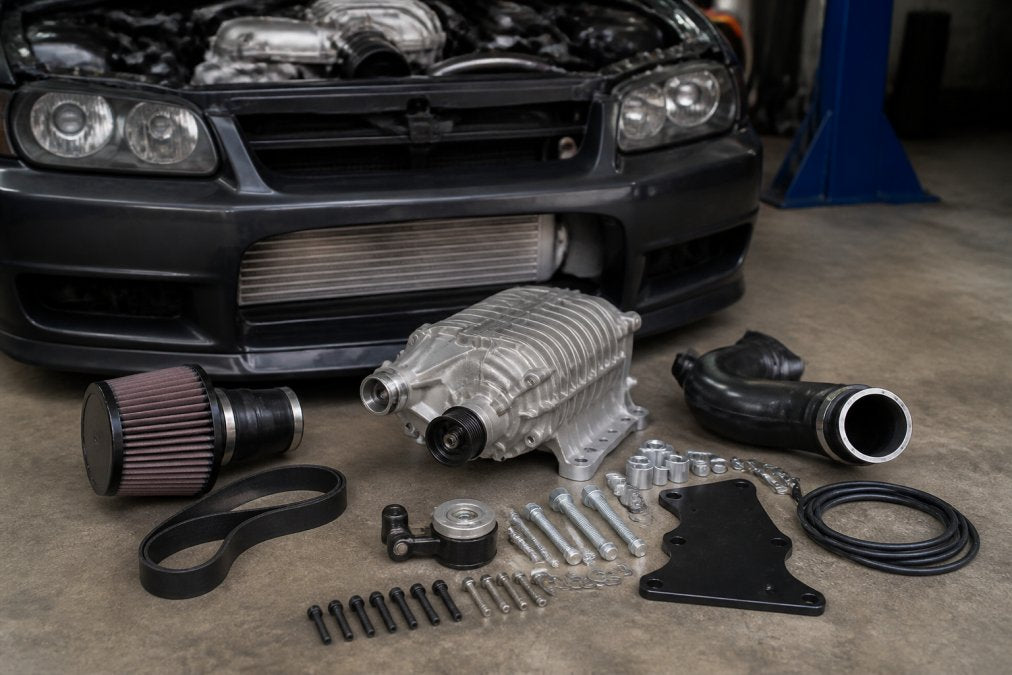
Top 10 Benefits of Installing a Supercharger in 2026
Table of Contents
- How Much Horsepower Do Superchargers Add?
- Benefit 1: Instant Throttle Response Without Turbo Lag
- Benefit 2: Massive Torque Gains for Towing and Off-Roading
- Benefit 3: More Power at High Altitude
- Benefit 4: Bolt-On Installation That Keeps Your Engine Stock
- Benefit 5: Better Acceleration for Daily Driving
- Supercharger vs Turbocharger Pros and Cons
- Understanding Bolt-On Supercharger Kit Installation Cost
- Frequently Asked Questions
Last Updated: September 4, 2026
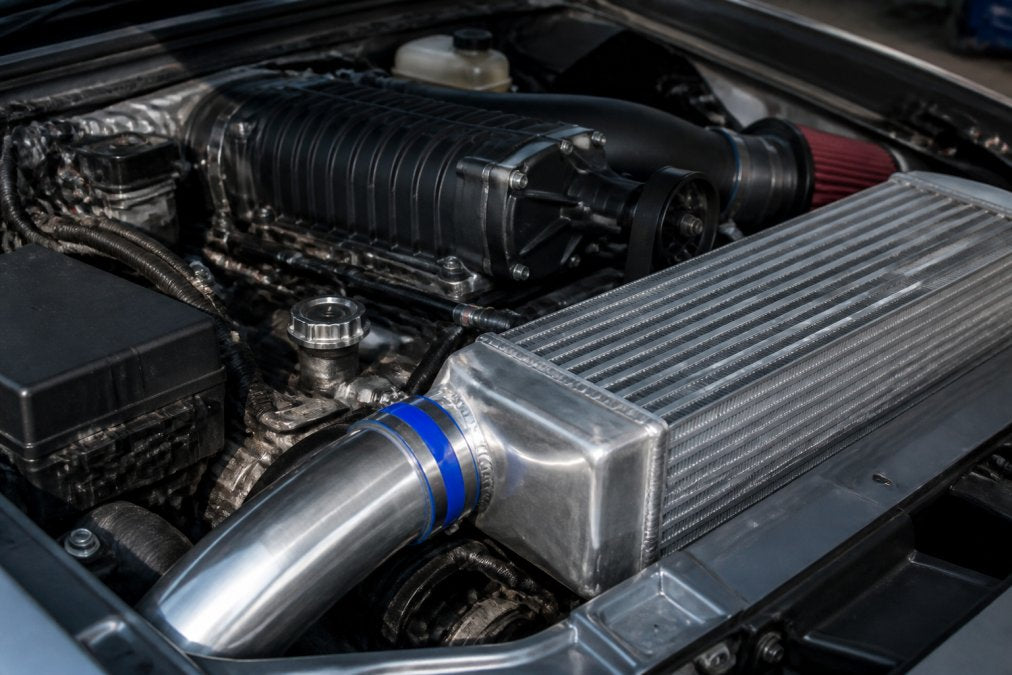
A supercharger can generate as much as 46 percent additional horsepower, according to HowStuffWorks' guide to forced induction systems, making it one of the most effective single modifications available. For drivers weighing the top 10 benefits of installing a supercharger, the decision usually comes down to where and how you drive. At VT Superchargers, we engineer bolt-on kits specifically to deliver this kind of power while keeping your engine otherwise stock. Below, we break down the real gains, the honest tradeoffs, and what installing a supercharger means for your daily driver, tow rig, or off-road build.
Quick Picks:
- Best for Towing: Nissan Titan/Armada kit, 50-70% torque increase
- Best for Off-Road: Jeep Pentastar kit, 40% horsepower at 7 psi
- Best Value: Toyota Tacoma 2.7L PnP kit, no standalone tuning required
How Much Horsepower Do Superchargers Add?
A correctly sized supercharger kit typically adds 40 to 60 percent more horsepower over stock, with some twin-screw designs reaching 50 to 70 percent depending on the engine platform. The exact number depends on your displacement, the boost pressure you run, and whether the kit includes an intercooler. Most VT Superchargers kits deliver these gains at just 7 psi of boost, which keeps internal stresses manageable.

The table below summarizes what you can expect across common platforms:
| Vehicle Platform | Horsepower Gain | Torque Gain | Boost Level |
|---|---|---|---|
| Toyota Tundra 5.7L V8 | +40-60% | +30-50% | 7 psi |
| Nissan Titan/Armada 5.6L V8 | +50-70% | +50-70% | 7 psi |
| Jeep Pentastar 3.6L V6 | +40% | +30% | 7 psi |
| Toyota Tacoma 2.7L | +50% | +40% | 7 psi |
That 46 percent figure aligns closely with what our mid-range kits produce, but a properly engineered bolt-on kit delivers that power reliably across the RPM range, not just at peak.

Benefit 1: Instant Throttle Response Without Turbo Lag
The most immediate difference you feel after installing a supercharger is the throttle response. Because a supercharger is driven directly by the crankshaft through a pulley system, boost pressure builds the moment you press the pedal. There is no waiting for exhaust gases to spool a turbine, which means no turbo lag.
This makes a supercharger feel like a larger-displacement engine rather than a forced induction setup, translating to confident merging and passing in traffic without downshifting to wait for boost.
Pro Tip
When test driving a supercharged vehicle, pay attention to part-throttle response around 2,000-3,000 RPM. This is where the difference between a roots or twin-screw unit and a centrifugal design becomes most noticeable.
Benefit 2: Massive Torque Gains for Towing and Off-Roading
Torque is what moves heavy loads, and this is where a supercharger shines over other power adders. Our Nissan Titan and Armada kit, for example, delivers a 50 to 70 percent torque increase, which dramatically improves towing capability and low-speed crawling.
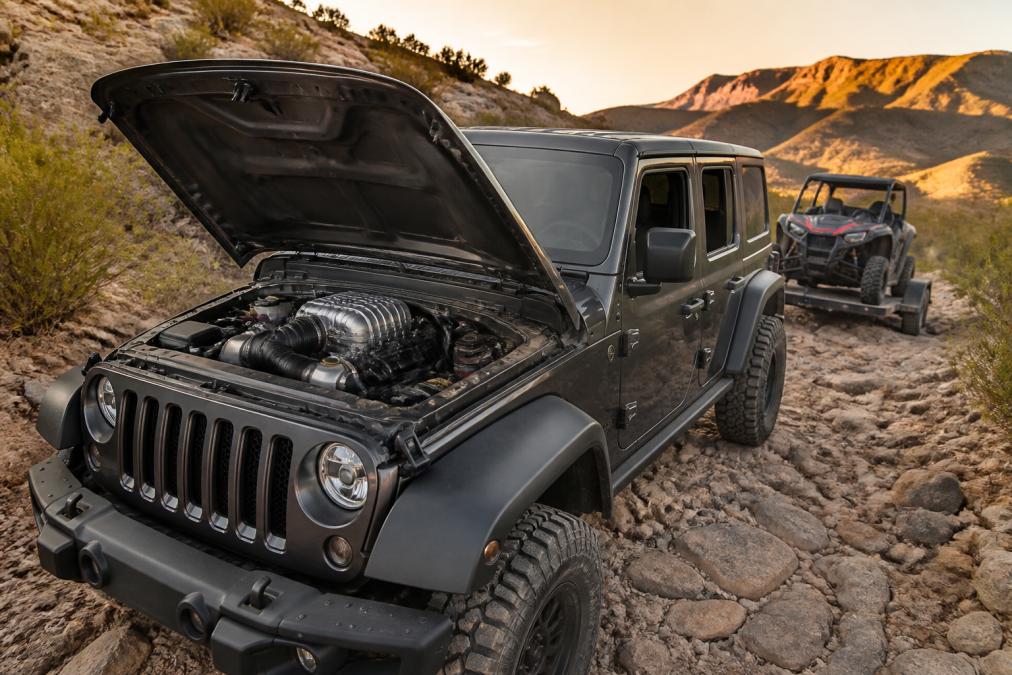
For off-roaders running larger tires, highway gear hunting is often a torque problem, not a gearing problem. Additional low-end torque lets the engine hold higher gears and pull smoothly over obstacles without constant downshifting. The torque curve of a positive displacement supercharger builds early and stays flat, suiting both trailer pulling and rock crawling.
Benefit 3: More Power at High Altitude
Forced induction systems recover power that naturally aspirated engines lose at elevation. Research from Market Research Future's automotive supercharger market analysis confirms that superchargers maintain a performance advantage over turbochargers above 1,500 meters because they do not depend on exhaust gas density.
At 5,000 feet, a naturally aspirated engine can lose roughly 15 to 20 percent of its sea-level output. A supercharged engine, by contrast, maintains near sea-level performance because the supercharger mechanically forces air into the combustion chamber regardless of ambient pressure. If you regularly drive mountain passes or live in the Mountain West, this benefit alone justifies the install.
Benefit 4: Bolt-On Installation That Keeps Your Engine Stock
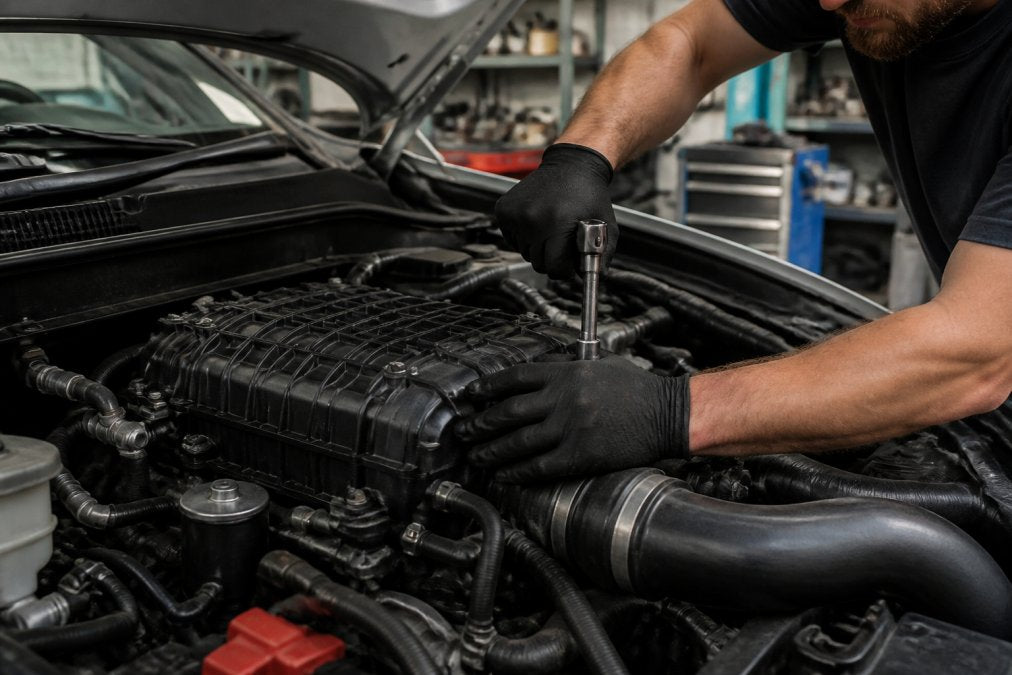
A common misconception is that adding forced induction requires rebuilding your engine. Quality bolt-on supercharger kits are designed to work with stock internals at their rated boost levels. The installation process uses OEM mounting points with no cutting, welding, or wire splicing required, which means your original components stay intact.
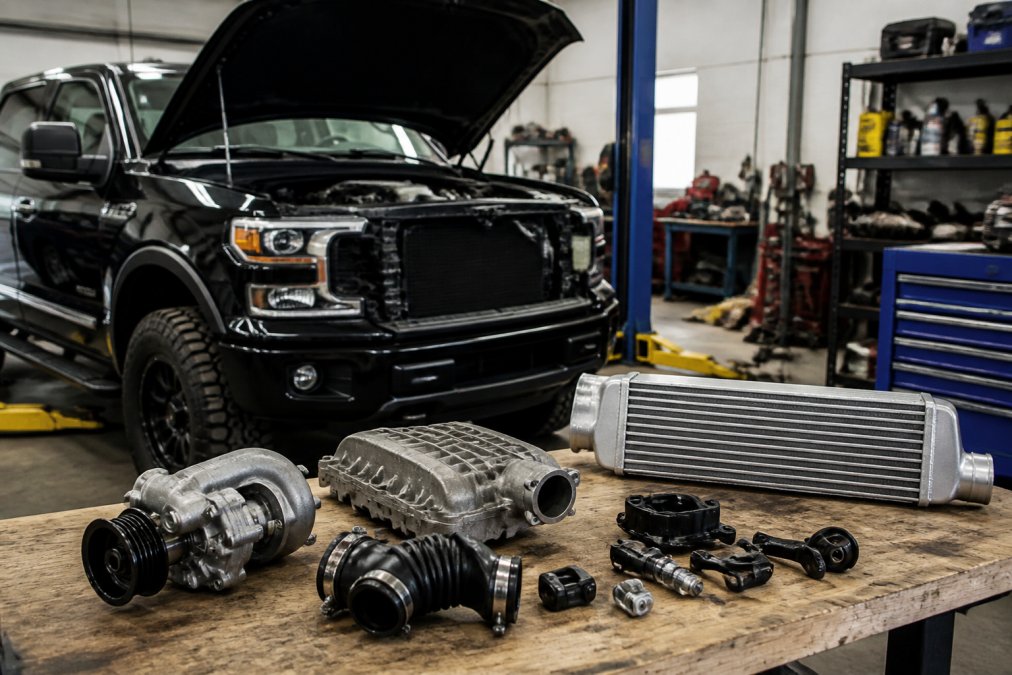
This keeps the modification reversible if you sell the vehicle and makes installation achievable for a competent DIY mechanic. Most VT Superchargers kits include the supercharger body, intake manifold, intercooler, coolant system, belts, pulleys, and all mounting hardware in one box.
Watch Out
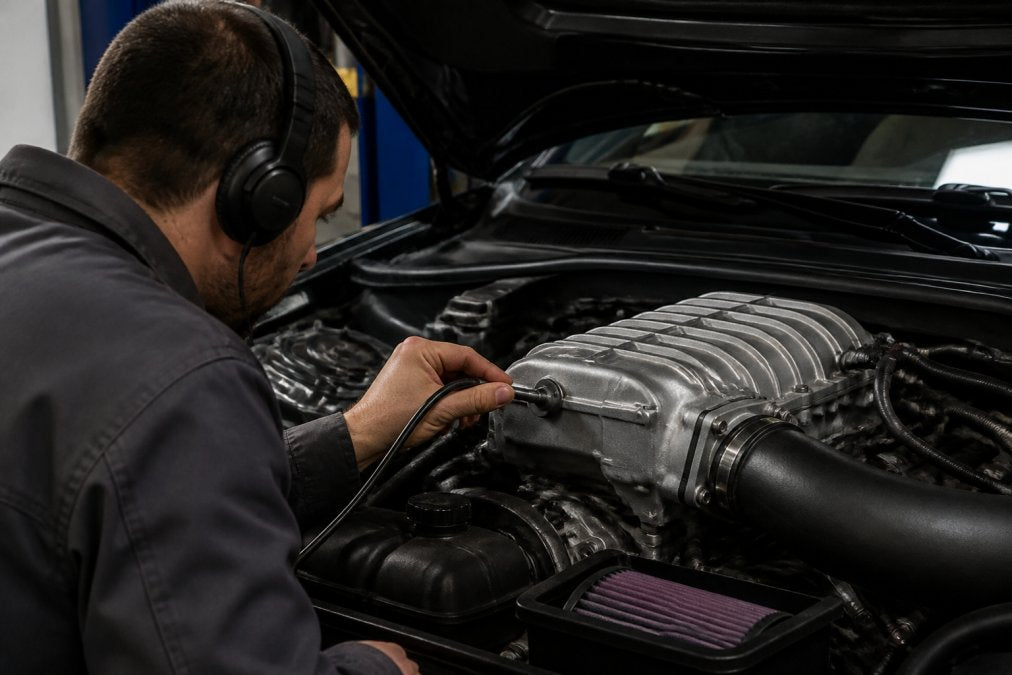
An ECU or engine tune is required after installation on most kits. Running boost without proper fuel and ignition calibration risks detonation and engine damage. This is not optional.
What "Stock Internals" Actually Means
Stock engine compatibility is a specific engineering claim with defined limits. Most modern engines, particularly those with aluminum blocks and forged or powdered-metal connecting rods, can safely handle 6 to 8 psi of boost from a well-designed kit without internal modification. The key variables are:
- Compression ratio: Engines with compression ratios above 10.5:1 are more knock-sensitive. A conservative tune and lower boost (6-7 psi) are essential. Engines in the 9.5:1 to 10.5:1 range are ideal candidates for 7-8 psi kits.
- Fuel quality: Premium fuel (91 octane or higher) is mandatory. The engine management system will pull timing if it detects knock, but relying on that safety net is a mistake. If you only have access to 87 octane, a supercharger is not a sensible upgrade.
- Cooling system condition: A stock cooling system in good condition handles the additional heat load of a supercharger at 7 psi. A marginal radiator or a failing water pump will become a problem quickly. Most installers recommend replacing the thermostat and water pump if they are near the end of their service life.
What Fails When Limits Are Exceeded
The most common failure point on a stock engine with too much boost is detonation, not the pistons or rods. Premature ignition creates shockwaves that can crack ring lands or bend connecting rods. This is why the tune matters more than the hardware, a conservative calibration at 7 psi is far safer than an aggressive tune at 9 psi.
A second failure point is the fuel system. Stock pumps and injectors are sized for naturally aspirated power, so at 7 psi most kits require upgraded injectors or a boost-referenced fuel pressure regulator. If a kit does not include these, factor their cost into your budget.
How to Verify Compatibility Before You Buy
A reputable kit manufacturer publishes the specific boost level, required fuel octane, and any supporting modifications needed. Before purchasing, confirm three things:
- The kit is application-specific to your exact engine code, not a "universal" unit.
- The included tune is calibrated for your vehicle's stock compression ratio and fuel system.
- The warranty covers engine damage caused by the kit when installed per instructions, not just defects in the supercharger itself.
Pro Tip
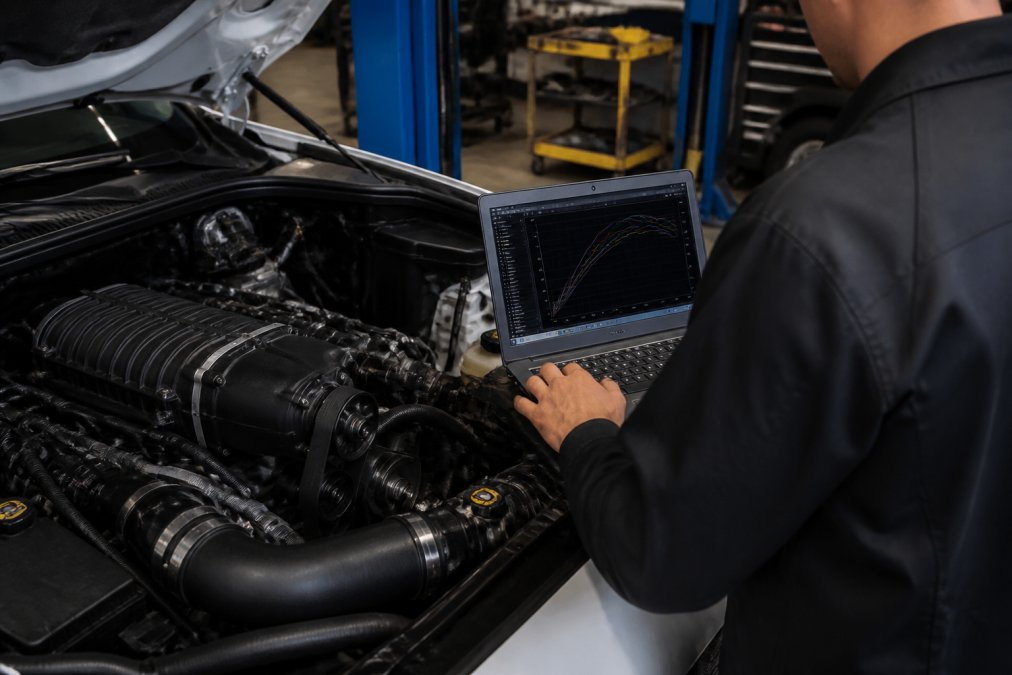
Ask the manufacturer for dyno charts showing both power output and air-fuel ratio across the RPM range. A safe tune holds air-fuel ratio between 11.5:1 and 12.2:1 under full boost. If they will not share that data, treat it as a red flag.
::: automotive aftermarket software.
The Reversibility Advantage
Because a bolt-on kit uses OEM mounting points and requires no machining, you can return the vehicle to stock in a weekend, preserving resale value and giving you an exit strategy. This is a meaningful advantage over a built engine or a turbo setup requiring exhaust modification, both far more invasive to reverse.
Benefit 5: Better Acceleration for Daily Driving
The 0-60 improvements are not just for the track. Stronger mid-range pull makes everyday driving more relaxed, as merging, overtaking, and maintaining speed up grades all require less throttle input.
This is the benefit most guides miss: a supercharged daily driver is less stressful to drive. The engine works less hard to achieve the same result, which many owners report makes the car feel more refined, not more aggressive.
Supercharger vs Turbocharger Pros and Cons
Choosing between a supercharger and a turbocharger comes down to power delivery characteristics rather than peak output. Here is the honest breakdown:
| Factor | Supercharger | Turbocharger |
|---|---|---|
| Throttle response | Instant | Delayed (lag) |
| Power delivery | Linear, predictable | Builds suddenly |
| Installation complexity | Bolt-on, no exhaust work | Requires exhaust modification |
| Heat management | Lower under-hood heat | Higher under-hood heat |
| Fuel efficiency | Slight decrease under boost | Slightly better highway economy |
| Low-end torque | Excellent | Limited until spool |
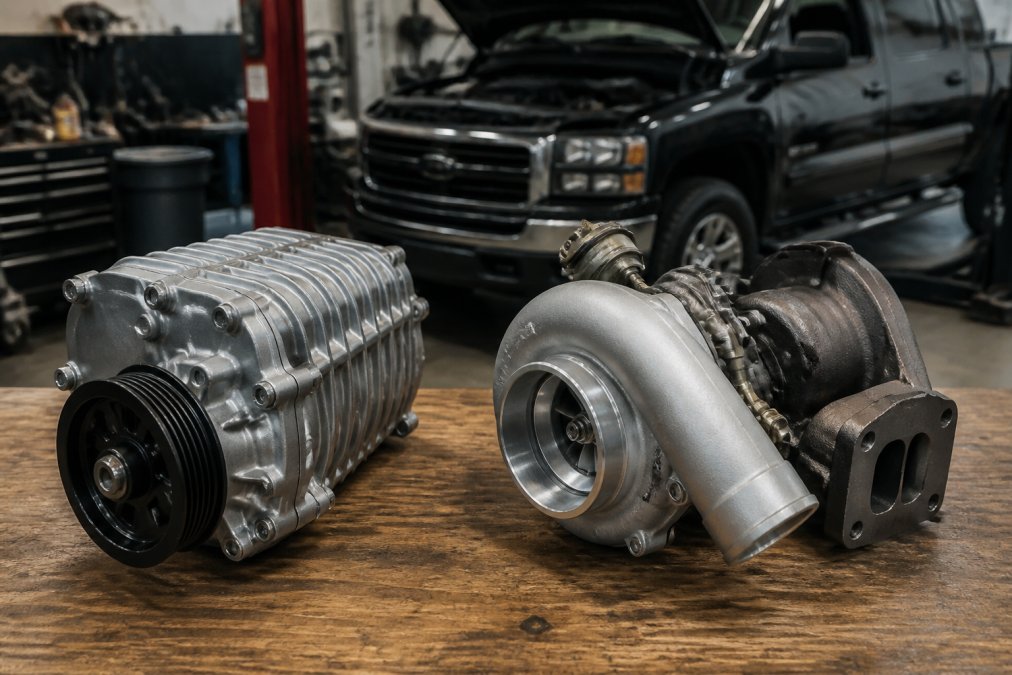
The main advantage of a turbocharger is potential peak efficiency, since it captures wasted exhaust energy. However, that comes with added plumbing, heat management challenges, and the inherent lag that many drivers find frustrating. For applications where immediate, predictable power matters, particularly towing and off-roading, a supercharger is the better choice. For a detailed comparison of the tradeoffs, Energy Solutions' analysis of charging and forced induction systems provides useful context on reliability and operational considerations.
Understanding Bolt-On Supercharger Kit Installation Cost
The upfront price is only the first number you need to know. Total cost of ownership over five years includes maintenance, fuel, and occasional repairs, and most guides stop at the sticker price. Here is the honest long-term picture.
Upfront Investment
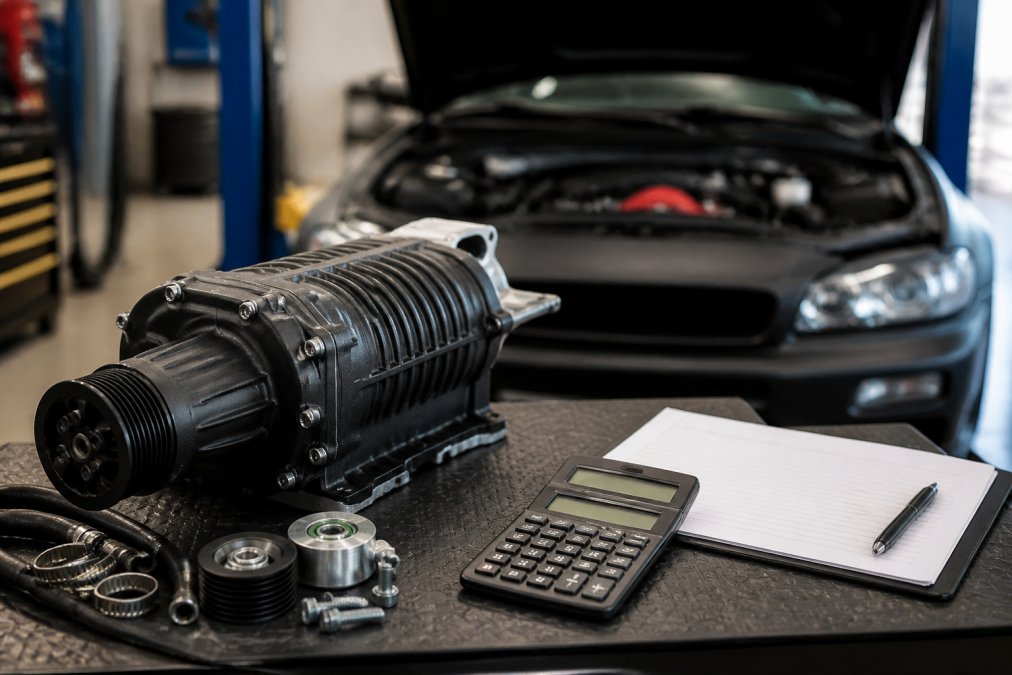
Bolt-on supercharger kits range from roughly $4,800 to $7,600 depending on the vehicle platform and the complexity of the system. For example, our Mazda 6 2.0L Skyactiv-G kit starts at $4,800, while the Nissan Titan and Armada twin-screw kit is $7,600. This price includes the supercharger head unit, intake manifold, intercooler, coolant system, belts, pulleys, brackets, and all necessary hardware.
Beyond parts, you are paying for engineering. A kit designed specifically for your engine ensures proper fitment, correct belt routing, and a calibration strategy that keeps the engine reliable. The cheapest kit is rarely the most economical once you account for fabrication work and tuning time.
:::takeaway Budget for the kit price plus an ECU tune. If you cannot do the install yourself, factor in 8-12 hours of shop labor. A $5,500 kit can easily become a $7,500 total investment with professional installation.
Maintenance and Long-Term Ownership Costs
This is the cost category most promotional content ignores. A supercharger adds moving parts under the hood, and those parts need attention.
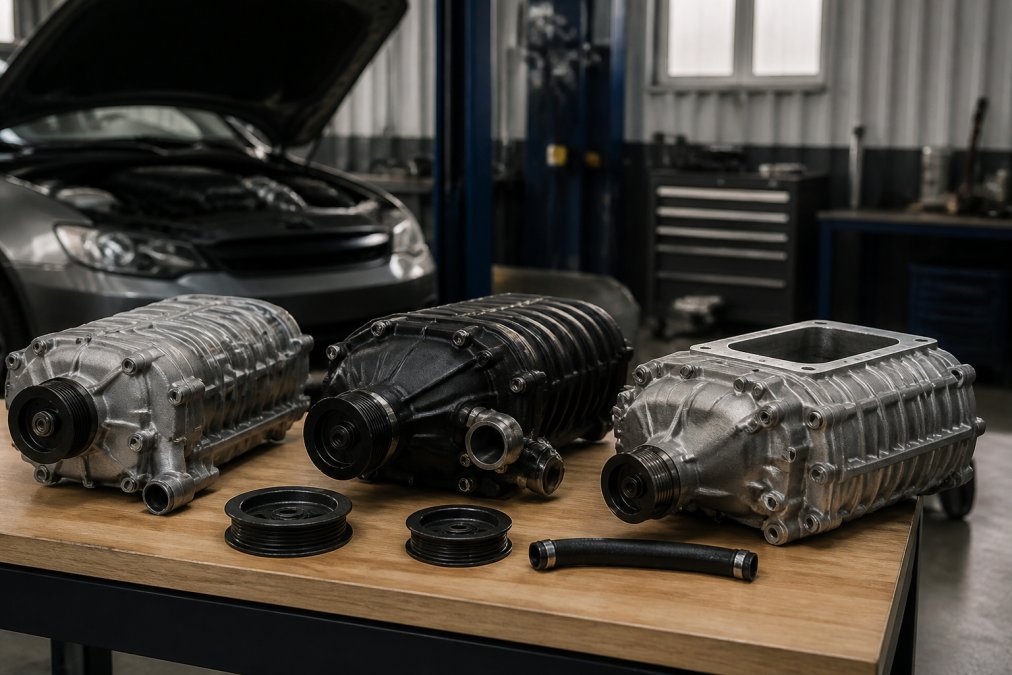
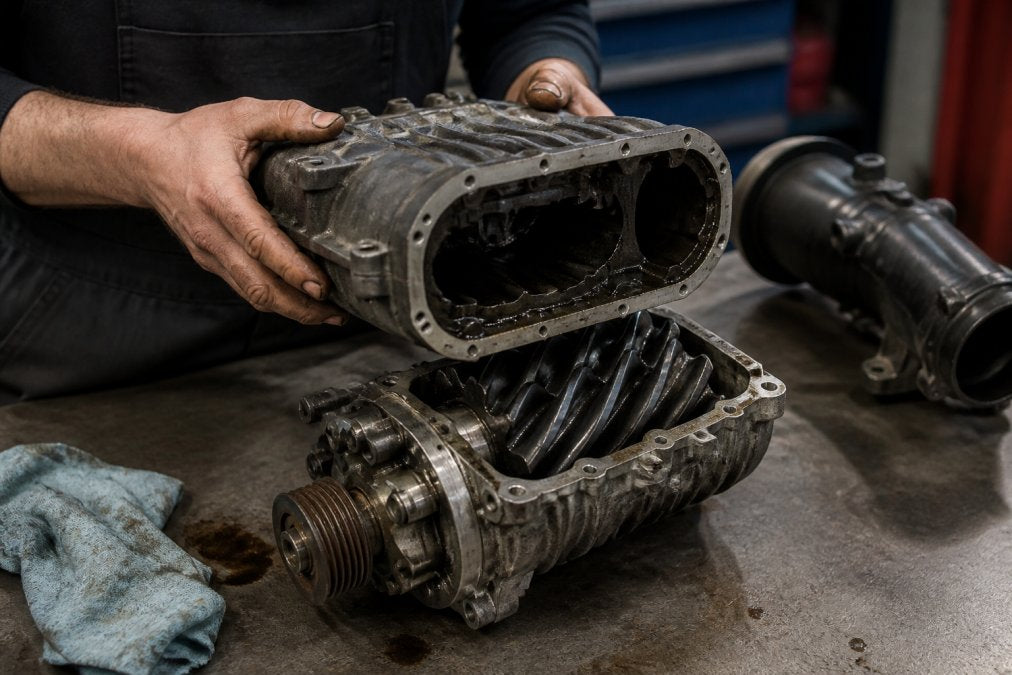
- Supercharger oil service: Most positive displacement units (Roots and twin-screw) require an oil change every 50,000 to 75,000 miles. The fluid itself is inexpensive, typically $20 to $40 per fill, but the service is often overlooked. Neglecting it leads to premature bearing wear and, eventually, a $1,500 to $2,500 rebuild.
- Belt and pulley wear: The supercharger drive belt operates under higher load than a stock accessory belt. Expect to replace it every 30,000 to 40,000 miles, roughly $50 to $90 for a quality belt. Inspect the tensioner at the same interval.
- Spark plugs: Forced induction raises cylinder pressures, which accelerates spark plug wear. Most tuners recommend stepping down one heat range and replacing plugs every 20,000 to 30,000 miles instead of the factory 60,000 to 100,000-mile interval. A set of eight plugs runs $60 to $120.
- Intercooler system health: If your kit includes a liquid-to-air intercooler, the coolant pump and heat exchanger should be inspected annually. A failing pump can cause heat soak and reduce power, but replacement parts are typically $150 to $300.
A common pattern among owners is setting aside $300 to $500 per year for supercharger-specific maintenance. That is not a dealbreaker, but it is a real cost that should factor into your decision.
Fuel Economy Impact
A supercharger changes fuel consumption in two ways. Under boost, the engine burns significantly more fuel, expect a 15 to 25 percent reduction in fuel economy during spirited driving or towing. At steady highway cruise, the difference is smaller, often only 5 to 10 percent worse than stock, because the supercharger is not producing meaningful boost at light throttle.
For a daily driver covering 12,000 miles per year at 20 mpg, that 5 to 10 percent penalty adds roughly $90 to $180 annually at $3.50 per gallon. It is not a reason to avoid a supercharger, but it is a number worth knowing before you commit.
Reliability and Repair Reserve
Quality kits from VT Superchargers include a 24-month warranty covering defects in materials and workmanship, but it does not cover wear items or damage from improper tuning. A reasonable rule of thumb is to keep a $1,000 repair reserve for unexpected issues, a failed sensor, coolant leak, or belt failure, during the first two years.
Financing is available at checkout, making the upgrade more accessible than a lump-sum purchase. When comparing costs, remember that infrastructure for other types of high-power modifications can be substantial. For context on the scale of investment required for commercial-grade charging or performance infrastructure, EV Wire's Q1 2026 network scorecard and EV Charging Stations' Q2 2026 usage report document that even basic four-stall commercial setups run around $250,000. A supercharger kit for your personal vehicle is a fraction of that cost with immediate, tangible results.
Frequently Asked Questions
Is adding a supercharger worth it?
For most enthusiasts, yes. A quality bolt-on supercharger kit delivers a 40-60% horsepower increase, which is more than any other single bolt-on modification. The instant throttle response also transforms daily driving, making passing and merging safer. However, the value depends on your vehicle and goals. If you want reliable power without rebuilding your engine, a kit designed for your specific make and model with a warranty is usually the best return on investment.
What are the drawbacks of installing a supercharger kit?
The main drawbacks are cost, installation complexity, and increased fuel consumption under boost. A quality kit, like those from VT Superchargers, ranges from $4,800 to $7,600. While most are bolt-on, you will likely need an ECU tune, and a professional install can add $1,000 or more. Superchargers also create parasitic drag on the crankshaft, which can lower fuel economy when you are not in the throttle.
How does a supercharger improve throttle response?
A supercharger is driven directly by the crankshaft via a belt and pulley system. This mechanical connection means boost pressure builds instantly as soon as you press the accelerator. Unlike a turbocharger, which relies on exhaust gases to spool up, there is no lag. You get immediate, predictable power delivery that makes the engine feel more responsive at any RPM, particularly in the low-to-mid range where daily driving happens.
Does installing a supercharger affect my vehicle's factory warranty?
Yes, it can. The Magnuson-Moss Warranty Act protects consumers, but a dealer can deny a warranty claim if they can prove an aftermarket part caused the failure. For example, a supercharger could void your engine or drivetrain coverage. However, a complete kit designed for your specific engine without cutting or welding reduces risk. Many brands, including VT Superchargers, offer their own 24-month warranty to cover the supercharger system itself.
This article was written using GrandRanker
Related post

RECENT POSTS