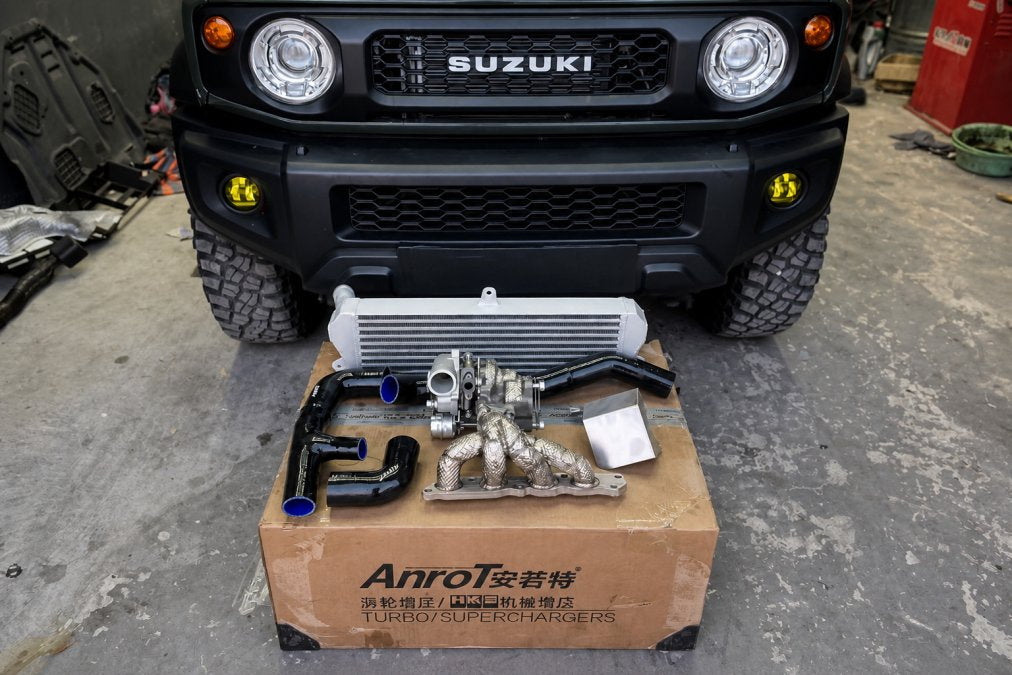
Supercharger vs Turbocharger for Daily Driving
Table of Contents
- How Superchargers and Turbochargers Work
- Supercharger vs Turbocharger: Power Delivery and Boost Lag in City Traffic
- Supercharger Reliability for Daily Driving
- Maintenance, Complexity, and Long-Term Costs
- Bolt-On Supercharger Kit Benefits for Your Daily Driver
- Fuel Economy and Efficiency Comparison
- Which One Is Right for Your Daily Driving Needs
Last Updated: August 23, 2026
How Superchargers and Turbochargers Work
Both superchargers and turbochargers are forced induction systems designed to push more air into an engine's cylinders, increasing power output beyond what a naturally aspirated engine can deliver. The fundamental difference lies in their energy source.
A supercharger is mechanically driven directly from the engine's crankshaft via a belt or chain, delivering instantaneous power across the entire RPM range. The trade-off is mechanical drag, the supercharger draws power from the engine to operate, creating what engineers call a "crankshaft tax." According to Patsnap Eureka's 2025 analysis, superchargers are less efficient at making net power than turbochargers because of this parasitic loss, even though they deliver immediate throttle response (patsnap.com).
A turbocharger harnesses exhaust gas energy that would otherwise be wasted. Hot exhaust gases spin a turbine wheel connected via shaft to a compressor wheel on the intake side, forcing compressed air into the engine. This approach captures thermal and kinetic energy, making turbochargers thermally efficient. However, there's a delay, typically 0.5 to 1.5 seconds, between throttle demand and boost delivery, called turbo lag.
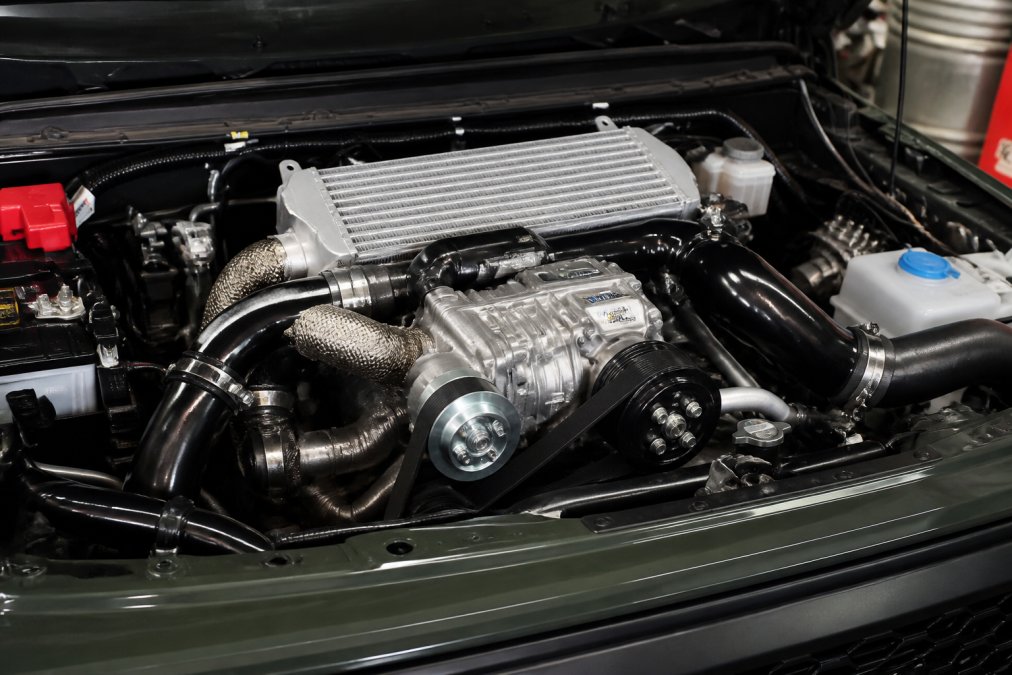
According to Patsnap Eureka's 2025 market analysis, turbochargers dominate the forced induction market with roughly 78% market share compared to superchargers' 22% (patsnap.com). This dominance stems from automakers' focus on fuel economy and emissions compliance, turbochargers deliver efficiency gains without the parasitic loss of a mechanical drive system.
Pro Tip
The key insight: superchargers trade mechanical efficiency for predictable, instantaneous power delivery. Turbochargers trade response time for thermal efficiency. Neither is universally "better", the choice depends entirely on your driving priorities.
Supercharger vs Turbocharger: Power Delivery and Boost Lag in City Traffic
For daily driving in stop-and-go city environments, power delivery characteristics matter far more than raw efficiency numbers.
Superchargers deliver instantaneous boost response, beginning at engine start and increasing linearly with RPM progression. When you're merging onto a highway or accelerating from a traffic light, that immediate response feels crisp and predictable. There's no waiting for the turbo to spool.
Turbochargers exhibit "boost lag." Below a certain RPM threshold, there isn't enough exhaust gas velocity to spool the turbine effectively. You press the throttle, and for a half-second to a second and a half, the engine feels naturally aspirated. Then boost kicks in. This lag is especially noticeable in low-RPM situations: accelerating from a stop, merging at highway speeds, or passing in third gear.
According to research from Eaton's 2016 Turbocharging and Supercharging report, Brian Contat, Product Director of Boosting at Eaton, noted: "The supercharger is evolving in its application. We are at a transition point where the traditional uses of a supercharger, which were for performance and transient response, are now evolving towards providing a dependable flow of air through the drive cycle." For daily drivers, this means superchargers are increasingly engineered specifically for responsive, predictable power delivery that makes city driving feel effortless.
Key Takeaway
Superchargers feel responsive in city traffic because boost arrives instantly. Turbochargers feel sluggish at low RPM because the turbine hasn't spooled yet. If you spend significant time in stop-and-go driving, that difference compounds daily.
Supercharger Reliability for Daily Driving
Reliability concerns often dominate the supercharger vs turbocharger conversation, yet the data paints a more nuanced picture than common assumptions suggest.
Superchargers are mechanically simpler than turbochargers. They have fewer moving parts, lower operating temperatures, and no complex waste-gate or variable geometry systems to fail. VT Superchargers' kits, for example, feature self-contained oiling systems that require no special maintenance. The 24-month warranty covering parts defects reflects manufacturer confidence in supercharger durability.
Turbochargers operate in extreme conditions, exhaust temperatures exceeding 1,000 degrees Fahrenheit, which accelerates wear on bearings and seals. According to Turbocharger vs Supercharger: Differences, Reliability and Price Comparison, the average turbocharger needs replacement every 100,000 to 150,000 miles, while quality superchargers often exceed 200,000 miles with proper maintenance.
The real reliability question isn't which system is inherently more durable, but which one your specific engine was designed to handle. High-quality turbo engines are engineered to support forced induction stress. Budget naturally aspirated engines upgraded with turbochargers sometimes suffer internal damage because the engine block, pistons, and connecting rods weren't designed for that pressure. Superchargers produce boost more linearly and predictably, which many stock engines tolerate better.
Watch Out
Turbochargers require precise installation and ongoing heat management. Poor installation can reduce lifespan to 80,000-100,000 miles. Superchargers are more forgiving of imperfect installation because they operate at lower temperatures and with more predictable pressure curves.
Maintenance, Complexity, and Long-Term Costs
The total cost of ownership for a supercharger vs turbocharger system extends far beyond the initial kit price.
Supercharger maintenance is straightforward. Most bolt-on kits require only standard engine maintenance: oil changes, air filter replacement, and coolant flushes if the system uses a water-to-air intercooler. There are no waste-gates to adjust, no variable geometry turbines to service. A supercharger kit installed at $4,600 to $6,950 typically costs nothing to maintain beyond routine engine care.
Turbocharger maintenance is more involved. Beyond standard engine maintenance, turbo systems require regular oil changes using correct viscosity, intercooler cleaning, waste-gate inspection, heat shielding inspection, and potential turbo replacement every 100,000-150,000 miles at $1,500-$3,000 per replacement.
According to Patsnap Eureka's 2025 market analysis, turbocharger aftermarket solutions outpace supercharger sales by approximately 3:1, reflecting both the higher failure rate and the thriving aftermarket for replacement turbos (patsnap.com).
Supercharger systems typically carry a higher cost premium than turbocharged systems. However, this upfront cost difference is often recovered over 150,000-200,000 miles of ownership through lower maintenance and replacement expenses. For a daily driver kept for five to seven years, a supercharger often proves cheaper to own despite the higher entry price.
| Maintenance Factor | Supercharger | Turbocharger |
|---|---|---|
| Annual Maintenance Cost | $200-400 (routine only) | $400-800 (routine + turbo-specific) |
| Replacement Interval | 200,000+ miles | 100,000-150,000 miles |
| Replacement Cost | $2,000-4,000 (if needed) | $1,500-3,000 per unit |
| Complexity | Low (belt-driven, sealed) | High (waste-gate, variable geometry) |
| Installation Difficulty | Moderate (bolt-on) | Moderate-High (exhaust integration) |
Bolt-On Supercharger Kit Benefits for Your Daily Driver
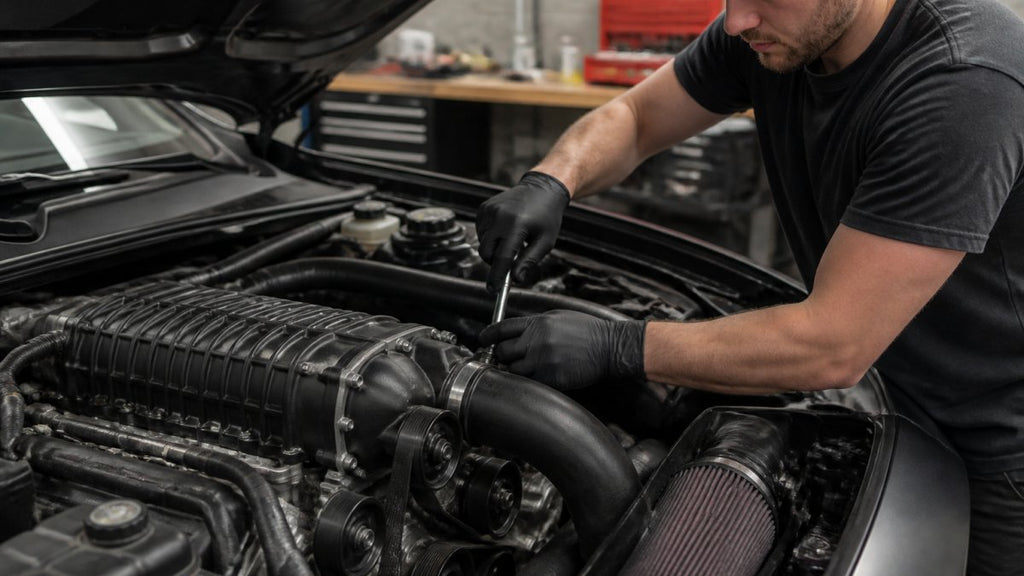
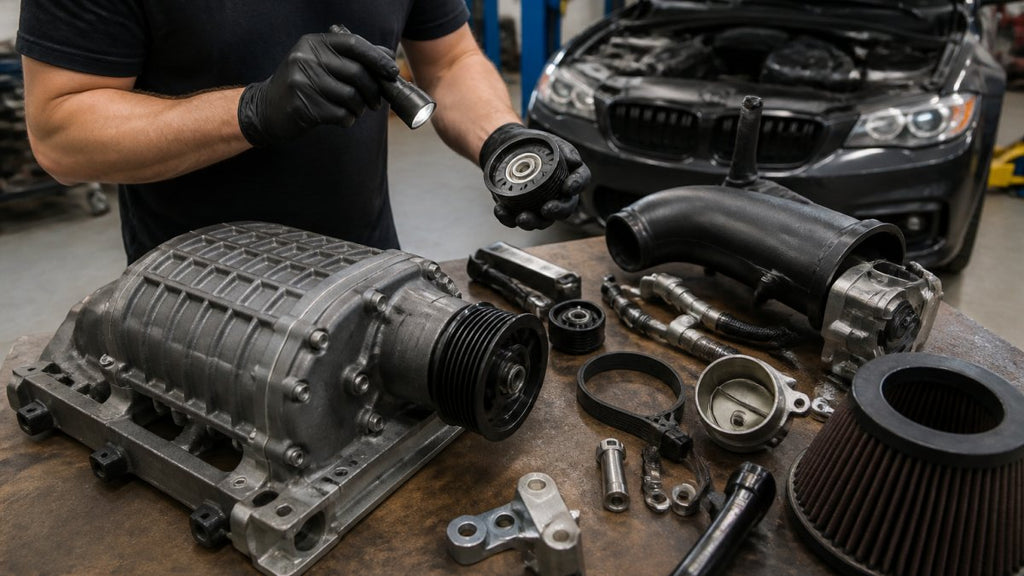
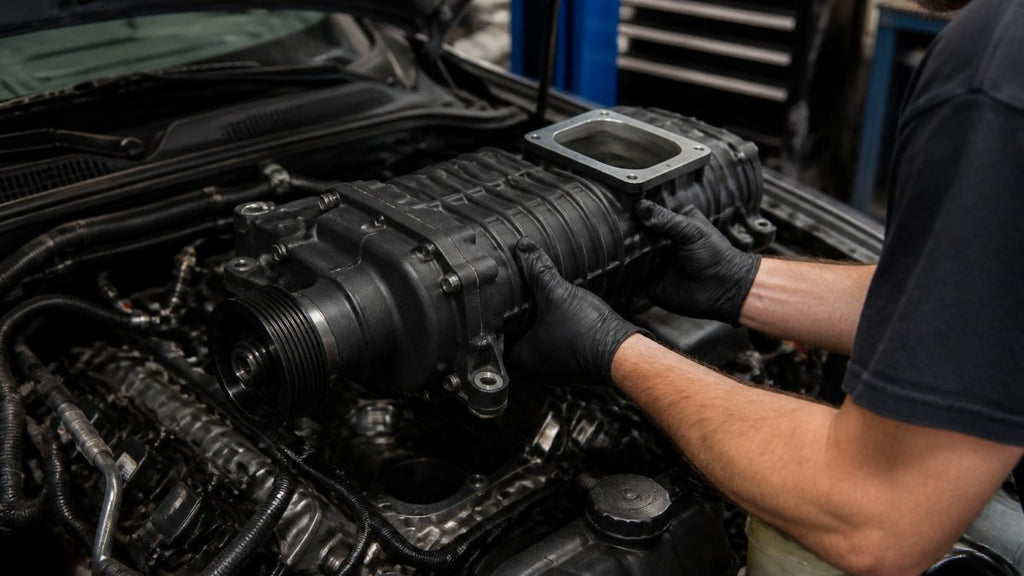
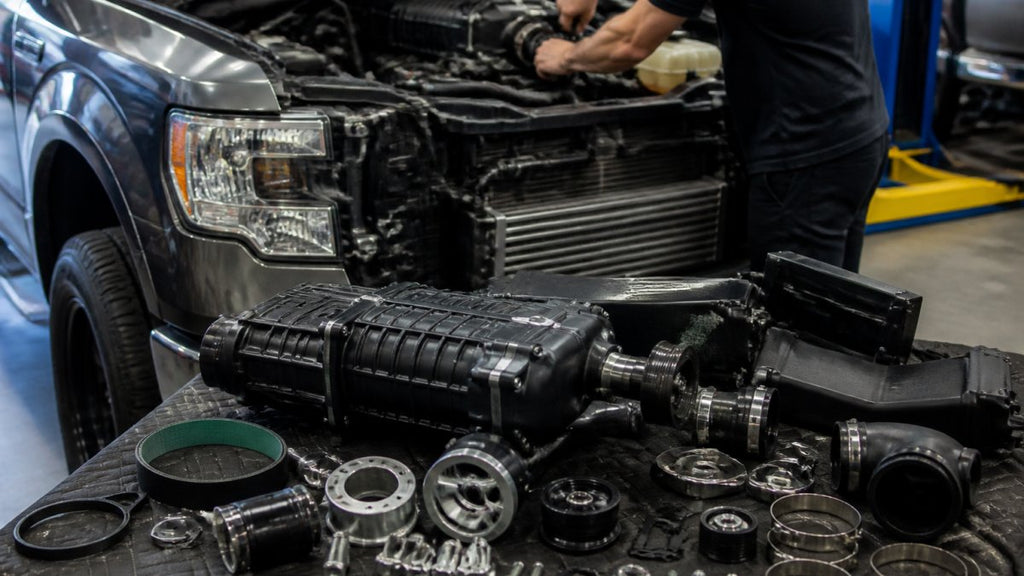
A bolt-on supercharger kit transforms a daily driver without requiring permanent modifications or extensive engine work.
VT Superchargers specializes in precisely this application. Their kits for vehicles like the Toyota Tacoma 3.5L deliver +100 horsepower and +90 lb-ft of torque, translating to tangible improvements in merging, passing, and towing capability without the engine feeling strained.

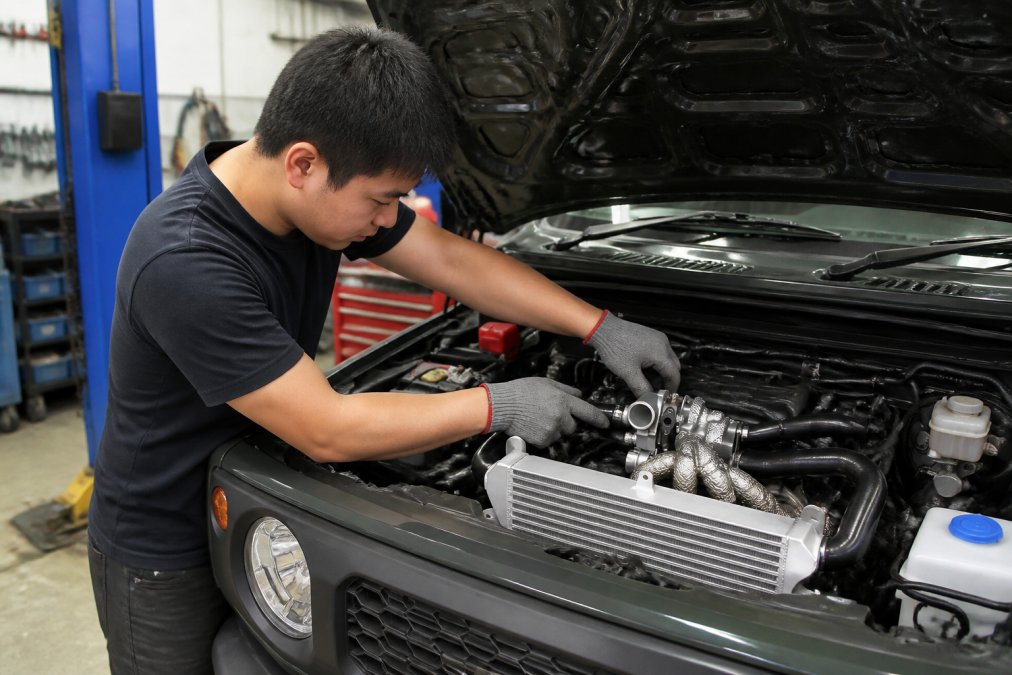
The "bolt-on" designation means the supercharger kit installs without cutting, welding, or permanent modifications. Factory components remain intact. If you ever decide to remove the supercharger, the engine returns to stock condition. This reversibility matters for leased or financed vehicles, and resale value impact is minimal.
Most insurers allow supercharger installations without policy cancellation, though some may require notification and could increase premiums by 5-15%. This is significantly less restrictive than turbocharger modifications.
For street drivers, superchargers are generally preferred due to their predictable, immediate response and smoother engagement. VT Superchargers' kits are engineered specifically for daily drivers that need responsive power without the complexity or heat management challenges of a turbo system. The 24-month manufacturer warranty provides confidence that the system will perform reliably.
Best For
Daily drivers aged 18-44 in the Midwest and West who want immediate throttle response, reliable power gains of 40-60%, and straightforward installation without permanent engine modifications.
Fuel Economy and Efficiency Comparison
Superchargers sacrifice thermal efficiency for mechanical simplicity. Turbochargers sacrifice response time for thermal efficiency. For daily driving, the practical difference is smaller than the numbers suggest.
A stock naturally aspirated engine burns fuel inefficiently at part-throttle. Adding a supercharger increases manifold pressure and air density, allowing more complete combustion across a broader RPM range. Fuel economy often improves slightly or remains neutral compared to a stock engine driven the same way, despite the added power.
Turbochargers achieve superior thermal efficiency by capturing waste exhaust energy. However, this advantage assumes careful driving habits. Aggressive throttle use negates the efficiency gain.
The critical variable is driving behavior, not the forced induction system itself. A driver who accelerates gently and maintains steady highway speeds will see minimal fuel economy impact from either system. For daily driving, the practical difference is negligible.
Which One Is Right for Your Daily Driving Needs
The supercharger vs turbocharger decision for daily driving comes down to three priorities: response, reliability, and maintenance burden.
Choose a supercharger if you value immediate throttle response, predictable power delivery, and low maintenance. Superchargers are ideal for city driving, towing, and off-road use where you need responsive power at any RPM. VT Superchargers' kits exemplify this approach, engineered for precise fitment, immediate power delivery, and long-term reliability with minimal maintenance.
Choose a turbocharger if you prioritize peak efficiency, can tolerate brief lag in low-RPM response, and are comfortable with more complex maintenance.
For most daily drivers, especially those in stop-and-go traffic, towing, or off-roading, a supercharger is the more practical choice. The immediate response, straightforward maintenance, and proven reliability create a better ownership experience. A quality bolt-on kit from VT Superchargers, backed by a 24-month warranty and worldwide shipping with financing options, transforms a daily driver into a responsive, capable vehicle without the complexity or long-term maintenance burden of a turbo system.
According to Patsnap Eureka's 2026 market forecast, the global automotive supercharger market is projected to grow from $9.91 billion in 2026 to $15.71 billion by 2035, registering a compound annual growth rate of 5.25%. This growth reflects sustained demand for high-performance internal combustion engines and the push for greater power density from smaller engines. For daily drivers, that trend reflects a simple truth: superchargers deliver the power and response people want without the complexity they don't.
The choice between a supercharger and turbocharger for your daily driver ultimately reflects your priorities. If immediate throttle response, straightforward maintenance, and reliable power delivery matter most, a bolt-on supercharger kit is the clear winner. VT Superchargers' engineered solutions for vehicles like the Toyota Tacoma 3.5L (delivering +100 HP and +90 lb-ft torque), Suzuki Jimny JB74, and Mazda 6 2.0L provide precisely that, real performance gains with OEM-style fitment, a 24-month warranty, and worldwide shipping. Get started with VT Superchargers and transform your daily driver into a responsive, capable vehicle that handles city traffic, highway merging, and off-road terrain with confidence.
=== FAQ ANSWERS (audit these too, same rules) ===
[1] Q: Can you drive a supercharged car every day? A: Yes. Modern supercharger kits like those from VT Superchargers are engineered for daily driving reliability. Superchargers deliver instantaneous boost response from engine start, making them ideal for stop-and-go traffic, merging, and highway passing. Unlike turbochargers, they have no lag and provide predictable, linear power delivery. With proper maintenance and a 24-month warranty, supercharged daily drivers maintain factory-like drivability while delivering 40-60% more horsepower and torque across the entire RPM range.
[2] Q: Is a turbocharger or supercharger better for daily driving? A: For daily driving, superchargers typically offer better real-world performance. Superchargers eliminate boost lag, the 0.5-1.5 second delay turbochargers experience between throttle demand and power delivery. This makes superchargers smoother in city traffic, more responsive at low RPM, and friendlier for casual driving. Turbochargers excel at fuel economy and high-RPM performance but require more complex maintenance. Bolt-on supercharger kits from VT Superchargers provide instant power without the complexity, making them ideal for drivers prioritizing immediate throttle response and reliability.
[3] Q: What are the main downsides of using a supercharger on a daily driver? A: Superchargers have three primary drawbacks: higher upfront cost, parasitic loss (the belt-driven compressor draws engine power, reducing net efficiency), and increased heat output requiring upgraded cooling systems. They also demand premium fuel and ECU tuning for safe operation. However, these trade-offs are offset by instant boost response, simplified maintenance, and superior drivability in traffic. For daily drivers prioritizing responsiveness over fuel economy, these downsides are manageable.
[4] Q: How does forced induction affect fuel economy in daily driving? A: Forced induction, whether turbocharger or supercharger, reduces fuel economy compared to naturally aspirated engines, though turbochargers perform better in this area. Superchargers consume engine power directly via the crankshaft (parasitic loss), while turbochargers recycle exhaust energy. However, both enable smaller, more efficient engines to replace larger naturally aspirated ones. For example, a supercharged 2.0L engine can match a 3.0L naturally aspirated engine's power while improving overall efficiency. Daily driving fuel economy depends on driving habits; spirited acceleration consumes more fuel than conservative city driving.
Frequently Asked Questions
Can you drive a supercharged car every day?
Yes. Modern supercharger kits like those from VT Superchargers are engineered for daily driving reliability. Superchargers deliver instantaneous boost response from engine start, making them ideal for stop-and-go traffic, merging, and highway passing. Unlike turbochargers, they have no lag and provide predictable, linear power delivery. With proper maintenance and a 24-month warranty, supercharged daily drivers maintain factory-like drivability while delivering 40-60% more horsepower and torque across the entire RPM range.
Is a turbocharger or supercharger better for daily driving?
For daily driving, superchargers typically offer better real-world performance. Superchargers eliminate boost lag, the 0.5-1.5 second delay turbochargers experience between throttle demand and power delivery. This makes superchargers smoother in city traffic, more responsive at low RPM, and friendlier for casual driving. Turbochargers excel at fuel economy and high-RPM performance but require more complex maintenance. Bolt-on supercharger kits from VT Superchargers provide instant power without the complexity, making them ideal for drivers prioritizing immediate throttle response and reliability.
What are the main downsides of using a supercharger on a daily driver?
Superchargers have three primary drawbacks: higher upfront cost, parasitic loss (the belt-driven compressor draws engine power, reducing net efficiency), and increased heat output requiring upgraded cooling systems. They also demand premium fuel and ECU tuning for safe operation. However, these trade-offs are offset by instant boost response, simplified maintenance, and superior drivability in traffic. For daily drivers prioritizing responsiveness over fuel economy, these downsides are manageable.
How does forced induction affect fuel economy in daily driving?
Forced induction, whether turbocharger or supercharger, reduces fuel economy compared to naturally aspirated engines, though turbochargers perform better in this area. Superchargers consume engine power directly via the crankshaft (parasitic loss), while turbochargers recycle exhaust energy. However, both enable smaller, more efficient engines to replace larger naturally aspirated ones. For example, a supercharged 2.0L engine can match a 3.0L naturally aspirated engine's power while improving overall efficiency. Daily driving fuel economy depends on driving habits; spirited acceleration consumes more fuel than conservative city driving.
This article was written using GrandRanker
Related post
09
Oct
RECENT POSTS