Supercharger Cooling Upgrades for Desert Driving
Table of Contents
- Why Supercharger Cooling Matters in Desert Conditions
- Understanding Supercharger Heat Soak and Its Impact
- Selecting and Installing a Supercharger Heat Exchanger
- Upgrading Your Intercooler Pump for Desert Performance
- Supercharger Cooling System Maintenance Before and After Desert Driving
- Real-World Temperature Targets and Testing in Hot Climates
- Common Mistakes to Avoid When Cooling a Supercharged Engine
- Frequently Asked Questions
Last Updated: October 10, 2026
Why Supercharger Cooling Matters in Desert Conditions
Desert heat is brutal on forced-induction engines. When you add a supercharger cooling upgrades for desert driving setup to your vehicle, you're forcing significantly more air into the combustion chamber. That creates massive heat. In extreme climates, this heat can damage your engine, reduce power gains, and shorten component lifespan.
Many enthusiasts overlook cooling when installing a supercharger kit, prioritizing power gains over reliability. The real win is sustaining that power reliably in extreme conditions that would destroy an unmodified engine.
Desert driving amplifies cooling challenges: high ambient temps, sustained throttle, and towing cause rapid temperature spikes. A properly engineered supercharger cooling system keeps intake air temps stable and protects internal components.
This guide covers the upgrades that matter most: heat exchangers, intercooler pumps, and maintenance protocols that keep your forced-induction engine running strong when the thermometer climbs.
Understanding Supercharger Heat Soak and Its Impact
Heat soak occurs when the supercharger compresses intake air. If you don't remove that heat before it enters the engine, you lose power and risk detonation.
Stock cooling systems weren't designed for supercharged engines and can't handle the extra thermal load. After hard runs, intake temperatures climb dangerously, forcing the engine to pull timing and cut boost, power you paid for, gone.
High intake air temperatures reduce air density, meaning fewer oxygen molecules per intake stroke and less power. Sustained high temps cause engine knock, damaging pistons and valves.
Common symptoms of inadequate supercharger heat management include:
- Inconsistent power delivery run-to-run
- Boost pressure dropping after 10-15 minutes of driving
- Check engine lights for knock detection
- Reduced fuel economy
- Engine running hotter than normal
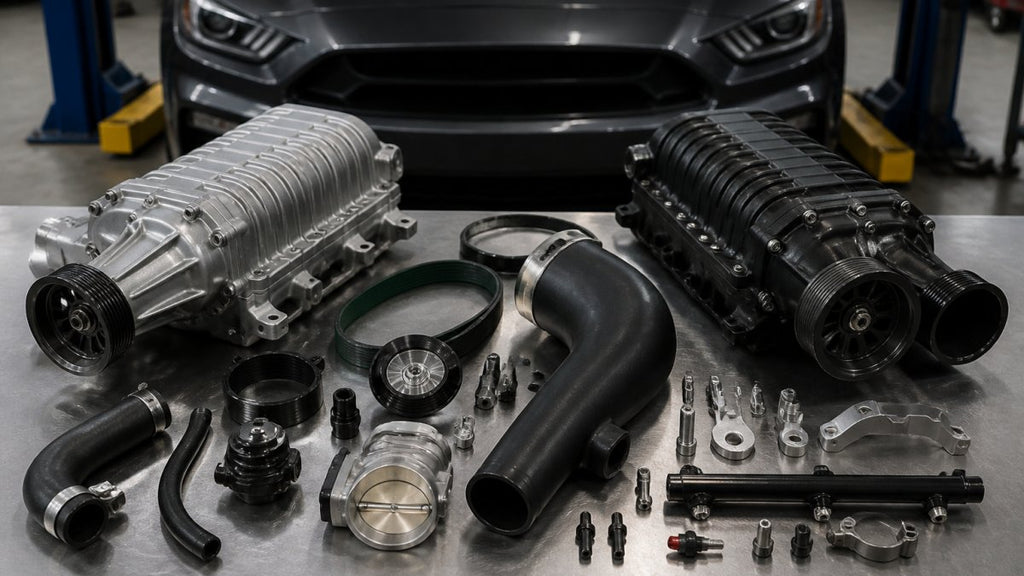
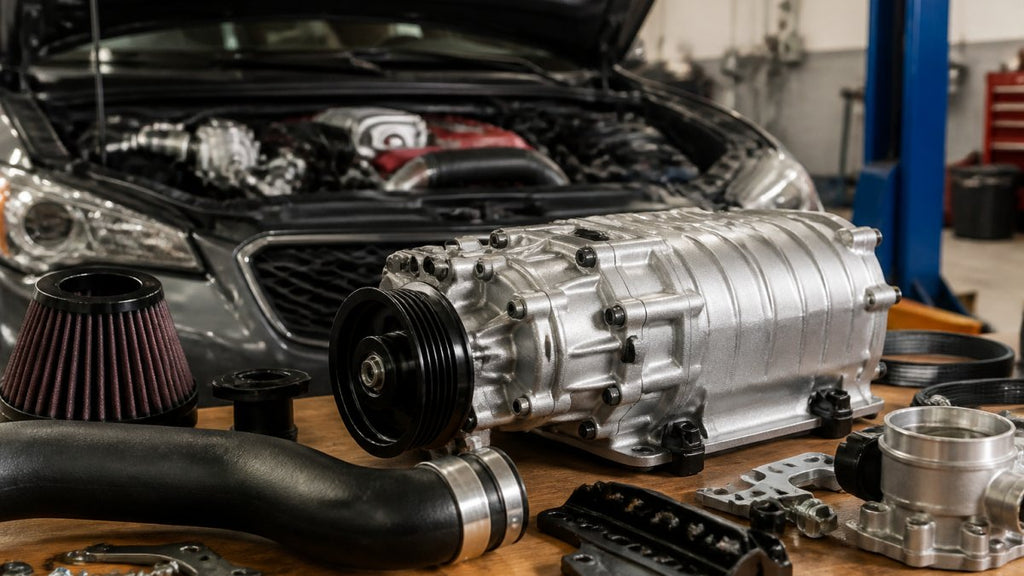
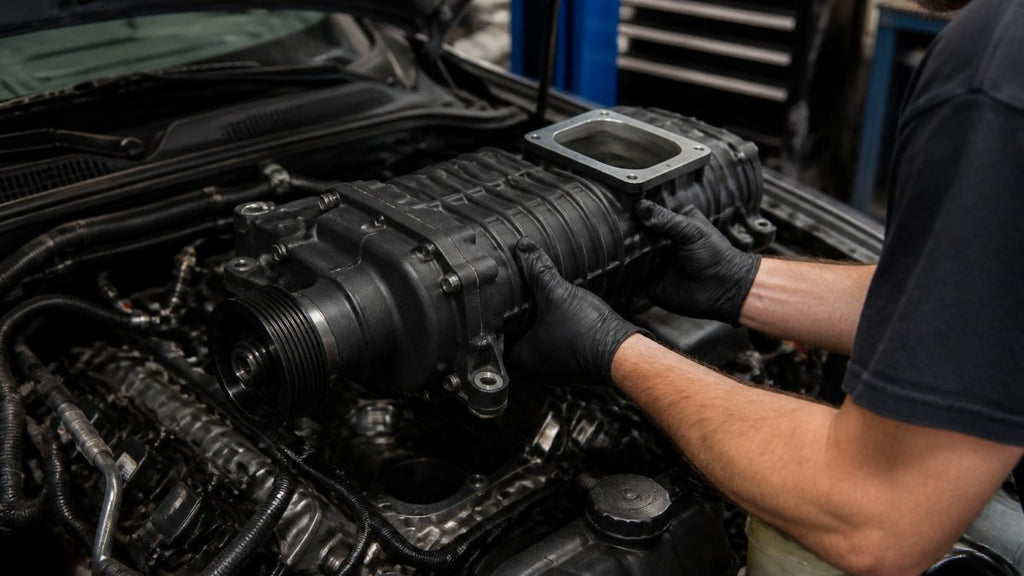
VT Superchargers kits include water cooling systems engineered to manage heat load. The mid-mounted water cooler pulls heat from compressed air before it enters the manifold, keeping intake temps safe during sustained desert driving.

Proper heat management ensures consistent power delivery, safer operation, and longer component life, foundational to reliable forced induction.
Selecting and Installing a Supercharger Heat Exchanger
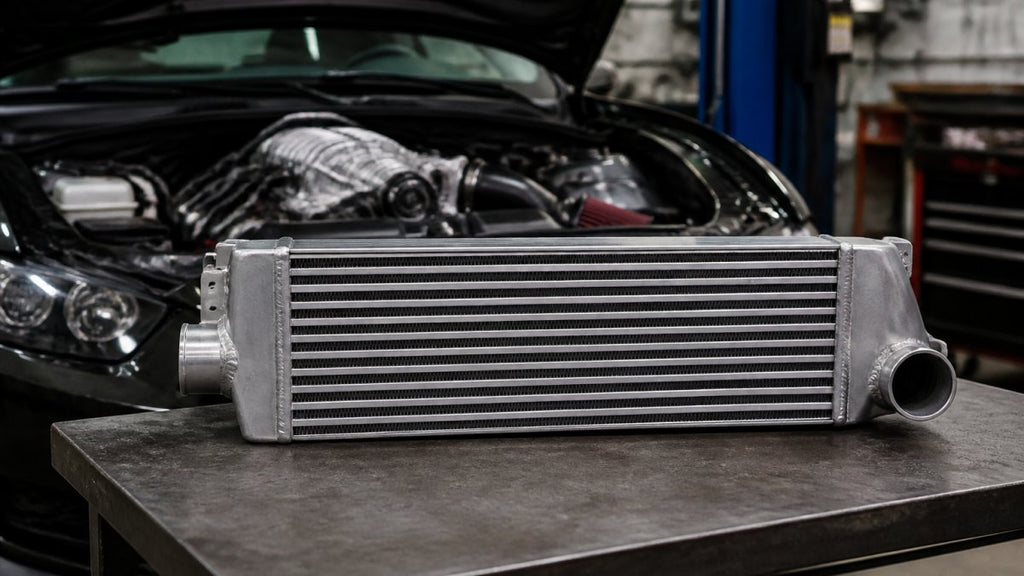
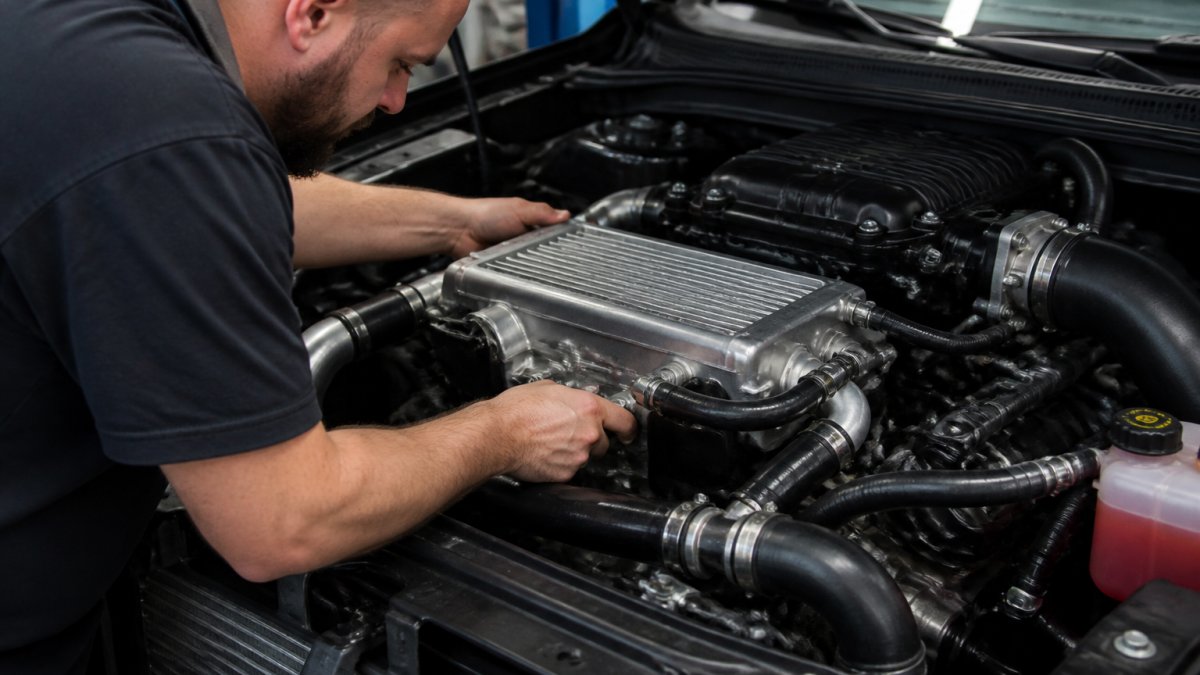
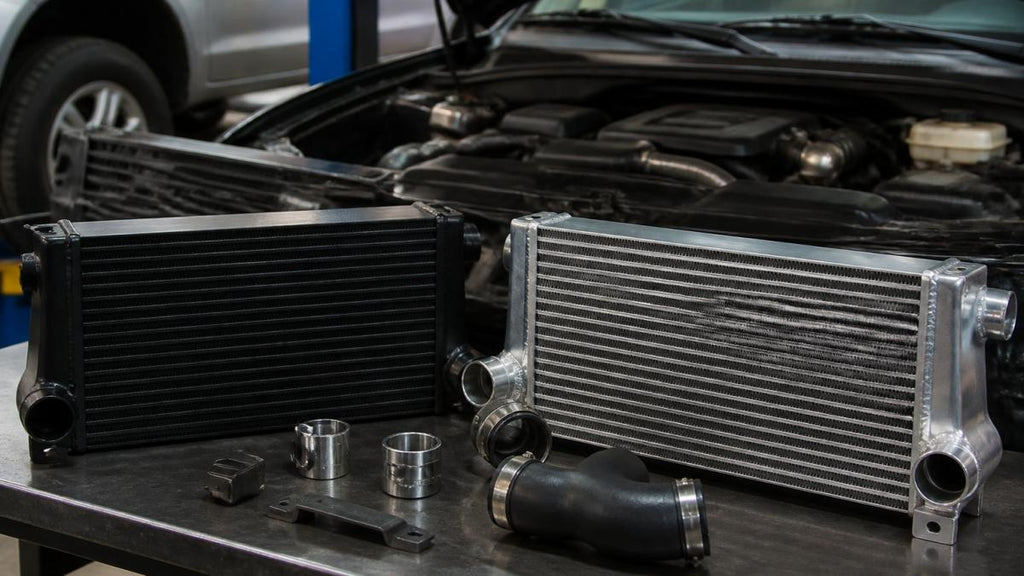
A supercharger heat exchanger removes thermal energy from compressed air before it reaches your engine, functioning as an air-to-water radiator for boost air.
Heat Exchanger Types and Sizing
Two main types dominate the aftermarket: air-to-air and air-to-water designs.
Air-to-air exchangers pass boost air through aluminum fins exposed to ambient airflow. They're simple and lightweight but ineffective in desert heat; cooling efficiency drops as ambient temperature rises, struggling to lower boost temps in 120-degree conditions.
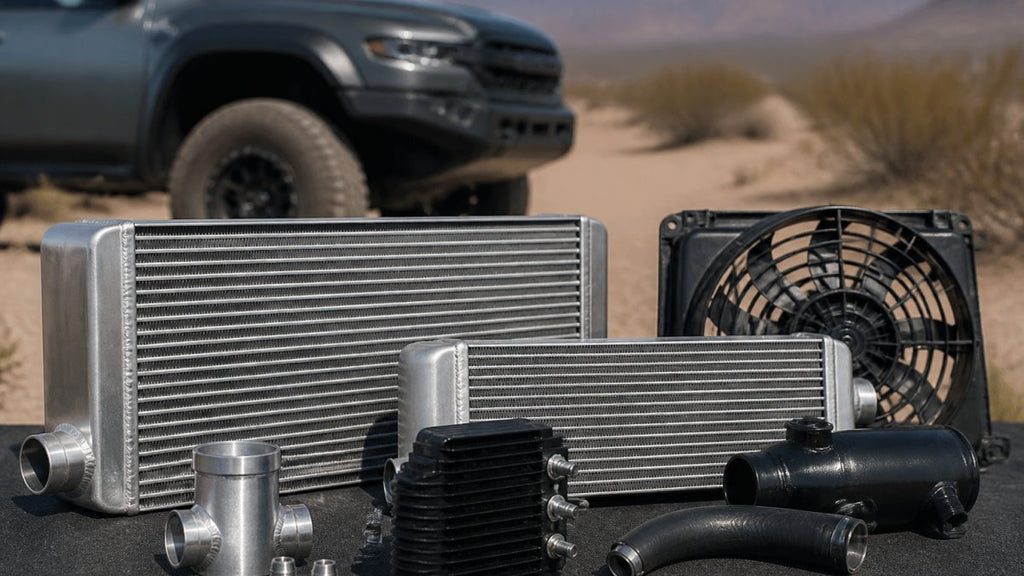
Air-to-water exchangers circulate coolant through the core to absorb heat, with a dedicated pump and radiator rejecting it to the atmosphere. More complex but far more effective in extreme conditions, water's higher heat capacity maintains lower intake temperatures even in desert climates.
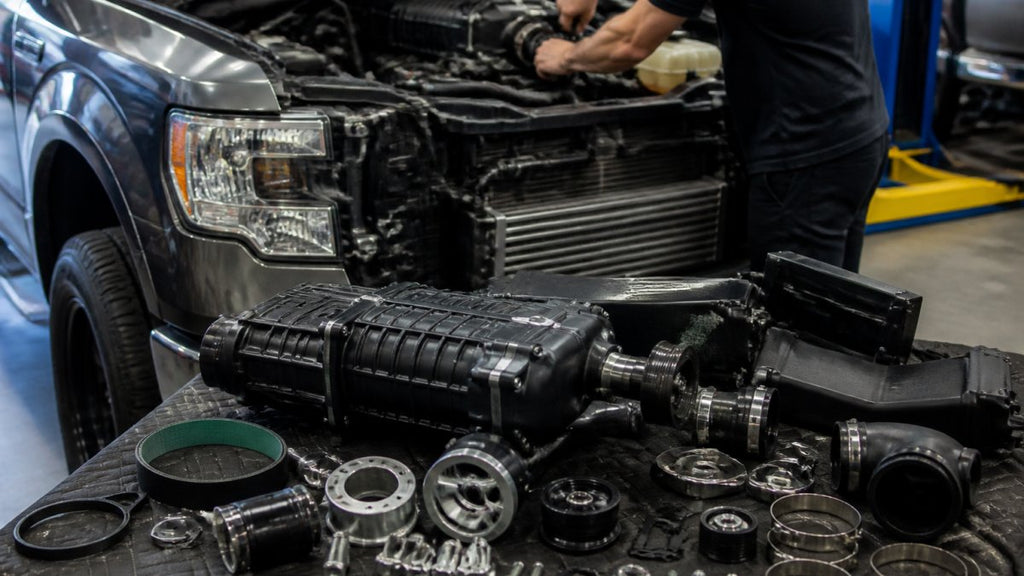
VT Superchargers uses air-to-water designs on all kits for this reason. Our Toyota Tundra 5.7L kit includes a mid-mounted water cooler, dedicated water pump, and water-cooled radiator. This setup delivers reliable heat removal even during extended desert runs.

Sizing matters: an undersized heat exchanger becomes a bottleneck. Match core size to engine displacement and boost level, adding 20% for margin.
Installation Checklist for Bolt-On Kits
Most quality supercharger cooling kits bolt on without permanent modifications:
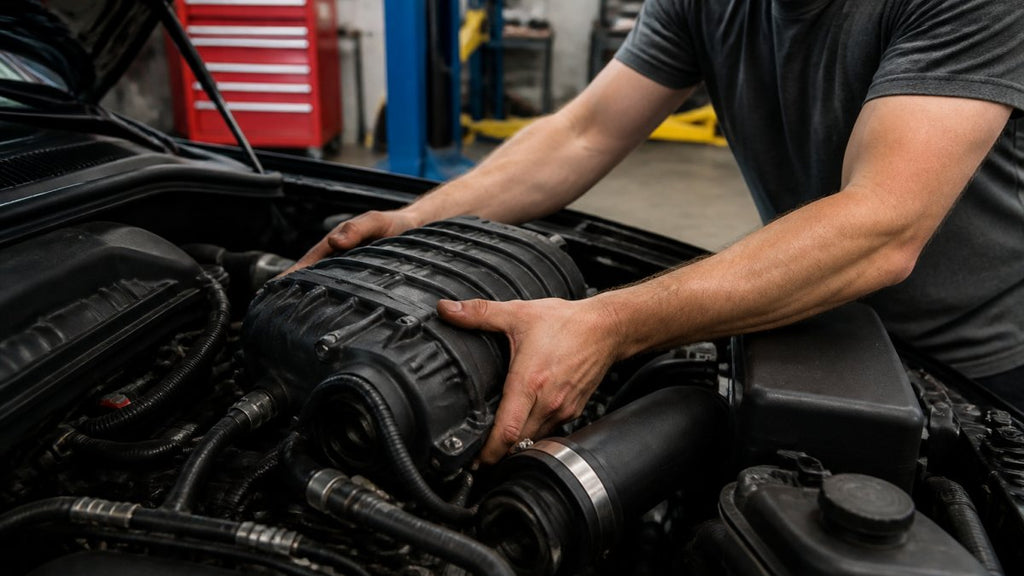
- Remove factory intake components and install supercharger body onto engine block
- Attach intake manifold and mount heat exchanger in engine bay
- Connect water lines and install belt and pulleys on crankshaft
- Connect electrical connectors and refill coolant system, bleeding air from lines
- Tune engine for boost pressure and fuel delivery
VT Superchargers provides detailed installation manuals and video guides for every kit. Our approved installers can complete the job in a single day if you prefer professional installation.
One critical detail: after installation, your engine needs an ECU tune. Factory calibration assumes atmospheric pressure. Boost changes air density significantly. A professional tune optimizes fuel delivery, ignition timing, and boost control for your specific kit and driving conditions. This step is non-negotiable for reliability and performance.
Upgrading Your Intercooler Pump for Desert Performance
The intercooler pump upgrade replaces the water circulation pump with a high-flow unit optimized for forced-induction cooling. Stock pumps can't move enough coolant fast enough to handle sustained thermal loads in desert conditions. A dedicated high-flow pump moves more coolant volume per minute, enabling faster heat rejection and lower intake air temperatures.
Key considerations when upgrading:
- Flow rate: Measured in gallons per minute (GPM). Higher flow is better, but must match your cooler core design. Mismatched flow and core size wastes energy.
- Pressure rating: The pump must handle system pressure without cavitation or failure. Most aftermarket pumps are rated for 15-20 PSI.
- Electrical vs. mechanical: Electrical pumps offer variable flow control. Mechanical pumps are simpler but run continuously at full output.
- Mounting location: Pump placement affects line routing and overall system layout. Center-mounted or side-mounted options depend on your engine bay.
For desert driving, electric pumps with variable speed control adjust flow based on water temperature, optimizing efficiency. VT Superchargers kits include properly sized pumps matched to each cooler core.
Installation is straightforward: disconnect old pump, unbolt mounting brackets, bolt in new pump, reconnect hoses, and wire electrical connectors.
Supercharger Cooling System Maintenance Before and After Desert Driving
Maintenance keeps your supercharger cooling system reliable over thousands of miles.
Toyota Land Cruiser 5.7L 3UR-FE Supercharger Kit | VT →
Pre-trip inspection (before desert driving):
- Check coolant level and condition using distilled water mixed with proper coolant (50/50).
- Inspect hoses for cracks, bulges, or leaks and replace questionable ones.
- Verify pump operation and check belt tension on the supercharger drive belt.
- Confirm radiator fins are clean and test all electrical connections.
Post-trip maintenance (after desert driving):
- Allow engine to cool, then drain and inspect coolant.
- Flush the system with distilled water and refill with fresh coolant.
- Inspect hoses for damage and check pump operation.
- Review any diagnostic codes recorded during driving.
Regular maintenance intervals depend on driving intensity. For frequent desert use, inspect cooling components every 500 miles and perform full flushes every 2,000 miles. Neglecting maintenance is the fastest path to cooling system failure and engine damage.
Real-World Temperature Targets and Testing in Hot Climates
What are safe intake air temperatures for a supercharged engine?
Most engines handle intake temps up to 140-150 degrees Fahrenheit without risk. Above 160 degrees, knock risk increases significantly. In extreme cases, sustained temps above 170 degrees can cause detonation and internal damage.
For desert testing, target intake air temps in the 120-140 degree range even under full throttle. This gives you a safety margin and ensures consistent power delivery.
To test your cooling system: install a data logger with an intake air temperature sensor, drive in conditions similar to your intended use for 30-60 minutes, and monitor peak intake temps against your target range.
If intake temps consistently exceed 160 degrees, your cooling system is undersized or malfunctioning. Possible causes: clogged heat exchanger core, insufficient pump flow, air bubbles in cooling lines, oversized boost pressure, or ambient temps exceeding design assumptions.
VT Superchargers kits are engineered for stable cooling across many conditions. Our Toyota Tundra 5.7L kit, for example, maintains intake temps within 130-145 degrees even at 7 PSI boost in 110-degree ambient heat.
If you're testing a kit you've already installed and seeing high temps, contact our support team. Often the issue is air in the cooling lines or incorrect pump operation, both easily fixed.
Common Mistakes to Avoid When Cooling a Supercharged Engine
Most cooling failures stem from a handful of preventable mistakes.
Undersizing the heat exchanger. Builders often choose coolers based on price rather than thermal capacity, creating a bottleneck. Calculate thermal load based on engine displacement and boost level, then add 20% for margin.
Ignoring air in the cooling lines. Trapped air pockets prevent coolant flow, resulting in no heat transfer and potential pump cavitation. Always bleed cooling systems thoroughly after installation.
Running coolant without proper additives. Plain water corrodes aluminum. Use distilled water mixed with quality coolant containing corrosion inhibitors and change every 2-3 years.
Neglecting belt maintenance. A slipping supercharger belt reduces pump drive speed and cooler flow. Check belt tension monthly and replace every 3-5 years.
Over-boosting without upgrading cooling. Adding extra PSI generates exponentially more heat. Confirm your cooling system can handle the thermal load before chasing power numbers.
Skipping the ECU tune. Factory calibration can't optimize for forced induction. Untamed boost pressure and incorrect fuel delivery cause knock and heat buildup. A proper tune is mandatory, not optional.
Assuming air-to-air cooling is sufficient in the desert. It's not. Ambient temps are too high for effective air-to-air performance. Invest in an air-to-water system if you're serious about desert reliability.
Keeping your supercharged engine cool in extreme climates requires proper equipment and maintenance discipline. VT Superchargers kits include engineered cooling systems designed specifically for heat management. Our Toyota Tundra 5.7L kit delivers 40-60% more horsepower while maintaining stable intake temperatures during sustained desert driving. Start with a properly sized cooling system, maintain it religiously, and monitor real-world temperatures during testing. Ready to upgrade? Register with VT Superchargers and connect with our approved installers. Our 24-month warranty is included with your complete kit.
| Component | Purpose | Maintenance Interval |
|---|---|---|
| Heat exchanger | Removes thermal energy from boost air | Inspect every 500 miles; flush every 2,000 miles |
| Water pump | Circulates coolant through cooler | Check operation monthly; replace belt every 3-5 years |
| Radiator | Rejects heat to atmosphere | Clean fins monthly; inspect hoses every 500 miles |
| Coolant | Absorbs and transfers heat | Change every 2-3 years |
| Water lines | Connects cooling components | Inspect for leaks and cracks every 500 miles |
Pro Tip
Before desert driving, measure intake air temps with a data logger during a 30-minute highway run in 100+ degree heat. If temps stay below 145 degrees at full throttle, your cooling system is properly sized. Above 160 degrees indicates undersizing or circulation problems.
Watch Out
Never run a supercharged engine without adequate cooling system upgrades. High intake temperatures cause engine knock, which damages pistons and valves. Sustained knock can total an engine in minutes.
Frequently Asked Questions
How do I know if my supercharger is experiencing heat soak during desert driving?
Heat soak occurs when intake air temperatures climb above 140°F, causing a noticeable drop in power output and throttle response. Monitor your engine's intake temperature with an aftermarket gauge or OBD-II scanner. In extreme desert heat, you may notice reduced acceleration, hesitation during acceleration, or a check engine light. VT Superchargers kits include mid-mounted water coolers designed to keep temperatures stable, but if you see temperatures creeping above 160°F under sustained driving, your cooling system needs an upgrade.
What's the difference between a supercharger heat exchanger and an intercooler pump upgrade?
A supercharger heat exchanger removes heat from compressed air after it leaves the supercharger but before it enters the engine. An intercooler pump upgrade improves water circulation through that heat exchanger, ensuring consistent cooling performance in extreme temperatures. A larger or more efficient pump maintains stable flow rates even when coolant temperatures rise, preventing cooling efficiency loss during prolonged desert driving. Both work together: the heat exchanger transfers heat to coolant, and the pump ensures that coolant circulates fast enough to absorb and dissipate that heat.
Do I need to upgrade my cooling system if I'm running a VT Superchargers bolt-on kit in the desert?
VT Superchargers kits come with a large water cooler and reliable cooling infrastructure designed for on-road and off-road use. Start by monitoring intake air temperatures on your first few desert drives. If you see consistent temperatures above 150°F, a pump upgrade is a practical next step to ensure long-term reliability.
What maintenance should I perform on my supercharger cooling system before a desert trip?
Before desert driving, inspect coolant level and condition, check all hose connections for leaks, verify the water pump is functioning smoothly, and confirm the cooling fan engages properly. Flush and replace coolant if it's over one year old, as old coolant loses heat transfer efficiency. Inspect the radiator for debris and clean if necessary. Test your temperature gauge or OBD-II scanner to establish a baseline. After desert driving, rinse the cooling system to remove dust and salt, and check all connections again. Regular maintenance prevents heat-related failures and extends the life of your supercharger cooling system.
Related post
09
Oct
RECENT POSTS