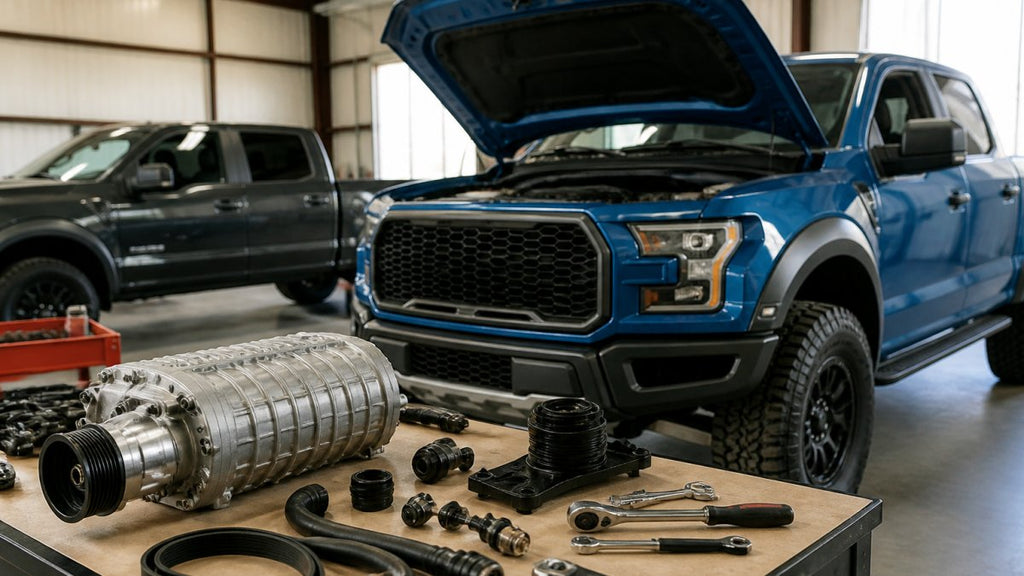
Supercharger Warranty: Truck Brands Compared
Table of Contents
- How Supercharger Warranties Work Across Truck Brands
- Does a Supercharger Void Your Truck Warranty
- Magnuson-Moss Warranty Act Explained for Performance Parts
- Aftermarket Supercharger Warranty Coverage Options
- Factory Warranty vs. Third-Party Protection Plans
- Installation Requirements and Warranty Validity
- What Voids Your Supercharger Warranty
- Conclusion
- Frequently Asked Questions
Last Updated: September 29, 2026
How Supercharger Warranties Work Across Truck Brands
Understanding supercharger warranty truck coverage across brands reveals critical differences in scope, duration, and what happens when you modify your engine. Understanding these distinctions matters because forced induction changes how your engine operates, and manufacturers know it. Most factory warranties explicitly exclude damage from performance modifications, but third-party protection plans and the Magnuson-Moss Warranty Act provide options that many truck owners don't realize exist.
At VT Superchargers, we've worked with thousands of customers navigating warranty questions before installation. The reality is straightforward: your factory warranty covers manufacturing defects under normal operating conditions. A supercharger fundamentally changes those conditions. Boost pressure increases stress on your powertrain components. Your engine management system must adapt. This is why knowing what voids coverage, and what doesn't, is essential before you commit to a build.

Truck manufacturers typically offer powertrain coverage ranging from three years or 36,000 miles to five years or 60,000 miles. Toyota, Ford, and Dodge each structure their limited warranties differently. Some cover only the engine block and transmission. Others include drivetrain components. The fine print matters because one manufacturer might cover a failed transmission under powertrain warranty while another classifies it separately. When you add forced induction, you're introducing variables the factory engineers didn't design for, which is exactly where warranty exclusions kick in.
Pro Tip
Check your vehicle's service manual before installation. It contains the specific engine specifications your manufacturer used to design warranty coverage. Exceeding those specifications, like boost pressure, is grounds for claim denial, even if the supercharger itself didn't cause the failure.
Does a Supercharger Void Your Truck Warranty
Installing a supercharger does not automatically void your entire factory warranty. This is a common misconception that costs buyers unnecessary anxiety. What actually happens is more nuanced: your factory warranty remains valid for components and systems the supercharger doesn't directly affect, but coverage is eliminated for any damage that can be traced to the forced induction system or its effects on engine operation.
The critical distinction centers on causation. If your air conditioning fails after supercharger installation, that's still covered because the A/C system operates independently. If your engine fails because boost pressure exceeded manufacturer specifications, that's not covered because the supercharger directly caused the condition. Dealers will investigate failure modes. They'll run diagnostics. They'll check your engine's computer logs for boost pressure data. If the numbers show your engine was operating outside factory parameters when failure occurred, the claim gets denied.
This is where installation compliance becomes crucial. A properly installed supercharger kit that respects OEM specifications and uses authorized technicians for tuning creates a defensible position. A sloppy installation or unauthorized ECU calibration that pushes boost pressure into dangerous territory gives the dealer ammunition to reject claims. VT Superchargers kits are engineered for OEM-style fitment specifically because this matters. When your supercharger is installed correctly and your engine tune stays within safe parameters, you preserve warranty coverage for everything else on your truck.
Watch Out
Aftermarket modifications that change engine output void coverage for engine-related failures under most factory warranties. If your supercharger causes a transmission to fail due to increased torque load, expect denial. This is why third-party protection plans exist, they cover what the factory won't.
Magnuson-Moss Warranty Act Explained for Performance Parts
The Magnuson-Moss Warranty Act is a federal law that protects consumers from overly broad warranty disclaimers (the FTC). Many truck owners assume it prevents manufacturers from voiding warranties for aftermarket parts, but the reality is more specific, and less protective than most people think.
Magnuson-Moss states that a manufacturer cannot void a warranty simply because you used an aftermarket part, unless that part directly caused the failure. This is the critical language: "directly caused." If you install a supercharger and your transmission fails, the manufacturer must prove the supercharger caused the transmission failure. They can't just reject the claim because you have forced induction on your truck. However, if your engine fails due to excessive boost pressure, they can prove direct causation because the supercharger created that pressure.
The law also requires manufacturers to provide warranty service at reasonable cost or clearly disclose that warranty service is not available. What it doesn't do is prevent manufacturers from excluding coverage for performance modifications. The distinction is important. Magnuson-Moss prevents blanket denial based on the mere presence of an aftermarket part. It doesn't prevent denial based on documented evidence that the modification caused the failure. This nuanced standard of causation remains the primary factor when evaluating aftermarket part warranty implications for components ranging from forced induction systems to electrical lighting upgrades.
For performance parts specifically, this means you have legal standing to challenge a warranty denial if the dealer claims your supercharger voided coverage without proving causation. You can request Federal Trade Commission guidance on the Magnuson-Moss Warranty Act to understand your rights. In practice, many dealers will work with you if you have proper documentation of installation, maintenance records, and a professional tune. The act gives you use, but it's use based on proof, not assumption.
Key Takeaway
Magnuson-Moss protects you from blanket denials but not from denials based on proven causation. Keep installation receipts, ECU tune documentation, and service records. These documents are your defense if a dealer tries to reject a claim.
Aftermarket Supercharger Warranty Coverage Options
Third-party warranty programs exist specifically because factory warranties exclude performance modifications. These plans come in several forms, each with different coverage scopes and price points.
Extended service contracts from aftermarket providers typically cover engine and powertrain components for a defined period, usually two to five years, regardless of modifications. VT Superchargers includes a 24-month warranty on all kits, which covers defects in the supercharger itself. This is different from an engine warranty. It protects your investment in the forced induction system, not the engine's response to forced induction.
Toyota Tundra 5.7L 3UR-FE Supercharger →
Some buyers layer multiple protections: they keep the factory warranty for non-modified systems while purchasing a separate engine protection plan that specifically covers supercharged engines. These specialty plans are more expensive than standard coverage because they assume higher risk. The tradeoff is that you get explicit coverage for failures that might occur due to boost pressure, increased combustion temperatures, and transmission stress from added torque.
The most important detail is understanding what each plan actually covers. Some exclude failures caused by tuning. Others exclude failures caused by driving conditions like towing with oversized tires. Read the exclusions carefully. A plan that sounds comprehensive might have loopholes that leave you exposed for exactly the failure mode you're worried about.
| Protection Option | Coverage Duration | What It Covers | Best For |
|---|---|---|---|
| Factory Warranty | 3-5 years | Non-modified systems only | Stock components |
| VT Superchargers Kit Warranty | 24 months | Supercharger defects and engineering | Forced induction system |
| Extended Engine Protection | 3-5 years | Engine/powertrain with modifications | Modified engines with towing |
| Dealer Service Plan | Varies | Maintenance and repairs | Routine upkeep |
Factory Warranty vs. Third-Party Protection Plans
The fundamental difference between factory coverage and third-party plans comes down to who assumes the risk. Factory warranties assume the manufacturer's engineers designed the vehicle for normal use. Third-party plans assume you're modifying that vehicle and operating it outside factory specifications.
Factory warranties are comprehensive for stock vehicles but narrow dramatically once you add forced induction. A five-year powertrain warranty becomes nearly worthless if the first supercharger boost cycle voids coverage for engine-related failures. Manufacturers have invested decades in designing engines for specific operating parameters. Exceed those parameters, and you've stepped outside their warranty promise.
Third-party plans flip this logic.
Best For
Truck owners running daily drivers with mild supercharger tunes who want factory coverage preserved for non-modified systems while protecting the engine against boost-related failures.
Installation Requirements and Warranty Validity
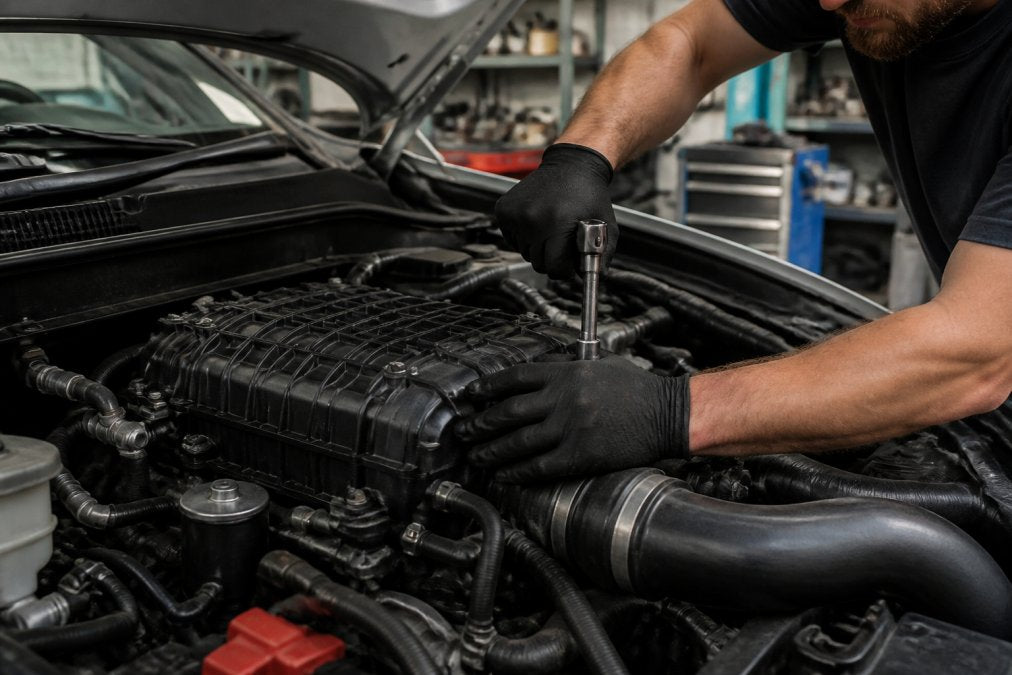
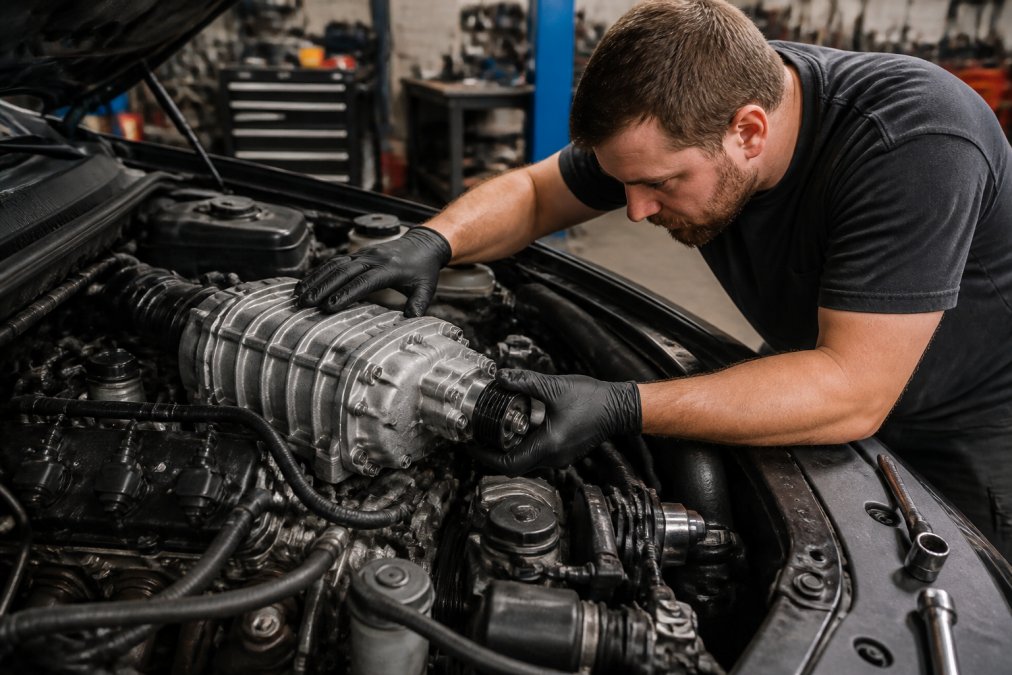
Installation method directly affects warranty validity. This is where many buyers make costly mistakes. A bolt-on supercharger kit that respects OEM specifications and is installed by an ASE-certified technician preserves your best defense against warranty denial. A kit installed in someone's garage with improvised brackets and unauthorized ECU calibration gives the dealer everything they need to reject claims.
What Voids Your Supercharger Warranty
Understanding specific warranty voidance triggers prevents expensive surprises. Factory warranties are voided by any modification that changes engine output or operating parameters beyond manufacturer specifications. This includes forced induction, ECU reprogramming, fuel system modifications, and internal engine work. Once you add a supercharger, your factory powertrain warranty for engine-related failures is gone. This is not negotiable.
Watch Out
Racing or track use voids most third-party protection plans. If you plan to use your supercharged truck on a race track or in extreme off-road competition, disclose this when purchasing coverage. Some plans explicitly exclude racing; others require a separate racing warranty.
Conclusion
Supercharger warranty coverage across truck brands follows consistent patterns: factory warranties protect stock components but exclude forced induction modifications, third-party plans fill the gap by covering engine and powertrain systems affected by boost pressure, and the Magnuson-Moss Warranty Act protects you from blanket denials while allowing manufacturers to reject claims based on proven causation.
Frequently Asked Questions
Does installing a supercharger automatically void my truck's factory warranty?
Not automatically. Under the Magnuson-Moss Warranty Act, manufacturers cannot void your entire warranty just because you added a supercharger. However, they can deny claims for damage directly caused by the modification. If your supercharger installation is done correctly and the damage claim is unrelated to forced induction, coverage typically remains intact. Proper installation by certified technicians and maintaining service records strengthens your position.
What is the difference between a powertrain warranty and aftermarket supercharger warranty coverage?
A factory powertrain warranty covers engine, transmission, and drivetrain components for a set period (typically 3-5 years). Aftermarket supercharger warranty coverage, like VT Superchargers' 24-month protection, covers only the supercharger system itself, the unit, intercooler, and included components. The factory warranty may exclude damage from forced induction stress, while the supercharger warranty protects against manufacturing defects in the kit. Both work together but cover different scopes.
How does the Magnuson-Moss Warranty Act protect aftermarket parts users?
The Magnuson-Moss Warranty Act (1975) prevents manufacturers from voiding your entire warranty because you used aftermarket parts. They must prove the aftermarket part caused the specific failure. This means installing a supercharger doesn't automatically void powertrain coverage, only claims related to forced induction stress can be denied. You retain coverage for unrelated systems like electrical, cooling, and transmission, provided installation was done properly and service records are maintained.
What should I look for in a 24-month supercharger warranty?
Check whether the warranty covers the supercharger body, intercooler, and water cooling system. Confirm the warranty applies regardless of mileage (not time-limited only). VT Superchargers includes a 24-month warranty on all components, but always confirm coverage terms before purchase.
Related post


RECENT POSTS