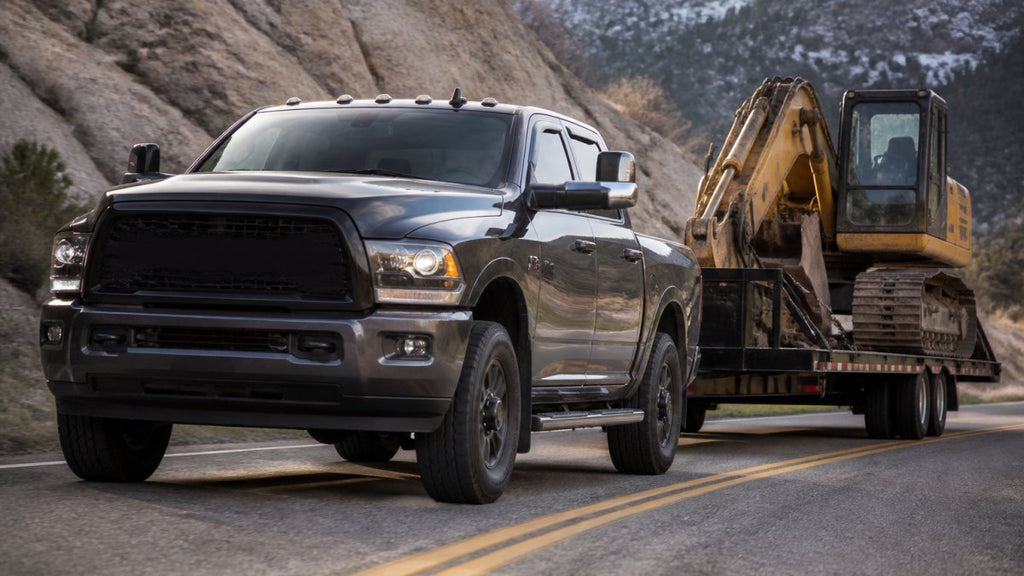
Supercharger Upgrades for Diesel Truck Towing: Power and Reliability
Table of Contents
- Why Diesel Truck Owners Choose Supercharger Upgrades for Towing
- Turbo vs. Supercharger for Heavy Towing: Which Delivers Better Results
- How Diesel Engine Torque Gains Transform Towing Performance
- Forced Induction Maintenance for Towing: Keeping Your Engine Healthy
- EGT Monitoring and Thermal Management Under Load
- Transmission and Drivetrain Upgrades: The Hidden Cost of More Power
- Warranty and Insurance Considerations for Supercharger Installations
- Frequently Asked Questions
Last Updated: September 28, 2026
Why Diesel Truck Owners Choose Supercharger Upgrades for Towing
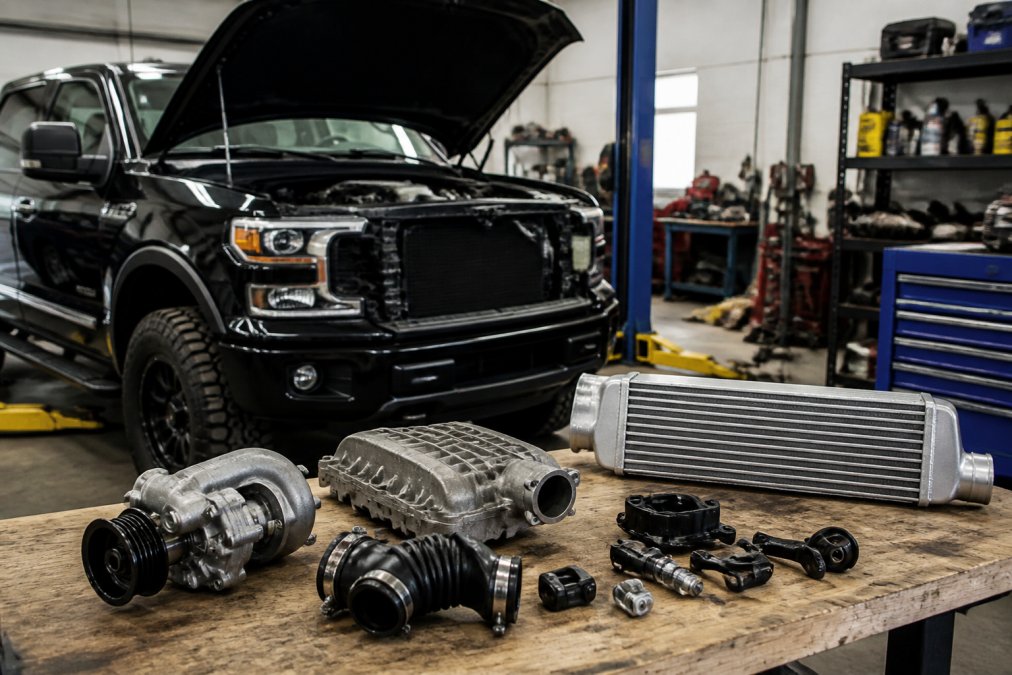
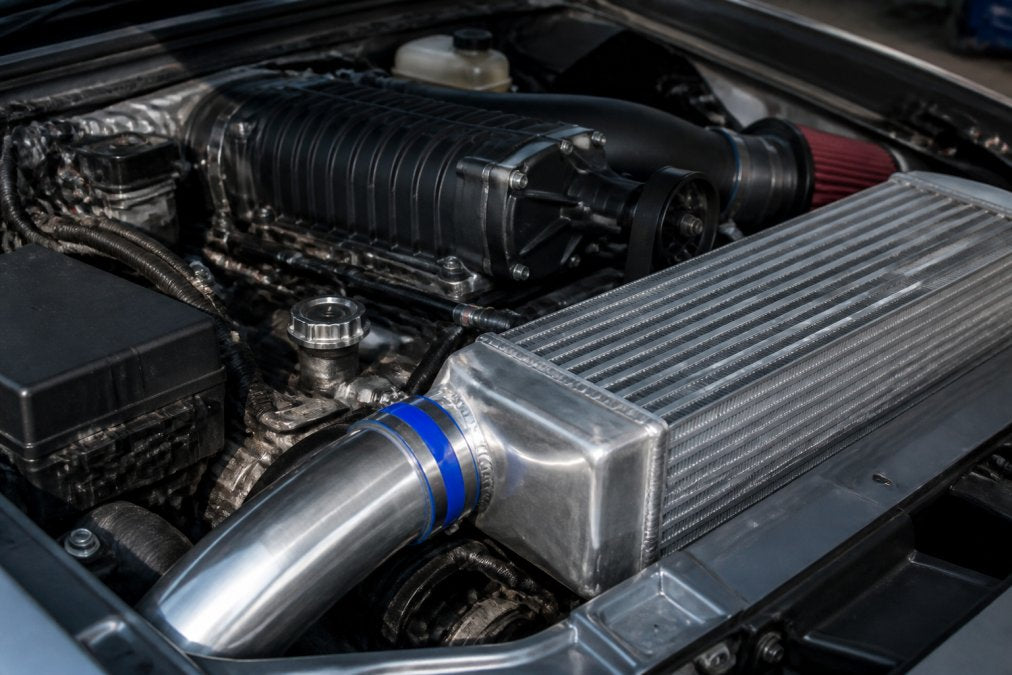
Diesel truck owners face a persistent challenge: factory torque output often falls short when towing heavy loads or climbing steep grades, which is why a supercharger upgrade diesel towing solution has become essential. A supercharger upgrade for diesel trucks towing directly addresses this gap by forcing more air into the combustion chamber, increasing horsepower and torque without the lag that turbochargers introduce. At VT Superchargers, we've engineered bolt-on kits that deliver measurable power gains while maintaining the reliability diesel owners demand.
Diesel trucks equipped with forced induction experience smoother power delivery across the RPM range, reducing transmission strain during extended towing and gear hunting on highways.
Pro Tip
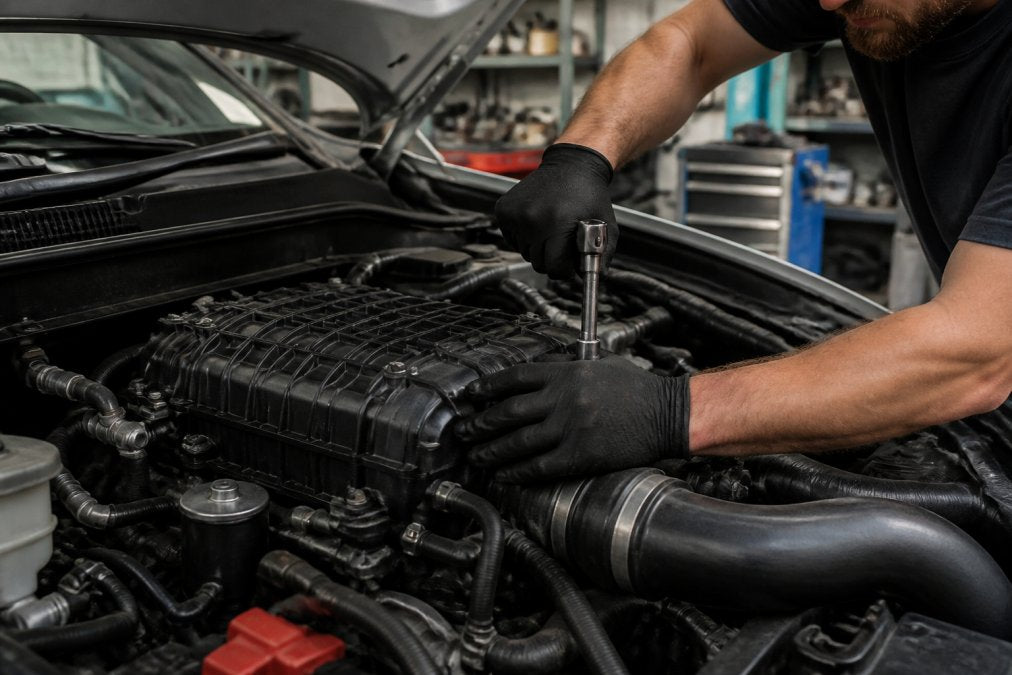
Many diesel owners assume they need a complete engine rebuild to gain meaningful power. Modern bolt-on supercharger kits change that equation, they bolt directly to your existing engine with OEM-style fitment, no custom fabrication required.
Gear hunting, constant upshifting and downshifting from insufficient torque, drains fuel economy and accelerates transmission wear. A forced induction upgrade flattens the power band, reducing this strain and improving towing efficiency.
Turbo vs. Supercharger for Heavy Towing: Which Delivers Better Results
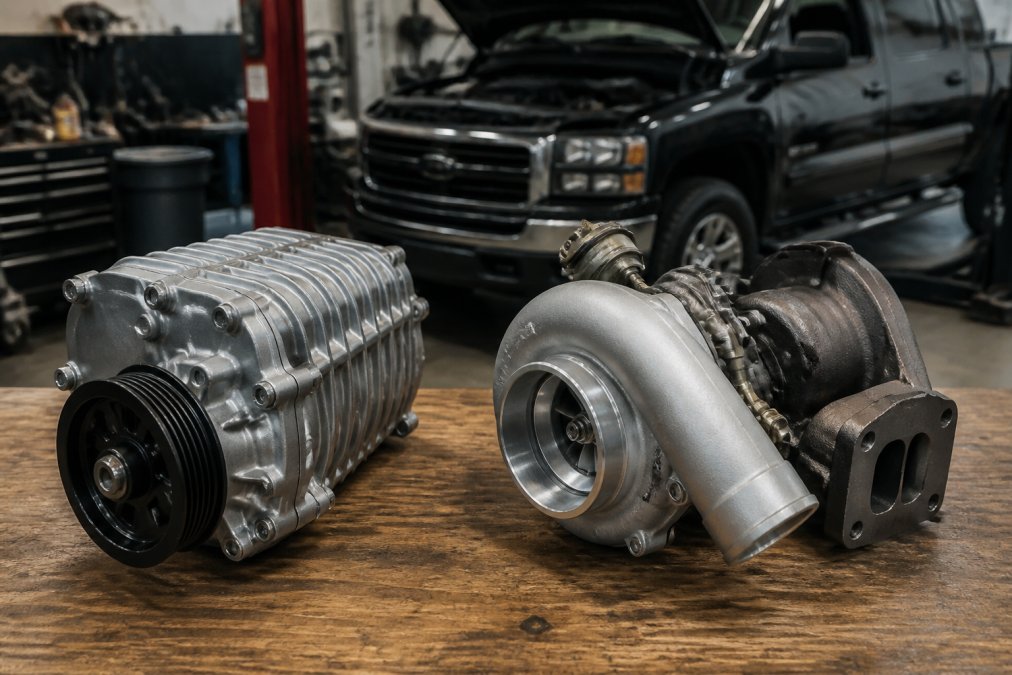
Turbochargers rely on exhaust gas to spin the turbine, creating turbo lag, a delay between throttle demand and power delivery. For towing, this hesitation when merging or climbing can be problematic. A diesel truck at 50 mph pulling a loaded trailer experiences noticeable lag before boost pressure builds.
Superchargers connect directly to the engine's crankshaft via belt drive, delivering boost immediately with no lag. This instant response prevents transmission hunting and keeps engine load stable under sustained pulling, with boost pressure rising proportionally to RPM across the towing band (1,200-2,500 RPM).
Turbochargers generate extreme exhaust gas temperatures (EGT), climbing to 1,300-1,450 degrees under sustained towing and requiring aggressive fuel-injection timing adjustments. Superchargers compress ambient air instead, running cooler at the source, though compressed air heats 80-120 degrees above ambient. Intercooling is essential for both systems under towing loads.
Turbochargers maintain high EGT continuously during towing, climbing toward 1,350-1,400 degrees over 10-15 minutes on long grades. Superchargers stabilize at 1,200-1,280 degrees because the intercooler rejects heat during steady-state operation. This thermal margin reduces the risk of exceeding safe EGT thresholds and extends engine life.
Superchargers deliver faster response and lower sustained heat, keeping transmissions happier during long hauls with stable EGT and no aggressive fuel timing adjustments. For sustained towing over hours, a supercharger's thermal profile is the safer choice.
Key Takeaway
Diesel engines respond differently to forced induction than gasoline engines. Turbochargers excel at peak power but generate sustained high EGT under towing; superchargers deliver instant response and lower thermal stress, making them better suited to long-haul diesel towing where heat management and transmission stability matter more than peak horsepower.
How Diesel Engine Torque Gains Transform Towing Performance
Torque moves your load; forced induction increases it across a wider RPM range, which is precisely what heavy towing demands.
Increased torque reduces aggressive downshifting, keeping the engine in its optimal efficiency zone. A truck maintaining steady RPM while towing burns less fuel and generates less heat than one constantly hunting for the right gear.
Boost pressure and torque are directly related but not linear; engine calibration, fuel injection timing, and air-to-fuel ratio all factor into output. VT Superchargers kits are engineered for OEM-style fitment, ensuring torque gains translate to real-world improvements without exceeding safe parameters.
Forced Induction Maintenance for Towing: Keeping Your Engine Healthy
The supercharger belt should be inspected annually and replaced at 60,000-80,000 miles. Belt tension is critical under forced induction; check it every 10,000 miles during towing season, it should deflect no more than 0.5 inches under moderate thumb pressure. A loose belt slips under high boost, reducing efficiency and generating heat.
Inspect the intercooler every 5,000 miles during towing season and clean it with compressed air. A clogged intercooler raises intake air temperature 20-30 degrees, increasing EGT and reducing power output. Reduced efficiency forces lower boost pressures, defeating the upgrade's purpose.
Boost pressure increases combustion pressure, demanding cleaner fuel and more frequent filter changes. At 12 psi boost, combustion pressure increases roughly 80 percent, making fuel injectors more vulnerable to clogging. Change your fuel filter every 10,000-15,000 miles when towing regularly (every 8,000 miles in dusty conditions), not the 30,000-mile stock interval.
Water contamination is especially dangerous under boost, causing fuel injector failure or detonation. Use a fuel additive with water-removal properties every other fill-up during towing season. An auxiliary fuel filter with water-separator ($150-300) provides insurance against contamination.
Forced induction raises peak combustion temperatures to 2,200-2,400 degrees Fahrenheit (versus 1,800-2,000 stock), accelerating oil degradation. Use premium diesel oil (API CJ-4 or higher) and change it every 5,000-7,000 miles under towing loads, compared to 10,000 miles stock. Quality oil with strong anti-wear properties is essential.
Air intake cleanliness is equally critical. A clogged air filter reduces the volume of clean air reaching the supercharger, which drops boost pressure and defeats the purpose of the upgrade. More importantly, a dirty air filter forces the engine to draw air from the bypass, which may not be filtered, introducing abrasive particles into the cylinders. Inspect your air filter every 5,000 miles and replace it when it shows any visible dirt accumulation. In dusty towing environments (desert, construction zones), replace it every 3,000-5,000 miles.
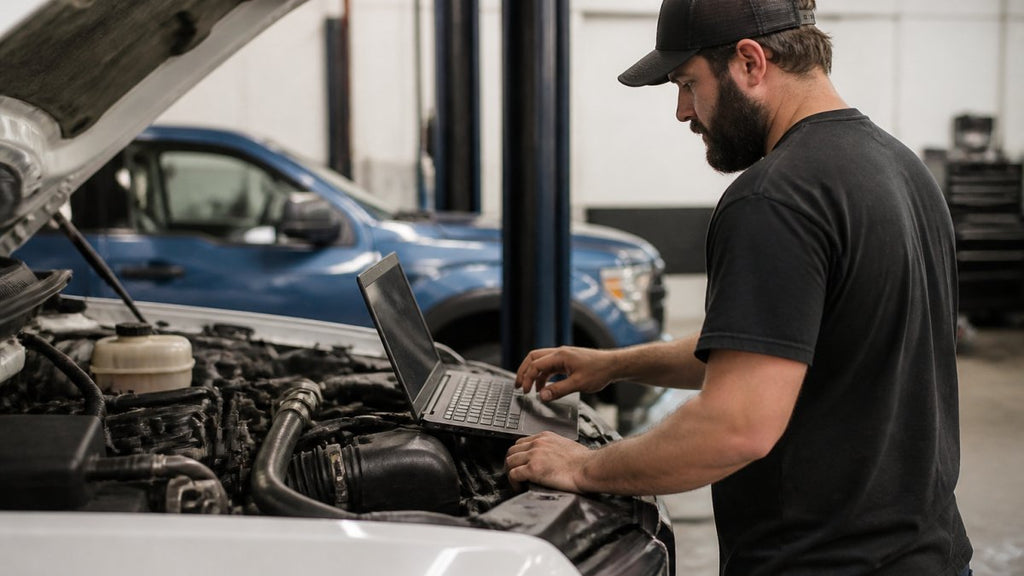
EGT monitoring integrates directly into maintenance planning. Install a pyrometer (EGT gauge) early, before you need it diagnostically. A pyrometer costs $200-400 and installs in your dashboard or on a pillar mount. It becomes your real-time feedback system during towing. When you see EGT approaching 1,300 degrees Fahrenheit, you ease off the throttle, reduce load, or find a cooler route. Without it, you're flying blind and risking engine damage. More importantly, EGT trends tell you when maintenance is needed: if EGT climbs higher than normal at the same throttle position, it signals fuel system contamination, intercooler fouling, or timing drift. Catching these issues early prevents catastrophic failure.
Transmission fluid deserves attention equal to engine oil. Forced induction adds engine heat that transfers through the transmission fluid via the cooler lines. Automatic transmission fluid degrades faster at elevated temperatures; every 20-degree increase in fluid temperature cuts fluid life roughly in half. Change transmission fluid every 30,000-40,000 miles when towing regularly with forced induction, compared to 60,000-100,000 miles for stock operation. Use only the transmission fluid specified by your truck's manufacturer; mixing fluid types or using incorrect viscosity can cause shifting problems and accelerate wear.
Watch Out
Neglecting fuel filtration, oil changes, or intercooler cleaning under forced induction is the fastest path to engine damage. The extra pressure that gives you towing power also means contaminants and heat stress components harder than they're designed to handle. A $50 fuel filter change every 10,000 miles prevents $5,000+ fuel injector failures.
EGT Monitoring and Thermal Management Under Load
Exhaust gas temperature monitoring is the often-overlooked key to long-term reliability with forced induction. EGT climbs rapidly under sustained boost, and diesel engines become unsafe above 1,350-1,400 degrees Fahrenheit. Many towing failures happen not because the supercharger failed, but because the driver didn't know EGT was climbing toward dangerous levels.
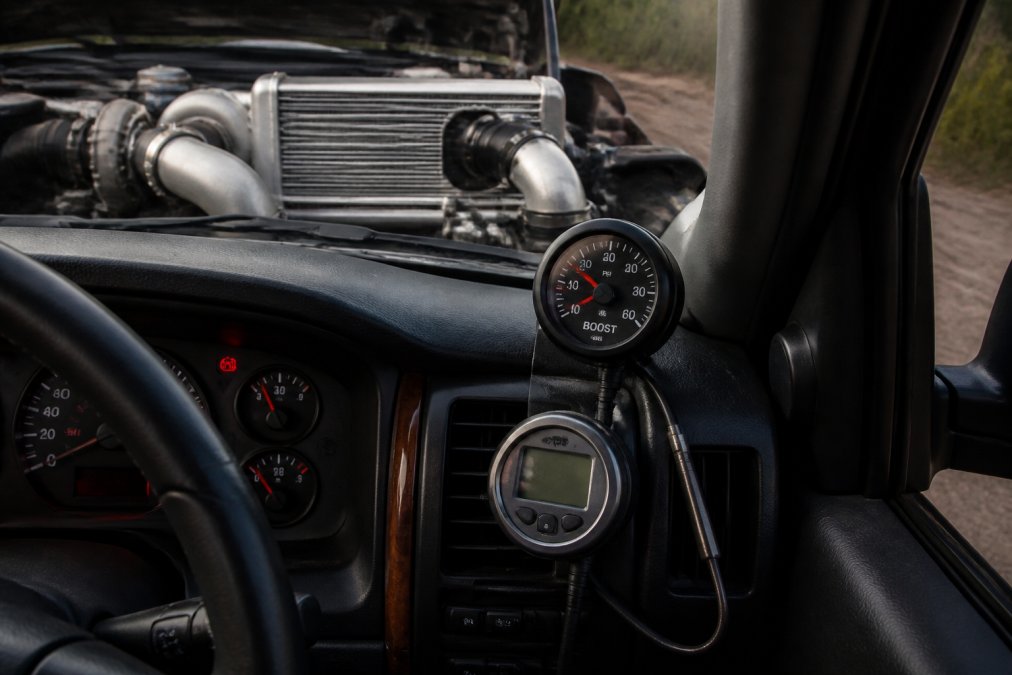
A pyrometer (EGT gauge) costs $200-400 and installs in your dashboard or on a pillar mount. It becomes your real-time feedback system during towing. When you see EGT approaching 1,300 degrees, you ease off the throttle, reduce load, or find a cooler route. Without it, you're flying blind.
Thermal management extends beyond the engine itself. The intercooler, which cools compressed air before it enters the cylinders, must be oversized for towing applications. Stock intercoolers often can't handle sustained boost under load.
Transmission and Drivetrain Upgrades: The Hidden Cost of More Power
Here's what most supercharger marketing doesn't emphasize: your transmission and driveline weren't engineered for the torque output of a forced induction engine. A stock diesel transmission rated for 400 lb-ft of torque will experience stress when you add 150+ lb-ft through a supercharger upgrade.
Best For
Diesel trucks used primarily for occasional towing can often get by with just a transmission cooler upgrade. Trucks towing regularly or at high loads benefit from a full drivetrain refresh, transmission cooler, upgraded driveline components, and fresh engine mounts.
Warranty and Insurance Considerations for Supercharger Installations
Installing a supercharger upgrade diesel towing system can affect factory powertrain warranties. Many manufacturers exclude coverage for engine, transmission, and drivetrain failures on modified vehicles. That's the trade-off for the power gains.
Frequently Asked Questions
Will a supercharger upgrade actually increase my diesel truck's towing capacity?
Yes, a supercharger upgrade increases towing capacity by boosting torque output and horsepower, which directly improves your truck's ability to handle heavier loads and maintain stability under strain. The torque gains occur across the power band, giving you better pulling power at highway speeds, critical for consistent towing performance. However, your GCWR (Gross Combined Weight Rating) remains the legal limit, so the upgrade enhances how efficiently you can tow within that limit, not the limit itself.
Is a turbo or supercharger better for towing?
Superchargers deliver immediate boost pressure with no turbo lag, making them better for towing because you get consistent torque response when you need it, pulling uphill or merging with a trailer. Turbos build boost gradually, which can delay power delivery under load. For diesel towing applications, superchargers provide more predictable, manageable engine behavior, though turbos are more fuel-efficient at cruising speeds. Your choice depends on whether you prioritize towing responsiveness or highway efficiency.
How does forced induction affect diesel engine longevity while towing?
Forced induction increases combustion pressure and exhaust gas temperature, which accelerates wear on pistons, rings, and valve seats if not managed properly. Monitoring EGT (Exhaust Gas Temperature) and maintaining proper air-to-fuel ratios prevents overheating. Quality intercoolers and upgraded cooling systems are essential to keep intake temperatures down. With proper maintenance, including regular oil changes, fuel filter replacement, and transmission cooling upgrades, modern diesel engines handle forced induction reliably for the long term.
Can I install a bolt-on supercharger kit myself, or do I need a professional shop?
Many bolt-on supercharger kits are designed for DIY installation if you have basic mechanical skills and proper tools, though installation complexity varies by vehicle. The process typically involves removing engine covers, installing mounting brackets, connecting fuel and boost lines, and programming the engine control unit. If you're uncomfortable with any step, professional installation ensures correct fitment and calibration. Either way, the 24-month warranty on quality kits covers defects, not labor, so factor installation costs into your budget.
Related post


RECENT POSTS