Truck Supercharger Maintenance Tips and Tricks for 2026
Table of Contents
- Truck Supercharger Maintenance Tips: Why Forced Induction Needs a Different Routine
- Supercharger Oil Change Interval: When to Service Your Self-Contained System
- Supercharger Belt Inspection: Checking Tension, Wear, and Pulley Alignment
- Signs of a Failing Supercharger: Noises, Boost Loss, and Bearing Wear
- Air Filter, Intake Manifold, and Cooling System Checks
- Maintenance Intervals for Towing, Off-Roading, and Daily Driving
- DIY vs. Professional Service: When to Handle It Yourself
- Frequently Asked Questions
Last Updated: September 26, 2026
Truck Supercharger Maintenance Tips: Why Forced Induction Needs a Different Routine
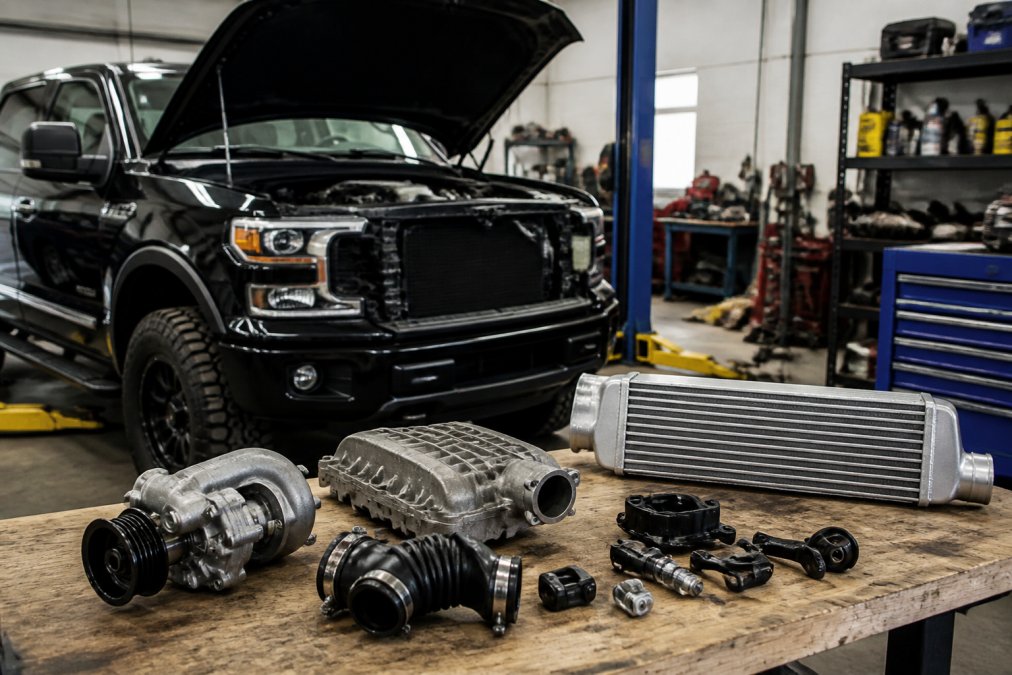
Truck supercharger maintenance is the practice of servicing the oil, belt, intake, and cooling systems that keep a forced induction setup alive under load. At VT Superchargers, a neglected blower can quickly turn an investment into a rebuild bill. A supercharger spins far faster than your engine's redline, so every wear item ages on an accelerated clock. Below, we break down the exact intervals, checks, and diagnostic tricks that separate a 200,000-mile blower from a paperweight.
Watch Out
The most common mistake is treating a supercharger like a sealed, maintenance-free part. Self-contained oiling systems still need fluid changes, and skipping them is the fastest path to bearing wear and a seized rotor.
Supercharger Oil Change Interval: When to Service Your Self-Contained System
Most self-contained supercharger units need an oil change every 30,000 to 50,000 miles, or sooner under heavy towing and off-road use. Always check your specific kit's manual for the recommended interval. A self-contained oiling system holds its own lubricant supply, separate from the engine, so the fluid sees only the blower's internal heat and shear. Synthetic lubricant is the standard choice because it resists thermal breakdown better under sustained boost.
| Driving Condition | Oil Change Interval | Check Level |
|---|---|---|
| Daily driving, light load | 50,000 miles | Every 5,000 miles |
| Mixed towing and commuting | 35,000 miles | Every 3,000 miles |
| Heavy towing or off-road | 25,000 miles | Every 1,500 miles |
Supercharger Belt Inspection: Checking Tension, Wear, and Pulley Alignment
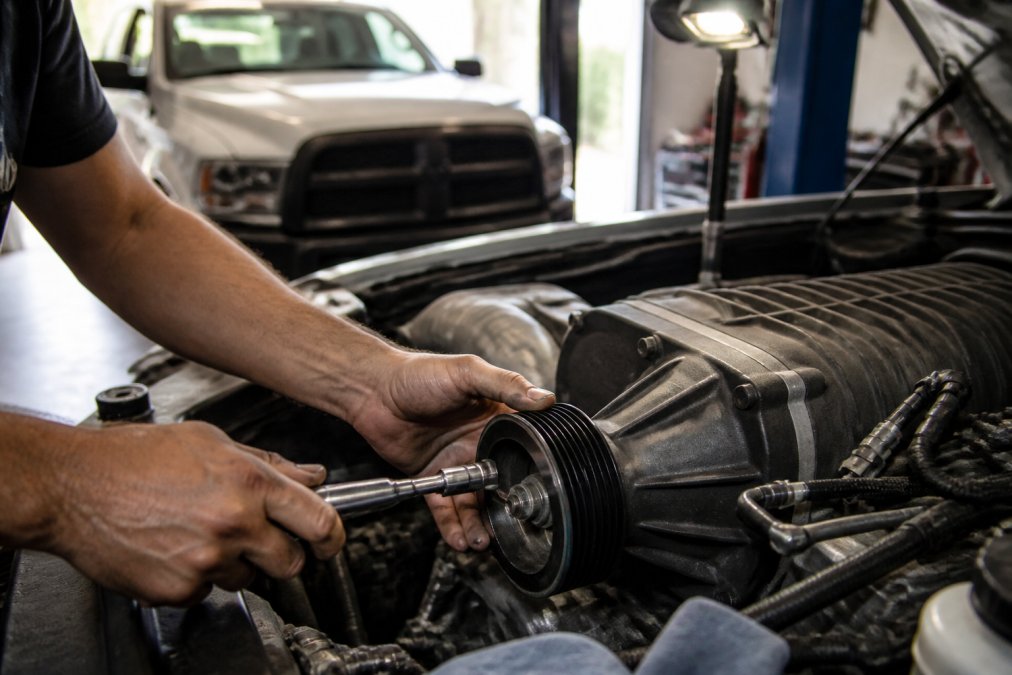
Inspect the serpentine belt every 10,000 to 15,000 miles and replace it at the first sign of glazing, cracking, or fraying. The belt is a wear item, and on a supercharged truck it works harder than on a stock engine because it drives the blower pulley under constant tension. A failing belt can slip, rob boost, and leave you stranded.
Pro Tip
Mark the belt's installed direction with a paint pen before you remove it. Reinstalling a used belt backward accelerates wear and can cause a chirp you'll chase for weeks.
Signs of a Failing Supercharger: Noises, Boost Loss, and Bearing Wear
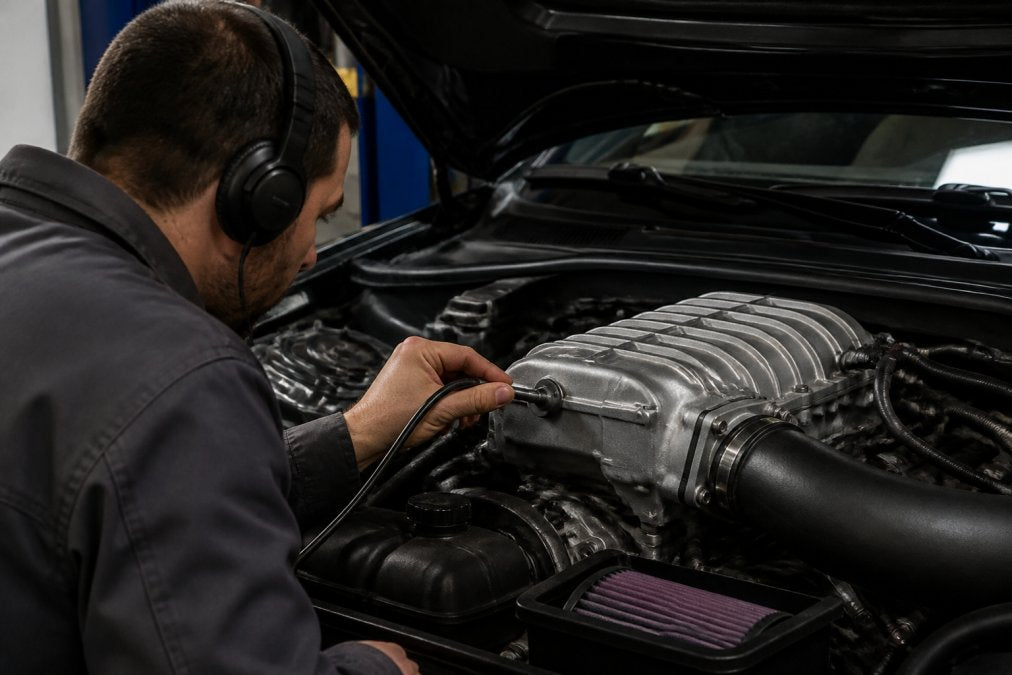
The clearest signs of a failing supercharger are a whine that changes with boost, a drop in boost pressure, and metallic debris in the oil. But the symptom alone doesn't tell you what's wrong, the character of the noise or the pattern of the boost loss does. Most guides stop at listing symptoms. This section teaches you to read them.
Decoding Supercharger Noises
A supercharger makes noise by design. The trick is separating normal blower whine from the sounds that mean money. Use this as a diagnostic starting point:
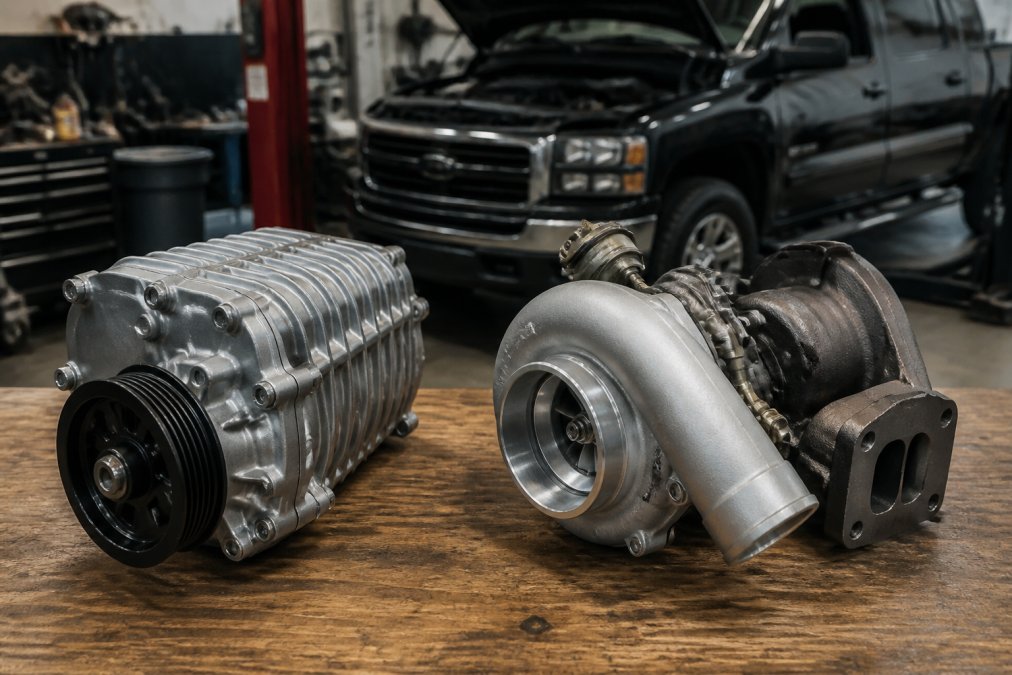
- Steady whine that rises with RPM, Normal. Roots and twin-screw blowers whine because of how the rotors mesh. If the pitch tracks RPM smoothly and the volume is consistent, the unit is healthy.
- Whine that spikes only under boost, Often a boost leak at a coupler, intake gasket, or intercooler pipe rather than an internal fault. Pressure escapes and the blower works harder to hit target.
- Rattle at idle that disappears off-idle, Commonly a worn belt tensioner, a loose idler pulley, or a failing coupler between the blower and the intake. It is frequently not the blower itself.
- Grinding or metallic scrape under load, Serious. This usually points to bearing degradation or rotor-to-housing contact. Stop driving and diagnose before the rotor lobes score the housing.
- Rhythmic knock that scales with RPM, Rotor clearance or timing-gear wear. The lobes are contacting each other or the case in a repeating pattern. This is a rebuild-level symptom.
- Chirp or squeal at startup, Belt slip or misalignment, not a blower failure. Check tension and pulley alignment first.
Reading Boost Loss
Boost that no longer hits target is a symptom with several possible causes, and the order you check them matters:
- Boost leak test first. Pressurize the intake tract and listen for escaping air at couplers, the throttle body, the intercooler, and vacuum lines. A leak is far more common than internal blower failure.
- Check belt slip. A glazed or loose belt can slip under load and bleed boost without making obvious noise. Look for black dust around the pulleys.
- Check the bypass or recirculation valve. A stuck-open bypass dumps boost continuously. A stuck-closed one can cause surge.
- Check the tune and sensors. A mass airflow sensor reading low, or a tune pulling timing, can mimic a mechanical boost problem.
- Only then suspect the blower. Internal wear that reduces boost is usually accompanied by noise or oil contamination.
Oil and Debris Clues
Watch Out
A rhythmic knock or grinding under load is not a "keep an eye on it" symptom. Rotor-to-housing contact can destroy a blower in a few hundred miles. Park the truck and diagnose.
Pro Tip
Record the noise with your phone at idle, at cruise, and under load.
If boost falls but the blower sounds fine, work the leak-test path before you spend money on internals. If the blower is grinding or knocking, stop driving and get it to a shop that services forced induction.
Air Filter, Intake Manifold, and Cooling System Checks
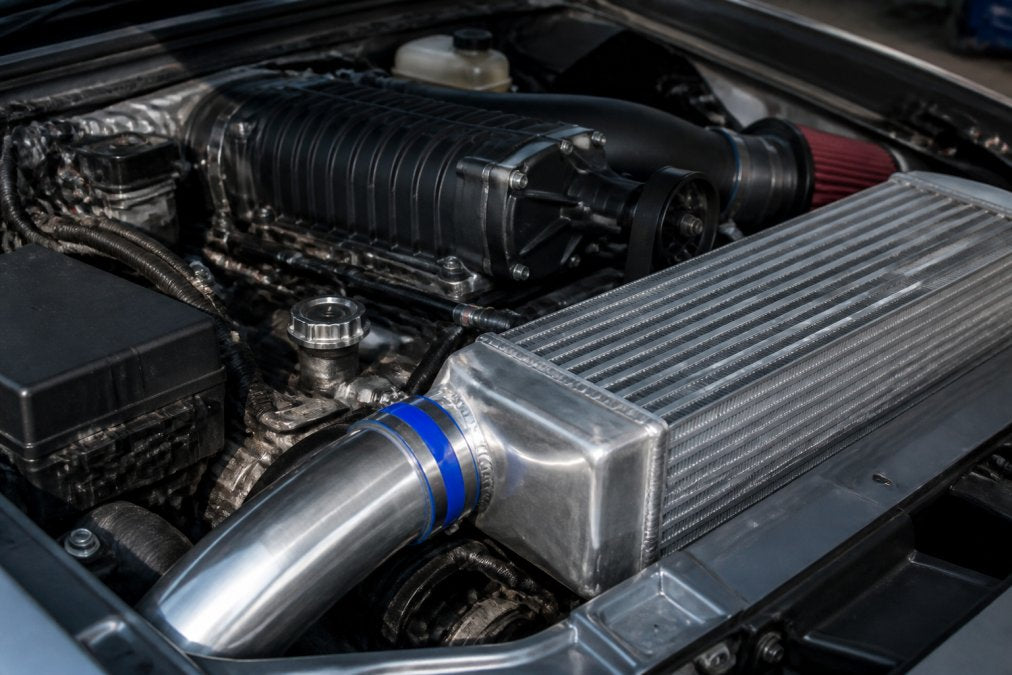
Clean or replace the air filter every 15,000 to 20,000 miles, and inspect the intake manifold and intercooler at the same time. Debris ingestion is the quiet killer of superchargers; a clogged filter lets grit past the seal and into the compressor housing. On trucks that see dust and dirt, shorten that interval.
Maintenance Intervals for Towing, Off-Roading, and Daily Driving
Towing and off-roading shorten every maintenance interval because they raise load, heat, and debris exposure. A truck that tows a trailer up grades runs the blower at high boost for minutes at a time, and that sustained load accelerates oil breakdown and belt wear. Off-road use adds dust to the intake and vibration to every bracket and fastener.
Use these usage-based intervals as a starting point:
| Use Case | Oil Change | Belt Check | Air Filter |
|---|---|---|---|
| Daily driver | 50,000 mi | 15,000 mi | 20,000 mi |
| Towing | 35,000 mi | 10,000 mi | 15,000 mi |
| Off-road | 25,000 mi | 7,500 mi | 10,000 mi |
DIY vs. Professional Service: When to Handle It Yourself
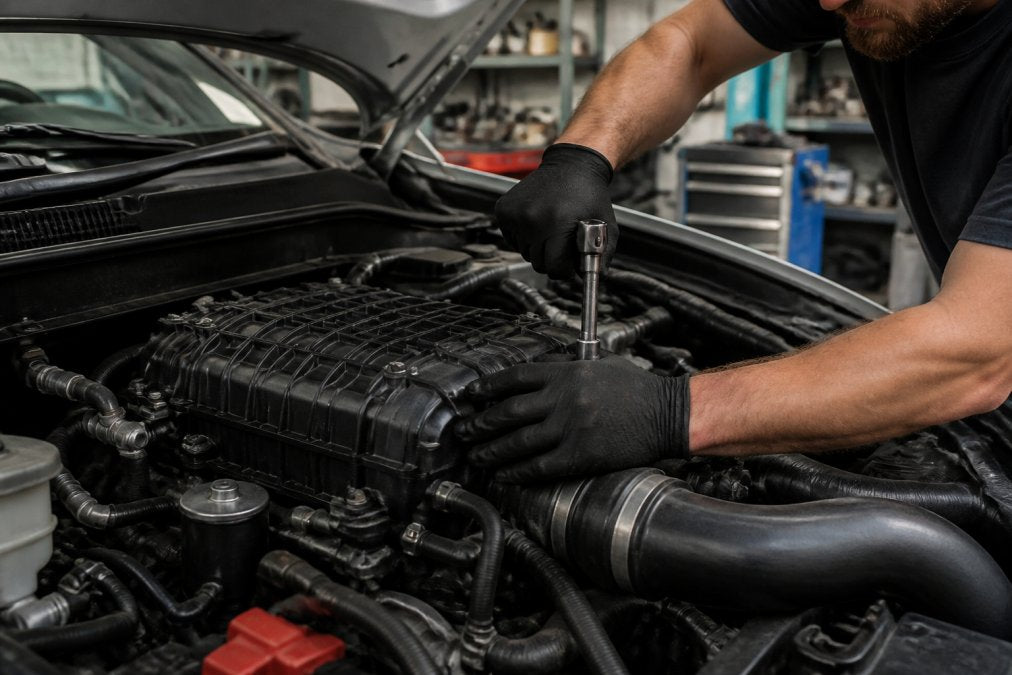
Most supercharger maintenance falls into different categories of difficulty. Knowing the scope of a job before you pick up a wrench can help you decide whether to tackle it yourself or seek professional help.
Green Light: Safe DIY Jobs
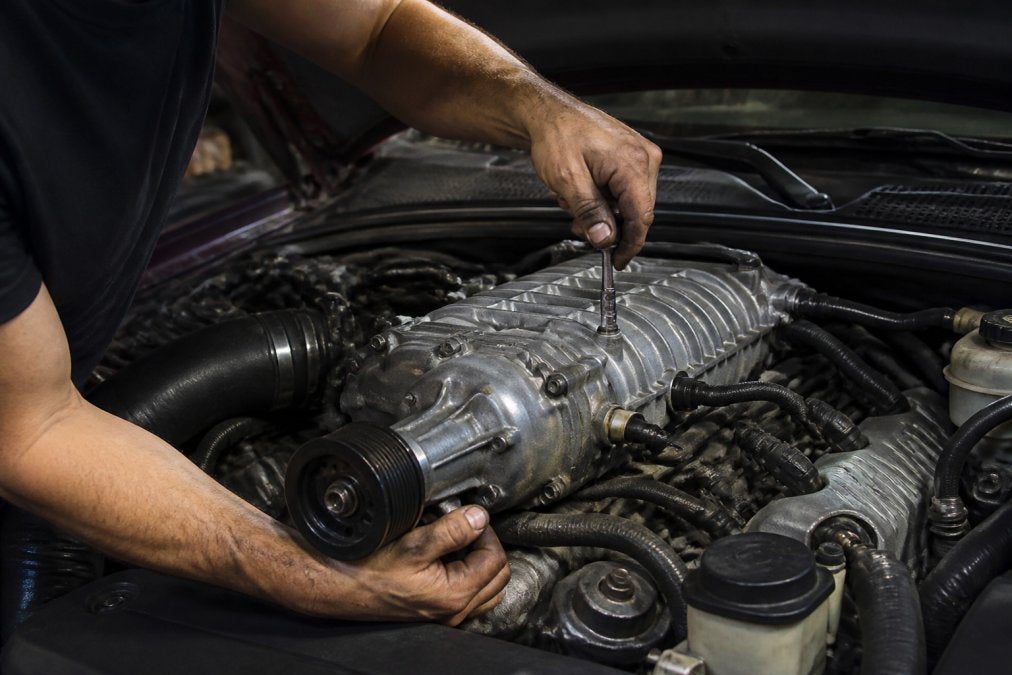
These tasks need basic hand tools, a torque wrench, and a clean workspace. An afternoon is enough.
- Blower oil changes on self-contained units, drain, refill to the mark, torque the plug to spec.
- Belt inspection and replacement, check tension, look for glazing and cracking, verify pulley alignment.
- Air filter service, clean or replace, inspect the intake tract for debris.
- Coolant level and condition checks on air-to-water intercooler systems.
- Visual inspections, oil weeping, loose fasteners, chafed hoses, debris in the engine bay.
Yellow Light: DIY With Caution
These jobs are doable at home but carry real risk if you rush or skip steps.
- Serpentine belt replacement on a supercharged truck, routing diagrams vary, and getting the belt on the wrong side of an idler will destroy it in minutes. Photograph the routing before you remove anything.
- Intercooler pump replacement, bleeding the system properly matters; trapped air causes hot intake temps and heat soak.
- Boost leak testing, building a simple tester is easy, but interpreting results takes patience.
- Spark plug changes on boosted engines, gap and heat range matter more than on a naturally aspirated engine. Use the plug the tune calls for.
Red Light: Hand It to a Professional
These jobs require specialized tooling, rotor clearance specs, or tuning knowledge that a general DIYer does not have.
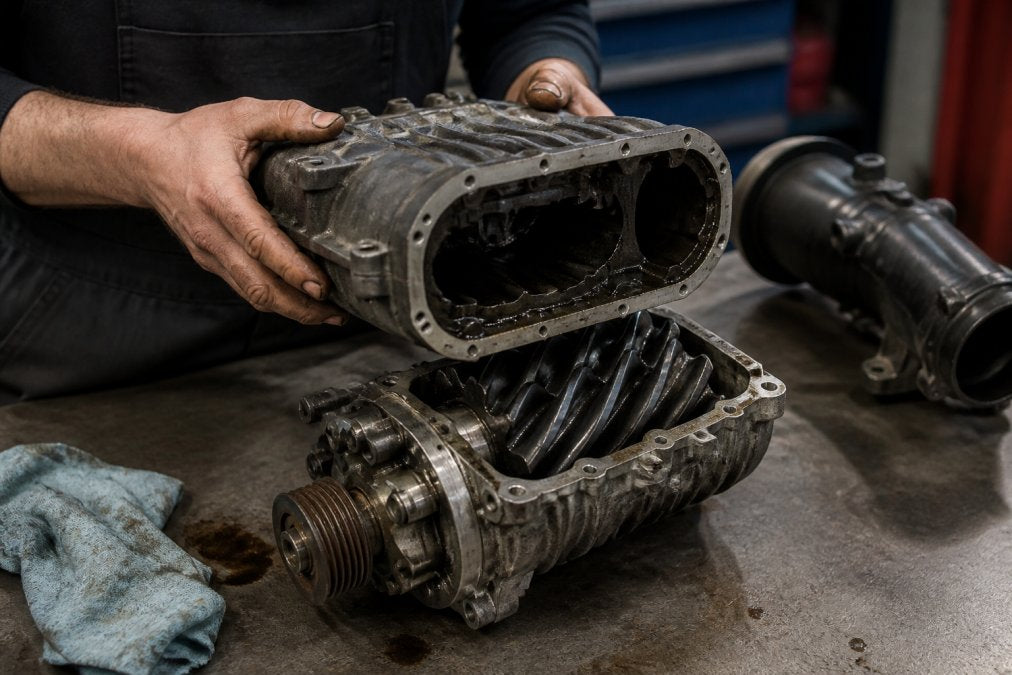
- Opening the blower case, rotor clearance, timing gear alignment, and case sealing all have tight tolerances. Get this wrong and the unit self-destructs.
- Bearing or seal replacement, press tools and spec sheets are mandatory.
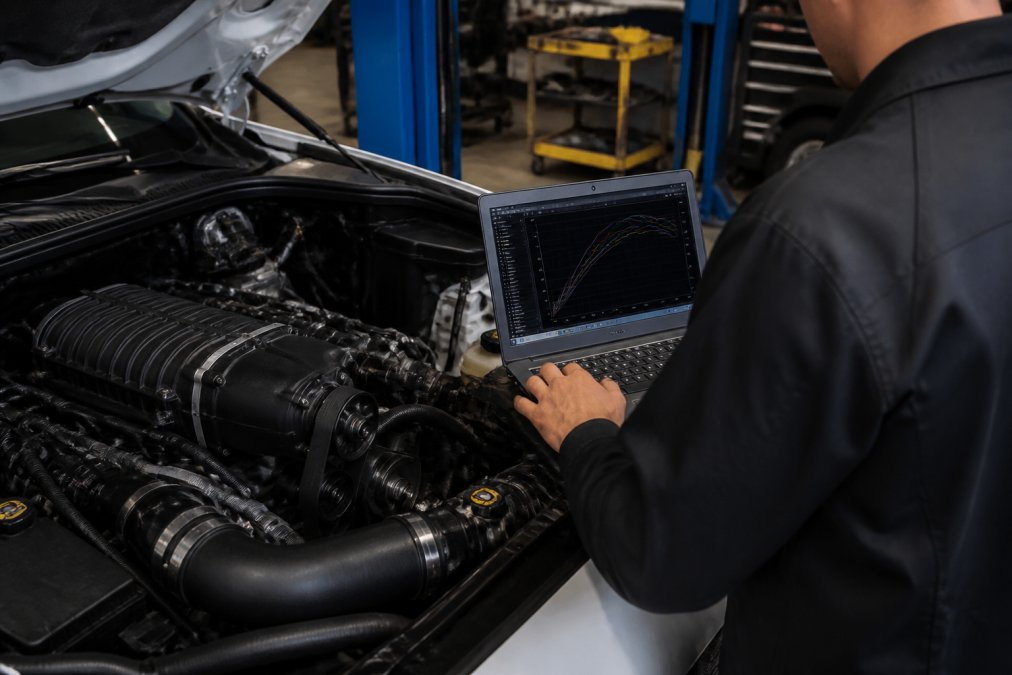
- Diagnosing boost loss you can't trace, a shop with a smoke machine and dyno data will find it faster than you will with guesswork.
- Any job that requires a tune, changing pulley size, injectors, or airflow characteristics without a matching tune risks lean conditions and detonation.
- Kit installation, a full supercharger kit install involves fuel system work, ECU calibration, and cooling system integration. VT Superchargers kits like the Toyota Tundra 5.7L 3UR-FE system require an ECU tune for safe operation, and professional installation is recommended for the 3.5L Tacoma kit.
The Threshold Rule
If a job meets any of these three conditions, stop and call a pro:

- It requires opening the blower case. Rotor clearance and timing are not driveway-friendly.
- It requires a torque spec you can't find in a service manual or kit documentation. Guessing on fasteners that hold a spinning assembly is how parts fail.
- It changes airflow, fuel delivery, or pulley ratio. Any of those changes needs a tune, and a bad tune kills engines.
Key Takeaway
If a job needs the blower opened, a torque spec you can't find, or a tune, that's your signal to call a pro. Everything else you can do in the driveway.
Frequently Asked Questions
What maintenance does a supercharger need?
Supercharger maintenance includes checking the oil level and condition (for self-contained units), inspecting the serpentine belt for wear and proper tension, cleaning or replacing the air filter, and monitoring the intercooler coolant. You should also listen for unusual noises and watch boost pressure. Following a routine based on your driving conditions, daily driving, towing, or off-roading, helps prevent costly repairs.
Do superchargers need to be oiled?
Many modern superchargers, like those from VT Superchargers, use a self-contained oiling system that does not share engine oil. These units require periodic oil changes. Always check your specific kit's manual for the recommended interval and use the correct synthetic lubricant.
How often does a supercharger need to be serviced?
Service intervals vary by type and use. For self-contained oiling systems, periodic oil changes are required. Inspect the belt regularly or at each oil change. If you tow or off-road frequently, shorten these intervals. Always refer to your supercharger kit's documentation for exact recommendations.
Can a supercharger affect the lifespan of my truck engine?
When installed and maintained correctly, a supercharger should not significantly reduce engine lifespan. Using the required tune, premium fuel, and keeping up with maintenance like oil changes and belt inspections are key. Many forced induction systems are designed for durability, but neglecting maintenance can lead to premature wear.
A supercharger rewards the owner who treats it as a living system rather than a bolt-on accessory. The trucks that run 200,000 miles on boost are the ones whose owners track oil, belts, and intake air like a checklist, not an afterthought. VT Superchargers builds bolt-on kits with OEM-style fitment and backs them with a 24-month warranty, plus financing and worldwide shipping. Register your kit with VT Superchargers and keep your forced induction build running strong for the long haul.
Related post
RECENT POSTS