How to Choose a Supercharger Kit: A 2026 Guide
Table of Contents
- Understanding Supercharger Types and How They Work
- Supercharger vs Turbocharger Pros and Cons
- Matching a Supercharger Kit to Your Vehicle and Goals
- Supporting Engine Mods for Superchargers
- CARB Legal Supercharger Kits and Emissions Compliance
- Long-Term Maintenance, Reliability, and Hidden Costs
- Installation Considerations and Warranty Protection
- How to Choose a Supercharger Kit: Your Selection Checklist
Last Updated: August 10, 2026
Understanding Supercharger Types and How They Work
A supercharger is a forced induction system that compresses ambient air and forces it into your engine's cylinders, delivering significantly more oxygen per combustion cycle than naturally aspirated engines. This increased air density translates directly into more fuel burn, higher combustion pressure, and measurable gains in horsepower and torque.
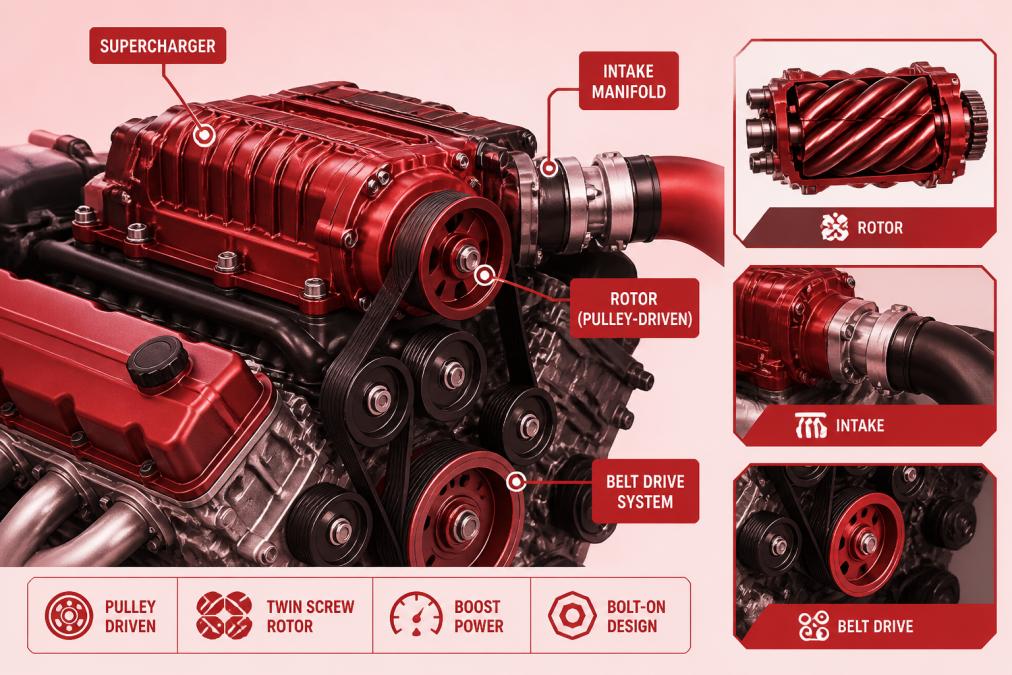
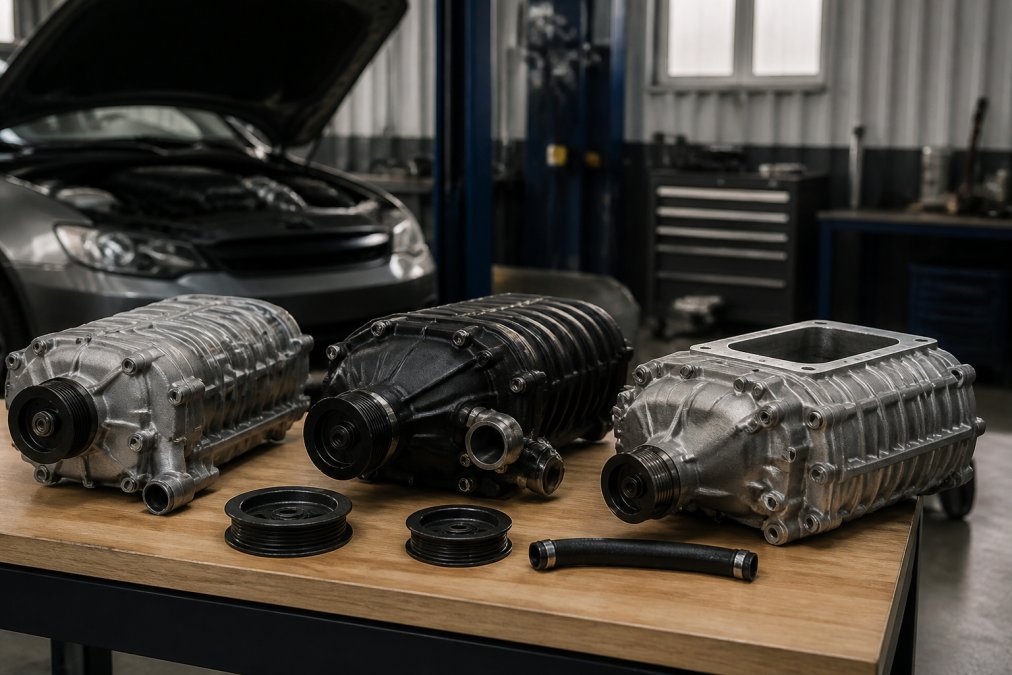
Roots-Type Superchargers
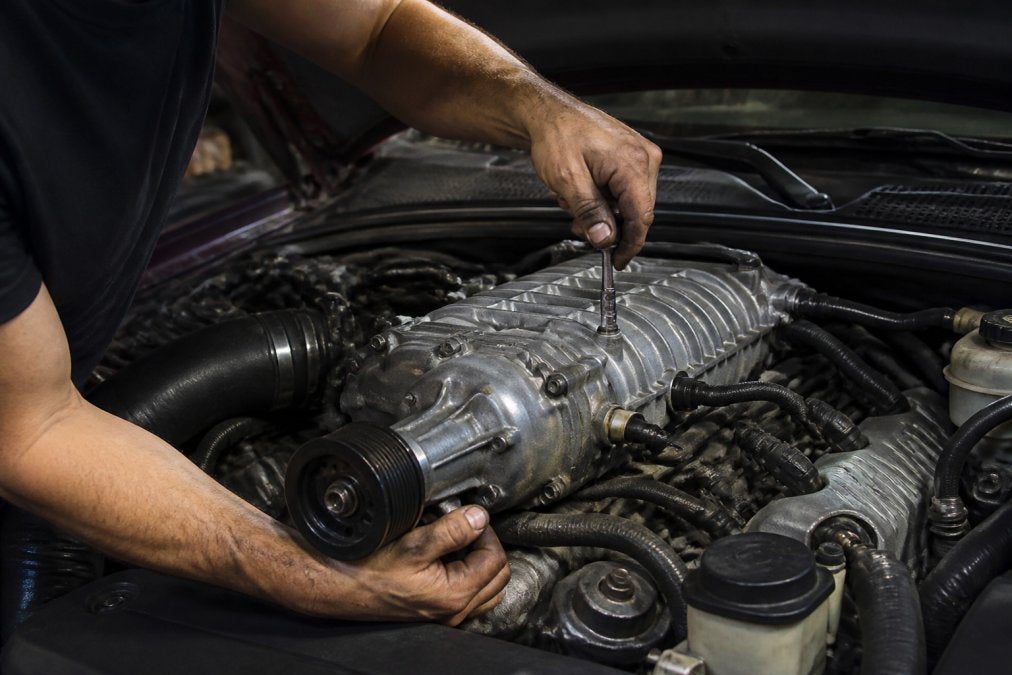
A roots-type supercharger uses two rotating lobes that mesh together to trap and compress air as they spin. This design delivers boost pressure directly proportional to engine RPM, producing a linear, predictable torque curve ideal for street driving and immediate throttle response.
The primary advantage is simplicity and low-end torque. Fewer moving parts mean better reliability, and roots superchargers generate boost at lower RPM ranges, effectively addressing gear-hunting problems in larger-tired trucks. The trade-off is efficiency, roots designs generate more heat during compression and require an intercooler to manage thermal buildup. Parasitic loss is also higher than centrifugal designs.
Twin-Screw Superchargers
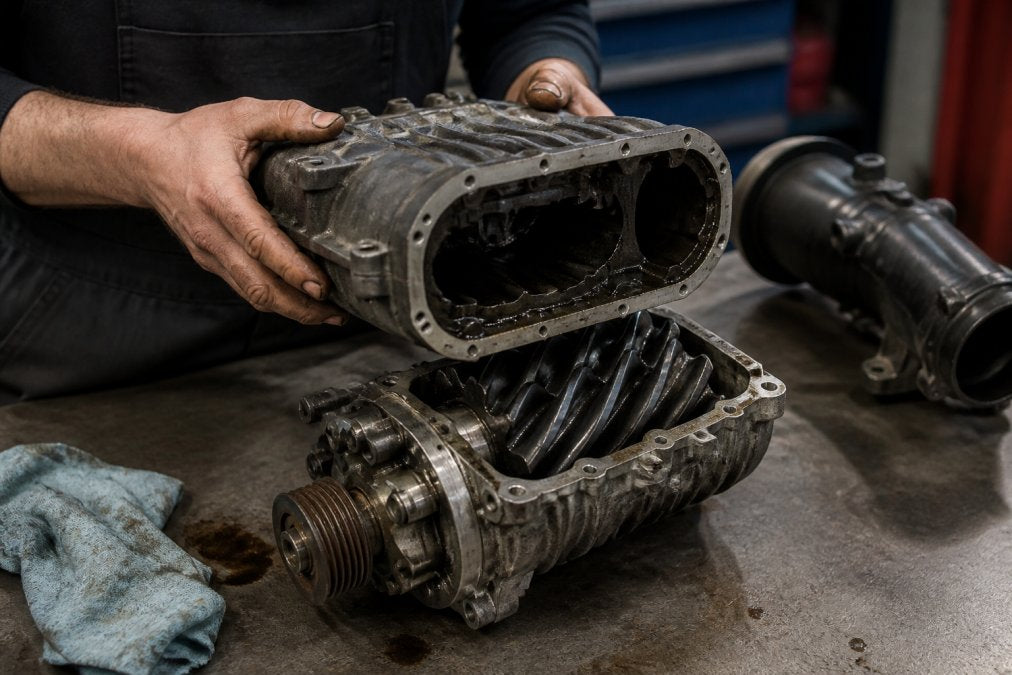
Twin-screw superchargers use two interlocking helical rotors that compress air progressively as it moves through the chamber. The helical design allows internal cooling as air is compressed, reducing heat generation compared to roots-type designs and delivering higher boost pressures with lower intake air temperatures.
Twin-screw designs are more efficient at converting engine power into boost, resulting in less parasitic loss and better overall system efficiency. They deliver smoother power delivery and consistently outperform roots designs in dyno testing. However, they require tighter manufacturing tolerances and more sophisticated engineering, translating to higher kit pricing and greater sensitivity to heat management.
Centrifugal Superchargers
Centrifugal superchargers use a belt-driven impeller that spins at extremely high RPM to accelerate air outward, compressing it through centrifugal force. These units are the most efficient in terms of parasitic loss and generate the least heat per unit of boost.
The defining characteristic is their RPM-dependent boost curve. Unlike roots-type designs that build boost immediately, centrifugal units require higher engine RPM to generate meaningful boost pressure. Power delivery is concentrated in the upper RPM range, producing dramatic throttle response at higher speeds but limited low-end torque improvement. Centrifugal designs excel for track applications and high-RPM performance but are less suitable for daily driving where responsive low-end power matters.
Supercharger vs Turbocharger Pros and Cons
Superchargers are mechanically driven by the engine via a belt connected to the crankshaft. This direct connection means boost delivery is immediate and predictable, as soon as the engine turns, the supercharger begins compressing air. For daily drivers and street vehicles, this instant response is a massive advantage.
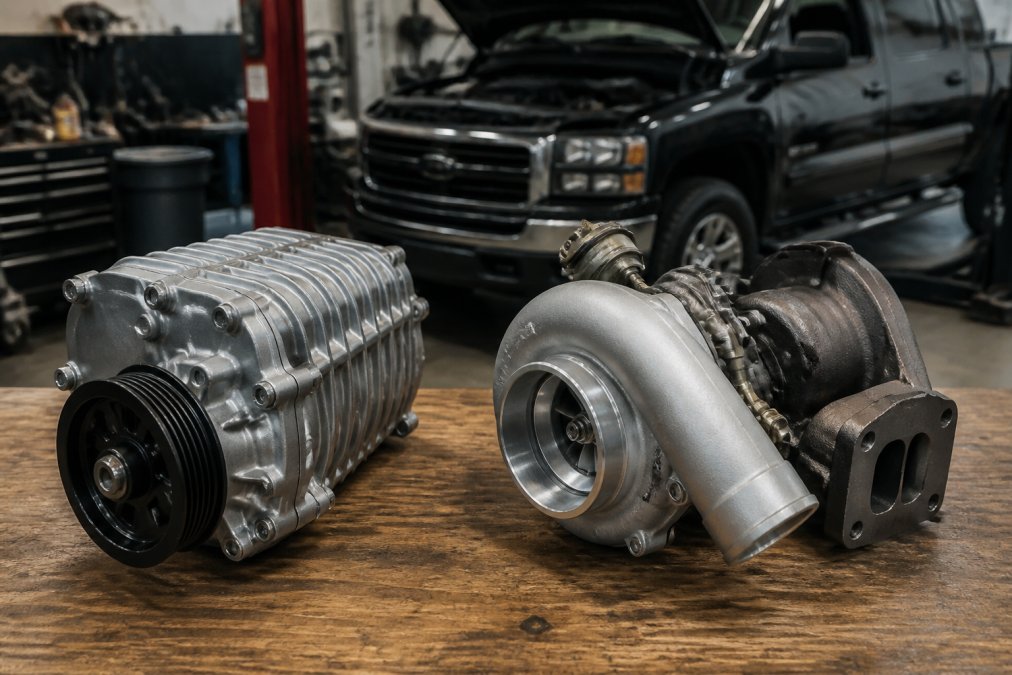
Turbochargers use exhaust gases to spin a turbine that drives the compressor, making them more efficient by recycling wasted energy. However, turbochargers introduce turbo lag, the delay between throttle input and boost delivery, which is noticeable and frustrating on a daily basis.
Superchargers operate at engine temperature and oil pressure, making them mechanically simple and durable. Turbochargers operate in extreme exhaust heat, requiring specialized bearings, cooling systems, and more frequent maintenance. A quality supercharger kit also costs less to purchase and install than a comparable turbo setup.

The real-world decision comes down to use case. Daily drivers and street vehicles benefit from supercharger immediacy and simplicity. Track cars and maximum-power builds favor turbocharger efficiency. Off-road vehicles pulling larger tires need the low-end torque that superchargers deliver better than turbos.
Matching a Supercharger Kit to Your Vehicle and Goals
Choosing a supercharger kit requires honest assessment of three critical variables: your engine, your power target, and how you actually use the vehicle.

Engine Displacement and Compatibility
Your engine's displacement determines the maximum realistic power gains a supercharger can deliver. Engine architecture also matters, V8 engines have different intake manifold configurations than V6 engines, affecting how a supercharger's discharge distributes across cylinders.
Compression ratio is another critical compatibility factor. Higher compression ratios produce more power but require more precise engine management and fuel octane to prevent detonation under boost. Understanding your current compression ratio and the boost levels your engine can safely handle is essential before selecting a kit.
Power Goals and Boost Pressure
Define your target horsepower increase before selecting a kit. A modest 30-40% gain requires only fuel system adjustments and possibly a tune. Aggressive gains require upgraded fuel injectors, engine management calibration, and cooling system enhancements.
Boost pressure, measured in pounds per square inch (psi), is the primary lever controlling power output. Each psi of boost approximately correlates to 5-7% additional horsepower. A supercharger producing 8 psi of boost yields roughly 40-56% more horsepower than stock. Your fuel system must support your chosen boost level, stock fuel injectors have a maximum flow capacity and may limit actual boost delivery if undersized.
Street vs. Track Application
Daily driver requirements differ fundamentally from track car requirements. A street vehicle needs reliable cold-start behavior, smooth idle quality, and predictable power delivery across varied conditions. A track car prioritizes maximum power output and can tolerate tuning compromises that would make a street vehicle uncomfortable.
Street applications benefit from roots-type or twin-screw superchargers because both deliver immediate low-end torque and smooth power delivery. Track applications often favor centrifugal designs because the upper-RPM power focus maximizes peak horsepower. Emissions compliance also matters for street vehicles in regulated states.
Supporting Engine Mods for Superchargers
Every component in the engine's fuel, cooling, and exhaust systems must support the additional air volume and pressure the supercharger delivers.
Fuel System Upgrades
Stock fuel injectors are sized for atmospheric pressure and naturally aspirated operation. A supercharger increases air density by 50-100%, requiring proportionally more fuel. If your injectors can't flow enough fuel, the engine runs lean, causing detonation and potential engine failure.
A stock fuel pump delivers adequate flow for naturally aspirated operation. Under boost, the fuel pressure regulator must maintain consistent pressure despite higher demand. An undersized pump causes fuel starvation and performance loss.
Fuel octane rating becomes critical under boost. Higher boost pressures create higher combustion temperatures and pressures, increasing detonation risk. 91-octane premium or 93-octane is typical for modest boost levels. Aggressive boost levels (12+ psi) may require race fuel with octane ratings above 100.
Cooling and Intercooler Selection
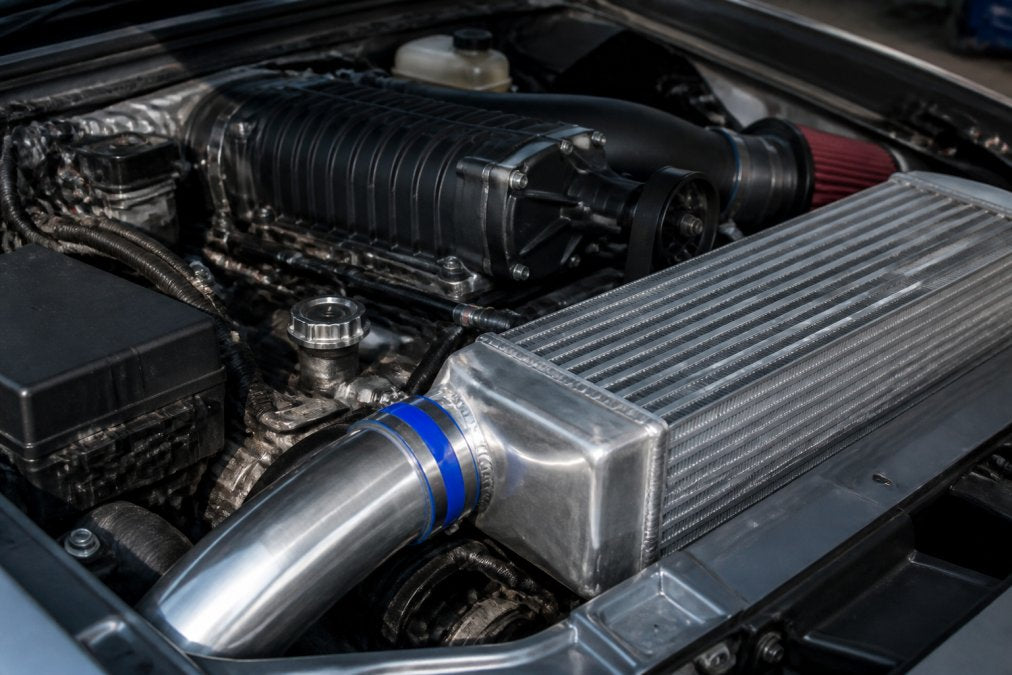
Supercharger compression generates heat. An intercooler is a heat exchanger that cools the compressed air before it enters the engine, restoring density and preventing heat soak during extended driving.
Air-to-air intercoolers use ambient air flowing through the radiator core to cool the supercharger discharge. These are efficient, affordable, and suitable for most street applications. Air-to-water intercoolers use engine coolant circulating through the intercooler core, offering superior cooling capacity in a more compact package.
Engine coolant system capacity also matters. A supercharger increases overall engine heat output, requiring your radiator, water pump, and cooling fans to handle additional thermal load. Many supercharger installations require radiator upgrades or auxiliary cooling fans to maintain safe operating temperatures.
Exhaust and Engine Management
A stock exhaust system is sized for naturally aspirated flow. A supercharged engine produces more exhaust volume and pressure, which can create backpressure that limits power delivery. A cat-back exhaust upgrade improves scavenging and reduces restrictions.
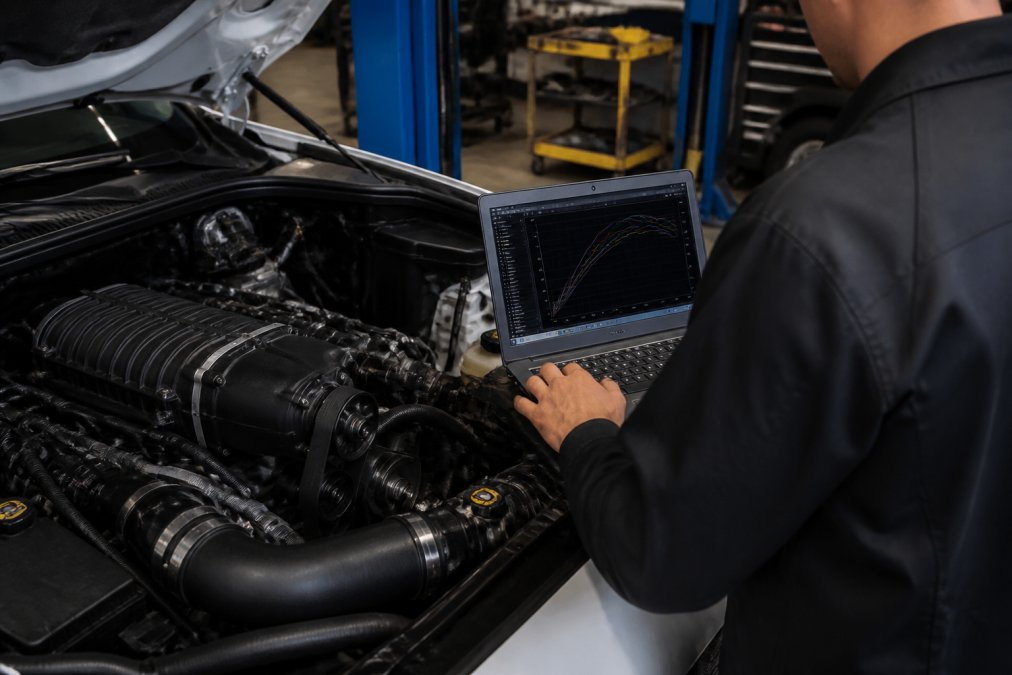
Engine management calibration is the critical final piece. Stock calibration is optimized for naturally aspirated operation. A supercharger requires custom tuning to adjust fuel injection timing, ignition timing, and boost pressure for forced induction. A professional tune prevents detonation, optimizes combustion, and matches boost pressure to your fuel system and cooling capacity.
CARB Legal Supercharger Kits and Emissions Compliance
In California and several other states, vehicle modifications must comply with California Air Resources Board (CARB) regulations. A CARB-legal supercharger kit maintains emissions compliance while delivering performance.
CARB-legal kits undergo testing to ensure they don't increase regulated emissions above baseline levels. Non-CARB-legal modifications can result in failed emissions testing, registration denial, or fines.
Long-Term Maintenance, Reliability, and Hidden Costs
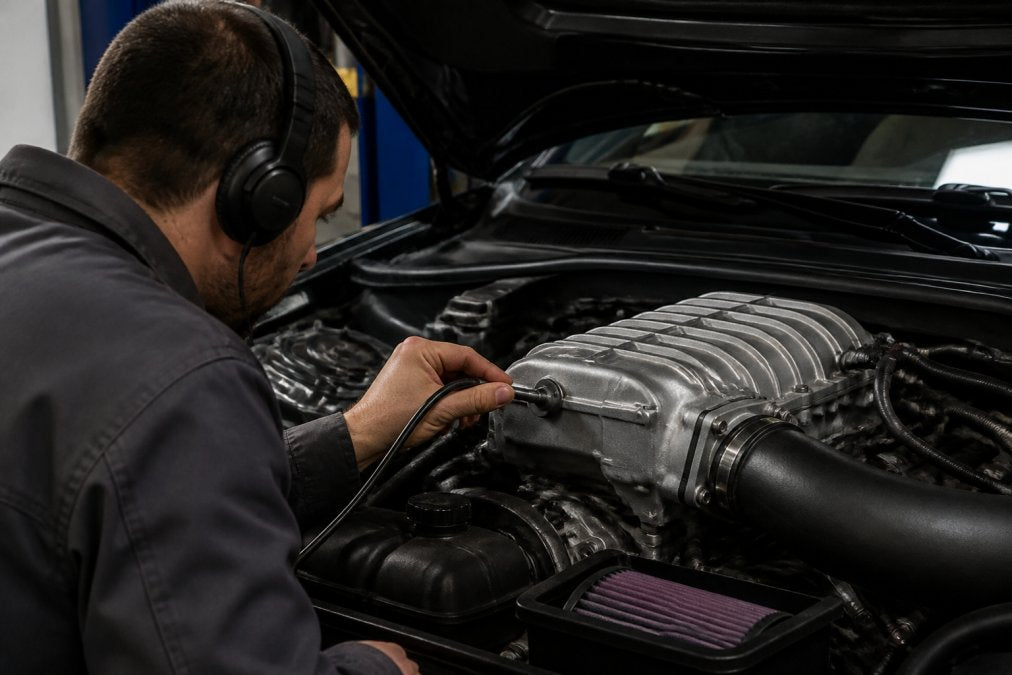
Superchargers are mechanically simple and durable, but forced induction introduces stresses that naturally aspirated engines don't experience. Supercharger oil requires regular inspection and replacement every 10,000-15,000 miles. Intercooler efficiency degrades over time as dust and debris accumulate. Air filters require more frequent replacement because a supercharger pulls significantly more air.
Drivetrain stress increases under boost. Superchargers deliver power immediately across the entire RPM range, which means your transmission, differential, and driveshafts experience higher loads. Engine longevity under boost depends on how conservatively you tune the supercharger. A mild tune producing 30-40% horsepower gains can run indefinitely with no reliability concerns. Most owners find the reliability sweet spot at 40-60% horsepower gains with proper supporting modifications.
Insurance considerations matter for modified vehicles. Some insurance companies exclude coverage for performance modifications or charge higher premiums. Disclosure of modifications is legally required when filing claims.
Installation Considerations and Warranty Protection
Professional installation versus DIY installation is a critical decision that affects warranty coverage, reliability, and long-term cost.
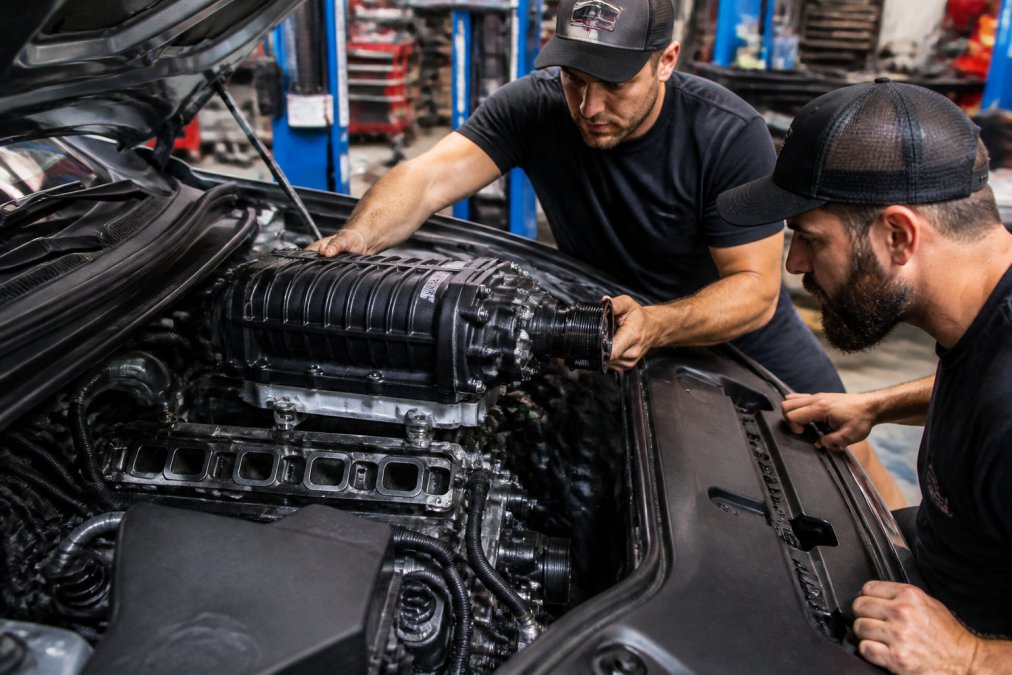
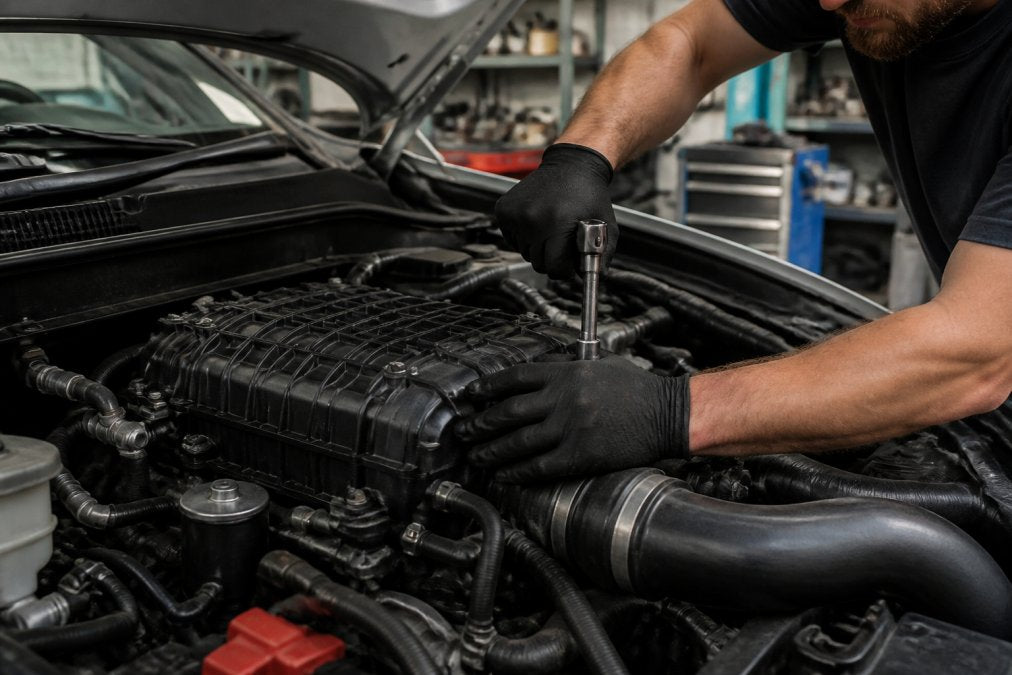
VT Superchargers kits are engineered for bolt-on installation, meaning they attach directly to the engine without requiring custom fabrication. However, "bolt-on" doesn't mean trivial. Supercharger installation requires proper tools, mechanical knowledge, and attention to detail. A mistake during installation can result in boost leaks, improper belt tension, or misaligned components that damage the supercharger.
Professional installation at an approved VT Superchargers installer ensures the kit is installed correctly and your warranty remains valid. Installation typically takes 8-16 hours depending on engine bay complexity. Labor costs range from 1,500-3,000 dollars depending on location and shop rate.
DIY installation saves labor costs but requires mechanical skill and proper tools. A botched installation can damage the supercharger and engine, turning a 5,500-dollar investment into a catastrophic loss.
VT Superchargers provides a 24-month warranty on all kits covering defects in materials and workmanship. Warranty coverage requires proper installation and maintenance. Professional installation documentation provides clear evidence that the kit was installed according to manufacturer specifications. Warranty coverage excludes damage caused by improper tuning, neglected maintenance, or operation beyond designed specifications.
How to Choose a Supercharger Kit: Your Selection Checklist
Selecting the right supercharger kit requires systematic evaluation across multiple dimensions.
| Selection Factor | Evaluation Criteria | Your Decision |
|---|---|---|
| Engine Displacement | Verify your engine size and confirm kit availability for your specific displacement | ✓ |
| Supercharger Type | Assess roots vs. twin-screw vs. centrifugal based on your driving pattern and power goals | ✓ |
| Power Goals | Define target horsepower increase (30-40% modest, 40-60% moderate, 60%+ aggressive) | ✓ |
| Boost Pressure | Confirm boost level matches your fuel system and cooling capacity | ✓ |
| Application | Determine if street daily driver, weekend warrior, or track-focused changes kit selection | ✓ |
| Fuel System | Verify fuel injectors and pump capacity support your chosen boost level | ✓ |
| Cooling Capacity | Assess whether stock cooling handles supercharger heat or upgrades are needed | ✓ |
| Emissions Compliance | Confirm CARB-legal status if you're in a regulated state | ✓ |
| Installation Method | Decide between professional installation (warranty protection) or DIY (cost savings) | ✓ |
| Budget Total | Sum supercharger kit, supporting modifications, installation, and long-term maintenance | ✓ |
Step 1: Identify Your Vehicle and Engine Locate your vehicle's year, make, model, and engine displacement. Confirm that a supercharger kit is available for your specific engine by checking VT Superchargers' product catalog.
Step 2: Define Your Power Goals Decide how much horsepower you want to gain. A 30-40% increase improves responsiveness without major supporting modifications. A 40-60% increase requires upgraded fuel injectors and professional tuning. A 60%+ increase demands aggressive modifications and acceptance of higher long-term maintenance costs.
Step 3: Select Supercharger Type Choose between roots, twin-screw, and centrifugal based on your application. Daily drivers and street vehicles benefit from roots or twin-screw immediate response. Track cars favor centrifugal efficiency. Off-road vehicles pulling larger tires need low-end torque that roots or twin-screw designs deliver.
Step 4: Assess Supporting Modifications List the supporting modifications your chosen supercharger requires. Fuel injectors, fuel pump, intercooler, radiator, exhaust, and ECU tuning are typical. Research the cost of each modification for your specific vehicle and total these costs along with the supercharger kit price and installation labor.
Step 5: Verify Emissions Compliance If you're in a CARB-regulated state, confirm the supercharger kit you're considering is CARB-legal. Check the product listing or contact VT Superchargers directly.
Step 6: Plan Installation Decide whether you'll install the kit yourself or use a professional installer. If DIY, verify you have the necessary tools and mechanical knowledge. If professional installation, contact approved VT Superchargers installers in your area and request quotes.
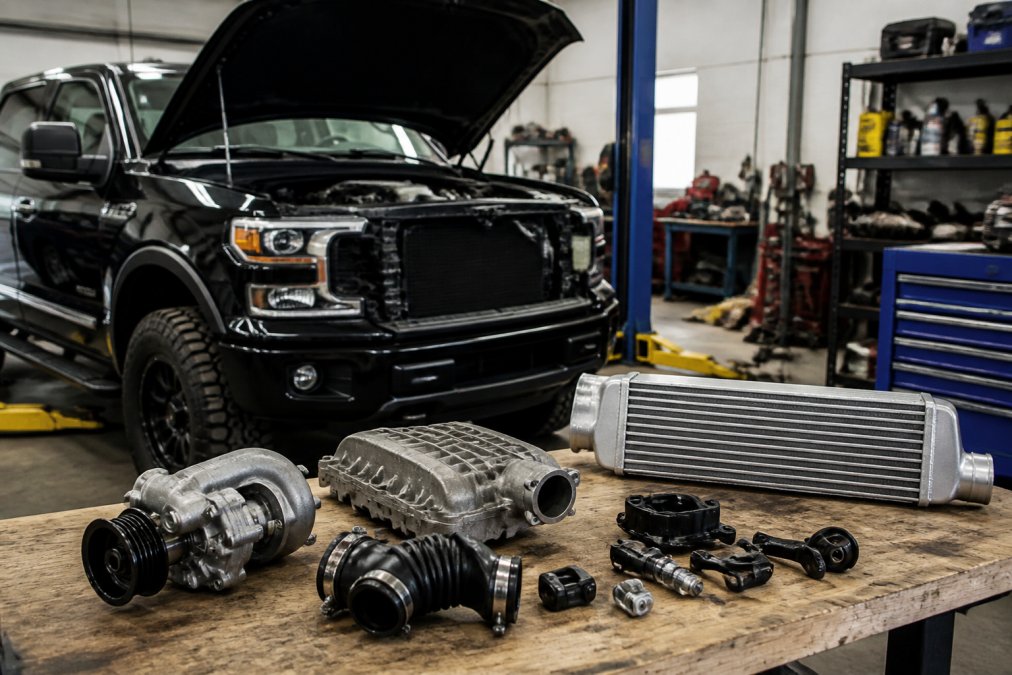
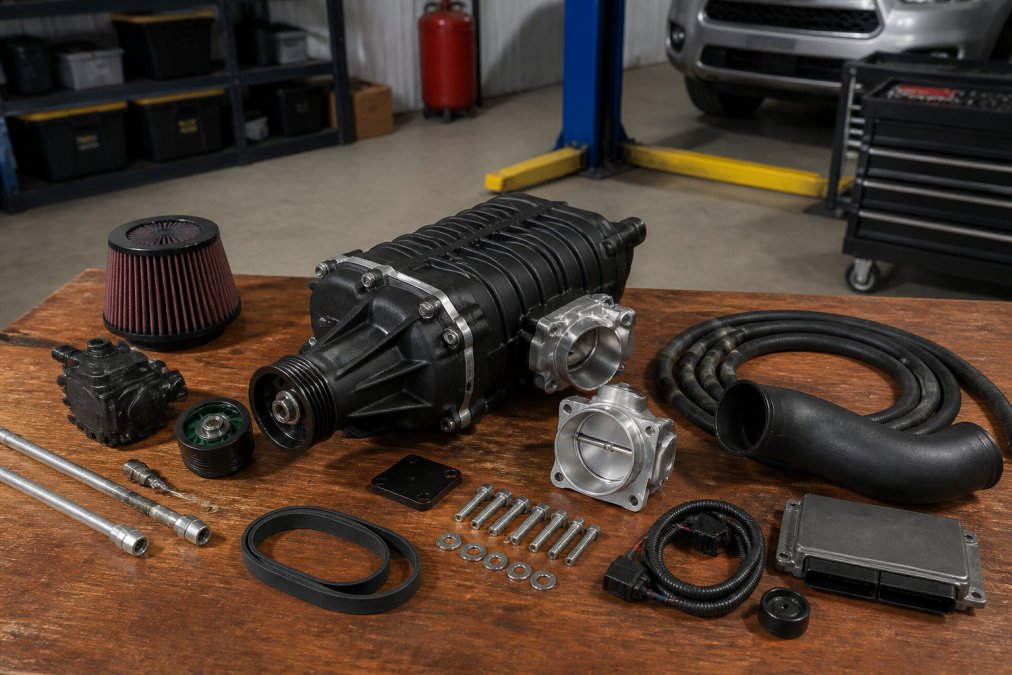
Step 7: Purchase and Install Once you've completed the checklist and confirmed your selection, purchase your supercharger kit from VT Superchargers. The Toyota Land Cruiser 5.7 Supercharger Kit by VT superchargers delivers 40-60% horsepower gains at 6,950 dollars. The Nissan Frontier 4.0 V6 Supercharger Kit years 05-19 provides similar gains at 5,500 dollars. The Jeep Pentastar v6 3.6L Supercharger Kit offers 40% horsepower and 30% torque gains at 5,500 dollars. VT Superchargers offers financing options to spread the investment across monthly payments.
Step 8: Complete Supporting Modifications Install fuel system upgrades, cooling enhancements, and exhaust modifications before or immediately after supercharger installation. These modifications must be in place before the vehicle is driven under boost.
Step 9: Professional Engine Tuning Schedule professional ECU tuning with a shop experienced in supercharged vehicles. The tune adjusts fuel timing, ignition timing, and boost pressure to match your specific engine, fuel system, and cooling capacity. Budget 500-1,500 dollars for professional tuning.
Step 10: Maintenance and Monitoring Establish a maintenance schedule for supercharger oil changes, intercooler cleaning, air filter replacement, and regular inspections. Monitor boost pressure, intake air temperature, and engine knock during the first few weeks of driving.
Choosing a supercharger kit is a significant investment that requires careful consideration of your vehicle, your goals, and your budget. VT Superchargers has engineered bolt-on kits for a range of vehicles including Toyota Land Cruiser, Toyota Tundra, Nissan Frontier, Jeep Pentastar, and Ford Explorer, each with proven performance gains and backed by a 24-month warranty. Whether you're resolving gear-hunting issues on a larger-tired truck, seeking responsive acceleration for daily driving, or building a weekend performance vehicle, a properly selected and installed supercharger kit delivers the power and reliability you're looking for. EPA regulations on vehicle modifications ensure your modifications meet federal standards, while CARB emissions standards for aftermarket parts govern compliance in regulated states. Professional installation and proper tuning transform a supercharger kit from a parts purchase into a complete performance solution that your vehicle can safely handle for years of reliable operation. Register with VT Superchargers today to explore financing options and connect with approved installers in your area.

Frequently Asked Questions
What is the difference between a roots, twin-screw, and centrifugal supercharger?
Roots-type superchargers deliver instant torque at low RPM but generate heat and lose efficiency at high speeds. Twin-screw designs use interlocking rotors for smoother airflow and better efficiency across the RPM range. Centrifugal superchargers use a turbine-like impeller that builds boost gradually with engine speed, offering the highest efficiency but delayed response. Your choice depends on whether you prioritize low-end torque, mid-range power, or peak efficiency.
How much horsepower can a supercharger add to a stock engine?
Most bolt-on supercharger kits deliver 40-60% more horsepower and proportional torque gains. A stock 300-hp engine typically gains 120-180 hp with a quality kit. Actual results depend on engine displacement, boost pressure, fuel system upgrades, and ECU calibration. VT Superchargers kits are engineered to deliver consistent, reliable gains specific to your vehicle's platform.
Is a supercharger kit street legal in all 50 states?
Not automatically. Federal EPA regulations allow modified engines, but California and several northeastern states enforce CARB (California Air Resources Board) emissions standards. CARB-legal supercharger kits carry an Executive Order number and are certified for emissions compliance. Non-CARB states generally allow any bolt-on kit without restrictions. Check your state's emissions requirements before purchasing. VT Superchargers offers CARB-legal options for regulated markets.
Do I need to upgrade my fuel system when installing a supercharger?
Yes. Forced induction increases air volume into the engine, requiring proportionally more fuel to maintain correct air-fuel ratio. Most supercharger kits require upgraded fuel injectors and often a fuel pump capable of higher flow rates. Skipping fuel system upgrades causes lean running, reduced power gains, engine knock, and potential damage. VT Superchargers kits include fuel system recommendations specific to your vehicle to ensure proper calibration and reliability.
What happens to my factory warranty after installing a supercharger?
Factory warranty coverage depends on your vehicle manufacturer's policy. Most manufacturers void warranty on modified engines if they can prove the modification caused the failure. Bolt-on kits with OEM-style fitment, like VT Superchargers kits, minimize risk by preserving original engine architecture. VT's 24-month warranty covers kit components and workmanship. Consult your vehicle's warranty documentation and consider a professional installation to maintain coverage eligibility where possible.
Is supercharger installation a DIY job, or do I need a shop?
Bolt-on kits are designed for experienced DIYers with proper tools and mechanical knowledge. Installation typically takes 8-16 hours and requires engine bay access, torque specifications, and fuel system adjustments. If you lack experience with engine work, professional installation costs $1,500-$3,000. VT Superchargers provides detailed installation guides and connects customers with approved installers who understand our kits and can complete the job with warranty coverage intact.
Will a supercharger hurt my engine reliability or cause long-term damage?
Quality bolt-on kits engineered for your specific engine are reliable when supporting modifications are completed correctly. The key is proper fuel delivery, cooling, and ECU calibration to prevent heat soak and knock. Forced induction does increase wear on internal components over time, but conservative boost levels and maintenance extend engine life. VT Superchargers kits use proven forced induction technology with 24-month warranty protection, and our kits are designed to balance performance with long-term durability.
Should I choose a supercharger or turbocharger for my truck or off-road vehicle?
Superchargers deliver immediate low-end torque and throttle response, ideal for towing, off-road crawling, and daily driving. Turbos build boost gradually and can cause lag but offer higher peak power. For vehicles with larger tires or gear-hunting issues, superchargers resolve low-end torque deficiency directly. Superchargers also run cooler at idle and in traffic. For off-road and overlanding applications, superchargers typically provide the responsive, predictable power delivery you need.
This article was written using GrandRanker
Related post
RECENT POSTS