Budget-Friendly Supercharger Options for Trucks
Table of Contents
- Why Budget-Friendly Superchargers Are Worth It in 2026
- Bolt-On Supercharger Kits for Trucks: What to Expect
- Truck Supercharger Installation Cost: DIY vs. Shop
- Top Budget-Friendly Supercharger Kits for Trucks
- TCO and Hidden Costs: What Budget Builders Miss
- Common Mistakes When Chasing Cheap Forced Induction
- Frequently Asked Questions
Last Updated: September 25, 2026
Why Budget-Friendly Superchargers Are Worth It in 2026
Key Takeaway
Budget-friendly means lowest total cost of ownership, not lowest sticker price. Factor in tuning, supporting mods, and installation before you compare kits.
Below: what a complete kit includes, what installation costs, and four kits that deliver real gains without wrecking your budget.
Bolt-On Supercharger Kits for Trucks: What to Expect
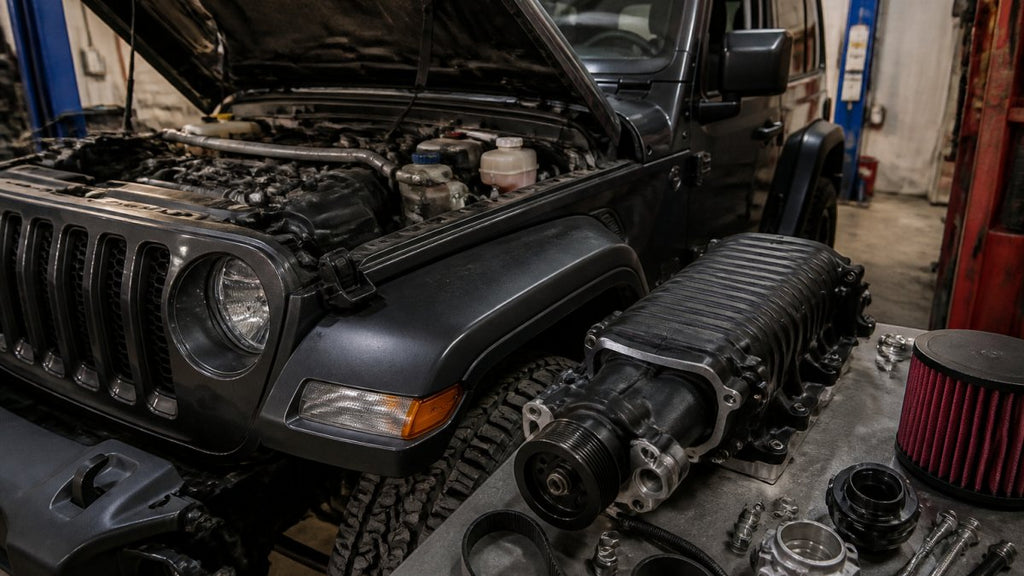
A bolt-on supercharger kit for trucks installs using factory mounting points, with no cutting, welding, or internal engine work, and preserves your original components so the truck stays serviceable.
What Comes in a Complete Kit
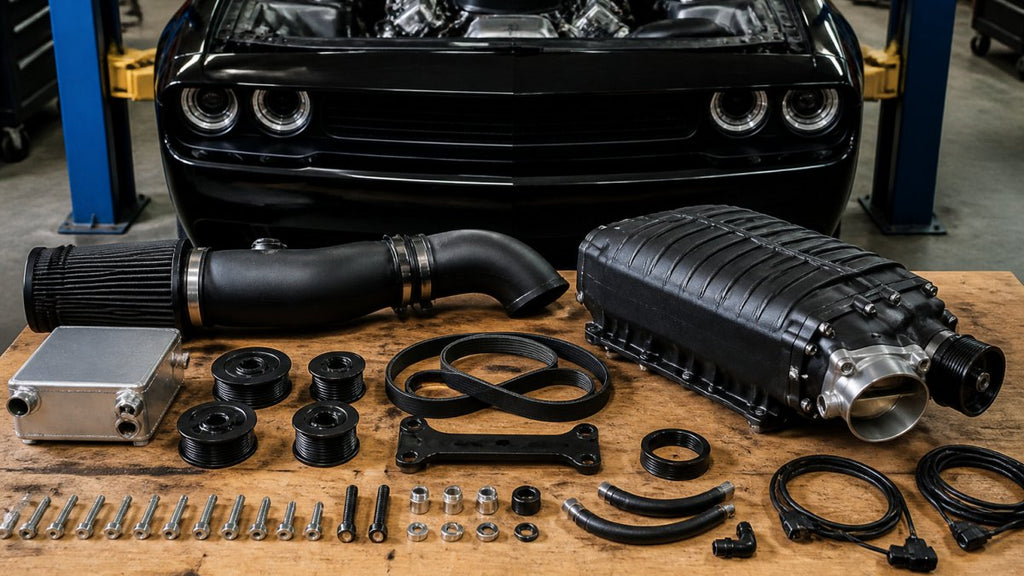
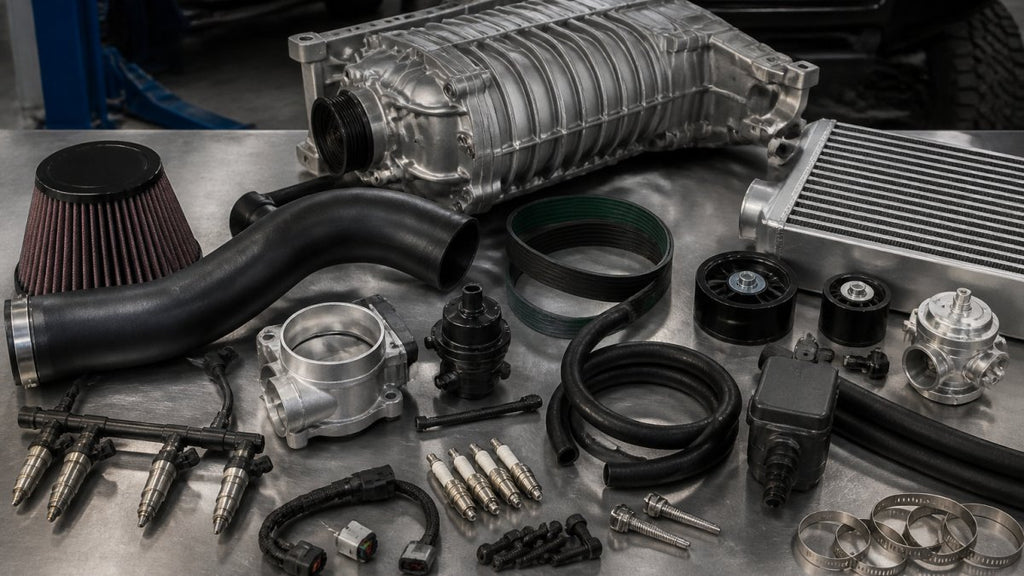
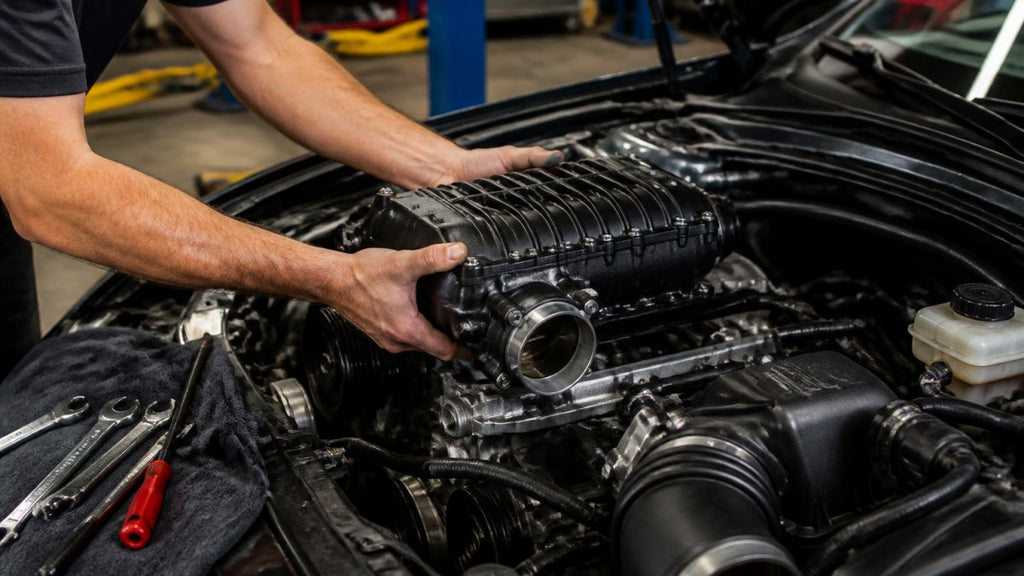
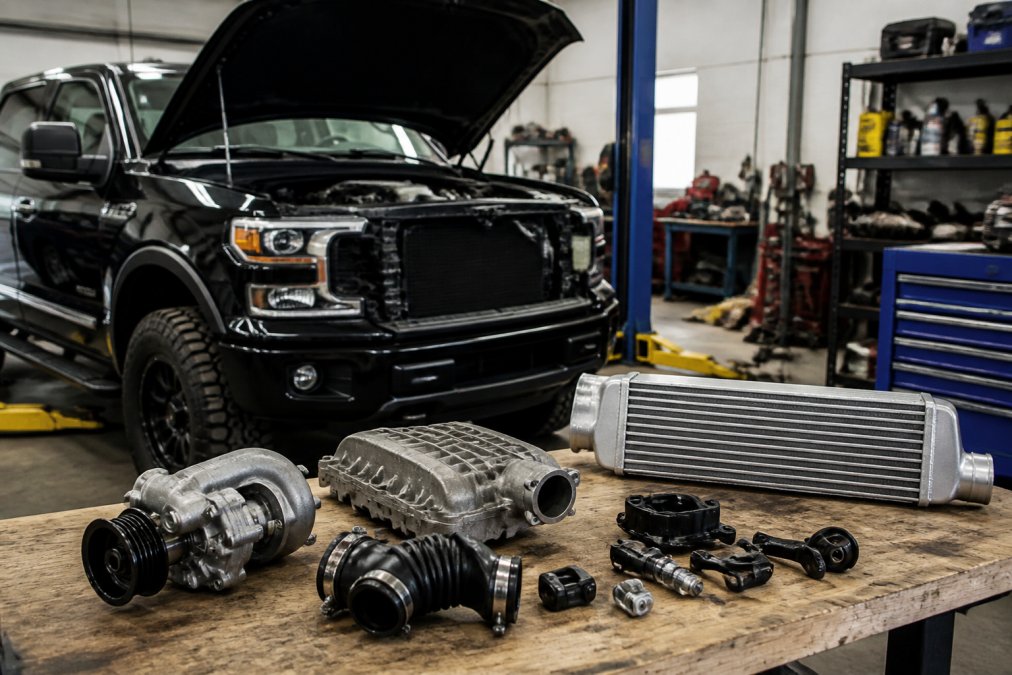
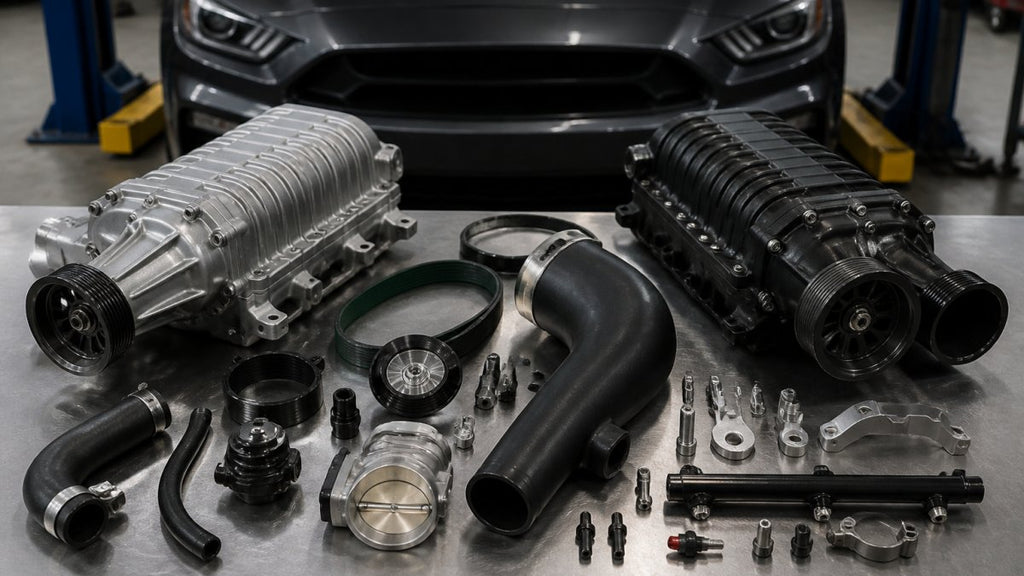
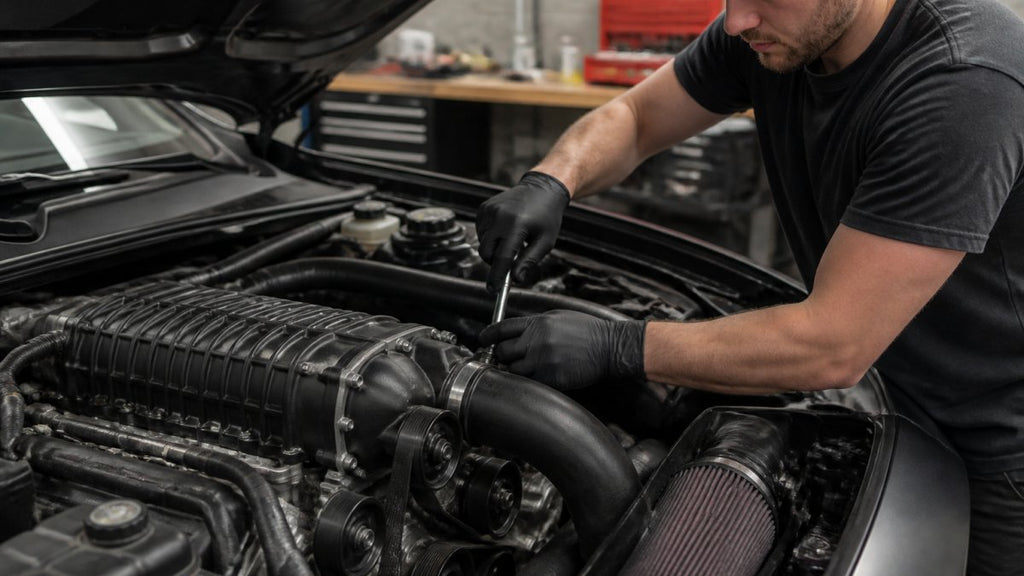
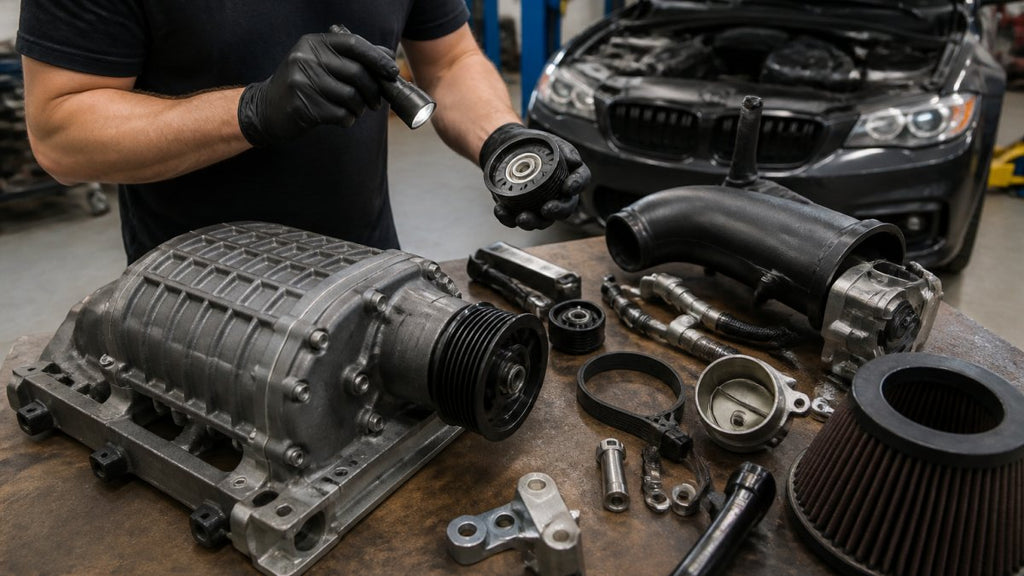
A complete kit should include the supercharger head unit, intake manifold, intercooler or heat exchanger, coolant reservoir, water pump, drive belt and idler system, charge piping, mounting brackets, and all hardware. If a listing is vague about what's included, that's a red flag. Missing brackets and one-off fittings are where budget builds bleed money.
Vehicle-Specific Fitment Matters
Fitment is the single biggest predictor of whether a budget build succeeds. A kit engineered for your exact engine code installs cleanly. A universal kit becomes a fabrication project.
| Kit Type | Typical Install Time | Tuning Required | Fitment Risk |
|---|---|---|---|
| Vehicle-specific bolt-on | 6-10 hours | Yes, pre-configured or custom | Low |
| Universal kit | 15+ hours | Custom dyno tuning | High |
| PnP ECU kit | 5-8 hours | Included module | Low |
Truck Supercharger Installation Cost: DIY vs. Shop
Truck supercharger installation cost surprises most budget builders: the kit is only part of the bill, and labor, tuning, and supporting parts add up fast.
What You'll Need Before You Start
- A vehicle-specific kit confirmed against your engine code
- A torque wrench and metric socket set
- Jack stands or a lift, plus a safe working space
- Fresh coolant and oil for the supercharger system
- A tuning solution: pre-configured module or a dyno appointment
- 91+ octane fuel if your kit requires it
Watch Out
Skipping the ECU tune is the single most common cause of engine damage on budget builds. A lean air-fuel ratio under boost leads to detonation, and detonation cracks pistons. The tune isn't optional.
Top Budget-Friendly Supercharger Kits for Trucks
The best budget-friendly supercharger options for trucks are vehicle-specific kits pairing complete hardware with a clear tuning path. Here are four VT Superchargers kits that hit that mark.
Toyota Tundra 5.7L 3UR-FE Kit ($6,900)
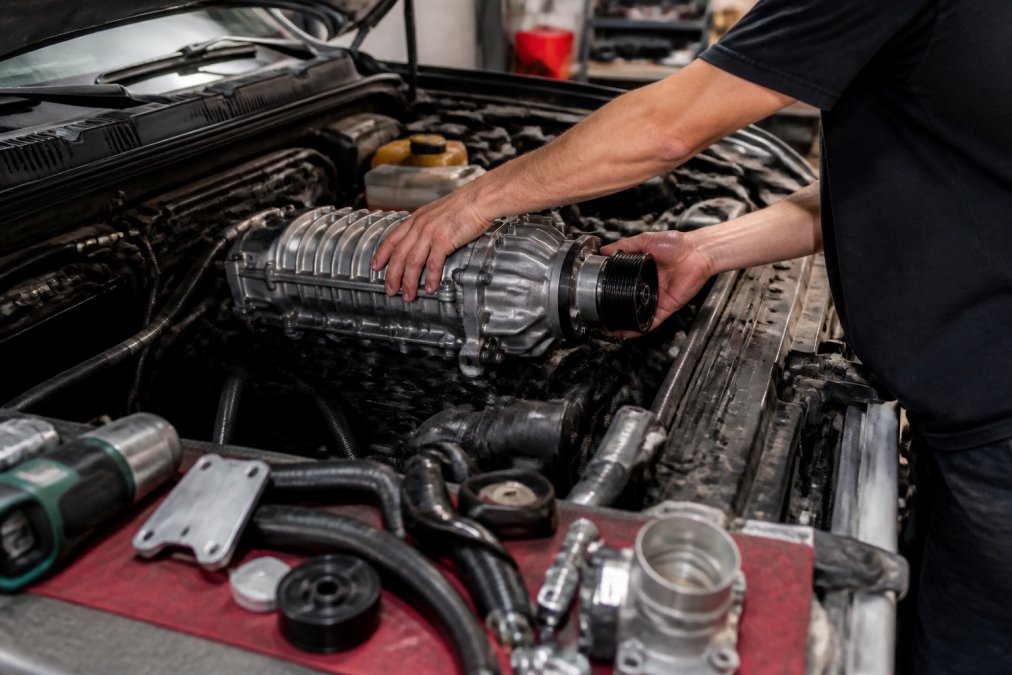
The Toyota Tundra 5.7L 3UR-FE kit delivers 40-60% more horsepower and 30-50% more torque at just 7 psi. It's a non-destructive bolt-on, so factory wiring and panels stay untouched, and the one-piece die-cast aluminum shell runs lighter and sheds heat better than cast iron. An ECU tune is required; it ships in red or black with a 24-month warranty.

Toyota Tacoma 2.7L PnP ECU Kit ($4,900)
The Toyota Tacoma 2.7L kit is the easiest entry point, with a plug-and-play piggyback ECU pre-configured for the 2TR-FE platform, no standalone tuning required. Gains run up to 50% more horsepower and 40% more torque at 7 psi, and factory drivability stays intact.

Nissan Frontier 4.0L VQ40DE Kit ($5,400)
The Nissan Frontier 4.0L VQ40DE kit covers 2005-2019 models at 6-8 psi using factory mounting locations, with no cutting, welding, or internal engine mods. Expect 40-60% more horsepower and 30-50% more torque depending on the tune, plus stronger mid-range pull for towing, backed by a 24-month limited warranty.

Nissan Titan/Armada 5.6L V8 Twin Screw Kit ($7,600)
For the biggest gains, the Nissan Titan/Armada 5.6L V8 twin screw kit pushes 50-70% more horsepower and torque over the stock VK56VD. Twin-screw blowers build boost immediately, so throttle response is sharp and towing capability jumps. It's a bolt-on with minimal modifications, and remote tuning assistance is available.
| Kit | Price | Boost | Power Gain | Best For |
|---|---|---|---|---|
| Tundra 5.7L 3UR-FE | $6,900 | 7 psi | +40-60% hp | Full-size towing |
| Tacoma 2.7L PnP ECU | $4,900 | 7 psi | +50% hp | Daily drivers |
| Frontier 4.0L VQ40DE | $5,400 | 6-8 psi | +40-60% hp | Mid-size off-road |
| Titan/Armada 5.6L V8 | $7,600 | Twin screw | +50-70% hp | Max torque |
TCO and Hidden Costs: What Budget Builders Miss
Total cost of ownership is where budget builds live or die. The kit price is the starting line, not the finish, to compare two options honestly, build a line-item model from purchase through the first 50,000 miles.
The Five Cost Buckets
Every budget build falls into five buckets. Miss one and your "cheap" kit becomes the most expensive thing in your garage.
- Hardware. The head unit, manifold, intercooler or heat exchanger, coolant reservoir, water pump, belt, idler, charge piping, brackets, and hardware. If a listing doesn't itemize these, assume you'll be sourcing the missing pieces yourself.
- Tuning. A pre-configured module or piggyback ECU is the cheapest path. Custom dyno tuning is the most expensive. Either way, this line item is non-negotiable, a lean air-fuel ratio under boost cracks pistons.
- Supporting modifications. Upgraded fuel injectors, a higher-flow fuel pump, a colder heat range spark plug set, and often a larger heat exchanger. These scale with your boost target, not with the kit price.
- Installation. DIY labor is free but takes a weekend. Shop labor is billed flat-rate or hourly and varies by region and by how vehicle-specific your kit is.
- Operating cost. Premium fuel, more frequent oil changes, and the occasional belt or coolant service. A kit that requires 91+ octane costs more every single week you own the truck.
A Worked Example: Comparing Two Paths
Take a mid-size truck running a vehicle-specific bolt-on kit at 7 psi versus a universal kit at the same boost. The bolt-on costs more up front but ships with a pre-configured tune, factory mounting points, and a documented pulley ratio. The universal kit costs less on the invoice but adds custom dyno time, fabricated brackets, and higher heat-soak risk from poorly routed charge piping.
Toyota Tundra 5.7L 3UR-FE Supercharger →
The Longevity Multiplier
Higher boost stresses engine internals, especially connecting rods and pistons on older, high-mileage trucks. A conservative pulley ratio and proper air-fuel ratio protect the engine; chasing maximum boost on a stock bottom end is how budget builds become expensive rebuilds. Maintaining a reliable powertrain allows you to focus your remaining budget on aesthetic upgrades like vinyl truck graphics to complement the aggressive new stance of your vehicle.
Pro Tip
Before buying any kit, ask the seller three questions: what boost pressure does it run, what tuning does it require, and what supporting fuel and cooling mods does it assume? If any answer is vague, keep looking. A kit with a clear tuning path and a documented supporting-mods list saves you money and headaches.
Quick TCO Checklist
- Kit price, itemized against the hardware list above
- Tuning cost: pre-configured module or dyno time
- Injectors, fuel pump, plugs, and heat exchanger if boost exceeds stock-safe levels
- Installation: your weekend or a shop's flat-rate quote
- Annual fuel and maintenance premium for premium octane and shorter service intervals
- A contingency line for the first failure, because budget builds that skip this line are the ones that hurt
Common Mistakes When Chasing Cheap Forced Induction
The biggest mistake is treating the kit as the whole project, forced induction is a system, and every weak link shows up under boost. The second is buying a blower before you know what your engine can safely take.
Mistake 1: Skipping the Tune
No tune, no reliability. A lean air-fuel ratio under boost leads to detonation, and detonation cracks pistons, the most common cause of engine damage on budget builds, and the line item builders most often try to avoid.
Mistake 2: Ignoring Heat Soak
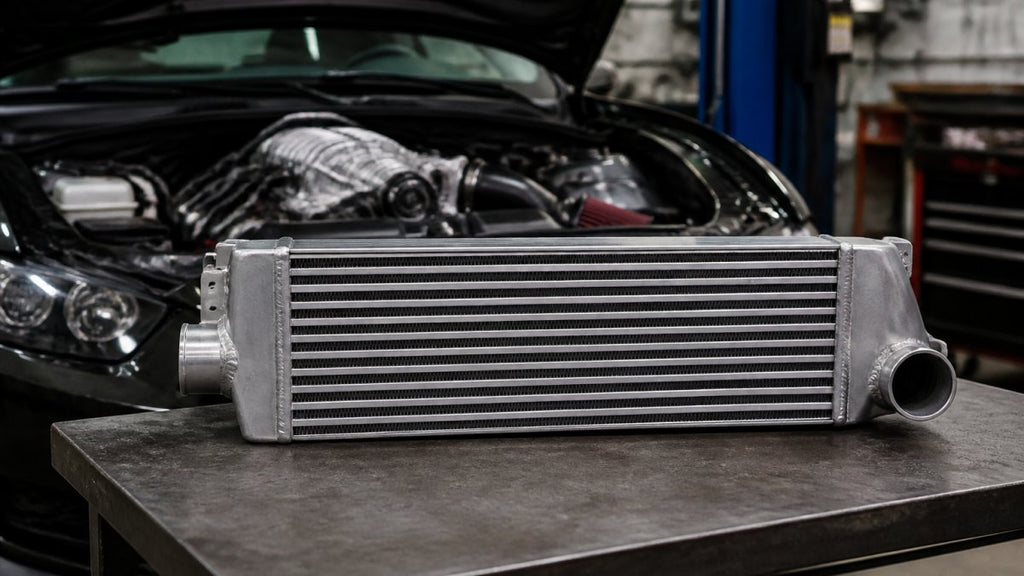
A cheap intercooler that can't shed heat loses power after a few hard pulls. Look for a large water-to-air cooler and a properly sized heat exchanger, if intake air temperatures climb faster than the system can reject heat, the ECU pulls timing and the engine runs closer to the knock threshold.
Mistake 3: Buying Universal Instead of Vehicle-Specific
Custom fabrication eats your savings and introduces fitment risk. A kit engineered for your exact engine code installs cleanly; a universal kit makes brackets, pulley alignment, charge pipe routing, and accessory clearance your problem.
Mistake 4: Overlooking the Fuel System
Higher airflow needs more fuel. Upgraded injectors and a fuel system that keeps up are not optional on bigger gains. A fuel system that runs out of headroom at peak boost is how a safe tune becomes an unsafe one.
Mistake 5: Sourcing Salvage Parts Without a Plan
Junkyard superchargers can work, but you must verify the blower's condition, match the pulley ratio, and source brackets that fit, otherwise you're buying a paperweight. Before pulling one, confirm rotor condition, check for shaft play, and identify the exact engine it was paired with.
Mistake 6: Chasing Boost on Stock Internals
This mistake turns a budget build into a rebuild. Stock connecting rods and pistons have a boost ceiling, lower on high-mileage engines, so a conservative pulley ratio and proper air-fuel ratio protect the engine.
Vehicle-to-Blower Cross-Reference
Fitment is the single biggest predictor of whether a budget build succeeds. The table below matches common truck engine families to the blower type that typically fits best, based on displacement, cylinder head design, and aftermarket support.
| Engine Family | Displacement | Common Blower Type | Why It Fits |
|---|---|---|---|
| Toyota 3UR-FE | 5.7L V8 | Twin-screw or Roots | Broad torque curve suits towing; strong aftermarket bracket support |
| Toyota 2TR-FE | 2.7L I4 | Centrifugal or small Roots | Compact packaging in a mid-size engine bay; modest boost targets |
| Nissan VQ40DE | 4.0L V6 | Roots or twin-screw | Mid-range pull matches off-road and towing use |
| Nissan VK56VD | 5.6L V8 | Twin-screw | Immediate boost response for heavy towing; robust factory bottom end |
| Roots |
Frequently Asked Questions
What is the cheapest type of supercharger for a truck?
Roots-type and twin-screw blowers typically cost less than centrifugal systems because they use simpler internal designs and fewer precision-machined components. Entry-level bolt-on kits from VT Superchargers start around $4,900 for the Tacoma 2.7L and $5,400 for the Nissan Frontier 4.0L. These kits include the supercharger, intake manifold, intercooler, and all mounting hardware, so you avoid buying separate parts. Centrifugal units often run higher because they need additional oiling systems and brackets.
How much does it cost to put a supercharger on a truck?
The kit itself ranges from $4,900 to $7,600 depending on your engine platform. If you install it yourself, you'll also need an ECU tune, which typically costs $500 to $1,200 at a local shop. Professional installation adds roughly $1,000 to $2,000 in labor. Budget another $200 to $400 for fluids, gaskets, and any supporting hardware. Total out-the-door for a DIY build usually lands between $5,500 and $9,000.
Do bolt-on supercharger kits require additional engine modifications?
Most quality bolt-on kits do not require internal engine work like forged pistons or upgraded connecting rods at low boost levels (6-8 psi). However, you will need an ECU tune to adjust air-fuel ratio and ignition timing. Some kits, like the Tacoma 3.5L 2GR-FKS, include upgraded fuel injectors. Always confirm with the manufacturer whether your specific engine platform needs supporting mods before ordering.
What are the risks of installing a budget-friendly supercharger?
The biggest risks are detonation from a bad tune, heat soak from undersized intercoolers, and premature wear on the crankshaft or connecting rods if boost exceeds what the stock block handles. Cheap kits that skip intercoolers or use low-quality bypass valves are the main culprits. Stick with kits that include water-to-air cooling, a proper bypass valve, and a 24-month warranty like those from VT Superchargers to reduce these risks.
Related post
09
Oct
RECENT POSTS