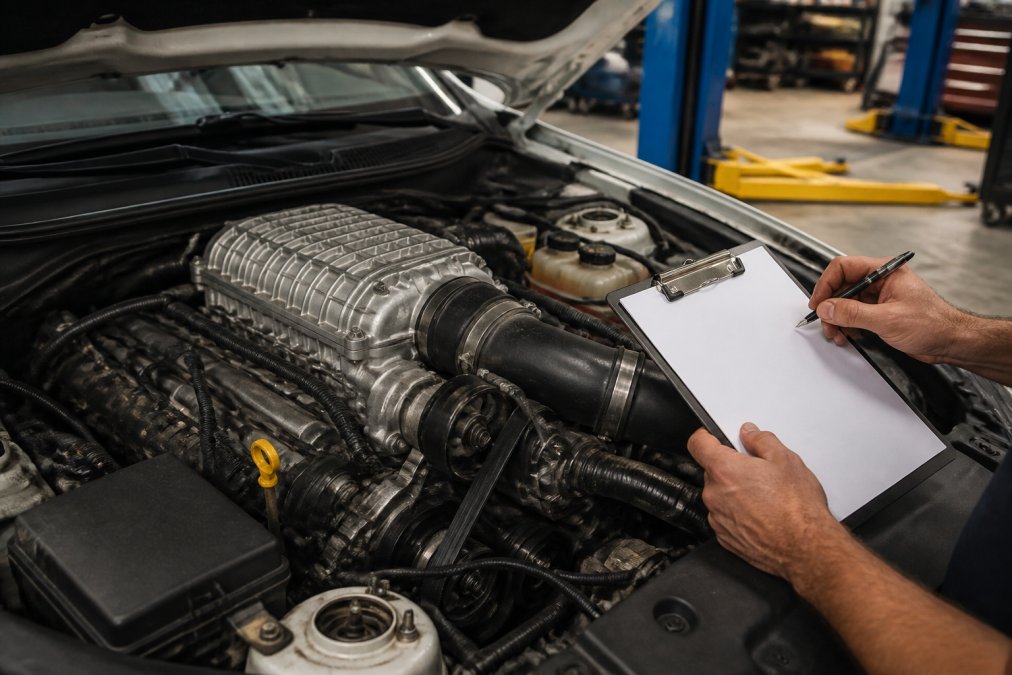
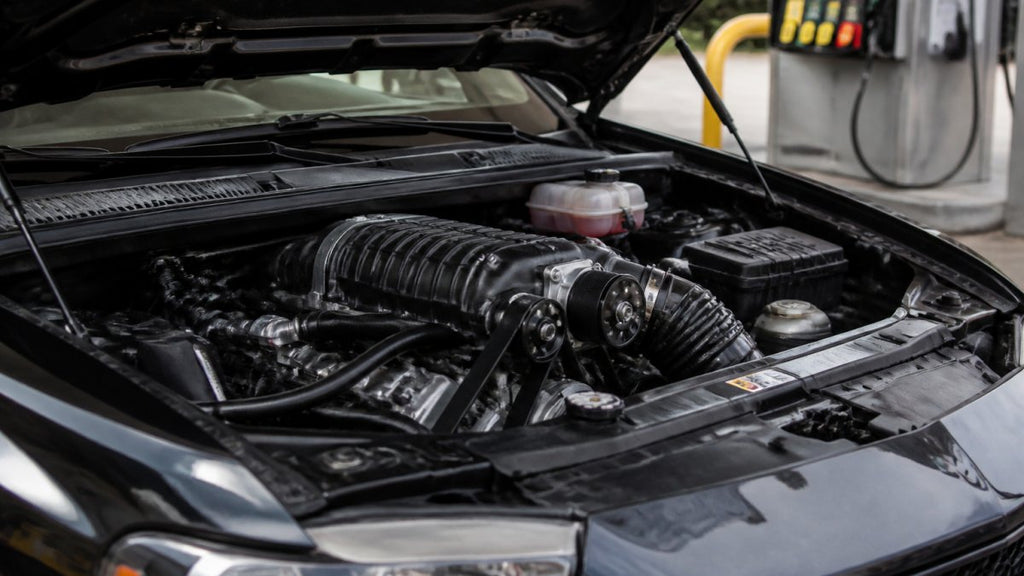
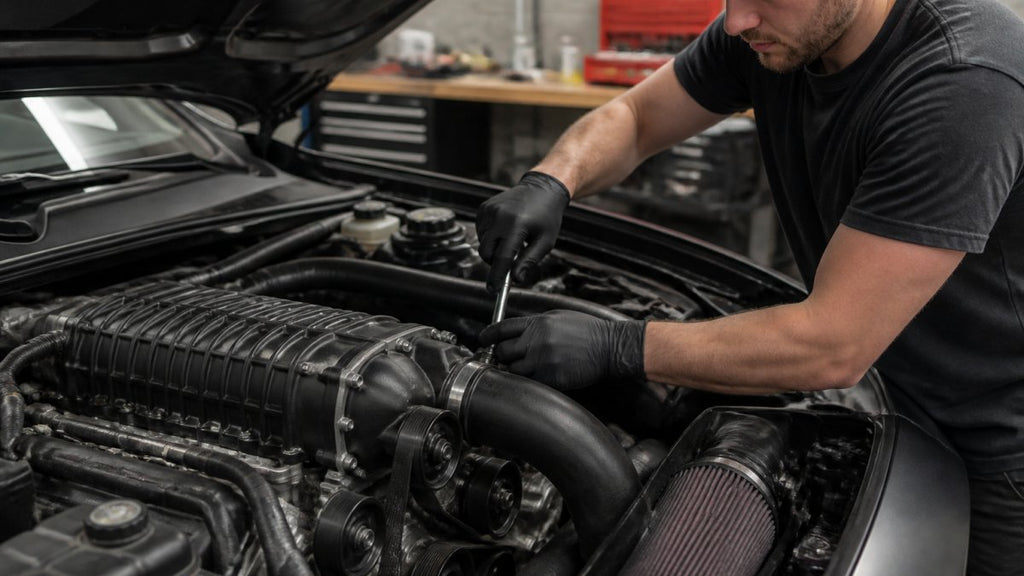
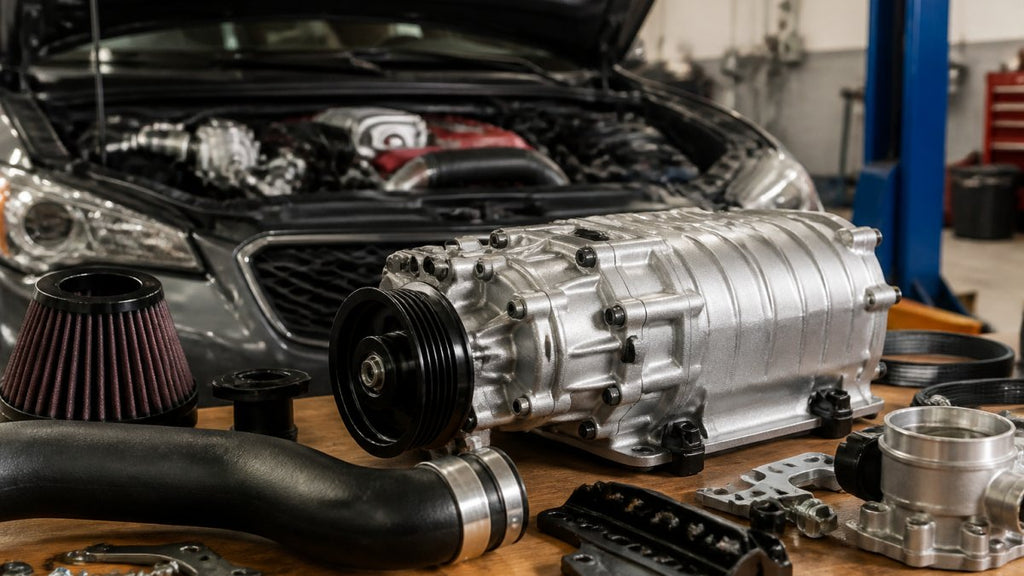
No, a supercharger doesn't automatically void your engine warranty. The critical distinction most people miss: there's a massive difference between voiding an entire warranty and having a specific claim denied.
The Magnuson-Moss Warranty Act, enacted in 1975, explicitly prohibits manufacturers from voiding an entire warranty based on modifications unless they can prove the modification caused the specific failure being claimed (the FTC). This is federal law.
Installing a supercharger doesn't give your dealer a blank check to reject every warranty claim you file. They can't say "you have a supercharger, so nothing is covered." That's illegal. What they can do is deny claims they believe the supercharger caused or contributed to. The burden of proof sits with the manufacturer to demonstrate causation.
Key TakeawayA supercharger doesn't void your warranty. A specific claim related to the supercharger's effects might be denied, but only if the dealer proves the modification caused the failure.
Understanding the Magnuson-Moss Warranty Act Explained
The Magnuson-Moss Warranty Act is the legal foundation protecting you when you modify your vehicle.
The law states that manufacturers cannot condition a warranty on the use of non-OEM parts unless those parts are provided free to the consumer. A manufacturer cannot void a warranty solely because an aftermarket part was installed. They must prove causation.
Loren Wong, a former warranty administrator at BMW and Acura, explained: Edmunds warranty coverage guide "Although some dealership service managers would have you think otherwise, simply having an aftermarket part or modifying your vehicle cannot void your entire warranty. The argument might be that just because you have a performance part such as a cold air intake on the car, the whole vehicle warranty is void. That's not true."
The act applies to all consumer products with written warranties, including vehicles. The protection is the same regardless of whether the part came from an aftermarket manufacturer or elsewhere.
Watch OutThe Magnuson-Moss Act protects you from blanket warranty denial, but it doesn't prevent a dealer from investigating whether a modification contributed to a specific failure. A dealer can still deny a claim if they prove the supercharger caused the failure.
How Superchargers Actually Impact Powertrain Warranty Coverage
A supercharger forces more air into your engine, increasing boost pressure and torque output. Increased stress on internal components is exactly what concerns warranty administrators.
Engine components retained 31.45% of the United States Aftermarket Automotive Parts and Components Market in 2025, according to Mordor Intelligence aftermarket report, because engines are the first thing people modify. When you add forced induction, you're increasing stress on the transmission, differential, and internal engine parts. If something breaks, the question becomes: would this have failed anyway, or did the supercharger contribute?
What the Warranty Booklet Actually Protects
Your warranty booklet defines what's covered and under what conditions. Most factory powertrain warranties cover the engine, transmission, and drivetrain for 3-5 years or 36,000-60,000 miles. They exclude wear items and damage caused by misuse, neglect, or modification.
Here's the critical part: "modification" doesn't mean any change whatsoever. It means modifications that affect the specific component being repaired. A supercharger affects engine durability and transmission stress. It doesn't affect your power steering pump or air conditioning compressor. A dealer can't deny a warranty claim on your AC compressor because you have a supercharger.
The Role of Causation and Burden of Proof
Causation is everything. The manufacturer must prove that your modification caused or contributed to the specific failure. You don't have to prove the supercharger didn't cause the problem. They have to prove it did.
A dealer needs diagnostic evidence showing the supercharger increased boost pressure beyond safe limits, or that engine calibration was altered, or that installation error caused the failure. They can't just point at the supercharger and say "that's why it broke."
VT Superchargers designs its kits to work within OEM specifications for boost pressure and engine calibration. A properly installed supercharger that respects the engine's engineering limits is much harder to blame for a failure.
Dealer-Installed Supercharger Warranty: Your Best Protection
Factory-approved supercharger installations are your strongest defense against warranty denial.
Ford Performance offers a 3-year/36,000-mile powertrain warranty for its Whipple supercharger kit on 2024-2026 Mustang GT 5.0 models when installed by a Ford dealer or ASE-certified technician. The kit increases output from 480 hp to 810 hp. This replaces the factory 5-year/60,000-mile powertrain warranty with Ford Performance's 3-year/36,000-mile coverage.
When you choose a dealer-installed kit, the manufacturer stakes its reputation on the installation and the kit itself. They won't deny claims lightly because doing so creates liability.
Third-party supercharger manufacturers like VT Superchargers offer their own warranties. VT Superchargers provides a 24-month warranty on its supercharger kits, backing the system against defects and performance issues. This warranty covers the supercharger hardware itself, not the engine or transmission.
Pro TipDealer-installed superchargers offer the strongest warranty protection because the manufacturer explicitly approves the modification. Third-party kits require more careful documentation and pre-installation inspection to protect yourself.
::: GM powertrain warranty coverage.
Engine Failure After Supercharger Installation: What Happens Next
An engine failure after supercharger installation triggers a specific sequence of events. Understanding the process puts you in control.
The dealer will perform diagnostic testing to determine the failure mode. They'll check boost pressure logs, engine calibration data, and physical damage to internal components. This is where causation gets established or refuted.
Diagnostic Testing and Proving the Cause
Diagnostic testing is the technical foundation of any warranty claim decision. Modern engines log extensive data about boost pressure, fuel trim, ignition timing, and knock detection.
Professional mechanic using diagnostic scanner equipment to analyze engine data on a vehicle in a modern service bay with overhead lighting
If your supercharger was installed correctly and operating within OEM specifications, the diagnostic data will show normal boost pressure and engine parameters. If the failure was caused by a manufacturing defect in the supercharger, the data will show a sudden loss of boost, not gradual degradation.
Request a copy of the dealer's diagnostic report. If they claim the supercharger caused the failure, their report must show how. Vague statements like "excessive boost pressure detected" aren't enough. They need to show the specific parameter that exceeded limits and explain why the supercharger caused it.
Your Rights During a Denied Claim
If a dealer denies your warranty claim, you have legal recourse under the Magnuson-Moss Warranty Act.
Request the technical documentation supporting the denial in writing. Contact the manufacturer's warranty department directly, dealership service advisors make recommendations, but the manufacturer makes final decisions. Consider filing a complaint with your state's attorney general's office or the Federal Trade Commission. Finally, consult an automotive attorney if the repair cost is significant. If the manufacturer violated the Magnuson-Moss Act by denying a warranty claim without proving causation, you may recover the repair cost plus legal fees.
Factory-Backed vs. Aftermarket Supercharger Kits
Factory-backed kits (like Ford Performance's Whipple supercharger) come with manufacturer engineering, testing, and explicit warranty coverage. Installation is typically done by authorized dealers using factory procedures. You get clarity about what's covered.
Aftermarket kits (like those from VT Superchargers) offer flexibility, broader vehicle compatibility, and often better performance gains. VT Superchargers offers bolt-on kits for Dodge, Ford, Jeep, Mazda, Nissan, Suzuki, and Toyota vehicles with a 24-month warranty on the supercharger hardware itself. Your protection depends on the quality of the kit design, the precision of the installation, and your documentation.
Factor
Factory-Backed
Aftermarket
Warranty Coverage
Manufacturer-backed, shorter duration
Third-party warranty on kit only
Installation
Authorized dealer required
Certified technician or DIY
Vehicle Compatibility
Limited to approved models
Broader range of vehicles
Documentation
Factory records
Your responsibility
Warranty Claims
Manufacturer decides
Easier to defend with documentation
Common Misconceptions About Warranty and Forced Induction
Myth: Installing a supercharger voids your entire warranty.
Reality: Federal law prevents this. Manufacturers can't void your entire warranty based on a modification. They can deny specific claims if they prove the modification caused the failure.
Myth: Any engine problem after a supercharger installation will be blamed on the supercharger.
Reality: Dealers must prove causation. If your alternator fails, they can't blame the supercharger unless they can show the supercharger caused it.
Myth: Warranty coverage ends the moment you install a supercharger.
Reality: Coverage continues for unrelated components. A supercharger doesn't affect your power steering, air conditioning, or electrical system coverage.
Myth: Only factory-approved superchargers are warranty-safe.
Reality: The Magnuson-Moss Act protects you with any supercharger. Factory-approved kits offer stronger protection because the manufacturer explicitly backs them. Aftermarket kits require more careful documentation, but they're legal and protected under federal law.
Myth: You need to tell your dealer about the supercharger before installation.
Reality: You don't. However, if you need warranty service, the supercharger will be visible during inspection. Honesty at that point helps your case.
How to Protect Your Warranty Before and After Installation
Protecting your warranty starts before the supercharger ever goes on your vehicle.
Before Installation:
Research your specific vehicle's warranty terms. Read your warranty booklet and understand what's covered.
Document your vehicle's current condition. Take photos of the odometer, engine bay, and any existing damage. This becomes your baseline if a dealer later claims the supercharger caused pre-existing damage.
Choose a reputable installer. Verify their credentials and ask for references.
Request a pre-installation inspection report. Have the installer document the engine's current condition, compression, boost baseline, and any existing issues.
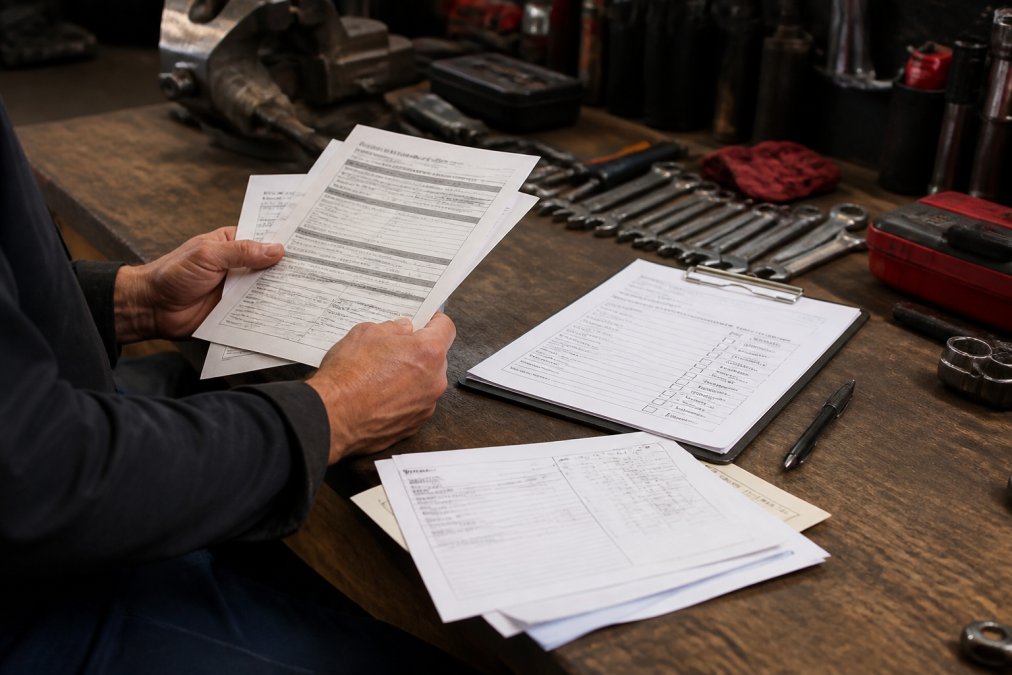
Hands holding warranty documentation and vehicle maintenance records spread across a workbench with a pen and checklist visible
After Installation:
Keep all installation documentation. Save receipts, invoices, warranty cards for the supercharger, and any performance data logs.
Maintain detailed service records. Document every oil change, filter replacement, and maintenance item.
Avoid extreme driving immediately after installation. Let the supercharger settle in.
Monitor boost pressure and engine parameters. Review the data periodically to confirm normal operation.
Report any issues immediately. Early intervention prevents small problems from becoming warranty claim denials.
Communicate with your dealer honestly. Tell the service advisor about the supercharger upfront. Transparency builds credibility.
Get warranty decisions in writing. If a dealer denies a claim, request the technical documentation in writing.
:::bestfor
DIY installers and enthusiasts who want maximum warranty protection should invest in pre- and post-installation inspection reports, maintain detailed service records, and document everything. This documentation becomes your defense if a warranty claim is questioned.
A supercharger doesn't void your engine warranty, but it does change how warranty claims get evaluated. The Magnuson-Moss Warranty Act protects you from blanket denial, but it doesn't eliminate the dealer's right to investigate causation. Your protection depends on choosing a quality supercharger kit, getting it installed properly, and maintaining meticulous documentation. VT Superchargers designs its bolt-on kits to work within OEM specifications and backs them with a 24-month warranty, giving you the confidence that your modification is engineered for reliability. Register with VT Superchargers today to explore kits for your specific vehicle and get started with a forced induction system built for both performance and peace of mind.
=== FAQ ANSWERS (audit these too, same rules) ===
[1] Q: Will a supercharger void my warranty?
A: Not automatically. The Magnuson-Moss Warranty Act prohibits manufacturers from voiding your entire warranty simply because you installed a supercharger. However, dealers can deny specific warranty claims if they prove the supercharger caused the failure. The key distinction: voiding means losing all coverage; denial means losing coverage for that one claim. Your powertrain warranty remains valid for unrelated systems and failures the dealer cannot link to the forced induction modification.
[2] Q: How does the Magnuson-Moss Warranty Act apply to aftermarket superchargers?
A: The Magnuson-Moss Warranty Act, enacted in 1975, explicitly prohibits manufacturers from voiding an entire warranty based on modifications unless they prove the modification caused the specific failure. When you install an aftermarket supercharger, the manufacturer cannot claim your entire powertrain warranty is void. They must demonstrate causation, that the supercharger directly caused the mechanical failure you're claiming. This burden of proof protects you from blanket warranty denials based solely on the modification's existence.
[3] Q: What should I do if my dealer denies a warranty claim after supercharger installation?
A: Request written documentation explaining exactly how the supercharger caused the specific failure. Dealers must prove causation, not just correlation. Ask your service advisor for diagnostic testing results and technical evidence. If the denial seems unjustified, contact the vehicle manufacturer's customer service department directly and reference the Magnuson-Moss Warranty Act. You can also consult a consumer protection attorney if the claim value is significant. Document all communications in writing and keep copies of your warranty booklet and installation records.
[4] Q: Is a dealer-installed supercharger warranty better than an aftermarket kit warranty?
A: Dealer-installed options, like Ford Performance's 3-year/36,000-mile powertrain warranty on Mustang supercharger kits, offer direct manufacturer backing and simplified claim processes. Aftermarket supercharger manufacturers like VT Superchargers provide their own 24-month warranties that cover the kit itself. Both protect you, but dealer installations may offer easier warranty administration since the dealer handles claims directly. Aftermarket kits provide flexibility and often cost less while still delivering comprehensive coverage.
Frequently Asked Questions
Will a supercharger void my warranty?
Not automatically. The Magnuson-Moss Warranty Act prohibits manufacturers from voiding your entire warranty simply because you installed a supercharger. However, dealers can deny specific warranty claims if they prove the supercharger caused the failure. The key distinction: voiding means losing all coverage; denial means losing coverage for that one claim. Your powertrain warranty remains valid for unrelated systems and failures the dealer cannot link to the forced induction modification.
How does the Magnuson-Moss Warranty Act apply to aftermarket superchargers?
The Magnuson-Moss Warranty Act, enacted in 1975, explicitly prohibits manufacturers from voiding an entire warranty based on modifications unless they prove the modification caused the specific failure. When you install an aftermarket supercharger, the manufacturer cannot claim your entire powertrain warranty is void. They must demonstrate causation, that the supercharger directly caused the mechanical failure you're claiming. This burden of proof protects you from blanket warranty denials based solely on the modification's existence.
What should I do if my dealer denies a warranty claim after supercharger installation?
Request written documentation explaining exactly how the supercharger caused the specific failure. Dealers must prove causation, not just correlation. Ask your service advisor for diagnostic testing results and technical evidence. If the denial seems unjustified, contact the vehicle manufacturer's customer service department directly and reference the Magnuson-Moss Warranty Act. You can also consult a consumer protection attorney if the claim value is significant. Document all communications in writing and keep copies of your warranty booklet and installation records.
Is a dealer-installed supercharger warranty better than an aftermarket kit warranty?
Dealer-installed options, like Ford Performance's 3-year/36,000-mile powertrain warranty on Mustang supercharger kits, offer direct manufacturer backing and simplified claim processes. Aftermarket supercharger manufacturers like VT Superchargers provide their own 24-month warranties that cover the kit itself. Both protect you, but dealer installations may offer easier warranty administration since the dealer handles claims directly. Aftermarket kits provide flexibility and often cost less while still delivering comprehensive coverage.
Hey there! VT Superchargers is a U.S.-based company built by car enthusiasts, for car enthusiasts. We use cookies to help tune-up browsing experience, and website performance, to bring you the horsepower you’re looking for.