Best Bolt-On Supercharger Kits for Nissan Engines
Table of Contents
- Best Bolt-On Supercharger Kits for Nissan Engines: Quick Comparison
- 1. Nissan Titan/Armada 5.6L V8 Twin Screw Supercharger Kit
- 2. Nissan Frontier 4.0L VQ40DE Supercharger Kit
- 3. Nissan Xterra 4.0L V6 Supercharger Kit
- 4. Nissan Pathfinder 4.0L V6 Twin-Screw Supercharger Kit
- Bolt-On Supercharger Maintenance Tips and Long-Term Reliability
- Supercharger vs Turbocharger for Nissan Engines: Which Forced Induction Works Best
- How to Choose the Right Supercharger Kit for Your Nissan
Last Updated: August 21, 2026
Best Bolt-On Supercharger Kits for Nissan Engines: Quick Comparison
Over 22% of high-performance vehicles sold in the U.S. use factory-installed or aftermarket superchargers. If you own a Nissan and want real power without an engine swap, a best bolt-on supercharger kits for Nissan engines delivers 25-45% more horsepower. At VT Superchargers, we've engineered kits that deliver genuine performance gains while maintaining reliability and OEM-style fitment.

The challenge is finding a supercharger that fits your specific engine, requires no custom fabrication, and won't destroy your warranty. This guide covers the top bolt-on options for Nissan's most popular platforms, power gains, and supporting modifications needed.
Feature Comparison Table
| Nissan Engine | Kit Type | Horsepower Gain | Torque Gain | Price | Best For |
|---|---|---|---|---|---|
| 5.6L V8 (Titan/Armada) | Twin-Screw | 50-70% | 50-70% | $7,500 | Towing, off-road, maximum power |
| 4.0L V6 (Frontier) | Twin-Screw | 40-60% | 30-50% | $5,500 | Daily driving, towing, reliability |
| 4.0L V6 (Xterra) | Twin-Screw | 50-70% | 50-70% | $5,400 | Off-road performance, trail use |
| 4.0L V6 (Pathfinder) | Twin-Screw | 40-60% | 40-60% | $5,400 | Family hauling, everyday performance |
1. Nissan Titan/Armada 5.6L V8 Twin Screw Supercharger Kit
The VT Superchargers Twin Screw kit for the Nissan Titan and Armada 5.6L VK56VD V8 delivers 50-70% more horsepower and torque. A stock 5.6L V8 produces around 400 hp; this kit pushes you to 550-600 hp depending on tune and supporting modifications.
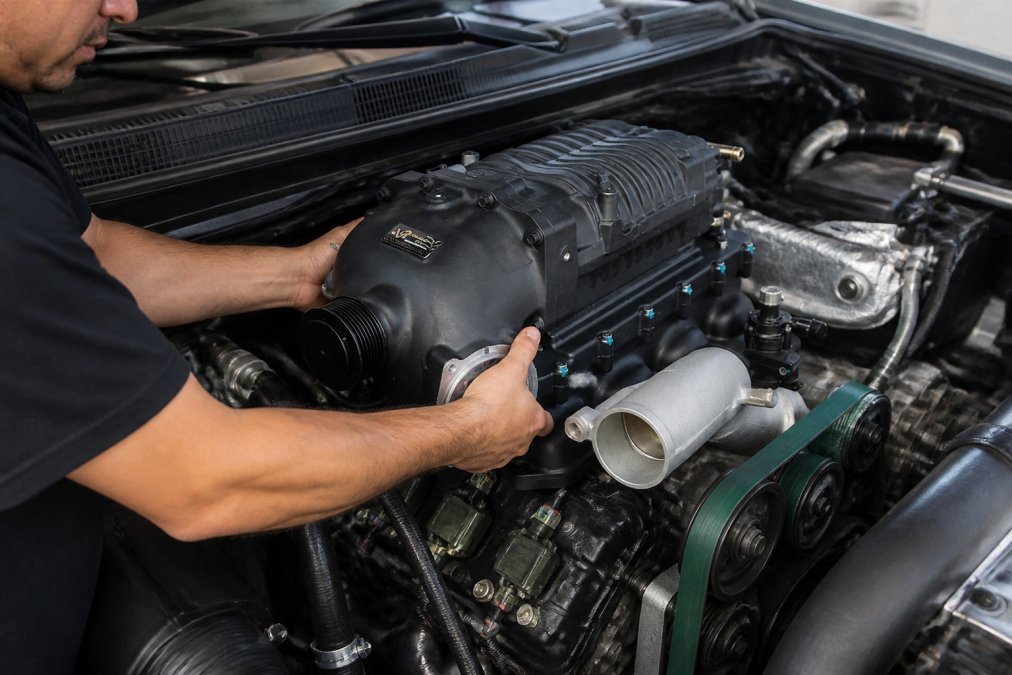
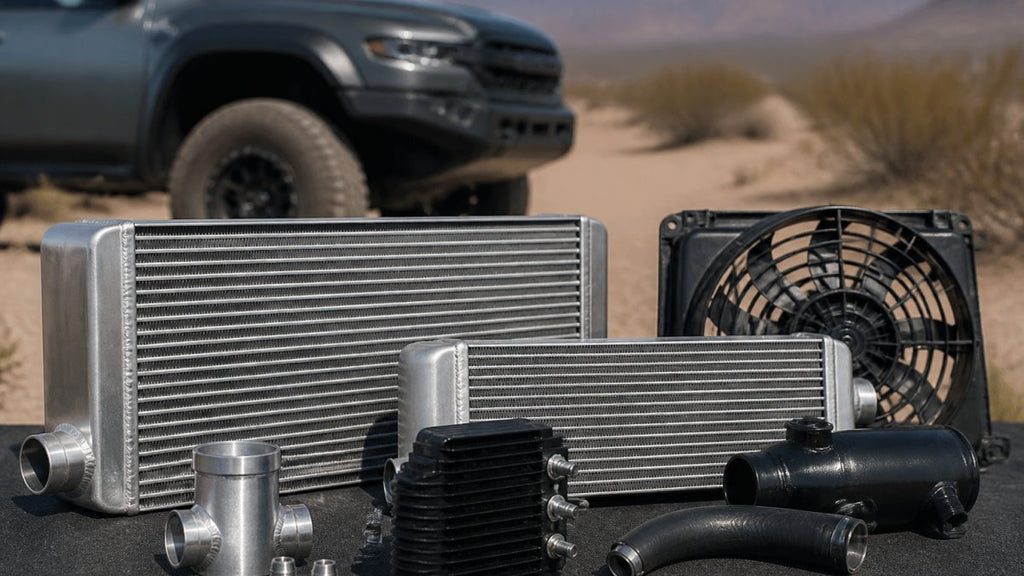
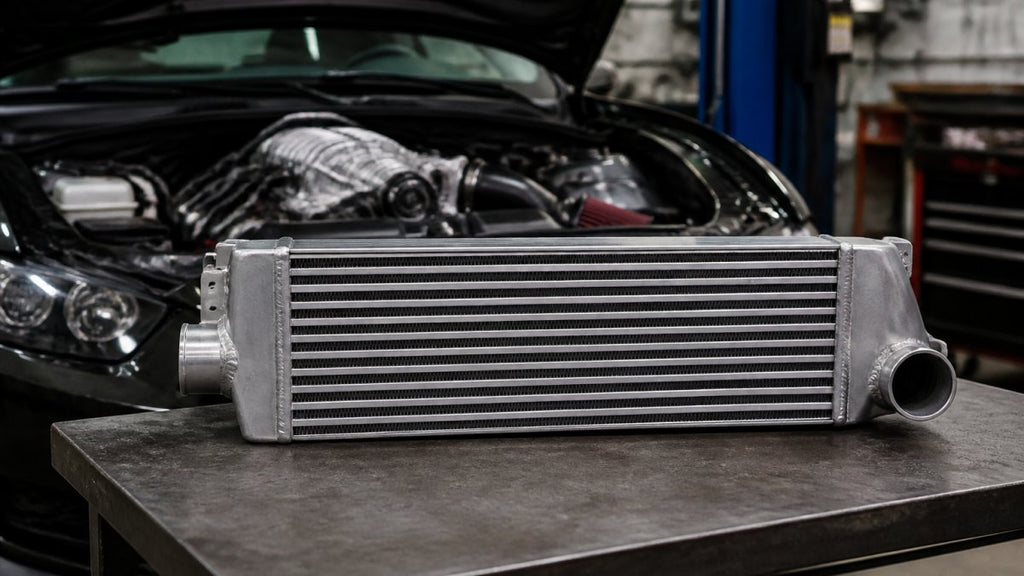
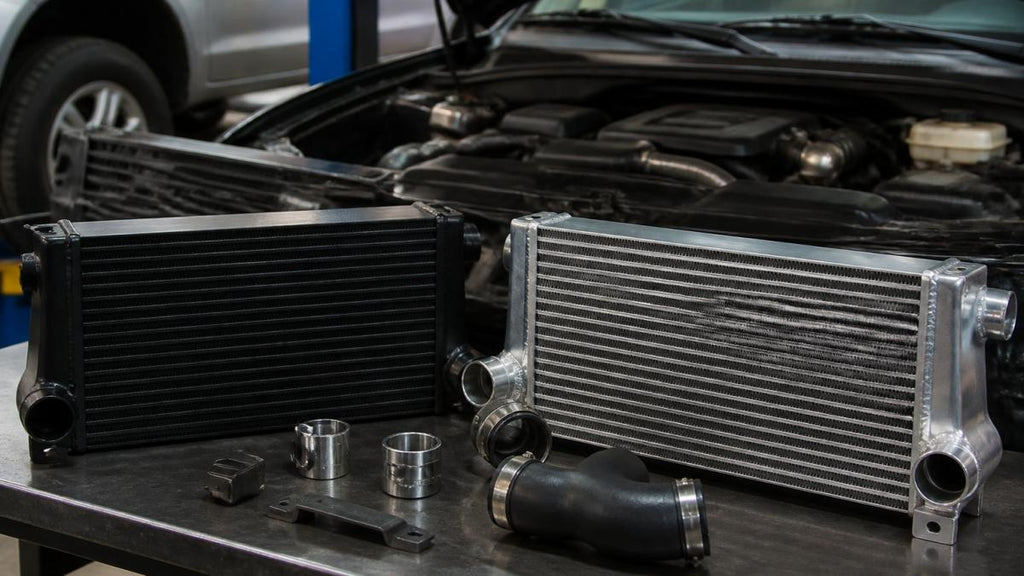
Twin-screw blowers dominate 39% of the market by type and deliver instant boost response with minimal lag. Unlike centrifugal designs that spool gradually, a twin-screw compressor engages immediately at low RPMs, essential for towing or off-road crawling. The kit uses a cast-aluminum intake manifold, integrated water-to-air intercooler, front-mounted heat exchanger, electric water pump, and belt drive hardware.
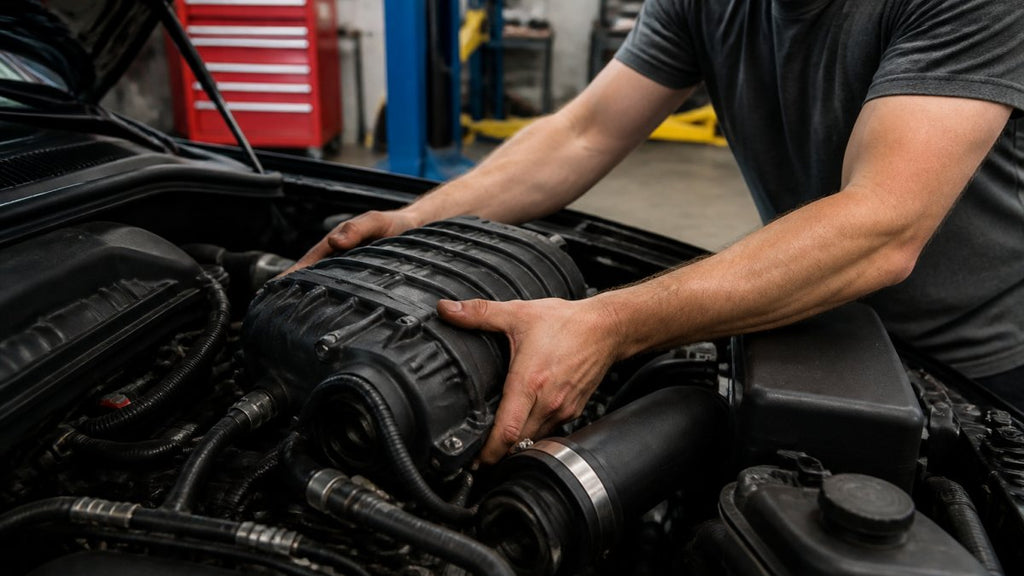
The VT Superchargers kit mounts to factory locations without cutting, welding, or internal engine modifications. Installation typically takes 8-16 hours.
Pro Tip
The VK56VD responds dramatically to pulley tuning. Swapping a smaller pulley (85mm instead of stock 100mm) increases boost from 6-8 psi to 10+ psi, unlocking an additional 100+ hp. This is one of the most cost-effective power adders after installation.
Price: $7,500. The 24-month manufacturer warranty covers defects in materials and workmanship under normal use. Racing abuse, improper installation, and incorrect tuning are excluded.
2. Nissan Frontier 4.0L VQ40DE Supercharger Kit
The Frontier's 4.0L VQ40DE V6 responds well to forced induction, delivering 40-60% more horsepower and 30-50% more torque. A stock 265-hp engine gains 100-160 hp in real-world conditions.

For daily drivers and weekend warriors, this is the sweet spot. The VQ40DE is bulletproof and has been in production since 2005 with minimal changes. The kit operates at 6-8 psi of boost, conservative enough for stock internals while delivering genuine performance.
Owners use these for commuting with sharper throttle response, towing heavier loads without constant downshifting, and off-road performance where mid-range torque matters. The integrated water-to-air intercooler keeps intake temperatures down during sustained driving.
Supporting modifications are minimal: ECU tuning and possibly a fuel pump upgrade if pushing beyond 55+ psi of boost. Stock fuel injectors handle the standard tune without issue.
Price: $5,500. Installation is straightforward with no custom fabrication required.
Watch Out
The one gotcha with Frontier supercharging is transmission heat. If towing or sustained highway driving, the extra torque loads the transmission harder. Adding a transmission cooler is highly recommended for regular towing.
3. Nissan Xterra 4.0L V6 Supercharger Kit
The Xterra's 4.0L V6 is the same engine as the Frontier's VQ40DE, but Xterra owners push harder on trail and terrain. The VT Superchargers kit delivers 50-70% more horsepower and torque, giving you aggressive power gains that justify off-road commitment.

Stock Xterras produce 265 hp. With this kit, you're looking at 400+ hp depending on tune. More importantly, the torque curve flattens out, providing stronger mid-range pull for rock crawling and technical terrain where low-end response matters.
The Xterra's heavier weight and off-road suspension setup means the supercharger improves drivability. Gear hunting on highway climbs disappears, and traction improves because you maintain momentum through rough terrain without dropping gears.
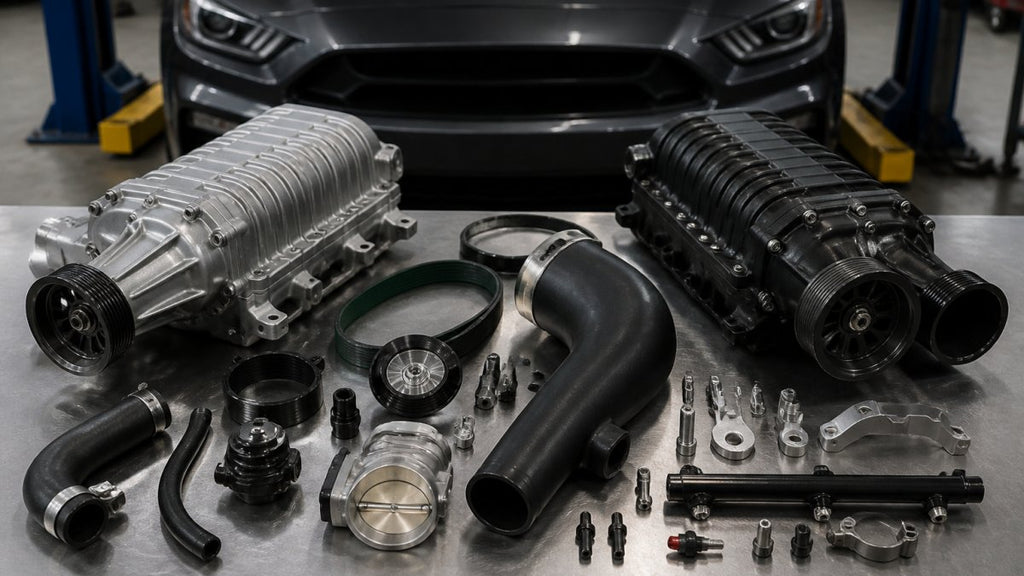
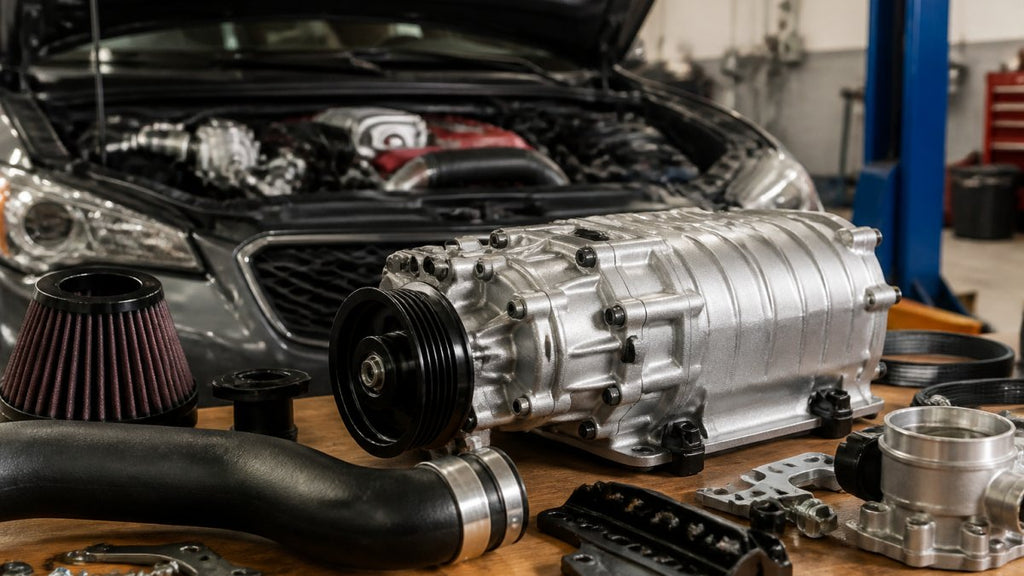
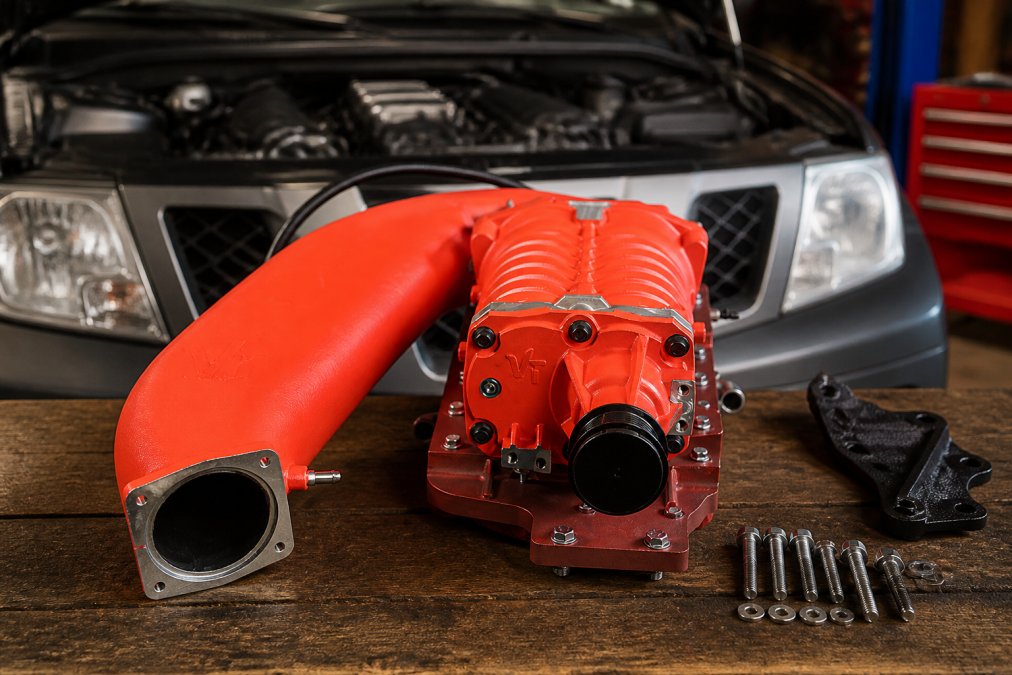
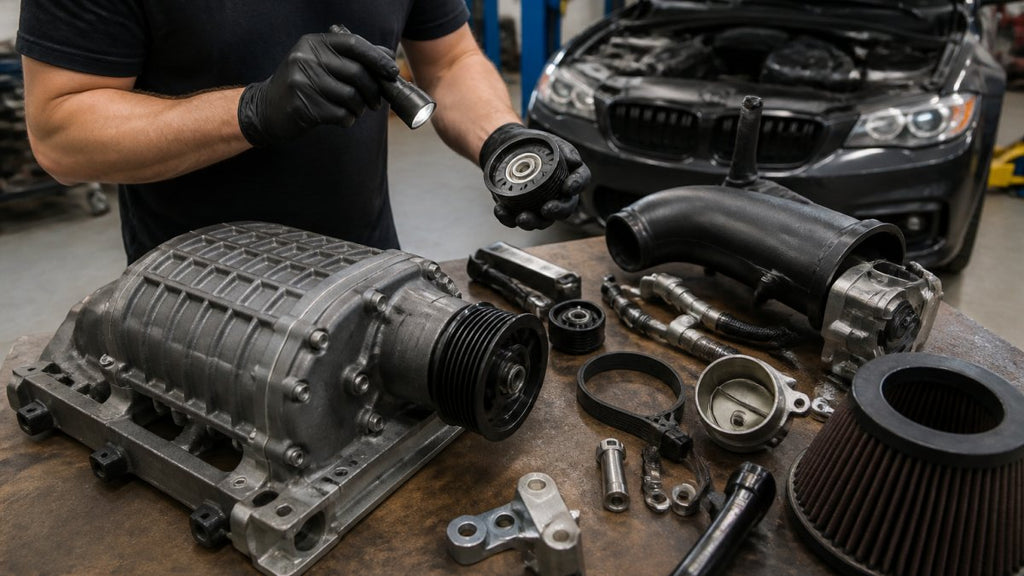
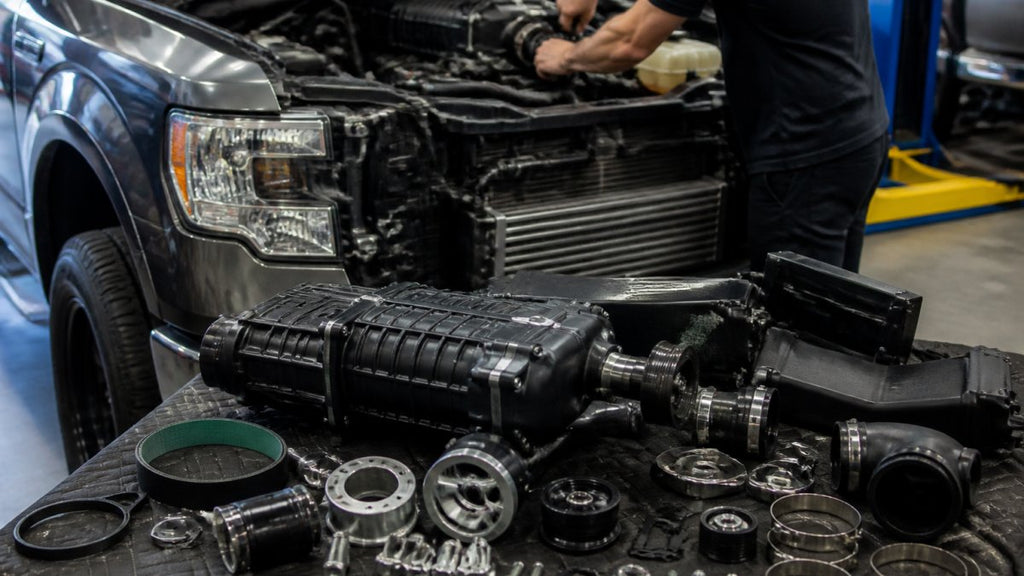
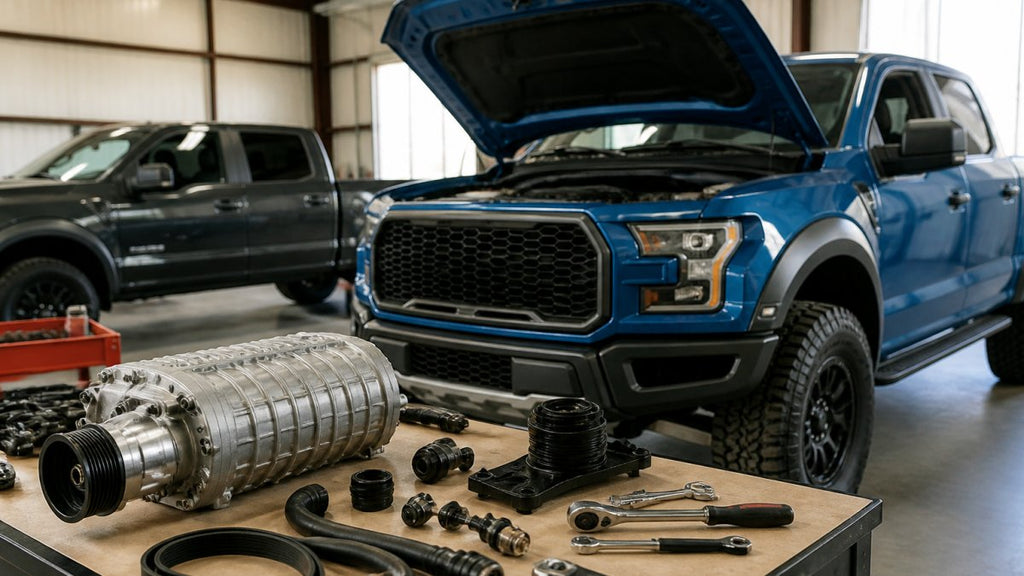
The kit includes the supercharger head unit, cast aluminum intake manifold, mid-mounted water-to-air intercooler, coolant reservoir, electric water pump, front-mounted heat exchanger, drive belt system, water lines, intake piping, mounting brackets, and all hardware. No cutting or welding required.
Price: $5,400. Professional installation is available at approved partner locations, though DIY installation is feasible for mechanically inclined owners.
Best For
Overlanders and off-road enthusiasts who want reliable, proven power without custom fabrication.
4. Nissan Pathfinder 4.0L V6 Twin-Screw Supercharger Kit
The Pathfinder's 4.0L V6 is the same proven engine as the Frontier and Xterra. The VT Superchargers kit delivers 40-60% more horsepower and torque, transforming the Pathfinder from underpowered to genuinely responsive.
Stock Pathfinders produce 265 hp. This kit brings you to 370-420 hp depending on tune. For a vehicle regularly carrying five people plus cargo, that's meaningful. Passing becomes easier, highway merging is no longer an afterthought, and towing becomes genuinely usable.
The twin-screw design ensures linear boost response with no lag. The system operates at 6-8 psi, safe for stock internals on the VQ40DE. The integrated intercooler prevents heat soak during sustained driving.
Installation uses factory mounting locations with minimal modifications. The kit includes everything needed: supercharger head unit, cast aluminum intake manifold, water-to-air intercooler, electric water pump, coolant reservoir, heat exchanger, drive belt system, and all hardware.
Price: $5,400. Professional installation is recommended. The 24-month warranty covers defects in materials and workmanship under normal use.
Bolt-On Supercharger Maintenance Tips and Long-Term Reliability
Superchargers are mechanically simpler than turbos with no exhaust manifold plumbing or variable geometry complications. However, they require attention. Aftermarket installations exceed 110,000 units annually in the U.S., and reliability depends entirely on maintenance discipline.
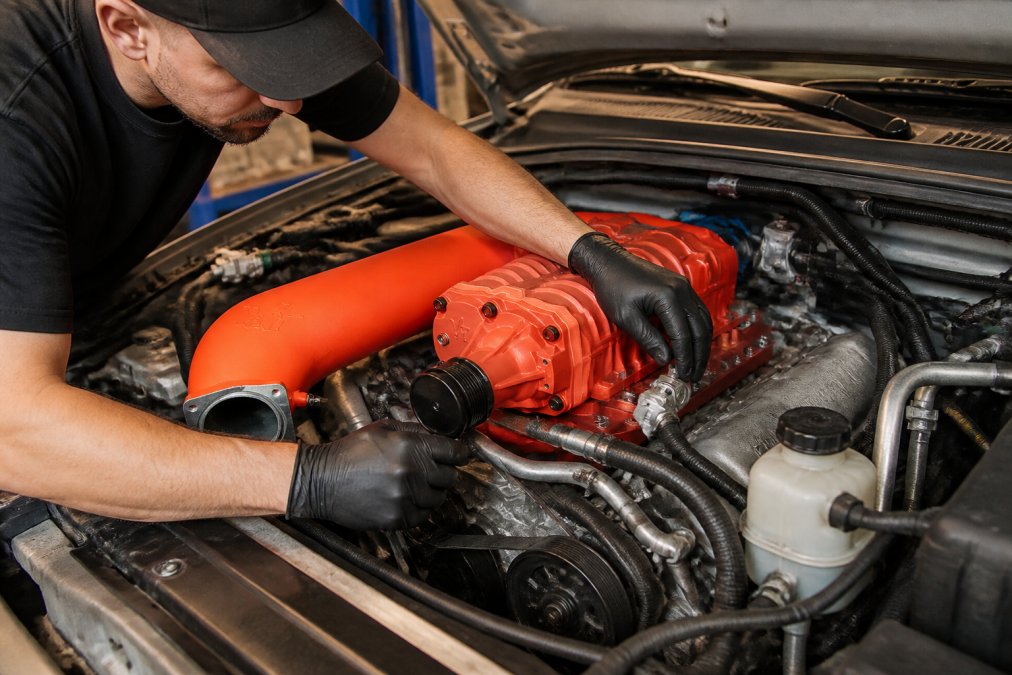
Check belt tension every 5,000 miles for the first 1,000 miles after installation, then every 10,000 miles. A loose belt slips and generates heat; a tight belt strains the water pump and bearings. VT Superchargers includes a detailed maintenance schedule with every kit.
Flush the intercooler cooling system according to the manufacturer's schedule, typically every 30,000 miles. If running aggressive boost (8+ psi), flush every 20,000 miles.
Use synthetic oil rated for higher temperatures. Superchargers compress air to 30-50% above atmospheric pressure, heating the intake charge. Use the grade specified in your tuning documentation, typically 5W-30 or 10W-30.
Watch Out
Detonation is the silent killer of supercharged engines. If your tune is too aggressive for your fuel octane, the engine will ping and knock, causing internal damage. Use 91-octane minimum; 93-octane is safer if available. If you hear detonation, back off the boost immediately and contact your tuner.
Use a quality air filter and replace it every 15,000 miles. Properly maintained kits routinely exceed 100,000 miles without major issues.
Supercharger vs Turbocharger for Nissan Engines: Which Forced Induction Works Best
Superchargers and turbochargers both compress intake air to increase horsepower, but they work fundamentally differently.
Superchargers use a belt driven from the engine's crankshaft. The compressor engages immediately with no lag, at 2,000 RPM, you have full boost. This linear power delivery is why superchargers dominate off-road and towing applications where you need predictable, instant torque.
Turbochargers use exhaust gas energy to spin a turbine, which compresses intake air. They're more efficient at high RPMs but require the engine to reach operating temperature and exhaust flow before boost builds. Turbo lag, though minimal on modern designs, still exists.
Cost comparison: A quality bolt-on supercharger kit for a Nissan V6 runs $5,400-$5,500. A comparable turbo kit costs $4,500-$6,500. Superchargers are simpler to install and tune. Turbo kits require exhaust manifold fabrication, oil and coolant line routing, and more complex tuning.
Superchargers are mechanically simpler with fewer moving parts and no turbine spinning at 150,000+ RPM. Turbos are proven but require more maintenance: more frequent oil changes, coolant flushes, and turbo-specific tuning.
Twin-screw superchargers maintain 39% of aftermarket installations because buyers prioritize instant torque delivery below 2,000 RPM, an advantage turbos can't match without significant tuning complexity.
For Nissan engines, superchargers are the better choice for bolt-on simplicity, instant power, and off-road reliability.
How to Choose the Right Supercharger Kit for Your Nissan
Choosing the right kit starts with three questions: What engine do you have? What do you want the power for? How much fabrication are you willing to do?
Engine Compatibility and Fitment
Your engine determines everything. Nissan uses different V6 platforms across generations. The 3.5L V6 in newer Altimas differs from the 4.0L VQ40DE in Frontiers and Xterras. The 5.6L V8 in Titans is completely different.
Confirm your exact engine displacement and model year before ordering. VT Superchargers lists compatibility by year and engine code. If unsure, contact the team, fitment verification is required before purchase.
The kits covered in this guide are designed for specific engines with factory mounting locations. No cutting, welding, or custom fabrication required. If your engine isn't listed, check with VT Superchargers directly for custom options.
Installation Requirements and Supporting Modifications
A bolt-on supercharger kit includes everything bolted to the engine, but "bolt-on" doesn't mean "plug and play." Supporting modifications are required.
ECU tuning is mandatory. The engine computer must be recalibrated to adjust fuel injection, ignition timing, and boost pressure for the added air volume. Stock tuning assumes naturally aspirated conditions. Forced induction without tuning causes detonation and engine damage. VT Superchargers provides tuning support via remote tuning.
Fuel system upgrades are often necessary. Stock fuel injectors handle naturally aspirated flow rates. If running 8+ psi of boost, a fuel pump upgrade and possibly larger injectors are required, costing $500-$1,500.
Cooling system upgrades are recommended. Forced induction generates heat. Adding a transmission cooler (if you tow) and ensuring your radiator is clean prevents overheating during sustained driving.
Exhaust modifications are optional but beneficial. A cat-back exhaust system reduces backpressure and allows the supercharger to breathe easier, costing $400-$800.
Total installed cost including supporting modifications: $7,000-$10,000 for most Nissan applications.
CARB Compliance and Emissions Legality
Some supercharger kits carry CARB (California Air Resources Board) approval and EO (Executive Order) numbers, making them 50-state legal. However, most aftermarket supercharger kits, including many from VT Superchargers, do not carry CARB approval. They're legal for off-road use and racing but not street legal in states with strict emissions enforcement. Check your local regulations before ordering.
Your factory warranty is a separate issue. Supercharger installation voids the powertrain warranty on most vehicles. Nissan will not cover engine or transmission repairs if the supercharger contributed to failure. This is why installation quality and tuning accuracy matter.
VT Superchargers' 24-month warranty covers the supercharger kit itself, not the engine. For street-legal, emissions-compliant setups, research CARB-approved kits specifically. For off-road and racing applications, emissions compliance is irrelevant.
Supercharging a Nissan is one of the most straightforward performance upgrades available. The kits are proven, power gains are real, and installation is manageable for experienced DIYers or professional shops. The limiting factor is always supporting modifications and tuning, get those right, and you'll enjoy years of reliable, responsive performance.
VT Superchargers specializes in precise, OEM-style fitment kits backed by a 24-month warranty and worldwide shipping. Whether upgrading a daily driver, building an off-road machine, or improving towing capability, our bolt-on kits deliver real performance without custom fabrication. Register with VT Superchargers today and unlock the full potential of your Nissan engine with engineered solutions you can trust.
=== FAQ ANSWERS (audit these too, same rules) ===
[1] Q: How much horsepower does a Nissan Titan supercharger gain? A: The Nissan Titan 5.6L V8 twin-screw supercharger kit delivers 50-70% more horsepower over stock output, translating to approximately 150-210 additional horsepower depending on tune and supporting modifications. Torque increases proportionally by 50-70%, dramatically improving towing capacity and acceleration.
[2] Q: What supporting modifications are required when installing a bolt-on supercharger kit for Nissan? A: Most bolt-on supercharger kits for Nissan engines require ECU/engine tuning to optimize air-fuel ratios and boost timing. Depending on horsepower goals, you may also need fuel injector upgrades, a stronger fuel pump, and exhaust modifications. The intercooler system handles heat, but ensuring adequate coolant flow and brake fluid capacity is essential. VT Superchargers provides detailed installation manuals and remote tuning support to guide you through these modifications.
[3] Q: Is a bolt-on supercharger kit street-legal for Nissan vehicles? A: Street legality depends on your state's emissions regulations. Some supercharger kits, like the Vortech bolt-on intercooled VQ35DE system, carry CARB (California Air Resources Board) approval with an EO number, making them 50-state legal. However, not all kits are CARB-certified. Before purchasing, confirm with VT Superchargers whether your specific kit meets your state's emissions standards. Improper tuning or unsupported modifications can void this compliance.
[4] Q: What is the difference between twin-screw and centrifugal superchargers for Nissan engines? A: Twin-screw superchargers deliver boost instantly across the entire RPM range, providing strong low-end torque ideal for towing and off-road use. Centrifugal superchargers account for the major share in the global market due to various advantageous features such as light weight, small size, and high output delivery efficiency. For Nissan Titan and larger V8s, twin-screw kits offer superior drivability and towing performance. For smaller engines like the Frontier 4.0L, either type works well depending on your intended use.
[5] Q: Can I install a bolt-on supercharger kit myself, or do I need professional installation? A: VT Superchargers bolt-on kits are designed for DIY installation and typically require 8-16 hours with basic mechanical skills and tools. The kits use factory mounting locations without cutting or welding. However, professional installation is recommended, especially for ECU tuning and fuel system adjustments. The 24-month warranty covers defects in materials and workmanship under normal use.
Frequently Asked Questions
How much horsepower does a Nissan Titan supercharger gain?
The Nissan Titan 5.6L V8 twin-screw supercharger kit delivers 50-70% more horsepower over stock output, translating to approximately 150-210 additional horsepower depending on tune and supporting modifications. Torque increases proportionally by 50-70%, dramatically improving towing capacity and acceleration.
What supporting modifications are required when installing a bolt-on supercharger kit for Nissan?
Most bolt-on supercharger kits for Nissan engines require ECU/engine tuning to optimize air-fuel ratios and boost timing. Depending on horsepower goals, you may also need fuel injector upgrades, a stronger fuel pump, and exhaust modifications. The intercooler system handles heat, but ensuring adequate coolant flow and brake fluid capacity is essential. VT Superchargers provides detailed installation manuals and remote tuning support to guide you through these modifications.
Is a bolt-on supercharger kit street-legal for Nissan vehicles?
Street legality depends on your state's emissions regulations. Some supercharger kits, like the Vortech bolt-on intercooled VQ35DE system, carry CARB (California Air Resources Board) approval with an EO number, making them 50-state legal. However, not all kits are CARB-certified. Before purchasing, confirm with VT Superchargers whether your specific kit meets your state's emissions standards. Improper tuning or unsupported modifications can void this compliance.
What is the difference between twin-screw and centrifugal superchargers for Nissan engines?
Twin-screw superchargers deliver boost instantly across the entire RPM range, providing strong low-end torque ideal for towing and off-road use. Centrifugal superchargers account for the major share in the global market due to various advantageous features such as light weight, small size, and high output delivery efficiency. For Nissan Titan and larger V8s, twin-screw kits offer superior drivability and towing performance. For smaller engines like the Frontier 4.0L, either type works well depending on your intended use.
Can I install a bolt-on supercharger kit myself, or do I need professional installation?
VT Superchargers bolt-on kits are designed for DIY installation and typically require 8-16 hours with basic mechanical skills and tools. The kits use factory mounting locations without cutting or welding. However, professional installation is recommended, especially for ECU tuning and fuel system adjustments. The 24-month warranty covers defects in materials and workmanship under normal use.
This article was written using GrandRanker
Related post
09
Oct
RECENT POSTS