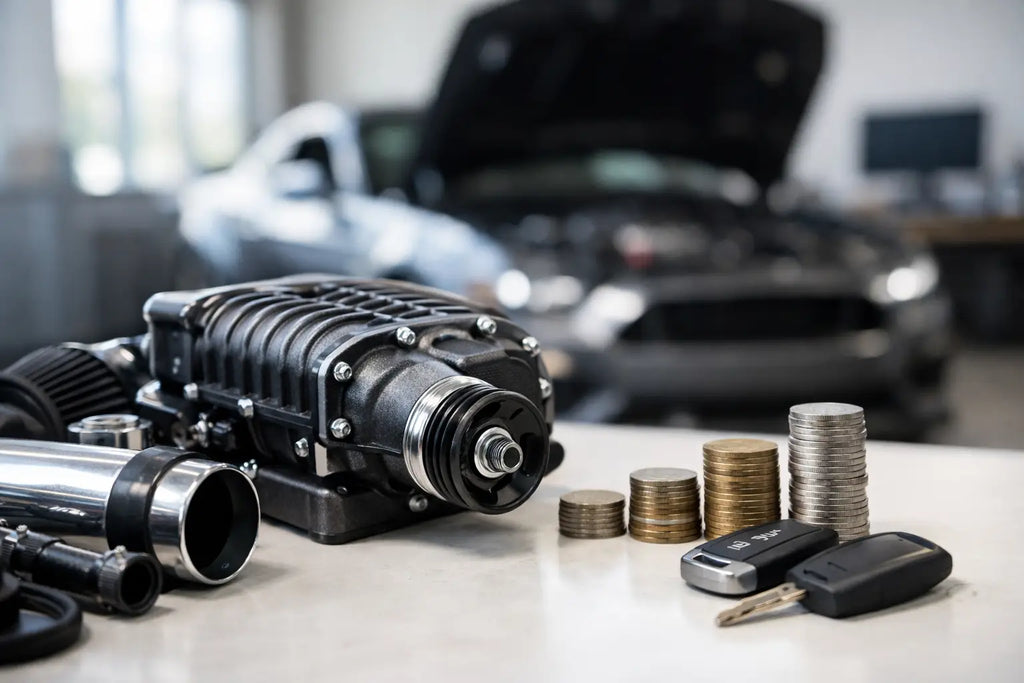
Supercharger Kit Financing Options That Work
Your Tacoma was fine until the 33s went on, the bed filled up with camping gear, and the trailer got hooked up. Now it hunts for gears on every grade, passing takes a full calendar invite, and the throttle feels like it is asking permission. We see this all the time. Supercharger kit financing options can be the difference between living with that sluggish setup for another year and putting the torque back where it belongs.
A properly matched bolt-on kit is not just about a peak horsepower number. It is about pulling a hill without burying the gas pedal, rolling into the throttle to pass a line of traffic, and making a loaded SUV feel like it did before the tires, armor, rack, and extra weight showed up. The trick is financing the whole job responsibly, not buying a kit on impulse and getting trapped by a payment that makes the upgrade less fun.
Supercharger Kit Financing Options Start With the Full Job
One of the biggest complaints we hear is, "I can afford the kit, but I did not budget for everything around it." That is how good plans get sideways.
Your real number is not always the price of the box. Depending on the vehicle, your budget may include the supercharger kit, tax, shipping if applicable, professional installation, tuning support, fluids, belts, plugs, and a few common wear items found during the install. If you are running a Toyota Tacoma or 4Runner on 35-inch tires, make sure you have also thought through gearing, brakes, and the condition of the transmission. More power helps, but it does not erase every weak link in an overloaded build.
For a Dodge Charger or Ford Mustang, the conversation may be more about rear tire traction, fuel quality, and whether the car is truly ready for the power you want to make. For a Jeep Gladiator that sees mountain trails and a camper, it is usually about restoring usable midrange torque without turning the truck into a temperamental weekend project.
Get a written estimate from your installer before you apply for financing. Most owners tell us they feel much better once they know the installed total rather than guessing at it. A clean install, proper calibration, and a little room for normal maintenance are worth planning for.
Common Ways to Finance a Supercharger Kit
The best option depends on your credit profile, your cash available, and how quickly you intend to pay the balance off. There is no magic answer, and the lowest monthly payment is not automatically the cheapest way to buy.
Point-of-sale financing
Many performance parts sellers offer financing through a third-party provider at checkout. This can be convenient because the application process is quick and the purchase is tied directly to the kit. Depending on the provider and your approval, you may see fixed monthly-payment plans, promotional offers, or deferred-interest terms.
Read the terms like you read a tune file before loading it. Know the APR, the length of the term, whether interest starts immediately, and what happens if a promotional balance is not paid in full by the deadline. A low payment spread over a long term can cost more than you expect.
For a lot of owners, this route makes sense when they have a stable monthly budget and want to keep cash available for installation. At VT Superchargers, financing availability and terms are determined by the lending provider, so always review the offer shown during checkout instead of assuming every buyer gets the same deal.
Credit union or bank personal loan
A personal loan can be a solid move when you are financing both the kit and labor. You get one amount, one payment, and a defined payoff schedule. Credit unions are often worth checking because some offer competitive rates to established members.
This option is especially practical for owners paying an approved installer separately. Instead of putting the kit on one plan and labor on a high-interest card, you can cover the complete build in one loan. The trade-off is that approval, rate, and funding time can vary, so get your numbers lined up before scheduling the install.
Credit card financing
A card with a true introductory 0% APR period can work if you have a clear payoff plan and the discipline to follow it. This is not the place for wishful math. If the balance will still be there when the promotional period ends, the interest can hit hard.
We see this work best for owners who have the cash flow to knock out the balance well before the promotion expires. It works poorly when the payment only covers the minimum and the project keeps growing. If you use a card, set an automatic payment based on the payoff date, not the minimum due.
Pay cash and finance only what makes sense
There is nothing wrong with using a down payment. In fact, it can put you in a much better position. Covering tax, shipping, or part of the install in cash reduces the financed balance and may make a shorter term realistic.
After installing hundreds of kits, I can tell you the owners who are happiest long-term are usually not the ones who stretched the farthest. They are the ones who left enough room to install the system correctly, keep up with maintenance, and enjoy the vehicle without sweating every payment.
Match the Payment to How You Use the Vehicle
A daily-driven Mazda3 or Nissan Frontier is different from a toy that only comes out on sunny weekends. If the vehicle gets you to work, hauls your family, pulls your boat, or takes you into the backcountry, prioritize a proven application and an installation plan that protects daily drivability.
For Tacoma and 4Runner owners, the value often shows up every time the vehicle is loaded. Bigger tires, skid plates, bumpers, drawers, rooftop tents, and passengers all add weight. The supercharger is there to bring back response and climbing power, not to make the truck feel wild for five minutes and miserable for five years.
For Jeep Gladiator owners, think about the terrain you actually run. A clean, well-tuned setup that gives you stronger throttle response from low rpm is more useful on a steep trail or when merging with a loaded truck than chasing a bragging-rights dyno number. The same goes for a Suzuki or Toyota build that lives at altitude. Thin air exposes weak factory power fast.
That is why the financing term should match the ownership plan. If you expect to keep the truck for years, a sensible fixed payment may be easier to justify. If you are planning to sell the vehicle soon, adding a long loan balance to a modified vehicle is usually a bad fit. Modified-vehicle resale can be unpredictable, even when the parts are high quality.
Do Not Finance Around a Bad Installation
Here is the part nobody wants to hear after watching install videos: the cheapest labor quote is not always the deal. A vehicle-specific supercharger kit should fit cleanly, be calibrated properly, and be installed by someone who understands the platform. That matters more than saving a few dollars on the front end.
Ask the installer whether they have worked on your engine and model year, what is included in the labor quote, and who handles support if a question comes up after the install. Confirm the fuel requirement, maintenance expectations, tuning process, and whether your current modifications affect compatibility.
A 2019 Tacoma with a bumper, 33s, and a bed rack may need a different conversation than a stock 2023 4Runner. A Charger with an existing intake, exhaust, and questionable plugs needs an honest inspection before forced induction goes on it. Clean power starts with a healthy vehicle.
A Quick Reality Check Before You Apply
Before you choose among supercharger kit financing options, run one simple test: could you still make this payment during an expensive month? Tires, brakes, insurance, registration, and normal life do not pause because the truck now pulls harder.
Use the lender's actual APR and term to calculate the total you will repay. If the number makes you uncomfortable, put more down, choose a shorter plan after saving for a few months, or hold off until the full installation budget is ready. There is no shame in waiting. There is plenty of shame in cutting corners on tuning or skipping maintenance because the payment ate the budget.
The right plan lets you bolt on real power, keep the install clean, and enjoy the first loaded uphill pull without wondering whether you made a bad financial call. Build it once, pay for it intelligently, and then floor it when the road opens up.
Related post
09
Oct
RECENT POSTS