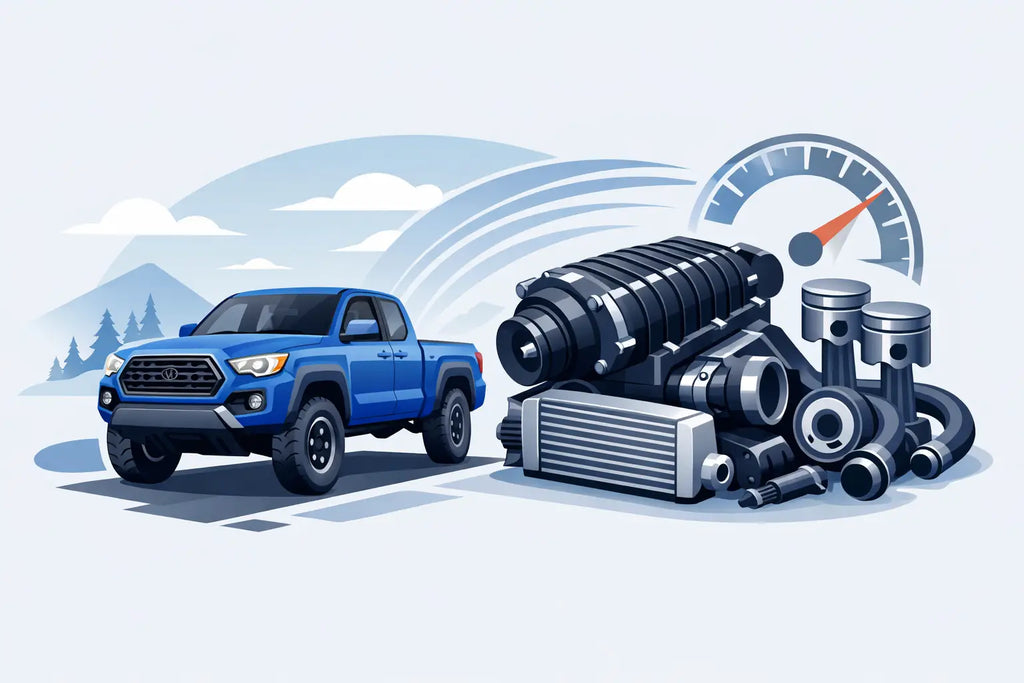
Toyota Tacoma Supercharger Kit Guide
Hi, it’s Dave. If you’re wondering why so many Tacoma owners end up adding a supercharger, the short version is simple: once these trucks are loaded with larger tyres, armour, camping gear, recovery equipment, or towing setups, many owners find the factory powertrain working harder than they’d like. A well-designed supercharger helps restore torque, improve drivability, reduce constant downshifting, and make the truck feel more relaxed and capable in everyday use.
TL;DR: Tacoma owners typically add a supercharger not to build a race truck, but to improve torque, towing performance, throttle response, and overall drivability after modifying their trucks with extra weight and larger tyres.
The Toyota Tacoma has earned its reputation for a reason. It’s reliable, capable, and will put up with years of abuse that would have some trucks begging for mercy. The problem isn’t durability. The problem is that once most owners start modifying them, they quickly discover the factory powertrain wasn’t designed around the way many Tacomas are actually used.
If you’ve added 33-inch tyres, steel bumpers, recovery gear, a rooftop tent, a bed rack, camping equipment, or a trailer, you’ve probably felt it.
You pull out to overtake, put your foot down, the transmission drops a couple of gears, the engine makes plenty of noise, and the truck doesn’t accelerate nearly as hard as you expected. On mountain roads it’s even more noticeable. The Tacoma can start feeling like it’s constantly working just to keep up.
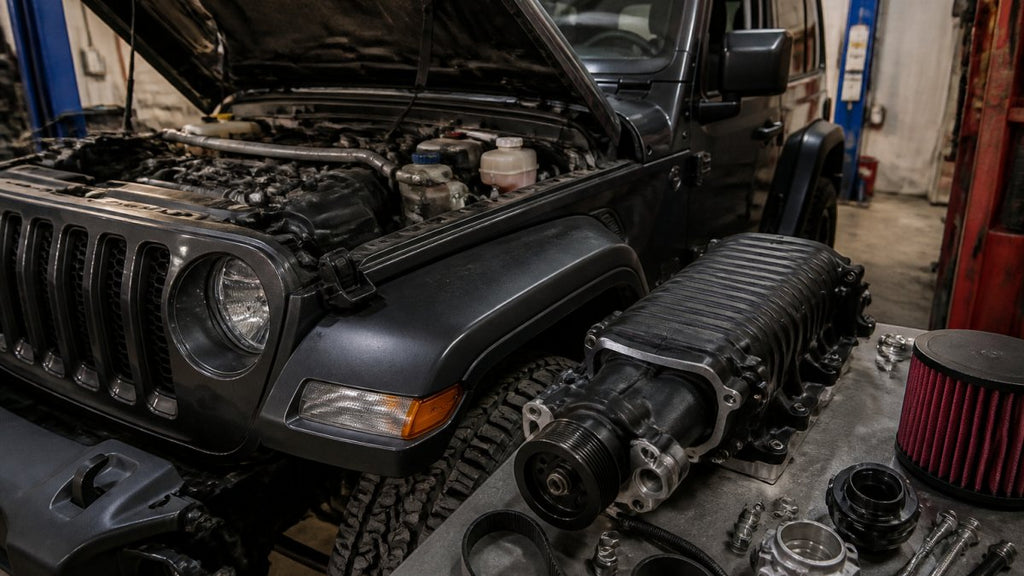
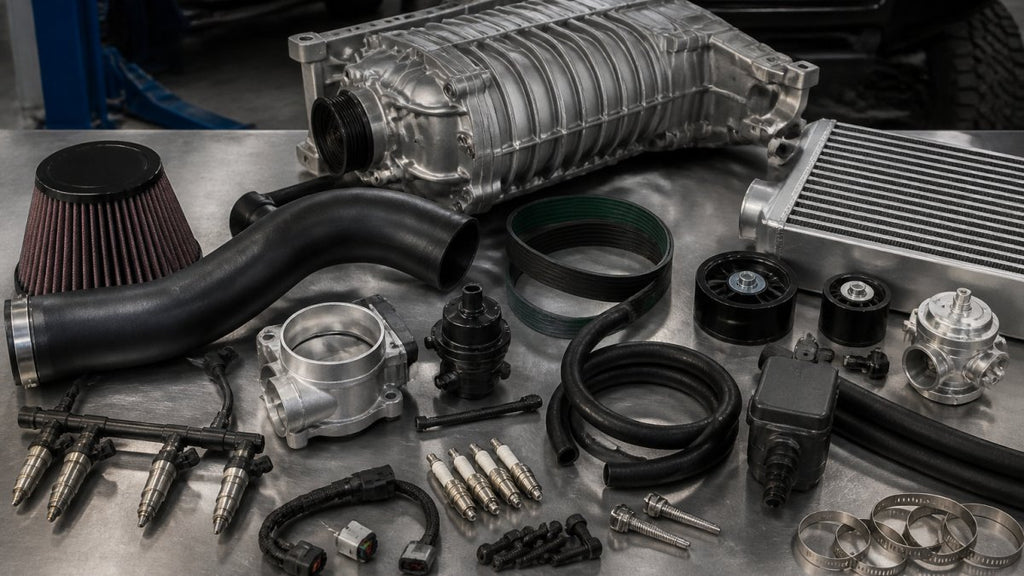
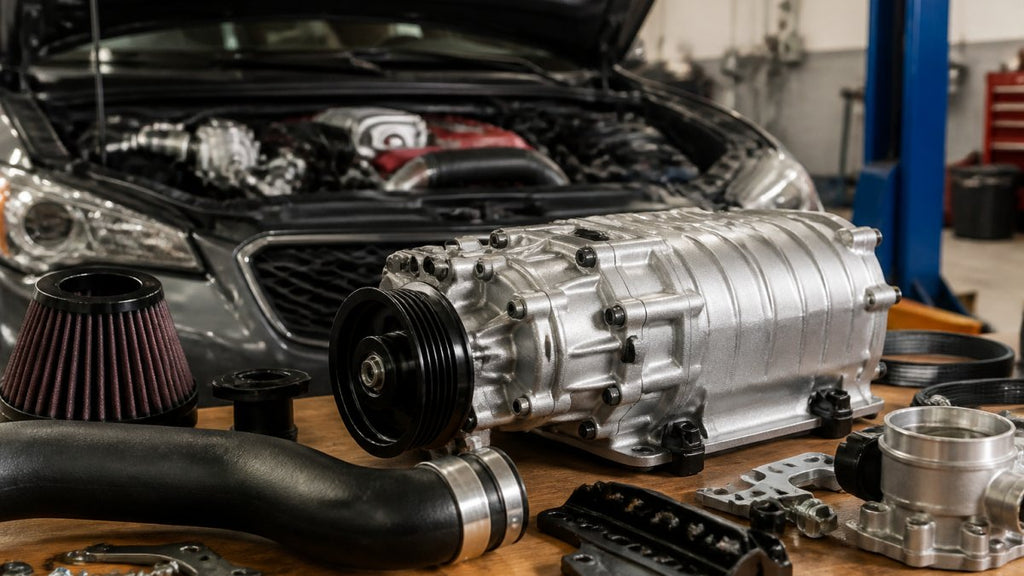
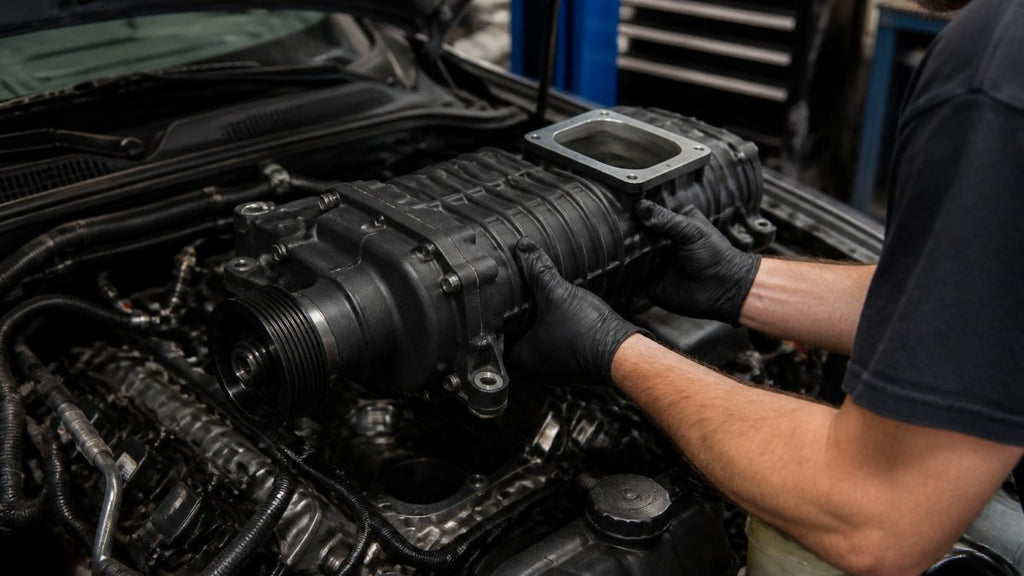
That’s usually the point where we see Tacoma owners start looking at a Toyota Tacoma supercharger kit.
Not because they’re trying to build a race truck.
Not because they want to do burnouts at every traffic light.
Because they want the truck to feel the way it probably should have felt from the factory.
The Real Problem Isn’t Horsepower
Most conversations about superchargers start with horsepower numbers.
That’s understandable. Everybody likes a good dyno chart.
But after speaking with Tacoma owners and seeing how these trucks are actually used, horsepower is rarely the thing they’re frustrated with.
What they’re frustrated with is how the truck behaves once it’s loaded.
The 3.5L 2GR-FKS V6 found in the 2016+ Tacoma is a solid engine. The challenge is that many owners gradually add hundreds of kilos to the vehicle without really thinking about it.
A steel front bumper here.
A winch there.
Larger tyres.
Sliders.
Roof rack.
Camping gear.
Recovery equipment.
Before long, you’re driving something significantly heavier than the truck Toyota originally calibrated.
The result is familiar to almost every modified Tacoma owner. More downshifts. More gear hunting. More time with your foot buried into the carpet trying to maintain speed on a grade.
A supercharger doesn’t magically turn the Tacoma into a sports car. What it does is give the engine the torque and response needed to cope with the additional weight and real-world demands owners place on it.
Why Tacoma Owners Notice Boost Immediately
One thing that surprises many customers is how quickly they stop thinking about horsepower after driving a supercharged Tacoma.
The first thing they usually talk about isn’t the dyno sheet.
It’s how much easier the truck is to drive.
The throttle feels sharper.
The truck responds sooner.
Passing manoeuvres require less planning.
Long motorway inclines become less of an event.
If you’ve ever driven through Colorado, Utah, Montana, or anywhere else where elevation starts to steal power from naturally aspirated engines, the difference becomes even more obvious.
One Tacoma owner we spoke with regularly towed a small camper while running 33-inch tyres and a rooftop tent. His biggest complaint wasn’t speed. It was constantly fighting the transmission on long grades.
After adding boost, his feedback was simple:
“The truck finally feels relaxed.”
That’s probably one of the best descriptions of a well-designed Tacoma supercharger system.
The truck doesn’t feel frantic anymore. It just gets on with the job.
Key Advantages of a Supercharged Tacoma
For most owners, the benefits show up in everyday driving situations rather than headline horsepower figures:
- Improved towing performance with stronger torque delivery on hills, during overtaking, and when pulling heavier loads.
- Better off-road drivability thanks to increased low- and mid-range power that helps the truck maintain momentum over obstacles and through challenging terrain.
- Sharper throttle response under load, reducing the delay between pedal input and acceleration when the vehicle is carrying gear or passengers.
- Less frequent downshifting and gear hunting when climbing grades or driving into headwinds.
- Increased torque where owners actually use it most, making the truck feel more capable and less strained during daily driving and adventure travel.
- More confident acceleration at higher elevations where naturally aspirated engines typically lose noticeable power.
Related post
09
Oct
RECENT POSTS