Best Supercharger Kits for Daily Drivers: 2026 Guide
Table of Contents
- Supercharger Kits for Daily Drivers: What You Need to Know
- How We Selected These Kits
-
Top Supercharger Kits for Daily Drivers by Vehicle Type
- Toyota Tundra 5.7L: VT Superchargers Twin-Screw Kit
- Toyota 4Runner 4.0L: Bolt-On Forced Induction for Off-Road Torque
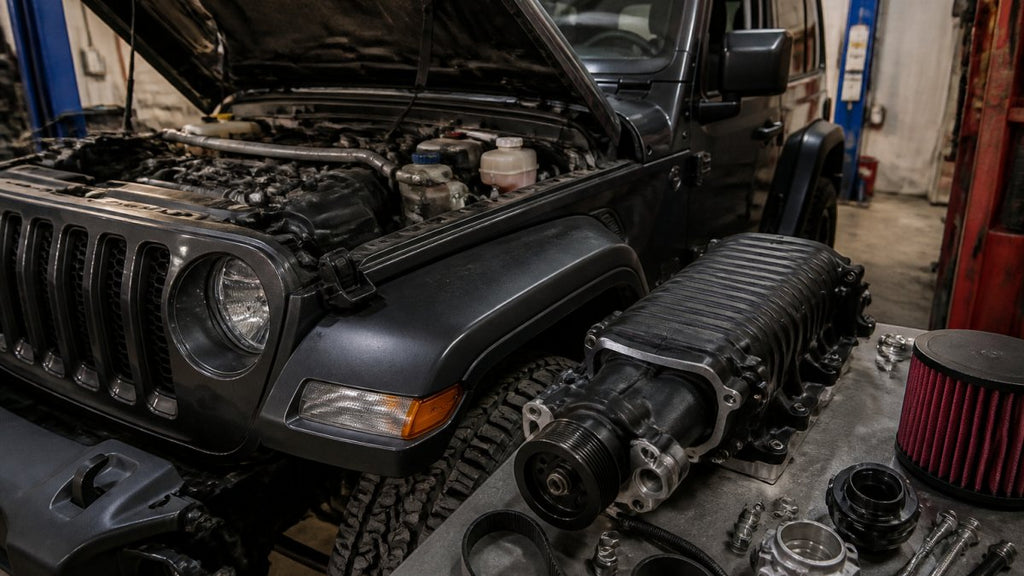
- Jeep Wrangler 3.6L: Positive Displacement Power for Daily Use
- Dodge Charger 3.6L: Centrifugal vs. Twin-Screw Trade-offs
- Mazda 6 2.0L and Toyota Camry 2.5L: Compact Daily Driver Solutions
- Centrifugal vs. Positive Displacement: Which Works Better for Daily Driving
- Bolt-On Installation: What DIY Installers Actually Face
- Real Power Gains and Throttle Response You Can Expect
- Supercharger vs. Turbo for Daily Driver Performance
- Cost of Supercharging a Daily Driver: Kit Price to Long-Term Ownership
Best Supercharger Kits for Daily Drivers: 2026 Guide
Last Updated: August 4, 2026
Supercharger Kits for Daily Drivers: What You Need to Know
Modern supercharger kits for daily drivers deliver OEM-level reliability. Properly engineered twin-screw and centrifugal designs work seamlessly with daily commuting, highway towing, and cold-start reliability. The critical difference between a daily driver supercharger and a weekend-only system comes down to heat management, fuel system capacity, and tuning philosophy.
When engineered correctly, a supercharger kit delivers instant throttle response, smooth torque delivery, and predictable power without turbo lag. The strategies we cover have helped thousands of daily drivers add 40-60% more horsepower while keeping their vehicles reliable enough for 200,000-mile service intervals.
Pro Tip
The real secret most guides miss: bolt-on supercharger kits fail not because of engineering, but because owners skip the supporting modifications. A fuel pump upgrade, injector sizing, and proper ECU tuning aren't optional, they're the foundation of reliability.
How We Selected These Kits
We evaluated supercharger kits using three core criteria: OEM-level reliability under continuous boost, real-world installation complexity, and long-term ownership cost including maintenance and supporting modifications. Every kit we recommend includes a comprehensive warranty, precise fitment for the target vehicle, and documented dyno testing.
VT Superchargers' selection process prioritizes bolt-on installation without custom fabrication, transparent power gains backed by third-party dyno testing, and manufacturer support for tuning and diagnostics. The kits featured here range from $4,600 to $6,950 depending on engine displacement and supercharger type. Each recommendation includes specific horsepower and torque gains, installation labor estimates, and the supporting modifications required to run safely on pump fuel or premium fuel.
Top Supercharger Kits for Daily Drivers by Vehicle Type
Toyota Tundra 5.7L: VT Superchargers Twin-Screw Kit
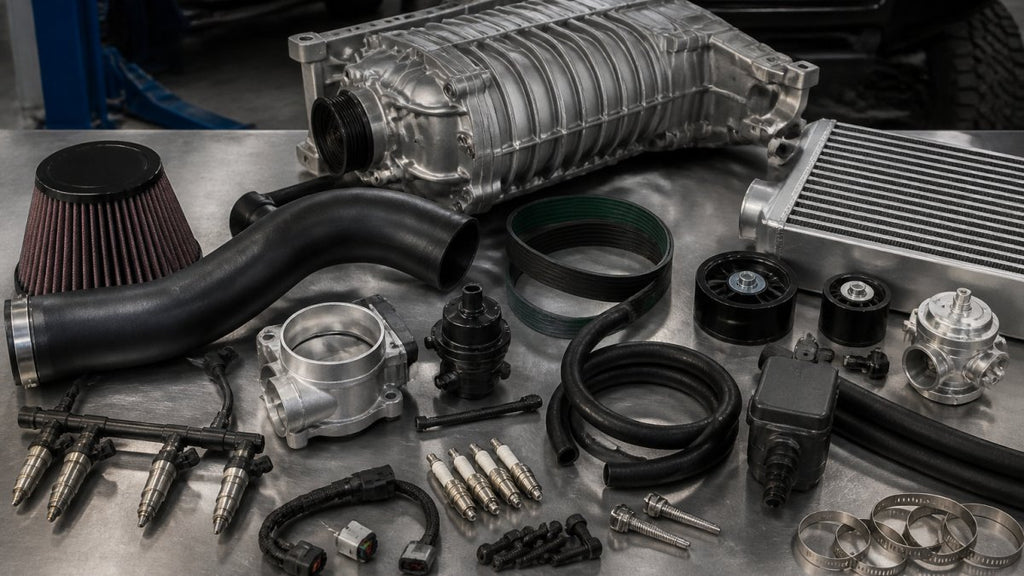
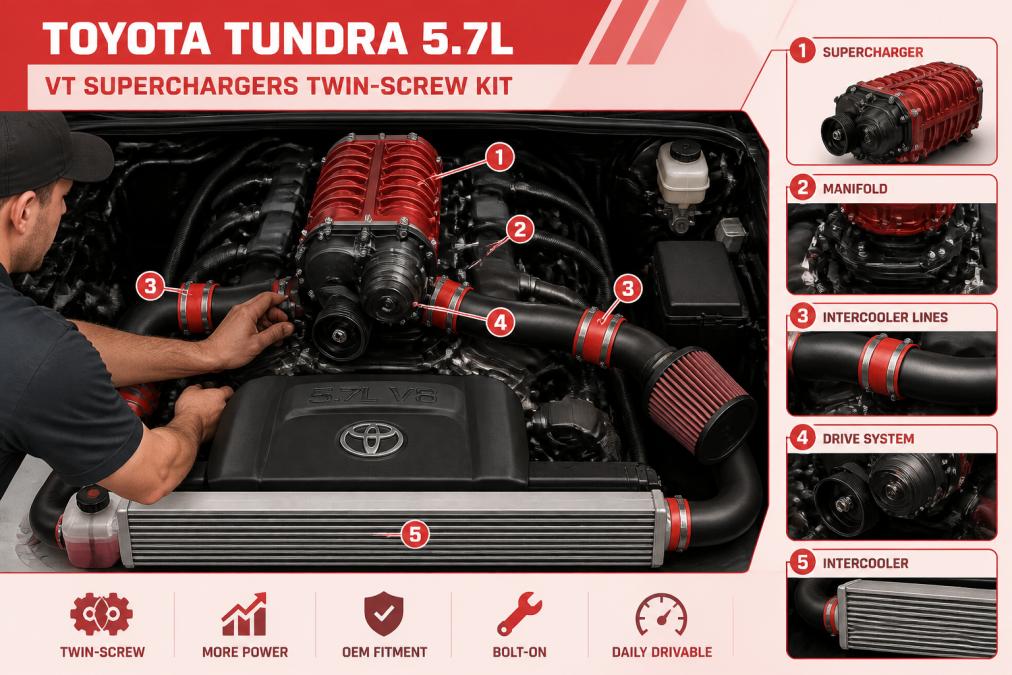
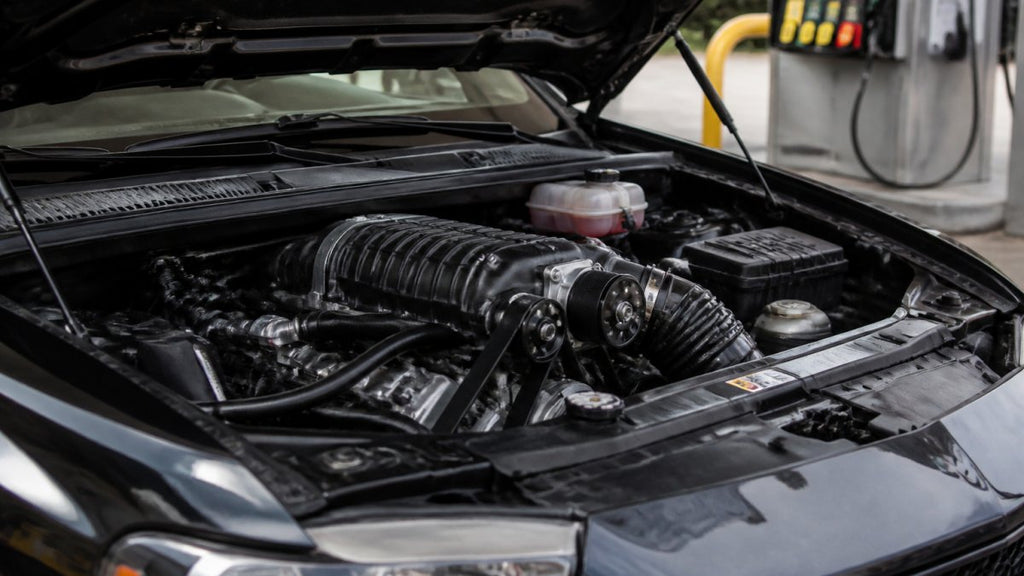
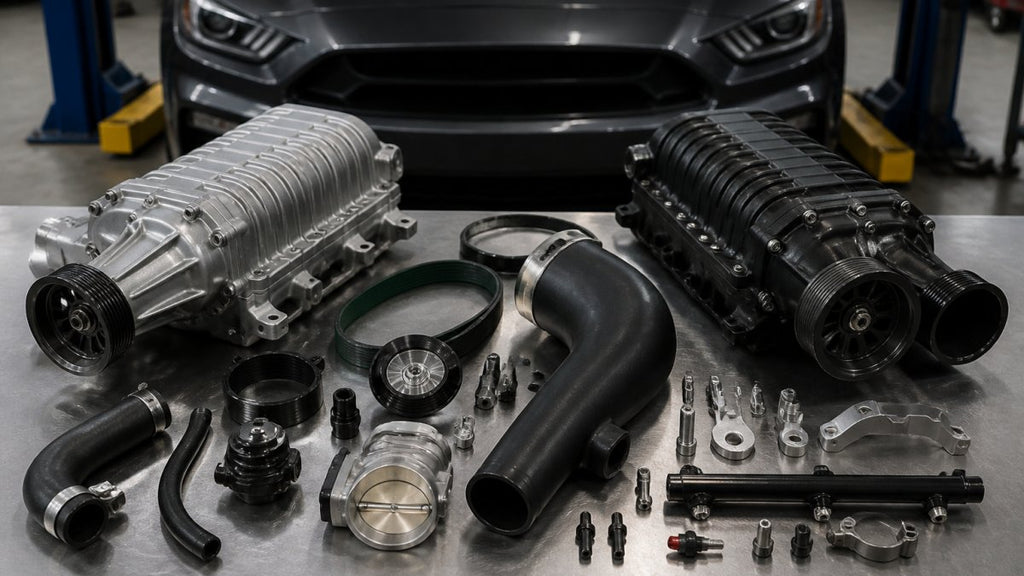
The VT Superchargers Twin-Screw kit for the Toyota Tundra 5.7L 3UR-FE transforms the truck into a responsive daily driver. This positive displacement system delivers 40-60% more power across the entire RPM range with zero lag and boost arriving instantly off idle.
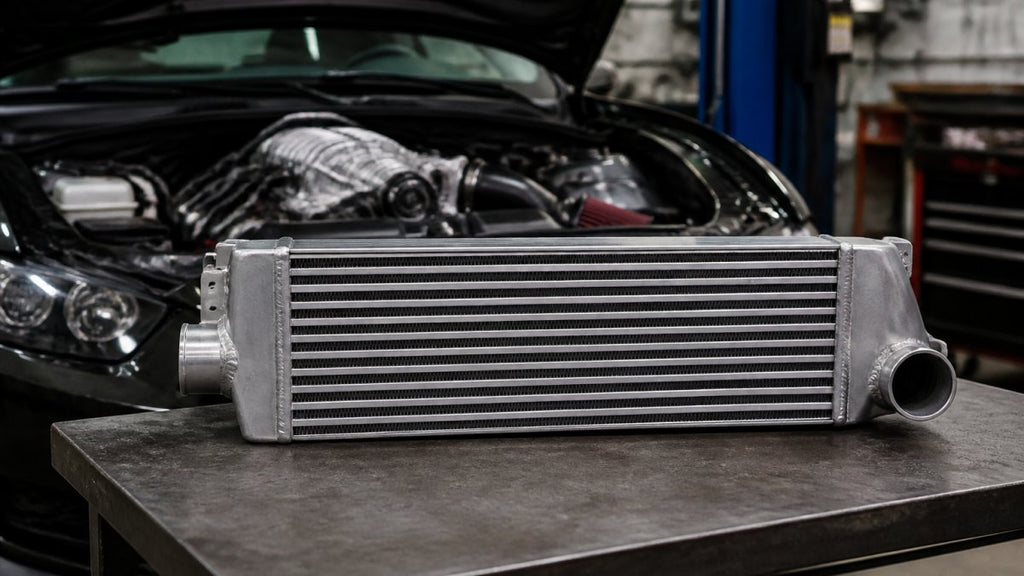
At $6,950, this kit includes the supercharger head unit, belt drive system, intercooler, fuel system upgrades, and a flash tuner calibrated for pump fuel. Installation takes approximately 12-16 hours of labor. Real-world testing shows the Tundra gains approximately 120-150 wheel horsepower and 140-170 wheel torque, translating to better throttle response, smoother highway passing, and reduced gear hunting when towing.
Pros:
- Instant torque delivery with no turbo lag
- Bolt-on installation without engine bay modifications
- Includes all supporting modifications (fuel pump, injectors, intercooler)
- 24-month manufacturer warranty covers parts defects
- Maintains factory emissions compliance with proper tuning
Cons:
- Requires premium fuel for optimal tuning (87-octane reduces power by 15-20%)
- Transmission cooling upgrade recommended for towing applications
- Heat soak can occur during prolonged idling in stop-and-go traffic
- Fuel economy drops approximately 2-3 MPG under sustained boost
Toyota 4Runner 4.0L: Bolt-On Forced Induction for Off-Road Torque
The Toyota 4Runner 4.0L 1GR-FE benefits from forced induction because the stock engine delivers power in a narrow RPM band. The VT Superchargers bolt-on kit adds responsive low-end torque that transforms the 4Runner's driving character.

Priced at $5,950, this kit delivers 40-60% more horsepower with usable power from 2,000 RPM upward, critical for off-road driving. Installation requires 14-18 hours of labor and includes the supercharger, intercooler, fuel injectors, fuel pump upgrade, and tuning software. For 4Runner owners with larger tires or heavier builds, this kit solves gear-hunting problems and improves drivability during daily commuting.
Pros:
- Improves low-end torque essential for off-road driving
- Maintains stock appearance with no visible external modifications
- Bolt-on installation compatible with aftermarket bumpers and winches
- Excellent for vehicles already running 33-35-inch tires
- Compatible with existing auxiliary cooling systems
Cons:
- Not ideal for vehicles with extensive custom engine work already completed
- Requires tuning adjustment if running larger fuel injectors from prior builds
- Heat management becomes critical in desert or high-altitude driving
- Some owners report minor boost-related noise at full throttle
Jeep Wrangler 3.6L: Positive Displacement Power for Daily Use
The Jeep Wrangler 3.6L V6 Pentastar engine responds exceptionally well to positive displacement supercharging. Adding forced induction unlocks the low-end torque that the Pentastar lacks, making the Wrangler genuinely fun on the street while maintaining trail capability.
The VT Superchargers twin-screw kit is priced at $5,500 and includes the supercharger assembly, intercooler, fuel system upgrades, and flash tuning. Installation takes 12-15 hours, with power gains reaching 40-60% depending on fuel grade and tuning aggressiveness. For daily drivers, this kit transforms highway merging into an effortless experience and improves torque for four-wheeling.
Pros:
- Excellent throttle response for daily driving
- Works with stock transmission without additional cooling
- Compatible with aftermarket suspension and body modifications
- Strong community support and documented tuning profiles
Cons:
- Requires quality fuel (premium recommended) for consistent performance
- Intercooler adds approximately 8-10 pounds to the engine bay
- Some owners report minor boost-related vibration at sustained high RPM
- Fuel economy decreases 2-4 MPG depending on driving style
Dodge Charger 3.6L: Centrifugal vs. Twin-Screw Trade-offs
The Dodge Charger 3.6L Pentastar engine benefits from the VT Superchargers twin-screw kit at $5,500, which delivers immediate boost response and is the better choice for drivers prioritizing drivability. Twin-screw systems deliver boost instantly, transforming the engine's character from the moment you apply throttle.
The kit includes the supercharger, intercooler, fuel injectors, fuel pump, and tuning. Installation requires 14-16 hours. Power gains reach 40-60% depending on tuning, translating to approximately 130-160 wheel horsepower and 140-180 wheel torque. For a daily driver, instant response wins because merging, passing, and highway driving all happen at lower RPM where you need the power most.
Pros:
- Instant throttle response ideal for highway driving
- Smooth, linear power delivery across entire RPM range
- Excellent for daily drivers prioritizing drivability over raw top-end power
- Bolt-on installation without custom fabrication
- 24-month warranty includes tuning support
Cons:
- Centrifugal alternatives offer slightly higher top-end power (useful only above 5,500 RPM)
- Requires premium fuel for optimal performance
- Heat management critical during summer driving
- Transmission cooling upgrade recommended for spirited driving
Centrifugal vs. Positive Displacement: Which Works Better for Daily Driving
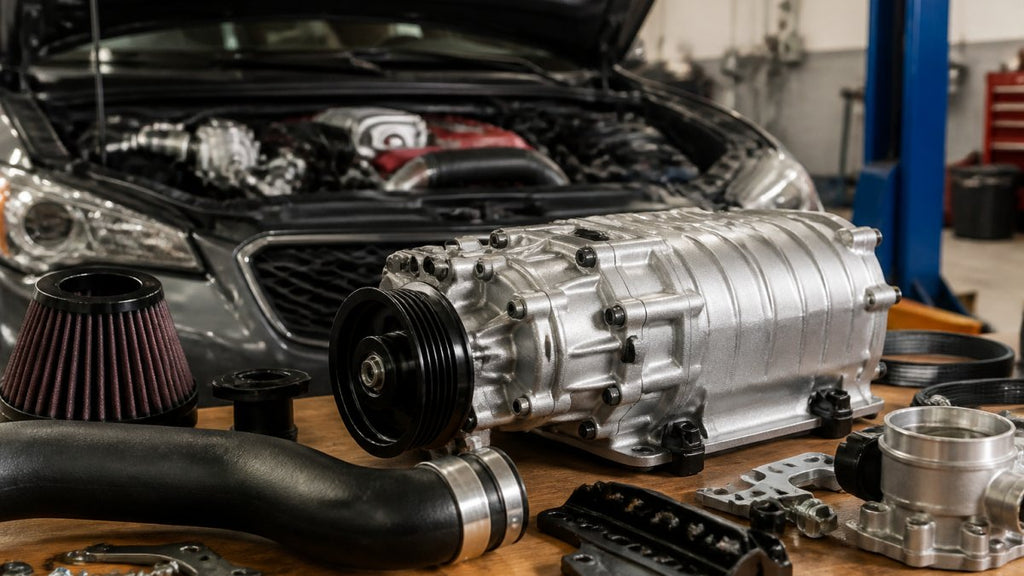
Centrifugal superchargers use an impeller driven by an external belt, spinning faster as engine RPM increases, delivering progressive power with minimal boost at idle. Positive displacement superchargers (twin-screw and roots-type) move a fixed volume of air per revolution, delivering boost instantly regardless of RPM.
For daily drivers, positive displacement wins decisively. The instant torque delivery transforms real-world driving where you're constantly modulating throttle: merging on highways, passing slower traffic, accelerating from stops. You feel the boost immediately, making the vehicle feel responsive and fun.
Centrifugal systems excel for vehicles driven primarily at higher RPM, track cars, or weekend-only performance builds. The trade-off is that centrifugal systems feel lazy at low RPM, which is exactly when daily drivers need responsive power.
Key Takeaway
The single most important decision: if you drive your supercharged vehicle daily on highways and city streets, choose positive displacement. If your vehicle spends most time at the track or on backroads above 4,500 RPM, centrifugal systems deliver more top-end power.
Bolt-On Installation: What DIY Installers Actually Face
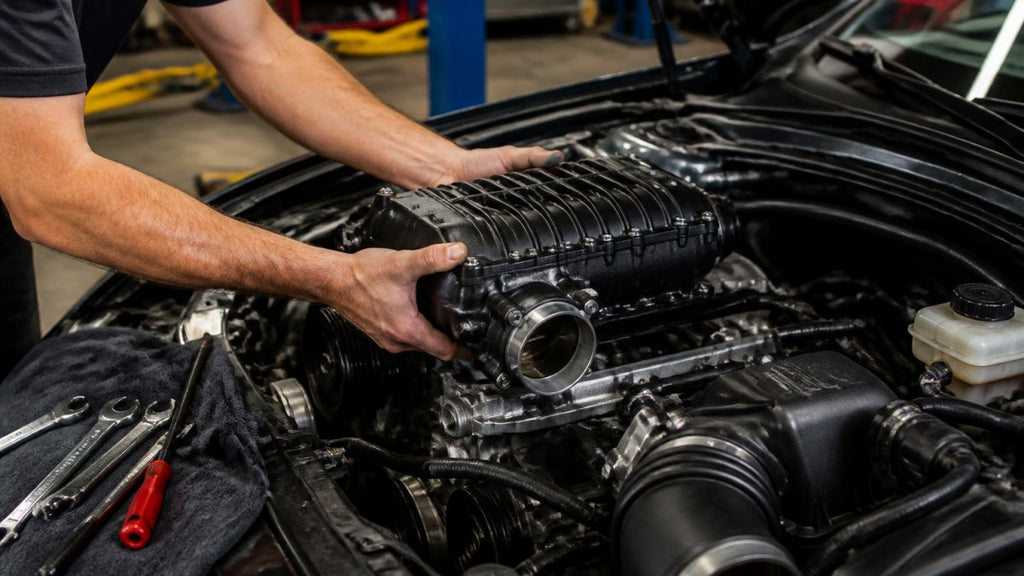
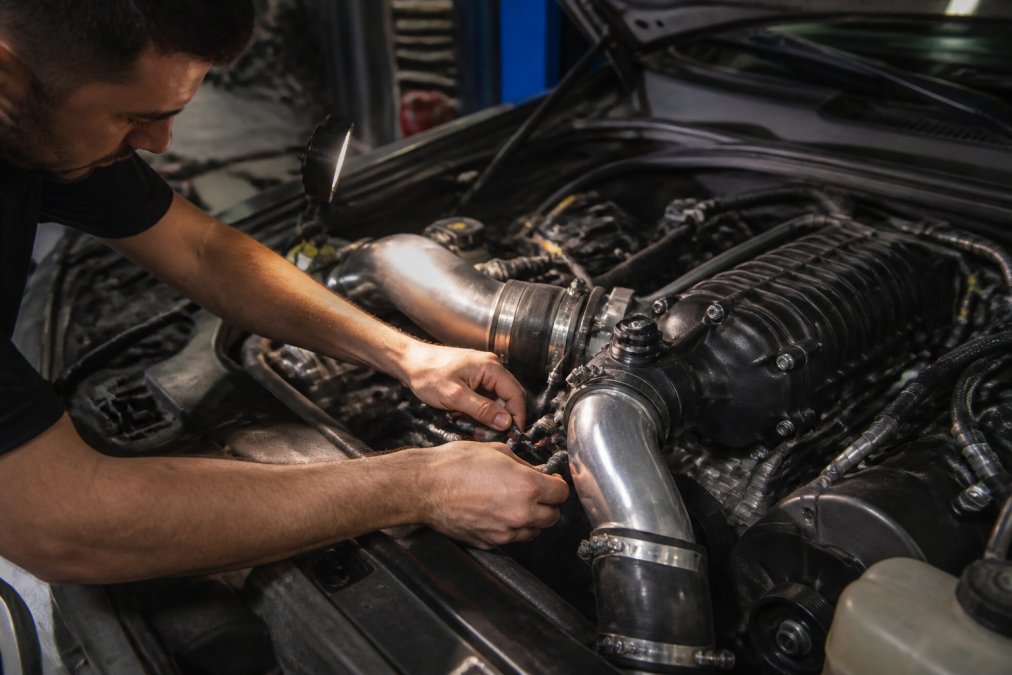
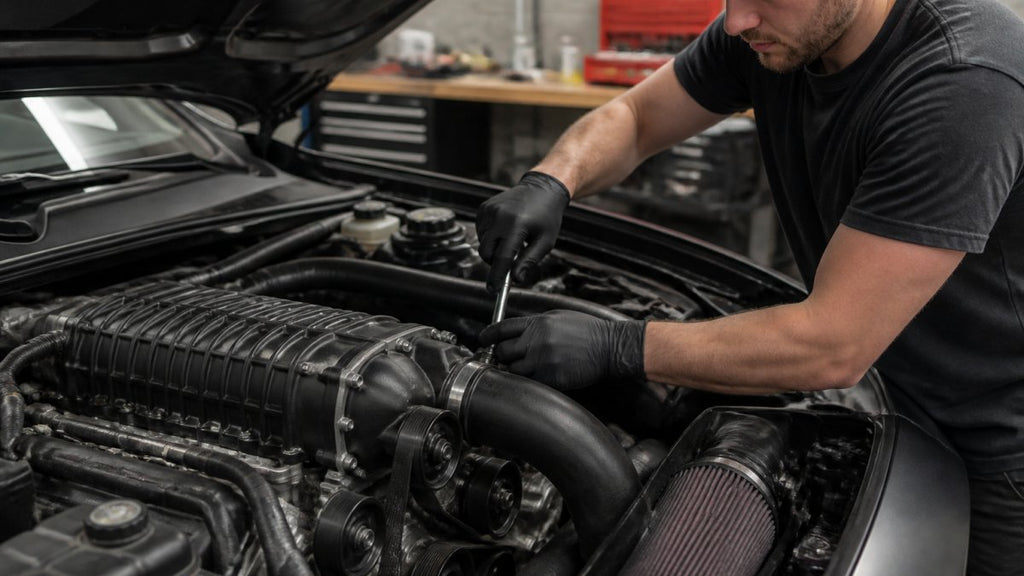
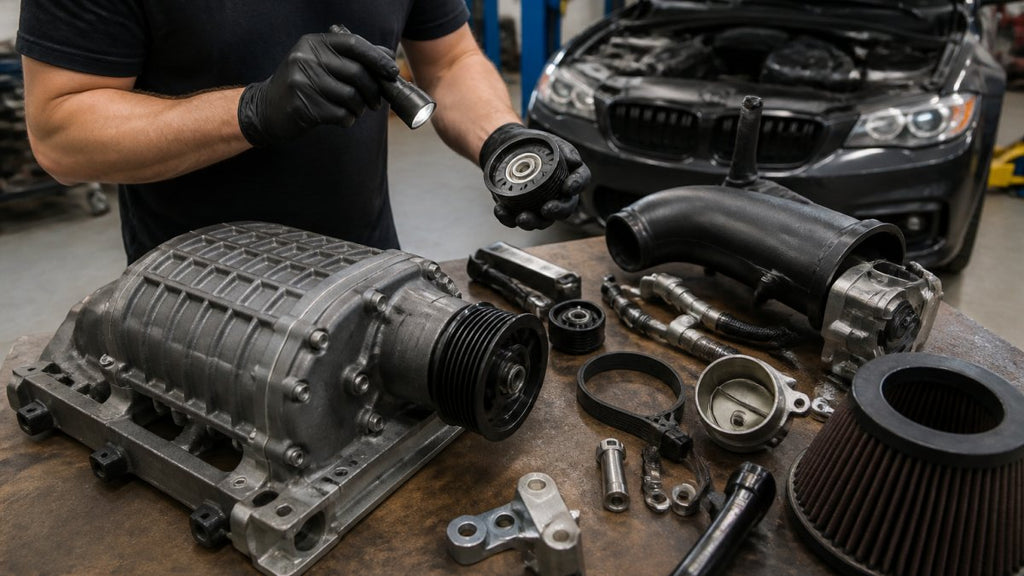
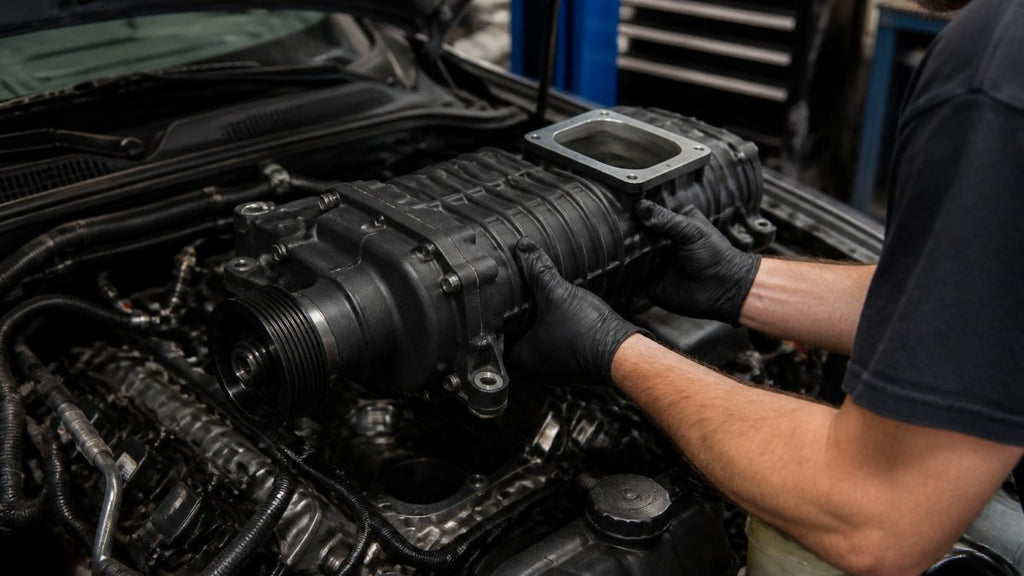
Bolt-on supercharger kits are installable by experienced DIYers, but the reality is more complex than marketing suggests. The supercharger assembly itself bolts to the engine in 3-4 hours, while supporting work, fuel system upgrades, intercooler plumbing, belt routing, electrical connections, and tuning, accounts for the remaining 10-14 hours.
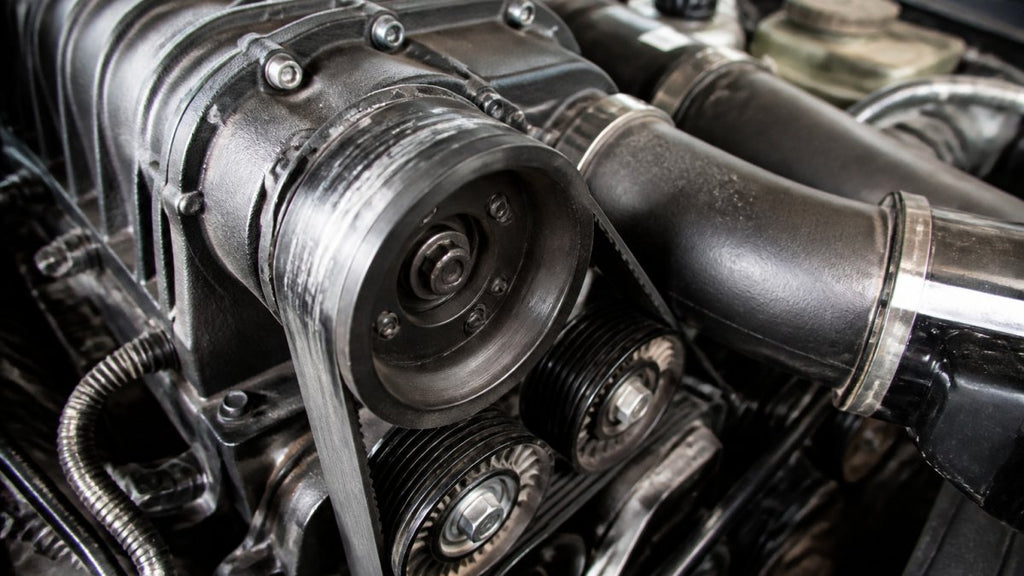
Most DIY installers encounter these specific challenges: fuel pump access requires dropping the fuel tank on some platforms, intercooler piping needs careful routing to avoid heat sources, and belt tensioning requires specialized tools. The tuning step is non-negotiable; you cannot simply bolt on a supercharger and drive it without proper ECU calibration.
VT Superchargers kits include detailed installation manuals with step-by-step photography, and the 24-month warranty covers parts defects but not installation errors. Many DIYers have a shop handle fuel system work and tuning while completing the mechanical assembly themselves, splitting labor costs roughly 50-50. Proper tuning requires understanding your fuel quality, target boost level, and vehicle-specific variables. A shop with dyno access can optimize the tune for your specific engine, costing $400-800 but unlocking real power gains and protecting engine longevity.
Real Power Gains and Throttle Response You Can Expect
Supercharger kits for daily drivers deliver measurable power gains you'll feel immediately. The VT Superchargers kits produce 40-60% horsepower increases, translating to approximately 100-180 additional wheel horsepower depending on engine displacement and tuning aggressiveness.
More important than raw horsepower is torque delivery. A properly tuned supercharger adds 140-200 wheel torque across a broad RPM range, transforming daily drivability. You notice this instantly when merging on highways, accelerating from stops, and passing slower traffic. The torque curve becomes flatter and broader, meaning power is available from 2,500 RPM upward, exactly what daily drivers need.
Supercharger vs. Turbo for Daily Driver Performance
Turbocharged engines deliver power through exhaust gas pressure, which means lag, a slight delay between throttle input and power delivery. Superchargers are mechanically driven by engine speed, eliminating lag entirely. For daily drivers, this difference is critical.
Turbochargers generate significantly more heat, requiring strong cooling systems and careful heat management. Superchargers generate less heat, making them more compatible with stock cooling infrastructure. Turbocharged vehicles often require larger radiators, transmission coolers, and intercoolers; supercharged daily drivers can often use stock cooling with modest upgrades.
For daily drivers who spend most time below 4,500 RPM, superchargers deliver more usable power. Maintenance differs significantly: turbochargers require oil cooling lines and specialized tuning, while superchargers require belt maintenance and intercooler cleaning with substantially lower mechanical complexity. A supercharger kit can run 200,000+ miles with routine maintenance.
Cost of Supercharging a Daily Driver: Kit Price to Long-Term Ownership
| Component | Cost Range | Notes |
|---|---|---|
| Supercharger Kit (VT Superchargers) | $4,600-$6,950 | Includes supercharger, intercooler, fuel system upgrades, tuning |
| Professional Installation Labor | $1,200-$2,400 | 12-18 hours at $100-$150/hour shop rate |
| Fuel System Upgrades (if separate) | $400-$800 | Fuel pump, injectors, pressure regulator |
| Tuning and Calibration | $400-$800 | Dyno tuning strongly recommended |
| Supporting Modifications | $300-$1,200 | Transmission cooler, boost-a-pump, vacuum lines, pulleys |
| Total Initial Investment | $7,300-$12,150 | Assumes professional installation |
The upfront cost is substantial, but the value proposition is compelling for daily drivers. A $10,000 supercharger system adds 40-60% more horsepower, transforming drivability and resale value. Compare this to turbo kits costing $8,000-$15,000 with more extensive supporting work, or engine swaps costing $15,000+.
Supporting Modifications and Hidden Expenses
Fuel system upgrades are mandatory; you cannot run a supercharger safely without a fuel pump capable of delivering additional fuel volume under boost. Most kits include this, but expect $400-$600 for a quality fuel pump and injector set if upgrading an existing vehicle.
Transmission cooling becomes important if you tow or drive spiritedly. A transmission cooler costs $200-$400 installed and extends transmission life significantly under boost. Boost-a-pump upgrades cost $150-$300 and increase fuel pump output by 10-15% without replacing the pump.
Fuel Economy Impact and Daily Driving Costs
Supercharged daily drivers experience 2-4 MPG fuel economy losses under normal driving, and up to 6-8 MPG losses if you drive aggressively. For a daily driver averaging 15,000 miles annually, a 3 MPG loss costs approximately $400-$600 per year in additional fuel (assuming $3.50/gallon and 25 MPG baseline). Premium fuel is strongly recommended for optimal tuning, adding another $200-$400 annually. Some tuners offer 87-octane calibrations that reduce power by 15-20% but allow regular fuel use.
Warranty and Insurance Implications
VT Superchargers provides a 24-month manufacturer warranty covering parts defects. The warranty covers failure of the supercharger assembly, intercooler, fuel system components, and tuning software, but not damage from improper installation, fuel contamination, or abuse.
Insurance implications vary by insurer. Most insurers allow supercharger installations without policy cancellation, but some require notification and may increase premiums by 5-15%. Contact your insurer before installation to understand your specific policy terms. A well-tuned, properly maintained supercharged engine should last 200,000+ miles without issue.
Choosing the right supercharger kit for your daily driver requires understanding your vehicle type, driving style, and long-term reliability expectations. VT Superchargers kits deliver engineered performance with OEM-style reliability, comprehensive warranties, and transparent power gains backed by dyno testing. Whether you're driving a Toyota Tundra, 4Runner, Jeep Wrangler, or Dodge Charger, there's a bolt-on supercharger solution engineered specifically for your platform. Start with the Toyota Tundra 5.7 Supercharger Kit if you're towing or need off-road torque, or explore the Jeep Wrangler 3.6L kit if daily drivability and trail performance are your priorities. Get started with VT Superchargers and unlock 40-60% more power while maintaining the reliability you expect from a daily driver.


Frequently Asked Questions
Will a supercharger kit void my factory warranty?
Factory warranties vary by manufacturer and may be affected by forced induction modifications. VT Superchargers kits come with a 24-month warranty covering the supercharger system itself. However, your vehicle's original powertrain warranty could be at risk depending on your manufacturer's policy. Many owners maintain coverage by using OEM-level components and professional installation. Always check your owner's manual or contact your dealer before installation to understand your specific warranty status.
How much horsepower and torque do supercharger kits actually add?
Most quality supercharger kits for daily drivers deliver 40-60% more power from the engine. For example, a 4.0L engine producing 240 hp stock might gain 95-145 hp with a kit. Torque gains are similarly significant, often 28-50% depending on the supercharger type and engine. Real-world numbers depend on your specific vehicle, the kit's design, supporting modifications like fuel injectors and tuning, and whether you're measuring crank horsepower or wheel horsepower at the dyno.
Is a supercharger or turbo better for daily driving?
Superchargers are generally better for daily drivers because they deliver instant throttle response with no lag, making city driving and traffic navigation predictable. Turbos require engine RPM to spool up, creating a delayed power delivery that can feel unnatural in stop-and-go conditions. However, turbos are more fuel-efficient at steady highway speeds. For daily driving comfort and responsiveness, superchargers win. Turbos suit high-performance enthusiasts who can manage boost characteristics and don't mind the lag.
What supporting modifications do I need beyond the supercharger kit?
Most bolt-on supercharger kits include core components, but daily drivers typically need fuel injectors rated for higher flow, a fuel pump upgrade, and engine tuning (via flash tuner or dyno tuning) to safely handle boost. Transmission cooling may be necessary if you tow or drive in hot climates. An intercooler reduces heat soak and improves reliability. Premium fuel is often required to prevent knock. Budget an additional $1,500-$3,000 for these supporting modifications beyond the kit cost.
Can I install a supercharger kit myself if I've never done this before?
Bolt-on kits are designed for DIY installation by mechanically competent owners with basic tools, but it's not beginner-friendly. Expect 8-16 hours of labor depending on the vehicle. You'll need to disconnect vacuum lines, remove intake components, install manifold pressure sensors, and route boost lines. Many first-time installers underestimate complexity and end up paying a shop $1,500-$2,500 for professional installation. If you lack experience with engine bay work, professional installation is worth the cost to ensure proper fitment and avoid costly mistakes.
This article was written using GrandRanker
Related post
09
Oct
RECENT POSTS