How to Add Truck Torque Without Losing Driveability
You put 33s or 35s on your truck, loaded the bed with overland gear, or hooked up a trailer - and now it feels like somebody took a cylinder away. It hunts for gears on the highway, downshifts on every grade, and needs a lot more pedal just to pass. If you are asking how to add truck torque, start with the problem you feel behind the wheel, not a peak horsepower number on a dyno sheet.
We see this all the time with Tacoma, Frontier, Gladiator, and half-ton owners. The truck was fine stock. Then came bigger tires, a bumper, winch, rooftop tent, tools, passengers, or a boat. None of those changes are wrong, but they all ask more from the engine. The right answer depends on whether you need better pull from a stop, stronger towing power, less gear hunting, or more passing power at 65 mph.
Start With What Is Making Your Truck Feel Slow
Before buying parts, be honest about the setup. A stock Toyota Tacoma V6 on factory tires has a different problem than a Tacoma on 35s with steel armor and camping gear. A Nissan Frontier that feels soft pulling a small utility trailer needs something different than a Ram 1500 that only feels weak at high altitude.
One of the biggest complaints we hear is, “My truck drives fine around town, but it falls on its face on hills.” That usually means the engine does not have enough usable midrange torque for the load and gearing. The transmission keeps trying to save the situation by dropping one or two gears. That is why the truck gets loud, busy, and frustrating even when it technically still gets the job done.
First, make sure the truck is healthy. Old spark plugs, dirty air filters, weak coils, dragging brakes, low tire pressure, and neglected transmission service can make a truck feel lazy. Fix that stuff before chasing power. A performance upgrade should improve a good-running truck, not hide a maintenance issue.
Regear Bigger Tires Before Blaming the Engine
If you installed larger tires and the truck immediately felt dead off the line, axle gears may be the first thing to look at. Bigger tires effectively make the final drive ratio taller. Your engine now has to work harder to turn the same distance down the road.
A Tacoma that was happy on stock tires can feel noticeably dull on 33s, and 35s can make the factory ratio feel downright wrong. Jeep Gladiator owners know this story well. Add 35s, a lift, bumpers, and a winch, and the truck can lose the crisp low-speed response it had on the dealership lot.
Regearing puts mechanical advantage back where it belongs. It can restore takeoff feel, reduce transmission hunting, and make the truck more controlled on trails. But gears do not create more engine torque. They multiply what is already there. If you tow at highway speed, drive mountain passes, or want stronger acceleration with a loaded truck, gears alone may not solve the whole problem.
There is a trade-off, too. Deeper gears can increase cruise rpm. Done correctly for tire size and use, that is often a worthwhile compromise. Done blindly, it can make daily highway driving less pleasant. Match the ratio to the actual tire diameter, transmission, axle, and how the truck is used.
A Tune Can Improve Response, Not Rewrite Physics
A quality tune can sharpen throttle response, improve transmission behavior, and make the engine feel more willing. On some trucks, that is exactly what the owner wants. The pedal feels less numb, shifts happen at better times, and the truck is easier to drive in the powerband.
But a tune is not a magic torque factory. Most owners tell us they want a tune because the truck feels slow with bigger tires or a trailer. If the engine simply does not make enough torque for the job, changing throttle mapping will not make it pull like a larger engine.
Be careful with aggressive canned files and anybody promising massive gains from software alone on a naturally aspirated truck. You want proper calibration, clean drivability, safe fueling, sensible timing, and transmission behavior that makes sense for your use. A truck that feels jumpy in traffic or bangs shifts while towing is not a better truck.
Intake and Exhaust: Helpful, But Keep Expectations Real
An intake and exhaust can improve sound and, in the right combination, help airflow. They are often good supporting modifications, especially when the rest of the truck is built around them. But they rarely fix weak towing torque by themselves.
After installing hundreds of kits, we can tell you that a louder truck is not always a faster-feeling truck. Some owners spend money on intake, exhaust, and a throttle controller, then still complain about passing power. That is because the truck needs more air and fuel under load, not just more noise or a quicker pedal command.
How to Add Truck Torque Where You Actually Use It
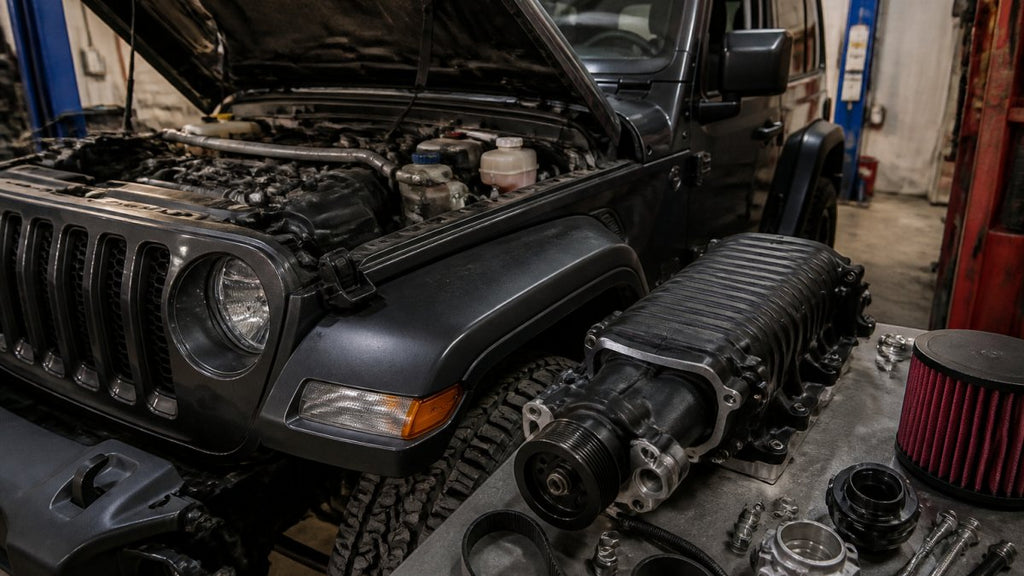
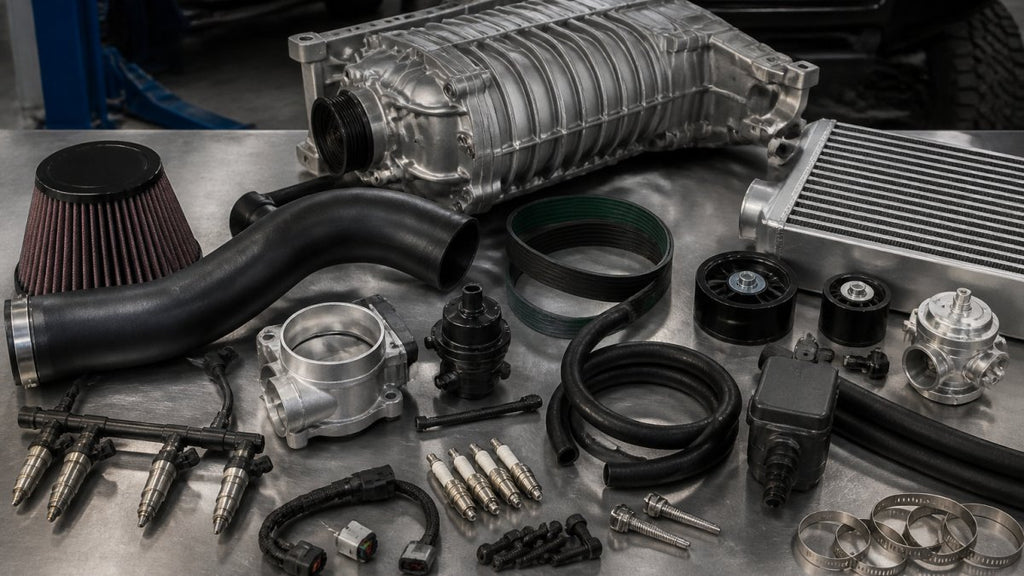
For owners who need a serious change in how the truck pulls, forced induction is usually the most direct path. A properly engineered supercharger system increases the amount of air the engine can use, which supports more torque across the part of the rpm range you drive in every day.
That matters when you are merging with 33-inch tires, climbing a long grade with a camper, or trying to pass without the transmission dropping three gears. You are not waiting for a race-car-style top-end hit. You want the truck to respond when you roll into the pedal.
A well-matched supercharger setup can make a Tacoma 4.0L, 4Runner V6, Frontier V6, or Gladiator feel like the vehicle finally has enough engine for its chassis. The difference is not just the number. It is the way the truck carries speed uphill, recovers after a corner, and stops feeling strained with people and gear onboard.
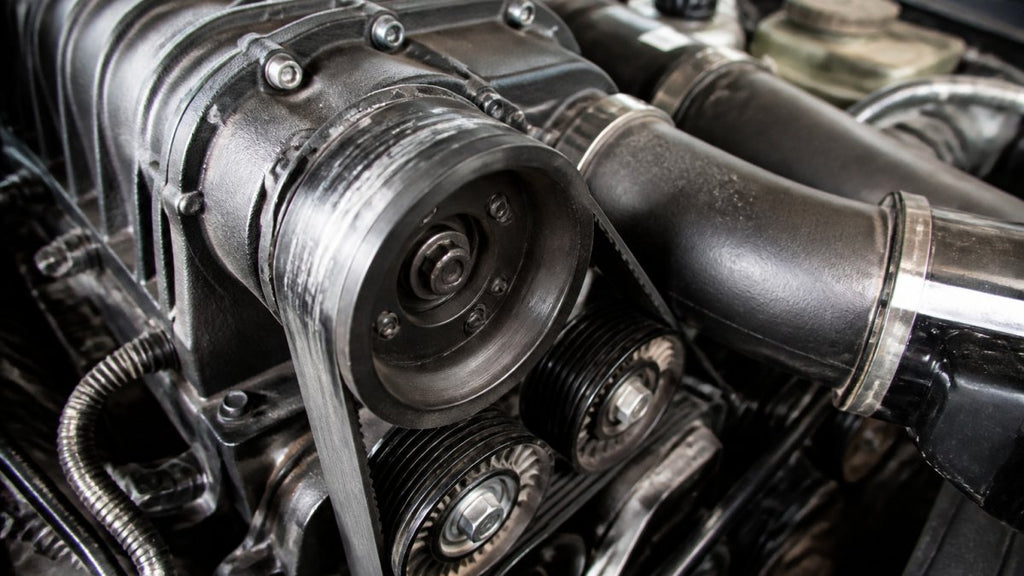
That said, more power needs to be treated with respect. The best setup is not the one chasing the wildest boost number. It is the one with vehicle-specific hardware, a proven tune, proper belt routing, clean cooling strategy, and installation details that do not turn every service visit into a headache.
Build for the Way You Use the Truck
A daily-driven Tacoma that tows a side-by-side on weekends needs a different plan than a Gladiator that lives on rocky trails. A truck that spends most of its time at 7,000 feet needs more help than one that runs empty near sea level. Altitude robs naturally aspirated engines of power, and no bolt-on exhaust is going to change that reality.
For a towing-focused truck, prioritize controlled torque delivery and transmission behavior. You want predictable throttle response, stable temperatures, and power that comes in cleanly when the trailer is behind you. A sudden, peaky setup might feel exciting unloaded, but it is not what you want halfway up a mountain with a boat or travel trailer.
For an overland build, consider total weight before selecting parts. A bed rack, tent, skid plates, recovery gear, full-size spare, fridge, and armor can add up fast. Combine that with 35-inch tires and the stock engine is doing a lot more work every mile. Regearing may be essential, while added engine torque gives the truck the reserve power to stay relaxed on the road.
For a street-driven truck, drivability is the whole deal. Cold starts, idle quality, normal fuel use, stop-and-go traffic, and smooth shifts matter just as much as wide-open throttle. This is why we favor OEM-like fitment and conservative, proven calibration over a pile of universal parts that technically make power but never feel finished.
Do Not Skip Supporting Parts and Installation Quality
Torque exposes weak links. If your tires are worn out, brakes are overdue, cooling system is neglected, or transmission fluid has been ignored, deal with those issues first. Added power is more enjoyable when the rest of the truck is ready for it.
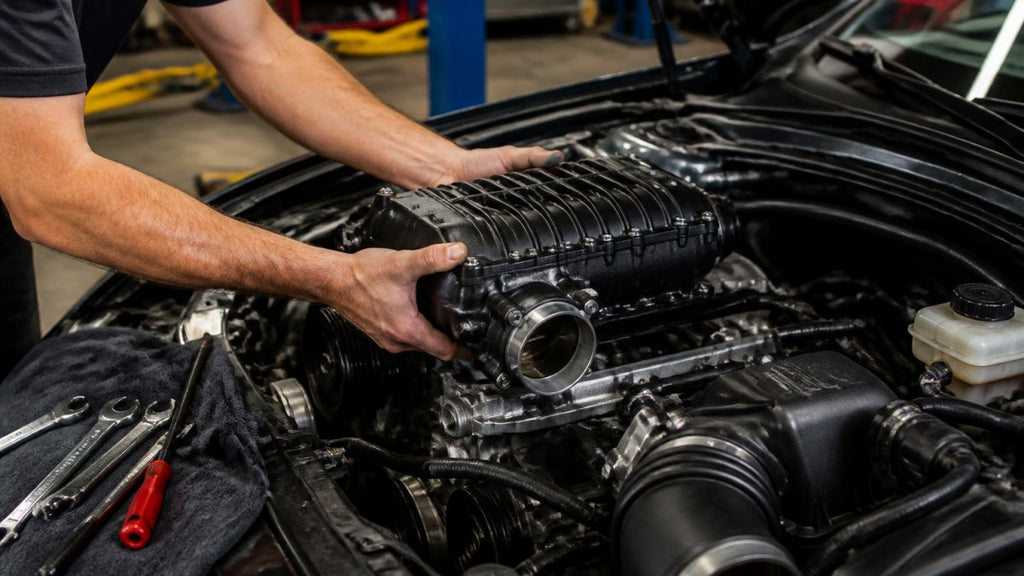
Use the correct fuel for the calibration. Follow the kit and tuner requirements. Give the installation the attention it deserves, especially routing, fastener torque, belt alignment, vacuum connections, and heat management. A clean install is not just about looking good when the hood is open. It is what keeps the truck dependable six months, two years, and thousands of towing miles later.
If you are not comfortable doing that work, use an installer who understands your exact platform and the tuning package. The cheapest installation can get expensive fast when a small detail is missed. Most owners would rather spend once, drive the truck home, and trust it on the next trip.
Pick the Upgrade That Fixes the Complaint
If larger tires ruined the takeoff feel, start by looking at gears. If the truck is healthy but the throttle and shift strategy feel dull, a quality tune may help. If you need real towing muscle, better hill-climbing, and stronger passing power with weight on board, adding airflow with a properly engineered supercharger is where the conversation gets serious.
The goal is not to build a truck that only feels good for one full-throttle pull. Build the one you want to drive to work on Monday, load for a trail on Friday, and tow with on Saturday. Get the torque where you use it, keep the installation clean, and your truck will stop feeling like it is constantly asking for a break.
Related post
09
Oct
RECENT POSTS