Bolt-On Supercharger Reliability: What Actually Fails
Table of Contents
- Why Bolt-On Supercharger Reliability Matters for Your Engine
- How Forced Induction Stresses Engine Internals
- Common Failure Points in Bolt-On Kits
- Supercharger Maintenance Schedule and Long-Term Care
- Signs of a Failing Supercharger and When to Act
- ECU Tuning and Engine Mapping: The Reliability Equation
- Daily Driver vs. Track Use: Different Reliability Profiles
- Supporting Modifications That Protect Your Investment
Bolt-On Supercharger Reliability: What Actually Fails
Last Updated: August 3, 2026
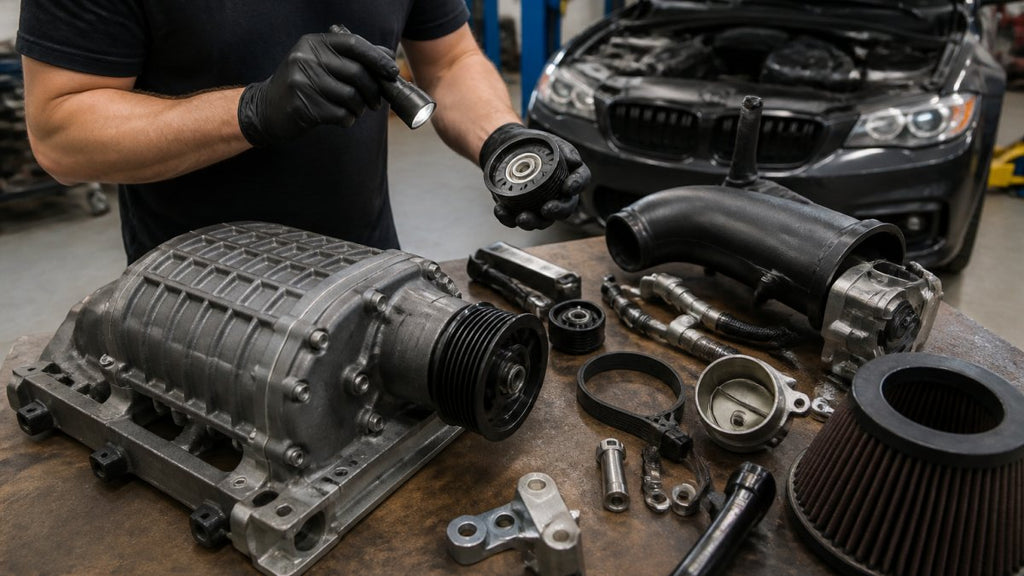
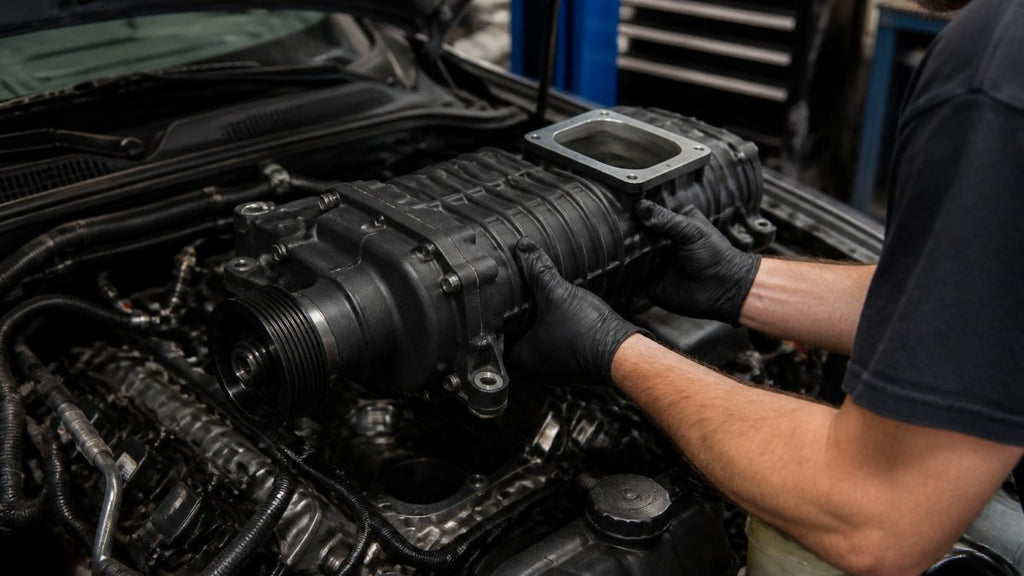
When forced induction enters the equation, bolt on supercharger reliability concerns become impossible to ignore. At VT Superchargers, we've tracked thousands of installations across Dodge, Ford, Jeep, Mazda, Nissan, Suzuki, and Toyota platforms, and what we've learned is this: reliability isn't about the supercharger itself. It's about what happens to everything else the moment you start forcing air into an engine that wasn't engineered for it. Below, we'll walk you through exactly where bolt-on kits fail, why they fail, and how to protect your investment with the right supporting modifications.
Why Bolt-On Supercharger Reliability Matters for Your Engine
Forced induction doesn't just add power; it fundamentally rewrites the stress profile of your engine. When you bolt a supercharger onto a stock engine, you're introducing boost pressure that the original design never anticipated. The crankshaft, transmission, and fuel system all feel it immediately.
Many enthusiasts believe that because a kit is "bolt-on," the engine can handle it without modification. That's the first mistake. A bolt-on kit is engineered for fitment, not for the engine's internal capacity to survive sustained boost. Your factory engine block, pistons, and bearing surfaces were designed around a specific compression ratio and air intake. Exceed those parameters, and failures compound.
Watch Out
Ignoring supercharger reliability concerns in the first 500 miles of driving is when most catastrophic failures occur. The engine hasn't adapted to the new stress profile, and if your tune is aggressive, you're asking for detonation and bearing wear simultaneously.
Consider this: a stock Toyota 5.7L Tundra produces roughly 380 horsepower. Bolt a supercharger onto it, and you're looking at 500-550 horsepower depending on boost level and tune. That's a 40-60% increase in power output. Your transmission, designed for 380 hp, is now absorbing 170 extra horsepower. Your crankshaft is dealing with boost-induced pressure spikes that exceed its original design envelope.

How Forced Induction Stresses Engine Internals
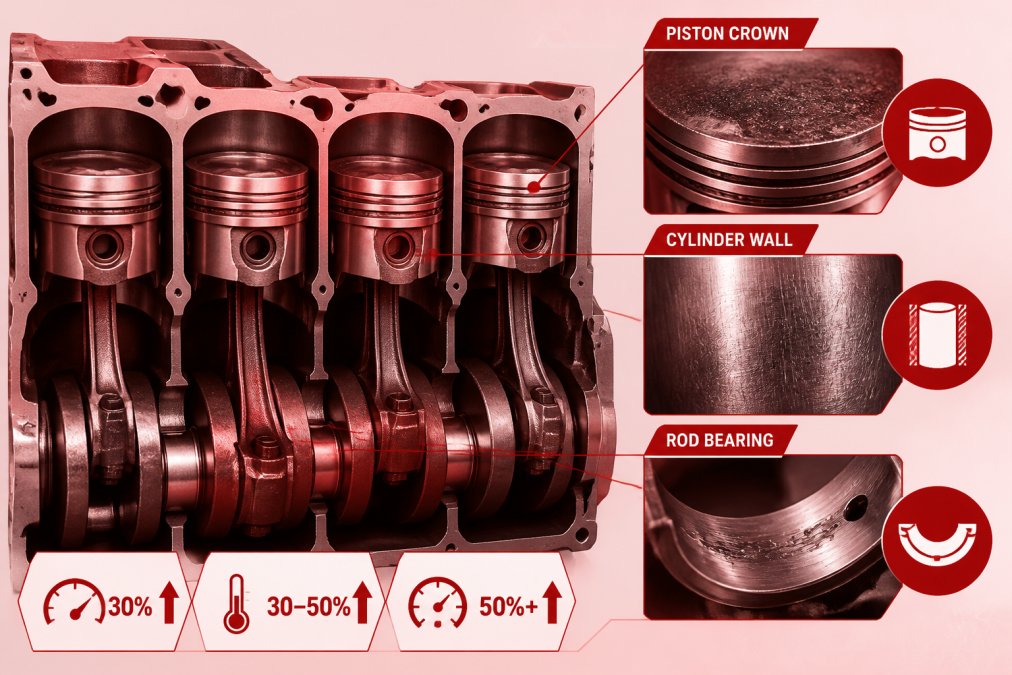
Forced induction fails because engine internals can't handle what the supercharger is asking of them. The moment boost pressure enters the intake manifold, compression ratios spike, detonation risk climbs, and bearing loads increase exponentially.
Compression Ratio and Detonation Risk
Your factory engine has a compression ratio optimized for naturally aspirated operation. A typical Toyota 5.7L runs 10.2:1 compression. When you introduce boost pressure, the effective compression ratio climbs. At 8 PSI of boost, your effective compression ratio is roughly 13:1. At 12 PSI, you're approaching 15:1, territory where detonation becomes a real threat.
Detonation, uncontrolled fuel ignition before the spark plug fires, creates pressure spikes that exceed the engine's design limits. A single detonation event can crack a piston. Sustained detonation destroys bearing surfaces and can punch a hole in the block. This is why ECU tuning isn't optional with forced induction.
Pro Tip
Most bolt-on [supercharger kits](https://ecae6f-2.myshopify.com/blogs/news/bolt-on-supercharger-kits-for-daily-drivers-2026-guide) ship with conservative factory tune settings. The moment you push boost pressure beyond 10 PSI or add aggressive fuel maps, detonation risk becomes your primary concern. A quality dyno tune from someone who understands your specific engine is non-negotiable.
Crankshaft Load and Bearing Wear
The crankshaft is where the real story lives. Every combustion event creates pressure that the crankshaft must absorb and convert into rotational force. With forced induction, that pressure increases dramatically. The bearing surfaces, the thin layers of oil that separate the crankshaft from its journals, experience stress they were never designed for.
Bearing wear is silent. By the time you notice a knock, the bearing surfaces are already damaged. Continued operation leads to catastrophic failure: the crankshaft seizes, metal shards circulate through the oil, and your engine is scrap. Factory engines use bearing materials and clearances optimized for their power output. When you increase power by 40-60%, bearing wear accelerates proportionally.
Common Failure Points in Bolt-On Kits
Not all failures are internal. Some of the most common reliability issues happen at the interface between the kit and the engine, where fitment, alignment, and supporting systems determine whether your supercharger runs for 100,000 miles or fails in 10,000.
Intercooler Efficiency and Heat Soak
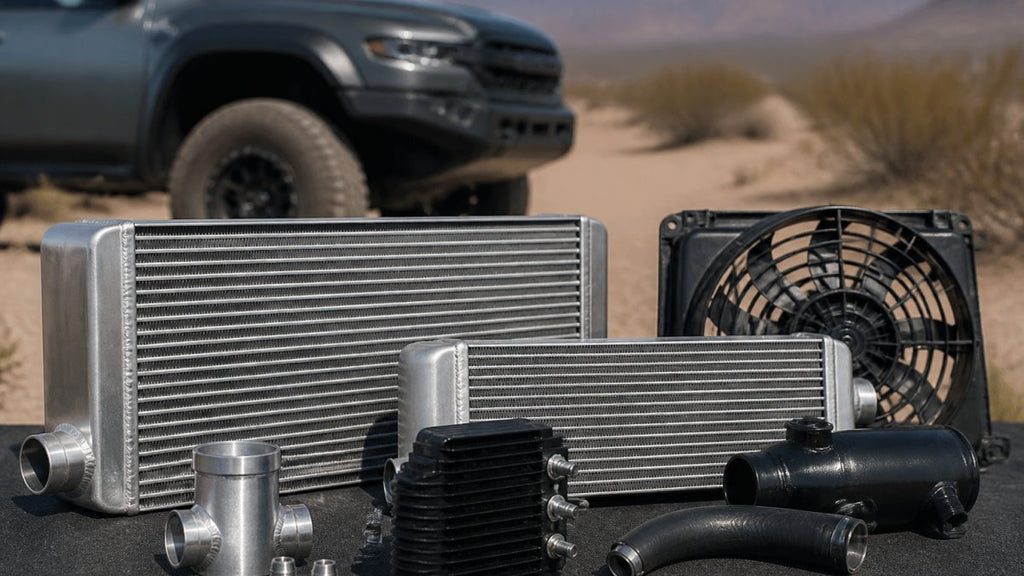
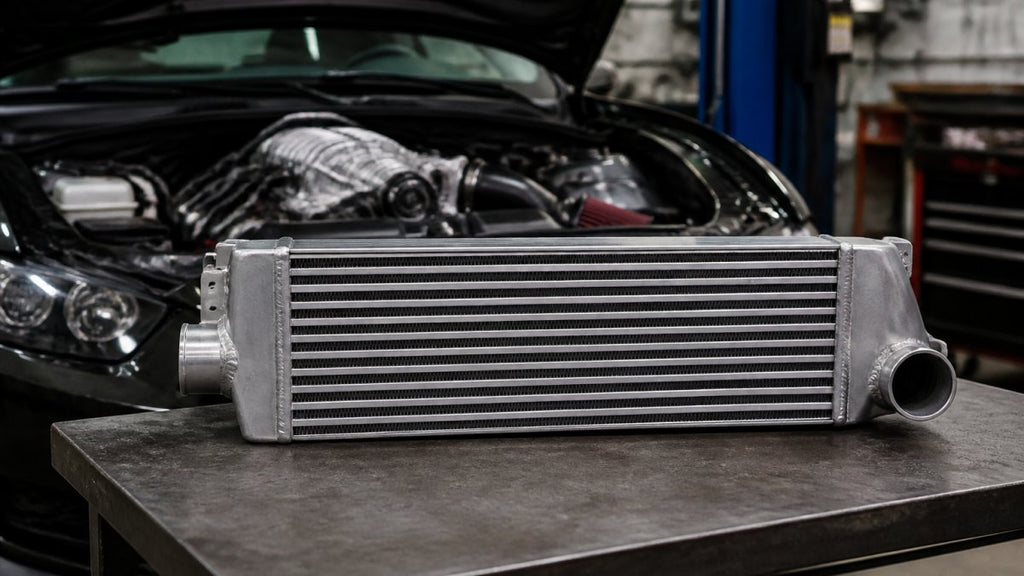
The intercooler cools compressed air before it enters the engine. Hot air is less dense, less efficient, and more prone to detonation. Many bolt-on kits use compact intercoolers designed to fit within tight engine bay constraints. These work fine for occasional driving but are undersized for daily drivers or sustained performance.
Heat soak becomes a problem on the highway at full throttle, in stop-and-go traffic, or during back-to-back acceleration runs. Upgrade to a larger intercooler with higher cooling capacity. A quality aftermarket intercooler can reduce charge air temperatures by 20-30 degrees Fahrenheit compared to the stock unit, translating directly to lower detonation risk and more reliable operation.
Pulley Alignment and Belt Slip
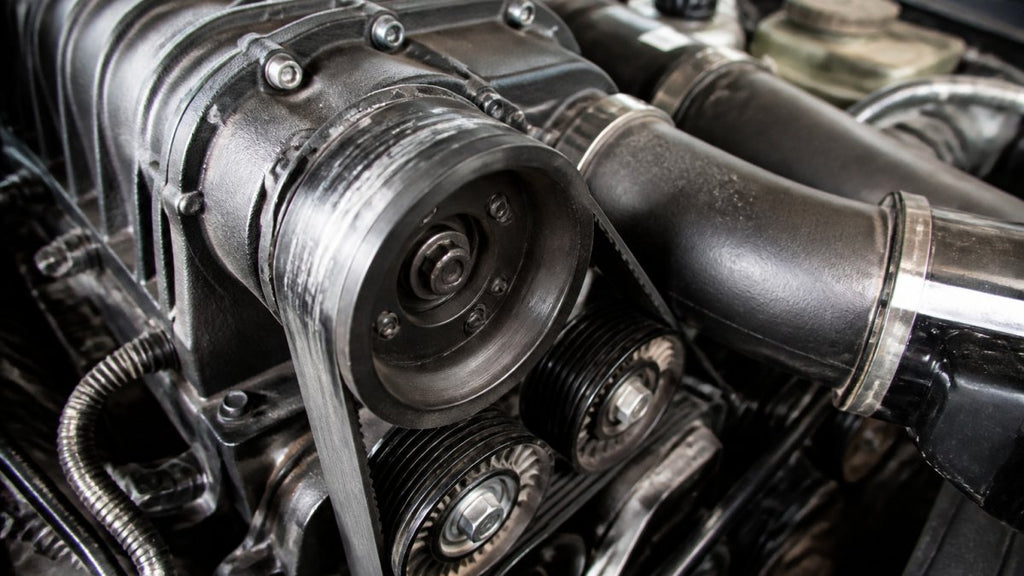
The supercharger pulley drives the compressor. If that pulley isn't perfectly aligned with the crankshaft pulley, belt slip occurs. The belt spins but doesn't transfer full force to the supercharger, reducing boost pressure and accelerating belt wear.
Bolt-on kits are engineered for precise fitment, but installation mistakes happen. If the supercharger bracket isn't torqued correctly, if spacers are missing, or if the belt isn't tensioned to spec, pulley misalignment follows. A misaligned pulley won't fail catastrophically but will cause gradual performance loss, increased belt noise, and eventually belt failure.
Supercharger Maintenance Schedule and Long-Term Care
Supercharger reliability concerns don't end at installation. Long-term durability depends on a disciplined maintenance schedule that most bolt-on owners ignore.
Oil Consumption and Lubrication Demands
The supercharger is an oil-cooled, oil-lubricated component. It draws oil from your engine's pan for internal bearing lubrication, then returns it. If your oil level drops or your oil degrades, the supercharger's internal bearings suffer immediate stress.
Forced induction increases oil consumption. Your engine is working harder, running hotter, and burning more fuel. Oil breaks down faster. Factory oil change intervals are too aggressive for supercharged engines. Many builders recommend 5,000-mile intervals or synthetic oil with extended drain capability. Supercharger bearing failure due to oil starvation is completely preventable.
Preventative Maintenance Intervals
A maintenance schedule for a supercharged engine differs significantly from a stock vehicle:
| Maintenance Item | Stock Interval | Supercharged Interval | Why |
|---|---|---|---|
| Oil and filter | 10,000 miles | 5,000 miles | Higher heat and stress accelerate oil breakdown |
| Air filter | 15,000 miles | 8,000 miles | Boost pressure increases air volume |
| Fuel filter | 30,000 miles | 15,000 miles | Richer fuel maps demand more flow |
| Spark plugs | 30,000 miles | 15,000 miles | Higher compression increases spark plug erosion |
| Supercharger oil level | Never | Every fill-up | Oil starvation causes bearing failure |
| Intercooler cleaning | Never | Every 10,000 miles | Dust and debris reduce cooling efficiency |
| Belt inspection | 60,000 miles | 20,000 miles | Heat and tension accelerate wear |
These intervals exist because supercharged engines operate in a different stress regime. Skip them, and you're trading maintenance costs for catastrophic failure costs.
Signs of a Failing Supercharger and When to Act
Supercharger reliability concerns become obvious once you know what to listen for. The warning signs are there; most owners miss them.
Audible Warning Signs and Performance Loss
A healthy supercharger produces a distinctive whine that increases with RPM and boost pressure. If the whine changes character, becomes a grinding or rattling sound, or is accompanied by loss of boost pressure, something is wrong. Belt slip produces a squealing or chirping sound, indicating pulley misalignment or belt wear. A knocking sound from the engine itself, especially under acceleration, signals detonation or bearing wear.
Performance loss is equally telling. If your supercharger delivered 520 horsepower six months ago and now maxes out at 480 horsepower, something has degraded. The time to act is immediately. A failing supercharger doesn't fix itself. What might have been a $500 belt replacement becomes a $3,000 supercharger rebuild or replacement.
ECU Tuning and Engine Mapping: The Reliability Equation
Bolt on supercharger reliability concerns pivot on a single point: ECU tuning. The most reliable supercharged engines are the ones that are properly tuned. The least reliable are the ones running factory maps or aggressive tunes from someone who doesn't understand the engine's limits.
ECU tuning controls fuel injection timing, spark advance, boost pressure, and other parameters that determine whether your engine runs safely or lives on the edge of detonation. A conservative tune prioritizes reliability over peak horsepower. An aggressive tune makes more power but increases detonation risk and bearing stress.
The best approach is dyno tuning with a professional who understands your specific engine, supercharger, and supporting modifications. A quality tune takes 4-6 hours and costs $800-$1,500.
Key Takeaway
Your supercharger is only as reliable as your tune. A conservative, professionally-executed tune on a well-maintained engine will outlast an aggressive tune by 100,000 miles or more.
Factory engine mapping assumes naturally aspirated operation. Forced induction demands a completely different approach. Air-fuel ratios must be richer to handle increased air volume. Spark timing must be retarded to prevent detonation. Boost pressure must be controlled to keep peak cylinder pressures within safe limits.
Daily Driver vs. Track Use: Different Reliability Profiles
The reliability profile of a supercharged engine changes dramatically depending on how you drive it. A daily driver operating at 8 PSI of boost with conservative tuning will be far more reliable than a track car running 12 PSI with aggressive fuel maps.
Daily drivers benefit from lower boost levels, longer oil change intervals, and conservative tuning. Run 8-10 PSI of boost, use quality synthetic oil on 5,000-mile intervals, and invest in a professional tune that prioritizes safe operation. You'll make 480-520 horsepower depending on your platform, and your engine will last 150,000+ miles without major issues.
Track cars can be more aggressive. Higher boost, richer fuel maps, and sustained high RPM operation are acceptable because you're accepting shorter engine life in exchange for maximum performance.
Supporting Modifications That Protect Your Investment
The bolt-on supercharger kit itself is only part of the equation. The supporting modifications, fuel system, spark plugs, air-fuel ratio control, transmission upgrades, determine whether your engine survives or fails under boost.
Fuel Injectors, Spark Plugs, and Air-Fuel Ratio Control
Stock fuel injectors are sized for naturally aspirated operation. They can't flow enough fuel to support a 40-60% power increase. Upgrading to larger, higher-flow fuel injectors is mandatory. You'll typically need injectors rated for 30-50% more flow than stock.
Spark plugs face similar pressure. Factory plugs are engineered for factory compression ratios. Boost pressure increases effective compression, which increases spark plug erosion. You need plugs with a colder heat range, typically one or two steps colder than stock.
Air-fuel ratio control is where reliability lives or dies. A wideband oxygen sensor and quality tuning platform allow you to monitor and adjust the air-fuel ratio in real time. Without it, you're guessing at fuel delivery, and guessing leads to detonation or running too lean, both of which destroy engines.
Transmission and Drivetrain Stress Management
The transmission is the forgotten component in most supercharger builds. Your factory transmission was engineered to handle 380 horsepower. Bolt a supercharger on, and you're asking it to handle 520 horsepower. That's a 37% increase in torque through the drivetrain.
Transmission slippage increases. Clutch packs wear faster. For automatics, a transmission cooler reduces fluid temperature and extends fluid life. For manuals, an upgraded clutch with higher holding capacity is essential. For both, more frequent transmission fluid changes every 20,000-30,000 miles are necessary.
Many bolt-on supercharger failures aren't engine failures at all. They're transmission failures. The engine makes power, the transmission can't handle it, and catastrophic transmission failure follows.
Bolt on supercharger reliability concerns are real, but they're manageable. The engines that fail are the ones running aggressive tunes without proper supporting modifications, ignoring maintenance schedules, or expecting factory components to handle 40-60% more power than they were designed for. The engines that thrive are the ones that treat forced induction as a system, where the supercharger, fuel system, transmission, cooling system, and ECU tune work together to deliver reliable, sustained performance.
VT Superchargers engineered kits for precise OEM-style fitment across Toyota, Ford, Jeep, Nissan, Dodge, Mazda, and Suzuki platforms. Our kits deliver 40-60% more power with a 24-month warranty. Whether you're building a daily driver Tundra or a performance 4Runner, the foundation matters. Start with a quality bolt-on kit, add the supporting modifications, and commit to the maintenance schedule. Your investment will reward you with years of reliable performance.

Frequently Asked Questions
Does adding a bolt-on supercharger actually decrease engine life?
Bolt-on supercharger reliability depends on supporting modifications and tuning. Stock engine internals face increased stress from boost pressure and detonation risk. With proper ECU tuning, fuel system upgrades, and maintenance, many engines handle forced induction well. Without these modifications, bearing wear and catastrophic failure become real risks. Daily drivers see longer engine life than track-use vehicles pushing peak boost constantly.
What is the most common failure point in bolt-on supercharger kits?
Heat soak and intercooler efficiency failures rank highest. As air-fuel mixture temperatures rise, knock sensor protection diminishes, risking detonation. Pulley alignment issues cause belt slip and reduced boost delivery. Oil leaks from seal degradation under constant boost pressure are frequent. Bearing wear accelerates without proper oil consumption management. Professional installation and dyno tuning catch many of these before catastrophic failure occurs.
How often should I maintain a supercharger, and what does that involve?
Follow a supercharger maintenance schedule every 5,000 miles for oil level checks and every 15,000 miles for filter changes. Inspect belt tension and pulley alignment quarterly. Monitor boost pressure and air-fuel ratio with a knock sensor to catch detonation early. Annual professional inspections catch seal wear and bearing degradation. Oil consumption increases under forced induction, so check levels more frequently than stock engines. Preventative maintenance extends long-term durability significantly.
Will a bolt-on supercharger void my factory warranty?
Factory warranties typically void on modified engine components. VT Superchargers provides a 24-month warranty on its kits, covering defects in materials and workmanship. However, insurance companies may deny claims if modifications caused the damage. Check your specific policy before installation. Professional installation from an approved installer strengthens warranty claims. Document all work and keep receipts. Some coverage gaps exist between factory and aftermarket warranties, so review both carefully.
This article was written using GrandRanker
Related post
09
Oct
RECENT POSTS