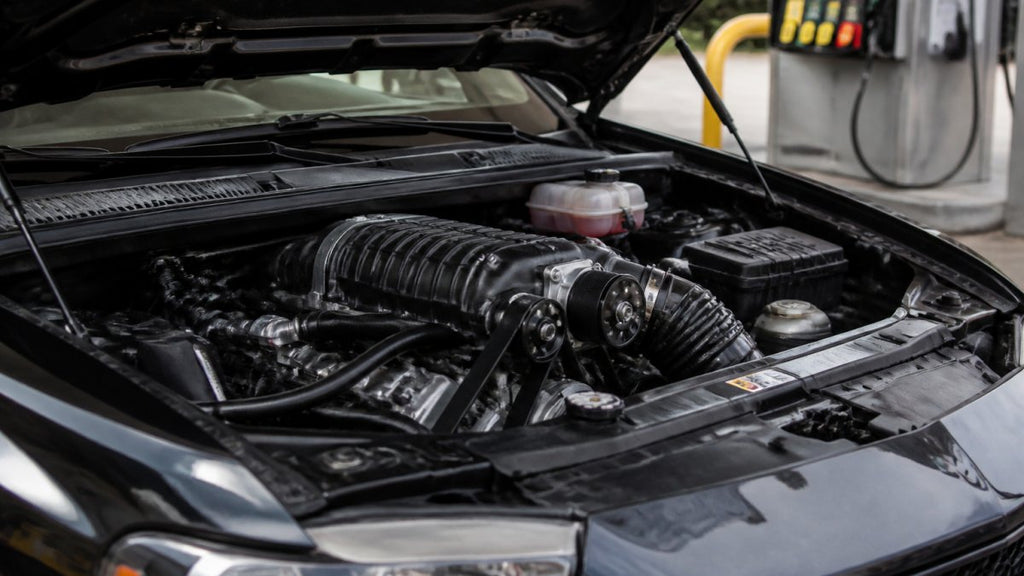
Supercharger Kit Fuel Economy Impact
Table of Contents
- How Supercharger Kits Affect Fuel Economy
- Why Superchargers Reduce Miles Per Gallon
- Supercharger Gas Mileage by Type
- Supercharger Octane Requirements and Fuel Selection
- Supercharger Tuning and Fuel Economy Optimization
- Driving Habits and Supercharger MPG Impact
- Real-World Fuel Economy Expectations
- Measuring and Managing Supercharger Fuel Consumption
- Frequently Asked Questions
Last Updated: October 10, 2026
How Supercharger Kits Affect Fuel Economy
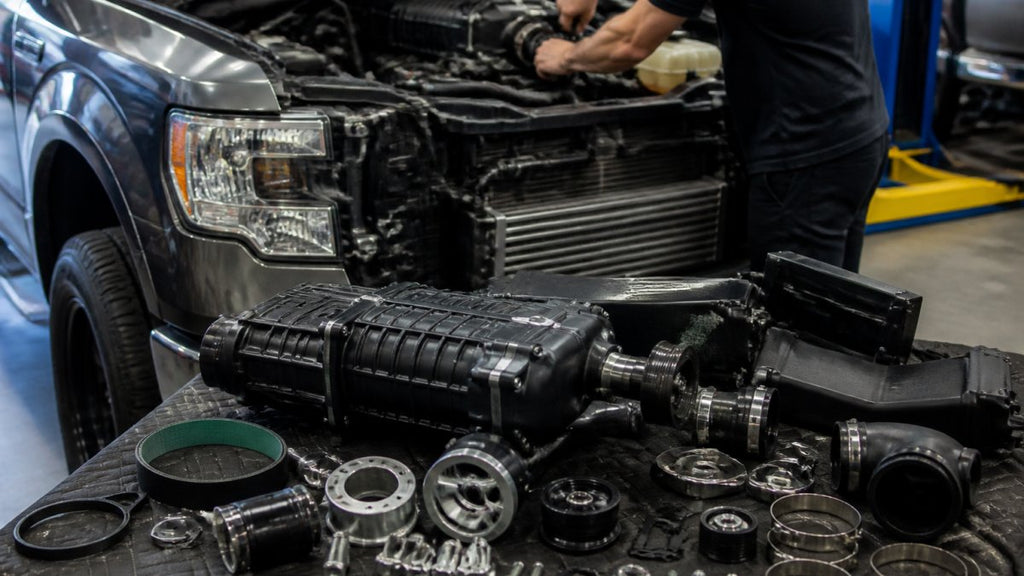
A supercharger kit forces more air into your engine's combustion chamber, delivering significant horsepower and torque gains, but the supercharger kit fuel economy impact comes at the cost of reduced fuel economy. Understanding how much your fuel economy will drop and what factors control that decline is essential before installation.
Pro Tip
The fuel economy hit from a supercharger kit is NOT fixed. Aggressive driving can cut your MPG in half. Conservative driving might reduce it by only 15-20%. This is the single biggest variable you control.
Why Superchargers Reduce Miles Per Gallon
Superchargers compress air before it enters the engine, increasing oxygen available for combustion. Your fuel injectors respond by spraying more fuel to match that extra oxygen. Additionally, parasitic load, the mechanical resistance created when your engine drives the supercharger's compressor, pulls energy from your crankshaft that would otherwise move your vehicle forward.
Parasitic Load and Engine Demand
Parasitic load draws power at idle (producing no boost) and increases with engine speed during cruising. Your engine burns extra fuel to support additional air and power the supercharger itself. On the highway at steady throttle, this effect is significant; in city driving with frequent acceleration, the impact varies more dramatically.
Boost Pressure and Air-Fuel Ratio
Boost pressure (measured in PSI) controls how much extra air enters your engine. Higher boost requires more fuel; a 7 PSI kit reduces fuel economy more than a 5 PSI kit. Your engine's ECU adjusts the air-fuel ratio automatically, and a proper tune optimizes it for your specific boost level and driving conditions.
Supercharger Gas Mileage by Type
Not all supercharger kits affect fuel economy equally. The type of supercharger, centrifugal versus positive-displacement, creates different mechanical demands and efficiency profiles.
Centrifugal vs. Positive-Displacement Performance
Centrifugal superchargers use a belt-driven impeller that spins at high speed to compress air.
Positive-displacement superchargers (roots-type and twin-screw) deliver boost across the entire RPM range, generating parasitic load even during gentle acceleration and cruising.
Our Nissan Titan and Armada twin-screw kit delivers 50-70% more horsepower and torque with a more noticeable fuel economy reduction during mixed driving.

Watch Out
Choosing a supercharger type based purely on power gains ignores the fuel economy reality. A twin-screw produces more low-end torque but costs more in fuel during daily driving. A centrifugal is lighter on the wallet at the pump but delivers power higher in the RPM band.
Supercharger Octane Requirements and Fuel Selection
Supercharger kits increase cylinder pressure and combustion temperatures, requiring higher-octane fuel to prevent knock. Most applications demand 91-octane (premium) fuel; some high-boost kits require 93-octane or race fuel. Using lower-octane fuel than required forces your ECU to retard ignition timing, reducing efficiency and burning more fuel while losing performance.
Supercharger Tuning and Fuel Economy Optimization
Your engine's tune, the software controlling fuel injection, ignition timing, and boost pressure, is the single biggest factor you control for fuel economy.
Engine Calibration for Balanced Performance
A proper engine calibration balances power delivery with fuel efficiency by adjusting fuel mapping, ignition timing, and boost pressure curves. Conservative tuning reduces boost and fuel consumption; aggressive tuning maximizes power but increases fuel use. Most owners choose a middle ground for noticeable gains without sacrificing efficiency.
Driving Habits and Supercharger MPG Impact
Driving style determines whether a supercharger kit costs you 15% or 50% in fuel economy.

City vs. Highway and Throttle Control
Highway cruising at steady throttle produces the smallest fuel economy penalties because the supercharger produces minimal boost and parasitic load stays low.
City driving demands frequent full throttle and maximum boost, causing aggressive fuel consumption. Stop-and-go traffic with a supercharger is expensive.
Aggressive acceleration can reduce MPG by 30-50% compared to moderate driving. Conservative drivers see drops of 15-25%.
Real-World Fuel Economy Expectations
The 20-30% reduction cited across the industry is an average that obscures the wide range of real-world outcomes for supercharger kit fuel economy impact. Your actual fuel economy penalty depends on four variables: supercharger type, engine displacement, driving cycle, and boost tuning.
Supercharger Type and Displacement: The Foundation
Positive-Displacement (Roots or Twin-Screw) on Small Displacement (2.0L-3.0L):
- Baseline expectation: 25-35% fuel economy reduction under mixed city/highway driving
- Highway cruising (steady 65 mph, light throttle): 15-20% reduction
- City driving (frequent acceleration, stop-and-go): 35-45% reduction
Positive-Displacement on Large Displacement (5.0L-6.0L V8):
- Baseline expectation: 15-25% fuel economy reduction under mixed driving
- Highway cruising: 10-15% reduction
- City driving: 25-35% reduction
Centrifugal on Small Displacement (2.0L-3.0L):
- Baseline expectation: 15-25% fuel economy reduction under mixed driving
- Highway cruising (steady throttle, minimal boost): 8-15% reduction
- City driving (frequent acceleration): 25-35% reduction
Centrifugal on Large Displacement (5.0L-6.0L V8):
- Baseline expectation: 10-20% fuel economy reduction under mixed driving
- Highway cruising: 5-12% reduction
- City driving: 18-28% reduction
Driving Cycle: The Multiplier
The same supercharger kit on the same engine produces wildly different fuel economy penalties depending on driving pattern. These ranges assume a well-tuned supercharger at moderate boost (6-8 PSI for positive-displacement, 5-7 PSI for centrifugal):
Highway-Dominant Driving (70% highway, 30% city):
- Centrifugal supercharger: 8-15% reduction
- Positive-displacement supercharger: 15-22% reduction
- Reason: Highway cruising at steady throttle minimizes boost demand. Centrifugal units shine here because they produce almost no parasitic load at cruise RPM.
Mixed Urban/Suburban (50% highway, 50% city):
- Centrifugal supercharger: 15-25% reduction
- Positive-displacement supercharger: 22-32% reduction
- Reason: This is the "average" driving pattern. City acceleration demands full boost, highway cruising demands minimal boost. The split determines the overall penalty.
City-Dominant Driving (20% highway, 80% city):
Mazda 2.0L / 2.5L Supercharger Tuner Kit →
- Centrifugal supercharger: 25-35% reduction
- Positive-displacement supercharger: 32-45% reduction
- Reason: Frequent acceleration and stop-and-go traffic demand constant boost. Positive-displacement units produce full boost even at low RPM, maximizing fuel consumption. Centrifugal units still suffer because city driving demands more boost than highway cruising.
Aggressive Driving (frequent full-throttle acceleration, high-RPM operation):
- Any supercharger type: 40-60% reduction
- Reason: Full throttle maximizes boost and fuel consumption. Aggressive drivers can halve their fuel economy regardless of supercharger type or engine size.
Boost Pressure and Tuning: The Tuner's Lever
Boost pressure is the single most controllable variable affecting fuel economy. Each additional PSI of boost increases air density and requires proportionally more fuel. A conservative tune at 5 PSI produces a smaller penalty than an aggressive tune at 9 PSI on the same supercharger:
Conservative Tune (5-6 PSI boost, moderate fuel mapping):
- Expected penalty: 12-18% reduction from baseline
- Use case: Daily drivers prioritizing efficiency and drivability
- Trade-off: Modest power gains (20-30% increase) but minimal fuel economy hit
Moderate Tune (6-8 PSI boost, balanced fuel mapping):
- Expected penalty: 18-28% reduction from baseline
- Use case: Most enthusiasts; balance between performance and efficiency
- Trade-off: Significant power gains (40-60% increase) with acceptable fuel economy penalty
Aggressive Tune (8-11 PSI boost, rich fuel mapping):
- Expected penalty: 28-40% reduction from baseline
- Use case: Performance-focused builds, weekend drivers
- Trade-off: Maximum power gains (60-100% increase) but substantial fuel economy cost
Race Tune (11+ PSI boost, maximum fuel enrichment):
- Expected penalty: 40-60% reduction from baseline
- Use case: Track-only or occasional performance driving
- Trade-off: Maximum power but impractical for daily driving
Octane Fuel Grade: A Hidden Variable
Using the correct octane fuel for your supercharger tune is critical. Running lower octane than your tune requires forces the ECU to retard ignition timing to prevent knock. Retarded timing reduces combustion efficiency and increases fuel consumption:
- Running 2 octane points below requirement (e.g., 89-octane in a 91-octane tune): 3-5% additional fuel economy penalty
- Running 4 octane points below requirement (e.g., 87-octane in a 91-octane tune): 6-10% additional fuel economy penalty
Conversely, using the correct octane or higher allows the tune to operate at optimal timing, maximizing efficiency for that boost level.
Vehicle-Specific Examples
These examples show how the variables combine for common vehicles:
Mid-Size Sedan (3.0L V6, centrifugal supercharger, moderate tune, 6-7 PSI, mixed 50/50 driving):
- Baseline: 24 MPG combined
- Post-supercharger: 18-20 MPG combined
- Penalty: 15-25% reduction
- Reason: Centrifugal unit produces low parasitic load at highway cruise; moderate tune limits fuel enrichment.
Full-Size Truck (5.7L V8, positive-displacement supercharger, moderate tune, 7-8 PSI, mixed driving with occasional towing):
- Baseline: 16 MPG combined
- Post-supercharger: 12-14 MPG combined
- Penalty: 12-25% reduction
- Reason: Large engine reduces parasitic load relative to output; positive-displacement unit still creates constant load; towing demands more boost.
Compact Performance Car (2.0L turbo-replaced with centrifugal supercharger, aggressive tune, 7 PSI, city-dominant 80/20 driving):
- Baseline: 22 MPG combined
- Post-supercharger: 15-17 MPG combined
- Penalty: 23-32% reduction
- Reason: Small engine spins supercharger faster; city driving demands frequent boost; aggressive tune increases fuel enrichment.
Off-Road SUV (4.0L V6, twin-screw supercharger, moderate tune, 7 PSI, highway-dominant 70/30 driving):
- Baseline: 18 MPG highway
- Post-supercharger: 15-16 MPG highway
- Penalty: 11-17% reduction
- Reason: Highway-dominant driving minimizes boost demand; positive-displacement unit still penalizes at cruise; moderate tune balances power and efficiency.
Uncertainty and Vehicle-Specific Variation
These ranges represent typical outcomes, but individual vehicles vary. Factors outside your control include engine condition, transmission type, aerodynamics, rolling resistance, and fuel quality. Use these ranges as a starting point, not a guarantee. Your actual results will depend on how these variables combine in your specific vehicle and driving pattern.
Measuring and Managing Supercharger Fuel Consumption
Establishing a reliable baseline requires more rigor than a single fill-up calculation, as fuel economy varies with ambient temperature, fuel quality, tire pressure, and route selection.
Establishing Your Baseline
Collect fuel economy data over at least 4-6 fill-ups spanning different seasons. For each fill-up: fill to the same level using the same fuel grade you plan to run post-installation; reset your trip odometer and note the date, temperature, and octane; drive your normal routes for 300-500 miles; refuel at the same pump if possible; record miles and gallons to calculate MPG.
Post-Installation Measurement Protocol
After installation and tuning, follow the same protocol for at least 4-6 fill-ups. Keep constant: fuel grade (use the octane your tune requires); route and driving conditions; tire pressure (check manufacturer spec); ambient temperature; and vehicle load.
Isolating Supercharger Impact from Driving Behavior
Most owners drive more aggressively immediately after installation. Track your first 4-6 fill-ups separately as your "adaptation period." After 4-6 weeks, your driving normalizes; weeks 5-12 represent true steady-state consumption. Most owners find fuel economy improves 2-4 MPG between month 1 and months 2-3 as throttle discipline returns.
Accounting for Seasonal and Fuel-Grade Variables
Adjust for seasonal shifts: winter fuel economy is typically 10-15% worse than summer. If comparing across fuel grades, premium fuel provides roughly 1-2% better MPG than regular.
Real-World Tracking Over Time
Continue logging fuel economy monthly after establishing your steady-state average. Most owners stabilize within ±1-2 MPG after 2-3 months. Sudden 3+ MPG drops often signal maintenance issues rather than supercharger changes. Over 6-12 months, patterns emerge showing your true average, seasonal variation, and how driving changes affect consumption.
Interpreting Your Results
Once you have 4-6 weeks of post-installation data under consistent conditions, compare your results: 15-25% reduction is typical for moderate driving with a well-tuned supercharger; 25-35% suggests aggressive driving or a high-boost tune; less than 15% may indicate a centrifugal supercharger or conservative tuning; more than 40% warrants a tune review.
Frequently Asked Questions
Will a supercharger kit significantly reduce my vehicle's fuel economy?
Yes, a supercharger kit typically reduces fuel economy by 15-30% depending on driving style and tuning. The engine works harder to compress and force additional air into the cylinders, increasing fuel consumption. However, the actual impact varies: highway cruising at steady throttle sees smaller losses, while frequent acceleration and boost demand cause steeper MPG drops. Proper tuning and driving discipline can minimize this penalty.
What octane fuel should I use with a supercharger kit?
Most supercharger kits require 91-93 octane fuel to prevent engine knock under boost. Higher octane fuel resists detonation better when the air-fuel mixture is compressed by forced induction. Using lower octane (87) risks engine damage and poor performance. Check your kit's tuning specifications, 91+ is the safer standard for full power and reliability.
Can careful driving offset a supercharger's impact on MPG?
Partially. Smooth acceleration, steady cruising, and avoiding unnecessary boost demand will reduce fuel consumption compared to aggressive driving. However, you cannot eliminate the parasitic load, the supercharger always consumes some engine power. Real-world tests show that disciplined drivers can recover 5-10 MPG points versus heavy-throttle use, but expect a net loss of 10-20% overall. Tuning also matters: a well-calibrated engine tune can improve efficiency at partial throttle.
How does supercharger tuning affect fuel economy?
Proper engine tuning optimizes the air-fuel ratio and ignition timing for your specific boost level, improving efficiency and power delivery. A well-tuned supercharger system can reduce fuel waste compared to a poorly tuned one by 5-15%. VT Superchargers kits include tuning support to ensure your engine runs lean at cruise and rich only under acceleration, helping balance performance and consumption. Aftermarket tuning services like Sauce Tuning (included in the Mazda Tuner Kit) fine-tune this calibration for your vehicle.
Related post
09
Oct
RECENT POSTS