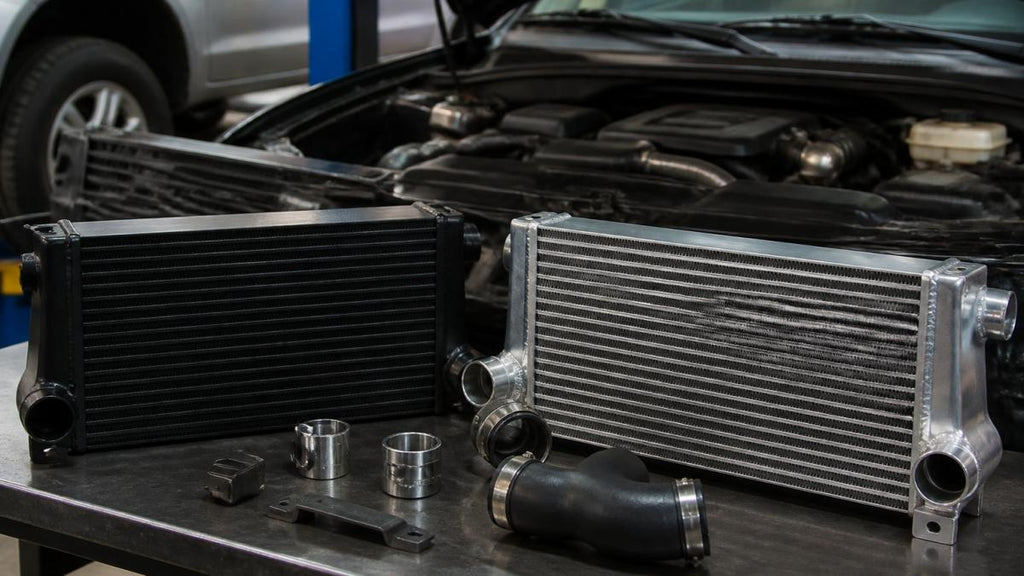
Supercharger Heat Exchanger Upgrade Benefits for Trucks
Table of Contents
- How Air-to-Water Heat Exchangers Work in Supercharger Systems
- Intake Air Temperature and Horsepower: Why IAT Reduction Matters
- Real Benefits of Upgrading Your Truck's Cooling System
- How to Prevent Heat Soak in Supercharged Trucks
- Installation and Maintenance Considerations for Trucks
- Supercharger Heat Exchanger Upgrade for Towing and Off-Road Use
- Frequently Asked Questions
Last Updated: October 1, 2026
How Air-to-Water Heat Exchangers Work in Supercharger Systems
An air-to-water heat exchanger is a device that transfers thermal energy from compressed air produced by your supercharger into coolant circulating through the system. When a supercharger forces air into your engine at higher pressure, that compressed air heats up dramatically. Without cooling, intake air temperature climbs, reducing oxygen density and cutting power. An air-to-water heat exchanger intercepts that hot air before it reaches the intake manifold, cooling it through a water circuit that dissipates heat to the atmosphere.
The core principle is straightforward: hot compressed air passes through aluminum fins inside the heat exchanger while cool water flows through passages around those fins. The temperature differential drives heat transfer from air to coolant. That warm coolant then circulates to a separate water-cooled radiator mounted elsewhere on the vehicle, where ambient air cools it back down. The cooled water returns to the heat exchanger, and the cycle repeats.
This design differs fundamentally from air-to-air intercoolers, which rely on ambient air speed to cool compressed air. On a truck crawling through traffic or idling in off-road conditions, an air-to-air system struggles because vehicle speed determines cooling efficiency. An air-to-water system maintains consistent cooling regardless of vehicle speed because the water pump runs continuously, independent of airflow. For trucks that spend time at low speeds or stationary, towing, climbing steep terrain, or navigating tight trails, this distinction matters significantly.
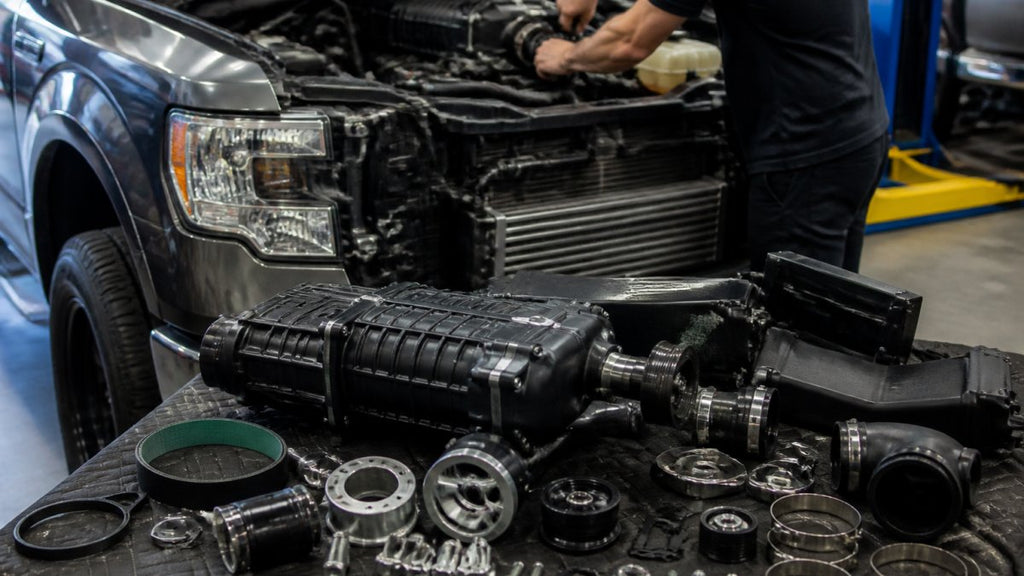
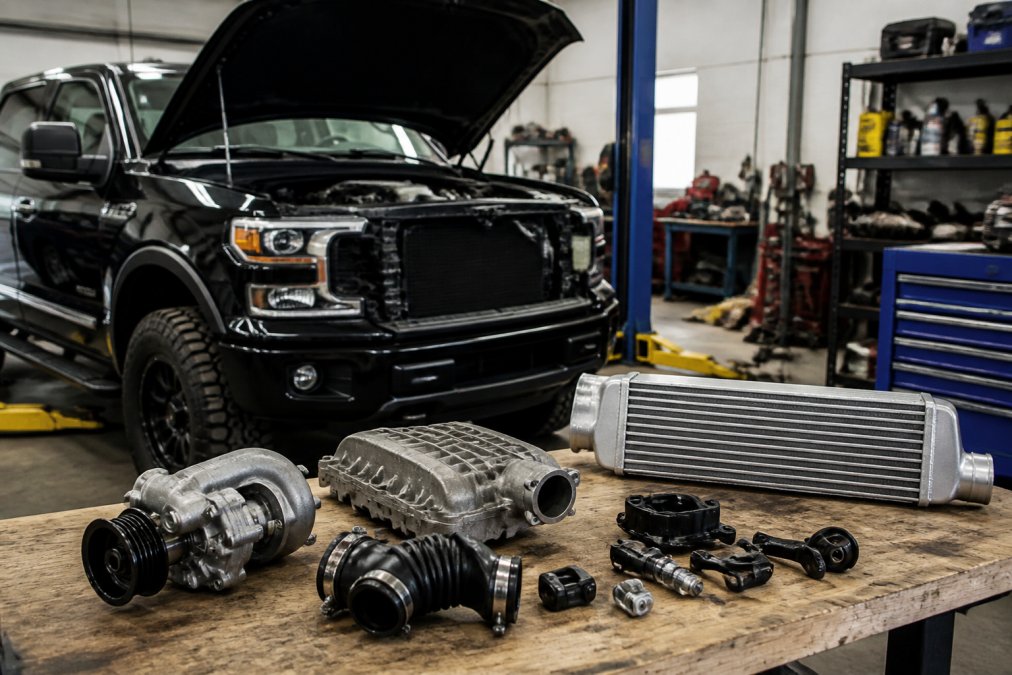
The water-cooled radiator itself is typically mid-mounted or rear-mounted, positioned to receive consistent airflow. VT Superchargers kits include a large-capacity water cooler engineered specifically for this purpose, ensuring stable thermal management even during sustained high-boost conditions.

Intake Air Temperature and Horsepower: Why IAT Reduction Matters
Intake air temperature directly controls how much oxygen enters your engine cylinders. Cooler air is denser, it contains more oxygen molecules per unit volume. More oxygen means more fuel can burn per combustion cycle, generating more power. Hot compressed air is less dense, so even though boost pressure is identical, the actual mass of air entering the engine is lower, limiting power output.
The relationship is quantifiable: for every 10 degrees Fahrenheit increase in intake air temperature above baseline, you lose approximately 1 percent of maximum horsepower. Conversely, cooling intake air by 20-30 degrees Fahrenheit can recover 2-3 percent of peak power. On a supercharged truck producing 400+ horsepower, that's 8-12 additional horses, real gains that compound when you're towing or accelerating under load.
Heat soak amplifies this problem. Heat soak occurs when your engine sits at idle or low-speed operation after hard acceleration, allowing residual heat to build in the intake manifold and compressed air path. The next time you accelerate, you're starting from an elevated baseline temperature. An effective heat exchanger combats heat soak by continuously cooling the air path, ensuring consistent power delivery across repeated acceleration cycles.
IAT reduction also improves reliability. Lower combustion temperatures reduce stress on pistons, rings, and valve seats. Engine knock, pre-detonation caused by excessive heat and pressure, becomes less likely. A supercharger heat exchanger upgrade isn't just about peak power; it's about sustainable, repeatable power without thermal degradation.
Real Benefits of Upgrading Your Truck's Cooling System
Consistent Power Delivery Across Driving Conditions
A stock cooling system on a supercharged truck was engineered for naturally aspirated operation. Adding forced induction dramatically increases heat load, overwhelming the original cooler's capacity. The result is inconsistent power: your first hard acceleration produces strong boost, but a second acceleration minutes later feels noticeably softer because intake air temperature has climbed.
A dedicated supercharger heat exchanger upgrade eliminates this inconsistency. By handling the thermal load generated by positive displacement supercharging, the aftermarket cooler maintains stable intake temperatures across repeated acceleration events. You get consistent power on the first pass, the second pass, and the tenth pass. For trucks used in towing applications, where you're repeatedly accelerating under load, this consistency is critical. You're not managing a power curve that degrades; you're managing predictable, repeatable performance.
Pro Tip
Log your intake air temperature using a data acquisition system during hard driving. Most upgraded trucks see IAT stabilize 15-25 degrees cooler compared to stock systems, even under sustained boost conditions.
Improved Reliability and Engine Longevity
Thermal stress is invisible until it's too late. Excessive heat accelerates wear on internal engine components. Pistons expand under heat, increasing friction. Ring gaps tighten, reducing blow-by control. Valve seats erode faster. A supercharger heat exchanger upgrade reduces operating temperatures, directly extending component life.
The durability benefit is particularly pronounced in trucks running custom builds or higher boost levels. A stock engine tuned to 7 psi of boost may tolerate elevated temperatures for a season. Push it to 10-12 psi without upgraded cooling, and you're gambling with reliability. A proper heat exchanger lets you run higher boost safely because the thermal headroom is there. You're not just gaining power; you're enabling that power to be sustainable.
How to Prevent Heat Soak in Supercharged Trucks
Core Design: Single-Pass vs. Dual-Pass Heat Exchangers
Heat exchanger core design determines how effectively coolant contacts the air-side fins. A single-pass design channels coolant through the core once before exiting. Coolant enters at one end, flows straight through, and exits at the other. This approach is simpler and lighter but sacrifices cooling efficiency because the coolant temperature rises as it progresses through the core, reducing the temperature differential at the exit end.
Toyota Tundra 5.7L 3UR-FE Supercharger Kit | VT Superchargers →
A dual-pass (or multi-pass) design routes coolant through the core twice, often in a serpentine pattern. Coolant enters at the bottom, rises through the first section, then descends through a second section before exiting. This extended dwell time and the ability to cool coolant again in the second pass significantly improve thermal efficiency. The coolant stays cooler throughout the core, maintaining a steeper temperature gradient and extracting more heat from the compressed air.
For trucks operating in high-heat environments, desert off-roading, sustained towing in summer, or repeated hard acceleration, a dual-pass core is the better choice. VT Superchargers kits use dual-pass core designs optimized for consistent thermal performance, ensuring that heat soak doesn't accumulate during extended driving sessions.

Coolant Flow Rates and Thermal Efficiency
Coolant flow velocity through the heat exchanger core affects heat transfer efficiency. Too slow, and the coolant doesn't extract enough heat before exiting. Too fast, and the coolant doesn't spend enough time in contact with the fins, also reducing efficiency. The optimal flow rate depends on core design, fin density, and coolant viscosity.
Most aftermarket supercharger kits specify a water pump capable of delivering flow rates between 40-80 gallons per minute, depending on the engine displacement and boost level. A pump sized correctly for your core ensures the coolant spends adequate time in the heat exchanger while maintaining laminar flow that maximizes fin contact.
Coolant additive compatibility matters here as well. Some additives increase viscosity or create deposits that reduce flow rate over time. Using the coolant type specified in your kit's documentation preserves flow characteristics and prevents thermal performance degradation. A clogged or restricted cooling circuit will cause heat buildup even if the core is oversized.
Watch Out
Never mix coolant types or use tap water in your supercharger cooling circuit. Mineral deposits and corrosion will restrict flow and reduce heat transfer efficiency within weeks. Always flush and refill with the coolant type your kit specifies.
Installation and Maintenance Considerations for Trucks
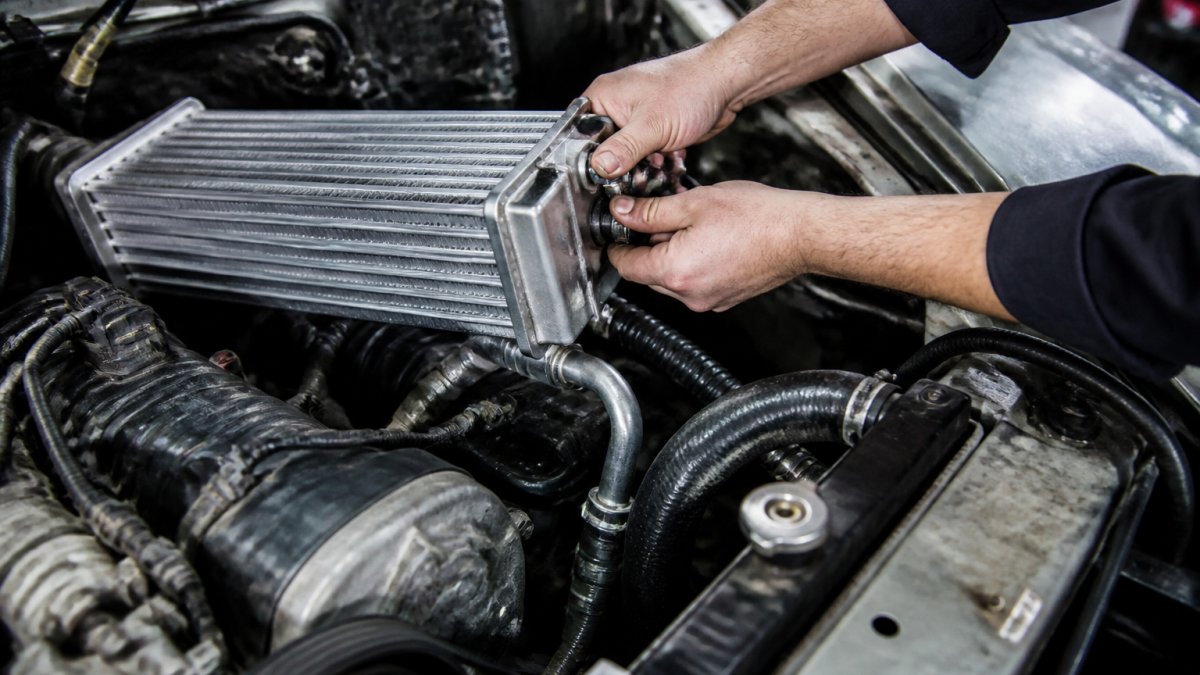
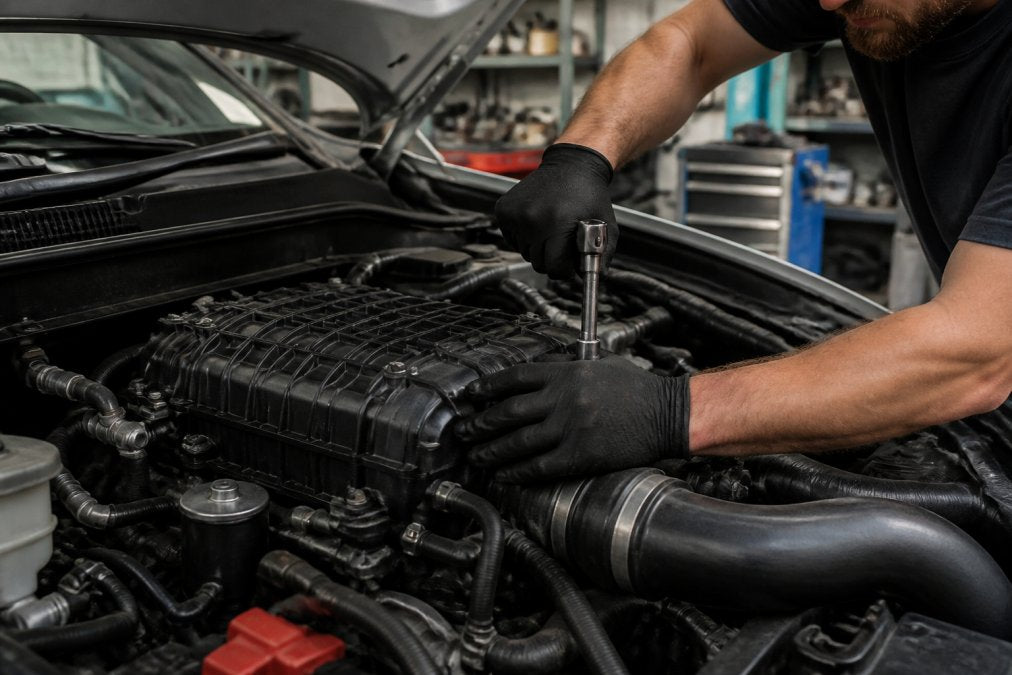
A bolt-on supercharger heat exchanger upgrade requires careful installation to ensure proper fitment and thermal performance.
Bleeding Your Cooling System After Installation
Air pockets in the cooling circuit are the enemy of thermal performance. Trapped air creates vapor locks that interrupt coolant flow, causing local hot spots and reducing overall heat transfer. Bleeding the system properly after installation is non-negotiable.
Coolant Additive Compatibility and Long-Term Durability
Aftermarket cooling systems use aluminum cores and passages, which are susceptible to corrosion if the wrong coolant is used. Conventional green coolant contains silicates that protect iron and steel but can cause deposits in aluminum systems. Extended-life coolants (orange, pink, or blue) use organic acid technology that's gentler on aluminum and typically lasts longer.
Supercharger Heat Exchanger Upgrade for Towing and Off-Road Use
Towing and off-road driving expose your supercharger cooling system to sustained stress. Towing at highway speeds means continuous high-boost operation with minimal rest periods. Off-road climbing means repeated hard acceleration at low speeds, where air cooling is minimal and heat accumulates rapidly.
Frequently Asked Questions
Does a supercharger heat exchanger upgrade actually add horsepower?
A heat exchanger doesn't directly add horsepower, but it enables your supercharger to deliver more power consistently. By reducing intake air temperature (IAT), the engine can maintain boost pressure without detonation, allowing the ECU to optimize timing and fuel delivery. On a truck running 7 psi of boost, you can expect 40-60% more horsepower than stock when paired with proper tuning. Without cooling, heat soak limits how long your supercharger can make peak power.
What's the difference between single-pass and dual-pass heat exchanger cores?
Single-pass cores allow coolant to flow through once, offering lower pressure drop but less heat rejection. Dual-pass cores route coolant through the core twice, maximizing surface area contact and heat transfer efficiency. For supercharged trucks, dual-pass designs are preferred because they maintain more consistent IAT during sustained driving, towing, and off-road use where thermal loads are highest.
Will a heat exchanger upgrade help with gear hunting on my truck with bigger tires?
Yes. Gear hunting often occurs because the engine loses torque under load due to heat soak and reduced boost. A quality heat exchanger maintains lower intake air temperatures, allowing the supercharger to deliver consistent boost and torque across RPM ranges. This keeps your engine in the right gear longer and reduces the transmission hunting for power. Combined with proper tuning, you'll see smoother acceleration and better low-end response.
How do I know if my truck needs a heat exchanger upgrade?
If you're planning a supercharger installation, a heat exchanger is essential for any truck used for daily driving, towing, or off-road work. Stock cooling systems cannot handle the heat rejection from forced induction. Signs you need an upgrade include IAT climbing above 120°F at highway speeds, power loss after sustained acceleration, or knock detected by the ECU. VT Superchargers kits include a large water cooler engineered for thermal stability in all conditions.
Related post

RECENT POSTS