Choose the Right Supercharger for Ram 1500
Table of Contents
- Understanding Superchargers for Ram 1500
- How Much Horsepower Do Superchargers Add to Your Engine
- Engine Compatibility: 5.7L vs. 6.4L HEMI
- Key Selection Criteria for Your Build
- Best Practices for Forced Induction Maintenance
- Supercharger Installation Cost for Ram 1500
- Real-World Impact: Fuel Economy and Long-Term Reliability
- Frequently Asked Questions
Last Updated: September 3, 2026
Understanding Superchargers for Ram 1500
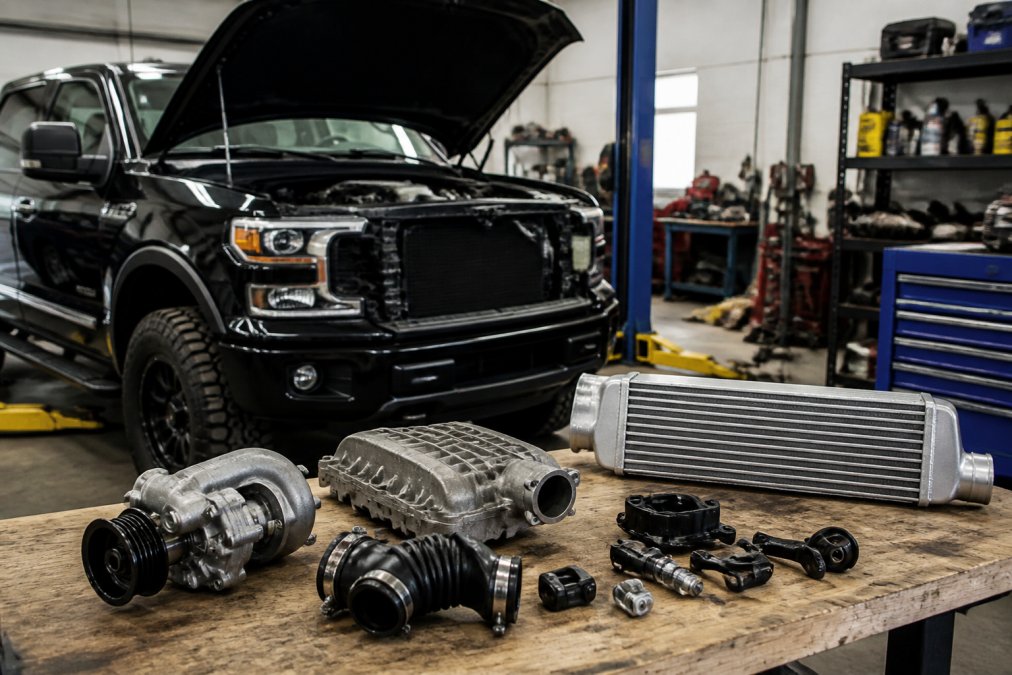
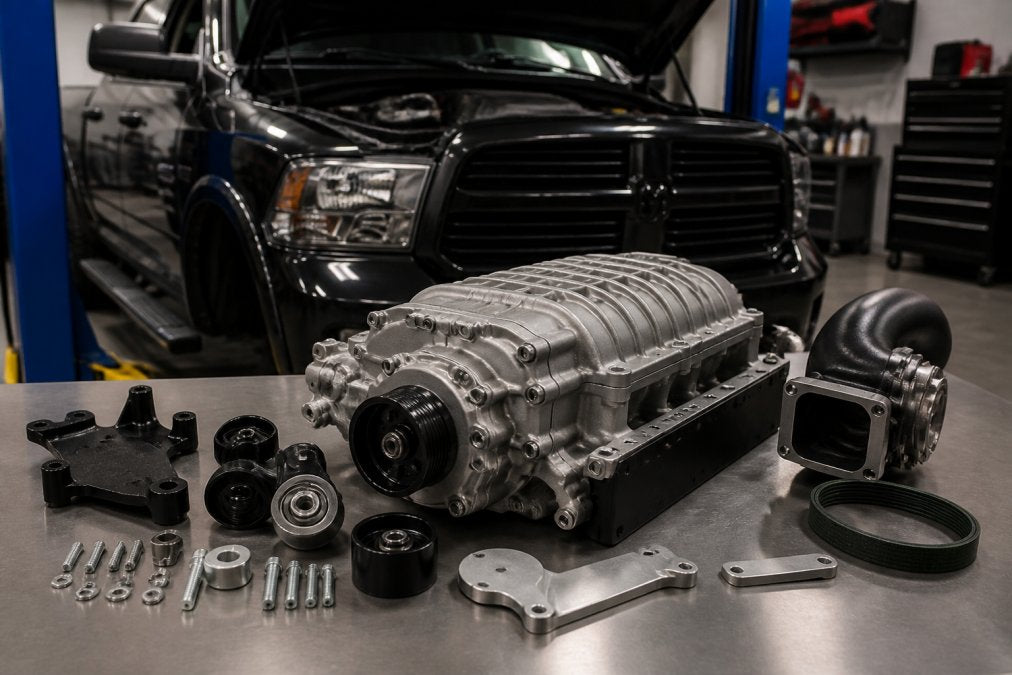
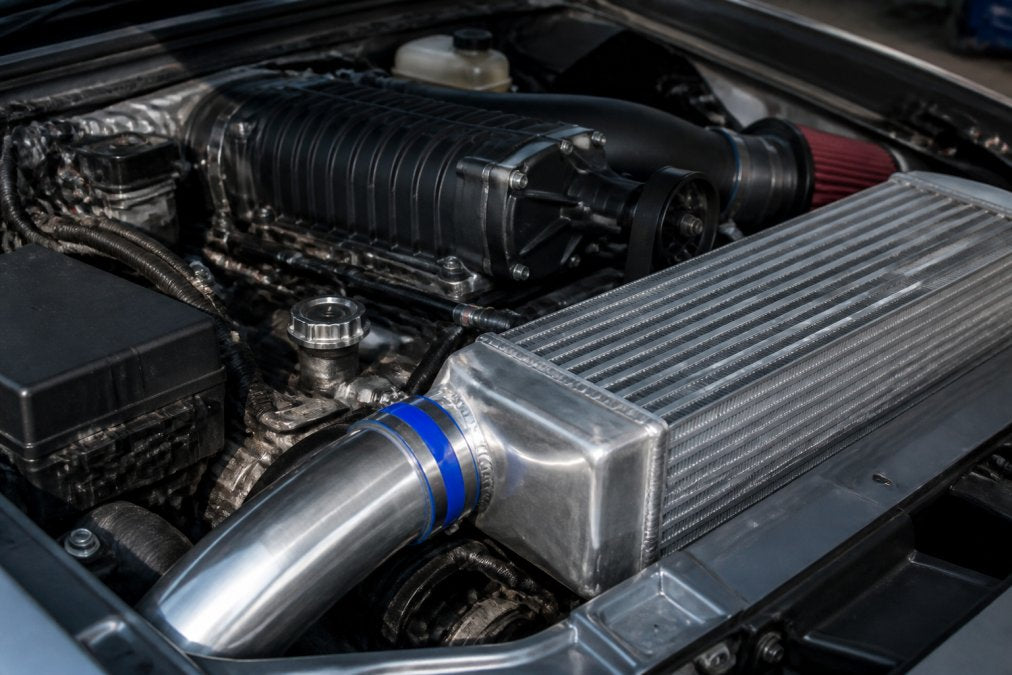
A supercharger for ram 1500 is a forced induction system that compresses incoming air before it enters the engine, dramatically increasing the amount of oxygen available for combustion. This allows your Ram to produce significantly more power without increasing engine displacement. According to automotive performance market research from 6Wresearch, the U.S. automotive performance parts market was valued at $165 million in 2025 and is projected to reach $194 million by 2032, with superchargers leading the product category.
Understanding how to choose the right supercharger for a Dodge Ram 1500 separates a smart investment from an expensive mistake.
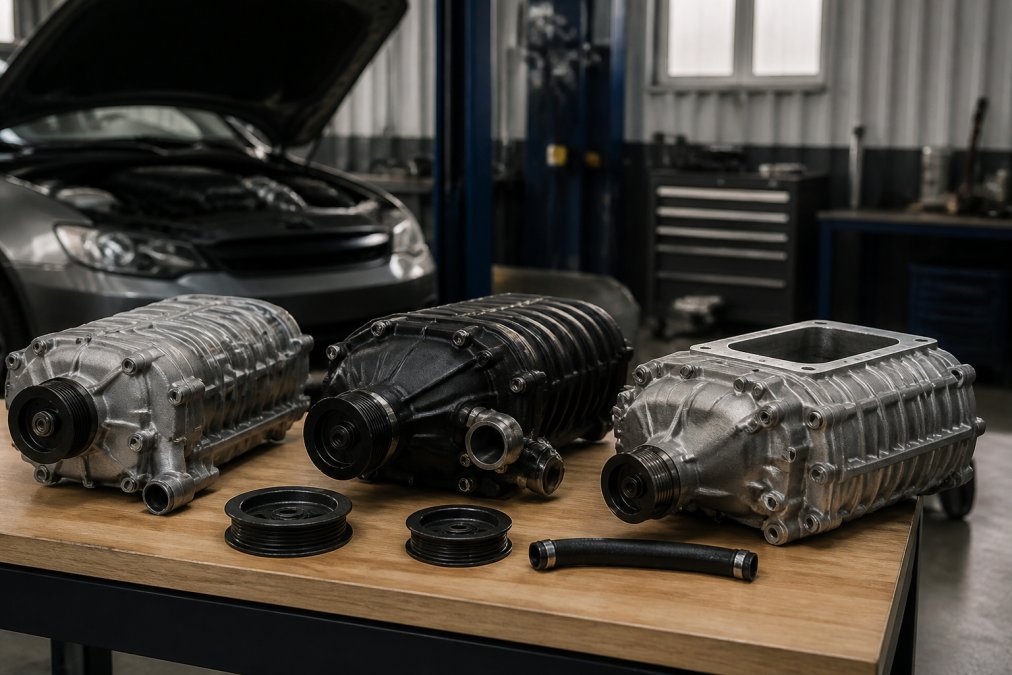
Centrifugal vs. Positive Displacement Superchargers
The two dominant supercharger technologies work fundamentally differently, and your choice determines how your truck performs.
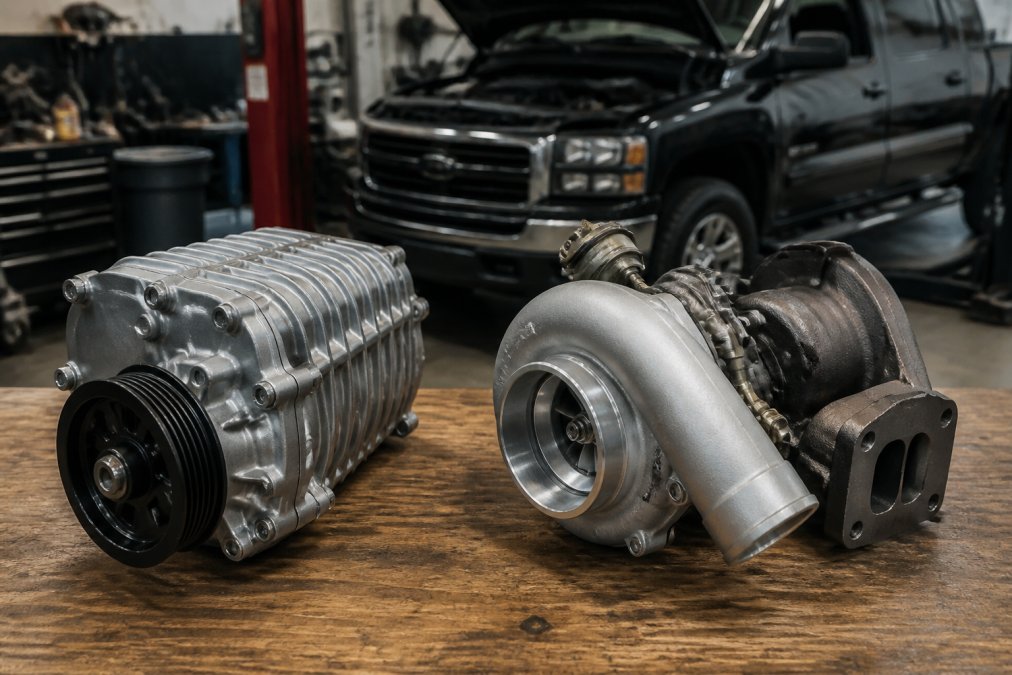
Centrifugal superchargers use a belt-driven impeller that spins at high speeds to compress air. They're mechanically simpler, lighter, and more efficient at higher RPMs, but produce boost gradually as engine speed increases. The advantage: excellent fuel economy potential and less parasitic loss at cruise speeds.
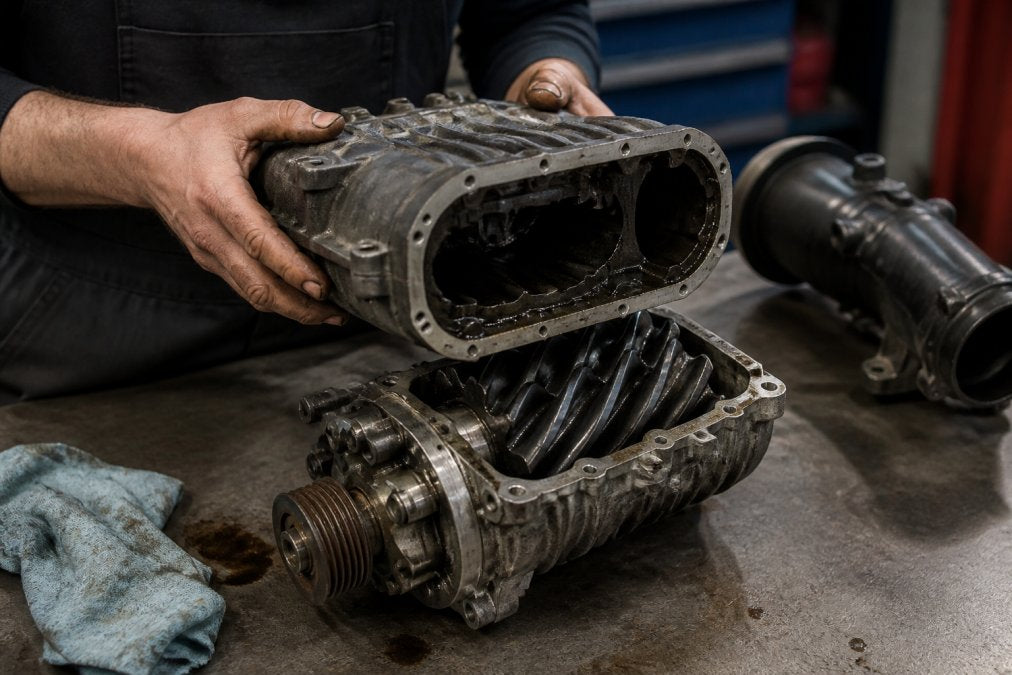
Positive displacement superchargers (twin-screw or roots-type blowers) deliver boost immediately at any RPM. The moment you touch the throttle, you feel the power surge. The tradeoff: they consume more engine power to operate, impacting fuel economy more noticeably. According to Grand View Research's supercharger market analysis, centrifugal superchargers dominated the market in 2023 with 51.7% market share, but twin-screw systems are the fastest-growing segment at 5.9% compound annual growth rate.
For a Ram 1500 used as a daily driver or towing vehicle, positive displacement systems typically feel more rewarding because that low-end torque response is exactly what you need when hauling or navigating terrain.
Why Instant Torque Matters for Your Ram
A stock 5.7L HEMI produces torque, but it builds gradually. When towing a heavy trailer or sitting in traffic with larger aftermarket tires, your transmission hunts for gears constantly, downshifting and upshifting repeatedly. This cycle heats your transmission and wears it prematurely.
Instant torque from a positive displacement supercharger fixes this directly. Your truck now has the low-end power to hold gears smoothly, reducing transmission stress and improving drivability. That's why truck owners with 35-inch tires and custom builds specifically seek out supercharger systems that deliver immediate boost.
How Much Horsepower Do Superchargers Add to Your Engine
Superchargers increase engine air intake by 30-50%, improving horsepower output by 25-45% without increasing engine displacement. For a Ram 1500, gains depend on which engine you're starting with and what fuel octane you're running.
The stock 5.7L HEMI produces 395 horsepower and 410 lb-ft of torque. A quality positive displacement supercharger system on 93-octane fuel can add significant rear-wheel horsepower and torque. For example, a 650-horsepower supercharged Ram 1500 with a Whipple 3.0L supercharger has been shown to achieve 0-60 mph in the low 4-second range. Another modified Ram 1500 with a Whipple 3.0L supercharger achieved 0-60 mph in 5.92 seconds and a quarter-mile in 13.95 seconds at 103 mph.
The key variable is supporting modifications. A supercharger alone on a completely stock engine will deliver gains, but fuel injectors, fuel pump capacity, and engine tuning all matter for consistency and longevity. Many DIY builders install the supercharger and wonder why the truck feels gutless or develops knock, the answer is usually that supporting systems weren't upgraded to match the new air volume.
Engine Compatibility: 5.7L vs. 6.4L HEMI
Not all HEMI engines are created equal when it comes to forced induction readiness.
The 5.7L HEMI is the workhorse of the Ram 1500 lineup. Supercharger kits for the 5.7L are abundant, well-tested, and proven reliable across hundreds of thousands of miles. Stock internals can handle the stress of a quality supercharger system, especially at conservative boost levels with quality fuel.
The 6.4L HEMI, introduced in 2022, is newer with tighter tolerances and higher stock compression. Supercharger compatibility is still being developed, and long-term reliability data doesn't exist yet. If you own a 2022+ Ram 1500, you're in the early adopter phase.
For the 2026 Ram 1500 with the 5.7L E-Torque engine, manufacturers are actively developing Gen 6 supercharger kits designed to work seamlessly with the hybrid system. These require unlocked PCM calibration and security gateway bypass devices, adding complexity but delivering integration that respects the truck's original engineering.
Choose the 5.7L if you want proven reliability and abundant kit options. Choose the 6.4L or E-Torque variant only if you're comfortable being part of the development cycle.
Key Selection Criteria for Your Build
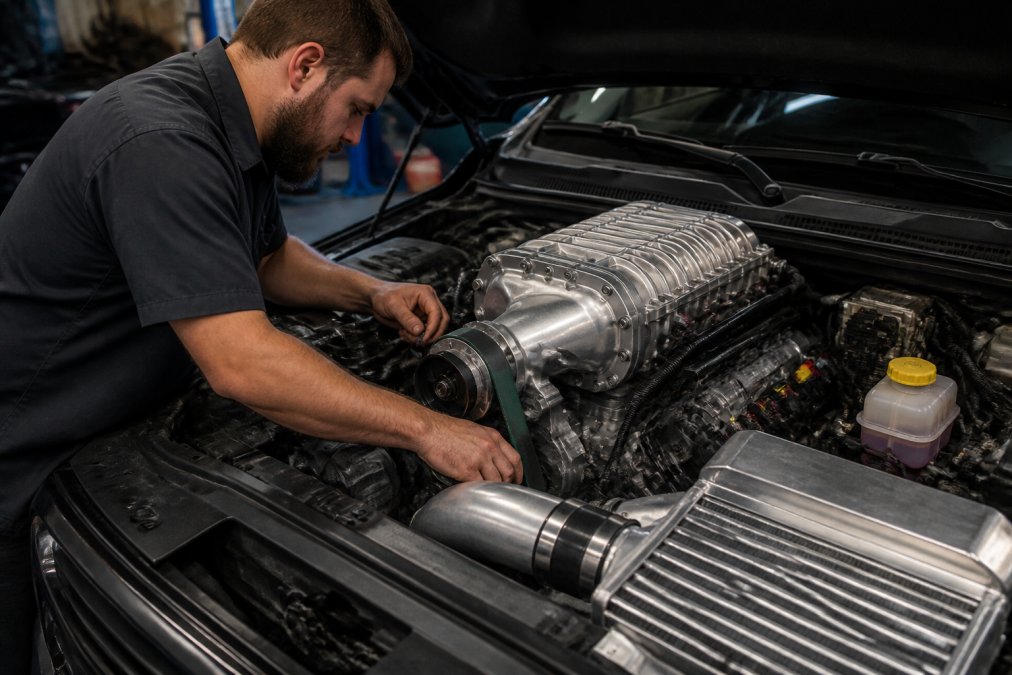
Choosing the right supercharger for a dodge ram 1500 means evaluating your specific use case, not just picking the most powerful option.
Stock vs. Modified Engine Considerations
A completely stock 5.7L HEMI can handle a supercharger installation, but "can handle" and "should handle" are different things.
Stock pistons have a compression ratio of 10.5:1. Add a supercharger and you're increasing combustion pressure significantly. On 91-octane fuel, you'll get decent power gains but risk engine knock. Knock is detonation that damages pistons and rings over time.
The practical solution: budget for quality tune work. A proper ECU tune that accounts for boost pressure, fuel octane, and your specific kit will prevent knock and optimize power delivery. This isn't optional for long-term reliability.
If your Ram already has supporting modifications, high-flow fuel injectors, a quality fuel pump, or forged pistons, you're in a much better position. For a completely stock truck, a centrifugal supercharger might be the smarter choice, with lower boost pressure and gradual power delivery meaning less stress on stock internals.
Drivetrain Stress and Transmission Upgrades
A stock 5.7L HEMI is paired with a TorqueFlite 8-speed automatic transmission. Add a supercharger and you're putting significantly more torque through that same transmission, potentially operating beyond its original design.
Transmission cooling becomes critical. A quality transmission cooler upgrade should be part of your supercharger installation plan. For trucks that tow regularly or see heavy use, consider a higher-stall-speed torque converter to better match the supercharger's power band. performance exhaust upgrades.
Tuning and ECU Requirements
Your engine control unit is the brain that decides how much fuel to inject, when to ignite it, and how much boost to allow. A stock ECU is programmed for a naturally aspirated engine.
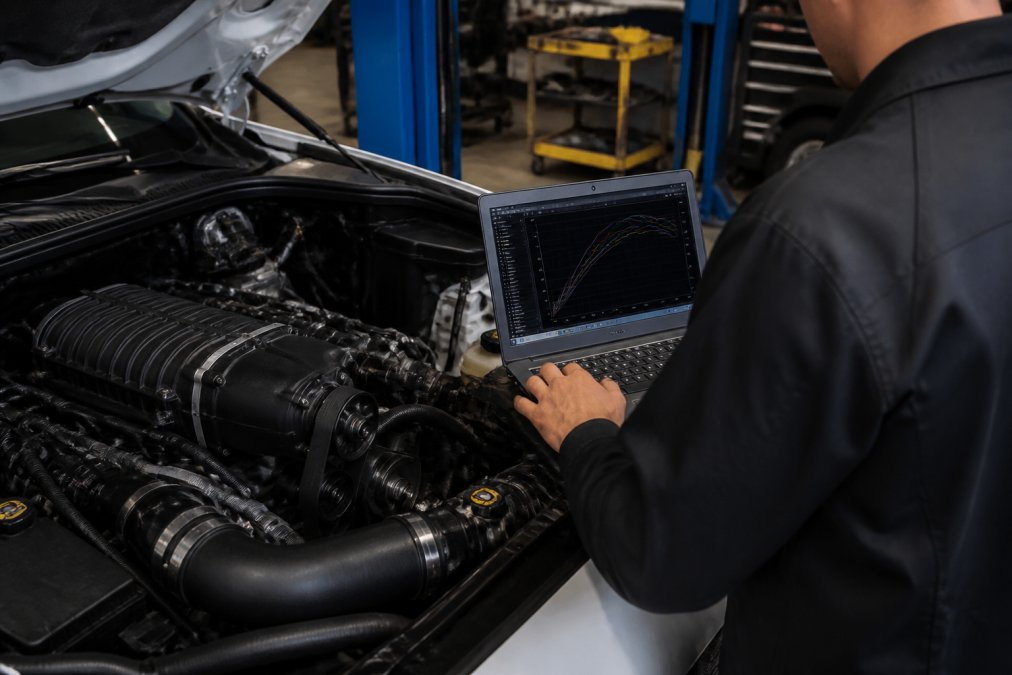
A supercharger requires ECU tuning that adjusts fuel injection timing and volume for boost pressure, prevents engine knock, accounts for fuel octane rating, and manages boost pressure limits to protect the engine.
Some supercharger kits come with basic tuning files. That's a starting point, not a solution. A professional tune from someone who understands your specific combination is worth the investment.
For 2026 Ram 1500 models with E-Torque hybrid systems, tuning becomes more complex. You need a tune that integrates with the hybrid system's battery management and motor assist. Manufacturer-approved kits like those from the Ram Direct Connection program are engineered to work with the truck's complete system.
Watch Out
Running a supercharger without proper ECU tuning is the fastest way to destroy an engine. Detonation from improper fuel timing can damage pistons and rings in a single aggressive drive. Professional tuning is not optional.
Best Practices for Forced Induction Maintenance
A supercharger doesn't require exotic maintenance, but it does require consistency.
Oil changes become more critical. A supercharger compresses air, generating heat that transfers to engine oil. Switch to quality synthetic oil and change it every 5,000 miles instead of 10,000-mile intervals.
Intercooler maintenance matters. An air-to-air intercooler can accumulate debris, reducing cooling efficiency. An air-to-water intercooler requires coolant monitoring and periodic flushing.
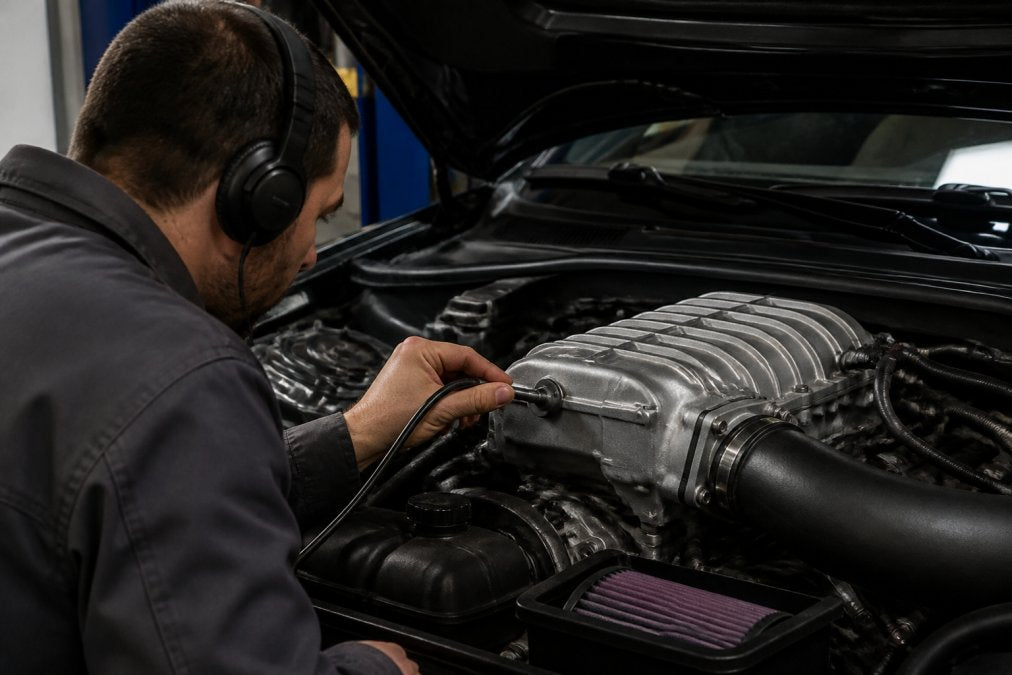
Boost pressure monitoring is your early warning system. If boost drops unexpectedly, something's wrong, a vacuum leak, worn belt, or internal supercharger wear. Catch it early and you replace a belt or seal.
Belt tension and condition. Check belt condition regularly and replace it every 50,000 miles or per manufacturer recommendation. A worn belt slips, reducing boost and generating heat.
Supercharger Installation Cost for Ram 1500
Installation cost breaks into two categories: the kit itself and the labor to install it.
A quality supercharger kit for a Ram 1500 ranges widely depending on the technology and manufacturer. For current pricing and available options, contact VT Superchargers directly for a quote tailored to your specific truck and goals.
Labor costs vary based on your location and the shop's experience. A shop that regularly installs superchargers will complete the work in 12-16 hours. At typical shop rates of $100-150 per hour, you're looking at $1,200-3,000 in labor alone.
Hidden costs matter more: ECU tuning ($400-800), fuel system upgrades if needed ($300-1,000), transmission cooler installation ($400-600), and any supporting modifications your truck requires.
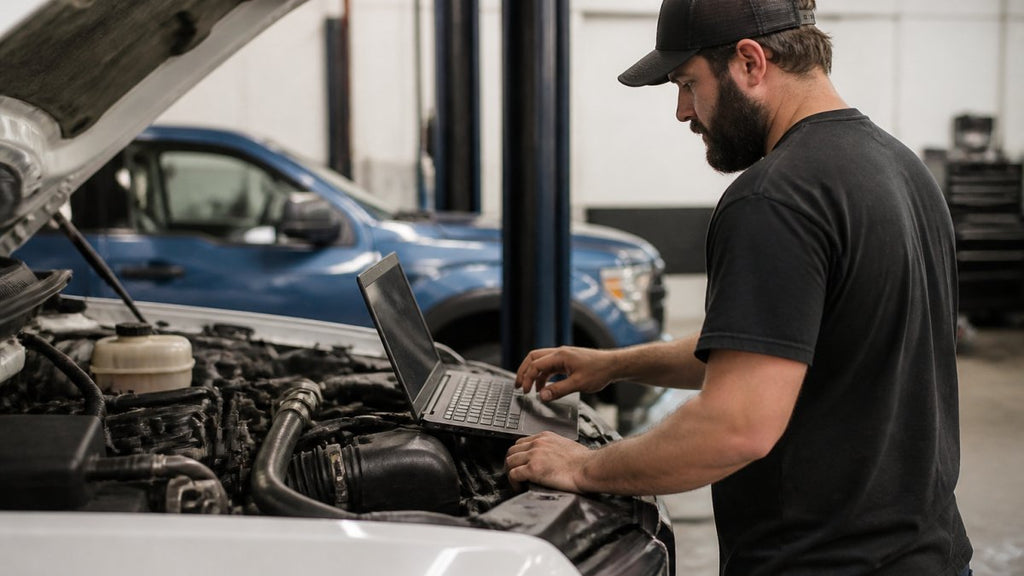
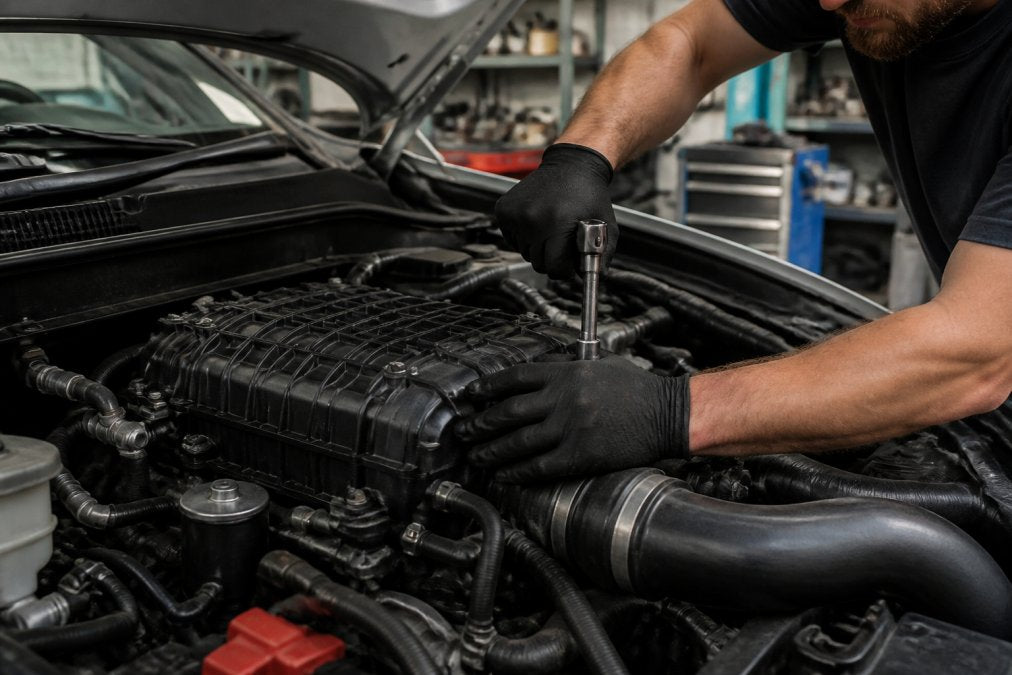
Many owners choose to install the supercharger themselves if they have mechanical experience and proper tools. The installation is straightforward bolt-on work. The challenge is tuning afterward, which typically requires professional help.
Pro Tip
Budget for the complete job, not just the kit. A $4,000 supercharger kit becomes a $7,000-9,000 project once you factor in installation, tuning, and supporting modifications.
Real-World Impact: Fuel Economy and Long-Term Reliability
A supercharger will reduce fuel economy under normal driving conditions. A supercharger consumes engine power to operate, and it tempts you to use the power you've added. The combination typically results in 10-15% worse fuel economy (6wresearch.com). If your Ram 1500 normally gets 18 mpg highway, expect 15-16 mpg with a supercharger.
However, owners who install superchargers for low-end torque response and drivability, not constant wide-open throttle, often see smaller fuel economy penalties. A truck with a supercharger that can hold gears while towing actually uses less fuel than a stock truck that hunts gears constantly.
Long-term reliability depends on proper maintenance, conservative tuning, and quality supporting modifications. Some supercharger manufacturers have documented customer vehicles exceeding 200,000 miles of supercharged driving on stock internals. For example, Charles's F-150 with a ProCharger P-1SC-1 system has maintained 200,000+ miles of consistent performance. Tina's 1998 Pontiac Firebird Formula, supercharged since 2002, continues producing 13 psi of boost after more than two decades.
The common thread: proper maintenance from day one. These vehicles weren't babied, they were driven hard and used for their intended purpose. The difference between a supercharger that lasts 50,000 miles and one that lasts 250,000 miles is commitment to the fundamentals.
VT Superchargers backs every installation with a 24-month warranty, reflecting our confidence in kit quality and proper installation practices.
Choosing the right supercharger for a Dodge Ram 1500 means matching the technology to your truck's purpose and your willingness to support it with proper tuning and maintenance. Whether you're chasing low-end torque for towing, seeking responsive daily-driver performance, or building a capable off-road platform, a well-chosen supercharger system delivers measurable, reliable power gains. VT Superchargers offers bolt-on kits engineered for precise OEM-style fitment across multiple vehicle platforms, backed by financing options and a 24-month warranty. Get started with VT Superchargers and transform your Ram 1500's performance today.
| Supercharger Type | Best For | Boost Delivery | Fuel Economy Impact | Maintenance Complexity |
|---|---|---|---|---|
| Centrifugal | High-RPM power, fuel economy focus | Gradual above 4,000 RPM | Minimal | Low |
| Positive Displacement | Instant torque, towing, daily driving | Immediate at any RPM | Moderate (10-15%) | Moderate |
=== FAQ ANSWERS (audit these too, same rules) ===
[1] Q: How much horsepower does a supercharger add to a 5.7L HEMI Ram 1500? A: A quality supercharger can increase horsepower by 25-45% without increasing engine displacement. For a 5.7L HEMI producing 395 stock horsepower, this typically translates to significant additional horsepower depending on the specific kit, boost pressure, and tuning. Real-world examples show systems delivering substantial rear-wheel horsepower gains on 93-octane fuel, with considerable torque improvements.
[2] Q: What's the difference between centrifugal and positive displacement superchargers for a Ram 1500? A: Centrifugal superchargers use a spinning impeller to compress air, delivering power at higher RPMs and offering smoother throttle response. Positive displacement (twin-screw) superchargers force air directly into the engine, providing instant low-end torque. Centrifugal units dominated globally with 51.7% market share in 2023, but twin-screw is the fastest-growing segment at 5.9% CAGR.
[3] Q: Will a supercharger void my Ram 1500's factory warranty? A: Factory warranties typically don't cover forced induction modifications, but quality aftermarket kits from reputable manufacturers include their own warranty protection. VT Superchargers provides a 24-month warranty on bolt-on kits, covering defects in materials and workmanship. To protect your investment, ensure your kit is installed correctly, maintain regular service intervals, and avoid pushing stock internal components beyond their limits. Some modifications may require internal engine reinforcement to maintain reliability.
[4] Q: Can I install a supercharger myself, or do I need a professional shop? A: Bolt-on supercharger kits are designed for DIY installation if you have mechanical experience and proper tools. Most kits include detailed instructions and can be completed in 8-12 hours. However, professional installation ensures proper fitment, correct tuning, and warranty coverage. If you're unfamiliar with engine work, transmission cooling modifications, or ECU tuning, professional installation is recommended to avoid costly mistakes.
Frequently Asked Questions
How much horsepower does a supercharger add to a 5.7L HEMI Ram 1500?
A quality supercharger can increase horsepower by 25-45% without increasing engine displacement. For a 5.7L HEMI producing 395 stock horsepower, this typically translates to significant additional horsepower depending on the specific kit, boost pressure, and tuning. Real-world examples show systems delivering substantial rear-wheel horsepower gains on 93-octane fuel, with considerable torque improvements.
What's the difference between centrifugal and positive displacement superchargers for a Ram 1500?
Centrifugal superchargers use a spinning impeller to compress air, delivering power at higher RPMs and offering smoother throttle response. Positive displacement (twin-screw) superchargers force air directly into the engine, providing instant low-end torque. Centrifugal units dominated globally with 51.7% market share in 2023, but twin-screw is the fastest-growing segment at 5.9% CAGR.
Will a supercharger void my Ram 1500's factory warranty?
Factory warranties typically don't cover forced induction modifications, but quality aftermarket kits from reputable manufacturers include their own warranty protection. VT Superchargers provides a 24-month warranty on bolt-on kits, covering defects in materials and workmanship. To protect your investment, ensure your kit is installed correctly, maintain regular service intervals, and avoid pushing stock internal components beyond their limits. Some modifications may require internal engine reinforcement to maintain reliability.
Can I install a supercharger myself, or do I need a professional shop?
Bolt-on supercharger kits are designed for DIY installation if you have mechanical experience and proper tools. Most kits include detailed instructions and can be completed in 8-12 hours. However, professional installation ensures proper fitment, correct tuning, and warranty coverage. If you're unfamiliar with engine work, transmission cooling modifications, or ECU tuning, professional installation is recommended to avoid costly mistakes.
This article was written using GrandRanker
Related post

RECENT POSTS