How to Increase Horsepower Without Engine Mods
Table of Contents
- Understanding How to Increase Horsepower Without Major Engine Work
- Cold Air Intake Upgrades and Their Real Impact
- Best Performance Air Intake Systems for Your Vehicle
- How to Reduce Vehicle Weight for Performance Gains
- Benefits of Cat-Back Exhaust Systems and Backpressure Management
- Is a Performance Chip Tune Worth It for Your Build
- Forced Induction as a Complete Solution: When Bolt-On Upgrades Aren't Enough
- Warranty, Insurance, and Real-World Reliability Concerns
Last Updated: August 12, 2026
Understanding How to Increase Horsepower Without Major Engine Work
Stock engines leave enormous amounts of performance on the table due to air restriction, exhaust backpressure, weight penalties, and inefficient engine management. You don't need to touch the internals to unlock real power gains, the path to increase horsepower without engine mods is more straightforward than most guides suggest.
At VT Superchargers, we've worked with thousands of owners seeking real power without the complexity of internal modifications. The best approach depends on your specific vehicle, budget, and power goals. Some owners achieve their targets with bolt-on upgrades; others discover that forced induction is necessary.
This guide walks you through every legitimate path to increase horsepower without engine mods, the real-world results you can expect, and when to consider more comprehensive solutions.
Cold Air Intake Upgrades and Their Real Impact
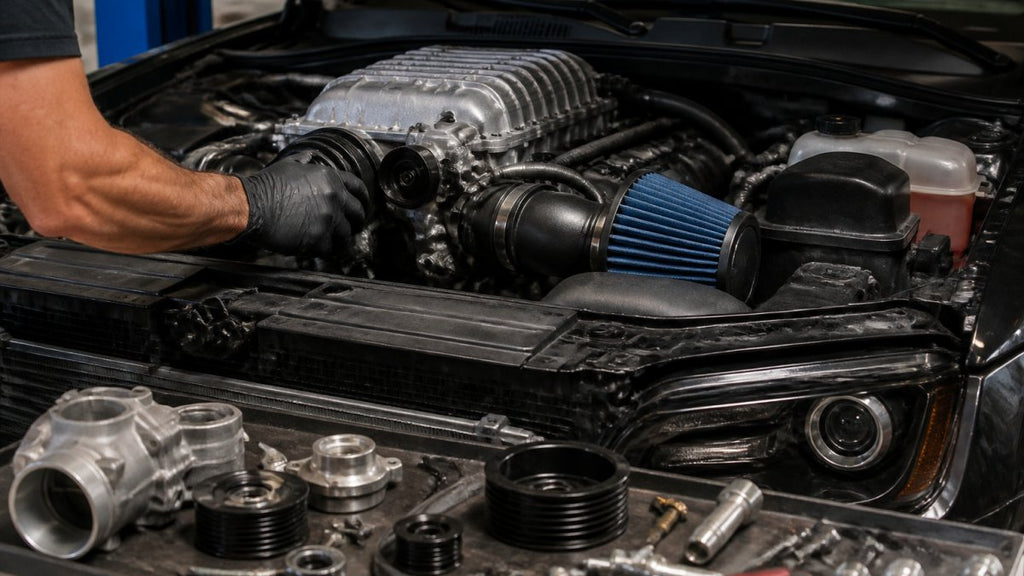
A cold air intake replaces the restrictive factory air box with a system that pulls cooler, denser air directly into the engine. Cooler air contains more oxygen molecules per unit volume, enabling better combustion and more power. Real-world gains typically range from 5-15 horsepower on naturally aspirated engines, with improvements in throttle response often mattering more than raw horsepower numbers.
The key variable is volumetric efficiency. Poorly designed intakes can reduce airflow at high RPMs, creating bottlenecks that hurt performance. The best systems use larger diameter tubing, smooth bends, and intake manifold designs matched to your engine's breathing characteristics. Quality cold air intakes from reputable manufacturers significantly outperform cheap knockoffs.
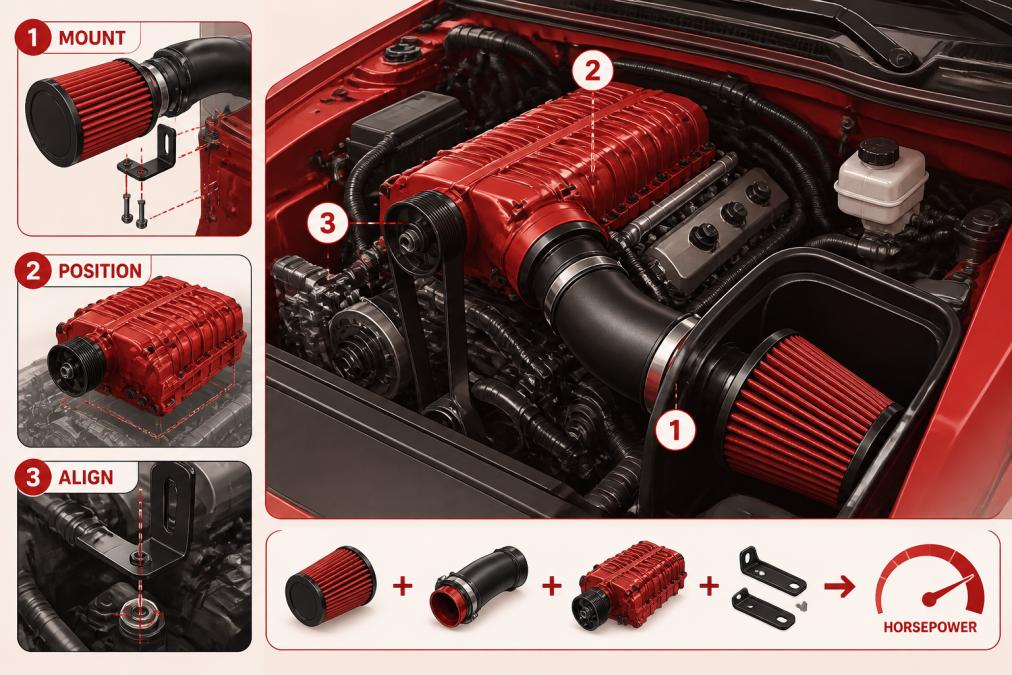
Installation is straightforward for most vehicles, typically 30 minutes to an hour with basic hand tools. A quality cold air intake won't void your factory warranty in most cases, since you're not modifying the engine itself. Stick with systems designed for your specific vehicle rather than universal kits requiring fabrication.
Best Performance Air Intake Systems for Your Vehicle
When shopping for performance air intake systems, prioritize fitment precision, airflow design, and brand reliability. Vehicle-specific systems engineered for your engine's exact specifications deliver better results than universal kits.
For Toyota trucks and SUVs, Tundra, Sequoia, 4Runner, and Tacoma, quality intake systems improve horsepower and high-RPM breathing. The 5.7L and 4.0L naturally aspirated engines respond well because they're hungry for air at wide-open throttle.

Jeep Pentastar V6 engines similarly benefit from dedicated intake systems. The 3.6L engine in Wranglers and Cherokees produces solid stock power, but a cold air intake removes a primary restriction.
Match the intake system to your vehicle's engine management strategy. If you're planning ECU tuning or forced induction later, choose an intake that scales well with those modifications. Installation difficulty varies by vehicle, some bolt directly to the factory air box location, while others require custom brackets. Factor installation time into your total cost comparison.
How to Reduce Vehicle Weight for Performance Gains
Weight reduction is one of the most underrated paths to increase horsepower without engine mods. A lighter vehicle accelerates faster, handles better, and puts less strain on the drivetrain. Reducing weight by 200 pounds effectively adds horsepower without touching the engine, a truck dropping from 5,400 to 5,200 pounds improves its power-to-weight ratio meaningfully.
The challenge is identifying where to cut weight without compromising reliability. Switching to lighter wheels and tires saves 100-150 pounds while improving handling and fuel economy. Replacing the factory battery with a lightweight lithium unit saves 30-40 pounds. Removing sound deadening material saves weight but increases cabin noise.
For off-road vehicles and overlanders, weight reduction is especially critical. Larger tires and suspension upgrades add significant mass, directly impacting acceleration and hill-climbing ability. The most practical approach targets components you're replacing anyway, switch to lighter forged aluminum wheels when your factory wheels wear out, consider a lithium battery at replacement time. These incremental changes add up to 200-300 pounds of weight reduction without requiring a complete rebuild.
Benefits of Cat-Back Exhaust Systems and Backpressure Management
Cat-back exhaust systems deliver tangible performance improvements. A quality cat-back can deliver 15-25 horsepower on naturally aspirated engines by reducing backpressure and improving exhaust scavenging, significantly more than a cold air intake alone.
The factory exhaust system prioritizes emissions compliance and noise reduction over performance. Small diameter piping, restrictive catalytic converters, and sound-absorbing mufflers create backpressure that the engine must work against. A performance cat-back replaces the restrictive muffler and tailpipe with larger diameter tubing and a high-flow muffler. The catalytic converter remains in place, maintaining emissions compliance and warranty protection, while a high-flow cat reduces restriction. The result is lower backpressure, better exhaust scavenging, and measurable horsepower gains.
The secondary benefit is throttle response. Combined with a cold air intake, the improvement in overall responsiveness becomes noticeable in daily driving.
Installation requires basic hand tools and typically takes 1-2 hours, with most systems bolting directly to factory mounting points. Cost ranges from $300 to $800 depending on material and brand. Note that a performance exhaust will be noticeably louder at wide-open throttle, a consideration for residential daily drivers but often appealing to weekend warriors and off-road enthusiasts.
Is a Performance Chip Tune Worth It for Your Build
Performance chip tuning, or ECU remapping, delivers substantial gains: 20-40 horsepower and 30-50 pound-feet of torque on naturally aspirated engines, with larger gains on forced induction setups. The factory ECU is programmed conservatively to meet emissions standards and maximize fuel economy. A performance tune adjusts ignition timing, fuel injection timing, boost pressure, and other parameters to optimize power while maintaining reliability.
A quality tune costs $400-$800 depending on your vehicle and whether you choose mail-in service or custom dyno tuning. The risk factors are real, a poorly executed tune can cause detonation or reduce engine longevity. A quality tune from a reputable tuner who knows your engine platform and has tested their tune on dozens of similar vehicles minimizes those risks.
For daily drivers, a conservative tune adding 15-20 horsepower with minimal risk is often ideal. For performance enthusiasts building track cars or off-road rigs, a more aggressive tune prioritizing power over longevity might make sense.
Most performance tunes void your factory powertrain warranty. If your vehicle is still under warranty and you're concerned about reliability, a tune might not be the right choice yet. If your warranty is expiring or you own the vehicle outright, the decision becomes simpler.
Forced Induction as a Complete Solution: When Bolt-On Upgrades Aren't Enough
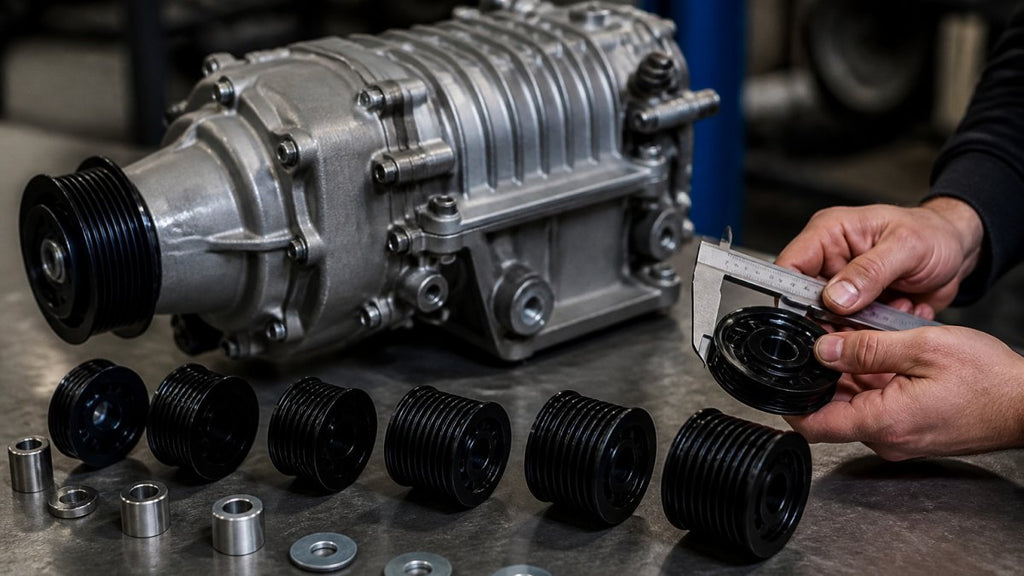
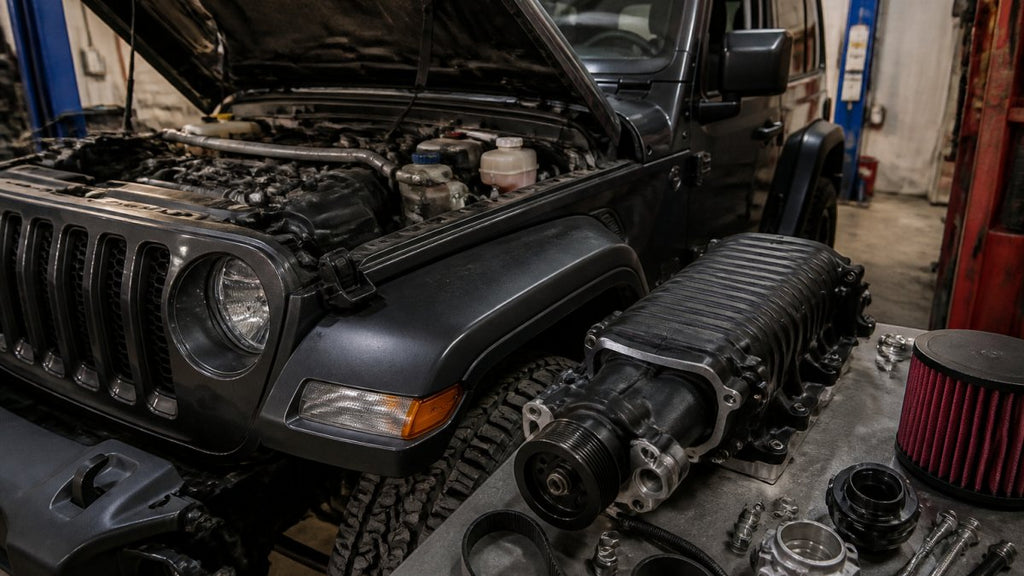
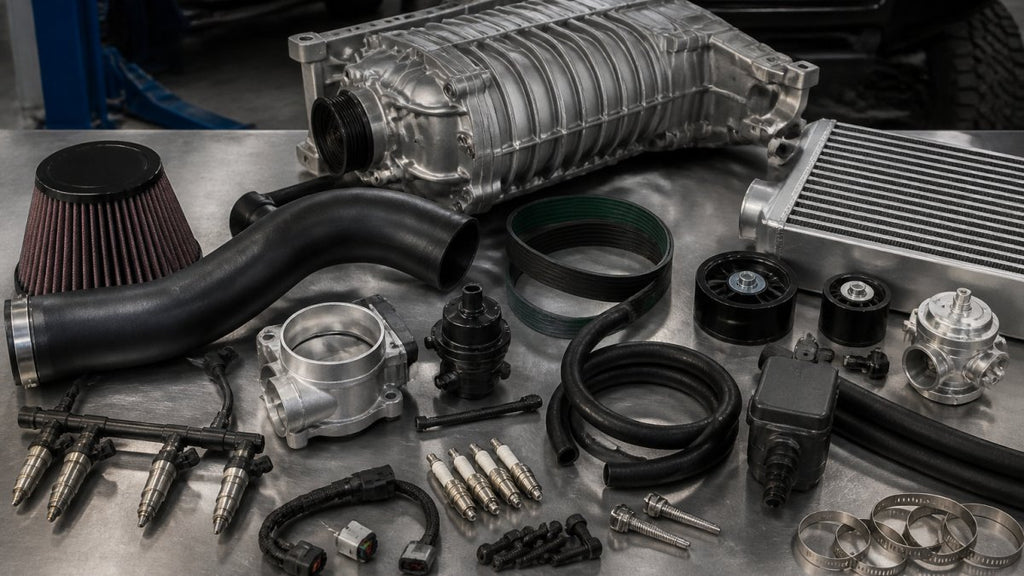
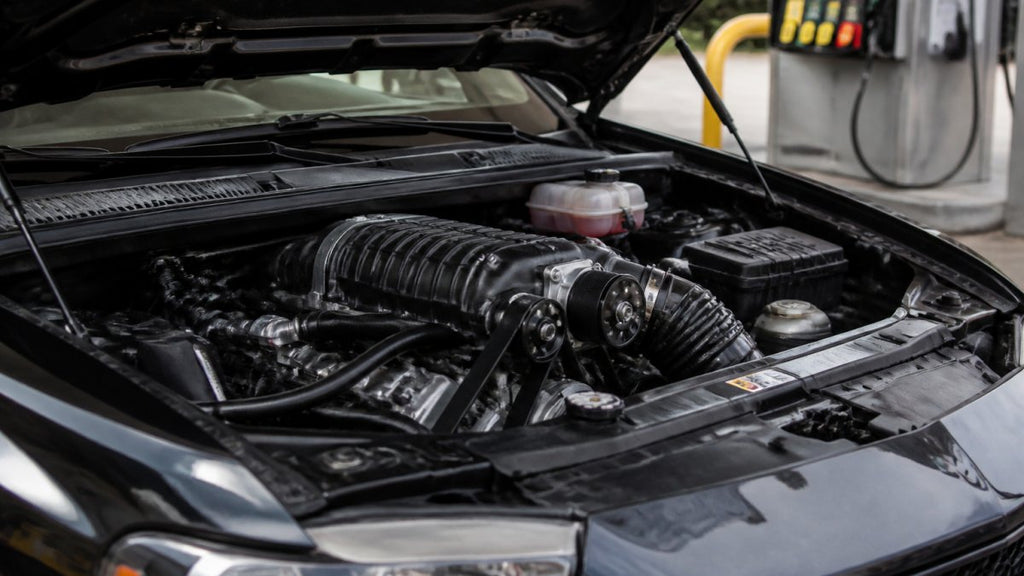
If upgraded intake, exhaust, and tune aren't delivering the power gains you want, forced induction is the answer. A supercharger or turbocharger forces more air into the engine, multiplying power output in ways bolt-on upgrades cannot match.
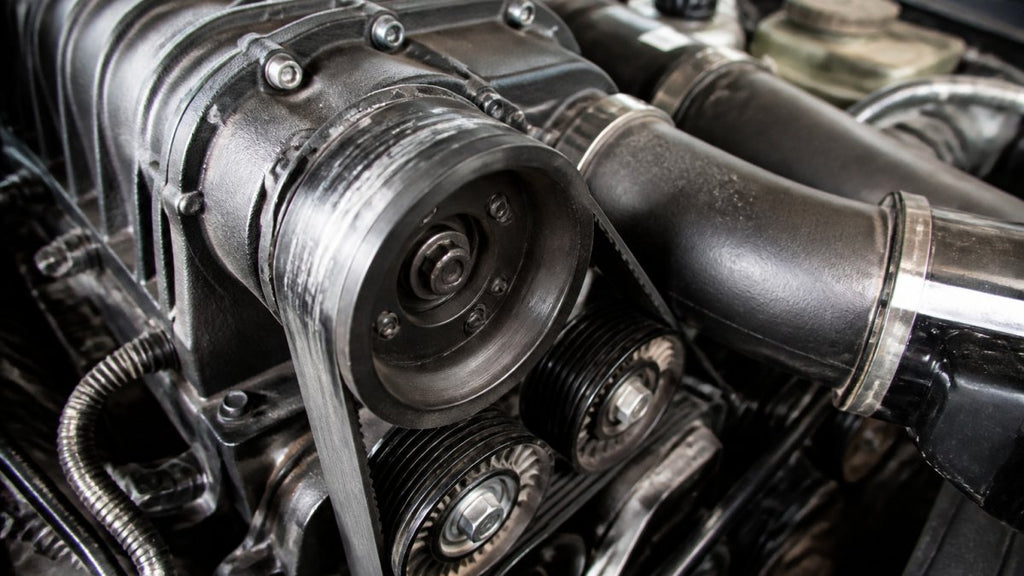
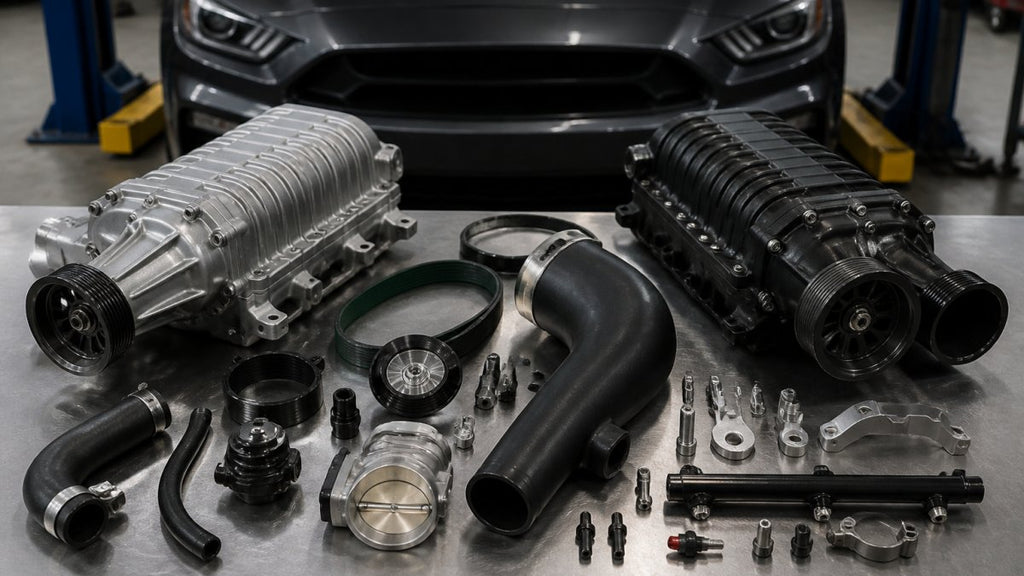
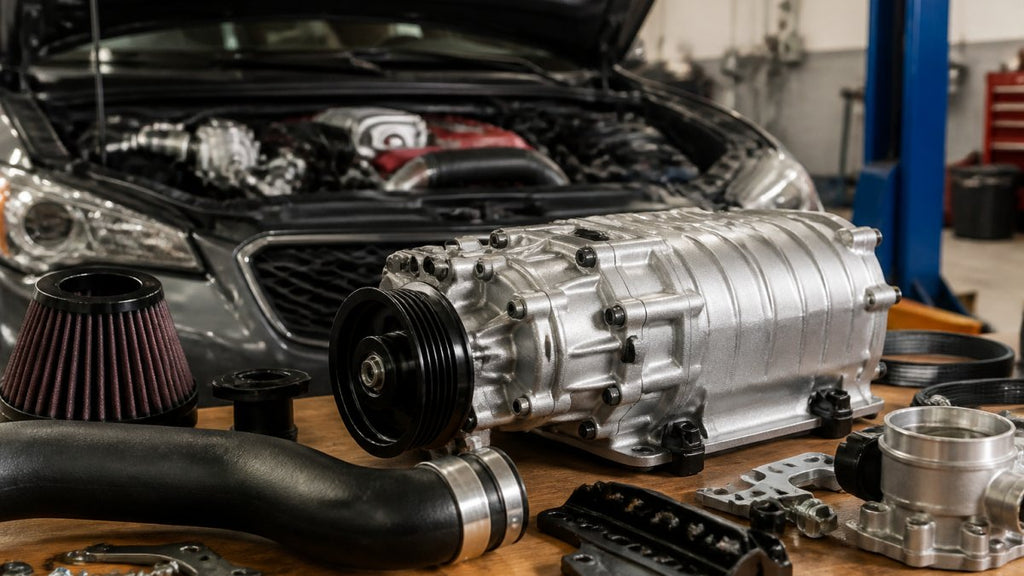
Superchargers are mechanically driven by a belt connected to the crankshaft, delivering boost immediately at any RPM for responsive, linear power gains across the entire rev range. Turbochargers are driven by exhaust gases and typically have a slight delay before boost builds, but they're more efficient and can deliver larger power gains.
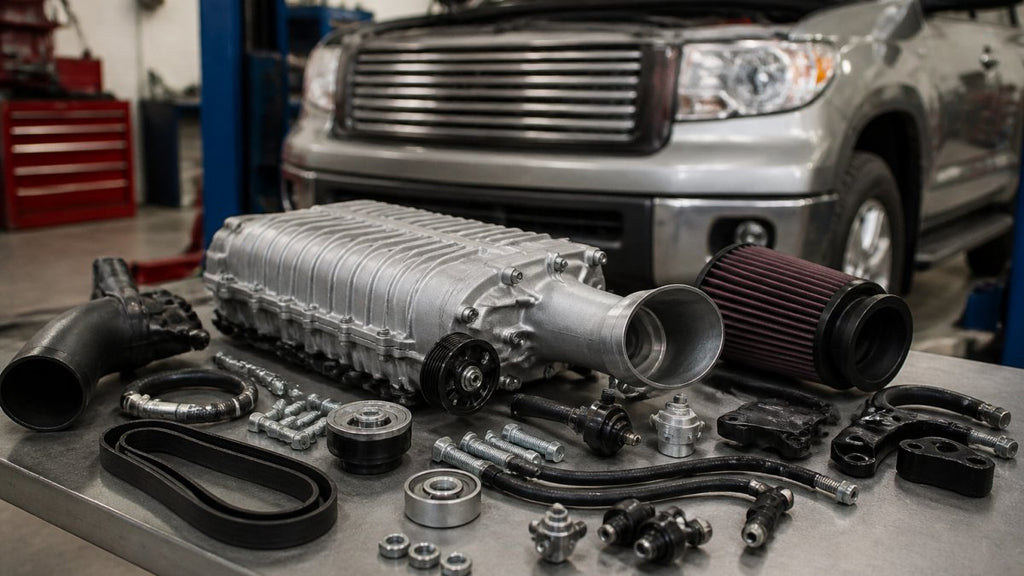
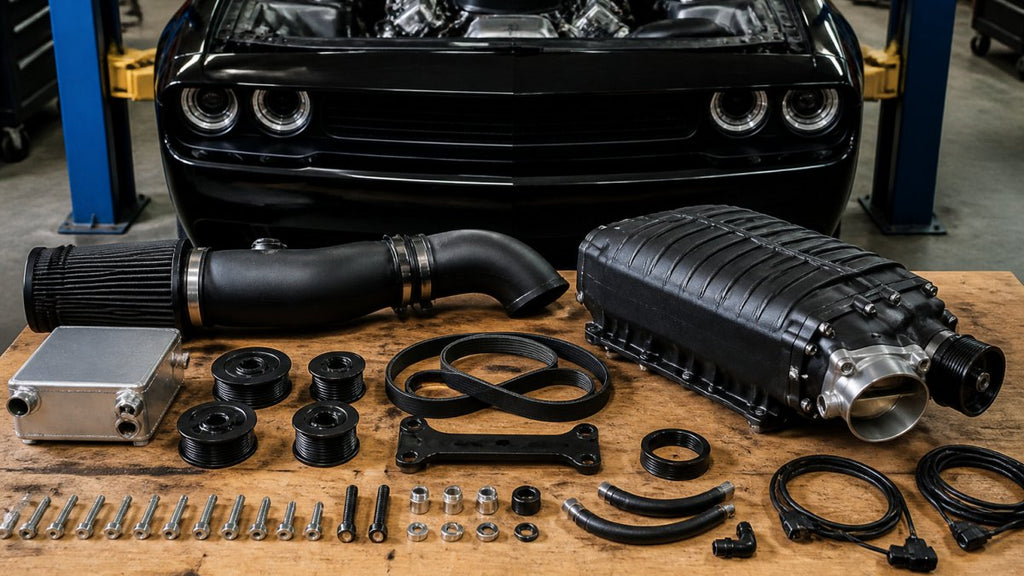
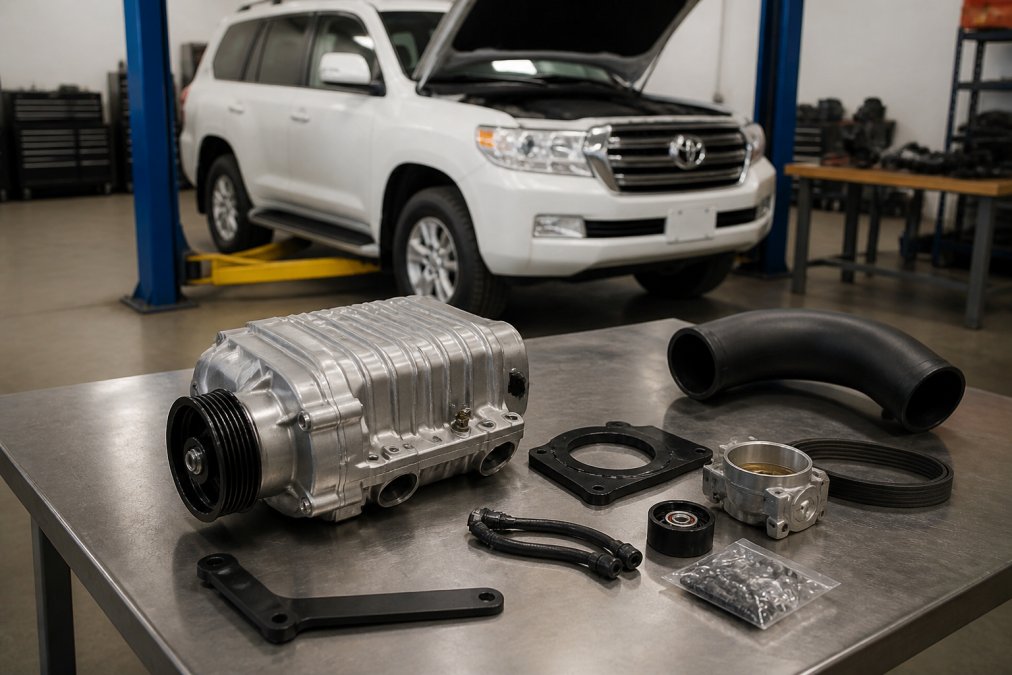
For most applications, a bolt-on supercharger kit is the most practical forced induction solution. A quality kit from VT Superchargers for Toyota and Jeep platforms delivers 40-60% more horsepower than stock. A Tundra with 381 horsepower stock becomes 500+ horsepower with a supercharger. A Jeep Pentastar V6 with 285 horsepower jumps to 400+ horsepower.

The real-world impact is transformative. A truck that hunts gears constantly with 35-inch tires suddenly has the torque to cruise smoothly. An off-road vehicle gains low-end power for rock crawling and hill climbing. A daily driver becomes genuinely fun to drive.
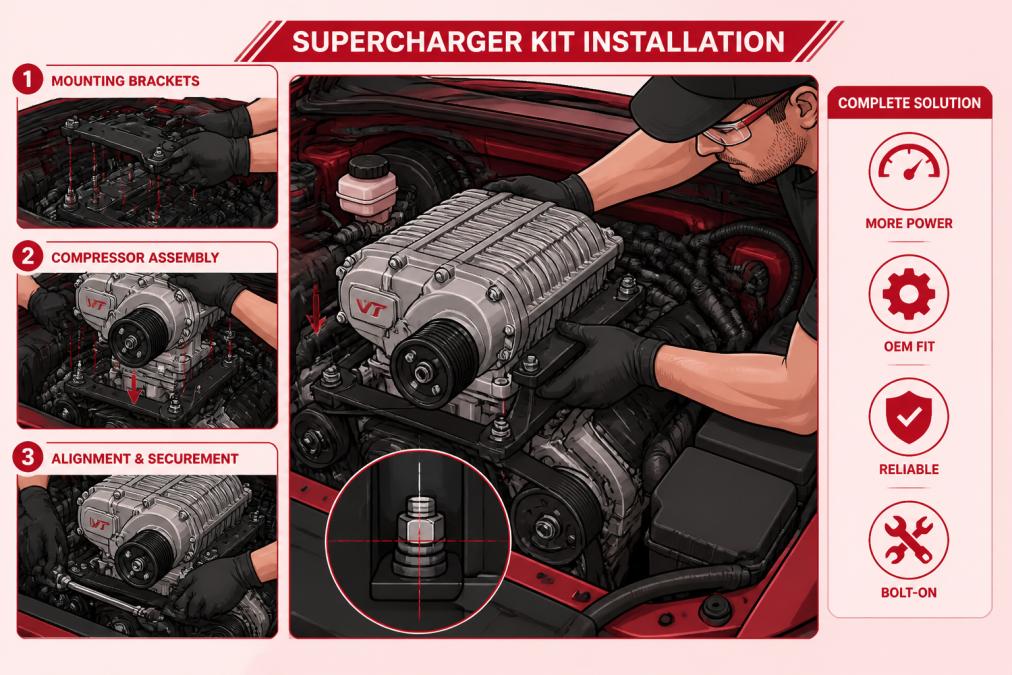
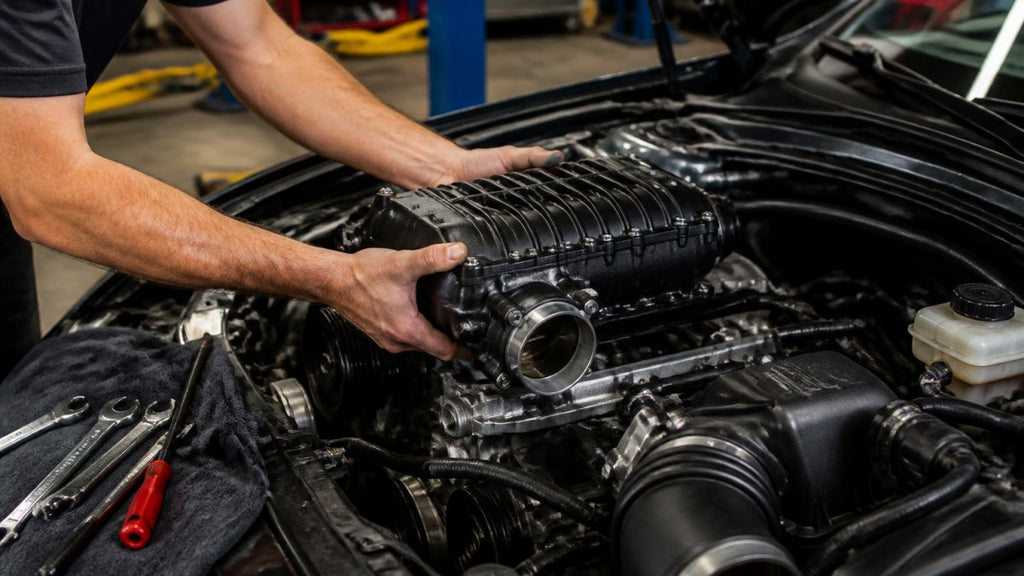
Modern supercharger kits are engineered for OEM-style fitment. VT Superchargers kits mount using factory engine bay attachment points with no cutting or welding required. Most owners can install a kit in a weekend with basic mechanical knowledge, though professional installation is recommended.
A complete supercharger kit ranges from $5,500 to $6,950 depending on engine platform. Installation labor adds another $1,500-$2,500 if using a shop. A quality supercharger kit with a 24-month warranty provides peace of mind and recourse if something fails.
Warranty, Insurance, and Real-World Reliability Concerns
Modifying your vehicle changes the insurance and warranty landscape in important ways. Cold air intakes and cat-back exhausts typically won't void your warranty since you're not modifying the engine itself, though manufacturers can deny coverage if a problem traces back to your modifications.
Performance tuning is riskier. Most manufacturers explicitly void powertrain warranty coverage if they detect a tune. The ECU stores a record of modifications, and dealer technicians check this during service.
Forced induction is the most significant warranty concern. Adding a supercharger or turbocharger increases cylinder pressure and stress on internal components. The factory warranty almost certainly won't cover the engine, but a quality aftermarket warranty like the 24-month coverage on VT Superchargers kits provides equivalent protection for the supercharger system itself.
Some insurers increase premiums for significant performance modifications. Contact your insurance agent before making major modifications and ask specifically about performance upgrades.
Real-world reliability depends entirely on modification quality and driving habits. A conservative tune on a stock engine with quality bolt-on upgrades will likely be more reliable than stock. A supercharger from a reputable manufacturer with proper installation will be reliable, though the engine will experience higher stress and reduced lifespan compared to stock.
The path to increase horsepower without engine mods is real and accessible. A cold air intake, quality exhaust, and conservative tune deliver 40-50 horsepower of gains for under $1,500, meaningful improvement for daily driving and weekend fun.
For serious power, if you've got 35-inch tires that your truck struggles to move or want genuine performance that transforms how your vehicle drives, forced induction is the answer. A supercharger kit from VT Superchargers delivers 40-60% more horsepower with engineered OEM-style fitment, a 24-month warranty, and financing options that make the investment manageable. Whether you're driving a Toyota Tundra, 4Runner, Tacoma, Sequoia, or Jeep Pentastar V6, there's a kit engineered specifically for your platform. Register to explore options for your vehicle and talk with our team about what real power looks like for your build.

Frequently Asked Questions
What is the easiest way to increase horsepower without engine modifications?
The simplest approaches are upgrading your air intake, installing a cat-back exhaust system, and tuning your engine management. These bolt-on modifications require minimal mechanical skill and deliver measurable gains. A quality cold air intake alone adds 5-15 horsepower on most vehicles. Combined with exhaust work and a performance tune, you can realistically expect 25-50 additional horsepower depending on your engine. For maximum gains without internal engine work, forced induction through a supercharger kit delivers 40-60% more power, our Toyota Tundra 5.7L kit adds substantial horsepower while maintaining reliability.
Can you feel a 20 horsepower gain in a daily driver?
Yes, most drivers notice a 20 horsepower increase, especially in throttle response and acceleration feel. You'll sense sharper throttle response off the line and smoother power delivery in mid-range acceleration. The sensation is more noticeable in lighter vehicles or when towing. Weight reduction amplifies this effect, removing 200 pounds while gaining 20 horsepower creates a more dramatic improvement in power-to-weight ratio than the horsepower gain alone suggests. Combining weight reduction with air intake and exhaust upgrades makes the overall improvement very apparent during daily driving.
How does weight reduction improve my vehicle's power-to-weight ratio?
Power-to-weight ratio determines acceleration and overall performance more directly than horsepower alone. Removing 100 pounds from a 4,000-pound vehicle improves your ratio by 2.5%, which feels equivalent to gaining 50+ horsepower in terms of acceleration. Practical weight reduction targets include removing unnecessary interior components, upgrading to lighter wheels, installing a carbon fiber hood, and using aluminum brake components. These modifications cost $500-$2,000 total and often deliver better performance improvement than spending the same amount on bolt-on power upgrades. The best approach combines modest weight reduction with air intake and exhaust work.
Will upgrading my air intake, exhaust, and tune void my factory warranty?
Factory warranties typically remain intact for unrelated systems when you install aftermarket bolt-on parts. However, any engine damage or failure directly linked to your modifications may not be covered. The safest approach is working with an approved installer who understands warranty implications for your specific vehicle. Many manufacturers, including those VT Superchargers supports, honor warranties on bolt-on kits when installed by certified shops. Our 24-month warranty covers manufacturing defects and workmanship. Before installing any modifications, contact your vehicle's manufacturer or dealer to confirm coverage on your specific model year.
How much horsepower can I realistically gain without tearing down my engine?
Realistic gains from bolt-on modifications range from 30-80 horsepower depending on your starting point and combination of upgrades. A cold air intake adds 5-15 hp, a cat-back exhaust adds 10-20 hp, and a performance tune adds 15-30 hp. Combining all three typically yields 35-60 additional horsepower. For vehicles with larger displacement engines or those running on premium fuel, gains stack higher. Forced induction delivers the largest gains, our supercharger kits provide 40-60% more power without internal modifications. Dyno testing reveals your actual gains; marketing claims often overstate results by 20-30%.
What's the difference between a supercharger and other forced induction options?
Superchargers, turbochargers, and nitrous systems each deliver forced induction differently. Superchargers use an engine-driven belt to compress air continuously, delivering instant throttle response with no lag, ideal for daily drivers and off-road vehicles needing low-end torque. Turbochargers use exhaust gases to spin a turbine, offering high peak power but with turbo lag and complexity. Nitrous injection provides temporary power boosts but requires ongoing system maintenance and refills. For bolt-on reliability without internal engine modifications, superchargers are the most straightforward choice. VT Superchargers kits are engineered for OEM-style fitment and include a 24-month warranty, making them reliable for daily drivers and off-road use.
How do I know if a performance tune is worth the cost for my vehicle?
A performance tune is worth the investment if your vehicle has a modern engine management system and you're combining it with other bolt-on upgrades. Standalone tunes cost $300-$800 and typically add 15-30 horsepower while improving throttle response and fuel efficiency. The value increases significantly when paired with cold air intake and exhaust upgrades, the tune optimizes air-fuel ratio and ignition timing to match your new airflow. For vehicles with larger displacement engines or those already modified, tuning delivers higher returns. Dyno testing before and after tuning confirms actual gains and justifies the expense.
Will these modifications affect my emissions compliance or fuel economy?
Quality bolt-on modifications and performance tuning can improve fuel economy under normal driving conditions by optimizing combustion efficiency and air-fuel ratio. However, aggressive driving negates these gains. Emissions compliance depends on your modifications and local regulations. Cold air intakes and cat-back exhaust systems maintain emissions compliance when properly installed. Performance tunes should be designed to work within your vehicle's emissions standards, reputable tuners ensure this. Forced induction systems like superchargers add complexity to emissions management; VT Superchargers kits are engineered to maintain reliability and compliance across supported vehicle platforms.
This article was written using GrandRanker
Related post
09
Oct
RECENT POSTS