Call, Text or WhatsApp Us

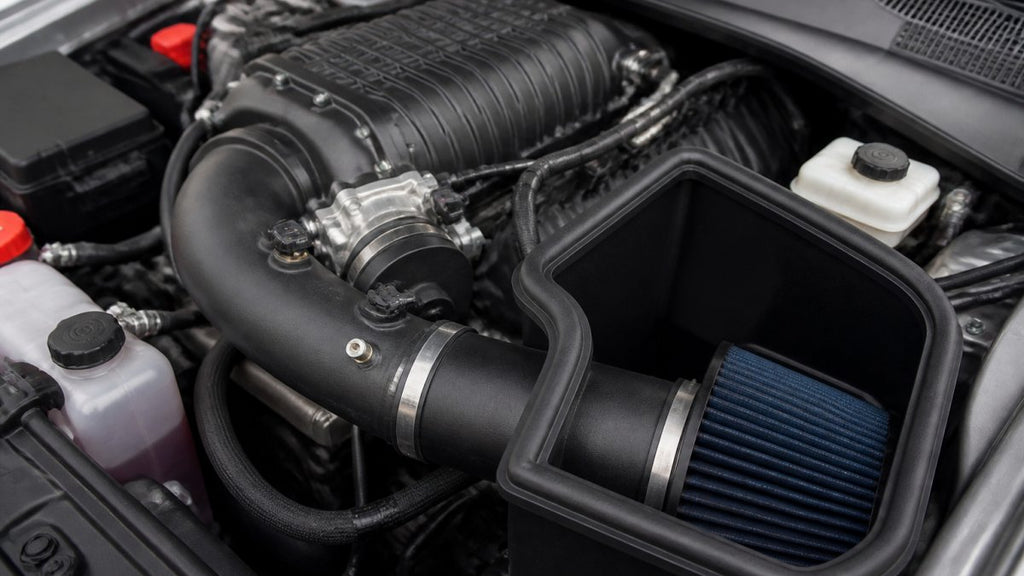
Table of Contents
- What Intake Air Temperature Means and Why It Moves Horsepower
- How Much Horsepower You Lose Per Degree of Intake Air Temperature
- IAT Timing Retard: How the ECU Pulls Power When Air Gets Hot
- The Ideal Intake Air Temperature Range for Tuned Engines
- Cold Air Intake Horsepower Gains: What the Mod Actually Delivers
- How to Lower Intake Air Temperature on a Daily Driver or Off-Roader
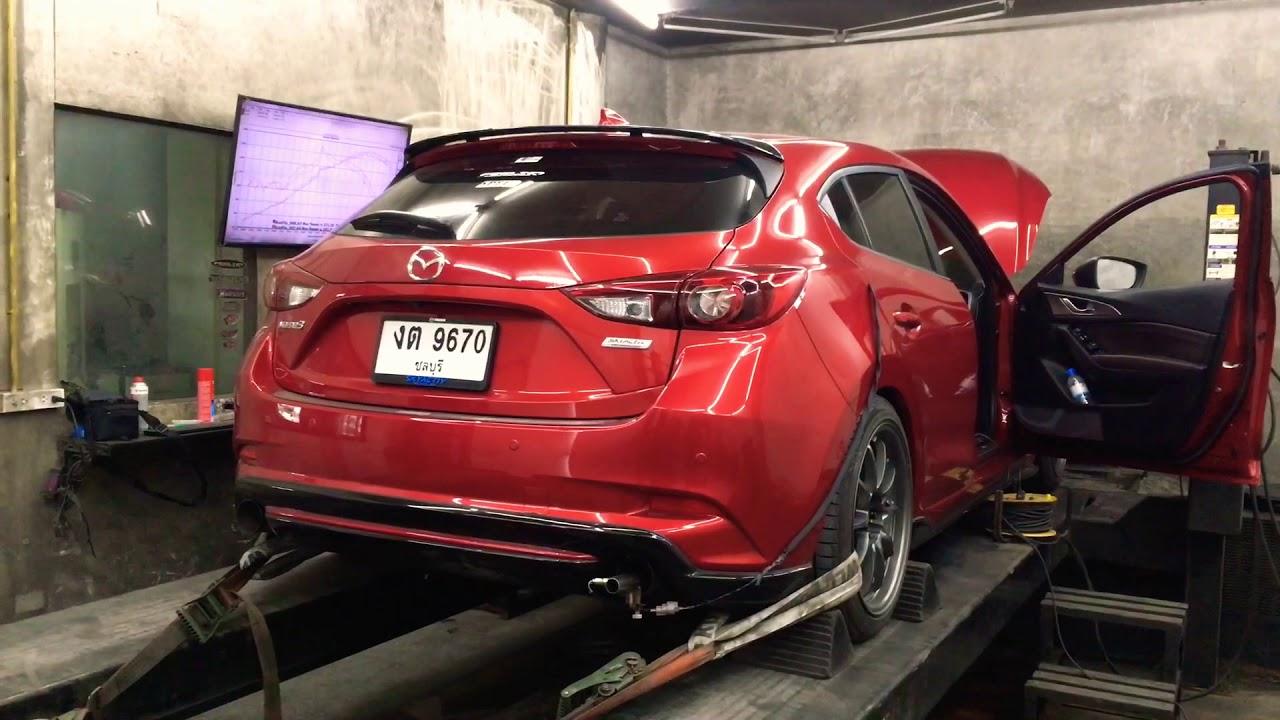
- Measuring IAT-Related Power Changes With a Data Log and Dyno
- Conclusion
- Frequently Asked Questions
Last Updated: October 21, 2026
What Intake Air Temperature Means and Why It Moves Horsepower
Intake air temperature is the temperature of the air entering your engine’s intake system, measured by the IAT sensor. That reading matters because hot air is thin air, and thin air carries less oxygen for combustion.
Here is the core idea in one line: your engine burns oxygen, not air volume. Cool air packs more oxygen into the same space, so each intake stroke delivers a bigger charge to the cylinder.
Air Density, Oxygen Content, and the Air-Fuel Mixture
Air density is the mass of air in a given volume. Cold air is denser than hot air at the same pressure.
That density changes the air-fuel mixture. The ECU meters fuel against the oxygen it expects.
- Cool, dense air: more oxygen, stronger combustion
- Hot, thin air: less oxygen, weaker combustion
- Same throttle position, different result
This is why NASA’s explanation of air density and temperature treats density as the starting point for any gas-flow calculation. Your intake system is a gas-flow problem.
How Much Horsepower You Lose Per Degree of Intake Air Temperature
There is no universal horsepower-per-degree constant, and any source that quotes one without qualifiers is guessing. But you can build a defensible estimate for your own engine using the physics of air density plus a few rules of thumb that most tuners and engine builders rely on.
The starting point is the ideal gas law: density is inversely proportional to absolute temperature at constant pressure. That means a 10°F rise from 70°F to 80°F (530°R to 540°R) reduces air density by about 1.9 percent, not 10 percent.
A Qualified Estimate You Can Actually Use
For a naturally aspirated engine running at wide-open throttle, a common working estimate is that a 10°F increase in manifold intake air temperature costs roughly 1 to 2 percent of peak horsepower, assuming the ECU does not pull timing and fuel is corrected for density.
For forced induction, the loss per degree is larger because the compressor multiplies the temperature problem. A turbo or supercharger heats the charge as it compresses it, and the intercooler only removes part of that heat.
These are estimates, not guarantees. Use them to size a problem, then verify with a data log and a dyno.
Why the Curve Is Not Linear
Three mechanisms bend the curve:
- Density change per degree shrinks as temperature rises. The same 10°F delta removes less mass at 120°F than at 60°F.
- ECU compensation kicks in at thresholds. Many calibrations add fuel and pull timing once IAT crosses a calibrated value, so the power loss can step down rather than slope smoothly.
- Knock margin disappears faster than density. An engine with aggressive timing may lose more power from timing retard than from the density loss itself once IAT crosses the knock threshold.
A practical way to think about it:
- Naturally aspirated engines: roughly 1 to 2 percent per 10°F, gradual and mostly density-driven
- Turbocharged and supercharged engines: roughly 2 to 3 percent per 10°F, steeper because compressor heat and intercooler limits compound the density loss
- Tuned engines with aggressive timing: the biggest loss, because the ECU has less margin before it pulls timing and adds fuel
Ambient Temperature Versus Manifold IAT
Ambient temperature is the air outside the car. Manifold IAT is the air that actually reaches the cylinders. They are rarely the same, and the gap is where most of your lost power hides.
On a hot day, manifold IAT can run 20°F to 60°F above ambient after the air passes through a hot intake tube, a heat-soaked manifold, or a compressor.
Log both ambient and manifold IAT on the same drive. If the gap widens under load, your intake is picking up heat it shouldn’t, and that is a fixable problem, not a law of physics.
Use 1 to 2 percent per 10°F for naturally aspirated engines and 2 to 3 percent per 10°F for boosted engines as a planning estimate, applied to manifold IAT. Then confirm with a log and a corrected dyno pull before you spend money on hardware.
IAT Timing Retard: How the ECU Pulls Power When Air Gets Hot
IAT timing retard is the ECU’s protection strategy: when intake air gets hot, the computer retards ignition timing to prevent knock, and retarded timing means less power.
Knock, or detonation, happens when the air-fuel mixture ignites early and unevenly. Hot air makes knock more likely.
- Hot IAT reading triggers timing pull
- Timing pull reduces cylinder pressure
- Reduced pressure means less horsepower
The frustrating part is that the ECU is doing its job. It is protecting your engine.
The Ideal Intake Air Temperature Range for Tuned Engines
The ideal intake air temperature is as close to ambient as your setup allows, and stable under load. There is no magic number, but stability matters as much as the reading itself.
What we look for on a data log:
- IAT close to ambient at cruise
- A small, controlled rise under full load
- A quick recovery after a pull, not a slow climb
If IAT keeps climbing during a pull, the intake is heat soaking faster than it can shed heat. That is a hardware problem, and no tune will paper over it.
Cold Air Intake Horsepower Gains: What the Mod Actually Delivers
Cold air intake horsepower gains are real but often overstated. A cold air intake moves the filter outside the hot engine bay or shields it from heat, so the air entering the engine is cooler.
What it delivers:
- Lower IAT at cruise and light load
- A modest power gain on most engines
- Better consistency on hot days
What it does not deliver: a miracle. If the rest of the intake tract still heat soaks, or the tune is not set up for the extra airflow, you leave gains on the table.
Mazda 2.0L / 2.5L Supercharger Tuner Kit →
Buying a cold air intake and skipping the tune is a common mistake. The ECU may not take advantage of the cooler, denser charge, and you paid for hardware you are not using.
How to Lower Intake Air Temperature on a Daily Driver or Off-Roader
Lowering intake air temperature comes down to three things: keep heat out, get heat out, and give the ECU a reason to use the cooler charge.
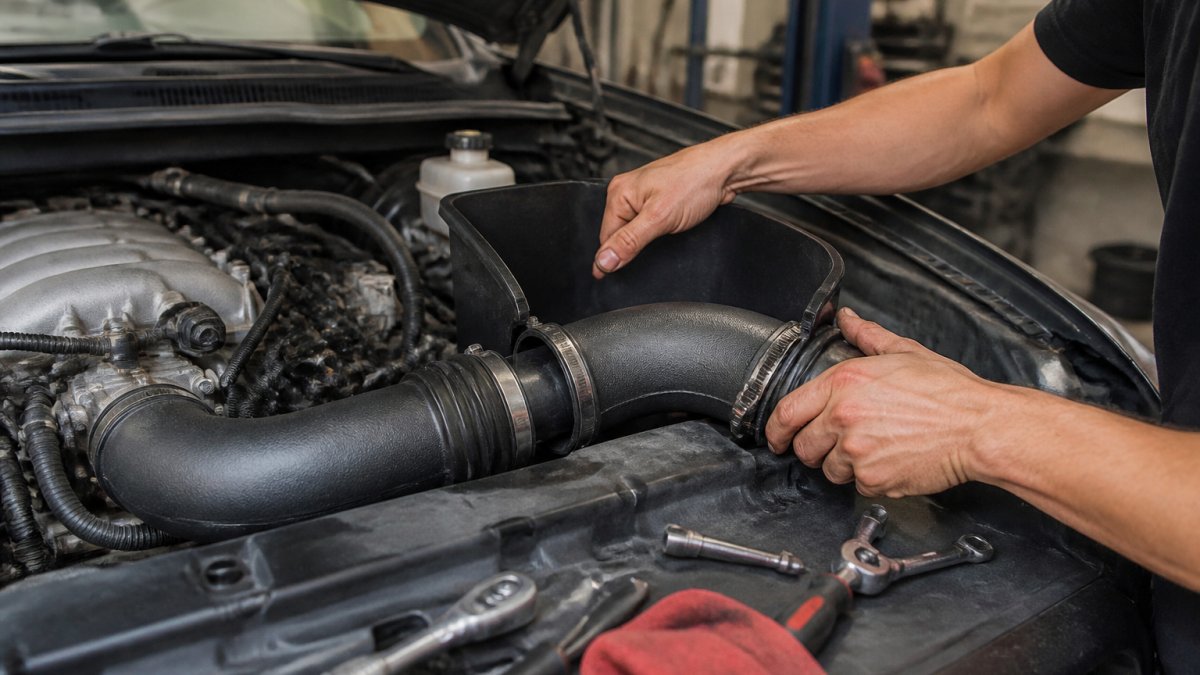
Start with the cheap wins:
- Add or repair a heat shield around the filter
- Seal the intake from engine bay air
- Check that the IAT sensor reads correctly
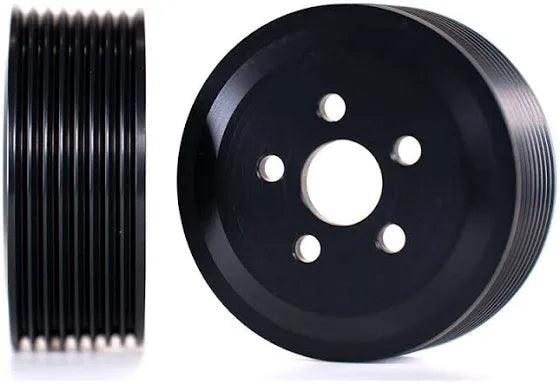
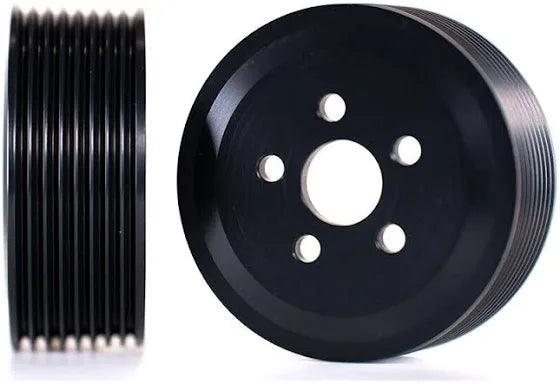
Then look at the bigger pieces. On forced induction, the intercooler does the heavy lifting. On a supercharged build, pulley choice changes boost pressure and heat together.
Heat Soak, Intercoolers, and Boost Pressure on Forced Induction
Heat soak is when intake and engine components absorb heat while the car sits or runs hard, and the air passing through picks that heat back up.
Intercoolers fight this by cooling the compressed charge before it reaches the manifold. Boost pressure matters too: more boost means more compression, and more compression means more heat unless the intercooler keeps up.
This is where a well-matched kit beats a bigger one. Our Mazda 2.0L / 2.5L Supercharger Tuner Kit pairs the hardware with tuning support, so the ECU is calibrated for the charge it actually gets. Pulley options like the 61 mm and 63 mm let you dial boost and heat together instead of chasing one at the expense of the other.
Measuring IAT-Related Power Changes With a Data Log and Dyno
You can measure IAT-related power changes without a lab, but you need more discipline than a single dyno pull. The goal is to isolate intake air temperature as the variable while holding humidity, barometric pressure, coolant temperature, and heat soak as constant as you can.
Step 1: Log the Right Channels
A useful log includes manifold IAT, ambient temperature, barometric pressure, humidity (if your logger supports it), coolant temperature, oil temperature, ignition timing advance, knock retard, fuel trims, and throttle position.
If your logger cannot capture humidity, note the weather station reading at the start and end of the session. Humidity changes air density almost as much as temperature does, and ignoring it will make your temperature comparison noisy.
Step 2: Control the Test Conditions
Run pulls at consistent coolant and oil temperatures. A cold engine and a heat-soaked engine will not produce comparable numbers even at the same IAT. Use the same gear, the same ramp rate, and the same correction standard for every pull.
The SAE J1349 standard for engine power correction exists because temperature, pressure, and humidity change measured output. Apply the same correction method to every pull before you compare them, or you will chase ghosts.
Step 3: Separate Ambient From Manifold IAT
Record both ambient and manifold IAT at the start of each pull. If ambient is stable but manifold IAT climbs across successive pulls, you are measuring heat soak, not ambient temperature.
A common pattern is the first pull showing the lowest manifold IAT and the highest power, with each subsequent pull losing a little more as heat soak sets in.
Step 4: Compare Like With Like
Compare pulls with similar IAT, not different ones. If you want to quantify the effect of temperature, you need at least two pulls at meaningfully different manifold IAT values with everything else held constant.
Change one variable at a time. If you install a heat shield and change the tune in the same session, you cannot attribute the result to either.
Step 5: Correct, Then Compare
Apply the correction standard to every pull, then compare corrected power at matched manifold IAT. If you cannot match IAT exactly, plot corrected power against manifold IAT and look at the slope.
What most guides miss: dyno testing without logging IAT tells you almost nothing about heat-related loss. You need both the dyno sheet and the log, corrected the same way, to make a claim that survives scrutiny.
Do not compare a cool-morning baseline pull against a hot-afternoon test pull without correction. The difference you measure will be mostly weather, not hardware, and you will draw the wrong conclusion about your intake or intercooler.
Conclusion
The hardest part of managing intake air temperature is that the problem hides in plain sight. Your car feels fine at cruise, then goes flat on the third pull, and the log shows exactly why.
We build supercharger kits for drivers who want the power to hold up, not just spike once. Our bolt-on kits use OEM-style fitment, carry a 24-month warranty, and ship with financing available so you can plan the build.
Frequently Asked Questions
How does intake air temperature affect horsepower?
Hotter intake air is less dense, so each cylinder pulls in fewer oxygen molecules per stroke. Less oxygen means less fuel can be burned, and the combustion event produces less force on the piston. The effect is measurable: a naturally aspirated engine typically loses a few percent of power for every 10 degrees Fahrenheit of intake temperature rise, and forced induction engines feel it more because boost heats the charge further. Cooler intake air reverses that trend, which is why intercoolers and heat shields exist.
What is the ideal intake air temperature for a supercharged engine?
On a supercharged engine, aim to keep manifold IAT within roughly 20 to 40 degrees Fahrenheit of ambient during a pull. Anything above about 130 degrees Fahrenheit under load starts to cost power on pump gas, and past 160 degrees the ECU may pull ignition timing to protect against knock. Idle readings will always run hotter than cruising readings because airflow through the intake is low. Log IAT during a third-gear pull, not at a stoplight, to judge whether your setup is working.
How can I lower intake air temperature in my car?
Start with the cheapest fixes: seal the airbox to the fender or hood, add a heat shield between the filter and exhaust manifold, and route the filter inlet to a high-pressure cool zone. On forced induction, a larger intercooler or a front-mount upgrade drops charge temps substantially. Heat wrap on the intake tube and a coolant bypass on the throttle body help on older engines. Log IAT before and after each change so you know which one actually moved the number.
How much horsepower will a cold air intake give me?
A cold air intake on its own usually delivers modest gains, often in the single digits to low teens at the wheels on a stock naturally aspirated engine, because the factory box is not as restrictive as marketing suggests. The real value shows up when intake air temperature drops consistently and the ECU can run more timing. On a supercharged build, a cold air intake paired with proper tuning and a pulley change contributes to much larger gains, so treat the intake as one part of a system rather than a standalone power adder.