Call, Text or WhatsApp Us

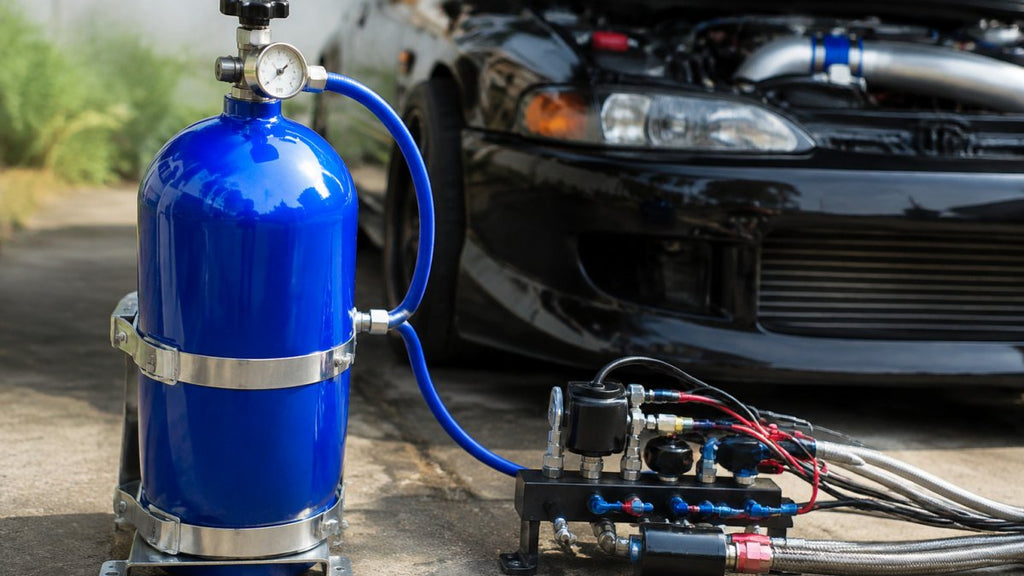
Quick Summary
Nitrous oxide can be used in off-road engines, but only with extra fuel matched to its flow, since a lean mix causes serious damage. Stock engines usually tolerate only small amounts, and off-road heat and load make conservative tuning essential.
- Every shot of nitrous must be paired with extra fuel, or the engine runs lean.
- A lean mix is the most common cause of serious nitrous damage.
- Stock engines often handle only a small shot, depending on their design and condition.
- Use a progressive controller and a safety switch that cuts nitrous if fuel pressure drops.
- Off-road heat, low-speed load and altitude changes all raise the risk.
Table of Contents
- How Nitrous Oxide Adds Power and Why Fuel Must Follow
- Can You Run Nitrous on a Stock Engine?
- What Causes Nitrous Oxide Engine Damage
- Off-Road Conditions That Change the Risk
- Checking Engine Condition and Vehicle Compatibility
- Nitrous Oxide vs. Supercharger for Off-Road Vehicles
- Setting Up and Monitoring a Nitrous System Conservatively
- Your Next Step Before Adding Nitrous to an Off-Road Build
- Frequently Asked Questions
Last Updated: November 7, 2026
How Nitrous Oxide Adds Power and Why Fuel Must Follow
Nitrous oxide is a gas that carries extra oxygen into the engine. More oxygen lets the engine burn more fuel, and more burned fuel makes more power. That is the whole idea, and it is simple. The hard part is keeping the mix balanced so the engine survives.
Nitrous does not add fuel by itself. Every shot of nitrous must be paired with extra fuel, or the engine runs lean. A lean engine runs hotter and can melt pistons. This is why nitrous systems use fuel solenoids and jets that match the nitrous flow.
Here is the basic rule most builders follow:
- More nitrous means more fuel, always.
- The fuel and nitrous flow should match closely.
- A lean mix is the most common cause of serious damage.
Power comes from the air-fuel balance, not from the boost source alone.
Can You Run Nitrous on a Stock Engine?
Many stock engines can take a small amount of nitrous. Many cannot take a large amount. The engine’s design, fuel system and condition decide the limit, not the nitrous kit alone.
A stock engine usually has factory pistons, rods and fuel injectors that were sized for the factory power level. Adding nitrous can push those parts past their limits quickly. Stock fuel pumps may also fall short when the fuel demand jumps.
A cautious approach works best on stock engines:
- Start with a small shot size.
- Confirm the fuel system can supply extra fuel under load.
- Watch for signs of knock or heat before you add more.
Stock trucks and SUVs also carry heavier loads off-road, which adds stress. If you want a deeper look at what limits power on a stock setup, see our guide on can stock engines handle boost.
What Causes Nitrous Oxide Engine Damage
Most nitrous damage comes from a lean mix, detonation or poor setup. Each one can destroy an engine in seconds.
Lean mixture. Too little fuel with the nitrous causes extreme heat. Heat weakens pistons and can cause a hole through the top of the piston.
Detonation or knock. Extra power can make the air-fuel mix ignite too early or uncontrolled. Knock is a sharp pinging sound. Continued knock can crack pistons and damage rod bearings. Can boost cause engine knock explains how this happens and what to watch for.
Timing errors. Ignition timing that is too advanced adds to the heat and pressure. Timing must be adjusted when nitrous is added.
Installation mistakes. Loose fittings, wrong jets or a bad solenoid can all cause sudden power spikes or fuel gaps.
Watch out: A failed fuel pump or clogged filter can cause a lean spike without warning, so check fuel pressure before every run.
Off-Road Conditions That Change the Risk
Off-road driving puts the engine under conditions that street driving does not. The risk goes up because of heat, load and terrain.
- Low speed, high load. Crawling over rocks keeps the engine at high torque with little airflow over the radiator. Heat builds fast.
- Mud, water and dust. Water crossings and dust can clog air filters and affect fuel delivery.
- Altitude changes. Thinner air at elevation changes the air-fuel balance. Tuning done at sea level may run lean up high.
- Drivetrain stress. Extra power puts more load on axles, transmissions and tires. Heavy tires and gear changes add to the strain. Our guide to choosing off-road tires for heavy overland builds covers how tire choice affects load and drivetrain stress.
Off-road builds with larger tires often already struggle with gear hunting and drivetrain strain. More power makes those problems worse, so plan the whole drivetrain before adding nitrous.
Checking Engine Condition and Vehicle Compatibility
Before you add nitrous, check the engine’s health. Our boost safe fuel system guide explains how to confirm your fuel system can keep up under boost.
Engine health and compression. A cylinder leak-down test and a compression test tell you more than a seat-of-the-pants check.
Fuel system capacity. Nitrous needs extra fuel delivered at the same moment the nitrous flows. Check the fuel pump’s rated flow at your target pressure, the condition of the filter, and whether the injectors or carburetor jets have headroom for the added demand.
Ignition and timing. Spark plugs should be in good condition and gapped for the added cylinder pressure, and ignition timing must be pulled back when nitrous is active.
Cooling system. Off-road engines run hot at low speed with little airflow over the radiator. A cooling system that is marginal on the street will be over its limit on a slow climb with nitrous adding heat.
Drivetrain strength. Nitrous adds torque suddenly, and off-road drivetrains are already stressed by large tires, low gearing, and heavy loads.
Manufacturer restrictions and warranty. Review your owner’s manual and warranty terms before you buy anything. Warranty limits are only part of the tradeoff, since suspension setup also affects how an off-road vehicle handles added power and rough terrain, a balance THE SUSPENSION SPECIALISTS can help put in perspective.
Use this checklist before you start:
- Compression is even across all cylinders (roughly within 10 percent).
- Leak-down results are acceptable and no cylinder is clearly weak.
- No oil or coolant leaks, and no signs of head gasket trouble.
- Spark plugs are fresh and gapped for the added pressure.
- Ignition timing can be retarded when nitrous is active.
- Fuel pump and filter flow enough for the added fuel demand at pressure.
- Cooling system holds temperature under sustained load.
- Transmission, axles, and u-joints can handle the added torque.
- You have checked the owner’s manual and warranty terms for restrictions.
Owners with heavily modified builds should be especially careful. Every change can alter the fuel, timing, or heat balance, and a combination that worked on the street may not hold up to off-road heat and load.
Nitrous Oxide vs. Supercharger for Off-Road Vehicles
Nitrous and superchargers both add power, but they work differently and suit different builds.
Nitrous adds power only when you press the button. It adds no boost at idle and no heat from constant compression. A supercharger adds boost all the time, which makes power available across the rev range.
For most off-road trucks and SUVs, a supercharger gives steadier low-end torque for towing and crawling. Nitrous suits drivers who want a short burst of power and accept more setup complexity.
Here is a quick comparison:
| Factor | Nitrous | Supercharger |
|---|---|---|
| Power delivery | On demand, short bursts | Constant boost |
| Low-end torque | Limited | Steady and usable |
| Fuel tuning | Needs added fuel control | Needs ongoing tuning |
| Heat risk | Higher if lean | Managed through design |
Both need careful tuning. Choose based on how you drive, not just on peak power numbers.
Setting Up and Monitoring a Nitrous System Conservatively
A conservative setup protects the engine, and off-road use demands more caution than a street car because heat, load, and dust all work against you. Start small, tune carefully, and build up over time.
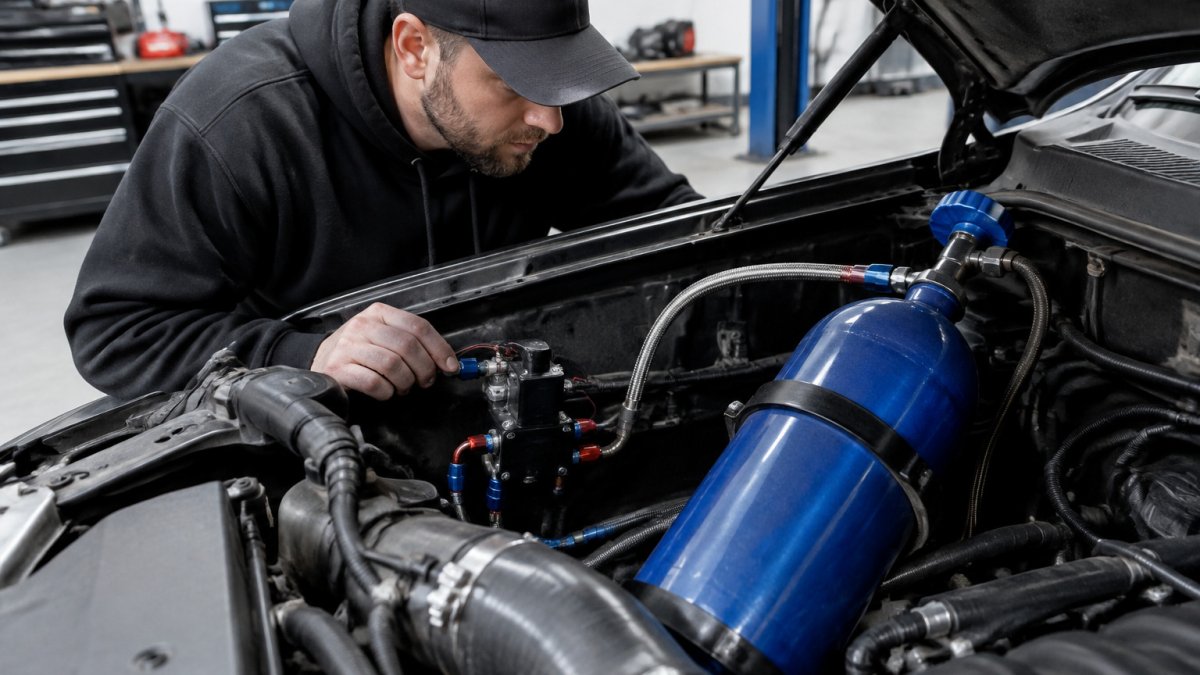
- Use a progressive controller. A progressive controller ramps nitrous in gradually instead of hitting the engine with full flow at once. This reduces the sudden torque spike that stresses the drivetrain and gives the fuel system time to respond. Start with a slow ramp and short full-power time.
- Add fuel first, then nitrous. Confirm fuel flow and pressure before any nitrous is introduced. A common pattern is to set the fuel side slightly rich at first, read the plugs and wideband, then lean toward target.
- Set a safety switch. Wire a cutoff that kills the nitrous solenoid if fuel pressure drops below a set threshold. This single safeguard prevents the lean spike that causes most nitrous damage.
- Start with a small shot. Begin with a small jetting and short activation time, test on a safe stretch, and read the results before increasing. A moderate, well-tuned shot is generally the more conservative choice, especially off-road.
- Log your results. Track air-fuel ratio, timing, fuel pressure, and exhaust gas temperature on every pull. A wideband oxygen sensor shows whether the mix stays rich enough, and a fuel pressure gauge and EGT gauge give early warnings before damage occurs.
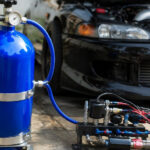
Concrete targets to watch. Bottle pressure matters: most nitrous systems are designed to run around 900 to 1,050 psi at operating temperature, and low bottle pressure leans the mixture while high pressure can over-rich it.
Off-road-specific monitoring. Off-road conditions change the rules. Low-speed crawling keeps airflow low and heat high, so watch coolant temperature and EGT closely on slow climbs and shut the nitrous off if temperatures climb past normal.
Signs to stop using the system. Stop and diagnose if you hear knock or pinging, see a sudden lean reading on the wideband, notice fuel pressure dropping when nitrous engages, see coolant or EGT temperatures climbing past normal, or feel a power spike or stumble.
Watch out: A failed fuel pump, clogged filter, or loose fitting can cause a lean spike without warning, so check fuel pressure and inspect connections before every run rather than trusting the last good pull.
Monitoring matters as much as setup. Power you can use every day beats power that breaks the engine, and off-road the margin for error is smaller than on the street.
Your Next Step Before Adding Nitrous to an Off-Road Build
Before you add nitrous, know your engine’s limits and your fuel system’s capacity. Check compatibility, confirm the fuel and timing plan, and start with a conservative setup. If you want a more consistent power option for off-road work, VT Superchargers offers bolt-on supercharger kits with OEM-style fitment for a range of vehicles, along with a 24-month warranty. Register with us to learn which kit fits your truck or SUV.
Frequently Asked Questions
Is nitrous oxide bad for your engine?
Nitrous oxide is not inherently damaging when the engine is in good condition and the system is installed and tuned correctly. Problems usually come from adding too much nitrous without enough supplemental fuel, running lean, or using it on an engine that was already worn or poorly built. Off-road use adds heat, load and traction stress, so a conservative setup and regular inspection matter more than the bottle itself. Pricing for any VT Superchargers product depends on the kit and delivery details, so check the website for current pricing or a quote.
Can you run nitrous on a stock engine?
Running nitrous on a stock engine is possible in some cases, but the engine’s internal parts, fuel delivery and cooling set the real limit. Stock components were designed for the factory power level, so added cylinder pressure and heat can exceed what they tolerate. A conservative, small shot with verified fueling and ignition timing is far safer than a large shot on an unmodified engine. Confirm your specific engine’s limits before installing a system.
Is nitrous oxide safe for a stock off-road engine?
A stock off-road engine can handle a small, conservatively tuned nitrous shot in many cases, but off-road conditions raise the risk. Low-speed crawling, high ambient heat, sustained loads and wheel slip can all push the engine and drivetrain harder than highway driving. Use a progressive controller, verify fuel delivery before every session, and watch for signs of detonation. If the engine is worn or has high mileage, avoid nitrous until it is rebuilt or thoroughly inspected.
Is a supercharger a safer alternative to nitrous for off-road use?
A supercharger provides power continuously and does not rely on a finite oxidizer supply, which many off-road drivers find easier to manage. Its boost is tied to engine speed and typically delivers more consistent low-end torque for towing and crawling. Nitrous adds power on demand and is simpler to install on some engines, but it adds risk when fuel or tuning falls short. VT Superchargers kits are bolt-on designs with a 24-month warranty; pricing depends on the vehicle and delivery, so request a quote for your application.