Supercharger Pulley Sizing Guide for Street Builds
Your Tacoma felt fine on factory tires. Then came the 33s, steel bumpers, skid plates, rooftop tent, and a loaded bed for the weekend. Now it drops two gears on grades, hunts for a gear in the mountains, and needs a running start to pass. We see this all the time. The supercharger is making power, but pulley sizing decides whether that power feels like clean, dependable torque or a headache waiting to happen.
A smaller pulley is not automatically the right pulley. It spins the supercharger harder, raises boost, and can make a vehicle feel seriously different. But it also raises heat, increases the demand on fuel and tuning, and shrinks the margin for error. If your goal is a daily-driven 4Runner, Tacoma, Gladiator, Charger, or Frontier that pulls harder every time you hit the throttle, choose the pulley for the whole build, not just the biggest dyno number.
Supercharger Pulley Sizing Guide: Start With Your Use
One of the biggest complaints we hear is, "I added all this gear and now my truck feels slower than stock." That is usually not a peak-horsepower problem. It is a torque-under-load problem.
A 5th-gen 4Runner on 33-inch tires, loaded with recovery gear and camping equipment, spends a lot of time working at lower engine speed. The right pulley can give it the stronger midrange needed to climb a forest road or merge onto the interstate without flooring it and waiting for a downshift. But a pulley selected only for maximum boost may make more heat during the exact long, slow pulls that overland rigs see most often.
The same idea applies to a Jeep Gladiator. Add 35s, a winch, armor, and a trailer, and the 3.6L has a lot more work to do. Most owners tell us they do not need a temperamental high-boost setup. They want the truck to hold speed on a grade, pull away from a stop without feeling flat, and stop searching for gears every time the road tilts up.
For a Dodge Charger or Mustang used mainly on the street, the priorities can shift. A driver who has good fuel available, proper supporting parts, and wants harder acceleration may have room for a more aggressive pulley. Even then, the tune, belt system, charge-air cooling, and engine condition have to agree with the plan.
What a Smaller Pulley Actually Changes
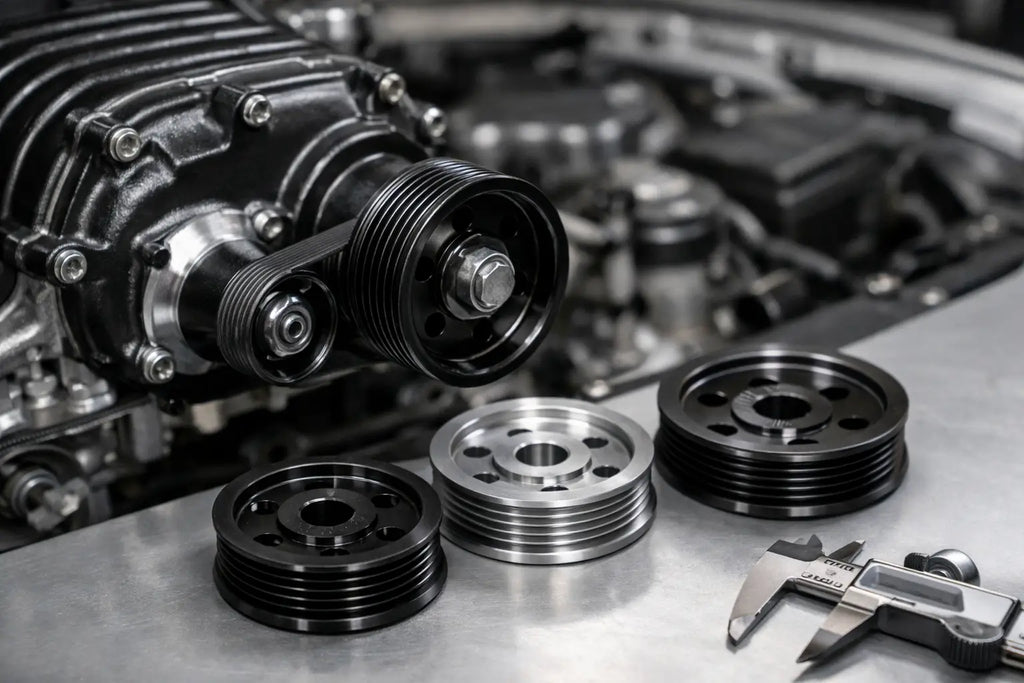
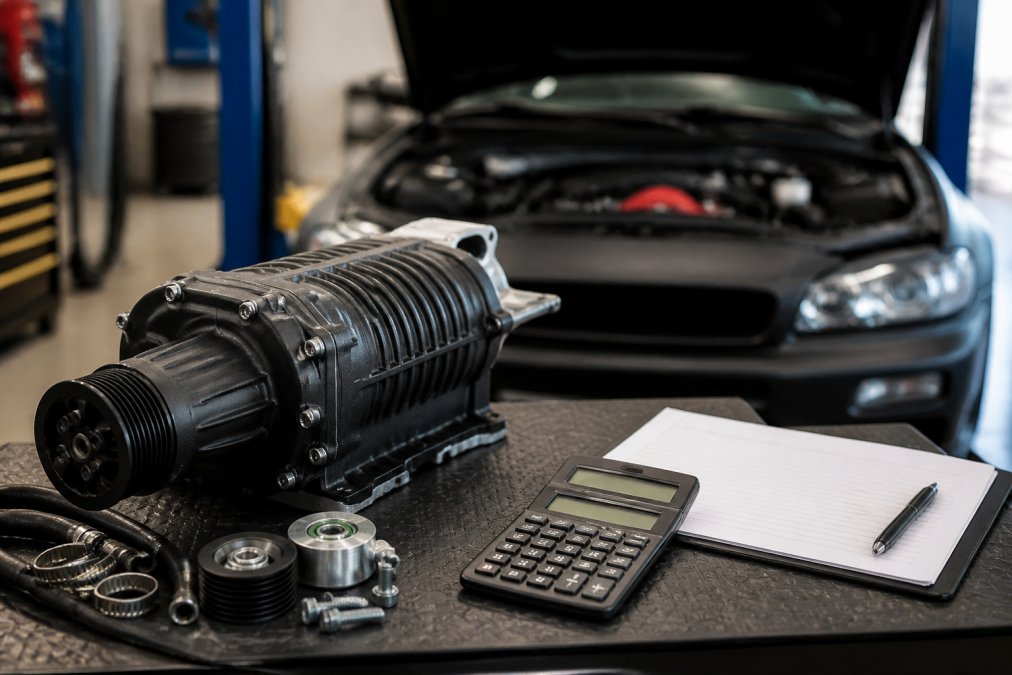
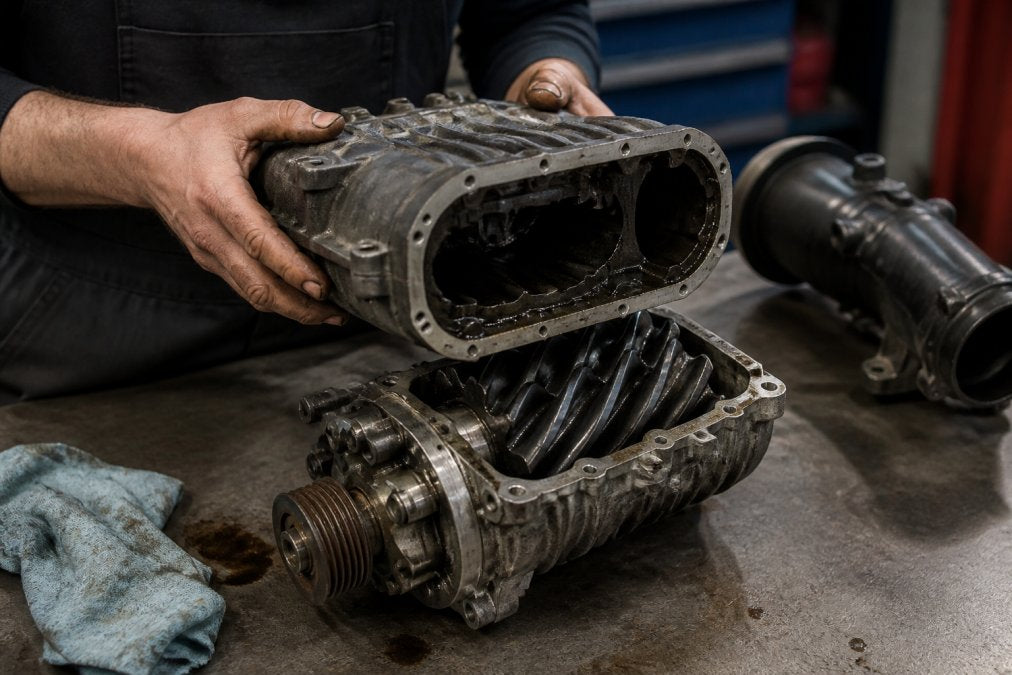
The crank pulley turns the supercharger pulley through the belt. Reducing the diameter of the supercharger pulley makes the blower spin faster for every engine revolution. More blower speed generally means more airflow and more boost.
That is the simple part. What you feel behind the wheel depends on the calibration and the vehicle. A well-matched pulley often sharpens throttle response and fills in the weak area where a naturally aspirated truck feels lazy. On a Tacoma V6, that can mean less pedal needed to stay with traffic when the bed is loaded. On a Nissan Frontier, it can mean the engine pulls through the middle of the rev range instead of sounding busy without gaining much speed.
But more blower speed also creates more heat. Hotter intake air can force the tune to pull timing to protect the engine. At that point, the smaller pulley may not deliver the real-world gain you expected, especially on a hot day, towing uphill, or making repeated pulls. The truck can feel strong once, then soften up when it is heat-soaked.
After installing hundreds of kits, that is why we care more about repeatable torque than bragging rights. A setup that runs hard on the third uphill pull in 95-degree weather is the one you will appreciate six months later.
Match the Pulley to Fuel and Tuning
Pulley changes are tuning changes. Treat them that way.
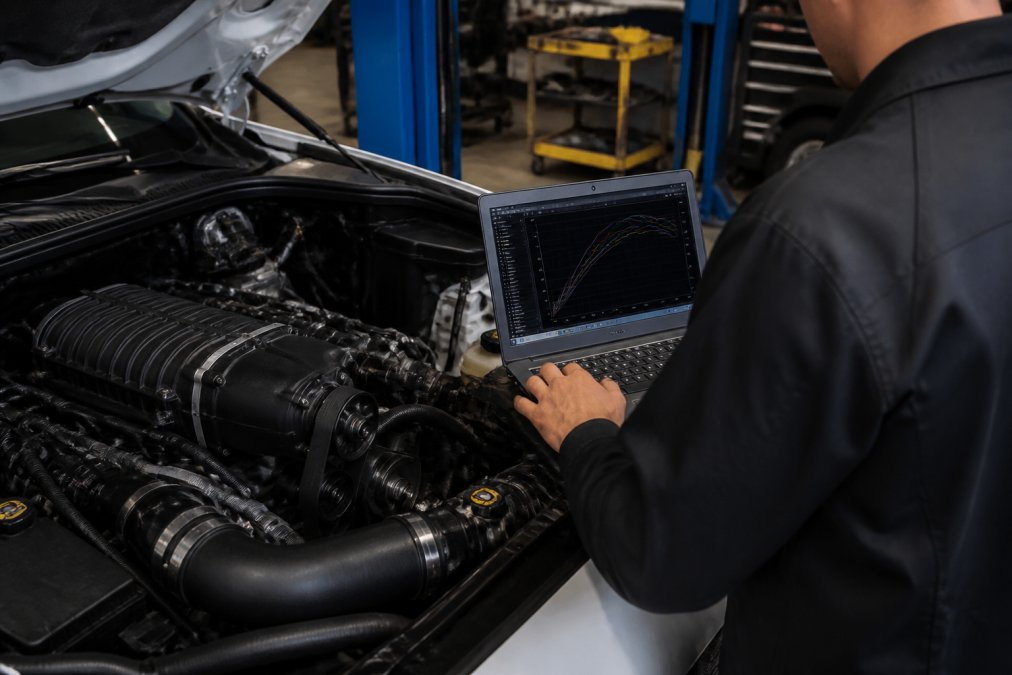
The tune controls how the engine responds to the added airflow. Fueling, ignition timing, throttle behavior, knock control, transmission strategy, and safety limits all need to be appropriate for the boost level. Do not install a smaller pulley and assume a generic calibration will sort it out. That is how a clean bolt-on build turns into a rough-running vehicle with inconsistent power.
Fuel quality matters just as much. If your vehicle is built around 91 or 93 octane, use the fuel the calibration calls for every time. Do not tune for premium, then fill up with whatever is available during a road trip and tow through the desert. If your local fuel is inconsistent, that should push the decision toward a more conservative pulley, not a more aggressive one.
E85 can support more aggressive combinations on platforms with the right fuel-system capacity and a proper flex-fuel or ethanol calibration. It is not magic, though. It requires enough injector and pump capacity, consistent ethanol content, and reliable access to fuel. For a Tacoma that sees remote trailheads, 91 or 93 octane with a sensible pulley is often the smarter long-term choice than building around fuel you cannot easily find.
Tires, Gears, and Weight Change the Answer
Pulley sizing does not happen in a vacuum. Bigger tires effectively change the final drive ratio. That is why a Tacoma on 35s can feel dull even after adding parts that looked good on paper. The engine has to work harder to turn the taller, heavier tire, and the added rotating mass shows up every time you leave a stop.
A supercharger helps because it adds torque where the vehicle needs it. But it does not replace sensible gearing. If you are running 35s on a Gladiator or 4Runner and regularly wheel, tow, or carry heavy gear, gears and a supercharger can work together far better than trying to bandage everything with maximum boost.
Added weight matters, too. Steel bumpers, sliders, drawers, full-size spares, water, tools, passengers, and a trailer can easily add hundreds of pounds. We see owners spend thousands building a capable truck, then wonder why the factory engine feels out of breath. A mild-to-moderate pulley setup with a proper tune usually restores the driving experience without pushing the rest of the package beyond its comfort zone.
Do Not Ignore Belt Grip and Charge Cooling
The smaller the supercharger pulley, the more demand you put on the belt drive. If the belt slips, boost becomes inconsistent. You may feel it as a vehicle that pulls hard, then falls flat near the top of the rev range. It can also leave belt dust around the drive system.
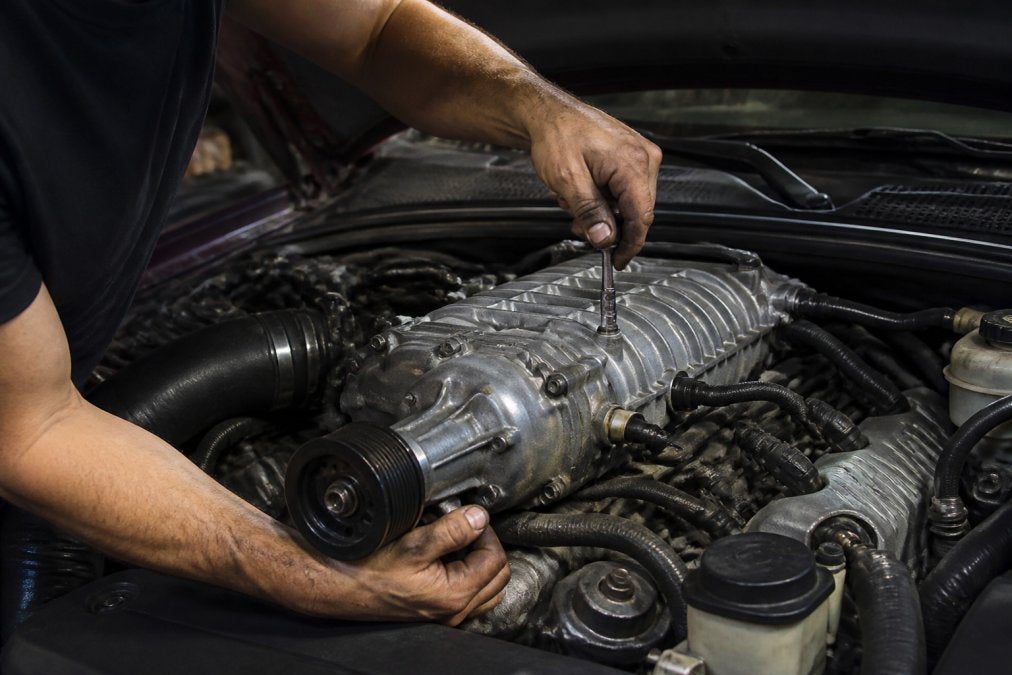
Proper belt length, tensioner condition, pulley alignment, and belt condition are not minor details. Neither is the rest of the drive system. A clean installation matters. If something is misaligned or rubbing, fix it before chasing a power issue with more pulley.
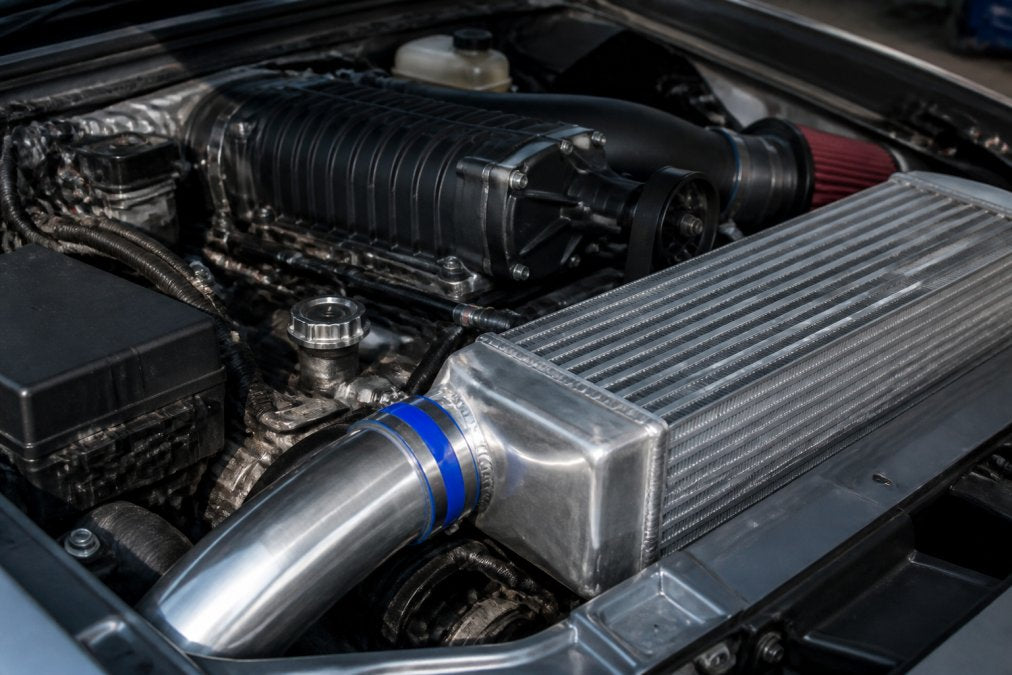
Charge cooling is the other big piece. Intercooler fluid, heat exchangers, pumps, hoses, and airflow all play a role in controlling intake temperatures. On a street car that makes short pulls, a more aggressive pulley may be manageable. On a 4Runner crawling around Moab in summer or a Tacoma towing a boat through rolling hills, sustained heat is the real test.
Signs Your Pulley Is Too Aggressive
A vehicle can make a strong first pull and still be poorly matched for how you use it. Watch for power that fades quickly after repeated acceleration, inconsistent throttle response, belt noise or dust, frequent knock-related timing reduction, and a tune that needs constant compromise to stay safe.
You may also notice the vehicle feels less polished. Instead of factory-like manners with more punch, it surges, hesitates, or behaves differently from tank to tank. That is not what a well-planned bolt-on system should feel like.
VT Superchargers builds vehicle-specific kit packages because fitment, calibration, and supporting hardware need to work together. The best setup is the one you can drive to work on Monday, load up on Friday, and trust when the road gets steep.
Choose the Pulley You Can Live With
If you daily-drive a Toyota 4Runner on 33s, tow a small trailer with your Frontier, or run a Gladiator loaded for weekend trips, start conservative. Build for strong midrange torque, stable temperatures, premium fuel you can actually get, and a calibration designed for that exact combination.
If you have a street-focused car, proven cooling, the right fuel system, dependable high-octane fuel, and a tuner who supports the setup, a smaller pulley may make sense. Just be honest about how the car is used. The occasional full-throttle hit is different from ten back-to-back pulls in summer heat.
The right pulley should make your vehicle feel like it finally caught up with the way you built it. More immediate throttle. Less downshifting. Better hill climbs. Stronger passing power. That is the target - power you can use every single time you turn the key.
Related post
RECENT POSTS