Best Supercharger for Off-Road Torque: 2026 Guide
Table of Contents
- Best Supercharger for Off-Road Torque: Quick Comparison
- Twin-Screw Supercharger Off-Road: Why Low-End Torque Matters
- Supercharger Kits for Jeep Wrangler: Proven Bolt-On Solutions
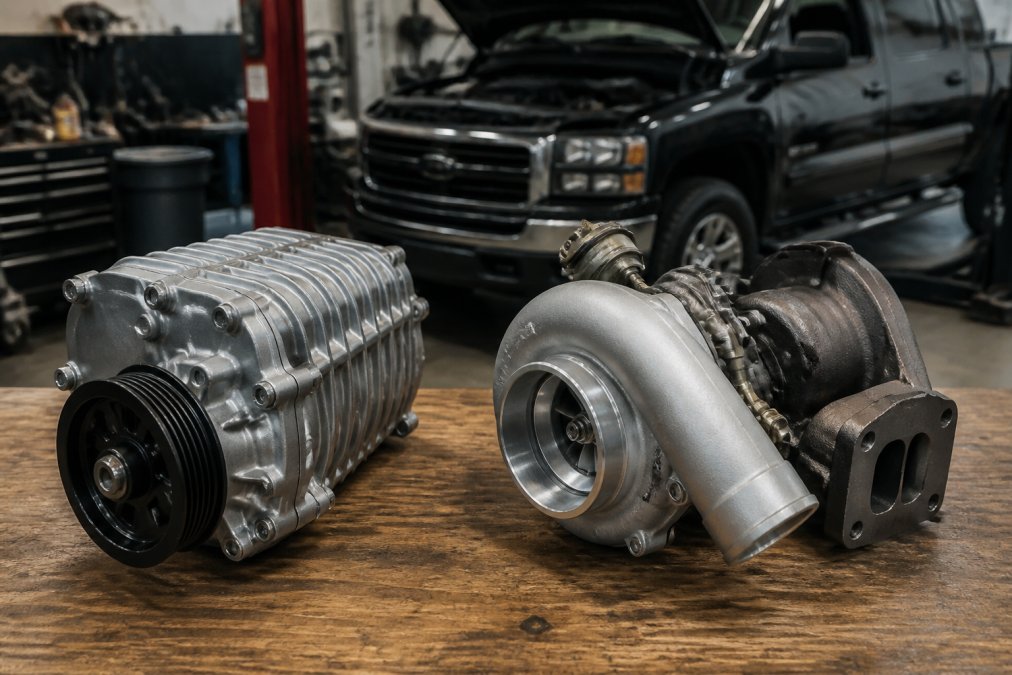
- Supercharger vs. Turbocharger for Off-Road: Which Delivers Better Torque
- Supercharger Installation Off-Road Vehicle: What You Need to Know
- Supercharger Heat Management & Octane Requirements
- Long-Term Maintenance Costs & Warranty Protection
- How to Choose the Best Supercharger for Your Off-Road Setup
Best Supercharger for Off-Road Torque: 2026 Guide
Last Updated: July 25, 2026
When navigating rocky terrain with larger tires and custom accessories, the difference between adequate power and genuine torque dominance comes down to one choice: the best supercharger for off road torque. Unlike turbocharged systems that suffer from lag, a quality supercharger delivers immediate throttle response exactly when you need it most, whether climbing a steep grade or recovering from a bogged-down start. At VT Superchargers, we've engineered bolt-on kits specifically for off-road applications, focusing on low-end torque delivery and durability in harsh environments. This guide walks you through the supercharger types that work for off-road use, compares real-world performance gains, and shows you how to choose the right system for your specific vehicle and terrain demands.
Quick Comparison: Supercharger Types & Performance
| Supercharger Type | Torque Delivery | Best For | Maintenance | Cost Range |
|---|---|---|---|---|
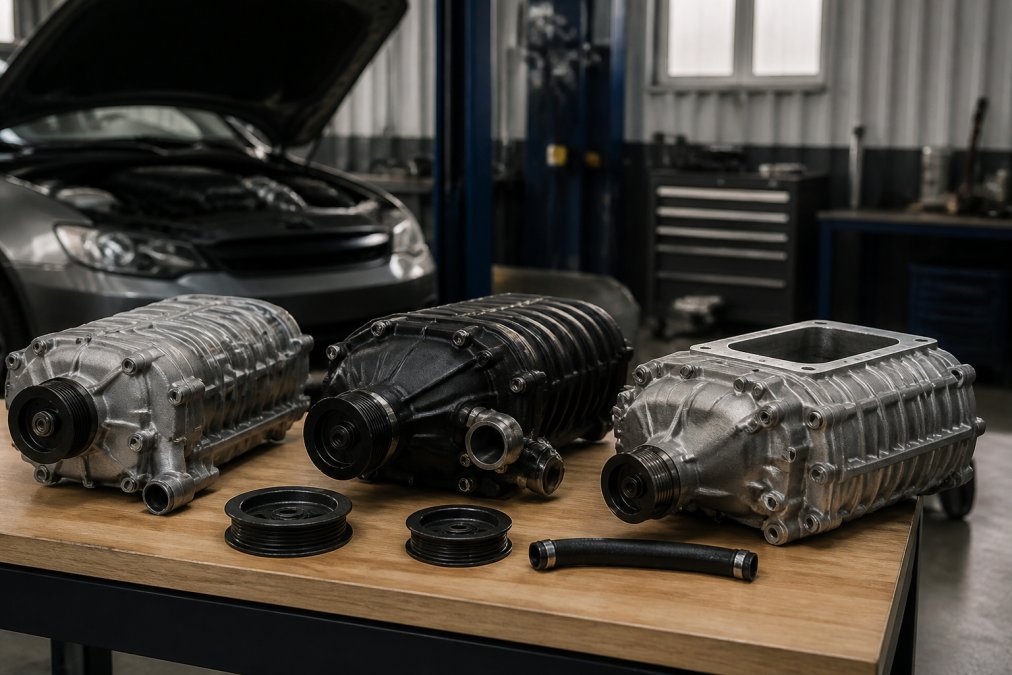
| Twin-Screw (Positive Displacement) | Immediate, from idle | Off-road, towing, daily driving | Belt-driven, routine | $5,400-$6,950 |
| Centrifugal | RPM-dependent, peaks high | Highway speed, spirited driving | Lower friction, sealed | $4,600-$5,500 |
| Roots-Style (Eaton TVS) | Strong mid-range, consistent | Jeep platforms, sustained load | Reliable, proven | $6,450-$8,249 |
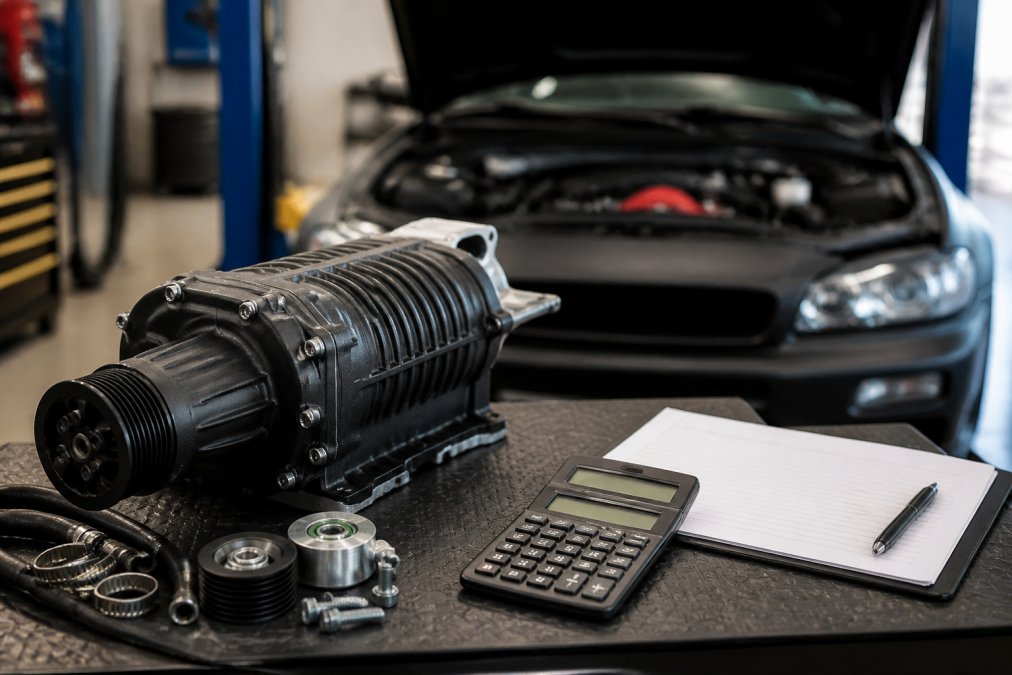
Twin-screw designs dominate the off-road market because their positive displacement architecture means every rotation of the compressor pushes a fixed volume of air into the engine. You get boost from idle, which transforms how your vehicle behaves on technical terrain.
Twin-Screw Supercharger Off-Road: Why Low-End Torque Matters
Low-end torque separates vehicles that crawl through obstacles from those that bog down and stall. In low-range four-wheel drive on a steep rocky slope, you need power available instantly, not at 4,000 RPM. A twin-screw supercharger delivers 40-60% more torque across the entire power band, with the biggest gains below 3,000 RPM where off-road driving actually happens.
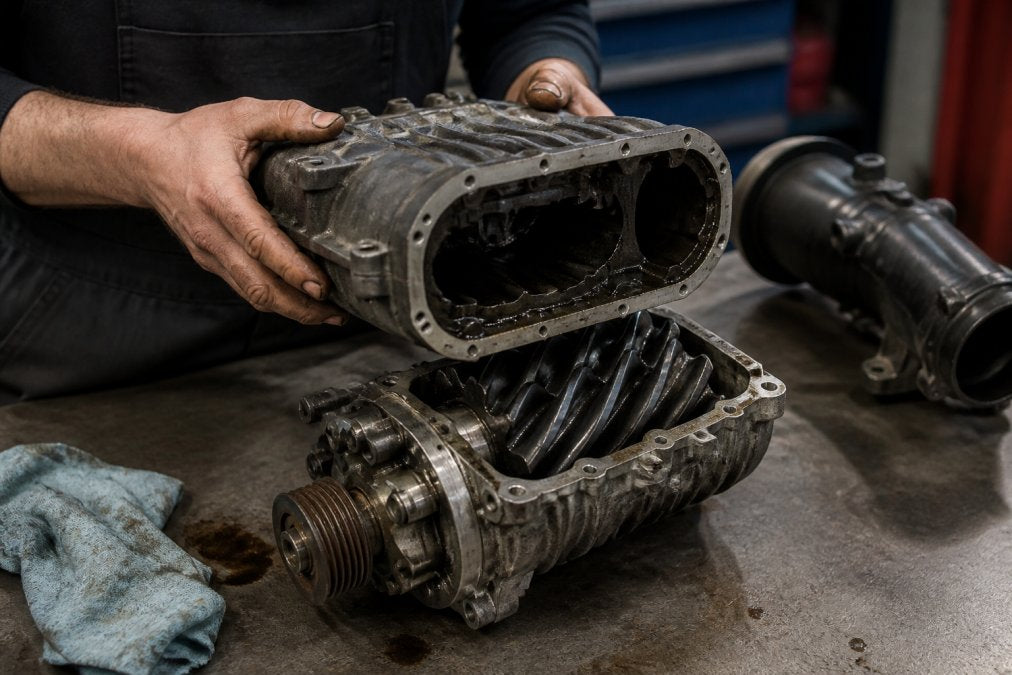
As the twin screws rotate, they trap and compress air continuously. Unlike centrifugal blowers that rely on impeller speed, twin-screw units produce consistent boost regardless of engine RPM. This means smoother power delivery, less gear hunting, and the ability to maintain momentum through technical sections.
Pro Tip
Off-road torque isn't just about peak numbers on a dyno chart. It's about sustained torque across the RPM range where you actually drive. A supercharger that delivers 150 lb-ft at 2,500 RPM is worth far more on the trail than one that peaks at 3,000 lb-ft at 5,500 RPM.
Real-world testing shows vehicles equipped with twin-screw setups experience reduced gear hunting on highway grades. A 2019 Ford F-150 with 35-inch tires no longer drops out of eighth gear when climbing a 6% grade; continuous torque keeps it locked in.
Positive Displacement vs. Centrifugal for Torque Delivery
Centrifugal superchargers spin faster as engine RPM increases, producing minimal boost at idle and low RPM. They're lighter and cheaper but their torque curve is lag-dependent; real power doesn't arrive until the impeller reaches sufficient speed, typically around 3,500 RPM.
For off-road use, this lag is a liability. When navigating a rocky wash and needing immediate throttle response to climb over a boulder, waiting for the centrifugal to spool up costs you momentum. Positive displacement (twin-screw) systems eliminate this problem entirely.
Torque Curve Visualization & Real-World Power Bands
A supercharger doesn't add flat boost across the board; it lifts the entire torque curve upward. A twin-screw typically adds torque most aggressively in the 2,000-4,500 RPM range, exactly where off-road driving concentrates. A centrifugal adds more torque above 4,000 RPM, which helps highway acceleration but leaves low-end power relatively unchanged.
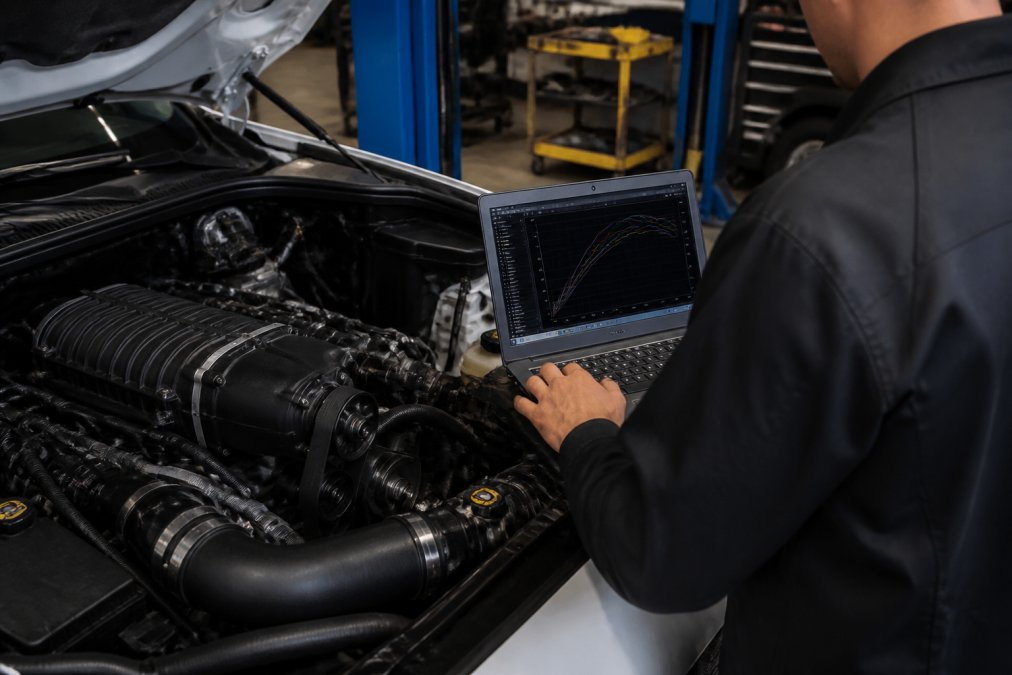
When evaluating a supercharger kit, ask for dyno charts showing before-and-after torque curves, not just peak horsepower numbers.
Supercharger Kits for Jeep Wrangler: Proven Bolt-On Solutions
Jeep Wrangler platforms are the most popular target for supercharger upgrades. The 3.6L V6 engine responds exceptionally well to forced induction. A quality supercharger kit adds 80-120 horsepower and 100-150 lb-ft of torque, transforming a vehicle that struggles with 35-inch tires into one that climbs confidently.
Bolt-on kits deliver OEM-quality fitment without cutting or welding. Installation typically takes 8-12 hours for a competent technician. The critical factor for Jeep Wrangler owners is compatibility with existing modifications. Most modern kits are designed to clear common aftermarket accessories, but custom builds require case-by-case evaluation.
OEM-Style Fitment & Compatibility with Modified Platforms
OEM-style fitment means the supercharger assembly uses existing engine bay attachment points, preserving factory lines and clearances. This maintains warranty coverage on unmodified components and simplifies installation.
However, "OEM-style" doesn't mean the system is invisible. The supercharger assembly, belt drive, and intake manifold take up space. On heavily modified platforms with custom engine bay work, you may encounter fitment issues requiring minor fabrication.
VT Superchargers kits are engineered with precise measurements to fit alongside common modifications. If you're running a custom engine bay setup, contact an approved installer before purchasing to verify fitment against your specific configuration.
Supercharger vs. Turbocharger for Off-Road: Which Delivers Better Torque
For off-road use, superchargers win decisively. Turbo lag, the delay between throttle input and boost arrival, is a genuine safety concern when navigating technical terrain. You need throttle response to be immediate and predictable.
Turbocharged systems also require more aggressive tuning to avoid overboosting and engine damage. Off-road driving involves sustained high load conditions that stress turbocharged engines harder than typical street driving. Superchargers handle this sustained load more gracefully because boost pressure is mechanical and consistent.
Watch Out
Turbochargers in off-road vehicles require careful monitoring of boost pressure and intake temperatures. A supercharger-equipped vehicle can be driven harder, longer, with less risk of heat soak or engine damage. This matters when you're deep in the backcountry far from help.
Turbo Lag, Throttle Response & Immediate Power Availability
Turbo lag is the time delay between pressing the accelerator and feeling the boost kick in. For off-road driving, a 0.5-1.0 second lag is a liability.
Imagine navigating a rocky creek crossing where you need to maintain momentum through a boulder field. You see the right path, press the throttle to climb over a rock, and wait for the turbo to spool up. By the time boost arrives, you've already committed to a line that no longer works. With a supercharger, there's no lag. Throttle input produces immediate torque, letting you navigate technical terrain with precision.
Reliability in Dusty & Dirty Off-Road Environments
Off-road environments are brutal on forced induction systems. Dust, sand, mud, and water all find their way into air intakes. Superchargers, being belt-driven and mechanically sealed, are inherently more resistant to environmental contamination than turbochargers. The supercharger compressor sits inside a sealed housing with a controlled intake path.
Turbocharged systems pull air through the turbo from the engine bay, meaning any dust gets sucked into the compressor. While modern turbos have better filtration, they remain more exposed to environmental hazards.
Supercharger Installation Off-Road Vehicle: What You Need to Know
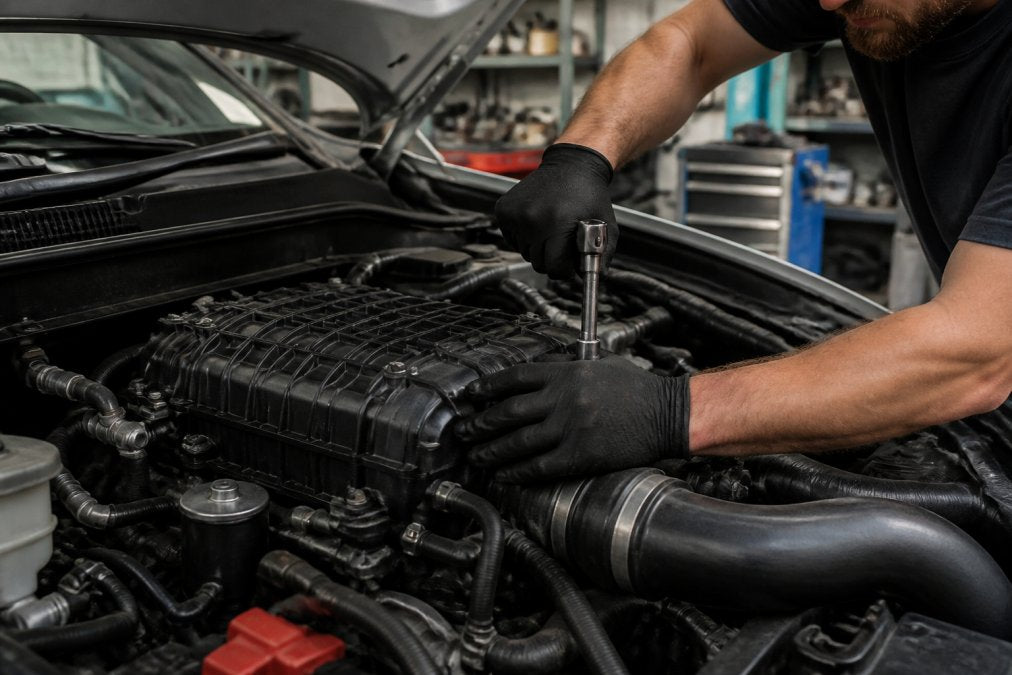
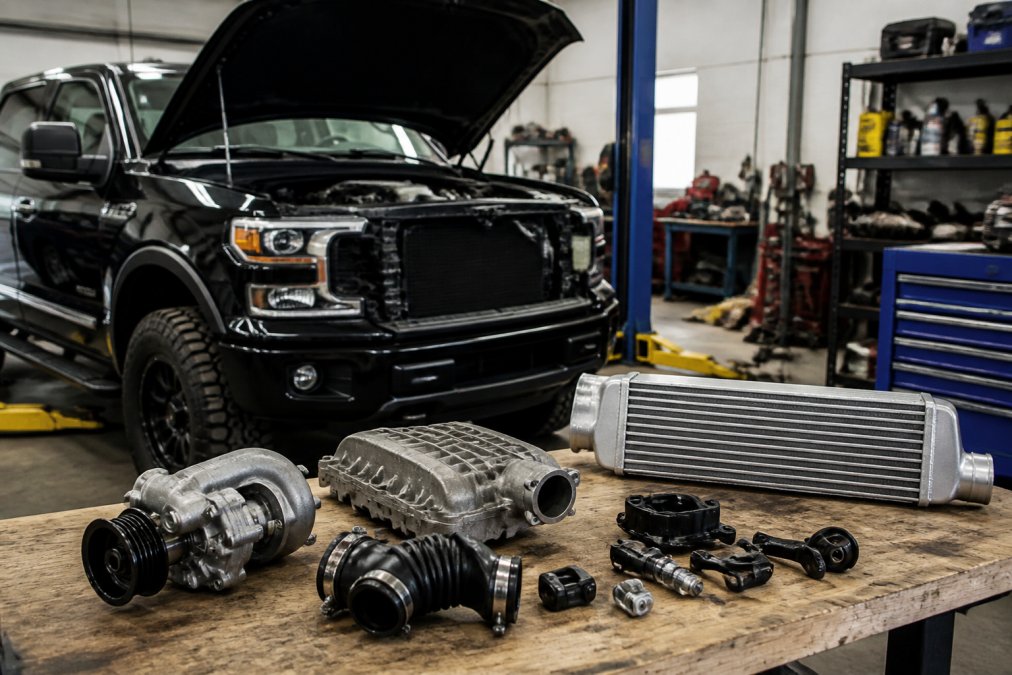
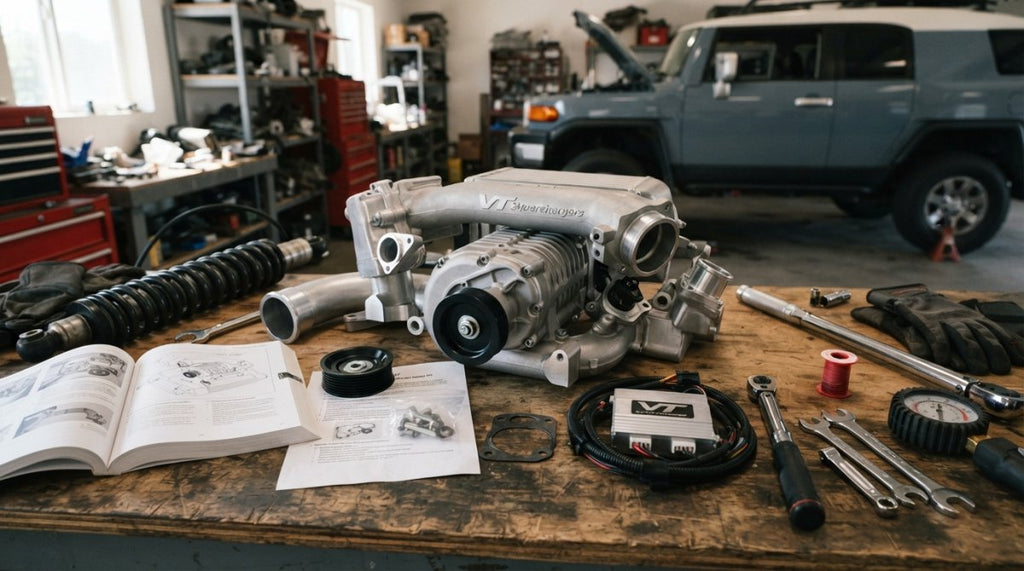
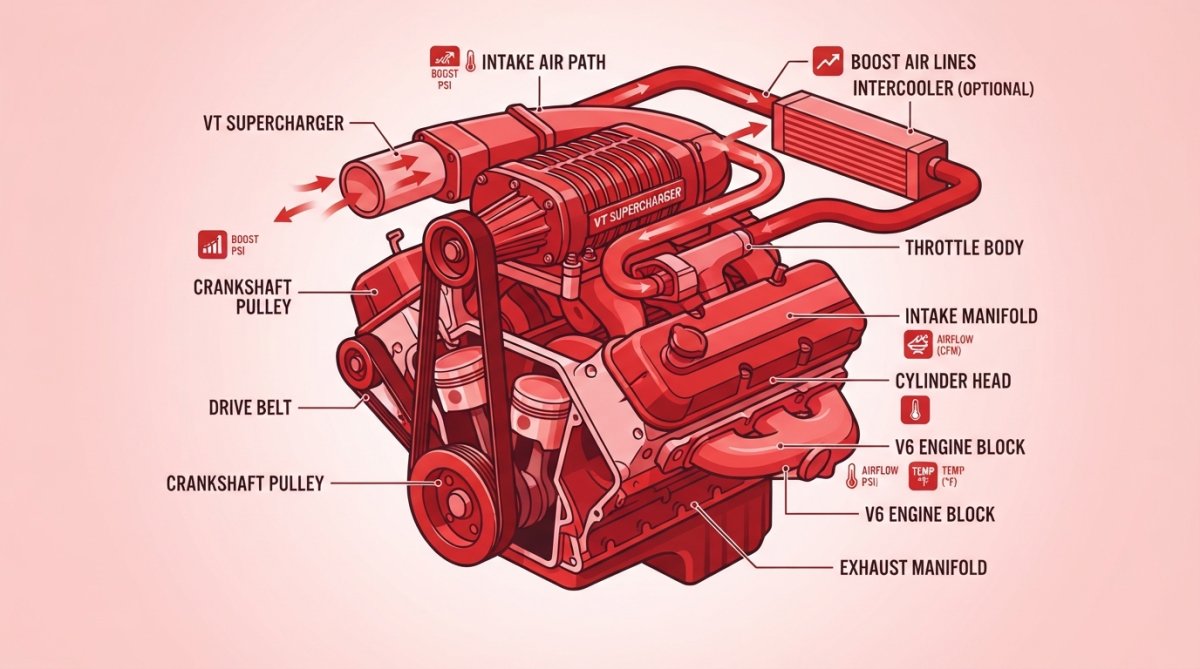
Installing a supercharger requires a competent mechanic with basic tools. Most bolt-on kits take 8-12 hours to install. The process involves removing the intake manifold, installing the supercharger assembly, routing the serpentine belt, connecting coolant and vacuum lines, and running new fuel injector wiring for the ECU tune.
Choose an approved installer. Not all mechanics understand supercharger installation nuances, belt tension, pulley alignment, intercooler plumbing, and ECU calibration all require precision. VT Superchargers maintains a network of approved installers trained on specific kit requirements.
The ECU tune is critical. A supercharger adds air to the engine; the fuel and ignition maps must be adjusted to match. A quality tune takes 2-4 hours and costs $500-$1,500 depending on complexity.
Belt-Driven System Maintenance & Long-Term Durability
The serpentine belt transfers power from the engine crankshaft to the supercharger compressor. A worn or misaligned belt will slip, reducing boost pressure and generating heat.
Belt maintenance is straightforward: inspect the belt visually every 10,000 miles for cracks or glazing. Check tension with a tension gauge; most supercharger belts should read 60-80 pounds of force. Replace the belt every 50,000-60,000 miles or if visible damage appears.
The pulley system must be aligned perfectly. Misalignment causes the belt to wear faster and slip under load. When your supercharger is installed, the technician should use a laser alignment tool to verify that the crankshaft pulley, supercharger pulley, and tensioner are all in the same plane.
Environmental Sealing, Filtration & Dust Protection
Off-road environments demand aggressive air filtration. A standard automotive air filter is designed for highway driving where air is relatively clean. Off-road air contains sand, dust, and organic debris that clogs filters faster.
A quality supercharger kit includes an oversized air filter element and intake ducting designed to minimize turbulence and water ingestion. The intake should be sealed from the engine bay and routed to draw air from the fender area where it's cleanest. Some kits include secondary filtration or cyclone pre-filters that remove coarse particles before they reach the main filter.
Water ingestion is a genuine concern for vehicles that ford streams. A quality intake design routes the snorkel high on the fender, well above typical water crossing depths.
Supercharger Heat Management & Octane Requirements
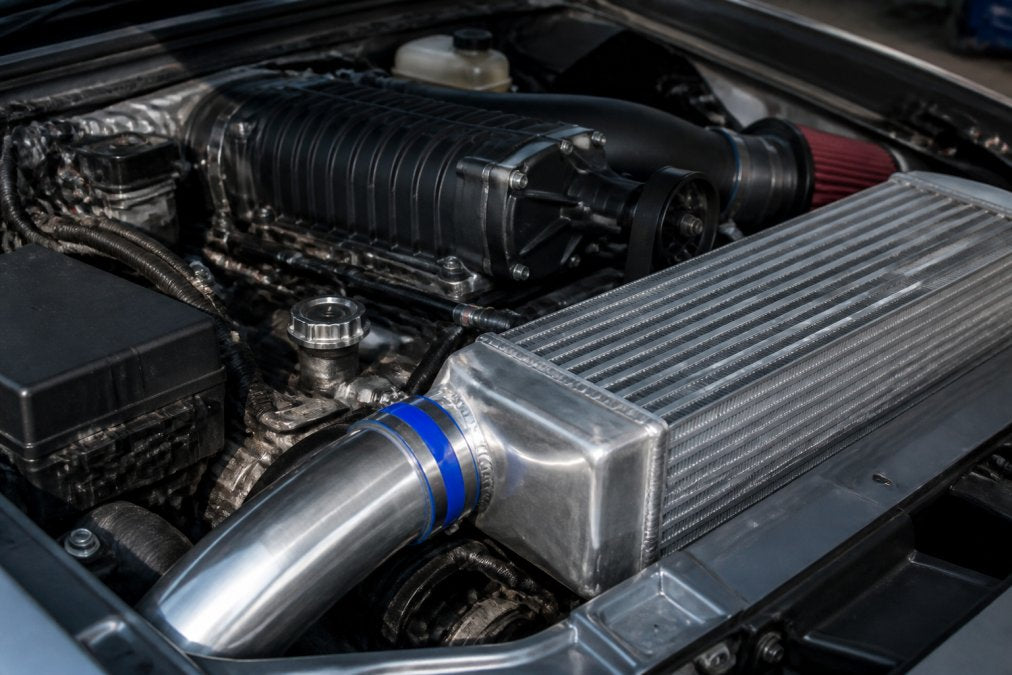
A supercharger compresses air, and compression generates heat. Hotter intake air reduces oxygen density, which reduces boost effectiveness. An intercooler solves this by cooling compressed air before it enters the engine.
Most modern supercharger kits include a front-mounted air-to-water intercooler that uses the engine cooling system to reject heat. This approach is compact and effective.
The intercooler is essential for sustained off-road performance. Without one, a supercharger produces good power for the first 5-10 minutes, then heat soak reduces boost pressure and power output. With an intercooler, power remains consistent for hours of continuous driving.
Heat Soak Mitigation & Intercooler Efficiency
Heat soak occurs when the intercooler can't shed heat faster than the supercharger generates it. On a hot day, climbing a long grade at full throttle, intake temperatures can climb to 150°F or higher without proper cooling.
Efficiency drops approximately 1% for every 10°F increase in intake air temperature. A properly sized intercooler keeps intake temperatures below 100°F even during sustained high-load driving. Front-mounted intercoolers should be positioned to receive maximum airflow, not blocked by bumpers or other components.
ECU Tuning Compatibility & Modern Calibration
A supercharger adds air to the engine, which changes the air-fuel ratio and combustion characteristics. The ECU must be recalibrated to compensate. A quality tune adjusts fuel injection timing and duration to match the increased air mass, retards ignition timing slightly to prevent detonation, and optimizes boost pressure across the RPM range.
The best tuning approach is dyno-based. A competent tuner places your vehicle on a dynamometer, monitors real-time engine parameters, and adjusts the calibration iteratively until the engine runs optimally.
Long-Term Maintenance Costs & Warranty Protection
Supercharger systems are mechanically simple compared to turbocharged engines, translating to lower long-term maintenance costs. The primary maintenance items are the serpentine belt, air filter, and intercooler coolant.
Belt replacement costs $100-$200 in parts and 1-2 hours of labor. Air filter replacement is $50-$100 and takes 15 minutes. Intercooler coolant flush and refill is $100-$200 every 3-4 years.
Most quality supercharger kits come with 24-month coverage against manufacturing defects. VT Superchargers provides a 24-month warranty on all kits, covering parts and labor for defects. If properly maintained, the system should last 150,000+ miles without major issues.
How to Choose the Best Supercharger for Your Off-Road Setup
Choosing the right supercharger requires evaluating your specific vehicle, driving style, and terrain demands.
Start by identifying your vehicle's engine and year. Supercharger kits are engineered for specific engine displacements and configurations. Verify exact compatibility before purchasing.
Next, define your performance goals. Are you prioritizing low-end torque for rock crawling, or balanced power across the RPM range for daily driving and towing? A twin-screw system excels at low-end torque.
Consider your vehicle's current modifications. If you're running 35-inch tires and a 6-inch lift, the supercharger must fit within those constraints. Finally, evaluate long-term reliability and support. Choose a manufacturer with a proven track record, approved installers in your area, and responsive customer support.
Vehicle-Specific Fitment, Tire Size & Drivetrain Stress
Larger tires increase rolling resistance and reduce effective gear ratios, demanding more torque from the engine. A vehicle with 35-inch tires needs 15-20% more torque than the same vehicle with 31-inch tires. At 37-inch tires, you're looking at 40-50% more torque demand.
A supercharger addresses this directly by increasing available torque across the RPM range. Before installing a supercharger, verify that your transmission, transfer case, and differentials can handle the added torque.
Towing, Payload & Power Band Alignment
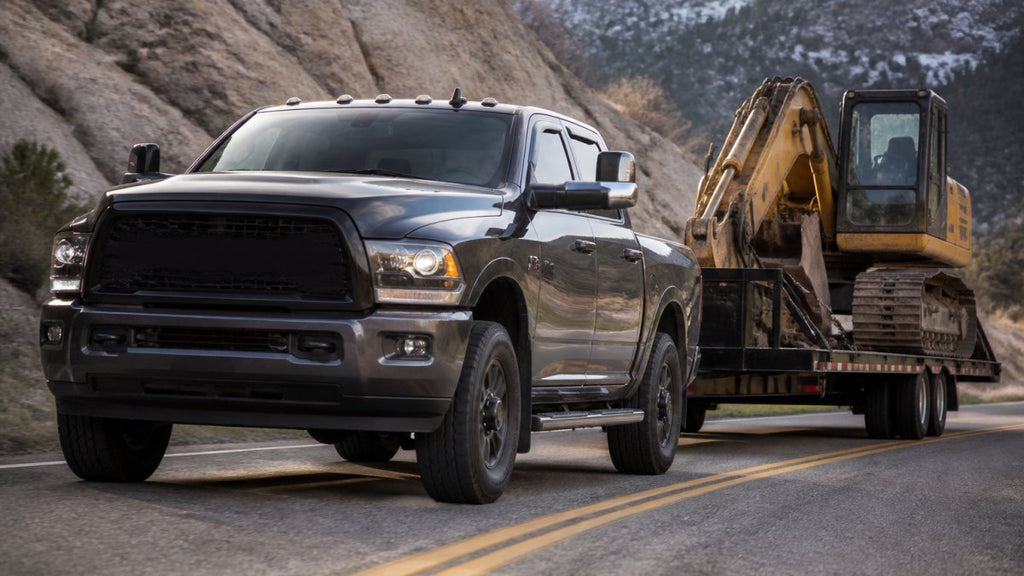
If you tow trailers or carry heavy payloads, a supercharger's benefits multiply. Towing demands sustained torque at lower RPMs, exactly where superchargers excel. A supercharged vehicle can maintain speed on grades without downshifting, reducing fuel consumption and improving safety.
Power band alignment refers to matching the supercharger's torque delivery to your typical driving conditions. If you spend most of your time in low-range four-wheel drive below 3,000 RPM, you want a supercharger that delivers maximum torque in that range. A twin-screw system is ideal.
Choosing the best supercharger for off-road torque comes down to matching the right forced induction system to your vehicle's engine, current modifications, and terrain demands. Twin-screw positive displacement superchargers deliver the immediate low-end torque that off-road driving demands, with reliability in dusty environments and straightforward maintenance. VT Superchargers offers bolt-on kits engineered for OEM-style fitment across platforms including Toyota, Nissan, Ford, and Jeep, with a 24-month warranty and financing options to make performance upgrades accessible. Explore the Toyota Land Cruiser 5.7 Supercharger Kit or Nissan Frontier 4.0 V6 Supercharger Kit to see how precision engineering and proven performance can transform your off-road capability.
Frequently Asked Questions
What type of supercharger is best for low-end torque and off-road performance?
Twin-screw positive-displacement superchargers deliver the best low-end torque for off-roading. Unlike centrifugal units that build boost gradually, twin-screw designs provide immediate power at low RPM ranges, crucial for navigating rocky terrain and overcoming traction challenges. The Eaton TVS and similar twin-screw designs maintain consistent torque delivery across the entire RPM range, making them ideal for off-road applications where smooth, predictable power is essential.
How much horsepower and torque can a supercharger add to an off-road vehicle?
Most quality supercharger kits deliver 40-70% more power depending on engine displacement and forced induction type. For example, VT Superchargers' kits for Toyota Tundra 5.7L and Land Cruiser 5.7L engines provide 40-60% gains, while smaller displacement engines may see similar percentage increases. Real-world dyno results vary based on ECU tuning, octane fuel grade, and forced induction efficiency, but expect substantial low-end torque increases that directly improve off-road traction and towing capacity.
Supercharger vs. turbocharger for off-road, which is better?
Superchargers are superior for off-road use because they eliminate turbo lag, delivering instant throttle response when you need immediate power on technical terrain. Twin-screw superchargers provide boost pressure immediately at idle and low RPM, essential for smooth take-offs on steep grades and rocky sections. Turbochargers, while efficient at sustained highway speeds, introduce lag and complexity unsuitable for the variable throttle demands of off-roading. Superchargers also integrate more seamlessly with modern ECU tuning and require less exotic fuel octane than highly boosted turbocharged setups.
Will a supercharger installation void my factory warranty or cause engine reliability issues?
Quality bolt-on supercharger kits from reputable manufacturers like VT Superchargers are engineered for OEM-style fitment and durability. A 24-month warranty on the supercharger unit itself provides peace of mind. However, engine warranty may be affected depending on your vehicle's original warranty terms, contact your dealer before installation. Reliability concerns are minimal with proper ECU calibration and maintenance; forced induction systems are proven in millions of vehicles worldwide. Professional installation and adherence to maintenance schedules ensure long-term durability comparable to naturally aspirated engines.
What maintenance do superchargers require for off-road use in dusty environments?
Belt-driven superchargers require regular belt inspection and replacement every 60,000-100,000 miles, depending on system design. Environmental sealing and dust filtration are critical for off-road reliability, ensure your supercharger kit includes sealed intake pathways and high-quality air filters to prevent contamination. Check belt tension periodically and monitor intercooler efficiency to manage heat soak in demanding conditions. Most modern systems are sealed for life internally, minimizing internal maintenance, but external components like belts and filters need attention in dusty off-road environments.
This article was written using GrandRanker
Related post


RECENT POSTS