Bolt-On Supercharger Kits With Financing: 2026 Guide
Table of Contents
- Bolt-On Supercharger Kits With Financing: What You Need to Know
- Understanding Supercharger Installation Cost and What's Included
- Financing Options and APR Rates for Performance Parts
- Supercharger vs. Turbocharger: Which Forced Induction Fits Your Needs
- Performance Gains and Real Horsepower Numbers
- Best Supercharger Brands and OEM-Style Fitment Comparison
- Installation Requirements and Warranty Coverage
- Step-by-Step Financing Workflow for Bolt-On Supercharger Kits
Bolt-On Supercharger Kits With Financing: 2026 Guide
Last Updated: July 24, 2026
Bolt-on supercharger kits with financing offer performance enthusiasts the most accessible entry point for forced induction upgrades. At VT Superchargers, we've tracked thousands of installations and found that financing barriers historically prevented qualified buyers from upgrading. This guide breaks down real costs, financing pathways, and performance expectations so you can make an informed decision.
Supercharger kits deliver 40-60% more horsepower depending on your engine, but total cost of ownership (parts, labor, tuning, supporting modifications) can exceed $8,000. Financing options have expanded dramatically since 2024, making these upgrades accessible to more vehicle owners.
Understanding Supercharger Installation Cost and What's Included
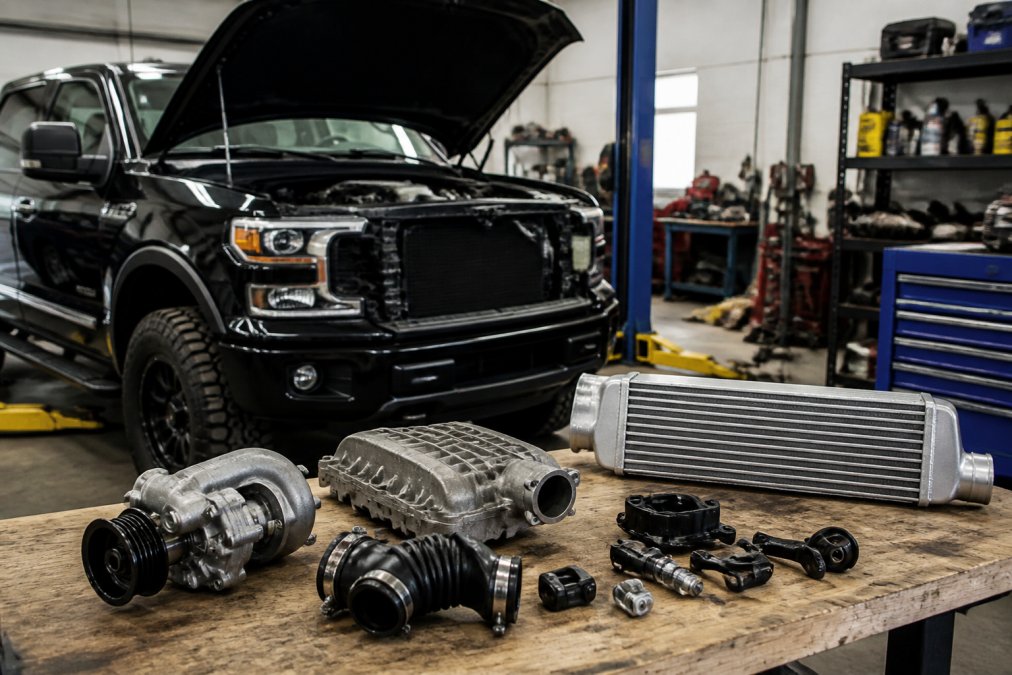
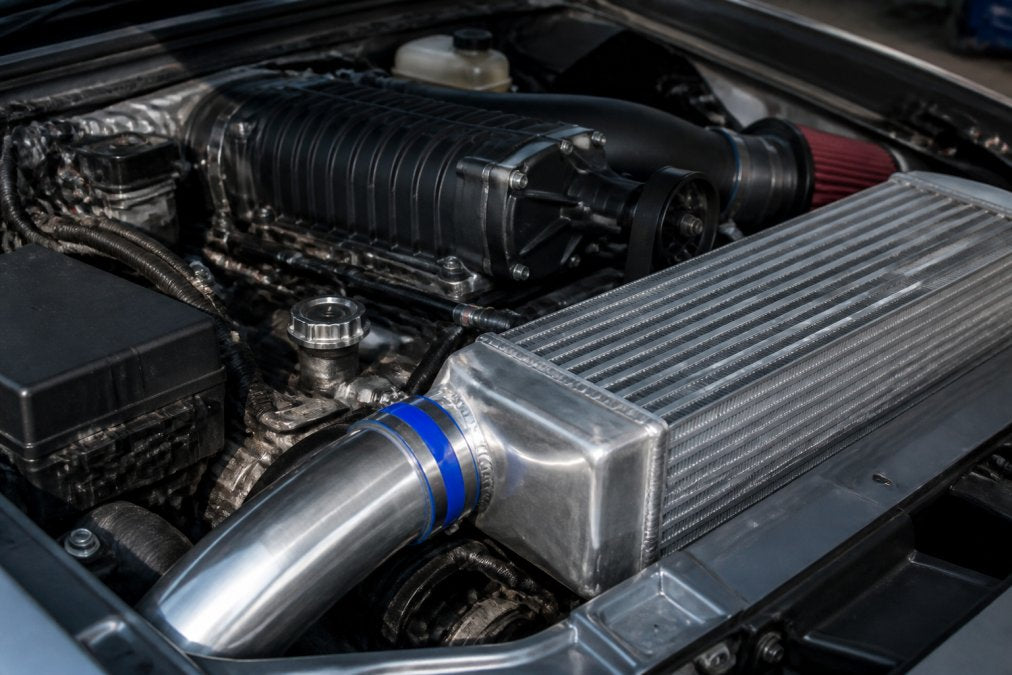
A complete installation involves the supercharger unit, supporting components like intercoolers and fuel system upgrades, professional labor, and ECU calibration.
Most bolt-on kits range from $4,500 to $7,500 depending on engine displacement and manufacturer. The VT Superchargers Nissan Frontier 4.0 V6 kit costs $5,500, while the Toyota Land Cruiser 5.7 kit runs $6,950.
Parts Cost vs. Labor Breakdown
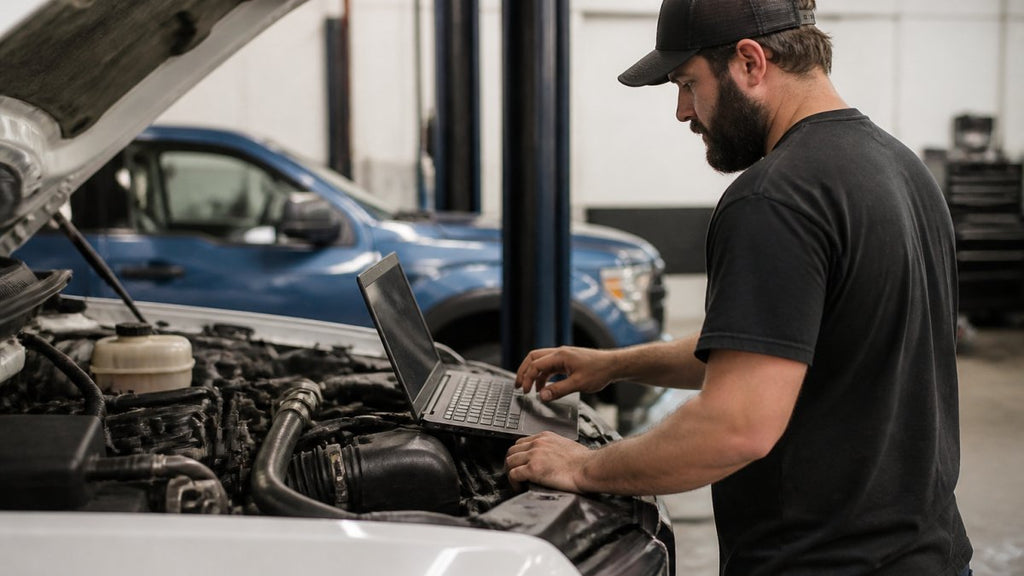
Professional installation labor typically adds $1,500 to $3,000. Supporting modifications often become necessary: fuel injector upgrades cost $600-$1,200, fuel pump and pressure regulator upgrades add $600-$1,200 combined, and intercooler systems add $800-$1,500 if not included. ECU tuning and calibration ($400-$800) ensures your engine runs safely at peak boost.
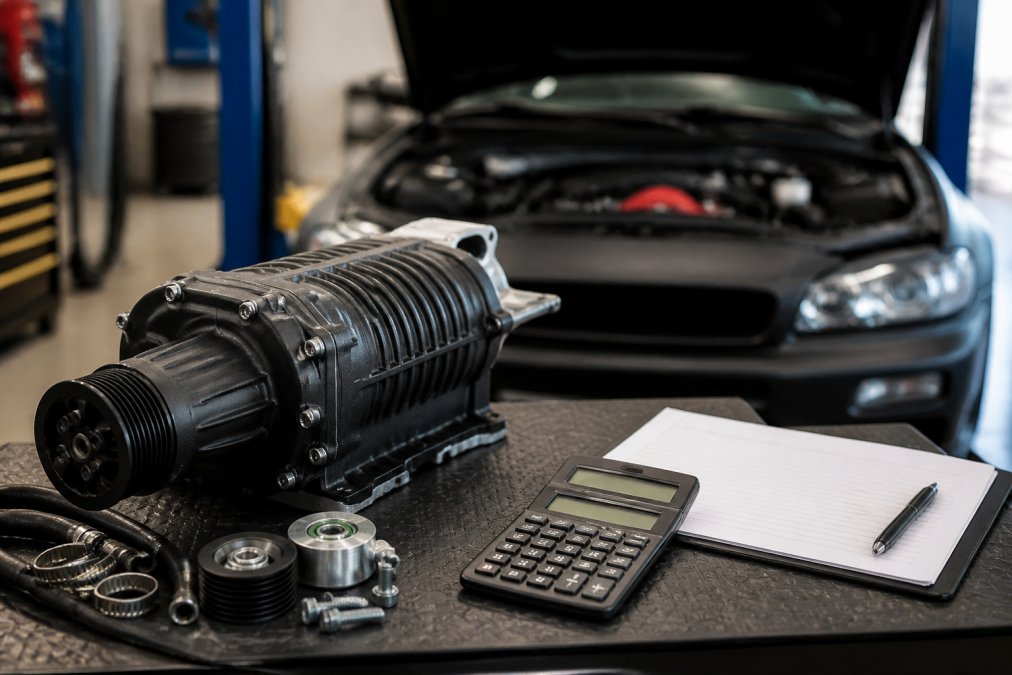
Total Cost of Ownership Calculator Framework
Use this framework to calculate your complete investment:
| Cost Category | Low Estimate | High Estimate | Your Amount |
|---|---|---|---|
| Supercharger Kit | $4,500 | $7,500 | $ |
| Professional Installation Labor | $1,500 | $3,000 | $ |
| Fuel System Upgrades | $600 | $2,500 | $ |
| Intercooler System | $0 | $1,500 | $ |
| ECU Tuning & Calibration | $400 | $800 | $ |
| Miscellaneous (Belts, Hoses, Gaskets) | $200 | $500 | $ |
| Total Cost of Ownership | $7,200 | $15,800 | $ |
A driver with $7,200 available can purchase an entry-level kit with basic labor. A driver targeting 60+ horsepower gains with supporting modifications faces a $12,000-$15,000 commitment. Financing spreads this across 24-60 months, making monthly payments manageable ($200-$500 depending on terms).
Pro Tip
Before calculating total cost, contact three local shops for labor quotes on your specific vehicle. Labor costs vary dramatically by region and shop expertise.
Financing Options and APR Rates for Performance Parts
The performance parts financing landscape offers multiple pathways, each with different approval criteria and interest rates.
Affirm and Third-Party Financing Programs
Affirm has become the dominant financing option for performance parts retailers, offering point-of-sale financing at checkout. The platform performs a soft credit pull (no impact to your credit score) and provides instant approval decisions. APR rates depend on your credit profile: excellent credit (750+) often qualifies for 0% APR over 12 months, while fair credit (650-700) may see 8-15% APR over 24 months.
A $10,000 purchase at 0% APR over 24 months equals $416.67 monthly. The same purchase at 12% APR over 24 months rises to $470 monthly, a $54 difference that compounds over time.
Other platforms serving the performance community include Klarna, Shop Pay financing, and manufacturer-backed programs. VT Superchargers offers accessible financing options through industry-standard platforms, ensuring competitive terms. Dealer credit programs represent another pathway, often featuring competitive rates (6-12% APR) but requiring larger down payments (20-30%) and longer approval timelines (3-5 business days).
Financing Risk Assessment: What to Consider
Before committing to financing, assess three critical risks: mechanical reliability, warranty coverage, and your ability to sustain monthly payments.
Mechanical Risk: Forced induction increases internal engine stress. If your engine has underlying issues, weak valve seats, marginal piston rings, or a tired fuel system, forced induction can accelerate failure. Financing a $12,000 upgrade on a vehicle with 150,000 miles carries more risk than the same upgrade on a 60,000-mile vehicle.
Warranty Implications: Most bolt-on supercharger kits carry 24-month warranties covering parts and labor. However, your factory powertrain warranty may be affected. Consult your dealer before installation if your vehicle still carries factory coverage.
Payment Sustainability: Calculate your monthly payment as a percentage of monthly income. A $400 monthly payment on a $5,000 monthly income (8%) is sustainable. The same payment on a $3,000 monthly income (13%) creates financial stress.
Watch Out
Financing a supercharger kit while carrying high-interest credit card debt (15%+) is inefficient. Pay down credit cards first, then finance the supercharger at lower rates.
Supercharger vs. Turbocharger: Which Forced Induction Fits Your Needs
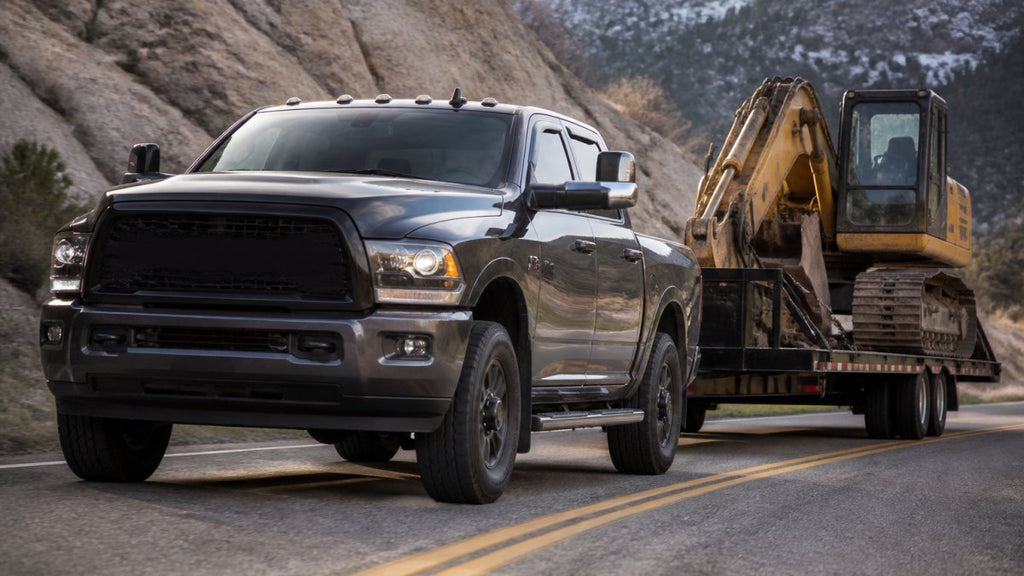
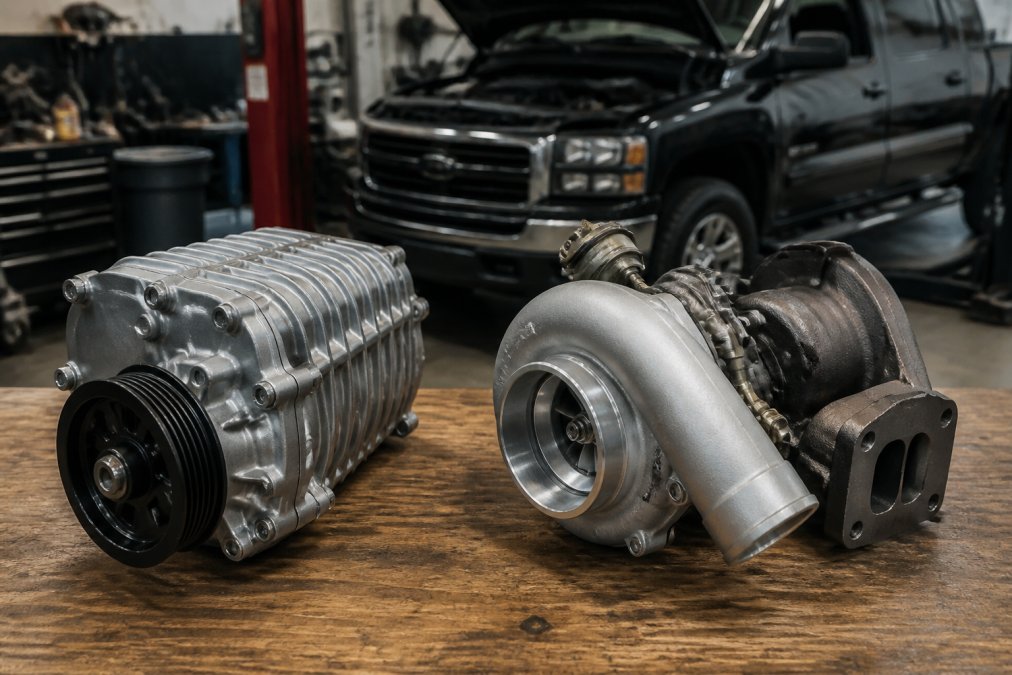
Superchargers use a belt-driven compressor connected directly to your engine's crankshaft, delivering boost instantly. A supercharger on a 5.7L V8 produces full boost pressure at 2,000 RPM, delivering immediate low-end torque. Turbochargers use exhaust gas energy to spin a turbine, with boost building gradually at 3,000-4,000 RPM.
For daily drivers and towing vehicles, superchargers win decisively. Instant boost response improves drivability in stop-and-go traffic. Turbochargers excel in high-RPM performance and fuel efficiency but require custom exhaust manifold fabrication, intercooler piping, and boost control systems, typically costing 30-50% more in labor.
For most drivers evaluating bolt-on supercharger kits with financing, the supercharger's instant response and simpler installation justify the choice.
Performance Gains and Real Horsepower Numbers
Horsepower gain depends directly on engine displacement, compression ratio, and boost pressure. A naturally aspirated 5.7L V8 producing 380 horsepower will gain 150-200 horsepower with a supercharger running 8-10 PSI boost, representing a 40-53% increase. Temperature and elevation also matter: a supercharger in 95°F heat produces less boost than the same system in 65°F conditions.
Forced induction also increases torque dramatically. A 5.7L V8 supercharger kit typically adds 200-250 lb-ft of torque across the 2,000-5,000 RPM band.
Dyno Testing and Torque Delivery
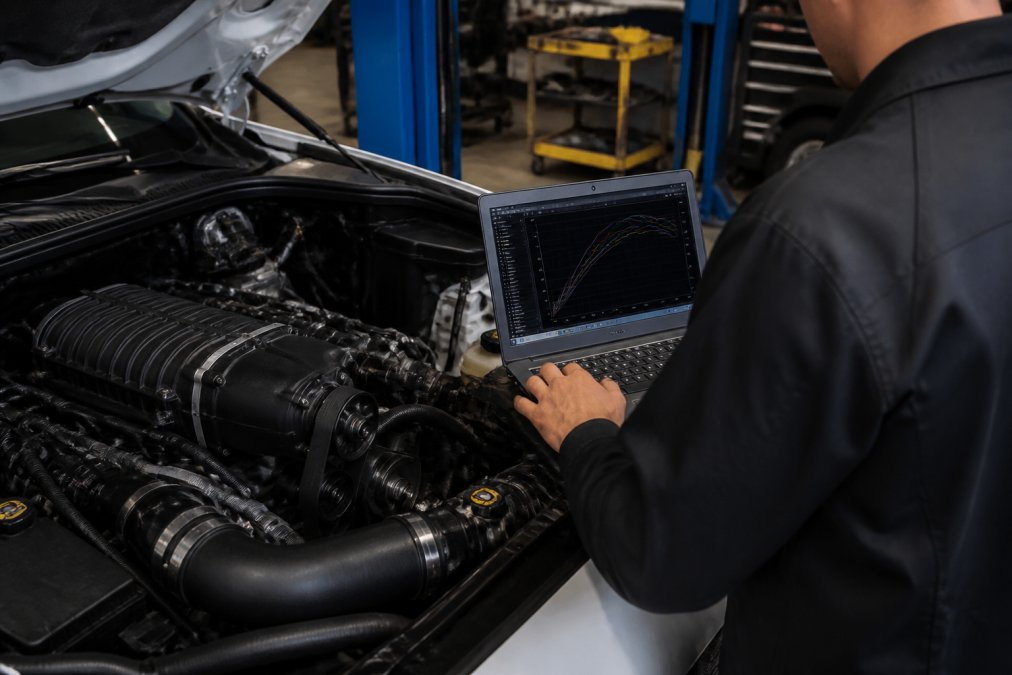
Professional dyno testing provides the only reliable measurement of your specific installation's power output. A chassis dyno measures wheel horsepower (accounting for drivetrain losses), while an engine dyno measures crankshaft horsepower. A typical V8 loses 15% of power through the transmission and drivetrain.
A 2019 Toyota Tundra 5.7L with a VT Superchargers kit typically produces 520-560 hp at the wheels (compared to 380 hp stock), representing a 37-47% increase. A 2015 Nissan Frontier 4.0L V6 supercharger installation yields 280-310 hp at the wheels (versus 261 stock), a 7-19% gain depending on supporting modifications and tuning quality.
Key Takeaway
Real horsepower gains depend on three factors: your baseline engine, boost pressure, and supporting modifications. Find dyno results from your specific vehicle and kit combination, then subtract 10-15% for conservative estimation.
Best Supercharger Brands and OEM-Style Fitment Comparison
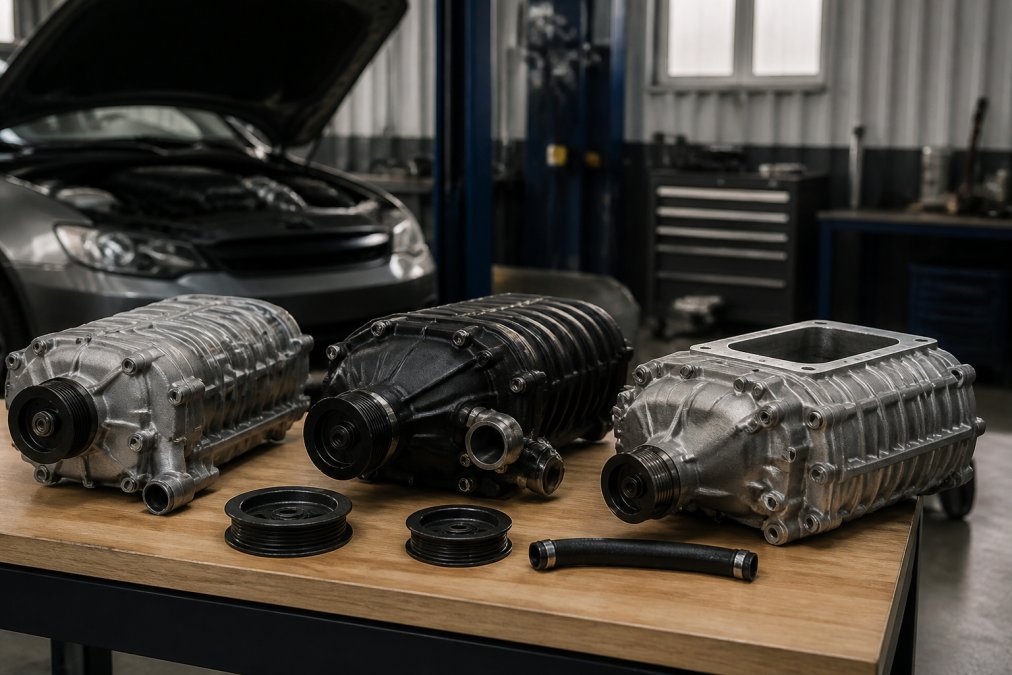
The supercharger market divides into three tiers: OEM-style bolt-on kits engineered for specific vehicles, universal kits requiring custom fabrication, and high-performance competition systems. For bolt-on applications, OEM-style fitment is non-negotiable.
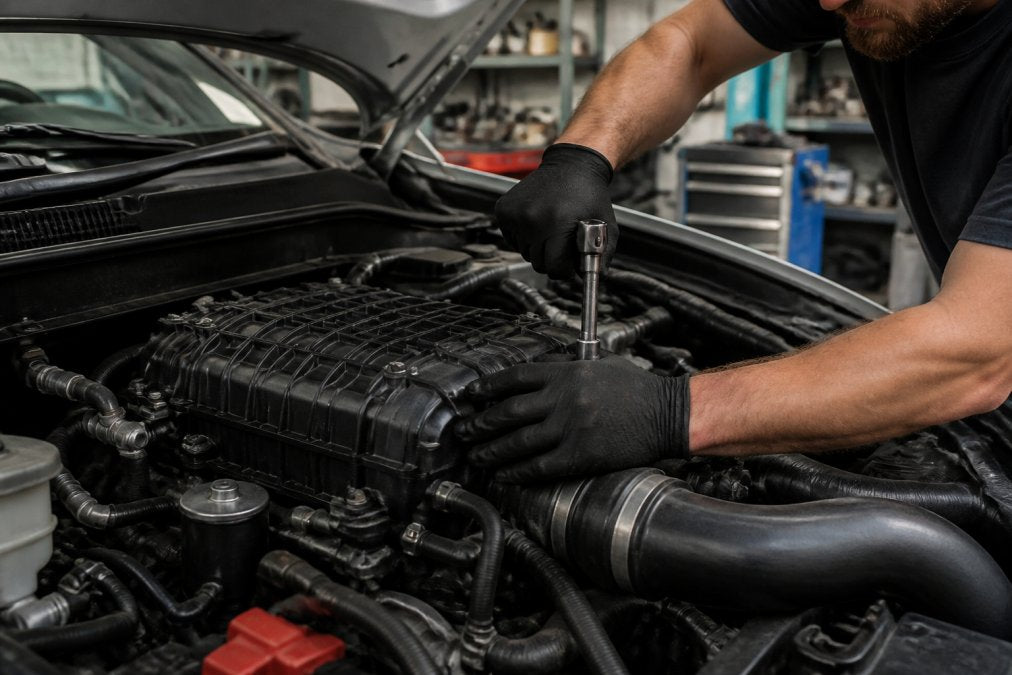
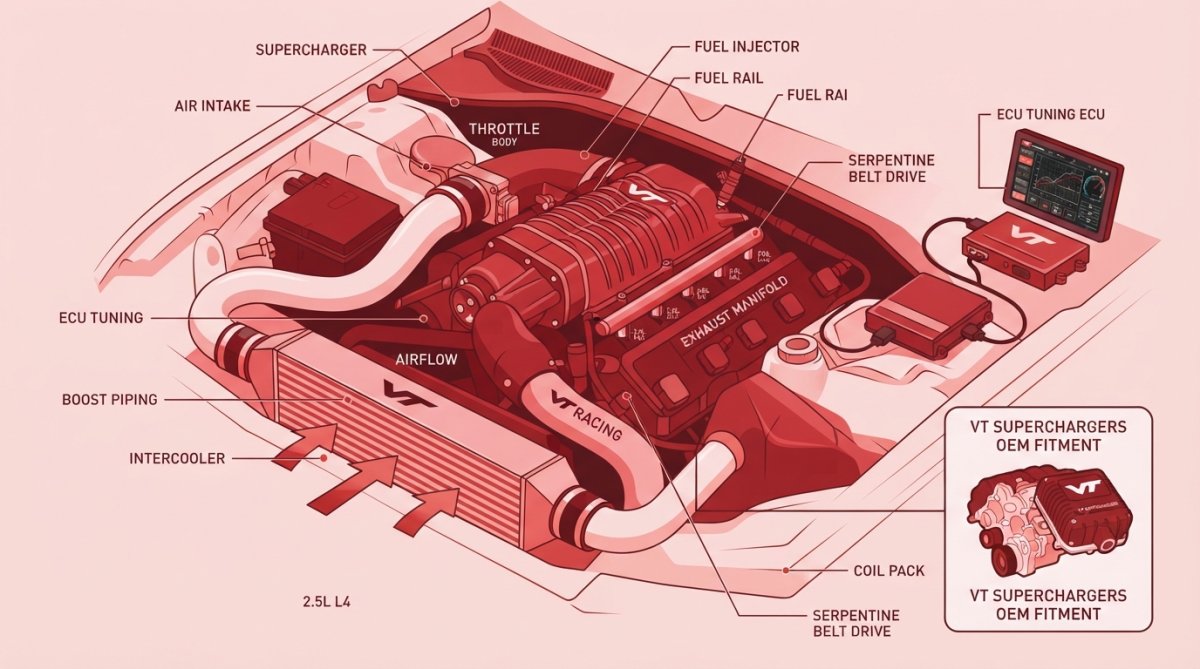
VT Superchargers specializes in precision-engineered bolt-on kits for specific vehicle makes including Dodge, Ford, Jeep, Mazda, Nissan, Suzuki, and Toyota. The engineering philosophy prioritizes OEM-style fitment, meaning your supercharger mounts where a factory component would, requires no cutting or welding, and integrates seamlessly with existing engine bay architecture.
VT Superchargers vs. Whipple vs. ProCharger
Whipple Superchargers and ProCharger represent established competition in the performance market. Whipple specializes in twin-screw superchargers known for high boost pressure (10-15 PSI) and extreme power output. ProCharger focuses on centrifugal superchargers with lower parasitic loss and better fuel economy.
VT Superchargers positions itself as the engineered-for-value alternative. Where Whipple and ProCharger kits often exceed $7,500 before installation, VT kits range from $5,400 to $6,950. A Whipple kit might produce 50 more horsepower than a VT equivalent, but at a cost premium of $3,000-$4,000 and requiring custom fabrication labor. For daily drivers and off-road vehicles, VT's trade-off favors value: you gain 40-60% more horsepower, improve torque delivery, and maintain warranty coverage without premium pricing.
VT Superchargers backs its kits with 24-month coverage on parts and labor.
Vehicle Compatibility and Bolt-On Kit Selection
Supercharger kit compatibility depends on engine displacement, intake manifold design, and available engine bay space. VT Superchargers offers dedicated kits for specific engine platforms:
- Toyota Land Cruiser 5.7L ($6,950): Twin-screw forced induction with 40-60% power gain
- Toyota Tundra 5.7L ($6,950): Identical platform to Land Cruiser, same performance envelope
- Nissan Frontier 4.0L V6 ($5,500): Mid-range V6 with 40-60% gains
- Nissan Xterra 4.0L V6 ($5,400): Compact SUV platform, 50-70% gains due to lighter weight
Always verify your vehicle's specific year, engine code, and transmission type before purchasing. Custom fabrication becomes necessary when your vehicle isn't covered by an OEM-style kit, but expect labor costs of $2,500-$4,000 and installation timelines of 4-8 weeks.
Installation Requirements and Warranty Coverage
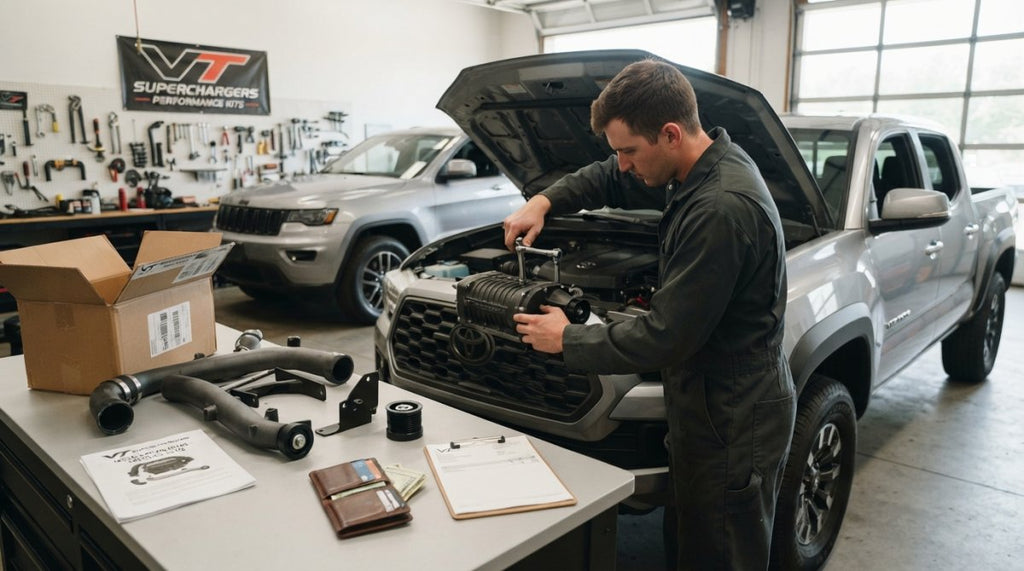
Professional installation ensures your supercharger operates safely and reliably. A shop with experience on your specific vehicle completes the work faster, troubleshoots unexpected issues confidently, and backs the work with labor warranty.
DIY vs. Professional Installation Labor
DIY installation is theoretically possible if you possess intermediate mechanical skills, specialty tools, and substantial time (20-40 hours). The risks are substantial: a misaligned supercharger belt slips under load, loose fuel line connections leak fuel into the engine bay, and incorrect ECU calibration causes engine knock, which damages pistons and valves in seconds.
Professional installation from a shop specializing in your vehicle's platform provides insurance against these failures. Spending $2,000 on labor prevents a $5,000 engine failure. For drivers financing the entire installation, the labor cost becomes part of your monthly payment, spreading $2,000 across 24 months ($83/month).
24-Month Warranty Terms and What's Protected
VT Superchargers' 24-month warranty covers all parts and labor defects under normal operation. If your supercharger compressor fails due to manufacturing defect, VT covers replacement and reinstallation labor.
Warranty exclusions are important to understand. Damage from improper installation, detonation (engine knock), or operating above recommended boost levels voids coverage. Supporting components purchased separately may carry their own 12-month warranty, not the 24-month supercharger warranty.
For financed purchases, warranty coverage becomes especially critical. If your supercharger fails at month 18 of a 24-month financing term, the warranty covers replacement. If it fails at month 25, you're responsible for repair costs while still making financing payments.
Pro Tip
Request a copy of the warranty documentation before signing financing paperwork. Understand exactly which components are covered, what voids coverage, and how warranty claims are processed.
Step-by-Step Financing Workflow for Bolt-On Supercharger Kits
The path from "I want a supercharger" to "my supercharger is installed and tuned" involves multiple decision points and approval stages.
Credit Approval Process and Monthly Payments
Step one is determining your financing eligibility. Most third-party platforms perform a soft credit inquiry, which doesn't impact your credit score. This takes 2-3 minutes online and provides an instant approval decision with your specific APR rate.
Your approval amount depends on your credit score, income verification, and existing debt. A borrower with a 750+ credit score and stable income typically qualifies for the full purchase amount. A borrower with a 650 credit score may qualify for only 70-80% of the purchase amount, requiring a down payment of 20-30%.
Once approved, you receive a loan agreement specifying your APR, term length (12, 24, 36, or 60 months), and monthly payment. Compare this carefully against alternatives. A $10,000 purchase at 0% APR over 24 months costs $416.67 monthly with zero interest. The same purchase at 12% APR over 36 months costs $332.20 monthly but totals $11,959 due to accumulated interest, a $1,959 difference.
Monthly payments are debited automatically from your bank account on the same date each month. You must maintain sufficient account balance, as missing a payment triggers late fees (typically $35-$50) and may impact your credit score.
From Order to Installation: Timeline and Support
After financing approval, your shop orders the supercharger kit. Lead times vary: VT Superchargers maintains inventory for popular platforms, enabling same-week delivery. Custom kits may require 2-4 weeks for manufacturing and shipping.
Once the kit arrives, your shop schedules installation. Lead times depend on shop capacity. A high-volume shop may schedule you within 1-2 weeks. A specialized shop with a waiting list might require 4-8 weeks.
The installation process typically unfolds across 3-5 business days depending on complexity. After installation, your shop performs a professional dyno tune ($400-$800, often included in labor estimates). Final inspection includes a test drive to confirm smooth operation, no unusual noises, and proper boost response.
| Workflow Stage | Typical Duration | Key Decisions |
|---|---|---|
| Financing Approval | 5-15 minutes | APR rate, term length, down payment |
| Kit Procurement | 1-4 weeks | In-stock vs. custom, lead time acceptance |
| Installation Scheduling | 1-8 weeks | Shop selection, installation timing |
| Physical Installation | 3-5 days | Unexpected modifications, supporting upgrades |
| Dyno Tuning | 1-2 days | Tune profile, boost level, performance targets |
| Final Inspection | 1 day | Verification, documentation, pickup |
Financing a bolt-on supercharger kit makes immediate performance upgrades accessible to drivers who might otherwise wait years to save cash. VT Superchargers simplifies this path by offering engineered bolt-on kits with OEM-style fitment, transparent pricing ($5,400-$6,950 depending on platform), accessible financing options, and a 24-month warranty that protects your investment. Start by identifying your vehicle's compatible kit, calculating your total cost of ownership using the framework above, and comparing APR rates across multiple financing platforms. The difference between a 0% and 12% APR loan represents hundreds of dollars in your pocket.
Frequently Asked Questions
How much does a bolt-on supercharger kit cost with installation labor?
Bolt-on supercharger kits range from $5,400 to $6,950 for the kit alone, depending on your vehicle. For example, the Nissan Xterra 4.0 V6 kit is $5,400, while Toyota Land Cruiser and Tundra 5.7 kits are $6,950 each. Professional installation labor typically adds $1,500-$3,000, bringing total cost of ownership to $7,000-$10,000. DIY installation can save labor costs if you have mechanical experience and the right tools.
What financing options are available for bolt-on supercharger kits?
Most retailers offer Affirm and third-party financing programs with APR rates ranging from 0% promotional offers to 10-20% depending on credit approval and terms. Monthly payments vary based on kit price and financing length, a $6,000 kit financed over 12 months at 10% APR costs roughly $530/month. Always review APR, monthly payment amounts, and warranty implications before committing to ensure the financing aligns with your budget and vehicle reliability needs.
Will a supercharger void my factory warranty or cause engine reliability problems?
Factory powertrain warranties may be affected by forced induction modifications, so check your vehicle's warranty terms before installation. Quality bolt-on kits engineered for OEM-style fitment, like those from VT Superchargers, include their own 24-month warranty covering parts and defects. Proper ECU calibration, fuel system upgrades, and intercooler installation are critical to reliability. Many customers successfully run superchargers on daily drivers and tow vehicles without issues when kits are installed correctly and maintained properly.
How much real horsepower can I expect from a bolt-on supercharger kit?
Bolt-on supercharger kits typically deliver 40-70% more horsepower depending on engine size and tuning. For example, a Toyota 5.7L engine may gain 150-250+ hp, while a Nissan 4.0L V6 gains 100-180 hp. Dyno testing confirms real gains in both horsepower and torque. Low-end torque delivery improves significantly, which benefits towing and off-roading. Results vary based on your vehicle's current condition, fuel octane, and ECU calibration, so request dyno numbers specific to your model before purchase.
Is a bolt-on supercharger kit a DIY job, or do I need professional installation?
Bolt-on supercharger kits are engineered for precise, OEM-style fitment, but installation complexity varies by vehicle. Some experienced DIYers complete installation in 8-16 hours with basic tools; others prefer professional installers to ensure proper fuel system tuning, intercooler setup, and ECU calibration. Professional installation costs $1,500-$3,000 but guarantees warranty coverage and reliability. If you've never modified an engine before, professional installation is recommended to avoid costly mistakes and protect your investment.
Why choose VT Superchargers over Whipple or ProCharger?
VT Superchargers specializes in bolt-on kits with OEM-style fitment engineered for real performance and reliability across Dodge, Ford, Jeep, Mazda, Nissan, Suzuki, and Toyota vehicles. Our kits offer competitive pricing, $5,400-$6,950 depending on engine, combined with a 24-month warranty and worldwide shipping. While established brands like Whipple and ProCharger have longer histories, VT delivers proven power gains, accessible financing, and dedicated customer support. Many customers choose VT for the balance of performance, affordability, and warranty protection.
This article was written using GrandRanker
Related post


RECENT POSTS