Supercharger Alternatives for Daily Driving: Beyond Whipple
Table of Contents
- Whipple Superchargers vs. Alternative Options for Daily Driving
- Twin-Screw vs. Centrifugal Supercharger Designs: Which Works Better Daily
- ProCharger Daily Driving: Centrifugal Performance for Street Use
- Magnuson Supercharger Daily Driving: Roots-Style Reliability
- Supercharger vs. Turbo for Daily Drivers: Real-World Driveability
- Supercharger Maintenance for Daily Driving: Long-Term Costs and Reliability
- VT Superchargers: A Proven Alternative for Daily Drivers
- Choosing the Right Supercharger Alternative: Daily Driver Decision Framework
Last Updated: July 26, 2026
When shopping for forced induction upgrades, many drivers assume Whipple superchargers are the only serious option. A whipple superchargers alternative for daily driving can deliver comparable power, better low-end torque, and lower heat generation, depending on your vehicle, budget, and how you actually use your truck or car. At VT Superchargers, we've engineered bolt-on supercharger kits that prove you don't need the Whipple name to get genuine performance gains. Twin-screw designs, centrifugal systems, and OEM-style fitment kits each solve different problems for drivers who live with their vehicles every day.
Daily driving demands different priorities than weekend racing. Your commute needs throttle response that feels natural, fuel economy that doesn't crater, and reliability that survives six-figure mileage. This guide breaks down the real-world tradeoffs between supercharger designs and shows you how to evaluate which system fits your daily driver.
Whipple Superchargers vs. Alternative Options for Daily Driving
Why Daily Drivers Need Different Priorities
A weekend racer cares about peak horsepower at 6,000 RPM. A daily driver cares about pulling smoothly from 2,000 RPM while towing, not overheating in traffic, and not requiring premium fuel.
Whipple superchargers deliver maximum power through aggressive twin-screw compression, producing tremendous top-end boost but significant heat soak. A driver stuck in rush-hour traffic sees boost pressure climb, intake charge temperature rise, and the engine's computer retard timing to prevent detonation. The result: less power when you need it most.
Daily driver alternatives prioritize different metrics. Centrifugal superchargers generate less heat and demand less tuning. Roots-style forced induction delivers immediate low-end torque without requiring high RPM to generate boost. OEM-style bolt-on kits match your vehicle's factory engineering, meaning installation is cleaner, warranty implications are clearer, and long-term reliability is more predictable.
Pro Tip
The best daily driver supercharger improves drivability in the RPM range you actually use 90% of the time, typically 2,500 to 5,500 RPM for highway cruising and towing.
Twin-Screw vs. Centrifugal Supercharger Designs: Which Works Better Daily
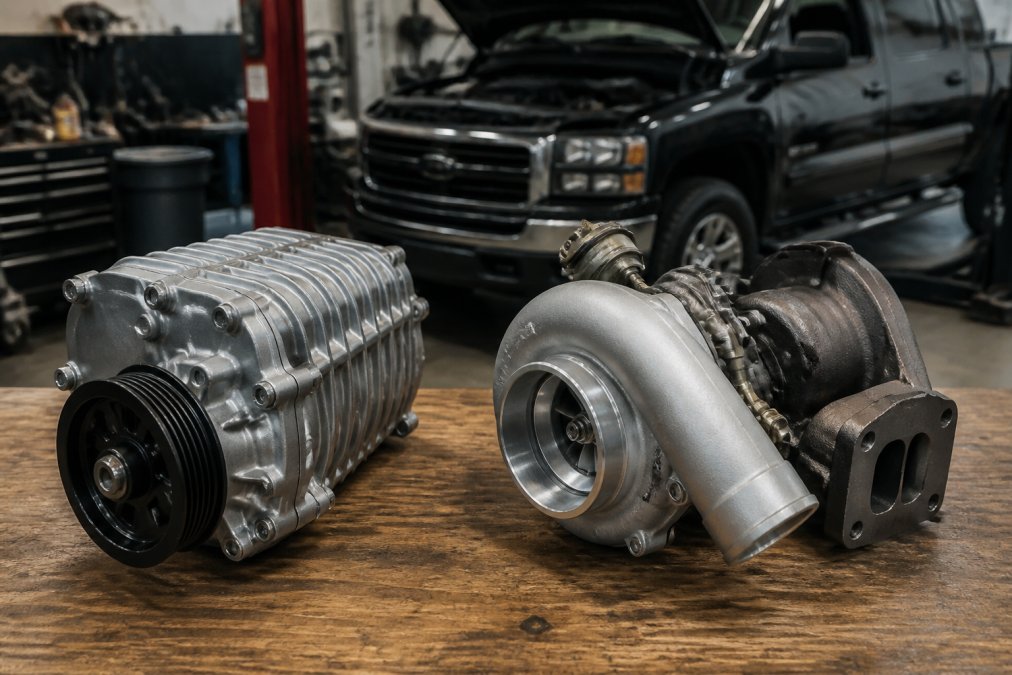
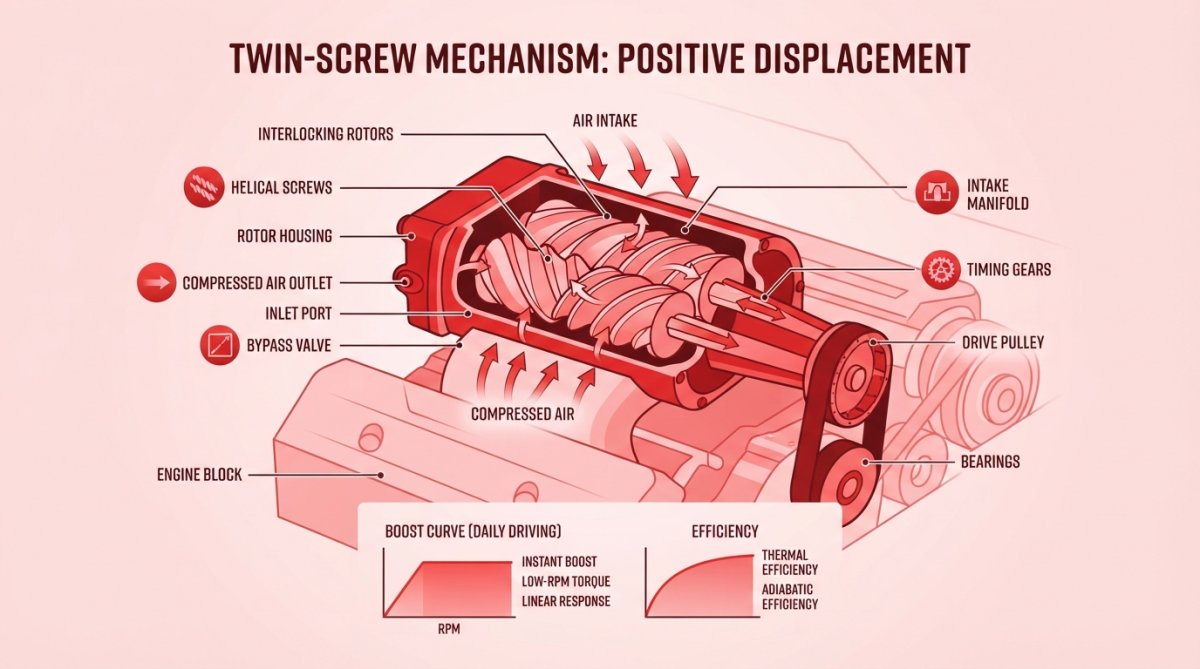
Twin-screw superchargers (Whipple, Magnuson TVS) use two interlocking rotors that trap air and push it into the engine. They generate boost almost instantly, even at 1,500 RPM, because they're driven directly by a belt connected to the crankshaft. The tradeoff is heat and complexity. Twin-screw designs compress air through the rotor mesh itself, creating friction and substantial heat. In daily driving, heat soak becomes a real problem. The engine computer detects rising intake charge temperatures and pulls timing, reducing power and efficiency.
Centrifugal superchargers (ProCharger, Vortech) work like a turbo without exhaust gas. An impeller spins at high speed, drawing air inward and flinging it outward into a diffuser chamber. This design produces less heat because air is cooled during diffusion. Centrifugal systems also require less maintenance and simpler belt tensioning. The tradeoff is RPM dependency. Centrifugal superchargers need higher engine speeds to generate meaningful boost. At 2,000 RPM in traffic, a centrifugal system produces minimal boost. At 5,500 RPM on the highway, it's making full power. This characteristic actually suits daily driving well: efficiency at low RPM and strong power when you ask for it.
Low-End Torque and Throttle Response Comparison
Twin-screw designs dominate low-end torque delivery. A Whipple-equipped truck starts making meaningful boost around 2,000 RPM. By 3,000 RPM, it's producing 80-90% of peak boost pressure. This immediate availability transforms how the vehicle behaves during everyday driving. Automatics shift more smoothly because they have predictable torque on demand.
Centrifugal superchargers feel slower off the line. A ProCharger or Vortech system might not produce significant boost until 3,500-4,000 RPM. In the critical 2,000-3,000 RPM range where highway merging happens, the engine feels naturally aspirated.
Roots-style superchargers (Magnuson) split the difference. They're belt-driven like twin-screws but use a different rotor design, producing boost earlier than centrifugal systems but with slightly less heat than Whipple designs.
Watch Out
A common mistake is choosing a centrifugal supercharger for daily driving without understanding the RPM curve. Drivers report feeling underpowered in stop-and-go traffic, then overpowered on the highway.
Top-End Power and RPM Range Differences
Twin-screw superchargers make peak power earlier and maintain it longer. A Whipple system hits maximum boost at 5,500-6,000 RPM and holds that boost through 7,000+ RPM. For a daily driver towing at 65 MPH, this translates to strong pulling power across the entire cruise range.
Centrifugal superchargers peak later but can sustain high boost at very high RPM. For daily driving, most drivers operate between 2,000-5,500 RPM. What matters is how the engine feels when you're actually driving, determined more by low-end response and heat management than absolute peak numbers.
ProCharger Daily Driving: Centrifugal Performance for Street Use
ProCharger has built a reputation as the thinking driver's alternative to Whipple. Their centrifugal systems prioritize efficiency, heat management, and reliability over peak power.
A ProCharger installation adds 40-80 horsepower to most naturally aspirated engines. For a 2019 Ford F-150 5.0L, expect 60-75 additional horsepower and 80-100 additional torque. The advantage emerges in daily driving. ProCharger systems run cooler, meaning the engine computer doesn't need to aggressively retard timing in traffic. Fuel economy impact is typically 1-2 MPG on the highway. The system is also quieter; centrifugal superchargers produce a distinctive high-pitched whine, less intrusive than a twin-screw's mechanical scream.
ProCharger's bolt-on kits are available for many vehicles, including Dodge, Ford, Jeep, and some Toyota trucks. Installation typically requires 8-12 hours of professional shop time.
Heat Soak and Intercooler Considerations
Heat soak is where ProCharger's design philosophy becomes tangible. A centrifugal supercharger generates less heat than a twin-screw because compression is more efficient. However, any forced induction system benefits from an intercooler, a heat exchanger that cools compressed air before it enters the engine.
ProCharger offers both air-to-air and air-to-water intercooler configurations. Air-to-air systems are simpler and cheaper (usually $500-1,500 additional), but they lose cooling effectiveness in traffic when ambient air temperature is high. Air-to-water systems (typically $2,000-3,500 additional) use engine coolant to cool charged air, maintaining consistent charge temperatures even in stop-and-go driving.
For daily drivers in hot climates or who frequently tow, an air-to-water intercooler is worth the investment. Research from SAE International technical publications indicates that intake charge temperature increases of just 20 degrees Fahrenheit can reduce horsepower output by 3-5% and increase detonation risk.
Magnuson Supercharger Daily Driving: Roots-Style Reliability
Magnuson specializes in Roots-style superchargers, a design that's been around since the 1960s. Roots-style superchargers use two figure-eight shaped rotors that trap air and push it into the engine. They're belt-driven like twin-screws but generate less heat because compression is less aggressive. A Magnuson TVS system produces boost almost as early as a Whipple but with a softer heat signature.
Magnuson kits are available for select trucks and SUVs. A typical installation adds 50-90 horsepower depending on engine size and tuning. The advantage is reliability: Roots-style superchargers have fewer moving parts than centrifugal designs and less internal stress than twin-screws. Many systems exceed 150,000 miles without significant wear.
Installation Complexity and Bolt-On Fitment
One of Magnuson's strengths is engineering for OEM-style fitment. Their kits integrate with factory engine bay layouts, minimizing modification requirements. A Magnuson installation typically requires 10-16 hours of professional shop time. The installation process is often cleaner because Magnuson engineers for the specific vehicle platform.
VT Superchargers has engineered similar OEM-style fitment principles into our kits for Toyota, Nissan, and other platforms. A supercharger that requires minimal engine bay modification is more reliable, easier to diagnose, and less likely to create unforeseen compatibility issues.
Key Takeaway
OEM-style fitment matters more for daily drivers than for track-focused builds. Every custom bracket and improvised hose is a potential failure point during 100,000-mile ownership.
Supercharger vs. Turbo for Daily Drivers: Real-World Driveability
Turbochargers compress air using exhaust gas energy. This design is incredibly efficient on a dyno; turbos can add 100+ horsepower with minimal mechanical complexity. However, turbos introduce turbo lag: the delay between pressing the throttle and feeling boost pressure.
A turbocharged daily driver at 2,000 RPM feels underpowered until the turbo spools up around 3,500 RPM. Then suddenly there's boost, and the engine lurches forward. This on-off characteristic is fatiguing in traffic and makes smooth acceleration difficult.
Superchargers eliminate turbo lag entirely. Because they're belt-driven, they're already spinning whenever the engine is running. Press the throttle at 1,500 RPM, and a supercharger responds immediately. This makes daily driving significantly more pleasant: smooth acceleration, predictable power delivery, and no surprises when merging or passing.
The tradeoff is parasitic loss. A supercharger consumes 5-10% of engine power just to run itself. For daily drivers, a supercharger is almost always the better choice.
Fuel Economy and Commute Impact
A supercharger reduces fuel economy. Expect 1-3 MPG loss on the highway and 2-4 MPG loss in city driving. However, fuel economy impact is heavily dependent on driving behavior. A driver who uses the supercharger aggressively will see larger MPG penalties. A driver who treats it as a tool for occasional passing will see minimal impact.
If your commute is under 30 miles per day and you rarely use the extra power, fuel economy impact is negligible. If you're towing regularly or driving highway miles aggressively, the fuel cost becomes a meaningful consideration.
Supercharger Maintenance for Daily Driving: Long-Term Costs and Reliability
A supercharger is a mechanical device with moving parts. Unlike a turbocharger, which is exposed to extreme exhaust temperatures, a supercharger operates in a relatively benign environment. Long-term reliability is excellent if the system is maintained properly.
Routine maintenance includes oil changes at manufacturer intervals, intercooler cleaning every 20,000-30,000 miles, supercharger belt inspection at 50,000 miles and replacement at 100,000-150,000 miles, and fuel system cleaning every 30,000 miles. Total maintenance cost over 100,000 miles is typically $1,500-2,500 above what a naturally aspirated engine would require.
The critical factor is whether the supercharger system is properly tuned and the engine isn't pushed beyond its design limits. A well-engineered kit on a stock engine with conservative tuning will run reliably for 200,000+ miles.
Warranty Coverage and Daily Driver Durability
Warranty coverage varies between supercharger manufacturers. Whipple typically offers 3-year/36,000-mile warranties. ProCharger offers similar coverage. VT Superchargers stands behind our kits with a 24-month warranty covering manufacturing defects and workmanship.
For daily drivers, warranty length matters less than what's actually covered. Most supercharger warranties exclude damage from improper tuning, detonation, or abuse. The real durability question is whether the engine platform can handle forced induction long-term. A Toyota 5.7L or Nissan 4.0L V6 is inherently strong and tolerates supercharging well.
Cold-Start Performance and Climate Considerations
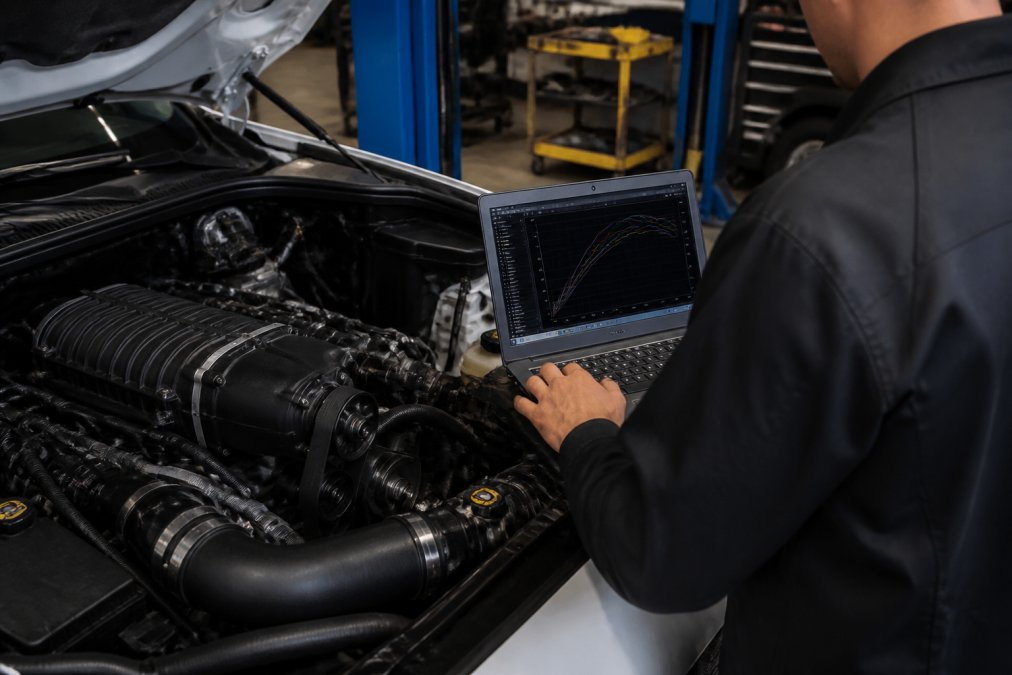
Superchargers introduce a real-world challenge in cold climates: cold-start performance. A properly tuned supercharger system includes cold-start logic that limits boost pressure until the engine reaches operating temperature. Most modern supercharger kits handle this automatically through ECU calibration.
Heat soak in extreme heat is the opposite concern. A driver in Arizona or Texas with a supercharged truck idling in traffic on a 110-degree day will experience significant heat buildup. An air-to-water intercooler becomes essential in these climates.
VT Superchargers: A Proven Alternative for Daily Drivers
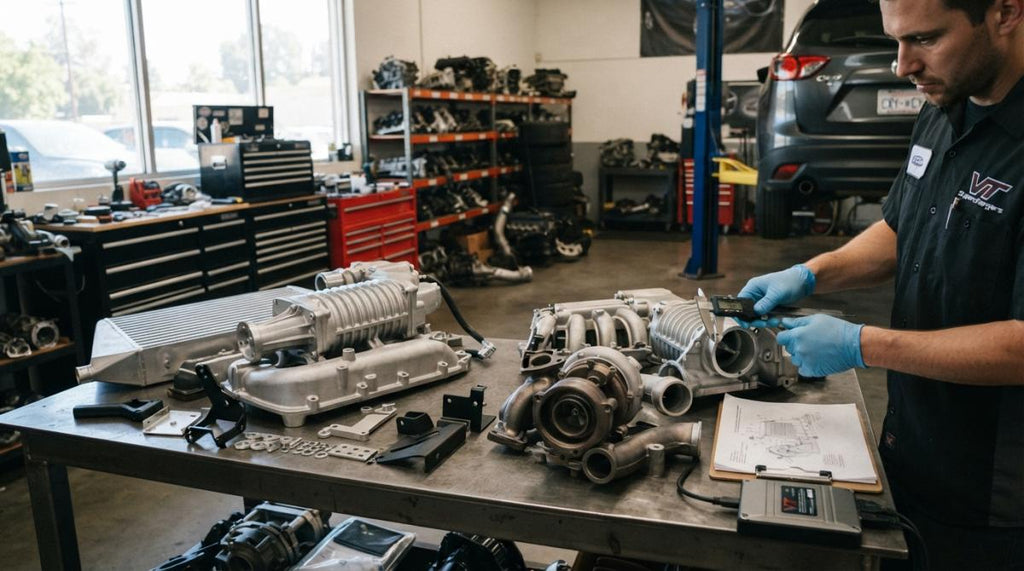
VT Superchargers has engineered supercharger kits specifically for daily driver use cases. Our philosophy is straightforward: real performance gains without the installation complexity or reliability concerns that plague some aftermarket systems.
We offer bolt-on supercharger kits for Toyota (5.7L, 4.0L), Nissan (4.0L Frontier and Xterra), Mazda (2.0L Skyactiv), and select Dodge platforms. Each kit is engineered for OEM-style fitment, meaning installation requires minimal engine bay modification and integrates cleanly with factory systems.
A VT Superchargers kit for a Toyota Land Cruiser 5.7L adds 40-60% more power, translating to roughly 60-90 additional horsepower and 100-150 additional torque. For a Nissan Frontier 4.0L, expect similar gains.
OEM-Style Fitment and Installation Reality
Our kits are designed for precise fitment. The supercharger mounting brackets, intercooler routing, and fuel system integration all account for the specific engine bay layout of each vehicle platform. A typical VT Superchargers installation requires 12-16 hours of professional shop time. We work with a network of approved installers who understand our kits and can execute installation properly.
The real advantage of OEM-style fitment emerges over time. A custom-built supercharger installation with improvised brackets becomes a reliability liability. Our kits minimize this risk by engineering for the specific vehicle from the start.
Pro Tip
When evaluating any supercharger kit, ask the manufacturer for detailed installation documentation and photos of completed installations in your specific vehicle. If they can't provide real examples, that's a red flag.
Real Power Gains and Torque Delivery
VT Superchargers publishes conservative power estimates because we test on real vehicles with real tuning. A 40-60% power increase for our Toyota 5.7L kit means 60-90 additional horsepower at the crank. For a daily driver, the real benefit is torque delivery across the RPM range you actually use. A supercharged truck towing a trailer feels the difference immediately. Low-end torque is stronger, mid-range pulling power is noticeably improved, and the engine doesn't labor on grades or during passing maneuvers.
Choosing the Right Supercharger Alternative: Daily Driver Decision Framework
Selecting the right supercharger alternative requires honest assessment of your vehicle, driving patterns, and priorities. Start by identifying your vehicle platform and confirming supercharger availability. Next, define your actual use case. Are you towing regularly? Commuting on highways? Doing city driving? Towing frequently demands immediate low-end torque, favoring twin-screw designs. Highway commuting benefits from heat management, favoring centrifugal designs.
Finally, assess your tolerance for heat management, fuel economy impact, and installation complexity.
| Supercharger Type | Low-End Torque | Heat Generation | Fuel Economy Impact | Installation Complexity | Best For |
|---|---|---|---|---|---|
| Twin-Screw (Whipple) | Excellent | High | 2-4 MPG loss | Moderate | Towing, off-road |
| Centrifugal (ProCharger) | Good | Low | 1-2 MPG loss | Moderate | Highway cruising |
| Roots-Style (Magnuson) | Excellent | Moderate | 2-3 MPG loss | Moderate | Balanced daily use |
| OEM-Style (VT Superchargers) | Excellent | Moderate | 2-3 MPG loss | Low | Daily driving, reliability |
Matching Forced Induction to Your Commute and Towing Needs
A driver with a 30-mile highway commute and occasional weekend towing should prioritize heat management and mid-range torque. A centrifugal system (ProCharger) or OEM-style kit (VT Superchargers) suits this profile better than an aggressive twin-screw.
A driver with a 10-mile city commute and frequent off-road use should prioritize low-end response and durability. A twin-screw (Whipple, Magnuson) or OEM-style kit with conservative tuning suits this profile.
A driver with a 50-mile daily commute in a hot climate should prioritize fuel economy and heat management. A centrifugal system with an air-to-water intercooler is the best choice. Match the supercharger design to the driving scenario where you'll use it most, not the scenario where you'll use it occasionally.
Insurance and Emissions Compliance for Modified Daily Drivers
A supercharger modification affects insurance and emissions compliance. Most insurance companies require disclosure of modifications and may adjust premiums. Before purchasing a supercharger kit, contact your insurance provider and confirm they'll cover the modified vehicle.
Emissions compliance varies by state and vehicle platform. In California and other states with strict emissions regulations, a supercharger installation must not increase emissions beyond factory levels. Most professional supercharger kits include emissions-compliant tuning, but verify this with the manufacturer before purchasing.
Federal law (Clean Air Act) prohibits removing or disabling emissions equipment. A supercharger installation that requires deleting a catalytic converter or disabling an emissions sensor is illegal, regardless of state regulations.
Choosing a whipple superchargers alternative for daily driving isn't about finding a cheaper Whipple knockoff. It's about selecting a system engineered for your actual use case, one that delivers the torque you need, manages heat intelligently, and integrates reliably into your vehicle for 100,000+ miles of ownership. VT Superchargers kits are engineered with this philosophy: OEM-style fitment, conservative power estimates, and 24-month warranty coverage. Whether you choose a centrifugal ProCharger, a Roots-style Magnuson, or a twin-screw Whipple, the right choice is the one that matches your vehicle, your climate, and your driving patterns. Ready to upgrade? Explore our Toyota Land Cruiser 5.7 Supercharger Kit, Nissan Frontier 4.0 V6 Supercharger Kit, or Mazda 6 2.0 Twin Screw Supercharger Kit and experience the difference engineered fitment makes.
Frequently Asked Questions
What are the best supercharger alternatives to Whipple for daily driving?
ProCharger centrifugal superchargers, Magnuson twin-screw units, Vortech systems, and VT Superchargers all offer daily-driving-friendly alternatives. ProCharger excels in top-end power and cooler operation due to air-to-water intercoolers. Magnuson delivers strong low-end torque ideal for towing. VT Superchargers provides bolt-on OEM-style fitment with 24-month warranty coverage. Your choice depends on whether you prioritize throttle response, low-end torque, fuel economy, or installation simplicity.
How does supercharger maintenance for daily driving compare to stock engine upkeep?
Supercharged daily drivers require more frequent oil changes (typically every 3,000-5,000 miles versus 7,500-10,000 for stock), intercooler cleaning, and boost-system inspections. Blow-off valves and pulley systems need periodic checks. However, properly tuned systems with quality ECU calibration and stage-appropriate fuel mapping minimize wear. A 24-month warranty like VT Superchargers provides covers manufacturing defects, but routine maintenance costs are higher than naturally aspirated vehicles.
Is a ProCharger or Magnuson supercharger better for daily driving than a Whipple?
ProCharger centrifugal designs offer cooler operation and smoother throttle response for commuting, but require higher RPM engagement. Magnuson twin-screw units deliver immediate low-end torque, making them superior for towing and off-road daily drivers. Whipple is known for peak power, but centrifugal alternatives like ProCharger often provide better daily driveability. The 'best' depends on your specific needs: highway comfort favors ProCharger; towing/hauling favors Magnuson.
Will a supercharger alternative hurt my fuel economy or void my warranty?
Fuel economy typically drops 15-25% with forced induction due to increased boost and tuning. Factory warranties may be affected; check your manufacturer's stance on engine modifications. VT Superchargers' 24-month warranty covers the supercharger system itself. To minimize warranty risk, use OEM-style bolt-on kits (like VT's) that avoid cutting or major engine work. Proper ECU tuning and stage-appropriate fuel mapping help preserve engine longevity and reduce stress on drivetrain components.
Should I choose a supercharger or turbo for my daily driver?
Superchargers provide instant throttle response and consistent boost across the RPM range, ideal for daily driving comfort. Turbos offer better fuel economy at cruise and peak power potential but introduce turbo lag and heat soak concerns. For daily commuting with towing, superchargers (especially twin-screw designs) deliver the low-end torque and driveability advantage. Turbos suit performance-focused drivers willing to tolerate lag; superchargers suit reliability-focused daily drivers.
This article was written using GrandRanker
Related post


RECENT POSTS